
The biggest lie in residency is that you “have no control” over your hours as an intern. You have less control than you want, sure. But not zero. The residents who survive PGY-1 with their sanity intact all do the same thing: they run a rotation-by-rotation strategy, starting on Day 1, not Month 10.
This is your playbook for protecting your hours all PGY‑1 year, in real time.
Big Picture: Your PGY‑1 Year, Quarter by Quarter
Before we drill down rotation by rotation, zoom out. Most intern years follow a rough pattern:
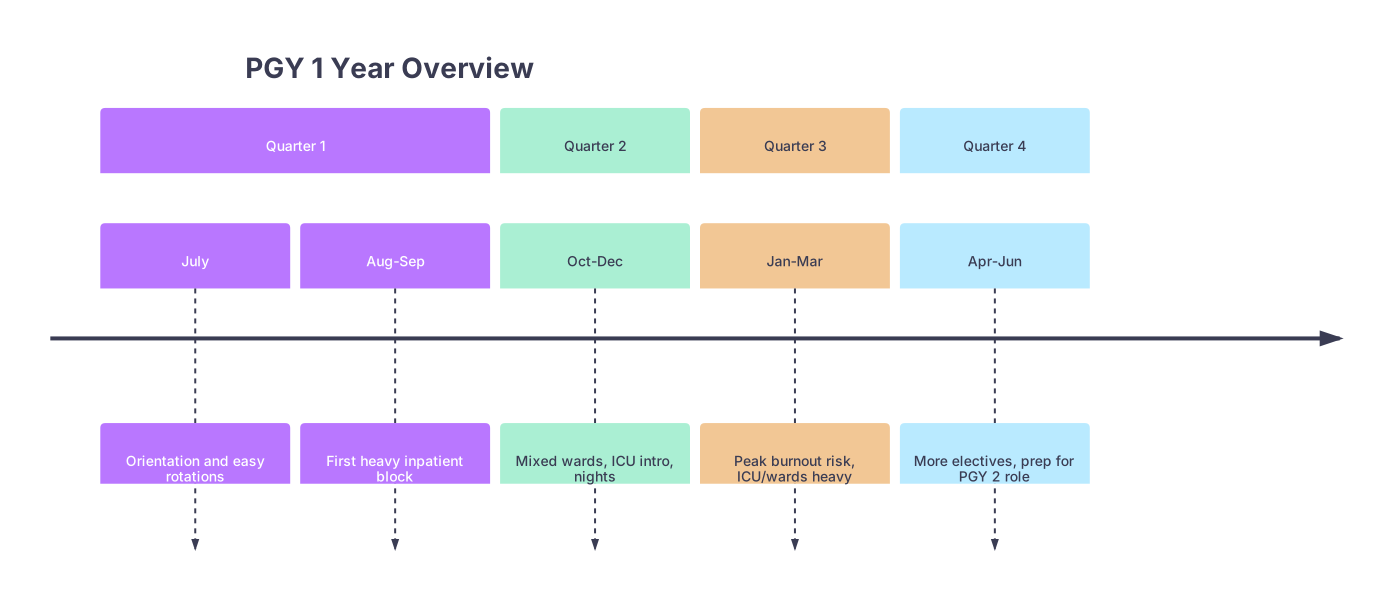
| Period | Event |
|---|---|
| Quarter 1 - July | Orientation and easy rotations |
| Quarter 1 - Aug-Sep | First heavy inpatient block |
| Quarter 2 - Oct-Dec | Mixed wards, ICU intro, nights |
| Quarter 3 - Jan-Mar | Peak burnout risk, ICU/wards heavy |
| Quarter 4 - Apr-Jun | More electives, prep for PGY 2 role |
At this point, you should:
- Identify your heavy vs light blocks now, not as you hit them.
- Decide your non‑negotiables (sleep minimum, workout frequency, one weekly social anchor).
- Accept one reality: you will not “find” time. You will take it, or someone else will.
The rest of this guide walks month‑by‑month and rotation‑by‑rotation with specific hour‑protection moves.
July–September: Setting the Standard From Day 1
July: Orientation + First Real Rotation
July sets your norms. If you act like you’re on call 24/7 now, people will expect it all year.
Week 1 (Orientation + Shadow days)
At this point, you should:
- Learn your program’s duty hour rules like a lawyer prepping a case.
- Max 80 hours/week (averaged over 4 weeks)
- Max 16 hours (old rules) or 24+4 (more common now) per shift depending on specialty
- 8–10 hours off between shifts
- 1 day off in 7
- Ask seniors direct questions:
- “On this rotation, what’s the real usual arrival and departure time?”
- “What’s the biggest trap for interns going over hours here?”
- “If I feel I’m going to violate duty hours, who do I tell first?”
Checklist – Before Your First Real Day on Service
- Set hard bedtime and wake time for this block.
- Decide:
- When you’ll pre‑chart (night before vs early AM).
- When you’ll eat (protect at least one 15‑minute meal block).
- Put your work hour logging app on your phone home screen. No excuses.
First Inpatient Wards Block (usually July or August)
This is where interns bleed hours if they’re not ruthless.
At this point, you should implement:
A fixed “drop dead” checkout time.
- Pick a time (e.g., 6:45 pm), set a repeating alarm labeled:
“If you’re still here, you must hand off 1 task.” - Every day, when the alarm hits, you must:
- Finish 1 note OR
- Hand off 1 pending non‑urgent task to night float
- This keeps you from death by 30 tiny unfinished things.
- Pick a time (e.g., 6:45 pm), set a repeating alarm labeled:
Time‑blocked mornings.
Rough internal med style example:- 6:00–6:45 – Pre‑round (no notes, just data)
- 6:45–7:10 – Write orders / quick messages
- 7:10–8:00 – Formal rounds
- 8:00–10:00 – Notes on sickest patients only
- 10:00–12:00 – Remaining notes & calls
The key: No wandering. You always know what the next 60 minutes are for.
Scripted boundaries for “one more thing” requests at 6:30 pm
You will hear: “Can you just quickly…?” at 6:29 pm. Your responses need to be pre‑cooked.
- “I’m at my duty hour limit for the day. I’ll hand this off in sign‑out.”
- “I can start it, but it’ll need to be finished by night float. Is that OK?”
Say it calmly. Don’t over‑explain. I’ve watched soft‑spoken interns hold their ground with exactly those lines.
End‑of‑week hour audit (Friday nights)
- Check:
- Total hours logged so far.
- Time in/out trends.
- If you’re trending >80:
- Tell your senior: “I’m on pace to exceed duty hours this week. How do you want to handle tomorrow/Sunday?”
Put it on them to help solve it. That’s their job.
- Tell your senior: “I’m on pace to exceed duty hours this week. How do you want to handle tomorrow/Sunday?”
- Check:
October–December: Nights, ICU, and the First Burnout Dip
By now attendings know your name. Bad habits are starting to calcify. This is where you either correct course, or PGY‑1 eats you.
Nights Rotation (usually in this window)
Nights are paradoxically the easiest place to blow past 80 hours because of “just stay for sign‑out” creep and flip‑flop sleep.
At this point, you should:
Lock your pre‑shift ritual.
- Wake time: consistent (even on days off) within 1–2 hours.
- 60–90 minutes before shift:
- Light meal
- 10–15 minute walk or stretching
- No heavy social plans that run up against start time
Create a strict “handoff at the door” rule for post‑night shift.
- As soon as morning team arrives:
- 10–15 minutes of sign‑out, max.
- No “helping finish” for more than one discrete task.
- If attending asks you to stay:
- “I’m past my scheduled shift and close to duty hour limits. I need to sign out and head home.”
The interns who “just stay to help” are zombies by week 2 and quietly break duty hours every single call.
- As soon as morning team arrives:
Protect your post‑shift sleep window.
Pick one of these patterns and stick with it for the block:
- Classic: Sleep 8:30 am–2 pm; short nap 7–8 pm.
- Split: Sleep 10 am–1 pm; 4–7 pm.
No errands. No “just a quick gym visit” before first sleep block. You go home, minimal light, shower if you must, sleep.
ICU Rotation (often Nov–Jan)
ICU is where the “I must stay” guilt is strongest. It’s also where hours balloon.
At this point, on Day 1 ICU, you should:
- Ask the senior:
- “What’s the expected sign‑out time for interns here?”
- “What specific tasks are okay to hand off to night?” (Cultures, repeat labs, re‑exam?)
- “What’s your preferred format for focused sign‑out?”
Then run this strategy:
Pre‑round triage
On your sickest 2–3 patients, you:
- Check overnight events
- Quick exam
- Verify drips and vent settings
On the rest:
- Data first (labs, imaging, events)
- Full exam later unless they’re unstable
Goal: Prevent 8 am “Oh, I didn’t see that norepi went up 3 times.”
Structured midday “stability scan” (around 3 pm)
- Rapid eyeball of each patient:
- Any new pressor?
- New oxygen requirement?
- New fever or lactate?
- Start building the “must‑do before I leave” list by 3:30 pm.
- Rapid eyeball of each patient:
The 4 pm Cutoff List
At 4 pm, you should have:
- List A: Must‑do before leaving (urgent labs, significant family conversations, consent for procedures)
- List B: Can be signed out (routine follow‑up labs, non‑urgent consults, re‑check vitals)
If List A is longer than 60–90 minutes of work, you tell your senior:
“I’m not going to finish all of this and stay under duty hours. Which pieces do you want me to prioritize and which should night take?”
Month‑by‑Month: Concrete Hour‑Protection Moves
Here’s how your tactics shift as the year goes on.
| Quarter | Main Risk | Primary Strategy |
|---|---|---|
| Q1 (Jul-Sep) | Overstaying to impress | Set hard out-times and scripts |
| Q2 (Oct-Dec) | Nights and ICU creep | Rigid sleep + handoff rules |
| Q3 (Jan-Mar) | Burnout apathy | Rebuild routines, say no |
| Q4 (Apr-Jun) | Complacency, overhelping | Finish strong, prep PGY-2 |
January–March: The Wall and How Not to Hit It
This is where a lot of interns say, “I stopped logging hours because it was depressing.” That’s how problems get hidden until ACGME surveys land.
At this point, early January, you should:
Audit the first half of the year.
- Which 2 rotations wrecked your hours?
- Which attendings or seniors consistently pushed later days?
- When did you sleep the least? Why?
Pick 1–2 hard year‑long rules.
Examples that actually work:
- “I will not stay more than 30 minutes past my scheduled sign‑out time unless there’s a crashing patient.”
- “If I’m over 80 hours by Saturday morning, I will email the chief that day.”
Stop being “fake flexible” for everyone.
By now you know the pattern:
- There’s always a co‑intern who wants to switch call so they can go to a wedding.
- Or a senior who asks, “Can you just cover one extra day on Sunday?”
New default:
- Say yes only if you’re clearly under hour limits and have a plan to compensate later.
- Practice: “I’m already tight on hours this week. I can’t safely add more shifts.”
April–June: Finish Strong Without Sliding Back
You’re better, faster, and more confident now. This is exactly when people start donating free hours “because it’s easier if I just do it myself.”
At this point, coming into spring:
- Treat extra efficiency as found time for your life, not more free labor.
- Mentor the new interns and med students on day‑one hour protection:
- Show them how you batch notes.
- Show them your pre‑round routine.
- Normalize leaving on time when work is done.
You’re also prepping to be a PGY‑2. That means you will set the tone for next year’s interns. If you’ve allowed your boundaries to erode, you’ll pass that on.
Rotation‑Specific Playbooks
Now let’s go rotation by rotation—what you should do in Week 1 and then day‑to‑day to protect your hours.
Inpatient Wards (Medicine, Surgery, Pediatrics)
Week 1 on any wards service, you should:
- Map the daily schedule with actual times:
- First patient seen by?
- Rounds start/end?
- Typical sign‑out?
- Watch your co‑interns:
- Who leaves on time consistently?
- Who’s always still typing at 8 pm?
Then:
Build a note template that fits reality.
- Stop writing novels. Use:
- One‑line summary
- 3–5 problem‑based bullets
- Labs only if they change management
- Ask a respected senior:
“Show me one of your notes that attendings are fine with.”
- Stop writing novels. Use:
Batch work instead of toggling constantly.
- Finish seeing all patients before starting any notes (unless there’s a true stat issue).
- Do all calls/messages in one block instead of reacting instantly to each page.
The 2 pm reality check alarm
- At 2 pm, you should know:
- How many notes are left?
- Which discharges are pending?
- If you’re not on pace, ask for targeted help early:
- “Can someone help me with 2 notes so I can finish handoffs on time?”
- At 2 pm, you should know:
ICU
We already touched it, but add this:
Procedure temptation:
Intubation at 6:50 pm when you’re almost out the door?Script: “I’m at my duty hour limit. If I stay for this, I’ll need to come in later tomorrow or leave earlier on another day. Is that OK with you and the chief?”
ED / Emergency Medicine Month
The ED is shift‑based. It should be the easiest place to protect hours. Unless you let charting drag.
At this point, Day 1 ED, you should:
- Clarify:
- Start and end of shift (exact times)
- How many patients expected per shift
- Where and when you sign out remaining patients
Then:
Chart in real time or not at all.
- Quick MDM bullets in the room or right after seeing the patient.
- Aim to leave with zero incomplete notes.
Hard stop at end of shift.
- 10–15 minutes before end, hand off:
- Pending labs
- Imaging
- Call‑backs
- If attending asks you to stay:
- “I’m at the end of my scheduled shift and close on weekly hours. I need to sign out and go.”
- 10–15 minutes before end, hand off:
Outpatient / Clinic Blocks
Clinic can quietly push you into hour violations by adding “just finish reviewing labs tonight” from home.
At this point, first clinic week, you should:
- Ask: “Are after‑hours inbox messages and charting counted in duty hours here?”
(Correct answer: yes. If your program disagrees, document your time anyway.)
Then:
Inbox control.
- Limit inbox to 1–2 defined blocks per day.
- No inbox after you walk out of clinic unless you log the time as duty hours.
Template hard.
- Use smart phrases or macros for common follow‑ups.
- Accept that “perfect” documentation isn’t worth your evening.
Using Data Instead of Vibes: Track Your Hours
If you’re not tracking, you’re guessing. And you’ll guess wrong.
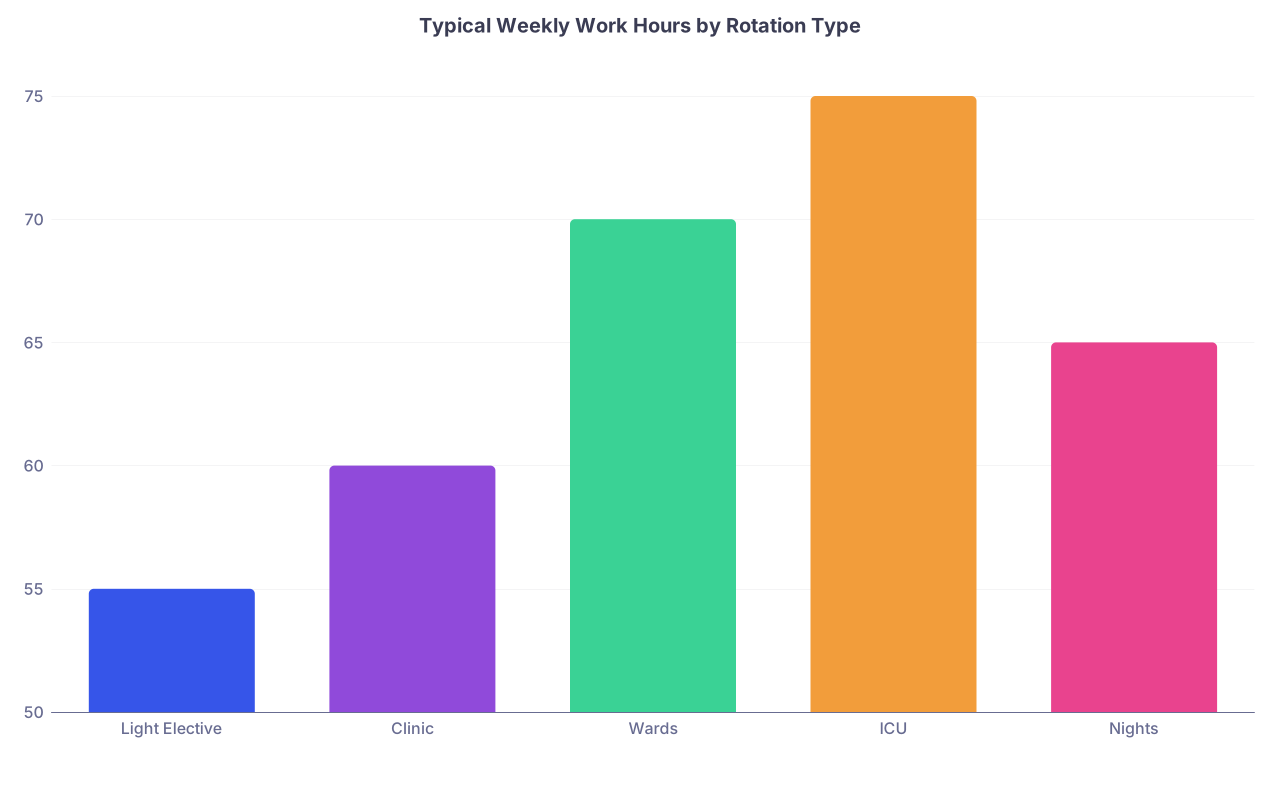
| Category | Value |
|---|---|
| Light Elective | 55 |
| Clinic | 60 |
| Wards | 70 |
| ICU | 75 |
| Nights | 65 |
At this point, this week, you should:
Log:
- Start and end time each day
- Where you did work (hospital vs home)
- Call shifts separately
Review weekly:
- If you’re consistently >75 on certain rotations, tell your chiefs:
- “On the last wards block I averaged 78 hours/week despite leaving on time most days. I think the service is overpaneled for the current staffing.”
- If you’re consistently >75 on certain rotations, tell your chiefs:
You’re not whining. You’re giving them the data they need before ACGME survey season.
Protecting Hours Without Being “That Intern”
You don’t want the reputation of the intern who sprints out while others drown. Fair. You also don’t need to martyr yourself.
At this point, any time you’re leaving on time and someone else is clearly underwater:
Offer contained help.
- “I can stay for 20 minutes. What’s the one thing that would help you most?”
- Set a phone alarm. When it rings, you leave.
Share tricks, not just time.
- Show them your pre‑chart method.
- Help them build templates.
- Teach them your end‑of‑day prioritization.
Know when the problem is systemic.
If everyone on your team is chronically over hours:
- That’s not a “work harder” issue.
- That’s a staffing/census/structure problem.
- Document your schedule for a week and bring it to your chiefs or PD.
Scripts You’ll Actually Use
You’re tired. You’re not going to invent perfect language on the spot. Use these.
To a senior at 6:30 pm on wards:
“I’m nearing my duty hour limit for the week. Here’s what’s left. What do you want me to hand off?”To an attending who keeps talking at 7:05 pm:
“I appreciate the teaching. I need to head out to stay within duty hours, but I’d love to continue this tomorrow.”To a co‑intern about a switch that will crush your week:
“I’d like to help, but that would put me over 80 hours. I can’t safely do that.”To a chief when a rotation is out of control:
“On this block I’ve logged 82, 84, and 83 hours the last 3 weeks, despite leaving as close to sign‑out as possible. The team census and tasks seem unmanageable for two interns. Can we adjust something?”
Final Thoughts: What Actually Protects Your Hours
You don’t win this by heroics. You win by boring consistency.
Key points:
- Decide your hour boundaries before each rotation starts, and say them out loud to your seniors.
- Use alarms, templates, and weekly reviews to make leaving on time the default, not the exception.
- When hours creep up, escalate early with data, not drama.
Do that, rotation by rotation, and you’ll finish PGY‑1 tired but intact—without donating hundreds of free, invisible hours to a system that will take everything you let it.