
It’s July 3rd. You’ve just finished your second 14-hour day in a row. Your scrubs smell like chlorhexidine and cafeteria fries, your pager hasn’t been quiet since 4 a.m., and you’re staring at three unread texts from your partner: “Are you alive?” “All good?” “Miss you.”
You’re asking yourself the right question: is it actually realistic to maintain a relationship during intern year, or are you setting both of you up to fail?
Here’s the direct answer:
Yes, it’s realistic. But not for everyone, and not without structure.
The couples that survive intern year don’t just “love each other more.” They treat the relationship like something that needs systems, guardrails, and brutal honesty the same way you treat patient care.
Let’s break it down.
The Real Question: What Kind of Relationship Are We Talking About?
You can’t answer “is it realistic?” without defining the relationship you’re trying to keep.

Here are the main scenarios I see over and over:
Established long-term relationship, same city
- Together for years. Maybe living together.
- You know each other’s families. You’ve seen each other stressed.
- This is the most salvageable category, if both people are willing to adapt.
New relationship (less than a year), same city
- This is where intern year often acts like a stress test.
- Can it work? Yes. But the default outcome, if you change nothing, is usually drift and resentment.
Long-distance, already established
- You’ve done distance before: med school vs job, different cities, etc.
- Add intern year and it becomes distance + chronic exhaustion + time-zone mismatches.
- Still realistic, but it needs really tight expectations and structure.
Brand-new, long-distance, starting during intern year
- I’m going to be blunt: this is almost never realistic. Not impossible, but you’re climbing with ankle weights on.
If you’re in group 1 or 3, I’d say: yes, realistically possible.
Group 2: possible, but you need to treat this like rehab, not vacation.
Group 4: assume “no,” then be pleasantly surprised if it survives.
What Intern Year Actually Does to Your Capacity for a Relationship
You’re not just “busier.” Your entire bandwidth shifts.
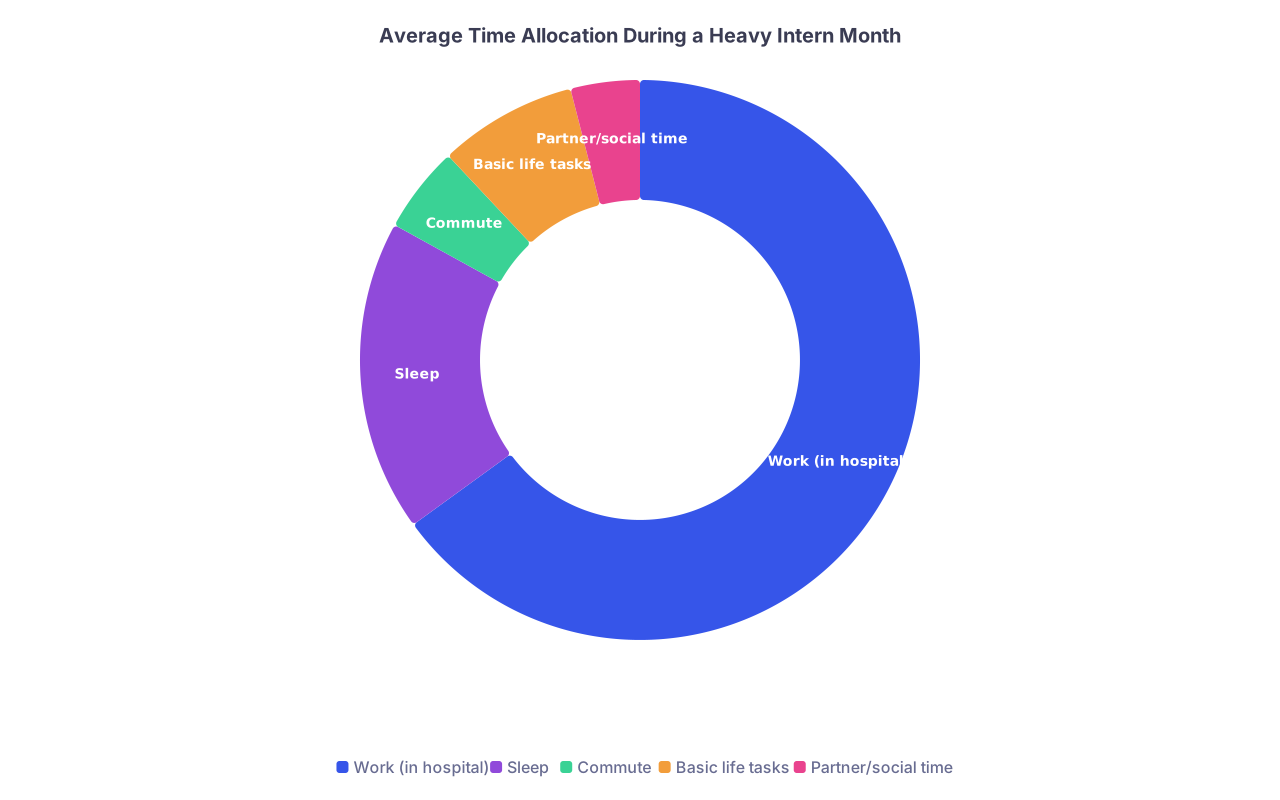
| Category | Value |
|---|---|
| Work (in hospital) | 65 |
| Sleep | 18 |
| Commute | 5 |
| Basic life tasks | 8 |
| Partner/social time | 4 |
On a heavy inpatient month, realistically, your week looks like this:
- Six days a week in the hospital, 70–80 hours
- 1 golden day off (which usually gets filled with laundry, groceries, and crashing on the couch)
- Sleep debt that never balances
- Emotional whiplash from codes, angry families, and pager chaos
Here’s what that means for your relationship:
You’ll be unreliable by normal-people standards
You’ll say “I’ll call you around 8,” then answer at 10:30. Or not at all.You’ll have nothing left in the tank some days
Your partner wants to talk about their stressful meeting. You’re mentally still with the septic patient in the ICU.You’ll be socially misaligned
Their life may be weekends, dinners, trips. Your life is post-call naps and targeted grocery missions.
You can maintain a relationship through that. But not if you’re pretending your life is still like M4.
What Makes Relationships Survive Intern Year vs Fall Apart
Let me be specific. When I look at who makes it through and who doesn’t, it usually comes down to a small set of variables.
| Factor | Survive More Often | Fall Apart More Often |
|---|---|---|
| Expectations about time | Explicit, realistic | Vague, optimistic |
| Communication style | Direct, forgiving | Passive, resentful |
| Flexibility with plans | High | Low |
| View of residency | Shared “team sport” | “Your thing vs my life” |
| Relationship stage | Established | Very new |
The couples that survive usually:
Talk numbers before July
“On ICU I may only have energy for 10–15 min calls. Let’s plan for that instead of pretending I’ll be free every night.”Expect flakiness and forgive it fast
They don’t treat a missed text like a referendum on the relationship.Make tiny, consistent rituals
Same 5-minute goodnight call. Same “text me when you park” check-in. Short but predictable.See residency as a shared project
Not “her crazy job I’m competing with,” but “our hard season that we’re managing together.”
The couples that fall apart usually:
Never adjust expectations
They still expect Friday date nights every week “because that’s healthy,” without integrating the reality of q4 call.Interpret everything personally
“You didn’t call… so you don’t care,” instead of “You probably got slammed by a code.”Try to act like nothing changed
Still planning long dinners, late nights, multiday trips like you’re on an outpatient elective.
Concrete Strategies That Actually Work (Not Instagram Nonsense)
Let’s talk tactics. If you want your relationship to survive intern year, build these in on purpose.
1. Schedule your relationship the way you schedule consults
Yes, it sounds unromantic. No, you’re not too cool for this.
- At the start of each month, sit down with your partner (or FaceTime) and go over your call schedule.
- Mark:
- One “real date” (even if it’s at home, post-call, with takeout).
- One protected long conversation (like a Sunday afternoon call if they’re long-distance).
- Your worst days (post-call, 6-day stretches) so they don’t expect much.
You’re not being controlling. You’re trying to prevent disappointment.
2. Set a baseline communication contract
Something like:
- “I’ll text you once when I get to work and once when I’m leaving, if I’m not in a crisis.”
- “If I go dark for > 12 hours unexpectedly, assume work chaos, not disinterest.”
- “We do a 10–15 minute call at [X time] on most days off, unless post-call wreckage.”
Spell it out. Don’t rely on “we’ll just check in when we can.” That’s how people drift.

| Step | Description |
|---|---|
| Step 1 | Start of Month |
| Step 2 | Share Schedule |
| Step 3 | Lower Expectations |
| Step 4 | Plan 1-2 Dates |
| Step 5 | Set Short Check-ins |
| Step 6 | Weekly Micro-Check |
| Step 7 | Plan Honest Talk |
| Step 8 | Continue Plan |
| Step 9 | Heavy Rotations? |
| Step 10 | Problems Building? |
3. Use short, frequent touchpoints instead of big, rare ones
Stop aiming for the 2-hour perfect phone call. You won’t have it regularly.
Instead:
- 30-second “thinking of you” voice note between pages
- Photo of your coffee at 3 a.m. with “still alive”
- 5–10 minute FaceTime while you brush your teeth and collapse into bed
Low pressure. High frequency. That keeps people emotionally current.
4. Protect one small ritual like it’s sacred
Examples I’ve seen work:
- A 5-minute call every night (or most nights) before the earlier sleeper goes to bed.
- “Saturday morning coffee” together on video, even if you’re post-call and half-human.
- A shared playlist you both add to and listen to on commutes.
Pick one thing and defend it. That ritual becomes the spine of connection during chaos.
5. Be brutally honest early about what you can’t do
Sneaky resentment kills intern-year relationships more than distance or time.
If you can’t:
- Do three weekend trips this fall
- Respond to every message in under an hour
- Talk every single night
Say that now. Not after three months of “I’ll try, sorry, work is crazy.”
Something like:
“I love you, I want this to work, and I also know I’m going to be a mess on ICU month. I need you to know now that there will be days you hear almost nothing from me. That’s about work, not you.”
Direct beats “let’s see how it goes.”
When Keeping the Relationship Isn’t Realistic
There are situations where the kindest, most adult option is to admit: this doesn’t fit intern year.
Watch for these:
1. Fundamental mismatch about priorities
If your partner believes:
- “If you really loved me, residency wouldn’t be an excuse.”
- “Your job is just one part of your life. It shouldn’t affect us this much.”
- “I shouldn’t have to adapt to your schedule.”
You’re in for a daily fight. Residency will eat priority and time. If they don’t accept that conceptually, you’re not negotiating details — you’re arguing about reality.
2. You feel constant dread, not occasional guilt
You should expect:
- Some guilt.
- Some “I wish I could give more.”
- Some missing them painfully.
You should not live in:
- Constant anxiety about checking your phone.
- Panic every time you’re late to reply.
- Feeling like you’re failing your relationship every single week.
If your relationship consistently feels like a second impossible full-time job, that’s not sustainable.
3. It only worked when you were always available
If your relationship was built on:
- All-day texting
- Long, spontaneous hangs
- Constant in-person reassurance
And you both refuse to evolve beyond that, intern year will probably break it. Not because you didn’t care, but because the format stopped fitting your life.
Specific Advice by Situation
Let me be concrete.
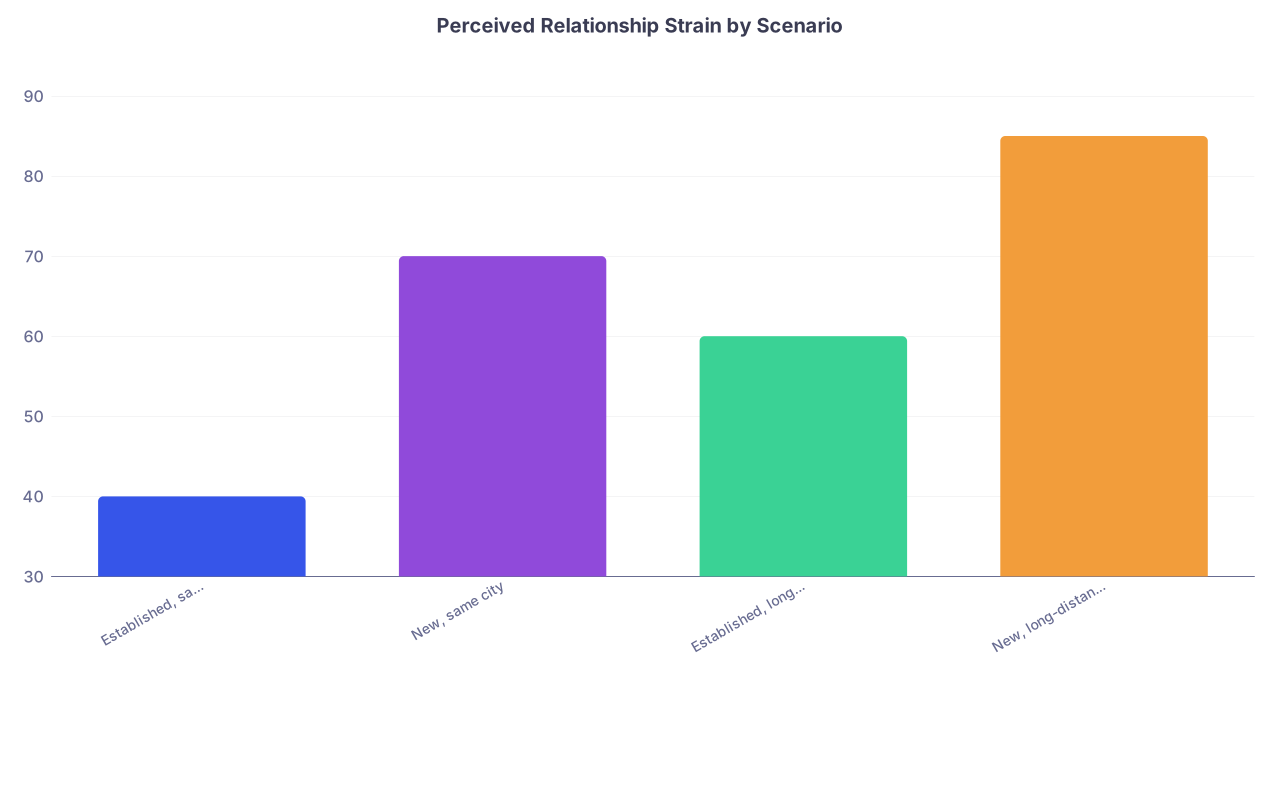
| Category | Value |
|---|---|
| Established, same city | 40 |
| New, same city | 70 |
| Established, long-distance | 60 |
| New, long-distance | 85 |
(Values represent rough “strain level” out of 100 I see reported by residents.)
If you’re in an established same-city relationship
- Move in together if you’re already serious. It helps more than it hurts.
- Prioritize “parallel time” over “event time.” Sitting on the couch while you both do your own thing still counts.
- Make your partner part of your world: talk about co-residents by name, explain what “cross-cover” means, show them your schedule.
If you’re in a new same-city relationship
- Name the elephant: “This is a weird time to start something serious. Let’s go slow on expectations.”
- Use shorter, casual meetups: a 45-minute coffee after a shift beats a 4-hour dinner you’ll cancel.
- Revisit after 3–4 months. If one of you is constantly resentful, stop pretending time will magically fix it.
If you’re in an established long-distance relationship
- Use a shared calendar that has your shifts, call nights, days off.
- Anchor around one longer call per week and shorter check-ins the other days.
- Plan realistic visits around lighter rotations or vacation, not ICU/wards.
If you’re in a brand-new long-distance relationship
I’ll be blunt: don’t promise each other the world.
- Treat it like “dating under harsh conditions,” not “we’re basically engaged.”
- Keep expectations extremely low at first and see if connection still grows.
- If conflict starts dominating after 2–3 months, cut losses early. You’re not a bad person. Your life is just not set up for a high-maintenance long-distance romance right now.
Red Flags You’re Ignoring That Will Blow Up by Spring
Here are patterns I’ve watched derail people halfway through the year:
- They keep saying “after this rotation, it’ll get better,” but you both know the next 6 months are just as intense.
- Every conflict ends with “you’re choosing medicine over me.”
- You’re hiding how bad things are — not telling them when you’re on call, downplaying your exhaustion, avoiding honest conversations because “they’ll freak out.”
- You fantasize more about being single than you do about having more time together.
Intern year is already hard. Don’t add a relationship that feels like a chronic wound.
Quick Reality Check: Is It Realistic For You?
Ask yourself these five questions and answer honestly:
- Does my partner fundamentally respect residency as demanding and real, not an excuse?
- Can they tolerate weeks where connection is minimal without panicking?
- Am I willing to schedule and protect small rituals, even when I’m tired?
- Do we talk directly when we’re upset, or do we stew and test each other?
- If nothing changed about my schedule, could I do this for 3 more years?
If you confidently answer “yes” to at least 3–4 of those, your relationship is probably realistic with some tuning.
If you’re under 3, you’ve got work to do — either on expectations, structure, or the hard decision to let go.
FAQs
1. Is it fair to start a new relationship during intern year?
It can be, if you’re radically upfront from day one. You’re not being unfair by dating; you’re being unfair if you advertise a life you don’t have — “I’m super chill, always around” — then disappear into q4 call. Start with: “I like you, my life is intense and unpredictable, and I don’t want to mislead you.” Let them choose with clear eyes.
2. How much time per week do I realistically need to keep a relationship healthy?
There’s no magic number, but most functional intern-year relationships I’ve seen run on roughly:
- 10–20 minutes of check-in most days (text, call, or voice note), and
- 2–4 hours of more focused time once a week or every other week (date, video call, or visit).
If your partner needs daily 1–2 hour deep talks to feel secure, that’s going to clash hard with most intern schedules.
3. Should I prioritize sleep or my relationship on my day off?
Sleep first. Then relationship. If you’re constantly sacrificing sleep to “show you care,” you’ll become more irritable, less present, and burn out faster — which eventually hurts the relationship more. The best version of you for your partner is the one that’s not chronically wrecked and resentful.
4. What do I say to a partner who keeps calling residency “just an excuse”?
You call it out directly: “Residency isn’t an excuse, it’s a constraint. Just like your job or your family obligations are constraints. If we can’t agree that this is objectively limiting my time and energy, we’re not arguing about feelings — we’re arguing about reality. I need you to at least accept the reality before we discuss how to work within it.” If they can’t do that, you’re not compatible with residency life.
5. How do I know if we’re just in a rough patch vs it’s fundamentally not working?
Look at the trend, not the week. If you have bad weeks but can reset with honest conversations and both of you make small adjustments, that’s a rough patch. If every talk ends in the same fight, nothing changes, and you both feel worse month after month, that’s a pattern. Persistent resentment plus zero adaptation usually means it’s not working.
6. Is it better to take a “break” during intern year and revisit later?
Sometimes, yes. A clean, mutual “pause” with clear boundaries is better than dragging each other through a year of half-commitment and constant disappointment. But be specific: what does “break” mean? No contact? Casual check-ins? Are you allowed to date others? Vague breaks just morph into messy, slow-motion breakups.
Today, don’t overthink the whole year. Do one concrete thing:
Sit down with your current (or potential) partner and walk them through your next month’s schedule, hour by hour. Then ask: “Given this reality, what would a good version of ‘us’ look like?”
Their answer — and your reaction — will tell you a lot.