
The way most interns “fight” burnout is backward. They wait until they’re wrecked in February, then try to fix it with a weekend off and a new yoga app. That is not a plan. That is damage control.
You prevent PGY‑1 burnout by treating the whole year like a marathon training cycle—quarter by quarter, with specific moves at each stage. At every point, there are predictable pressure spikes and predictable mistakes. If you know what’s coming, you can blunt a lot of it.
Here’s how to run your intern year without burning yourself to ash.
Big Picture: The Four Quarters of PGY‑1
Think of PGY‑1 in four quarters, roughly:
- Q1: July–September — Shock and adaptation
- Q2: October–December — Competence and creep (responsibility creeps up, fatigue creeps in)
- Q3: January–March — Peak risk for burnout and cynicism
- Q4: April–June — Fatigue vs. mastery, plus second‑year anxiety
Burnout risk is not flat. It spikes.
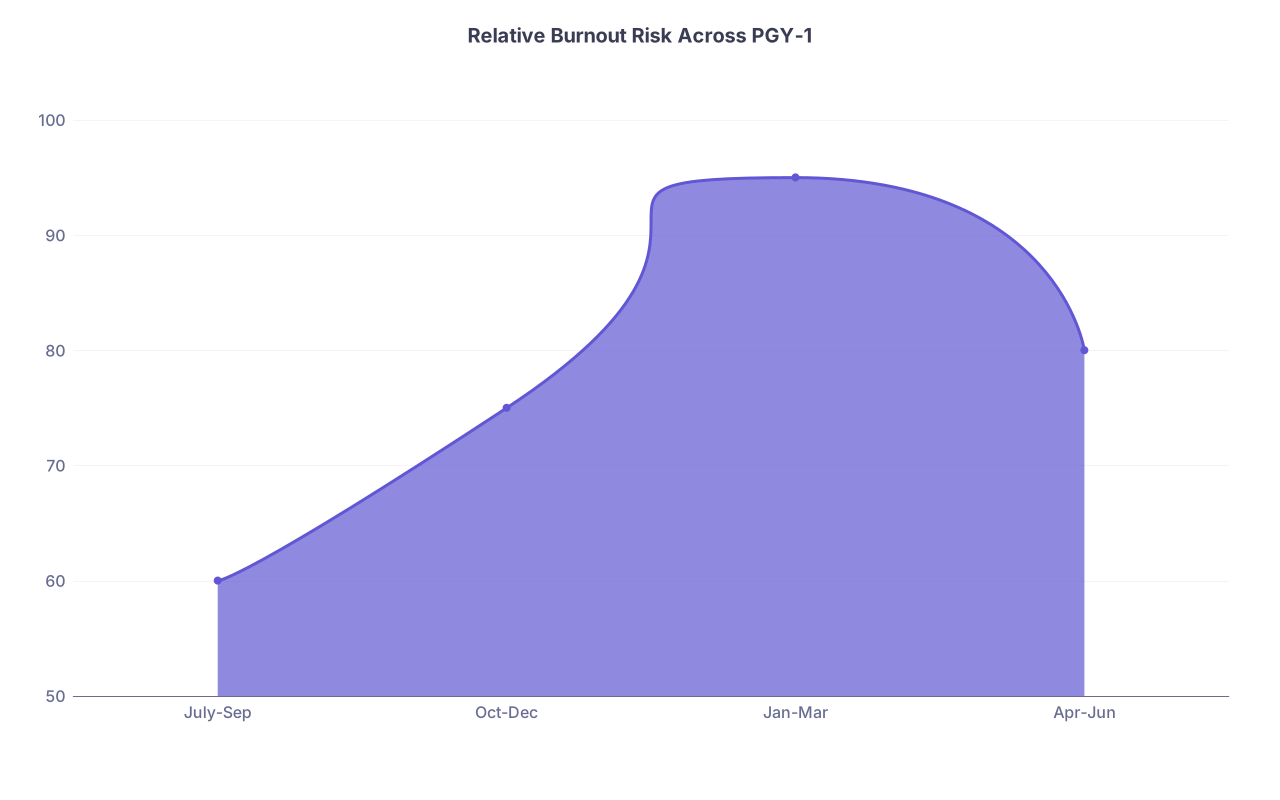
| Category | Value |
|---|---|
| July-Sep | 60 |
| Oct-Dec | 75 |
| Jan-Mar | 95 |
| Apr-Jun | 80 |
At each stage, I’ll tell you:
- What’s happening to you
- What you should start, stop, and protect
- Concrete weekly and daily actions that actually fit a resident schedule
Quarter 1 (July–September): Survive the Shock Without Destroying Yourself
Q1 is not about optimization. It’s about not digging a hole so deep you can’t climb out later.
July: The Shock Month
What’s happening now
- Imposter syndrome is loud. Everyone else “gets it” faster (they don’t).
- Your phone never stops. Orders, pages, messages. You feel behind all the time.
- Sleep and food become optional in your head. This is when bad habits lock in.
At this point, you should set minimum standards, not ideal routines.
Week 1–2: Establish Non‑Negotiables
Set three absolute rules for yourself. Not ten. Three. For example:
- Sleep floor: minimum 5 hours on any 24‑hour period, no heroics.
- Food rule: one real meal per shift, not just snacks and coffee.
- Safety net: one person you text once a week with “real” status (not “I’m fine”).
Daily checklist (keep it stupid‑simple):
- On your way in:
- Ask: When will I eat? Pick a 10–15 minute window and guard it.
- During the shift:
- Drink water whenever you open your inbox or EMR.
- On your way home post‑call:
- No “just one email.” Phone in bag. Straight home. Straight to bed.
Week 3–4: Protect Time Like It’s a Consult
You’re learning the system now. You can add one more layer.
At this point, you should:
- Block one evening per week as truly off‑limits. No notes. No studying. No “just finishing up.”
- Tell your co‑interns and your partner: “Wednesday nights I disappear.”
- Start a 15‑minute weekly reset:
- Look at the next week’s schedule.
- Plan: laundry, groceries, any appointment.
- Choose 1–2 social things max (FaceTime, coffee, call home). Not 5.
August: From Panic to Patterns
You’re less terrified, more tired. That’s progress, but also risky—this is when people start skipping the basics because they feel “used to it.”
Monthly objective: Build 2–3 simple systems that lighten cognitive load.
At this point, you should:
Standardize your mornings on work days:
- Same wake time.
- Same 3–5 minute routine: shower, coffee, quick stretch, out.
- No decisions in the morning = less stress.
Create a work bag checklist and put it on your door:
- Badge, stethoscope, charger, snacks, compression socks, backup pen.
- Check it every night before an early start. Takes 30 seconds, saves a lot of panic.
Pick a default 10‑minute decompression ritual after every shift:
- Could be: quick walk around the block + shower + 5 minutes of music.
- The content matters less than the consistency. This tells your brain, “We’re off now.”
Weekly in August:
- One micro‑debrief with a co‑intern or senior:
- “What’s one thing I did well this week?”
- “What’s one thing to improve?”
- Keeps you grounded in growth, not just fatigue.
September: Lock in Boundaries Before They Disappear
By now, people know you. They know you’re capable. They start asking you to do more—committees, QI projects, “quick” teaching sessions.
This is where burnout prep gets serious.
At this point, you should:
Decide your Q1–Q2 workload ceiling:
- Pick one non‑clinical thing only: research, teaching, or committee. Not all three.
- Script your “no”:
- “I really appreciate you thinking of me. I’ve committed to mastering my core rotations for now so I can be safe and efficient. Can we revisit this in January?”
Audit your schedule one week:
- Track when you actually sleep, not just when you mean to.
- If you average under 6 hours on non‑call days, something has to move.
Set a burnout early‑warning indicator:
- For some people: losing interest in food.
- For others: snapping at nurses, or dreading going in on a non‑call day.
- Write yours down. When it shows up → you must adjust something within a week.
Quarter 2 (October–December): Competence, Creep, and Course Correction
You’re better now. Notes are faster, sign‑outs cleaner. This is also when the slow leak starts—more expectations, less novelty, colder weather, earlier sunsets.

October: Turn Survival Into Sustainability
At this point, you should refine, not reinvent.
Clinical habits:
Standardize pre‑rounding:
- Same order of checking: vitals → overnight events → labs → imaging.
- Use a single template for your patient list. Adjust once, then stop tinkering.
End‑of‑shift 5‑minute closeout:
- Clear unread messages.
- Leave one sticky note with top 3 tasks for next day.
- Log out fully. Don’t haunt the EMR from your couch.
Non‑clinical habits:
Add one 20–30 minute movement block 3 times per week:
- Could be hospital stairs between admissions.
- Could be a short bodyweight routine in your living room.
- This is not “fitness.” This is joint preservation.
Pick one way to see sunlight most days:
- 5 minutes outside after sign‑out.
- Or step out during lunch to the ambulance bay. Even that counts.
- Light is not optional in winter. It’s medicine.
November: Guard Your Energy Before the Holidays Hit
Census climbs. Flu season starts. Nights may ramp up.
This is where you either:
- Start resenting everything, or
- Tighten your routines and ride it out.
At this point, you should:
Re‑evaluate commitments
Look at everything non‑clinical you’ve said yes to.
Ask:
- Does this energize me or drain me?
- Is this essential for my fellowship or career?
- Can I delay or downsize it?
Drop at least one thing. Yes, actually drop it. Email:
- “I overestimated my bandwidth while on wards. I need to step back for now so I can be safe and effective clinically.”
Prepare for holiday coverage
- Before the schedule locks:
- Coordinate swaps early. Do not wait until December 20.
- Plan your post‑holiday recovery day if you’re working the actual holidays.
Weekly November checklist:
- One non‑medicine conversation with someone you like.
- One small treat: pastry from that place near the hospital, a new book, a movie night. Cheap, doable, scheduled.
December: The “Everyone’s Tired” Month
Morale can get weird. Staff are stretched, families have expectations, and you’re working strange days.
At this point, you should:
Set realistic holiday expectations with family/partners:
- “I will be off 24 hours between X and Y. I will be exhausted. Let’s plan something very low‑key.”
Create a micro‑vacation inside a 24‑hour off window:
- No chores. No EMR.
- Sleep in, order food, one outdoor thing, one fun thing. That’s it.
Watch for the cynicism creep:
- If you catch yourself mocking every patient, every consult, every policy—pause.
- That’s usually exhaustion + unmet expectations, not “you becoming a jerk.”
Quarter 3 (January–March): Peak Burnout Season
This is the danger zone. Dark outside, long behind you but still far to go, milestone exams or in‑training exams looming. This is when I’ve seen interns quietly Google “non‑clinical jobs for physicians.”
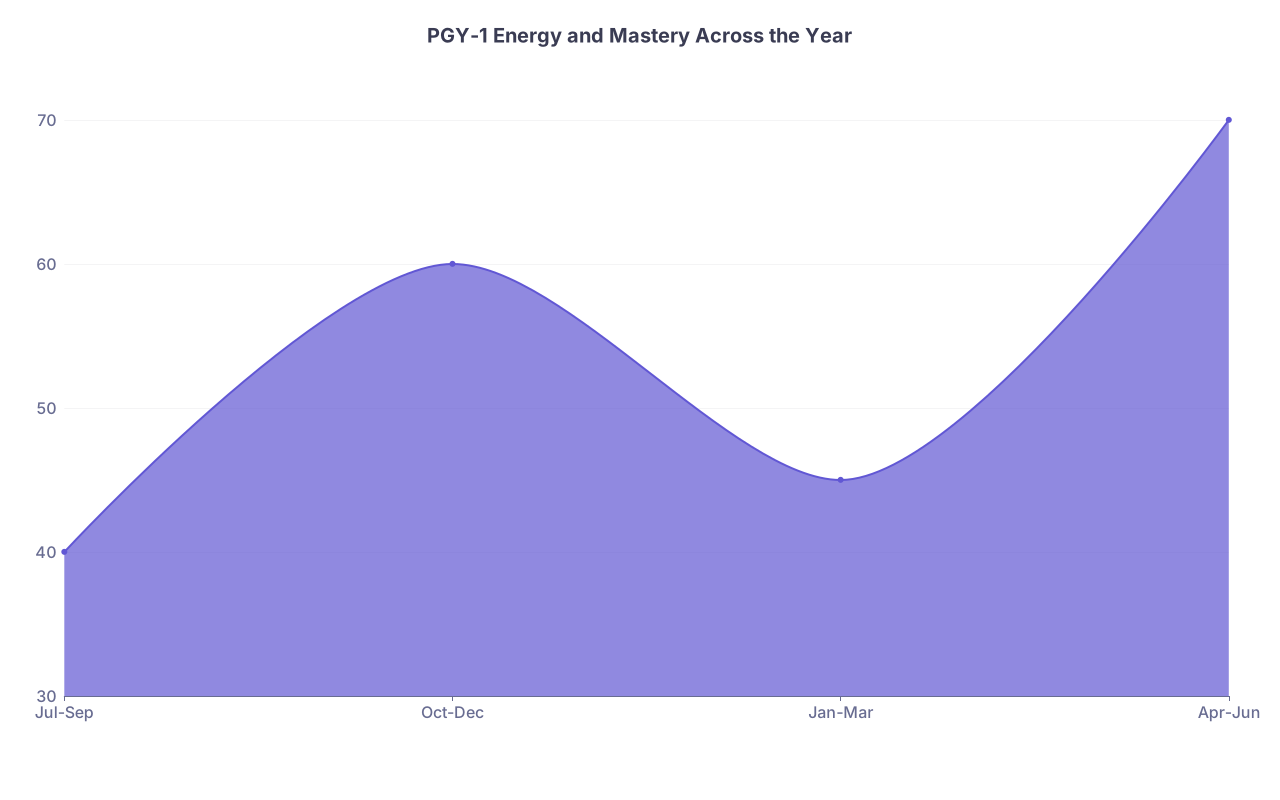
| Category | Value |
|---|---|
| Jul-Sep | 40 |
| Oct-Dec | 60 |
| Jan-Mar | 45 |
| Apr-Jun | 70 |
Energy drops in Q3. Mastery plateaus or feels like it does. Bad combo.
January: Mid‑Year Reset, Not “Suck It Up”
At this point, you should do a structured mid‑year review.
Take 30 minutes on a post‑call day afternoon or a golden weekend:
Clinical:
- What do I do now without thinking? (Admitting chest pain, writing discharge meds, calling consults.)
- Where do I still freeze? (Breaking bad news, managing conflict, codes.)
Life:
- Am I sleeping more or less than in August?
- Am I seeing friends or family at all?
- What have I completely stopped doing that used to make me feel human?
Emotional:
- Am I more irritable?
- Do I feel hopeless more days than not?
If your answers are worrying (and for many interns they are), this is not a failure. This is a signal.
Actions:
Book one 30‑minute meeting with a trusted chief, PD, or mentor by the end of the month.
- Go in with 2–3 concrete concerns and 1–2 ideas. E.g., “I’m exhausted after back‑to‑back ICU and nights; can we avoid that sequence next year?”
If you’re even wondering about depression or anxiety:
- Reach out to GME wellness, your PCP, or a therapist. Not “later.” This month.
- Medication and therapy are tools, not moral failures.
February: Tighten the Leaks
By February, patterns are entrenched. This is where you systematically close energy leaks.
At this point, you should:
Fix the 3 biggest time sinks
- Identify your top 3:
- Charting after getting home.
- Doom‑scrolling for an hour before bed.
- Saying yes to every “quick” task post‑sign‑out.
For each one, set a hard limit:
- Charting: “No notes from my couch. If it’s not done by X time at the hospital, it waits.”
- Phone: “Phone goes on Do Not Disturb 45 minutes before planned sleep.”
- “Quick tasks”: “After official sign‑out, I only handle urgent pages. Everything else goes to the on‑call person.”
Rebuild micro‑joys
You need something every week that reminds you you’re more than a cog.
Join a standing micro‑ritual with co‑interns:
- Friday 10‑minute coffee after sign‑out.
- Post‑night‑shift breakfast on the same day each week.
Reactivate one old hobby at 10% intensity:
- Used to run 5 miles? Run or walk 1 mile once a week.
- Used to play an instrument? 10 minutes Sunday afternoon.
March: Consider the Next Year Without Panicking
At this point, you should start looking ahead—but gently.
Ask second‑years what they wish they’d set up in late PGY‑1:
- Vacation timing.
- Elective choices that are actually lighter (every program has fake “electives” that are brutal).
- Research that matters.
Use one evening to sketch Q4:
- Which rotations are coming?
- Where are your light months?
- Where’s vacation?
This is not obsessive planning. It’s so you can see relief on the calendar. That alone lowers burnout risk.
Quarter 4 (April–June): Finish Strong Without Collapsing
You’re finally not brand new. People ask you for advice now. You start getting “you’ll be a great senior” comments. Nice. Also: expectations jump.
This quarter is where you decide whether you drag yourself across the PGY‑1 finish line or cross it standing.

April: Shift From “Surviving” to “Owning”
At this point, you should start practicing like a junior senior.
Daily on busy rotations:
- Before rounds:
- Predict 1–2 dispo decisions for your patients. (Home? SNF? More workup?)
- After rounds:
- Take ownership of one learner (med student, new intern):
- Ask, “What’s one thing you want to get better at this week?”
- Check in once mid‑week.
- Take ownership of one learner (med student, new intern):
Why this matters for burnout:
- Autonomy reduces burnout.
- Teaching reminds you that you know things now. Feeling competent is protective.
May: Protect Your Transition to PGY‑2
You’re mentally halfway out the door. Easy to slack. Also easy to overload yourself with “I’ll do all the projects now before I’m a senior.”
At this point, you should:
Decide what you are not bringing into PGY‑2:
- Chronic post‑call charting.
- Never delegating to students.
- Taking on everyone’s tasks to look “helpful.”
Create a PGY‑2 boundary list (3 items max), for example:
- I will not stay more than 30 minutes past shift end more than twice a week.
- I will delegate appropriate tasks to students without guilt.
- I will use all my vacation days before the last quarter.
Share this with a co‑resident or your partner and tell them to call you out when you violate it.
June: Debrief, Recover, and Close the Loop
You made it. If you’re not burned out, that’s because you planned. If you are somewhat burned out but still standing, you’re in the majority.
At this point, you should:
Take one quiet hour, no phone.
What worked this year in:
- Sleep
- Food
- Relationships
- Studying
- Boundaries
What absolutely did not:
- Rotations that crushed you.
- People you should avoid partnering with when possible.
- Bad habits that spiraled.
Write 1–2 sentences for each. Save it in a note titled: “PGY‑1 Lessons – Read Before PGY‑2.”
Formalize your support structure
- Identify your three go‑to people for next year:
- Clinical: who you page or text when you’re stuck.
- Emotional: who you vent to.
- Career: who you ask about fellowship/jobs.
Lock in a quick check‑in with each early in PGY‑2.
Quarterly Snapshot: What You Should Focus on When
| Quarter | Primary Goal | Key Actions |
|---|---|---|
| Q1 (Jul–Sep) | Survive shock without bad habits | Set non-negotiables, standardize mornings, basic boundaries |
| Q2 (Oct–Dec) | Convert survival into sustainable routines | Refine workflows, guard off-time, drop extra commitments |
| Q3 (Jan–Mar) | Detect and correct burnout drift | Mid-year review, close time sinks, seek help early |
| Q4 (Apr–Jun) | Finish strong and prepare for PGY-2 | Practice autonomy, reset boundaries, formal debrief |
Final Takeaways
- Burnout prevention in PGY‑1 is timing‑dependent. What you need in July is not what you need in February. Adjust each quarter.
- You win this year with small, consistent non‑negotiables—sleep floors, one real meal, guarded off‑time—not grand wellness plans you cannot sustain.
- When your early‑warning signs show up—cynicism, dread, collapse of basic self‑care—change something within a week. Waiting “until this rotation ends” is exactly how residents slide from tired into burned out.