
The myth that busy residents cannot have real routines is wrong. You can. You just have to build them like you build an admission order set: tight, efficient, no fluff, and adapted to the service you are on.
You do not need a perfect “5 a.m. miracle morning.” You need 10–20 minute bookends that you protect like a code stroke. Morning and evening. On every kind of day: pre‑round chaos, 28‑hour call, post‑call fog, golden weekend.
Here is how to structure it, chronologically, so you always know: at this point in the day, you should be doing this.
Big Picture: Your Daily Bookend Framework
Before we go hour‑by‑hour, set your basic structure. Think in four versions of the same routine:

| Day Type | Morning Routine Target | Evening Routine Target |
|---|---|---|
| Normal | 15–20 minutes | 15–20 minutes |
| Call | 5–10 minutes | 5–10 minutes |
| Post-call | 5–10 minutes | 5–10 minutes |
| Weekend | 20–30 minutes | 20–30 minutes |
Your goal is not heroics. Your goal is consistency.
- Normal day: Full “standard” bookends
- Call day: Stripped‑down survival version
- Post‑call: Recovery version
- Weekend: Extended version
Now let’s walk a full “normal” day, then I will show you how to adapt for call, post‑call, and nights.
04:45–06:00 – Morning Bookend (Normal Ward or ICU Day)
You wake up. You have somewhere between 10 and 20 minutes before you should be in motion for work. This is where most residents lose the day: phone in bed, email, doom‑scroll, then panic.
At this point in the morning, you should be doing only three things:
- Waking up your body
- Orienting your mind
- Laying out the day on purpose
Step 1: First 3 Minutes – No‑Decision Wake‑Up
0:00–0:30 – Feet on floor
The alarm goes off. You do not negotiate. Phone out of reach helps. I have seen dozens of residents fix their mornings just by putting the phone across the room.
0:30–3:00 – Light + water
- Turn on a bright light
- Drink a full glass of water you poured the night before
- Two deep breaths at the window or door (yes, even in winter)
That is it. No phone. No email. No EMR.
Step 2: Minutes 3–10 – Physical “Boot Sequence”
You are not doing a full workout. You are clearing sleep inertia.
Pick a 5–7 minute script you repeat every single day:
- 1 minute: Gentle neck and shoulder rolls
- 2 minutes: Cat‑cow or simple spinal mobility
- 2 minutes: Bodyweight squats / heel raises / light stretching
- 1–2 minutes: Slow breathing (inhale 4 sec, exhale 6 sec)
If you want to be fancy, fine. If you are on surgery and waking at 3:45 a.m., keep it to 3 minutes. But do something. Your back and your attention span will thank you at 10:30 rounds.
Step 3: Minutes 10–15 – 5‑Minute Mental Setup
At this point you should be setting your mental agenda, not the hospital’s.
Sit at your desk or kitchen table. Phone still away.
Do this quick sequence:
One line check‑in (30–60 seconds)
- Write a single sentence: “Today I feel ____ because ____.”
That is it. No essays. Just labeling mood.
- Write a single sentence: “Today I feel ____ because ____.”
Three priorities (2 minutes)
On a sticky note:- 1 clinical priority (e.g., “Make sure Mr. X gets that MRI result before sign‑out”)
- 1 learning priority (e.g., “Look up hyponatremia algorithm after work”)
- 1 personal priority (e.g., “Text Mom,” “10 minutes outside,” “Laundry load”)
30‑second visualization (30 seconds)
Picture the rough shape of the day: pre‑rounds, rounds, procedures, notes, sign‑out, home. One tricky moment you anticipate (angry family, tough attending) and how you will respond once, calmly.30–90 seconds of quiet
Call it meditation, prayer, or just “sit and breathe.” No phone. No podcast.
You are done. 15 minutes. Less than a shower.
If you commute by train or shuttle, you can push some of this to the ride. But keep the first 3‑minute wake‑up and 3–5‑minute movement at home. That separation from the hospital helps more than people admit.
06:00–17:00 – The “Middle” That Can Ruin Your Bookends
You are in the meat grinder now: pre‑rounds, notes, codes, consult pages, OR. This is where morning and evening routines get killed by one habit: letting the workday leak into everything.
At this point in the day, you should be:
- Protecting 2–3 micro‑moments that support your bookends
- Not starting anything in the last hour that will destroy your evening routine if it can safely wait
Midday Micro‑Routines (30–120 seconds each)
You are not going to do a full “routine” at 11:00 on busy gen med. But you can stack small habits that make your evening bookend possible.
Pre‑lunch reset (or “whenever I first sit down”) – 60 seconds
- Three slow breaths
- Ask yourself: “What is the next right task?” Write it. Do that.
Afternoon check‑in – 60 seconds
Sometime between 15:00–16:00:- Glance at your three priorities sticky note from the morning (carry it in your pocket)
- Decide which one still matters and what minimum version you will hit tonight
Boundary phrase for end of day
In the last hour on the floor or in the OR, start using specific language:- “I can start that note now and finish first thing in the morning.”
- “I will call radiology from home if it is critical, otherwise I will check first thing.”
You are not being lazy. You are defending against endless scope creep that will eat your evening bookend.
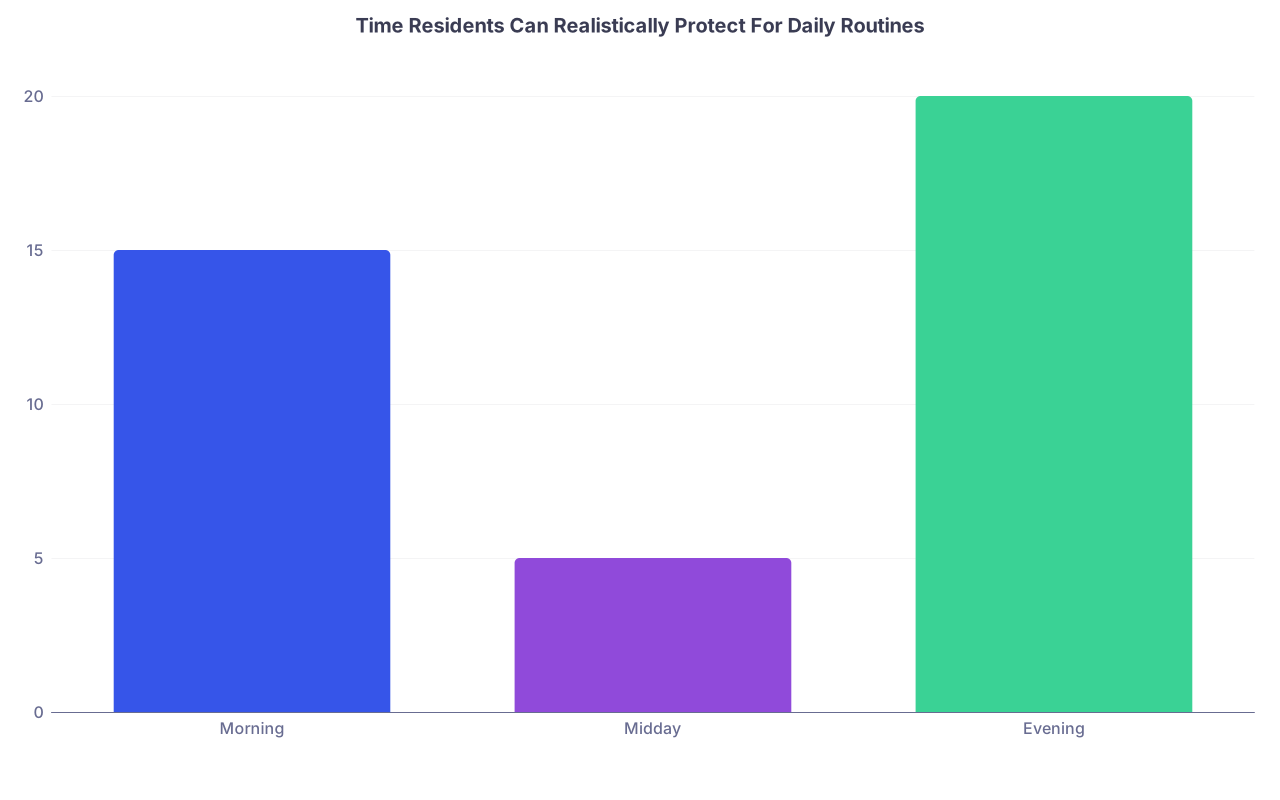
| Category | Value |
|---|---|
| Morning | 15 |
| Midday | 5 |
| Evening | 20 |
Most residents can reliably protect:
- 10–20 minutes in the morning
- 3–5 minutes midday (micro‑routines only)
- 15–20 minutes in the evening before total brain shutdown
Design around that. Not around fantasy.
17:30–22:30 – Evening Bookend (Normal Day, No Call)
You get home anywhere from 17:30 to 20:00. Your energy is not “tired.” It is shredded. You have decision fatigue, pager phantom vibrations, and chart‑note guilt.
If you do not design this block, the default is: shoes off → couch → phone → random snacking → half‑sleep → panic shower → bed → insomnia.
At this point in the evening, you should follow a simple three‑phase script:
- Decompress
- Do one small “future you” task
- Prepare for sleep and the next morning
Phase 1: First 20–30 Minutes At Home – Decompression
Door closes behind you.
0:00–2:00 – Transition ritual
Pick something you associate with “shift over” that is not your phone:
- Change out of scrubs immediately
- Quick shower if feasible
- Or at least wash face and hands like you mean it
2:00–10:00 – Low‑input unwind
This is not the time for Instagram. Your brain is junk. Give it quiet.
Options:
- Sit with a real drink of water or tea, not coffee
- Light snack (protein + carb, not just sugar)
- 3–5 minutes of stretching on the floor
- Brief conversation with someone you live with that does not involve venting for 45 minutes
If you are on a rotation with frequent late days, set a hard cap: decompression must end by 21:00 or one hour after you get home, whichever comes first. Otherwise it swallows your whole night.
Phase 2: 10–25 Minutes – “Future You” Block
This is the core of your evening routine.
At this point you should do one thing that will make tomorrow easier or your life outside residency slightly better. Not ten things.
Structure it as:
- 5–10 minutes: Personal life
- 5–10 minutes: Professional / learning
- 2–5 minutes: Logistics for tomorrow
Examples:
Personal (choose one):
- Start a laundry load
- Wash dishes for 5 minutes, then stop
- Call or text one friend or family member
- Journal three bullet points: “3 things that happened / 1 thing I learned / 1 thing I am grateful for”
Professional (choose one):
- Read one UpToDate article that came up today
- Watch one 5–10 minute video (EMCrit clip, surgical technique, etc.)
- Review one patient problem list for tomorrow’s sickest patient
Logistics (do every night, 2–5 minutes):
- Glance at tomorrow’s schedule (OR start time, clinic, conference)
- Lay out clothes / scrubs
- Pack badge, keys, pen, minimal snacks
- Set alarm and place phone away from the bed
This block is where your identity as a growing physician lives. Keep it short so you do it every day instead of cramming on your golden weekends.

Phase 3: Last 30–60 Minutes Before Bed – Downshift
Your body does not care that you “need” to fall asleep in 10 minutes. Physiology wins.
At this point you should be signaling “night mode” clearly.
- Screens: Hard stop on work email and EMR at least 30–45 minutes before bed
- Light: Dim lights, lamps instead of overhead
- Activity: Quiet, repetitive, low‑stakes
A simple pre‑sleep script:
- 5 minutes: Bathroom, floss, etc.
- 5 minutes: Light stretching or legs up on the wall
- 5–15 minutes: Reading something non‑medical (yes, a real book or a basic e‑reader with low light)
- 60 seconds: Quick look at your three priorities sticky note from the morning and mentally release whatever you did not get to
If you consistently go to bed wired, add a 5‑minute breathing exercise in bed:
- Inhale 4 seconds
- Hold 4 seconds
- Exhale 6–8 seconds
- Repeat until you get bored
Boredom is the point.
Call Days – Ultra‑Condensed Bookends
Call blows up all the nice structure. Fine. You still need minimal bookends or you will live in permanent fight‑or‑flight.
Morning of Call (Pre‑Call)
You might be starting at 05:30 and going until the next day. The morning routine here is cut to the bone.
At this point in the morning, you should aim for a 5–10 minute version:
- 1–2 minutes: Light + water
- 2–3 minutes: Micro‑movement (10 squats, arm circles, neck rolls)
- 2 minutes: One‑line check‑in and one priority (survival mode: “Keep patients safe and be kind”)
- 1 minute: Glance at call schedule and pack call bag (charger, snacks, an extra pair of socks)
That is it. No study goals. You are entering endurance mode.
During Call
You are not doing routines here. You are doing triage.
Your only “bookend” objectives:
- One 60‑second reset every few hours (bathroom break = 3 breaths + single stretch)
- One decent meal if humanly possible
- Keep caffeine from becoming a 02:00 disaster (last big dose before midnight if you expect to be up late)
Post‑Call “Evening” (Often Late Morning or Early Afternoon)
This is where people make huge mistakes. They either:
- Try to live a normal afternoon and destroy the next day, or
- Collapse without any plan and wake up at midnight, wrecked
You need a post‑call micro‑routine the moment you get home.
At this point (walking in the door post‑call), you should:
Reset (5–10 minutes):
- Quick shower or at least wash face and change clothes
- Small, light snack and water
- No phone scrolling
Decide sleep plan (2 minutes):
- If home before noon: Plan a 2–4 hour core nap, try to wake before 17:00
- If home after noon: Short 90‑minute nap, then early bedtime
Set one small anchor for waking up (30 seconds):
- Pre‑set coffee for later
- Put out something enjoyable (book, show queued up, simple meal ingredients)
Post‑call evening routine is minimal:
- Light movement (short walk, even 5–10 minutes outside)
- Easy food
- 5–10 minutes to glance at next day and prep clothes/bag
- Bed early, no guilt about “wasting” the day
Nights – Flipping the Bookends
Night float residents live in a different universe. Your “morning” is 16:00 and your “evening” is 08:00. The principles stay the same, the clock flips.
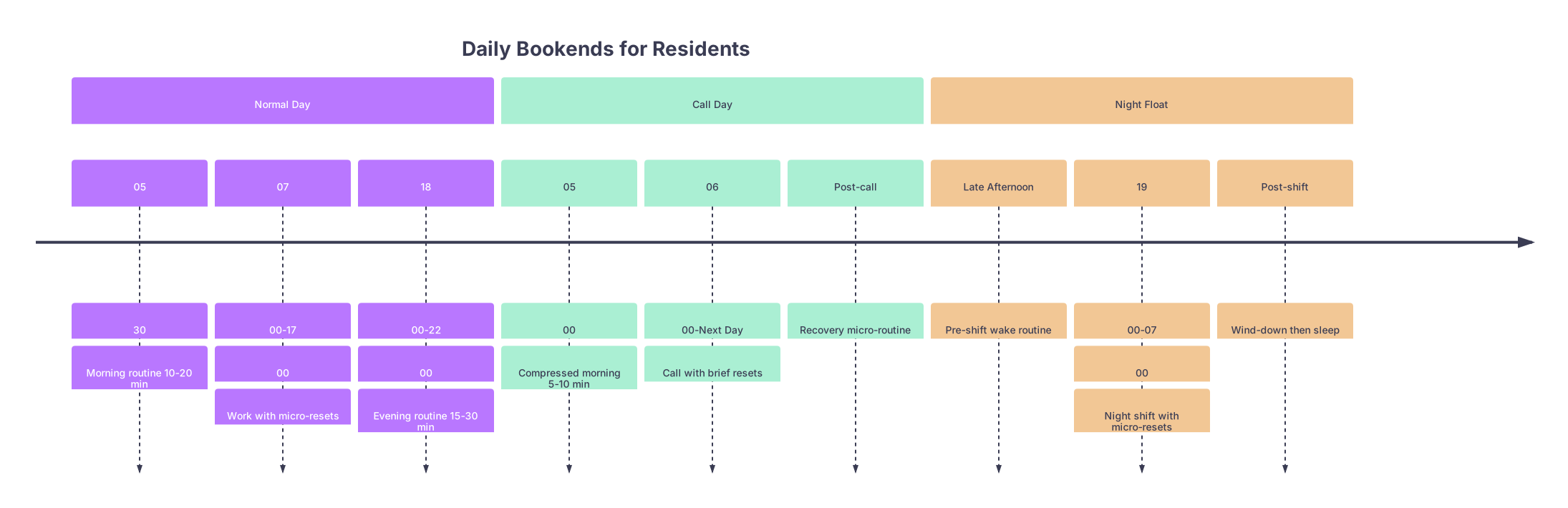
| Period | Event |
|---|---|
| Normal Day - 05 | 30 |
| Normal Day - 07 | 00-17 |
| Normal Day - 18 | 00-22 |
| Call Day - 05 | 00 |
| Call Day - 06 | 00-Next Day |
| Call Day - Post-call | Recovery micro-routine |
| Night Float - Late Afternoon | Pre-shift wake routine |
| Night Float - 19 | 00-07 |
| Night Float - Post-shift | Wind-down then sleep |
Pre‑Shift “Morning” (Late Afternoon)
You wake up at 15:30–16:00. Your “morning” bookend happens then.
At this point you should:
- Hydrate and get light exposure (go outside if you can)
- 5–10 minutes of movement
- 5 minutes to set three priorities (same format: clinical, learning, personal)
Resist the temptation to spend an hour on your phone before leaving. That energy will be gone at 03:00 when you desperately need it.
Post‑Shift “Evening” (Early Morning)
You leave the hospital at 07:30. You are tired but wired.
At this point you should:
De‑hospitalize (5–10 minutes at home):
- Shower
- Small, light snack if hungry
- Blackout curtains ready, room cool
Shortest possible “tomorrow” check (2 minutes):
- Confirm you do not have a random 14:00 mandatory meeting
- Adjust alarm accordingly
Sleep routine (10–15 minutes):
- No screens
- Simple downshift (stretch, breathing, dark room)
The same rules apply: tiny, consistent rituals that tell your nervous system, “We are off duty now.”
Weekends – Upgraded Bookends
Golden weekends are where residents try to cram an entire life into 36 hours and end up more exhausted. Use them to run your “extended” bookends instead.
Weekend Morning Routine (20–30 Minutes)
At this point, with more time, you should:
- Keep the same skeleton: wake, move, mental setup
- Add:
- 10–15 minutes of real exercise
- Longer reflection or journaling (what is working in residency, what is not)
- A weekly planning pass for your upcoming rotations, calls, conferences
Weekend Evening Routine (20–30 Minutes)
Use it to zoom out a bit:
- Quick review: “What did I actually do this week?”
- Identify one habit that failed (e.g., always skipping the 3‑minute morning movement on surgery) and adjust the routine instead of blaming yourself
- Short connection time with someone outside medicine
This is also the time to batch errands so your weekday evening bookends stay protected.

Putting It All Together: A Simple Daily Checklist
You do not need another 12‑page planner. You need one card in your pocket.
Print or write this once. Use it as a scaffold until it is muscle memory.
Morning (normal day)
- Light + water (3 minutes)
- 3–7 minutes of movement
- One‑line mood check
- 3 priorities (clinical, learning, personal)
During work
- 1 midday reset (3 breaths + “next right task”)
- Quick priority check between 15:00–16:00
- Start closing mental loops in the last hour
Evening
- Decompress (clothes change, wash, snack, no phone first 10 min)
- One personal task
- One professional / learning task
- Prepare clothes/bag and check tomorrow
- 30–60 minute downshift before sleep
For call, post‑call, and nights, run the smallest possible version: 5–10 minutes total at each bookend. That still counts. That still works.
Key Takeaways
- Build short, repeatable bookends for morning and evening, then create compressed versions for call, post‑call, and nights.
- Protect micro‑moments during the day so your evening routine is not constantly sacrificed to chaos.
- Judge your routines by one metric: Can I do this on my worst rotation? If yes, keep it. If not, shrink it until you can.