
The worst way to do night float is to “just see how it goes.”
You need a plan, and you need it before your circadian rhythm gets demolished.
I’m going to walk you through a practical, time-based playbook: what to adjust before, during, and after night float so you do not crawl out the other side wrecked for a month.
Big-Picture Night Float Timeline
Let’s anchor the whole block first.
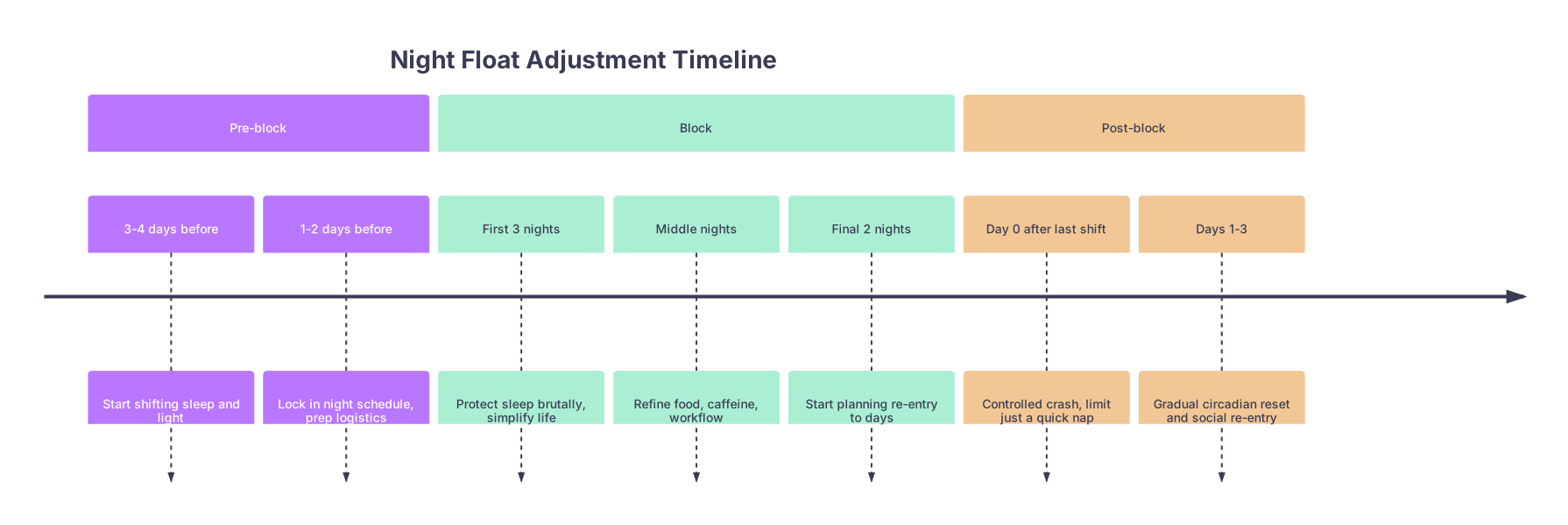
| Period | Event |
|---|---|
| Pre-block - 3-4 days before | Start shifting sleep and light |
| Pre-block - 1-2 days before | Lock in night schedule, prep logistics |
| Block - First 3 nights | Protect sleep brutally, simplify life |
| Block - Middle nights | Refine food, caffeine, workflow |
| Block - Final 2 nights | Start planning re-entry to days |
| Post-block - Day 0 after last shift | Controlled crash, limit just a quick nap |
| Post-block - Days 1-3 | Gradual circadian reset and social re-entry |
We’ll zoom into each phase with specific “at this point you should…” actions.
3–4 Days Before Night Float: Start the Shift
At this point you should stop pretending you’ll ‘adjust on night one.’ That’s how people end up crying in the stairwell at 3 a.m.
Sleep & Light: Begin the Drift, Not a Flip
Aim: push your sleep and wake times later in 1–2 hour chunks.
3–4 days before:
- Go to bed 1–2 hours later than usual.
- Wake up 1–2 hours later than usual if your schedule allows (days off are best for this).
- Late afternoon: get bright light (walk outside, no sunglasses if safe).
- After 9–10 p.m.: dim lights, minimize screens or use blue-light filters.
2 days before:
- Bedtime now 2–3 hours later than usual.
- If you normally sleep 11 p.m.–6 a.m., aim for ~1–2 a.m. to 8–9 a.m.
- Start treating mid-late afternoon like your “morning” in terms of energy and activity.
Do not go straight to a vampire schedule yet. Just nudge the clock.
Caffeine: Pull It Earlier
At this point you should stop drinking caffeine after mid-afternoon.
- Last caffeine by ~3–4 p.m.
- You want your adenosine system to be responsive when you hit real nights.
- Cutting it late in the day now makes night-shift caffeine hit harder when you need it.
Logistics & Life Setup
You’ll work better at 3 a.m. if your non-work life is boring and automated.
3–4 days before, you should:
Food prep:
- Prep 2–3 “grab and go” meals you can eat cold or microwave quickly.
- Think: burrito bowls, pasta + protein, cut veggies/hummus, pre-cooked chicken, oatmeal packs.
Groceries: buy enough for the whole block + 2 days after. You won’t want to shop tired.
Clothes:
- Set aside enough clean scrubs/undershirts/socks for the entire run.
- Put them in one easy-to-grab spot. You do not want to be hunting for socks at 6:30 p.m.
Home setup for sleeping during the day:
- Blackout curtains (or trash bags + painter’s tape—yes, really).
- White noise machine or fan.
- Eye mask and foam earplugs as backup.
Talk with cohabitants (partner, kids, roommates):
- “From X to Y I’m asleep. No loud calls, no vacuum, no knocking unless the house is on fire.”
1 Day Before Night Float: Trial Run Night
Now you stop being casual. Treat this like night zero.
At this point you should do a mini-night shift at home.
Daytime Sleep Rehearsal
If your first night shift is, say, 7 p.m.–7 a.m.:
- Sleep from 2–9 p.m. if you can (or as much as you manage).
- If you can’t fall asleep that long:
- 1–2 p.m.: dark room, in bed, eye mask, no phone.
- Even 2–3 hours is better than nothing.
Evening Routine
From ~9–11 p.m.:
- Get up, light snack, bright light in the apartment.
- Move your body a bit: walk, light stretching, nothing intense.
- Do some mentally engaging but low-stress activity: read, low-key show, light studying.
You’re teaching your brain: awake and functional at midnight is normal.
Night Float: First 3 Shifts – Survival Mode
This is where most residents crash because they treat the first few nights like a “one-off.” They are not. Your system is in shock.
At this point you should simplify everything and protect sleep like a code blue.
Before Each Shift (First 3 Nights)
Typical night: 7 p.m.–7 a.m. Adjust times for your schedule, the pattern is the same.
12–1 p.m.: wake-up window
- Get out of bed. No snooze war.
- Bright light immediately (open curtains, step outside).
- Hydrate. Full glass of water before coffee.
1–3 p.m.: “Morning” block
- Light meal (protein + complex carbs, minimal sugar).
- Short walk or light workout if your body allows.
- Avoid heavy admin: bill paying, argument with partner, etc. Keep emotional load low.
3–5 p.m.: prep block
- Pack:
- 1–2 full meals, 1–2 high-protein snacks.
- Water bottle you will actually drink from.
- Minimal caffeine source (1–2 doses—coffee, tea, energy drink).
- Quick review:
- Check sign-out structure.
- Look at typical overnight cross-cover issues for your service.
- Mentally rehearse: sepsis at 2 a.m., chest pain page, rapid AF, delirium patient pulling lines.
5–6 p.m.: low-stress wind-up
- Light dinner (don’t do a massive, greasy meal).
- 10–15 minutes of quiet time. No doomscrolling.
During the Shift: Hour-by-Hour Priorities
At this point you should structure your night deliberately, not just “see patients as they come.”
7–9 p.m.: Get Control Early
- Fast but thorough sign-out.
- Immediately:
- Prioritize sickest and most unstable patients.
- Skim key results that may explode on you (late CTs, new labs).
- Set rules with nurses (kindly, clearly):
- “If BP < X / MAP < Y, please page right away.”
- “For pain or sleep med refills, batch pages when possible.”
9–11 p.m.: Front-load Work
You want to be ahead before your circadian trough hits.
At this point you should:
- Clean up:
- Finish admissions already in the pipeline.
- Write prelim notes early when you can.
- Put in overnight orders proactively (PRNs, bowel regimens, DVT ppx, sleep meds if appropriate).
- Quick recheck on sick patients:
- Labs, vitals trend, fluid balance.
Try to avoid saving all your notes for 4–6 a.m. That’s when your brain is mush.
11 p.m.–1 a.m.: Caffeine Window #1
This is a good time for your first real caffeine dose if you need it.
- Light snack + caffeine.
- Doesn’t have to be huge—think 8–12 oz coffee or equivalent.
- Avoid chugging a liter of energy drink. You will feel like hot trash at 6 a.m.
1–3 a.m.: Circadian Trough #1
This is the danger zone.
At this point you should:
- Do active tasks, not passive ones:
- Walk to see patients rather than sitting and scrolling notes.
- Chart standing up if possible.
- If it’s inexplicably quiet (rare, but it happens):
- 10–15 minute power nap in a safe space is fine if culture allows.
- Set two alarms and tell a trusted nurse where you are.
- Zero social media rabbit holes. You’ll lose 45 minutes and still feel awful.
3–5 a.m.: Caffeine Window #2 (Maybe)
If you’re really fading and you need a second hit:
- Keep it small: half coffee, tea, or a smaller dose.
- Try to avoid caffeine after ~4 a.m. if you plan to sleep by 9–10 a.m.
- Snack: protein + a little carb. No giant bag of candy.
Use this window to:
- Finish any remaining documentation.
- Pre-write portions of AM sign-out.
- Do a last sweep:
- Any labs pending?
- Any “soft” blood pressures getting worse?
- Any delirious patient escalating?
5–7 a.m.: Handoff Prep
At this point you should be transitioning, not starting big tasks.
- 5–6 a.m.:
- Final checks on sickest patients.
- Medium brevity: one last set of vitals, re-exam if you’re worried.
- 6–7 a.m.:
- Clean, concise sign-out:
- One-liner.
- Overnight events.
- Today’s crucial “to-do” items.
- Clear if-then statements: “If X, then Y.”
- Clean, concise sign-out:
Hand off and get out. Lingering to “help” with rounds destroys your sleep and impresses no one long-term.
After Each Shift (First 3 Nights): Immediate Recovery
You walking out at 7:30 a.m. is not “free time.” It’s your bedtime routine.
At this point you should:
7:30–8:30 a.m.: controlled wind-down
- Drive/public transit home without loud, aggressive music or podcasts.
- Quick, light breakfast if you want: yogurt, eggs, toast. Not a 900-calorie feast.
- Block blue light:
- Sunglasses outside.
- Avoid bright overhead lights once home.
8:30–9:30 a.m.: sleep prep
- Same short routine every day:
- Brush, shower if helpful.
- Dark room, white noise.
- Phone on “Do Not Disturb,” face down, across the room.
Target: anchor sleep roughly 9 a.m.–3 p.m. at minimum.
Do not tell yourself, “I’ll just lie down for a bit and then go to the gym.” You won’t.
Middle of the Block: Stabilize and Optimize
Once you’ve survived the first 3–4 nights, your brain stops panicking. This is when you refine.
At this point you should:
Lock in a Consistent Sleep Window
Your circadian system likes predictability. Even on “days off” in the middle of a night block:
- Do not flip fully back to days.
- Modify slightly:
- Sleep, say, 4 a.m.–noon or 6 a.m.–2 p.m.
- Stay awake until at least 1–2 a.m.
You want to stay closer to night-mode to avoid re-adjusting all over again.
Food & Caffeine: Watch the Patterns
By now, you know when you crash hardest.
Common pattern:
- Mental wall: 2–4 a.m.
- GI rebellion: big meal at midnight → reflux and nausea by 3 a.m.
At this point you should:
- Move heavier meals earlier (8–10 p.m.).
- Use snacks only overnight:
- Nuts, cheese sticks, yogurt, fruit, protein bar.
- Cap caffeine at 3–4 a.m. latest.
If you’re getting home “tired but wired,” review your last 4 hours:
- Too much caffeine?
- Too much blue light?
- Arguing in the group chat at 5:30 a.m.?
Final 2 Shifts: Planning the Exit
Most people ignore re-entry. Then they’re zombies for a week on days.
You’re smarter than that.
At this point you should design your transition back to days like a mini jet-lag plan.
Night -1 (Second-to-Last Shift)
Do your usual routine with one change:
- Try to wake up 1–2 hours earlier than usual that afternoon.
- You’ll be a bit more tired at the end of the shift, which is good for the reset.
Immediately After the Last Night: The “Bridge Day”
This 24-hour period makes or breaks your recovery.
Morning After Final Shift
At this point you should not go straight into a “normal day.”
Plan:
- After shift (7–9 a.m.):
- Light breakfast.
- Short, controlled sleep: 2–4 hours max.
- Example: 9 a.m.–12 or 1 p.m.
Set alarms. Multiple. If you oversleep to 5 p.m., you’re stuck in night mode.
Afternoon & Evening of Bridge Day
Once you wake from that short nap:
1–5 p.m.: forced wakefulness
- Get bright natural light. Go outside.
- Gentle movement: walk, light chores.
- Keep yourself upright and engaged but not miserable.
- No napping “just for 20 minutes.” They morph into 2 hours.
5–9/10 p.m.: early evening wind-down
- Normal dinner time.
- Low-stimulation activities.
- Aim for bed by 9–10 p.m. local time.
You will feel like death around 5–7 p.m. You’ll want to lie down. Fight it. That wall is exactly what resets you.
Days 1–3 After Night Float: Full Reset
At this point you should be back on days but gentle with yourself.
Day 1 After Bridge
- Wake at a normal-ish time: 6–8 a.m.
- Get light exposure early.
- Keep naps either:
- 20–30 minutes max, before 3 p.m.
- Or avoid them entirely if you can.
Socially, you’ll be behind. Texts, emails, life stuff piled up. Do not schedule a full social calendar plus errands plus workouts here. Pick one major task only.
Days 2–3
Now you’re mostly reset.
At this point you should:
- Return to your usual workout routine slowly:
- Half intensity or half duration for the first couple of sessions.
- Watch your mood:
- Post-night float blues are common.
- Short fuse, mild anhedonia, or brain fog are not you “being weak.” They’re physiology catching up.
- If you’re still wrecked by day 4–5:
- Review your schedule for the next block.
- Protect one full night of 8+ hours, no exceptions.
Quick Comparison: What Changes Before, During, After
| Phase | Sleep Strategy | Caffeine Timing | Light Exposure Focus |
|---|---|---|---|
| 3–4 days before | Gradual delay 1–2 hours | Cut after mid-afternoon | Increase late-day light |
| During block | Anchor 9 a.m.–3 p.m. core | 11 p.m.–3 a.m. only | Bright on waking, dim post-shift |
| Bridge day | Short nap 2–4 hours | Minimal or none | Max daytime, avoid evening |
| Days 1–3 after | Normal nights, no late naps | Normal daytime use | Morning light to lock schedule |
One Week Snapshot: Example Night Float Schedule
Just to make this concrete, here’s how a 7-night block could look.
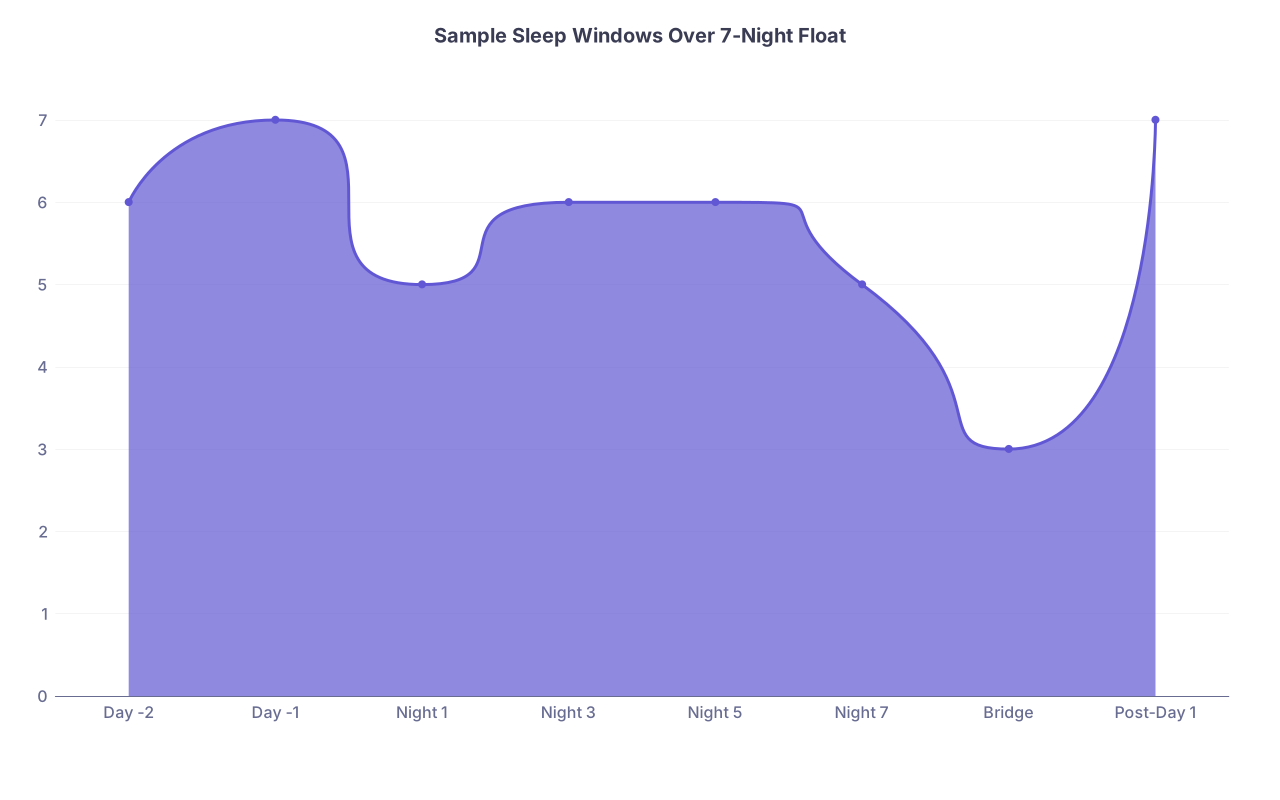
| Category | Value |
|---|---|
| Day -2 | 6 |
| Day -1 | 7 |
| Night 1 | 5 |
| Night 3 | 6 |
| Night 5 | 6 |
| Night 7 | 5 |
| Bridge | 3 |
| Post-Day 1 | 7 |
- Values are hours of main sleep, not counting tiny naps.
- Notice: you don’t chase 8 perfect hours every day. You chase adequate and consistent.
Tiny Habits That Make Nights Less Brutal
Scatter these through the block:
- Pre-written order sets in your brain:
- Sepsis: fluids + cultures + broad-spectrum ABX + source control thoughts.
- Mild alcohol withdrawal: CIWA orders + benzo protocol + thiamine.
- Default scripts for pages:
- “Can you tell me: vitals trend, mental status change, urine output in last 8 hours?”
- Micro-break rule:
- Every 2–3 hours, stand, stretch, drink water. Even 90 seconds helps.
And yes, take 10 seconds before you respond snappily at 4 a.m. You’re tired. So is everyone else.
Visual: Emotional Energy Over a Night Float Block
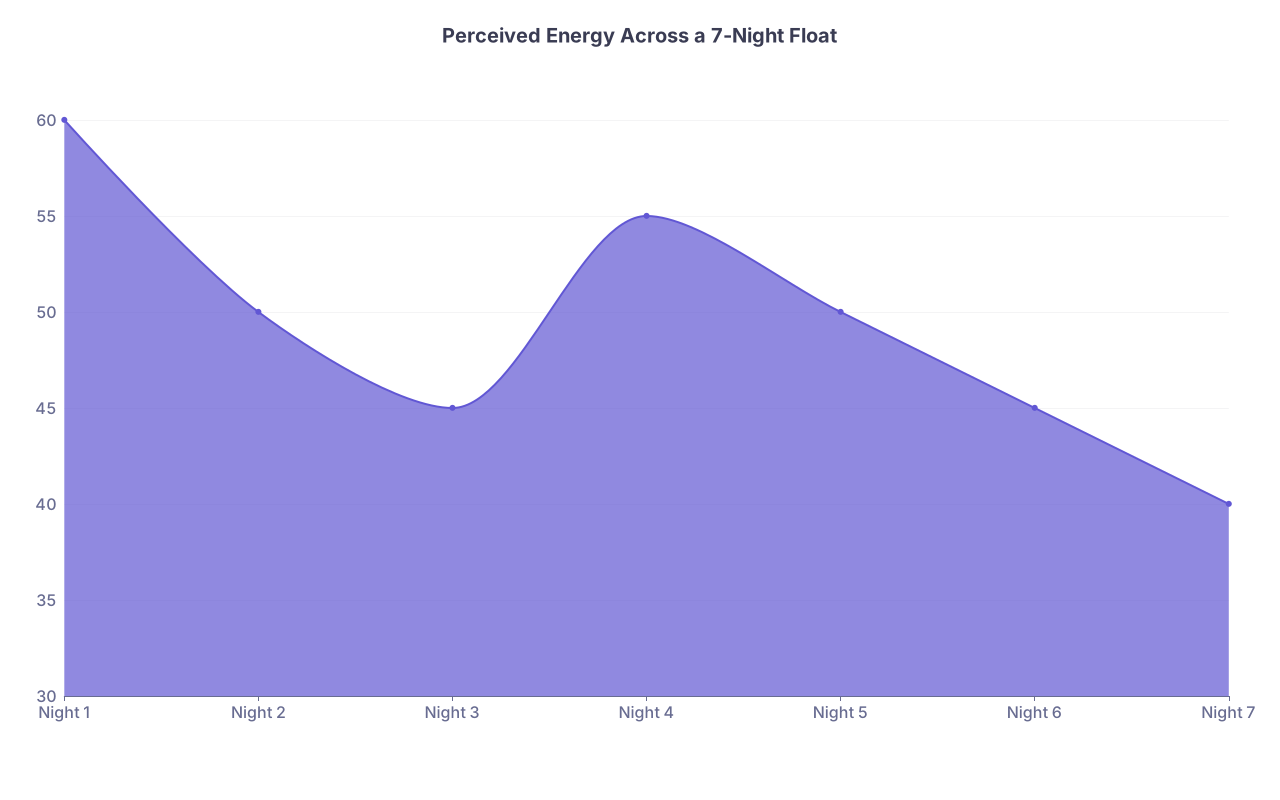
| Category | Value |
|---|---|
| Night 1 | 60 |
| Night 2 | 50 |
| Night 3 | 45 |
| Night 4 | 55 |
| Night 5 | 50 |
| Night 6 | 45 |
| Night 7 | 40 |
You’ll never feel amazing on night 6. The goal is functional and safe, not heroic.
Final Checklists by Phase
24 Hours Before First Night
At this point you should have:
- Blackout room setup tested.
- Groceries and 2–3 days of meals ready.
- Clear expectations at home (“I sleep from X–Y.”).
- One consistent sleep target for the block (e.g., 9 a.m.–3 p.m.).
Each Shift
You should be:
- Eating something before midnight.
- Limiting caffeine to 1–2 hits, none after ~4 a.m.
- Doing at least one structured sweep of sick patients between 2–5 a.m.
- Leaving on time post-sign-out unless the house is literally on fire.
After the Block
You should:
- Plan a controlled 2–4 hour nap the morning after.
- Force yourself to stay up until 9–10 p.m. that bridge day.
- Reserve the next day for low-demand tasks only.
If You Remember Nothing Else
- Night float is a circadian problem, not just a stamina problem. Shift your sleep and light on purpose before, during, and after.
- Protect post-shift sleep and the bridge day like they’re part of your job. Because they are—tired you is a dangerous you.
- Front-load work and decisions early in the night; survive the 1–4 a.m. window with structure, not willpower.
You cannot make night float pleasant. But with the right timeline, you can make it survivable—and walk back onto days without feeling like you aged five years.