
It is Friday at 4:30 p.m. Your last inpatient note is signed, you clicked “handoff complete,” and your co-resident just said the magic words: “Enjoy your week off.”
You walk out of the hospital feeling weirdly hollow. No pager. No sign-out. Just…space.
This is where most residents blow it.
They either:
- Cram the week with flights, weddings, and family obligations.
- Or collapse on the couch, scroll, DoorDash, and emerge seven days later feeling somehow more tired.
You get about 4–6 weeks of vacation per year. Most residencies will take every ounce of your energy and then ask for more. A vacation week is not a bonus. It is survival infrastructure.
Here is a chronological blueprint: what to do the week before, day by day during, and the weekend after so that by the time you walk back into the hospital, your brain, body, and life are actually better than when you left.
One Week Before Vacation: Set Up the Win
At this point, you are still on service. You are tired and tempted to “just get through” to vacation. Do not. The prep work you do now determines whether your week off is restorative or chaotic.
Goals for the week before:
- Tie up loose ends that will invade your vacation
- Protect the first 48 hours off
- Set realistic expectations with work, family, and yourself
Focus on these tasks between T–7 days and T–2 days before vacation starts.
Lock in one priority for the week off
Not five. One.
Examples:- Recover physically
- Reset sleep and exercise
- See family / partner and actually be present
- Do one life admin project (moving, visas, car stuff)
Everything else is optional. One clear priority filters decisions later when FOMO hits.
Defend the first 24 hours of vacation
This is non-negotiable recovery time.- Say no to early Saturday flights if you finish a Friday call.
- If your family wants you at a Sunday brunch after a 24-hour shift, you say: “I can come, but not before 11 a.m.”
- Do not schedule dental, therapy, or PCP appointments the first morning off. Move them to midweek.
Pre-negotiate with your future self
You will be tempted to “catch up on research / readings / presentations” while off. Decide now how much is acceptable:- “Maximum 2 hours total on research this week.”
- “I will not open my hospital email.”
Actually write this rule down in your Notes app.
Boundary-setting with your team and program
- Tell your co-residents: “I will be off-grid; text only for urgent, can’t-wait stuff.”
- Turn off email notifications. Remove hospital email from your phone if you can.
- Confirm you are not on jeopardy or backup status for that week. If you are, clarify expectations.
Basic logistics
- Refill essential meds for the next 30–45 days.
- Make sure paycheck timing and bills are auto-pay.
- If traveling:
- Avoid red-eye flights at the start or end
- Leave buffer: do not land at 10 p.m. the night before a 6 a.m. start
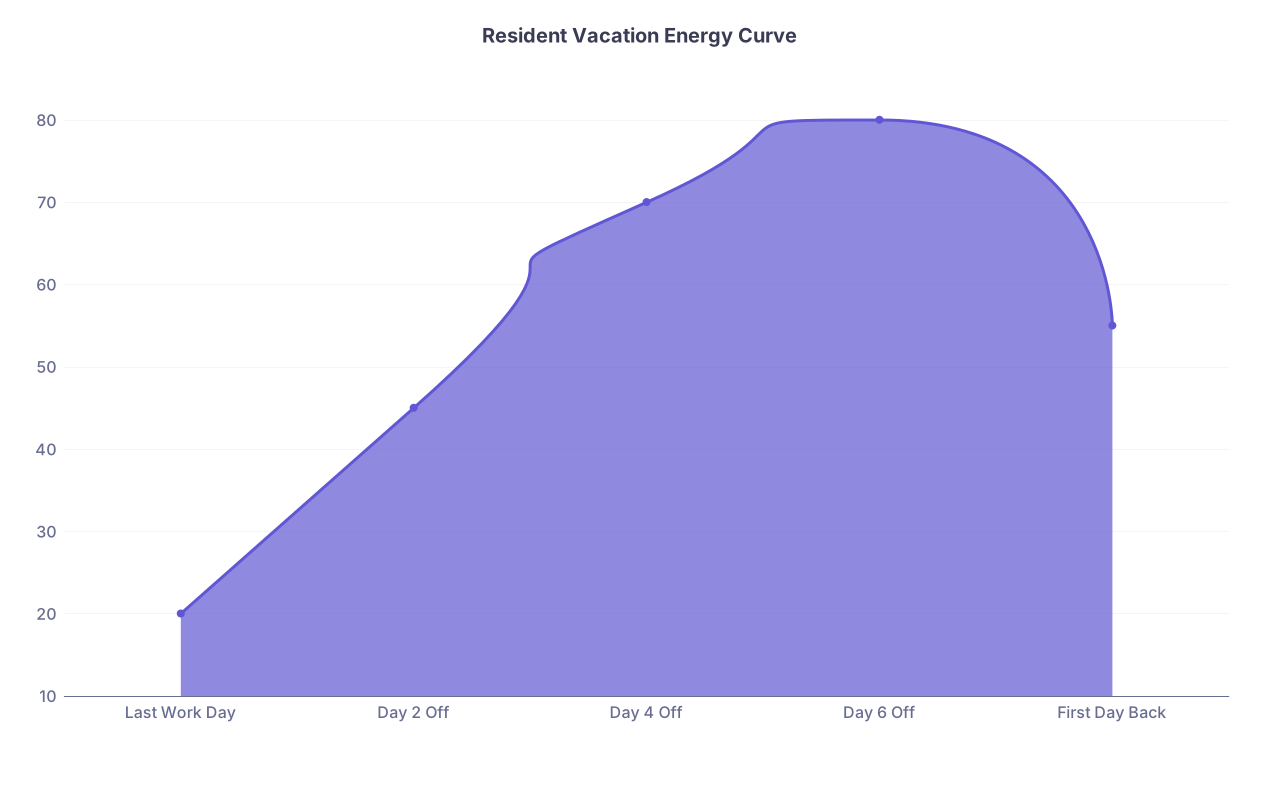
| Category | Value |
|---|---|
| Last Work Day | 20 |
| Day 2 Off | 45 |
| Day 4 Off | 70 |
| Day 6 Off | 80 |
| First Day Back | 55 |
Energy is lowest the day you finish and highest around day 5–6. Plan around that curve.
Day 0–1: The Decompression Window
Vacation starts the moment your last shift ends. That first evening and next day are for one thing: decompression. Not productivity. Not travel heroics.
Evening of Last Shift (Day 0)
At this point, you should land the plane:
- Go straight home. Avoid “let’s grab drinks” impulsive plans. You are too depleted to enjoy them.
- Shower like you are washing off the block. Hot water, long, slow.
- Eat something simple and real:
- Soup and bread, omelet, rice and vegetables. Not a giant greasy takeout feast that wrecks your stomach.
- Light, mindless activity:
- One episode of something comforting
- Low-stakes YouTube
- 15–20 minutes of stretching if your back has been screaming all month
Then: early bed. Even if you “are not tired.” Your circadian rhythm has been brutalized. Start the reset now.
Day 1: “Nothing Productive” Day
This is the day residents routinely ruin by overscheduling. Your only job is to let your nervous system drop a gear.
Your schedule should look embarrassingly simple:
Morning
- Sleep until you wake up without an alarm. If that is 10–11 a.m., so be it.
- Hydrate: two full glasses of water before coffee. Your kidneys have suffered.
- Light movement, not a “comeback workout”:
- 20–30 minutes walking outside
- Gentle yoga
Midday
- Simple errands that do not require brainpower:
- Laundry
- Clean sheets on bed
- Run dishwasher
- Eat an actual lunch at a table, not over a laptop. Phone in another room for 20 minutes.
Afternoon / Evening
- Have one pleasant, low-stimulation activity:
- Long shower and skincare
- Read 20–30 pages of fiction
- Sit in a park
- Social interaction: max one plan. Coffee with partner/friend, or family dinner. Do not stack multiple events.
You should go to bed this night feeling slightly bored. That is good. That boredom is your nervous system finally exhaling.
Day 2–3: Physical Reset and Life Baseline
At this point, you should shift from “stop the bleeding” to “start rebuilding.” Energy is better, brain is clearer, but you are not at 100 percent.
Core goals for these two days:
- Normalize sleep
- Calm your body down
- Get your life out of chaos mode
Sleep Reset
- Fixed wake time: choose a wake time you want for the next block (e.g., 7–8 a.m.) and set it Day 2 and Day 3.
- No screens in bed. Brutally cliché, but you need real sleep depth this week.
- Short nap allowed:
- 20–30 minutes, before 3 p.m., if you are dragging. Not a 3-hour coma at 5 p.m.
Move your body, but do not punish it
You have two months of neglected joints and muscles. Fix that, slowly.
- Day 2:
- 30–40 minutes brisk walking or light cycling
- 10 minutes of stretching: hip flexors, hamstrings, thoracic spine
- Day 3:
- Add light strength:
- 2–3 sets each: squats, pushups (or wall pushups), rows (resistance band)
- Keep it easy. Soreness defeats the purpose.
- Add light strength:
Life Admin: 2–3 Hour Block Max
You probably have a backlog: DMV, apartment issues, visas, taxes, license renewal, whatever.
Pick one 2–3 hour block on either Day 2 or 3:
- Make a quick list of 5–7 tasks that are bugging you.
- Circle the top 3.
- Do those only. The rest roll forward.
You are clearing mental debt, not optimizing your life.

Day 4–5: Connection and Meaningful Enjoyment
Now your energy is up. This is when you are most at risk of overscheduling. Resist the urge to make up for an entire year of neglect in 48 hours.
At this point, you should lean into what actually fills you instead of what looks good on Instagram.
Social and Relationship Time
Pick 1–2 key people and be intentional:
- Partner:
- Half-day “date” — brunch and a walk, or museum and early dinner. Phones away.
- Talk openly: “What do you need from me in the next 2–3 months while things are crazy?”
- Close friend:
- Unhurried coffee, long walk, or board games evening.
Skip:
- Massive group events that drain you.
- Back-to-back social days with no quiet time.
Hobbies and Joy, Not Projects
Do something that reminds you you are a person, not just a provider.
Examples:
- Play an instrument for 30–60 minutes.
- Cook one real meal from scratch while listening to something you like.
- Read a book that has nothing to do with medicine.
- Hike or spend several hours outdoors.
Wrong move: starting a giant new project (“I will repaint the whole apartment this week”). That is not recovery. That is unpaid labor with worse lighting.

Travel vs Staycation: Where to Put It in the Week
You can travel on vacation and still recover. You just have to stop treating it like a college spring break.
Here is how I have seen it work best.
| Option | Best Timing | Key Rule |
|---|---|---|
| Short trip | Days 3–5 | Buffer days before and after |
| Longer trip | Days 2–6 | Low-intensity itinerary |
| Staycation only | Days 1–7 | Themed days (rest/admin/fun) |
If you travel
- Do not leave the morning after a 24-hour or brutal stretch. Give yourself Day 1 at home.
- Keep the itinerary light:
- 1 main activity per day (beach, museum, trail).
- No 7 a.m.–10 p.m. “see everything” mentality.
- Protect sleep and meals:
- Commit to at least 7 hours of sleep nightly during travel.
- Do not rely entirely on airport food and snacks. Your gut and mood pay the price.
If you stay home
Theme the days. It stops the “I wasted my week” feeling.
Example:
- Day 1: Total rest and reset
- Day 2: Life admin + light workout
- Day 3: Social / family day
- Day 4: Hobbies and outdoors
- Day 5: One errand / one fun thing
- Day 6: Prep for return, early night
- Day 7: Light day, emotional ramp-up
Subclinical Work: How Much Is Okay?
Residents ask this a lot: “Can I use vacation to catch up on research or reading?”
My answer: yes, but cap it. Hard.
At this point in the week (usually around Day 3–5), you may feel guilt about doing “nothing.” Avoid one of two extremes:
- Zero engagement with professional growth, then panic later.
- Turning vacation into unpaid, unscheduled work block.
Reasonable middle ground:
- Max 2–4 hours total of “career maintenance” for the entire week.
- Never in the first 24 hours.
- Never on the last 24 hours.
Examples:
- Skim one review article related to your interest.
- Outline a draft for a case report.
- Send 2–3 emails you have been procrastinating.
You stop the second you feel your chest tighten or your brain spiral back into “I am behind” mode.
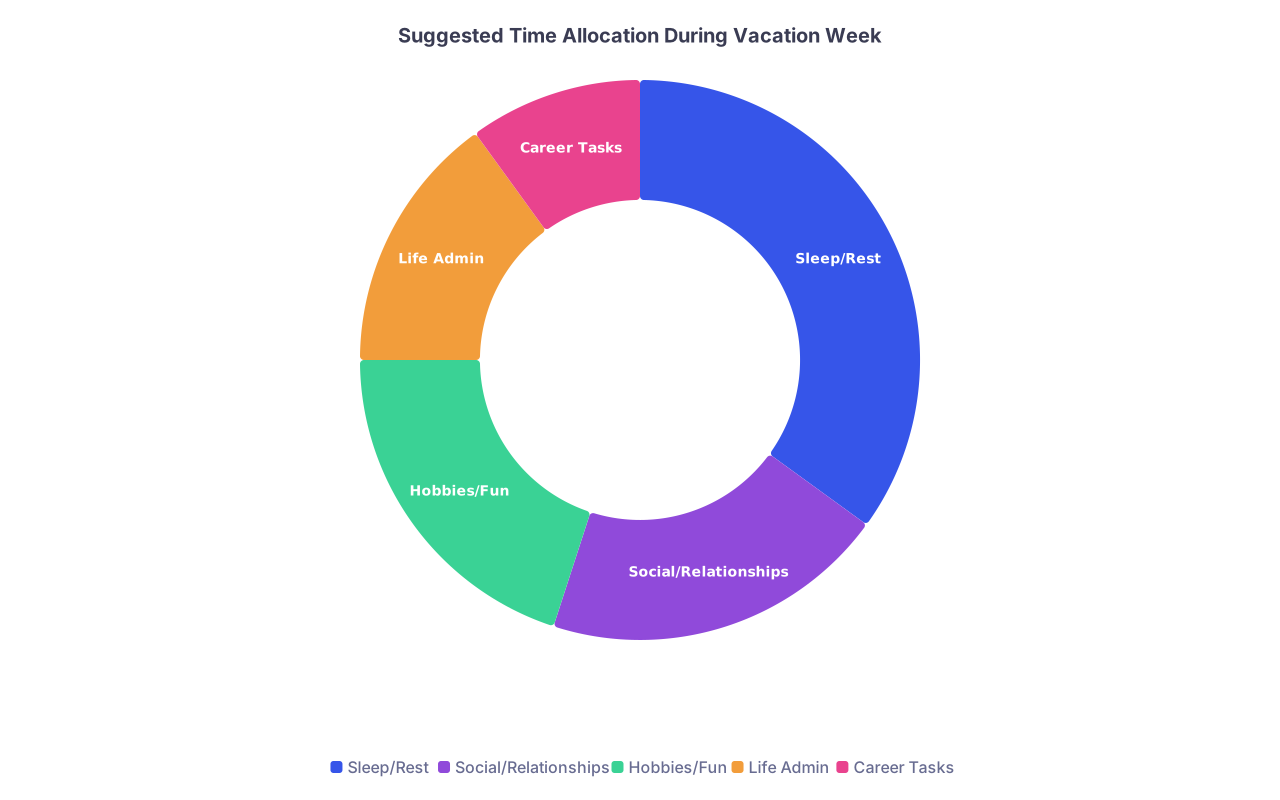
| Category | Value |
|---|---|
| Sleep/Rest | 35 |
| Social/Relationships | 20 |
| Hobbies/Fun | 20 |
| Life Admin | 15 |
| Career Tasks | 10 |
Day 6: Gentle Re-entry and Future-Proofing
You are not back yet, but you should start turning toward the upcoming block instead of pretending it is not coming.
At this point, you should spend 1–2 hours setting up your future self.
Practical setup
- Check your schedule for the next block:
- Start time and location
- Pre-round expectations
- Any required modules / checklists
- Meal basics:
- Cook or buy enough for the first 2–3 days back. Even just pre-cut vegetables, pre-cooked protein, and microwave rice.
- Clothes and gear:
- Clean scrubs / work clothes ready
- Badge, stethoscope, pens, small notebook in one place
Mental setup
Spend 15–20 minutes with a notebook or note app:
- Write 3–4 bullet points about:
- What helped you feel better this week?
- What you want to keep during the next block (e.g., “10-minute walk after call,” “no phone in bed,” “one guilt-free off day per week”).
- Pick 1–2 non-negotiables for next block:
- “I will do at least two 20-minute walks per week.”
- “I will protect one dinner with my partner weekly.”
This is not some idealistic life overhaul. It is installing small, realistic habits you can actually sustain on wards, ICU, or nights.

Day 7: The Ramp-Up Day
This is the day before you go back. Most residents either:
- Ignore it and feel dread all day
- Fill it with last-minute everything and feel wrecked the next morning
You will do something different: calm, light, and deliberate.
Morning
- Wake at the time you need for the next day (or 30–60 minutes later at most).
- 20–30 minutes walk or light exercise. Move your body, but do not crush it.
- Look at the coming week once. Confirm you know:
- Start time
- Transit / parking
- Any call or night shifts early that week
Then close the scheduling apps.
Midday
- One small enjoyable thing:
- Lunch at a place you like
- Coffee with a friend or partner
- An hour of reading, gaming, or a show
Nothing that runs late. Nothing that needs recovery.
Evening
- Layout:
- Clothes ready
- Bag packed
- Food in fridge
- Set alarms (with backup).
- 10–15 minutes of quiet – no screen:
- Breathing exercise, journaling, or just sitting in silence.
- Bedtime: aim to be in bed 8 hours before wake time, even if you do not fall asleep immediately.
You should go to sleep with mild nerves, not full-blown dread. Nerves are normal. Exhaustion is optional.
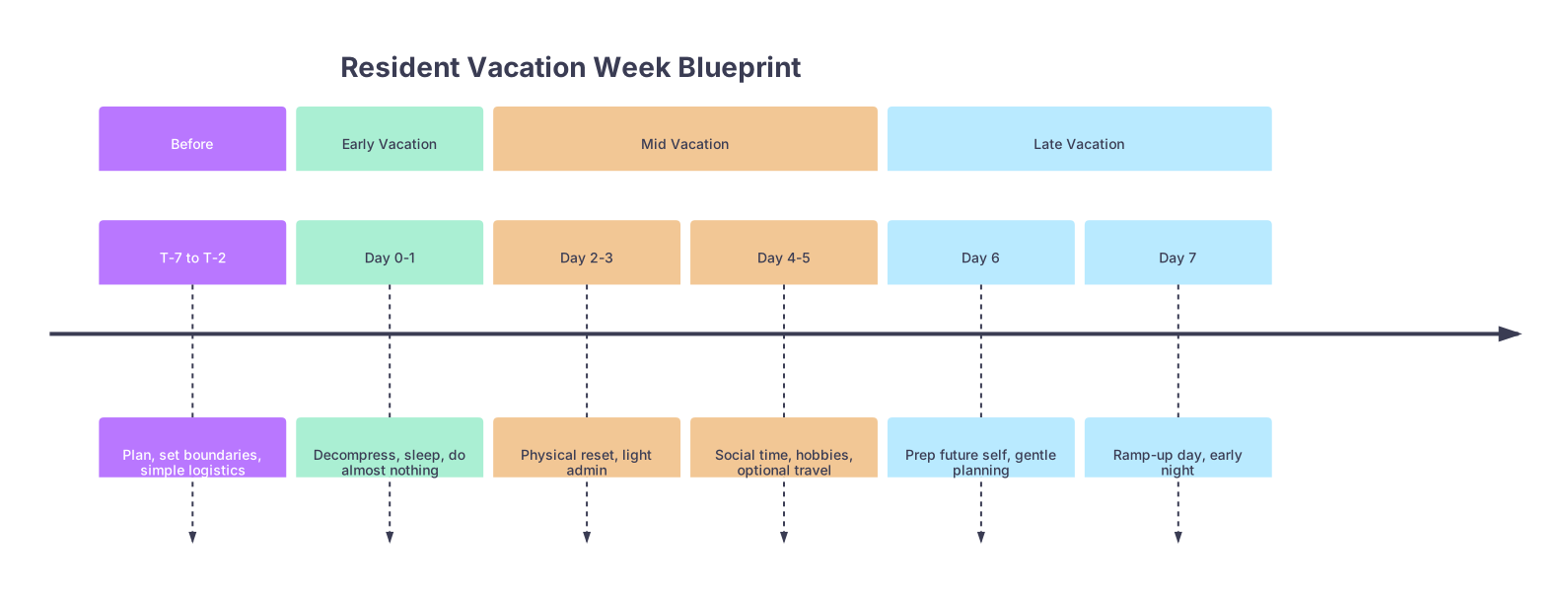
| Period | Event |
|---|---|
| Before - T-7 to T-2 | Plan, set boundaries, simple logistics |
| Early Vacation - Day 0-1 | Decompress, sleep, do almost nothing |
| Mid Vacation - Day 2-3 | Physical reset, light admin |
| Mid Vacation - Day 4-5 | Social time, hobbies, optional travel |
| Late Vacation - Day 6 | Prep future self, gentle planning |
| Late Vacation - Day 7 | Ramp-up day, early night |
FAQ (Exactly 4)
1. What if my “vacation” week is mostly taken by travel for a wedding or family event?
Then you treat it like this: protect Day 1 for decompression, even if that means flying out Day 2. Build in at least one fully unscheduled half-day during the trip (sleep in, sit by yourself, no obligations). When you get home, reserve the last evening as quiet reset: unpack, simple food, early bed. You will not get a perfect recovery week, but you can still prevent complete burnout.
2. Is it okay to moonlight during vacation if I need the money?
From a pure recovery standpoint, it is a bad trade most of the time. If you must, cap it at one short shift and never at the start or end of vacation. And be honest: if you are already dragging, adding more clinical hours is like taking out a loan from a burned-out future you. Only do it if you are in relatively good shape and the financial need is real, not just “I like the extra cash.”
3. How do I stop feeling guilty for not being “productive” during my week off?
You remember that your “normal” in residency is pathologically overloaded. Rest is not indulgent; it is the bare minimum maintenance for a high-risk job. Set one concrete rule: “My only required deliverable this week is to return to work more rested than I left.” Any additional productivity is optional bonus. When guilt shows up, label it as a side effect of training culture, not a moral truth.
4. What if I follow this plan and still feel tired when I go back?
You are a resident, not a phone battery. One week will not undo months of chronic sleep debt and emotional trauma. The goal is not perfection; it is less bad. If you feel somewhat clearer, sleeping a bit better, and less resentful, that is a win. If you feel exactly the same level of wrecked, that is data: your baseline load is unsustainable, and you may need to talk with chief residents, program leadership, or a physician-therapist about longer-term changes.
Key points to walk away with:
- Front-load decompression: the first 24 hours of vacation are sacred and should be almost aggressively boring.
- Midweek is for rebuilding: sleep, gentle movement, a bit of life admin, and a small dose of joy.
- End with intention: spend Day 6–7 setting up your future self so the reset survives more than 12 hours into your next block.