
The chaos of Match Day is not an accident—it’s what happens when smart people wing the most scripted day of med school.
If you want control on a day built on uncertainty, you do not wait and “see how you feel.” You build an hour-by-hour plan.
Below is what your Match Day should look like—from two hours before emails drop to midnight—if you want to stay sane, be present, and actually remember it.
I’ll assume an 11:00 AM ET / 10:00 AM CT / 9:00 AM MT / 8:00 AM PT email release. Adjust the exact clock times to your zone, but keep the sequence and logic.
T‑2 HOURS TO EMAIL: SETTING UP YOUR DAY
At this point you should be awake, fed, and not rushed.
2 hours before email (9:00 AM ET / 6:00 AM PT)
Your job right now is to remove as many variables as possible.
Do this:
- Get up. No snoozing.
- Light breakfast with protein + carbs (eggs + toast, yogurt + granola). Skip the heavy brunch nonsense.
- Hydrate. One glass of water before coffee.
- Light movement: 5–10 minutes walk, stretching, or a short shower. You want your heart rate up just a bit, not pounding.
Set expectations with your people. Two quick texts:
- To close family:
“Match email comes at [time]. I’ll call you 15–20 minutes after I open it. Love you guys.” - To partner / best friend (if not with you):
“I’ll FaceTime you right before I open the email. Let’s plan on [time].”
90 minutes before email (9:30 AM ET / 6:30 AM PT)
Now you transition from “human” to “Match candidate who has a schedule.”
At this point you should:
- Decide where you’re opening the email:
- At home alone
- With your partner/roommate
- At a class ceremony with everyone
Choose one. Decide now. No last-minute changes.
- Decide who is in the room when you open it.
Trying to open with 15 relatives screaming behind you? Bad idea. Pick 1–3 humans tops. - Set your tech:
- Phone on Do Not Disturb except favorites
- Laptop charged and logged into email
- Backup device ready (tablet or second phone)
- Decide about recording:
If you want video, set up the phone on a stand and practice the angle for 10 seconds. Do not be fiddling with this at 10:59.
If you’re going to a school ceremony, this is the window when you get dressed and head out. Aim to arrive 30–45 minutes before the posted time, not 5 minutes before.
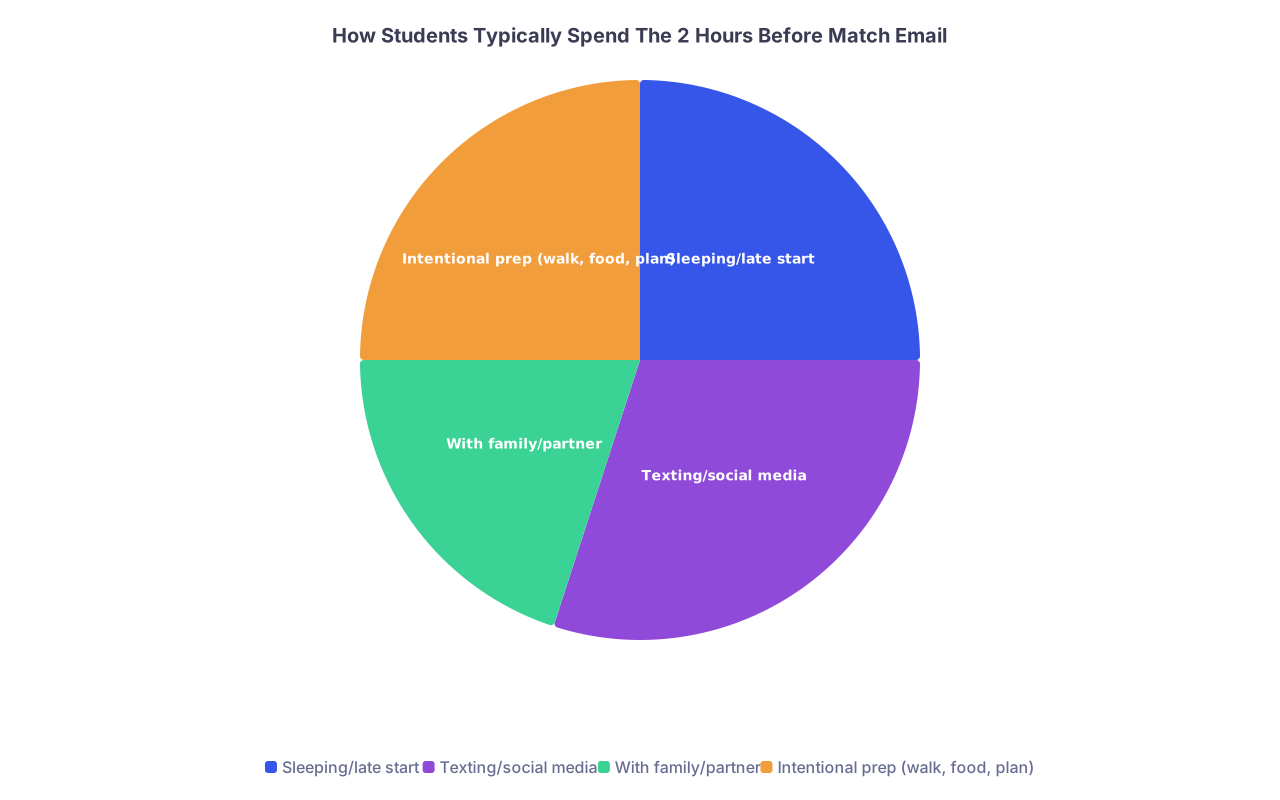
| Category | Value |
|---|---|
| Sleeping/late start | 25 |
| Texting/social media | 30 |
| With family/partner | 20 |
| Intentional prep (walk, food, plan) | 25 |
T‑1 HOUR TO EMAIL: CONTROL HOW YOU FEEL, NOT WHAT YOU GET
60 minutes before email (10:00 AM ET / 7:00 AM PT)
This is where people start spiraling. You’re not going to.
At this point you should:
- Lock in your opening ritual (5–10 minutes):
- Deep breathing (inhale 4 seconds, exhale 6 seconds x 5 cycles)
- A short playlist: 1–2 songs that calm or hype you without wrecking you emotionally
- Prayer/meditation if that’s your thing
- Clarify your Plan B emotional response:
“No matter what the email says, I’m going to:- Breathe,
- Read it clearly twice,
- Say out loud: ‘I did it. I matched,’
- Hug the nearest human.”
If you’re at a school event:
- Find your closest friends. Stand/sit together.
- Identify the quiet corner or hallway where you can step out if it’s overwhelming.
- Locate the nearest restroom—someone in your group will need it 10 minutes before announcement. Might be you.
30 minutes before email (10:30 AM ET / 7:30 AM PT)
This half hour is dangerous: too much time to think, not enough to distract.
At this point you should structure every 5–10 minutes:
- 10:30–10:35:
- Final tech check. Email open and refreshed (but don’t obsessively hit refresh).
- 10:35–10:45:
- Light conversation with 1–2 people. No rank list autopsies. No “what if I go unmatched?” debates. Shut those down politely.
- 10:45–10:55:
- Bathroom. Sip of water. One more breathing cycle.
- 10:55–email time:
- Phones ready (if calling/FaceTiming someone).
- Decide: count down together or just let the email hit and open quietly.
EMAIL DROP: 11:00 AM ET / 8:00 AM PT
This 5–10 minute window will burn into your brain. So organize it.
Minute 0–5: Opening and Immediate Reaction
At this point you should:
- Open the email. Don’t stall.
- Glance at the first line for the key info: specialty and program.
- Read the entire email once before reacting big. Make sure you’re not misreading city, program name, or track.
- Say the words out loud:
- “I matched at [Program Name], [City].”
This grounds you. It also helps everyone around you understand clearly.
- “I matched at [Program Name], [City].”
If you’re recording video, ignore the camera. Look at the screen and the humans in the room. The video will be fine.
Minute 5–15: Contain the chaos
At this point you should shift from you reacting to you communicating:
- Hug your person/people. Take that 30–60 seconds.
- Quick call or FaceTime to:
- Parents / guardians
- Partner (if not with you)
- Sibling / one key friend
Keep each call to 2–3 minutes. You can have long conversations later.
If the result is not what you wanted:
- Step to a quieter spot.
- Give yourself 5–10 minutes to feel whatever shows up.
- Do not start comparing programs with classmates during this window. That’s how resentment and shame grow.
LATE MORNING: TEXTS, SOCIALS, AND FIRST LOGISTICS
30–90 minutes after email (11:30 AM–12:30 PM ET)
This is where people lose control of their day to notifications. You don’t have to.
At this point you should:
- Send one broadcast text to the key group threads:
- “Matched into [specialty] at [Program, City]! Will call later today but wanted to share the good news.”
- Post on social media only if you want to:
- A simple message is enough: “Matched into Internal Medicine at [City]! Feeling grateful.”
- You don’t owe anyone your rank list, your exact program name, or a long essay.
- Take 10–15 minutes for logistics:
- Screenshot or save the match email.
- Forward it to your personal email if it went to a school account.
- Start a folder on your computer or cloud drive: “Residency – [Program]”.
If your school has a ceremony where letters are opened later (some delay until noon or early afternoon):
- Don’t leak your results loudly if the expectation is to open envelopes together. Respect the social contract.
- But you still get to process privately. You can quietly tell your closest circle.
EARLY AFTERNOON: CEREMONY AND SOCIAL TIME
Noon–2:00 PM
Most schools run their official Match Day ceremony now: speeches, envelopes, photos, chaos.
At this point you should:
- Show up on time. You don’t want to sprint into a packed auditorium 2 minutes before your name is called.
- Decide your public reaction style:
- Big scream-hug-jump?
- Calm smile and walk?
Both are fine. What’s not fine is faking an over-the-top performance you don’t feel.
- Get your core photos:
- You with your envelope or phone screen
- You with your partner/family
- You with your closest med school friends
Take these early. After an hour, the room gets hot, people leave, and you’ll be exhausted.
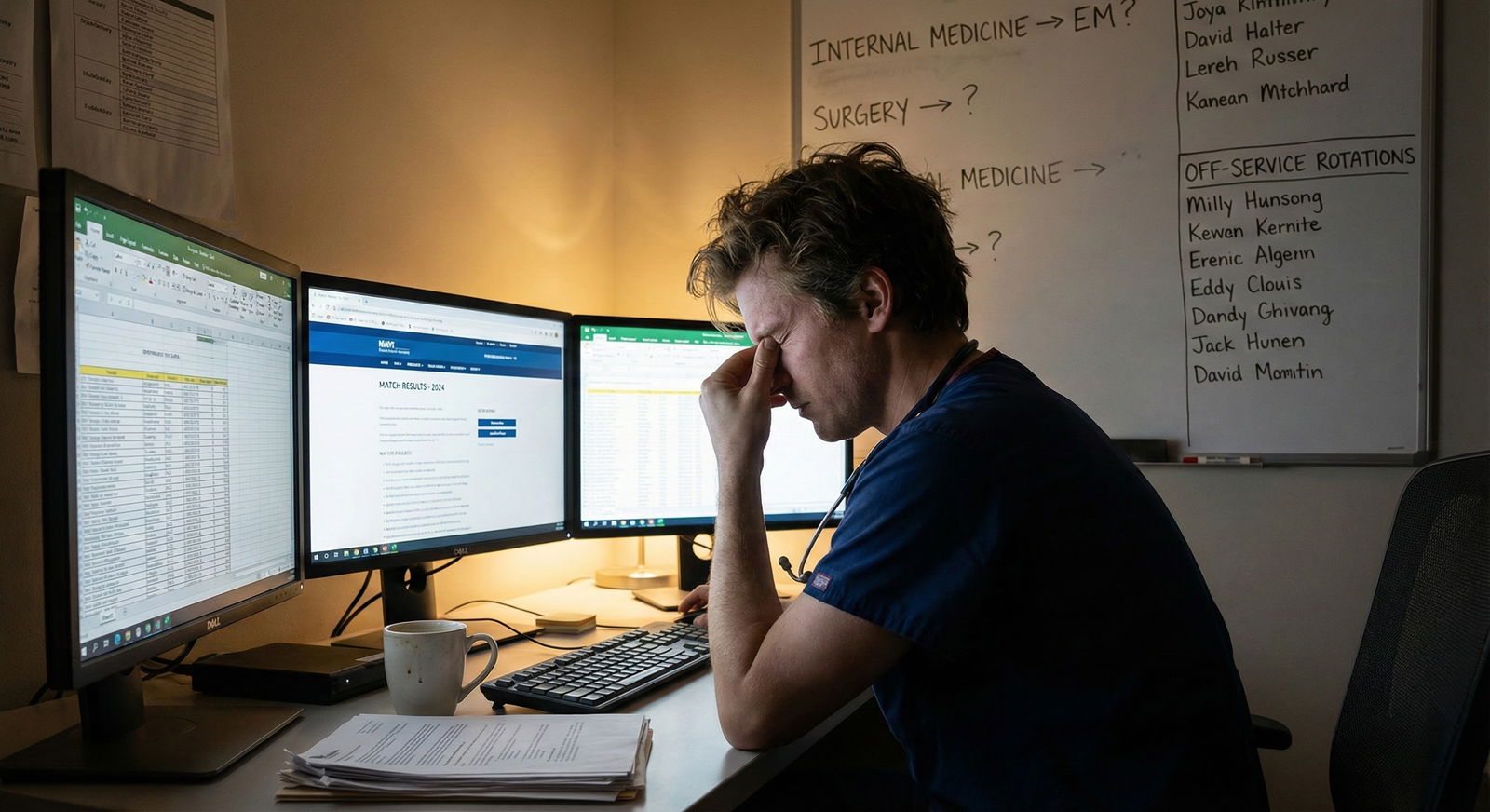
If your match result is disappointing or complicated (couples match odd city, specialty mismatch, etc.):
- Give yourself permission to step outside between ceremony segments.
- Have one trusted friend/partner as your “anchor person” who knows how you’re really feeling.
MID‑AFTERNOON: PROCESSING AND FIRST REAL CONVERSATIONS
2:00–4:00 PM
Adrenaline starts to fade. This is when your brain begins shifting from “What did I get?” to “What does this mean?”
At this point you should:
- Eat something real. Not just cake and cookies from the ceremony table.
- Choose your next setting:
- Small lunch/coffee with close friends or family
- Head home for a quiet hour before night events
- Start your first real conversations:
- Talk with your partner about initial reactions to the city/program.
- If relocating is big for you (kids, dual careers), note immediate questions, but don’t try to solve everything in one conversation.
You can also begin light program follow-up:
- If your program director or coordinator sent a “Welcome!” email:
- A simple reply is enough:
“Thank you so much! I’m thrilled to be joining [Program]. Looking forward to working with the team in July.”
- A simple reply is enough:
No need for long paragraphs. They are drowning in messages too.
LATE AFTERNOON: PRACTICAL PLANNING WINDOW
4:00–6:00 PM
You’re still buzzing, but the day hasn’t turned fully into party mode yet. This is your best window for early logistics and sanity.
At this point you should carve out 30–45 minutes alone or with your partner for practical planning:
Location reality check
- Look up basic cost of living for your new city.
- Check approximate rent ranges near the main hospital.
- Note immediate concerns: car needed or not, parking costs, commute.
People-to-call round two
- Grandparents, extended relatives, mentors, close premed friends.
- Keep calls short but meaningful: 5–10 minutes each. You can always schedule a longer catch-up later.
Write down questions for later
- Visa issues (if IMG or on visas)
- Childcare, spouse jobs, timelines for contracts, orientation dates
- Housing or moving reimbursement
Do not email your program every question today. Collect them. You’ll have time.
| Task Category | Time Needed | Goal |
|---|---|---|
| Calls to mentors | 20–40 min | Share results, maintain relationships |
| Basic city research | 15–30 min | Get rough sense of cost and housing |
| Program email reply | 5–10 min | Acknowledge welcome, show enthusiasm |
| Question list | 10–15 min | Centralize concerns for later follow-up |
EVENING: CELEBRATION MODE (WITH BOUNDARIES)
6:00–9:00 PM: Dinner and Group Events
This is when the celebration really happens: class dinners, bar nights, house parties.
At this point you should choose your pace:
- If you’re a social person:
- Go to the main class dinner or event.
- Decide in advance if you’re bar-hopping afterward or just doing dinner.
- If you’re introverted or emotionally drained:
- A smaller dinner with 4–6 friends is often better than the giant screaming room.
Some guardrails that future-you will thank you for:
- Set a personal drink limit before you leave. “I’ll have 2–3 drinks max.” Stick to it.
- Eat before and during. You probably under-ate earlier in the day.
- Avoid trash-talking programs, classmates’ matches, or specialties. Word travels, screenshots live forever, and residency is a small world.
You should also get at least one good, intentional moment of gratitude:
- Toast with your group: “We did it. Crazy couple of years, but we’re here.”
- Text a mentor: “Matched at [Program]. Couldn’t have done this without your support.”

LATE EVENING: KNOW WHEN TO LEAVE
9:00–11:00 PM
This is the high-risk window for regrettable decisions: too much alcohol, oversharing, sloppy social media, petty comparisons.
At this point you should check in with yourself every 30–45 minutes:
Ask:
- Am I still enjoying this, or am I just staying because everyone else is?
- Have I crossed my personal line for drinking, energy, or emotional bandwidth?
- Is this conversation fueling me or draining me?
If you’re sliding into overwhelm:
- Step outside for 5 minutes of air.
- Switch groups or locations.
- If necessary, call a ride and go home. You do not have to “close the bar” on Match Day for it to count.
Take 10 minutes somewhere quiet (bathroom stall, outside, stairwell) to send:
- One text to your future self (in Notes or a journal app):
“Matched into [specialty] at [Program]. Today felt [3–5 words]. Right now I’m most grateful for [x] and most nervous about [y].”
You’ll be shocked how good it is to read this later on a brutal call night.
MIDNIGHT: CLOSING THE DAY ON YOUR TERMS
11:00 PM–12:00 AM
You do not need to make it to midnight. But if you’re still up and the day is winding down, close it intentionally instead of just collapsing.
At this point you should:
- Get home safely. No exceptions. Designate a driver or call a ride share.
- Hydrate—two full glasses of water before bed.
- Lay out clothes for tomorrow and plug in your phone somewhere not right by your pillow.
Spend 5–10 quiet minutes:
- Skim the match email again (yes, really). Let it sink in that this is real.
- Look at one photo from the day that actually matters to you (not the perfect Instagram one, the real one).
- Jot down:
- Who you want to thank in the next week (mentors, advisors, family)
- One thing you’re excited about for residency
- One thing that scares you
Then stop. You don’t need to plan your whole life tonight.
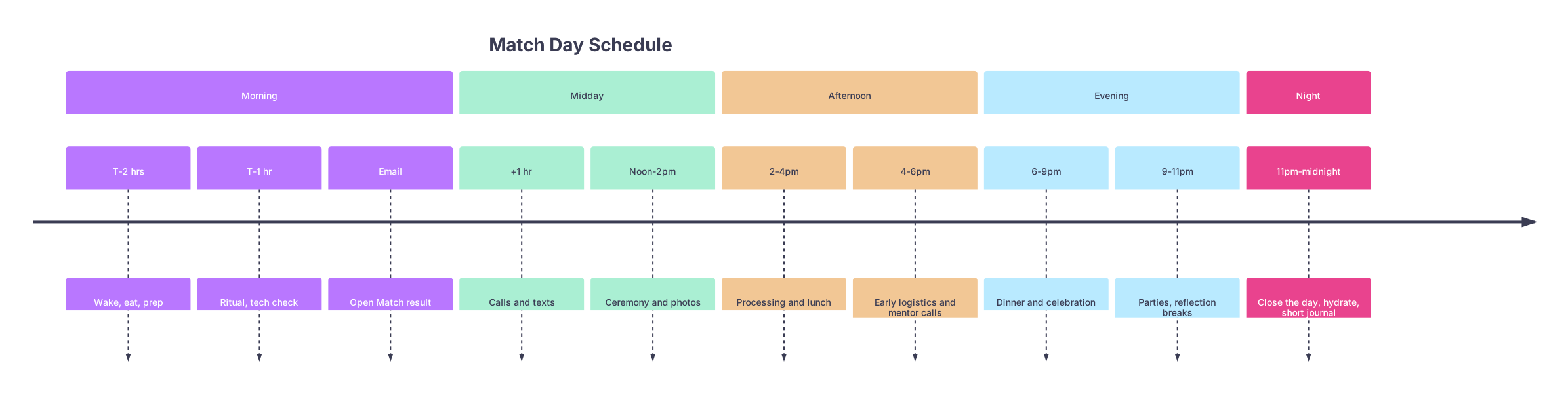
| Period | Event |
|---|---|
| Morning - T-2 hrs | Wake, eat, prep |
| Morning - T-1 hr | Ritual, tech check |
| Morning - Email | Open Match result |
| Midday - +1 hr | Calls and texts |
| Midday - Noon-2pm | Ceremony and photos |
| Afternoon - 2-4pm | Processing and lunch |
| Afternoon - 4-6pm | Early logistics and mentor calls |
| Evening - 6-9pm | Dinner and celebration |
| Evening - 9-11pm | Parties, reflection breaks |
| Night - 11pm-midnight | Close the day, hydrate, short journal |
Final Takeaways
- Treat Match Day like a 16‑hour event, not a single email moment. Your hour-by-hour choices shape how it feels and what you remember.
- Front-load control: sleep, food, tech, and expectations set you up to actually enjoy the good parts and survive the hard ones.
- End the day with intention—safe, hydrated, and with a few honest notes to yourself—so Match Day becomes a clear memory, not just a blur of adrenaline and noise.