
The week of Match Day is when many smart future physicians make some of the dumbest financial decisions of their lives.
You are exhausted, emotional, and finally feel like the finish line is in sight. That combination is gasoline next to a lit match when it comes to money. I have watched residents dig a hole in five days that took them five years to climb out of.
You are not doing that.
Below are the top financial mistakes I see over and over again the week of Match Day—and how to sidestep every single one of them.
1. Locking Into the Wrong Housing Too Fast
The worst financial contract many residents sign is not their student loans. It is their first lease.
The classic mistake
I have seen this play out so many times it is almost scripted:
- You match on Monday.
- You get the email from GME with your start date and orientation schedule.
- You panic about housing.
- By Thursday, you have signed:
- A 12–15 month luxury apartment lease
- Too far from the hospital
- Too expensive for a PGY-1 salary
- With awful parking and no flexibility
You felt “productive” and “on top of things.” In reality, you just locked in a guaranteed monthly drain.
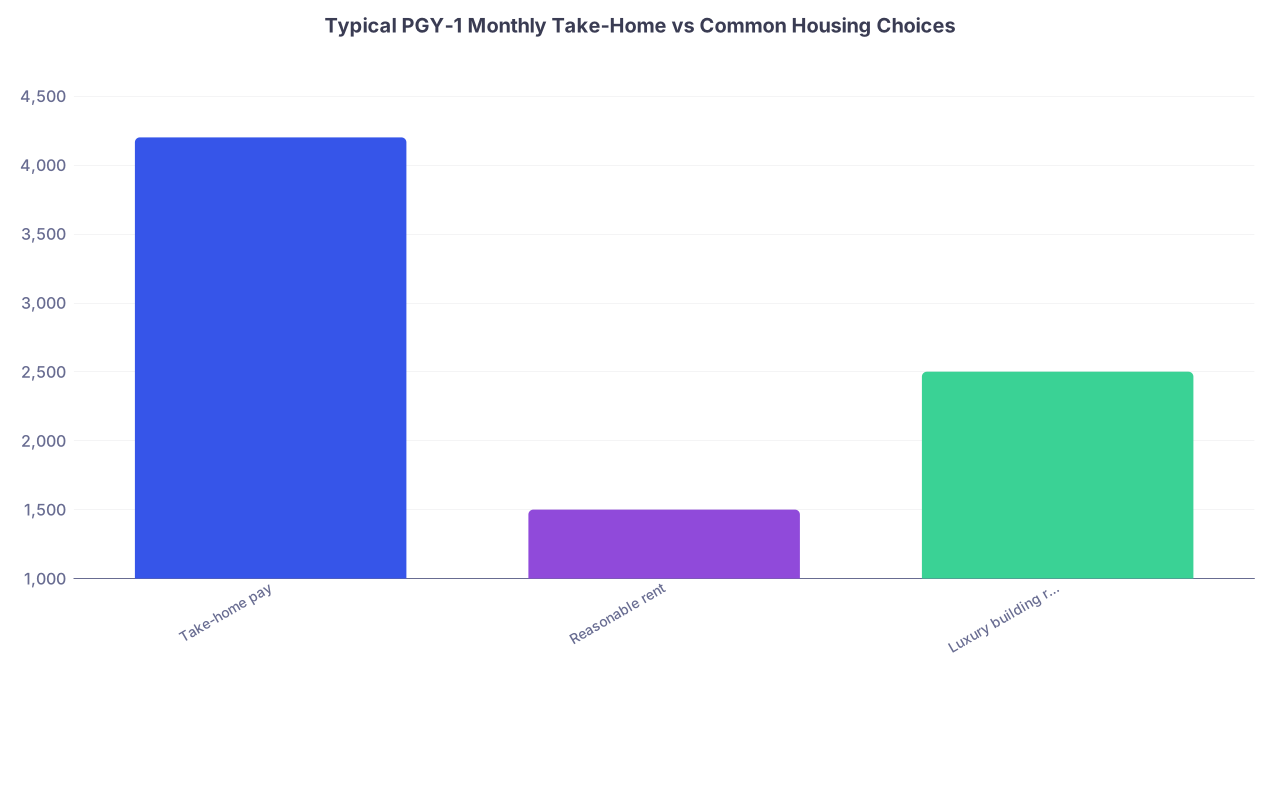
| Category | Value |
|---|---|
| Take-home pay | 4200 |
| Reasonable rent | 1500 |
| Luxury building rent | 2500 |
Why this crushes you
Here is what you are not calculating when you rush to sign:
- Night float Uber costs from “trendy” neighborhoods
- Parking fees or tickets near the hospital
- Call room overnights wasted because you live too far to go home
- Extra furniture, fees, and utilities in “amenity-rich” buildings
You think: “I deserve something nice after all these years.” I get the emotion. The timing is just awful.
How to avoid it
- Do not sign a lease the week of Match. Full stop. You have no urgent deadline that requires a decision in 48–72 hours.
- Wait for your contract and full schedule details. You need:
- Call schedule style (q4? night float? home call?)
- Main hospital vs off-site clinics
- Parking situation and costs
- Consider short-term options first:
- 1–3 month sublet from a graduating resident
- Month-to-month rental
- Furnished room close to the hospital
Once you start, you will learn fast:
- Where people actually live
- Which neighborhoods are a disaster at 6 a.m. post-call
- Which places eat you alive with commuting costs
Commit long-term after you have lived the job, not during Match week fantasies.
2. Ignoring the Hidden Cost of Moving
People obsess over “signing bonuses” and “salary,” then promptly burn thousands on a chaotic, unplanned move.
The hidden budget sink
You know what I have seen wreck new residents?
- Cross-country movers booked last-minute: $4,000–$7,000
- Multiple flights for “apartment hunting” trips
- Storage units holding things you do not need
- Break-fees on old leases
- Buying all new furniture because “I will be a doctor now”
The move is not one expense. It is a series of small, scattered hits that add up fast.
| Expense Category | Common Range (USD) |
|---|---|
| Cross-country movers | $3,000–$7,000 |
| Local movers | $400–$1,500 |
| Flights / travel | $300–$1,200 |
| Deposits & fees | $1,000–$3,000 |
| Furniture / setup | $800–$3,000 |
The Match Week trap
The week of Match Day, you will be:
- Comparing cities and assuming you already know cost of living
- Making emotional promises to friends or partners about moving together
- Telling yourself “I’ll figure out the details later”
Later becomes more expensive. Every time.
How to avoid it
During Match week, you should not be booking movers yet. What you should do is:
- Create a rough move budget range
- Low: “Bare bones, used furniture, small truck”
- High: “Professional movers + deposits + flights”
- Decide what is actually worth moving
- Heavy, cheap furniture? Usually not.
- Personal essentials, documents, tech? Always.
- Plan a cash buffer
Aim for:- At least $2,000–$3,000 liquid for a local move
- $4,000–$7,000 if you are crossing multiple states or coasts
And stop saying, “I’ll just put it all on a card and pay it off later.” That is how 24% APR turns a $4,000 move into a $5,500 memory.
3. Blowing Money on Match Week Celebrations
You should celebrate. You should not financially sabotage yourself in the name of “once in a lifetime.”
The subtle overspending
This is not just bottle service and Vegas trips. It is also:
- Multiple “congrats” dinners out—3 nights in a row
- New outfits for Match Day, graduation, “doctor” photos
- Trips booked on impulse before you see your residency calendar
- Helping fund group trips you actually cannot afford
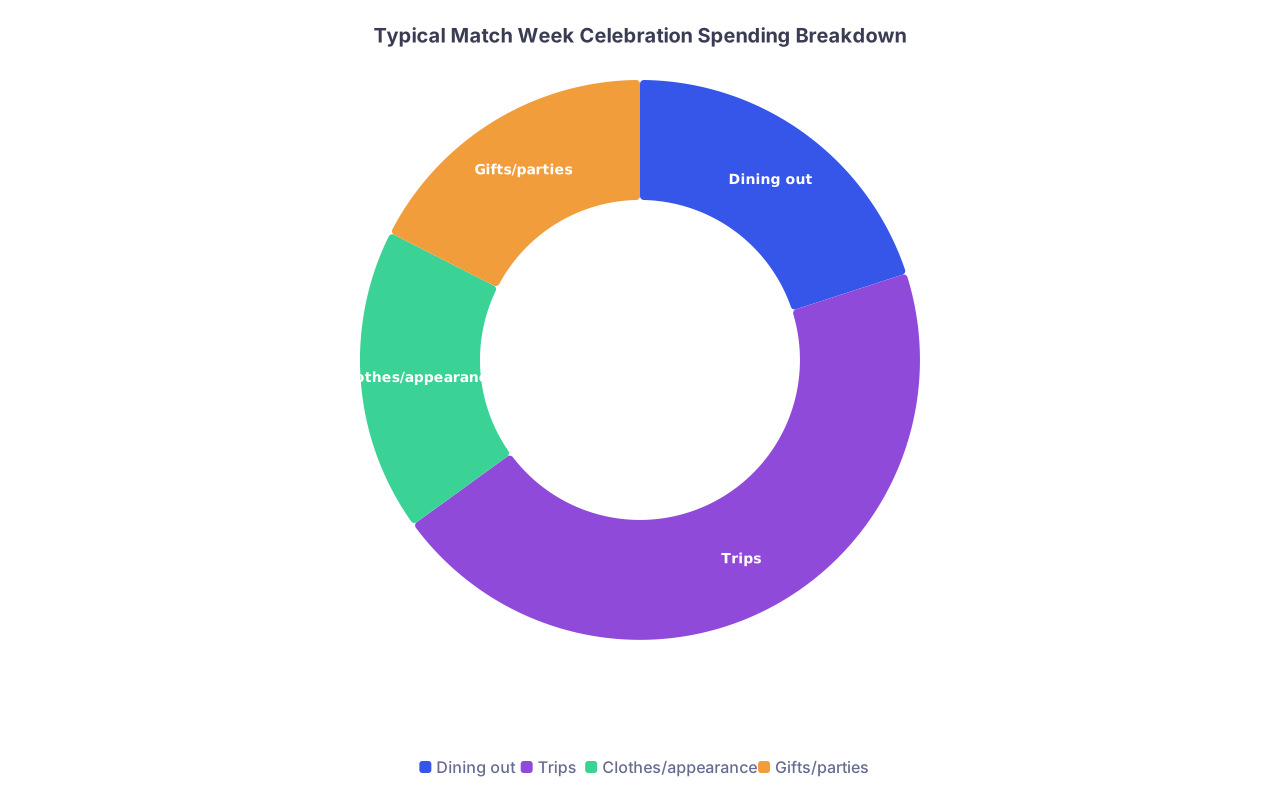
| Category | Value |
|---|---|
| Dining out | 400 |
| Trips | 900 |
| Clothes/appearance | 350 |
| Gifts/parties | 350 |
I have seen students spend $2,000–$3,000 that week alone. On top of upcoming moving costs. On top of graduation expenses. On top of already maxed-out cards.
Why it is more dangerous than you think
You are standing at a financial inflection point:
- You have no attending salary yet
- You probably have 5–6 figures of student debt
- You have not started your retirement savings
- You are about to hit an unstable schedule with unexpected expenses
Starting residency with a bloated credit card balance is like starting a marathon wearing ankle weights.
How to avoid it
- Set a hard celebration budget before Match Day. A real number. $300? $800? Pick a cap.
- Use cash or debit for celebrations. If you cannot pay it now, you cannot afford it.
- Say no to some events. You are not obligated to show up to everything your class organizes.
- Delay big trips until you:
- Have your residency schedule
- Know your orientation dates
- See your first few paychecks
You will have other chances to celebrate. You only get one shot at starting residency without financial shackles.
4. Misjudging Your New “Doctor” Income
One of the most expensive illusions: believing a PGY-1 salary makes you “finally comfortable.”
It does not. It just feels that way after living off loans.
The take-home pay reality
I have watched new residents plan around the gross number they saw on the contract email:
- “$64,000 a year? That’s over $5,300/month, I’ll be fine.”
- Then taxes, benefits, retirement (hopefully), and maybe union dues hit.
- Suddenly your actual paycheck is closer to $3,500–$4,200/month.
If you are in a high-cost city, that disappears very fast.
The Match Week distortion
The week of Match, all you see is:
- Program salary tables on their website
- Excited group chats: “We’re finally getting paid!”
- Parents saying, “Now you can breathe a little.”
No one is talking about:
- Mandatory disability insurance
- Health insurance premiums
- FICA and state taxes
- Union dues in some programs
- Parking fees deducted from payroll
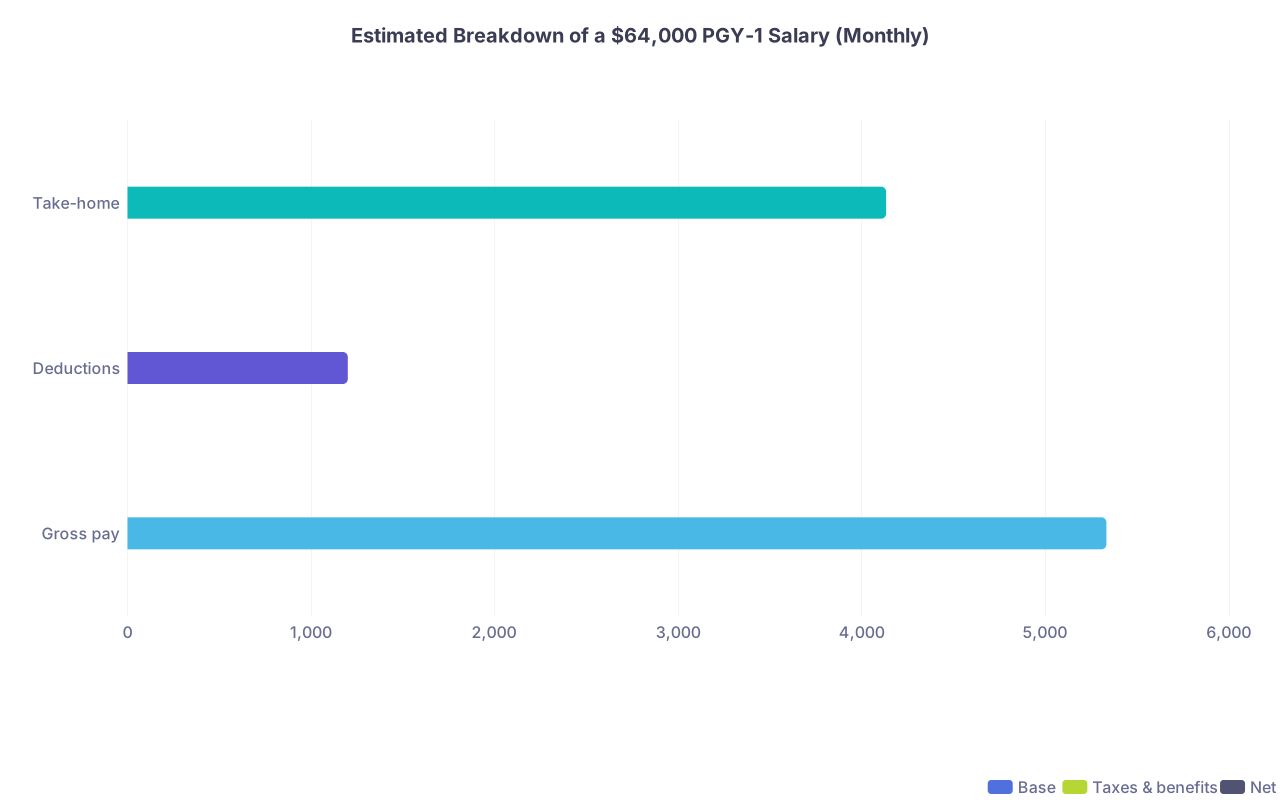
| Category | Base | Taxes & benefits | Net |
|---|---|---|---|
| Gross pay | 5333 | 0 | 0 |
| Deductions | 0 | 1200 | 0 |
| Take-home | 0 | 0 | 4133 |
How to avoid it
During Match week:
- Do not mentally spend your future salary.
- Do not commit to:
- New cars
- Long-term gym contracts
- Premium phone plans
- High-rent apartments “because I’ll be earning”
Instead, sketch a rough sample budget:
- Rent target (30–35% of take-home, max)
- Utilities + internet
- Transportation
- Food
- Loan payments (once grace period ends)
- Savings (yes, even small amounts)
You do not need precision yet. You just need a reality check to kill the “I’m rich now” fantasy before it costs you.
5. Ignoring Your Student Loans During the Most Important Week
Many new residents treat their loans like a ghost until six months after graduation, when the bills finally show up.
That is a mistake. The week of Match is when strategy starts.
Where people mess this up
Common mistakes I see:
- Not checking what servicer actually holds their loans now (servicers change)
- Ignoring emails about consolidation, grace periods, and repayment plan deadlines
- Making random decisions about refinancing because a company offered “resident deals”
- Assuming “I’ll do PSLF probably” without confirming if the hospital even qualifies
You do not need to fix your loans Match week. But you do need to stop flying blind.
Why Match week matters
Match week gives you important information:
- Whether your hospital is nonprofit (PSLF-eligible) or not
- Your approximate salary, which affects income-driven plan calculations
- Your city’s cost of living, which dictates how much flexibility you will have
With this info, you can at least avoid doing something stupid, like refinancing government loans into private ones and losing PSLF eligibility before you even start.
How to avoid it
During Match week, your loan checklist is simple:
- Find out:
- Is my residency hospital a 501(c)(3) or government employer?
- If yes, I should probably not refinance federal loans right now.
- List your loans:
- Total federal amount
- Total private amount
- Current interest rates
- Set a hard reminder for:
- 1–2 months before repayment begins
- To choose/confirm an income-driven plan if using PSLF
- Do not make irreversible decisions this week:
- No quick refinancing
- No consolidation without understanding PSLF impact
- No voluntary big payments before you know your full budget
Your only goal Match week: avoid moves that kill your future options.
6. Signing Financial Products You Do Not Understand
The week of Match, your inbox and social media will suddenly “discover” that you exist.
Banks, brokers, and insurance agents love new physicians. You look like a lifetime of revenue to them.
The usual predators
Watch for:
- “Resident-special” credit cards
- “Doctor loans” for future home purchases
- Disability policies pushed via rushed Zoom calls
- Whole life or “investment” insurance cleverly framed as “protecting your future”
- Financial advisors with assets-under-management fees and no transparency
I have literally heard this line said to a fourth-year:
“You are about to be a high-income professional, it is irresponsible not to get this in place now.”
Translation: “You are about to have a paycheck I can skim from.”
What is actually urgent vs not
Urgent or near-urgent (but not necessarily in Match week):
- True own-occupation disability insurance (especially before health issues appear)
- Setting up a basic checking/savings structure in your new city
- Possibly a no-fee card for moving expenses if you are disciplined and strategic
Not urgent during Match week:
- Whole life insurance, “physician-specific” permanent policies
- Complex investment accounts
- Home-buying discussions
- Any advisor who charges you based on “a percentage of assets they manage for you” when you barely have assets
How to avoid it
Rules for Match week:
- If you do not understand it in plain language, you do not sign it.
- If someone uses FOMO or guilt to push a timeline (“You really should lock this in before you start”), walk away.
- Anything involving:
- Surrender charges
- Cash value
- Investment and insurance mixed together
deserves a hard pause and an outside opinion.
You have years ahead of you to optimize investments. You have one week here where you are uniquely vulnerable to slick sales pitches. Act accordingly.
7. Failing to Build Even a Tiny Emergency Buffer
No, you will not build a full 6-month emergency fund during Match week. But too many residents start with zero buffer and no plan to create one.
Then:
- The car dies.
- The license fee is higher than expected.
- You need last-minute travel for a family emergency.
And it all goes on high-interest credit cards.
Why this week is dangerous for your buffer
You are likely:
- Still relying on loan disbursements
- Paying for rank list fees, interviews, and unmatched friends’ support
- Thinking, “I will save once I start getting paid.”
So you treat every leftover dollar as “extra” and spend it.
How to avoid it
During Match week:
- Decide that some amount of your first 3–4 paychecks will go straight into savings. Automatically.
- If you have any current flexibility (e.g., unused interview travel budget, small gifts from family), resist the urge to inflate your lifestyle.
- Target: $500–$1,000 initial buffer by the end of your first few months as a PGY-1. Small. But it stops minor surprises from turning into credit-card disasters.
Residency is unpredictable enough. Do not add financial fragility you could have avoided with a few boring decisions now.
8. Not Talking Money With the People You Depend On
This one is messy but real.
Many residents blow up their finances not alone, but with partners, spouses, or family expectations blended in.
Where this goes off the rails
Common patterns I have watched:
- Partner assumes the new resident income means:
- Moving to a nicer place
- Upgrading car / lifestyle
- Helping out extended family
- Parents assume:
- You will start sending money home sooner rather than later
- You are “set” now and do not need help with moving or transition
- Partner or spouse’s job search is based on:
- Bad assumptions about your schedule and income
- No awareness of your true debt load
The week of Match, emotions are high and people start making promises about the future with zero math behind them.
How to avoid it
During or shortly after Match week, have the uncomfortable conversations:
- With your partner/spouse:
- Here is my projected take-home pay, not just salary.
- Here is my loan total and whether I am aiming for PSLF.
- Here is what I can realistically contribute to:
- Rent
- Shared expenses
- Savings
- With your family (if relevant):
- Set boundaries early:
“I will be making more than a student but far from an attending. I need the first few years to get stable before I can help more.”
- Set boundaries early:
Do not let vague optimism drive financial commitments you will quietly resent later.
FAQ: Top Financial Questions New Residents Ask Around Match Week
1. Should I start paying down my student loans immediately once I match?
Do not rush. Match week is not the time to throw extra money at loans without a plan. Figure out:
- Whether your institution qualifies for PSLF
- What income-driven repayment options would look like
- How tight your budget will be in your new city
If PSLF is on the table, aggressive early payments can actually backfire. Strategy first, payments later.
2. Is it ever reasonable to sign a lease during Match week?
Rarely. The only cases where it might make sense:
- You matched in your current city and already know the neighborhoods well.
- You have lived near the hospital and understand the commute and call demands.
Even then, waiting a couple of weeks to compare options and talk to current residents is usually smarter. If you are moving to a new city, signing during Match week is almost always premature.
3. Do I really need disability insurance before I start?
You need it early, but not necessarily this week. Disability insurance is critical for physicians, especially before health issues appear that can exclude coverage. Use Match week to:
- Confirm if your program offers any group coverage
- Start learning the basics of true own-occupation policies
Then schedule real conversations in the months before residency starts, not in a 48-hour match-week rush.
4. Are “resident relocation loans” or physician-specific credit lines a good idea?
They are a tool. And like most tools, dangerous in the wrong hands. They can help cover unavoidable moving costs if:
- You cannot get cheaper financing
- You have a clear, realistic payoff plan
The mistake is treating them as “free money” and using them to inflate lifestyle instead of solving specific, necessary expenses. If you already struggle with credit cards, do not add another credit line.
5. What is the single most important financial move I should make the week of Match Day?
Protect your future options. That means:
- Do not sign long, expensive housing contracts in a city you do not know.
- Do not refinance federal loans before you understand PSLF and your hospital’s status.
- Do not commit to big lifestyle upgrades based on gross salary numbers.
If you do nothing else this week besides avoiding those three traps, you will be ahead of most of your peers.
Key points to walk away with:
- Match week is emotionally loud and financially dangerous—delay big, binding decisions, especially housing and loans.
- Your PGY-1 salary feels huge after loans, but it is fragile; protect it from lifestyle creep, predatory products, and impulsive celebrations.
- Use this week to gather information and set boundaries, not to “act rich” before you even see your first paycheck.