

The most dangerous thing you can do when you change specialties mid‑career is assume your old retirement plan will magically adapt. It will not.
If you are changing specialties, employers, or practice structure in your 30s, 40s, or 50s, you are ripping up the old financial script. That is not a disaster. But it becomes one if you do not build a new retirement plan with intention.
Here is how to fix it, step by step.
Step 1: Accept That Your Old Retirement Plan Is Obsolete
You are not “tweaking” your old path. You are writing a new one.
Your old plan was built around:
- A certain income trajectory
- A certain benefits package (401(k), pension, match)
- A certain lifestyle and schedule
- A certain risk tolerance
Change specialties and that all shifts:
- Income might go up or down.
- Hours and burnout risk change.
- Your ability to work into your 60s may improve or get worse.
- The retirement accounts available to you change — sometimes a lot.
So first rule: stop asking “How do I keep doing what I was doing?” and start asking “Given my new specialty and setup, what is the optimal plan from here forward?”
Step 2: Map Your New Career and Money Reality
You cannot build a retirement plan without knowing the new playing field.
Answer these concretely, on paper:
What is my realistic income range for the next 5–10 years?
Not fantasy top‑of‑market. Realistic:- Base salary
- RVU or production bonuses
- Call pay
- Side gigs or locums
How many more years do I actually want to work?
Be blunt:- “I can handle full‑time clinical to 60, then part‑time to 65.”
- “New specialty is more sustainable — I could do this to 70 if needed.”
- “This new role is intense; I need out by 58.”
What retirement account options do I have now?
List them:- Employer 401(k) / 403(b)
- 457(b) (governmental vs non‑governmental)
- Defined benefit pension or cash balance plan
- SEP‑IRA / Solo 401(k) if self‑employed or side‑gigs
- HSA (if on high‑deductible health plan)
- Stock options / RSUs / equity if you moved into a corporate role

To keep it simple, build a quick snapshot:
| Factor | Old Specialty | New Specialty |
|---|---|---|
| Base Income | $___ | $___ |
| Typical Weekly Hours | ___ | ___ |
| Employer Retirement | 403(b) + 401(a) | 401(k) only / etc. |
| Match / Contribution | ___% or $___ | ___% or $___ |
| Workable To Age | ___ | ___ |
You are not chasing perfection. You are anchoring to reality.
Step 3: Consolidate and Clean Up the Old Retirement Mess
Mid‑career switchers usually have retirement accounts scattered everywhere. That leaks efficiency.
Your goals:
- Reduce the number of accounts.
- Lower your costs.
- Keep tax advantages intact.
- Preserve options for future backdoor Roth contributions.
Inventory every account
List:
- Old 401(k)s / 403(b)s
- 457(b)s
- Pensions or cash balance plans
- Traditional IRAs
- Roth IRAs
- HSAs
- Taxable brokerage accounts
Then for each:
- Current balance
- Underlying investments
- Fees (expense ratios, admin fees)
- Whether it allows in‑plan Roth conversion
- Whether it can be rolled over
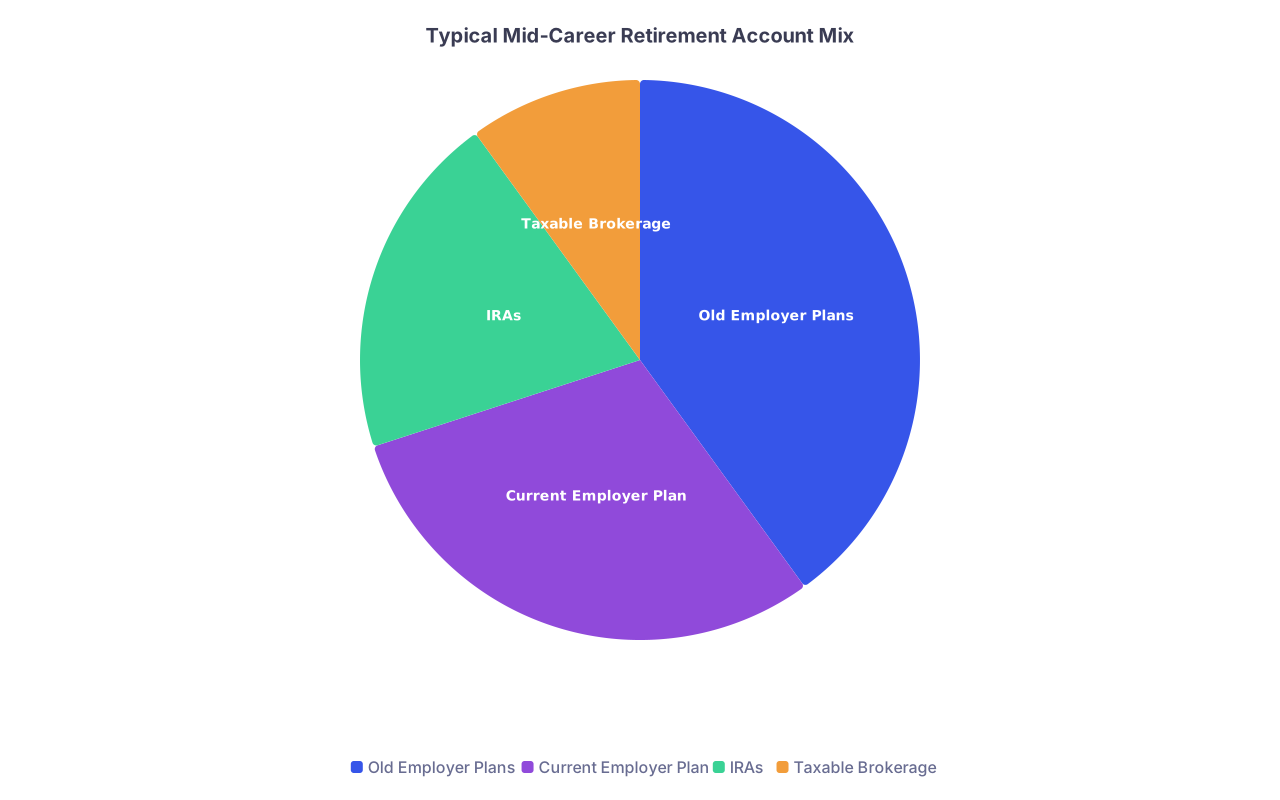
| Category | Value |
|---|---|
| Old Employer Plans | 40 |
| Current Employer Plan | 30 |
| IRAs | 20 |
| Taxable Brokerage | 10 |
Decide what to roll where
Here is a simple protocol that works for most professionals:
Roll old 401(k)/403(b) to your new 401(k/403(b) IF:
- The new plan is low‑cost (index funds, expense ratios under 0.15–0.20%)
- You want to keep the door open for backdoor Roth IRA (avoids the pro‑rata problem if you keep pre‑tax IRAs clean)
- The plan has reasonable investment options
Roll old 401(k)/403(b) to a Rollover IRA IF:
- Your new employer plan is garbage (high fees, poor options)
- You are not doing or do not care about backdoor Roth IRA
- You want full control over investments at a low‑cost brokerage (Vanguard, Fidelity, Schwab)
Leave assets in the old plan IF:
- It has truly excellent institutional share class funds with ultra‑low costs
- You get special protections (for example, some 457(b) plans)
- There are legal or creditor protection reasons, based on your state
Do NOT roll governmental 457(b) into a 401(k) blindly:
- Governmental 457(b)s can allow penalty‑free withdrawals after separation, regardless of age.
- Combining them with 401(k)s can destroy that flexibility.
This is where a lot of people accidentally give up flexibility to retire early or go part‑time in their 50s. Do not be casual with 457(b) rollovers.
Step 4: Recalculate Your Retirement Number and Savings Rate
Your old target retirement number was built on your old income, lifestyle, and planned retirement age. That is gone.
You need a new target and a new required savings rate. Here is a fast but effective approach.
1. Define the retirement lifestyle
Estimate your desired annual spending in retirement, in today’s dollars. Do not obsess over perfection. Directionally correct is enough.
Use this rule of thumb:
- Take your current annual spending.
- Subtract things that will disappear (mortgage, child‑care, large tuition, big debts).
- Keep healthcare high — often more than people think.
Let us say:
- Current spending: $140,000 / year
- Retirement: Kids out, mortgage almost gone, but more travel. Maybe $120,000 / year in today’s dollars.
2. Translate spending into a portfolio target
Use a conservative withdrawal rate. I prefer 3.5% for professionals who want flexibility and resilience.
Formula:
- Retirement Portfolio Target ≈ Annual Spending ÷ 0.035
Example:
- $120,000 ÷ 0.035 ≈ $3.4 million
This is your portfolio number. Not counting Social Security or any pension. Those are bonuses.
3. Check where you stand
Write down:
- Total current investment assets (tax‑advantaged + taxable). Exclude primary residence and cars.
- Your new timeline: years to planned retirement in the new specialty.
Use a simple growth assumption:
- 5–6% real (after inflation) is too optimistic for planning.
- Use 4–5% nominal (2–3% real), especially if you are already mid‑career.
Now rough math:
You can use online calculators, but here is a quick mental framework:
- If you have 10–15 years left:
- You generally need to save 25–35% of gross income if you are “behind.”
- If you have 20+ years left:
- 15–25% of gross can be enough, especially if you already have a base.
The right way: plug numbers into a retirement calculator using:
- Starting portfolio
- Annual contributions
- Expected return 4–5%
- Years until retirement
- Target portfolio (from above)
Then adjust your savings rate until the calculator hits your target.
Step 5: Design a New Contribution Strategy Around the New Job
Now that you know your required savings rate, structure it around the specific retirement accounts you have access to in the new specialty.
Here is a typical mid‑career priority stack:
Get the full employer match
- Non‑negotiable. That is a 100% return on that portion of contributions.
- If the new job matches 4% of salary if you contribute 4%, you contribute at least 4%. Full stop.
Max your primary plan (401(k), 403(b))
- 2024 employee limit: $23,000 (plus $7,500 catch‑up if 50+). This may update in future years.
- Decide traditional vs Roth based on:
- Current marginal tax rate
- Expected retirement tax rate
- Mid‑career, higher income → Traditional usually wins. You need the current tax deduction.
If available and safe: governmental 457(b)
- Extra $23,000 / year (plus catch‑up) with flexible withdrawal rules after separation.
- Excellent tool if changing jobs again or planning early semi‑retirement.
- Be careful with non‑governmental 457(b): they are employer assets, carry creditor risk, and require more scrutiny.
HSA (if you have a high‑deductible health plan)
- Triple tax advantage. This is a stealth retirement account.
- Treat it like a long‑term investment vehicle, pay current medical costs from cash if you can.
Backdoor Roth IRA (if your income is too high for direct Roth)
- Only clean if you do not have pre‑tax money sitting in traditional IRAs (otherwise the pro‑rata rule bites).
- This is why rolling old workplace plans into the new 401(k) instead of an IRA can be strategic.
Taxable brokerage account
- Where the overflow goes once tax‑advantaged space is maxed.
- Critical if you plan to retire or cut back before 59½.
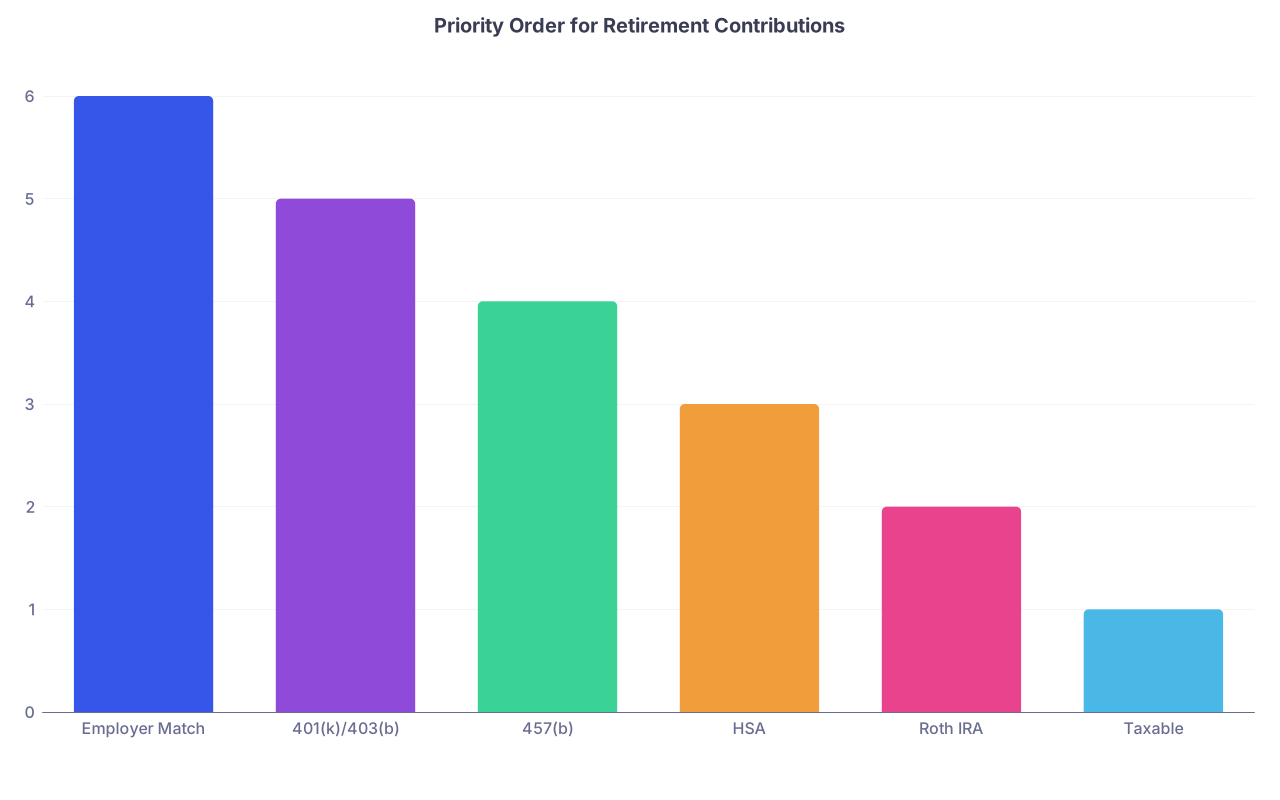
| Category | Value |
|---|---|
| Employer Match | 6 |
| 401(k)/403(b) | 5 |
| 457(b) | 4 |
| HSA | 3 |
| Roth IRA | 2 |
| Taxable | 1 |
The numbers above are just labels for priority ranking (higher = higher priority).
Step 6: Adjust Your Investment Strategy to Your New Timeline and Risk
Most mid‑career professionals changing specialties are either:
- Overly aggressive because “I started late and must catch up,” or
- Overly conservative because one market crash scarred them.
Both extremes are wrong.
You need an allocation that:
- Gives a high enough expected return to reach your target.
- Does not cause you to panic sell during a downturn.
- Reflects any change in your ability to work longer or shorter in the new specialty.
Build a simple portfolio
For 99% of people, you do not need complexity. Something like:
- Age 35–45:
- 70–80% stocks
- 20–30% bonds / stable fixed income
- Age 45–55:
- 60–75% stocks
- 25–40% bonds
- Age 55+:
- 40–60% stocks
- 40–60% bonds and cash equivalents
And then within stocks:
- 60–70% US total market
- 30–40% international total market
Use low‑cost index funds:
- Vanguard Total Stock Market (VTSAX / VTI)
- Vanguard Total International (VTIAX / VXUS)
- Vanguard Total Bond (VBTLX / BND)
Or the equivalent at Fidelity/Schwab.

One change: update your risk tolerance based on your new work reality
Example:
- Old specialty: brutal call schedule, high burnout. Realistically could not see yourself past 60.
- New specialty: outpatient only, more sustainable. You can now credibly work to 65–68.
Result:
- Your “human capital” (future earning power) just became more stable and longer‑lasting.
- You can actually justify staying a bit more aggressive with your portfolio, especially in your 40s and early 50s.
Flip side:
- If you changed from stable academic employment with tenure‑like security to a volatile startup or private group with income risk and possible buyouts:
- Your job risk went up.
- That argues for slightly less portfolio risk, not more.
You are not investing in a vacuum. Tie risk to your career reality.
Step 7: Build a Legal and Tax Framework Around the New Plan
You mentioned financial and legal aspects. Good. Because without the legal/tax structure, you are leaving money on the table and leaving your family exposed.
Here is the bare minimum legal/structural cleanup you should do within a year of changing specialties:
1. Update beneficiaries. Everywhere.
- Old 401(k)s
- New 401(k)/403(b)/457(b)
- IRAs and HSAs
- Life insurance policies
- Any pensions
Do not rely on your will to override outdated beneficiary designations. It will not. The retirement account beneficiary form usually wins.
2. Sync your estate plan with your new income and risks
If your income jumped or your practice risk changed (malpractice exposure, business ownership), you need:
- Updated will
- Updated or newly created revocable living trust (for many mid‑career professionals, this is now appropriate)
- Updated powers of attorney (financial and healthcare)
- Confirmed guardian designations for minor children
Not glamorous. But crucial.
3. If you are now an owner / partner / self‑employed
You need a more deliberate structure:
Choose the right entity: LLC, S‑Corp, partnership, PLLC, etc.
This affects:- What retirement plans you can set up (Solo 401(k), defined benefit, cash balance)
- Your tax treatment
- Liability shielding (within limits)
Consider advanced retirement structures:
- Cash balance plan or defined benefit plan if:
- You are 45–60
- You have high income and want to defer well above 401(k) limits
- You are okay with required annual contributions
- Cash balance plan or defined benefit plan if:
| Plan Type | Typical Annual Limit | Best For |
|---|---|---|
| SEP-IRA | Up to 25% of comp, max | Simple setup, 1–2 person shops |
| Solo 401(k) | Employee + employer up to limit | Side-gig income, higher deferral |
| Cash Balance | Often $100k+ possible | High earners 45+ |
- Coordinate with a competent CPA, not just a tax preparer. There is a difference.
Step 8: Plan for Transitions, Not Just Endpoints
A lot of mid‑career changers do not want a binary “work full‑time until 65, then stop.” They want:
- A shorter workweek in their 50s.
- Academic/administrative shifts later on.
- 6–12 month sabbaticals.
- Early semi‑retirement at 55–58 with some consulting or locums.
Your retirement plan has to handle phases, not just a final date.
Here is a useful structure:
Phase 1 – Full‑time in new specialty
- Primary goal: maximize tax‑advantaged savings and stabilize lifestyle.
- Target: at least 20–30% of gross income going to long‑term savings.
Phase 2 – Reduced clinical load / partial FTE
- Expected lower income.
- You may temporarily reduce savings rate but should not stop entirely if you are behind.
- This is where taxable brokerage accounts become incredibly useful:
- They can bridge income gaps without age penalties.
Phase 3 – Retirement / minimal work
- Portfolio withdrawals, Social Security, possible pension, maybe small side income.
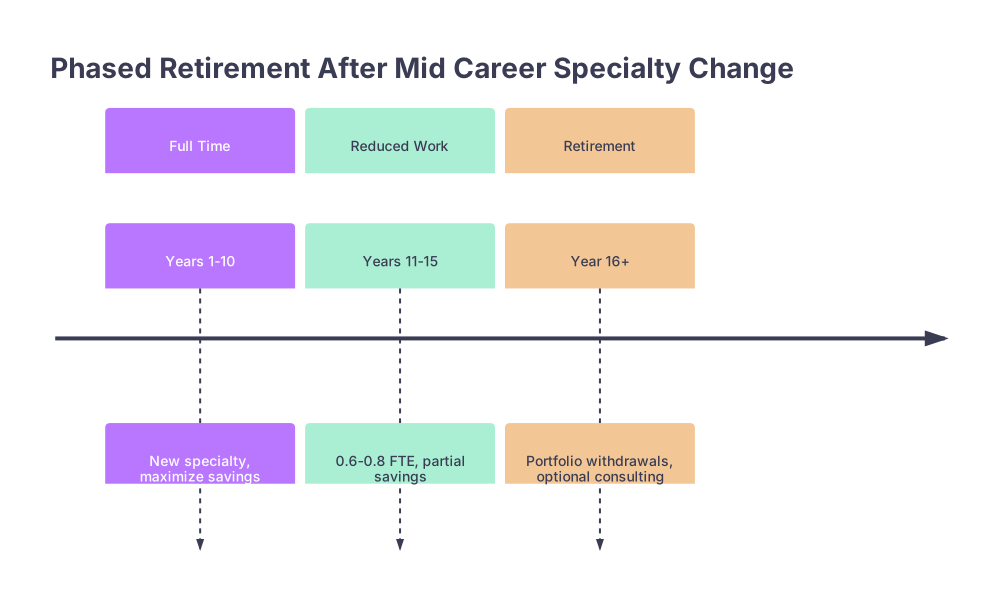
| Period | Event |
|---|---|
| Full Time - Years 1-10 | New specialty, maximize savings |
| Reduced Work - Years 11-15 | 0.6-0.8 FTE, partial savings |
| Retirement - Year 16+ | Portfolio withdrawals, optional consulting |
Your strategy should explicitly state:
- When you expect each phase.
- How much you will save (or withdraw) in each.
- Where the money comes from (which accounts).
This is where having a mix of:
- Tax‑deferred accounts (401(k), 403(b), 457(b))
- Tax‑free (Roth)
- Taxable brokerage
gives you real flexibility to manage taxes year by year.
Step 9: Build a 1‑Page Retirement Plan for Your New Career
You do not need a 40‑page financial plan you never read again. You need one page that you actually look at once or twice a year.
Here is the structure:
1. Retirement Goals
- Target retirement age (or range): e.g., 60–62, then part‑time to 65.
- Desired retirement spending (today’s dollars): e.g., $120,000 / year.
2. Portfolio Targets
- Target portfolio number: e.g., $3.4M.
- Current portfolio: e.g., $1.1M.
- Target asset allocation: e.g., 70% stocks / 30% bonds until age 55, then gradually de‑risk.
3. Savings Plan
- Annual savings target: e.g., 25% of gross income (~$75k on $300k).
- Where it goes:
- 401(k): $23k (plus match)
- 457(b): $23k
- HSA: $4,150 (current single limit) or family limit if applicable
- Backdoor Roth IRA: $7k
- Taxable brokerage: remainder
4. Legal / Protection
- Estate docs: Will, trust, POAs last updated [year].
- Beneficiaries: reviewed annually at open enrollment.
- Insurance:
- Term life: $X until kids out of house.
- Disability: own‑occupation policy in new specialty.
5. Check‑In Rules
- Rebalance when allocation drifts more than 5%.
- Review plan annually after bonus season.
- Major review if:
- Income changes by >20%.
- You change jobs again.
- Major life event (marriage, divorce, birth, death, disability).

Put that single page somewhere you will actually see it. Not buried in a drawer.
Step 10: When to Bring in Professionals (and How to Use Them Correctly)
You do not need a financial advisor to change specialties and build a retirement plan. But if you are:
- Overwhelmed.
- Juggling complex equity/ownership.
- Dealing with multiple pensions, 457 plans, or business interests.
Then it can be worth paying for expert help. With conditions.
Use professionals like this:
- Fee‑only fiduciary planner (ideally hourly or flat‑fee):
- Help you design the structure: savings rates, withdrawal strategies, tax planning, entity choice.
- Help you avoid obvious blunders (like rolling the wrong account into the wrong place).
- CPA:
- Optimize use of pre‑tax vs Roth contributions.
- Coordinate retirement plan design if you are self‑employed.
- Handle high‑income tax nuances in your state.
Avoid:
- Advisors who:
- Will not put “fiduciary” in writing.
- Push annuities or permanent life insurance as a default.
- Obscure how they get paid.
You are mid‑career. You have less time left to fix big mistakes. Choose carefully.
FAQ (Exactly 4 Questions)
1. I changed specialties and my income dropped. Is aggressive retirement saving still realistic?
Yes, but the strategy changes. When income drops, you focus on:
- Still getting the full employer match.
- Maintaining at least a baseline savings rate (15–20% of gross if possible).
- Cutting legacy lifestyle creep from your higher‑income days. You may extend your working years by a few years or accept a lower retirement spending target. The key is not to pause saving “until things stabilize.” That pause is how people fall permanently behind.
2. Can I use my old 401(k) to fund a specialty change (like a mid‑career training gap)?
You can, but it is usually a bad move. Early withdrawals before 59½ typically trigger income tax plus a 10% penalty. Instead:
- Build a separate cash reserve before the transition.
- Use taxable brokerage assets first if you must.
- If you leave an employer at 55 or later and your plan allows it, you can sometimes withdraw from that employer’s 401(k) without penalty, but that is a narrow exception. Do not assume your plan allows it without reading the rules.
3. How does changing from employee to independent contractor affect my retirement plan?
You lose employer retirement benefits, but you gain control and higher potential contribution space:
- You can open a Solo 401(k) and contribute both as “employee” and “employer” on your 1099 income.
- If your income is high, you can add a cash balance plan to defer even more. You also take on the burden of health insurance, taxes, and plan administration. The smart move is to sit down with a CPA the first year you get 1099 income and set up the right structure from day one.
4. Is it too late to fix my retirement plan if I change specialties in my 50s?
No, but you lose margin for error. You need:
- A brutally honest look at your new earnings potential and realistic retirement age.
- A high savings rate (often 30%+ of gross) if you are behind.
- A clear plan for phased retirement instead of an abrupt stop. You will rely much more on tax optimization, careful withdrawal strategies, and controlling lifestyle inflation. It is not hopeless, but you no longer have the luxury of vague plans and inconsistent saving.
Key Takeaways
- A mid‑career specialty change blows up your old retirement plan; you need a fresh, specific one built around your new income, benefits, and timeline.
- Clean up old accounts, set a clear retirement target, and lock in a disciplined savings and investment structure that matches your new reality.
- Put it all on a one‑page written plan and review it annually; complexity is optional, consistency is not.


