
The average physician starts retirement planning about ten years too late. You are not going to be that physician.
You have four years of medical school. Four clean, well‑defined stages: MS1 through MS4. At each point you should complete specific retirement‑related tasks—small, boring, powerful moves that compound into millions later.
I will walk you year by year, then drill down to what each semester and break should look like. No fluff. Just a checklist you can actually follow.
Big Picture: What Changes From MS1 to MS4
Before we go year‑by‑year, anchor the progression. What you should be doing evolves every year.
| Year | Primary Focus | Secondary Focus |
|---|---|---|
| MS1 | Build habits, learn basics | Track spending, set goals |
| MS2 | Optimize debt & protection | Start investing framework |
| MS3 | Prepare for income jump | Legal basics, spouse alignment |
| MS4 | Residency‑ready plan | Accounts, automation, boundaries |
At a high level:
- MS1: Awareness and behavior. Learn the language of retirement, not the advanced tactics.
- MS2: Clean up debt strategy and basic risk protection. Start defining your investment philosophy.
- MS3: Set up the legal and logistical scaffolding: how money will flow, how you will protect it, how you will invest it.
- MS4: Turn the scaffolding into a working system so PGY1 you can just plug in a paycheck and go.
Now the timeline.
MS1 – Build the Foundation and Your Financial Identity
August–September (Start of MS1): Establish Baseline
At this point you should:
Inventory your entire financial life
- List all:
- Federal loans (amount, interest rate, subsidy status)
- Private loans
- Credit cards (limit, balance, APR)
- Existing retirement accounts (old Roth IRA from undergrad? 403(b) from a gap year job?)
- Put it in a simple spreadsheet. No fancy app required.
- List all:
Define your “retirement planning mission statement” Write 2–3 lines:
- Target retirement age range (e.g., 55–65)
- What “work optional” means to you (clinical part‑time? academia? full retirement?)
- Core priorities (financial independence, family support, geographic flexibility)
If you think this is overkill as an MS1, you will be the same person doing this at 38 in a panic.
- Create a realistic MS1 budget
- Fixed: tuition, rent, utilities, cell, insurance, subscriptions.
- Variable: food, transport, books, exam fees, social.
- Target: positive cash flow (even if it is $25/month) to prove you can live below your means.
October–December (MS1 Fall): Learn the Fundamentals
At this point you should not be “investing.” You should be learning.
Your tasks:
- Block 4–6 hours total for basic literacy
Break it into 1–1.5 hour sessions:
- Session 1: How retirement accounts work (401(k), 403(b), 457(b), Roth vs traditional IRA)
- Session 2: Basics of index funds, stocks vs bonds, compounding
- Session 3: Student loans and IDR plans (SAVE, PAYE, PSLF structure)
Use one or two trusted sources. Not ten blogs and twelve TikToks.
- Write your first “investment policy draft” (1 page max)
- Stock/bond mix you think you will use as an attending (e.g., 80/20 in your 30s)
- Intention to use low‑cost index funds
- Commitment to avoid day trading, options, crypto “plays”
You will revise this over years. That is the point.
January–March (MS1 Spring): Start Tracking and Automating
At this point you should:
Track every dollar of spending for 30 days
- Use a simple method: Excel, Notion, or a basic app.
- Label each category.
- Goal is not shame. Goal is data.
Establish your emergency buffer goal
- Target: 1 month of essential expenses during med school.
- You probably will not fully fund it now, but write the number and a slow build plan (e.g., $50–$100/month from side work, scholarships, or careful spending).
Set up banking architecture
- One main checking account
- One savings account labeled “Buffer / Future you”
- Optional: a separate “Tuition” or “Big Bills” savings bucket if your school’s billing is lumpy
April–June (End of MS1): First Contact With Retirement Accounts
You might not have money to invest yet. That is fine. You still prepare the pipes.
At this point you should:
Decide on your Roth IRA strategy
- If you have any earned income (W‑2 or 1099) in the calendar year:
- Confirm eligibility for Roth IRA contributions.
- Pick a brokerage (Fidelity, Vanguard, Schwab—any low‑cost major one).
- Open the account, even if you contribute $0 this year.
- If you do not work: still choose the institution and learn their interface now.
- If you have any earned income (W‑2 or 1099) in the calendar year:
Map out a sample “future portfolio” In your Roth IRA (even if unfunded), set a model:
- Example: 70% US total market index, 30% international index.
- Save this as your default choice. Less thinking later.
Do a quick loan plan check‑in (30–45 minutes)
- Confirm all federal loans are set to in‑school deferment.
- Make sure you are not accidentally accruing interest on some private loan you forgot.
MS2 – Optimize Debt, Risk Protection, and Start Real Investing
MS2 is when things can get dangerous. You know “enough” to sound confident, not enough to avoid big mistakes. Stay disciplined.
August–September (Start of MS2): Reset and Upgrade
At this point you should:
Update your net worth snapshot
- Assets: cash, investments.
- Liabilities: loans, credit cards.
- Yes, it may be negative $200,000. You still track it. Seeing it move less negative over time is powerful.
Update your 1‑page investment policy
- Re‑affirm target stock/bond mix.
- Explicitly state:
- “I will not buy individual stocks.”
- “I will not buy crypto or speculative assets until I have at least $100,000 in boring retirement investments.”
- If you disagree, fine—but write down your rules clearly.
Re‑evaluate your budget with Step exam costs included
- Build separate line items for:
- Exam fees
- Question banks
- Dedicated study period expenses
- Build separate line items for:
October–December (MS2 Fall): Attack the Loans and Insurance Questions
At this point you should:
- Do a deep dive on your student loan strategy (2–3 hours once)
- Figure out your likely path:
- PSLF‑oriented (academic / nonprofit / VA heavy)
- Full repayment (high‑earning private practice)
- “I truly have no clue” (then prepare for both options)
- Run numbers using:
- Federal loan simulator
- Rough projections for residency and attending income
- Figure out your likely path:
Based on that, write down:
Whether you expect to use IDR + PSLF
Whether refinancing is likely after residency or not at all
Decide on disability and life insurance timing
- As a med student, you usually:
- Skip life insurance unless you have dependents or co‑signers.
- Consider a high‑quality own‑occupation disability policy only if you have health issues that may worsen, or if your school offers a favorable group policy that locks in future insurability.
- The key: understand the concepts now, so PGY1 you do not sign garbage policies from an aggressive salesperson.
- As a med student, you usually:
January–March (MS2 Spring): Your First Real Retirement Contribution
If you have any earned income in this tax year, at this point you should:
Fund a Roth IRA (even a tiny amount)
- Aim for anything: $100, $500, $1,000.
- Set up automatic monthly contributions if possible ($25–$50/month).
- Invest in your pre‑chosen index fund mix. Not sitting in cash.
Create a “Resident financial blueprint” draft One page, bullet form:
- Expected PGY1 gross income range.
- Target percent to retirement (10–15% of gross, aspirational).
- Expected rent range.
- Plan: use IDR for loans vs aggressive payoff.
- Notes about desired city cost of living.
You will refine this in MS3–MS4. The draft forces you to think now.
April–June (End of MS2): Stress‑Testing Your Plan
At this point you should:
- Run “future you” projections
- Use any compound interest calculator.
- Input:
- Starting residency: 28 years old, $0 invested
- Contribution: $6,000–$7,000/year during residency, $30,000–$40,000/year as attending
- Retirement age: 60–65
- See the difference between:
- Starting contributions PGY1 vs PGY5.
- Contributing 10% vs 20%.
The point: once you see a 7‑figure gap from a 3–5 year delay, you stop treating retirement planning as “future problem.”
- Evaluate summer work / moonlighting options
- If you can reasonably earn some income (research stipends, tutoring, TA work) without tanking Step scores:
- Estimate how much could go straight into Roth IRA each year.
- Decide if the tradeoff in time and focus is worth it.
- If you can reasonably earn some income (research stipends, tutoring, TA work) without tanking Step scores:
MS3 – Clinical Years and the “Pre‑Residency Architecture”
MS3 destroys your free time. You are tired, you are rotating, your schedule is chaos. That is exactly why you need pre‑defined, low‑maintenance systems.
July–September (Start of MS3): Quick Financial Triage
At this point you should:
Update your net worth and loan status
- New loan disbursements for clinical years.
- Any changes in interest rates.
- Keep the spreadsheet alive.
Refine your resident blueprint
- You now have a much clearer sense of:
- Preferred specialties
- Geographic preferences
- Update the plan:
- High vs low income specialties (EM vs derm vs peds)
- Expensive vs affordable cities
- Run 2–3 “sample resident budgets”:
- High COL, high pay (e.g., NYC IM with housing support)
- Low COL, moderate pay (Midwest FM)
- HCOL, average pay (West Coast peds)
- You now have a much clearer sense of:
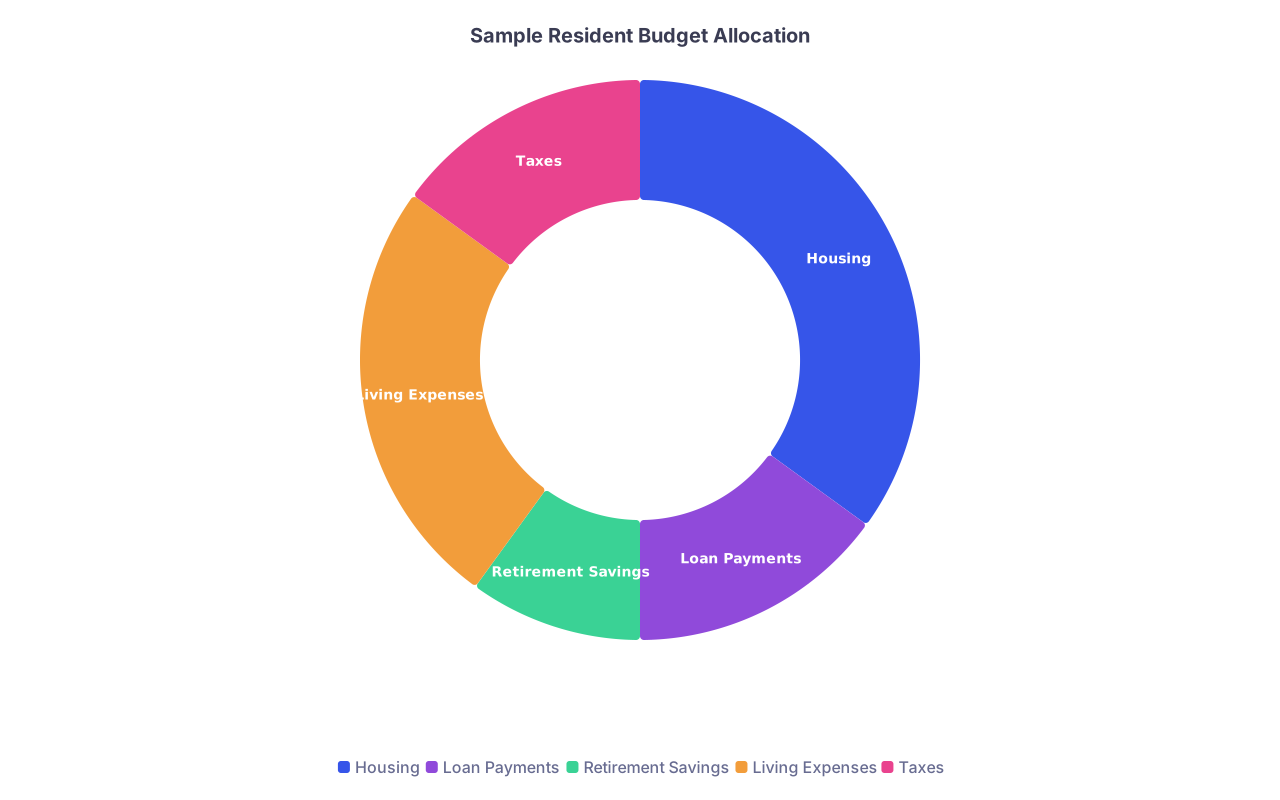
| Category | Value |
|---|---|
| Housing | 35 |
| Loan Payments | 15 |
| Retirement Savings | 10 |
| Living Expenses | 25 |
| Taxes | 15 |
October–December (MS3 Mid‑Year): Legal and Structural Prep
Now we move beyond pure “money” into the legal and structural side that actually protects your retirement path.
At this point you should:
- Draft basic estate and incapacity planning goals
You do not need a 40‑page legal document as an MS3. You do need clarity:
- Who makes medical decisions for you if you cannot?
- Who can access your accounts if something happens?
- If you have a partner or kids: who do you want to protect?
In many states, you can execute:
- Healthcare proxy / advance directive
- Basic durable power of attorney These are not retirement tools directly, but they protect the person who is supposed to execute your retirement plan. You.
Understand employer retirement plans before you have one
- Learn:
- What a 403(b) vs 401(k) vs 457(b) actually means.
- The concept of “match” and “vested.”
- The tax difference between Roth and pre‑tax contributions to employer plans.
- Goal: when residency gives you a benefits packet, you can decide in under 30 minutes.
- Learn:
Align with your spouse/partner if applicable
- Have one focused conversation:
- Target retirement age each of you wants.
- Feelings about debt, especially your loans.
- Commitment level to maxing out retirement accounts once you have attending income.
- A misaligned partnership is one of the fastest ways to sabotage a solid plan.
- Have one focused conversation:
January–March (MS3 Spring): Residency Apps and Money Reality
This is where retirement planning intersects hard with your match strategy.
At this point you should:
Factor cost of living into your rank list strategy (yes, this early)
- Make a simple table with 3–5 likely cities or regions:
- Average PGY1 salary for your specialty.
- Estimated rent/studio or 1‑bedroom.
- State tax burden.
- You are not going to rank purely by money. But if Program A and B are identical in training quality and Program A is in a city where you can actually save, that matters.
- Make a simple table with 3–5 likely cities or regions:
Estimate your first year retirement contribution as a resident
- Aim for a specific number, not a vague “I’ll save something.”
- Example: “I will contribute at least $3,000 to Roth IRA, plus 5% of income to 403(b) if there is a match.”
- Plug this into your sample budget.
April–June (End of MS3): Interview Budget and Application Costs
At this point you should:
- Build an MS4 application and interview budget
- ERAS fees
- Travel / lodging (yes, still relevant even with virtual interviews; away rotations, second looks, etc.)
- Extra loan disbursement you might need
Why does this live in a retirement planning article? Because if you do not plan it, you end up taking on high‑interest credit card debt to float the year. That directly competes with your first resident retirement contributions.
MS4 – Locking In Your Residency‑Ready Retirement System
MS4 is your last chance to set this up while you have some mental bandwidth. After this, you are an intern. You will be exhausted and default to whatever looks simplest. Design that default now.
July–September (Early MS4): Final Runway Check
At this point you should:
Update your full financial inventory again
- Total debt
- Current cash
- Any existing investments (Roth IRA, taxable account)
- Net worth trend from MS1 to now—negative but hopefully improving.
Refine your resident budget for your specific specialty
- Get actual salary data from your target programs.
- Confirm typical call schedule and whether moonlighting is allowed PGY2+.
- Map:
- Rent limit (e.g., <30% of gross pay)
- Target monthly retirement contribution.
- Target monthly extra loan payment (if not PSLF path).
Make a PGY1 “Financial One Pager” This should include:
- Debt strategy (PSLF vs payoff).
- Retirement priority order (e.g., “1. Employer match, 2. Roth IRA, 3. Extra loan repayment, 4. Taxable investing”).
- Insurance plan:
- Disability: buy within first 3–6 months of residency.
- Life: term policy only if spouse/children/co‑signed loans.
Print it. Keep a PDF in your cloud storage.
October–January (Application and Match Season): Decisions With Money Consequences
At this point you should:
- Integrate financial tie‑breakers into your rank list
Ask of each program:
- Retirement plan quality (403(b) only, or also 457(b)? Any match?)
- State taxes and cost of living.
- Ease of cheap housing / roommates.
You are not picking programs because of their 403(b) match. But between two similar programs, the one where you can max a Roth IRA and still breathe is objectively better for your long‑term retirement.
- Confirm your loan strategy immediately post‑graduation
- PSLF intent:
- Keep loans federal.
- Plan to consolidate only if it improves IDR terms.
- Non‑PSLF:
- Note to explore refinancing late PGY2/early PGY3 when income stabilizes.
- PSLF intent:
February–April (Match to Graduation): Turn Plans Into Automation
After Match Day, things get very real, very quickly.
At this point you should:
Deep‑dive your residency benefits packet (60–90 minutes, once)
- Identify:
- Employer‑sponsored retirement accounts (403(b)/401(k)/457(b)).
- Match percentage and vesting schedule.
- Disability coverage (is it own‑occupation? How much?).
- Decide:
- Roth vs pre‑tax contributions early in career (most residents benefit from Roth, given low marginal tax rates).
- Identify:
Pre‑build your automation plan For your first 1–2 paychecks:
- Payroll deduction:
- Set X% to employer plan (enough to capture full match if available).
- Auto‑transfer:
- From checking to Roth IRA monthly (even if it is $100/month).
- Create calendar reminders:
- One 30‑minute review each quarter in PGY1 to adjust as you see reality.
- Payroll deduction:
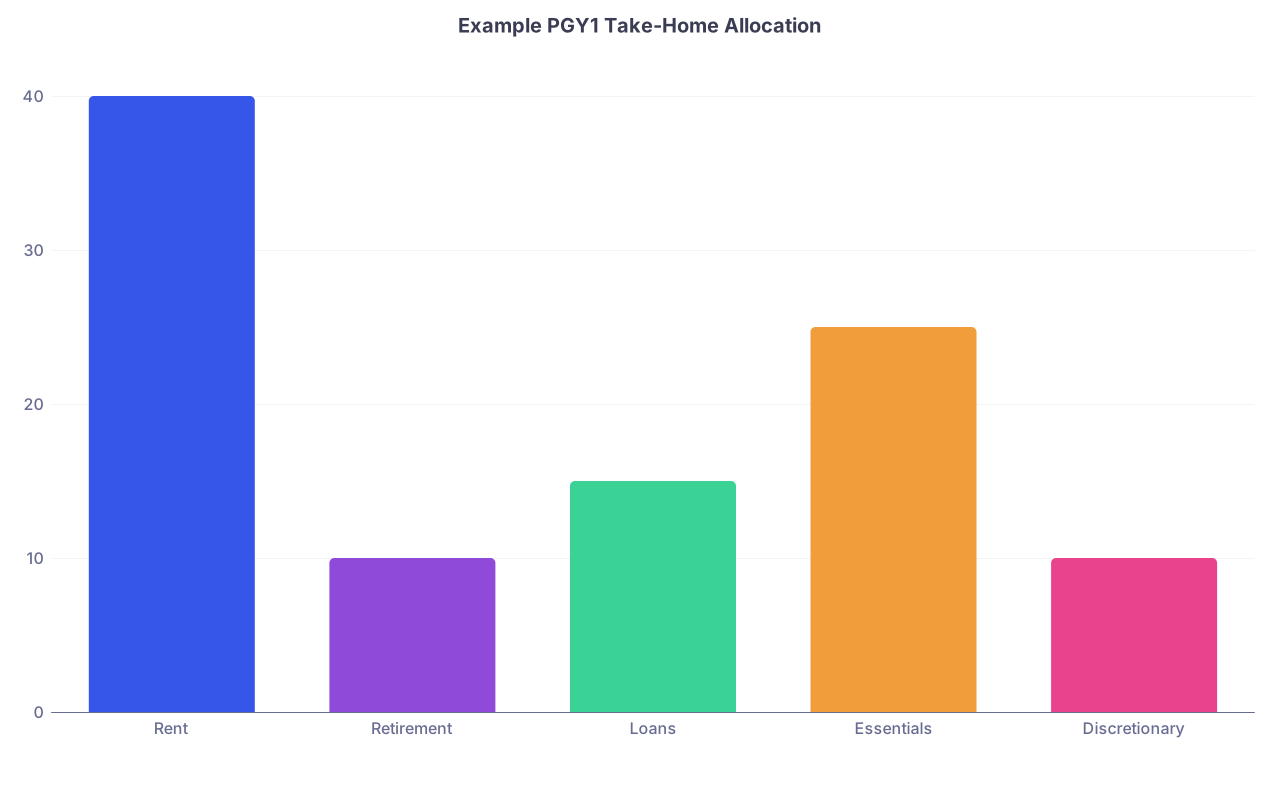
| Category | Value |
|---|---|
| Rent | 40 |
| Retirement | 10 |
| Loans | 15 |
| Essentials | 25 |
| Discretionary | 10 |
- Prepare your legal basics before moving
- If you have a partner or dependents:
- Get a simple will and healthcare proxy done (state‑appropriate).
- Update beneficiaries:
- Add your chosen beneficiary to any existing Roth IRA.
- Plan to add beneficiaries to new employer retirement accounts as soon as they are opened.
- If you have a partner or dependents:
May–July (Graduation and Transition to Residency): Execute the Handoff
This is the critical handoff period. You move from “student planning” to “resident implementation.”
At this point you should:
Finalize your debt setup
- Consolidate federal loans if part of your strategy.
- Select IDR plan (if PSLF or protection during residency).
- Turn on auto‑debit when payments start to avoid missed payments that hurt both credit and PSLF credit.
Open missing accounts before residency
- If you still do not have:
- Roth IRA → open now.
- High‑yield savings account for emergency fund → open now.
- Decide: which brokerage will hold your long‑term accounts so you do not scatter your financial life.
- If you still do not have:
Set your PGY1 “minimum savings floor”
- Pick a non‑negotiable monthly amount to retirement accounts (Roth IRA + employer plan).
- This is the number you protect even when life feels tight.
- You can upgrade it later, but you do not drop below it unless it is absolute emergency.
A Simple Annual Checklist You Can Reuse
To close, here is a condensed version you can run every year MS1–MS4, adapted to your stage:
| Task | Timing |
|---|---|
| Update net worth + loan inventory | Every August |
| Review / revise 1-page investment policy | Every October |
| Run 1-year and 10-year projections | Every January |
| Confirm student loan strategy | Every March |
| Adjust budget for new realities (exams, apps, moves) | Every April |
You will be busy. You will be tired. But once a year, for 2–3 focused hours, you can reset your entire trajectory.
Key Takeaways
- Retirement planning for you is not about picking hot investments; it is about building year‑by‑year systems before the big money arrives.
- Every med school year has a specific financial job: MS1 learn and track, MS2 optimize debt and start investing, MS3 build legal and structural scaffolding, MS4 hard‑wire a residency‑ready system.
- If you enter PGY1 with a clear written plan and basic automations in place, you are already ahead of most attendings a decade into their careers.