
The biggest retirement mistake physicians make is assuming their income will save them. It will not. Your timeline will.
You do not “drift” into retirement readiness. You hit specific financial and legal milestones, decade by decade, or you pay for it later in call shifts and burnout at 68.
Let me walk you through what should be true at 30, 40, 50, and 60—chronologically, with concrete targets. At each point: what you must already have done, what you should be doing that year, and what is non‑negotiable to fix if you are behind.
Age 30: Foundation Years (Residents, Fellows, Early Attendings)
At this point you should be building structure, not wealth. Your main job at 30 is to avoid unforced errors that wreck your 40s.
Most physicians at 30 are:
- PGY 3–5, fellow, or brand‑new attending
- Still cleaning up student loans
- Just starting to see a real 403(b)/401(k) balance
By Age 30, You Should Already Have
A debt and cash baseline
- Full list of:
- Federal and private student loans: balances, interest, repayment plan
- Credit cards and personal loans
- Car loans
- 1–2 months of basic expenses in cash (even if it is just $5k–$10k during training).
- Full list of:
Core protections in place
- Own‑occupation long‑term disability insurance (not the hospital’s weak group policy only).
- Term life insurance if:
- You have dependents, or
- Anyone relies on your income / future earning potential (spouse who stepped back from career, co‑signed loans, etc.).
Basic retirement infrastructure
- You are enrolled and contributing something—anything—to:
- Employer 403(b) or 401(k), even if only 3–5 % of income.
- Roth IRA (direct or backdoor) if eligible and cash allows.
- You have chosen low‑cost index funds, not random expensive mutual funds your colleague mentioned.
- You are enrolled and contributing something—anything—to:
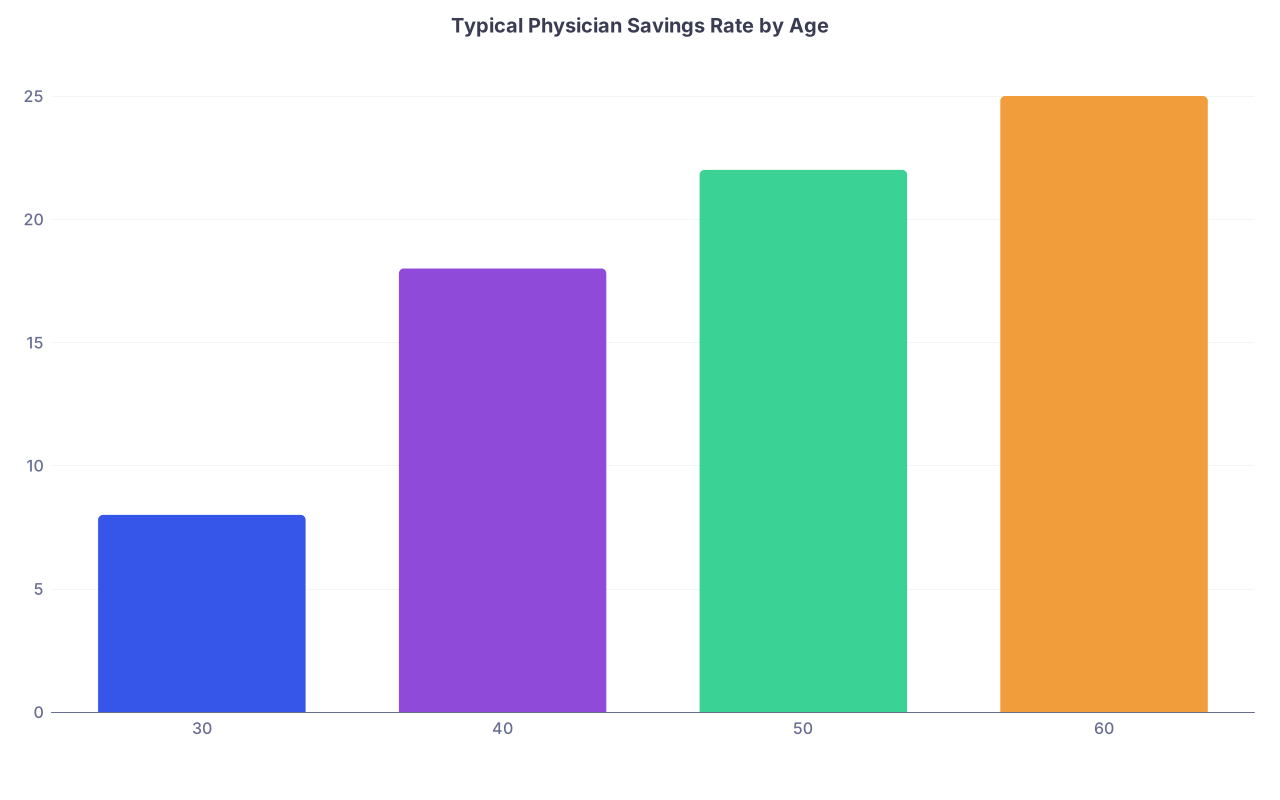
| Category | Value |
|---|---|
| 30 | 8 |
| 40 | 18 |
| 50 | 22 |
| 60 | 25 |
During Ages 27–30: Month‑by‑Month Priorities
Every January
- Increase your retirement contribution by at least 1 % of salary (automatic annual bump).
- Reconfirm beneficiaries on:
- Retirement accounts
- Life insurance policies
Every July (new training year / contract year)
- Review disability policy. If your coverage is not at least:
- 60–65 % of your attending‑level income (or projected income), plan to upgrade when you sign your attending contract.
- Re‑estimate your emergency fund target:
- Residents: aim for 1 month of expenses.
- Attendings: work toward 3 months.
Quarterly (15–30 minutes)
- Log in to:
- Loan servicer: check payments, verify PSLF credit if applicable.
- 403(b)/401(k): confirm:
- Contributions are happening.
- Investments are still in broad index funds (e.g., total market, S&P 500, target‑date fund).
Non‑Negotiables Before You Turn 31
By your 31st birthday, you should be able to check off:
- Disability insurance in force, own‑occupation
- Retirement account opened and funded in this calendar year
- You know your total loan balance within $5k
- A written plan (even a one‑page note) for:
- Loan strategy (PSLF vs aggressive payoff)
- How much % of income goes to retirement next year
If you are 30 and have none of this, you are not ruined. You are just late. Treat the next 12 months as a catch‑up year, not “someday.”
Age 40: Accumulation and Course Correction
By 40, the excuses stop. These are prime earning years. At this point you should be aggressively building net worth and tightening your legal framework.
Most physicians at 40:
- Are established attendings, sometimes in their second or third job
- May have a house, kids, maybe a divorce already in play
- Are either:
- Quietly ahead of schedule, or
- Very behind and a bit in denial
By Age 40, You Should Already Have
- Meaningful retirement balances Here is what “on track” usually looks like for a physician who finished training late and started saving around 30:
| Age | Solid Progress | At Risk (Needs Catch-Up) |
|---|---|---|
| 30 | $0–$50k | $0 and no plan |
| 40 | 1–2x salary | < 0.5x salary |
| 50 | 3–5x salary | < 2x salary |
| 60 | 7–10x salary | < 5x salary |
If your household income is $350k at 40, a solid target is roughly $350k–$700k in all retirement accounts combined. Not perfect science, but a real gut check.
Serious emergency fund
- 3–6 months of living expenses in cash or high‑yield savings.
- Not invested in stocks. Not “available” via a HELOC you might lose in a downturn.
Student loans under control One of:
- PSLF track with clear qualifying payment count
- Refinanced to a lower rate and on pace to be gone by your mid‑40s
- Already paid off
-
- Will
- Durable financial power of attorney
- Health care proxy / advance directive
- Guardians named for minor children

Age 35–40: Year‑by‑Year Checklist
Every Year (Non‑negotiable at this stage)
Max tax‑advantaged accounts (or have a strong reason not to)
- 401(k)/403(b): aim to hit the IRS maximum employee contribution.
- Backdoor Roth IRA for you (and spouse if applicable).
- Health Savings Account (HSA) if on a high‑deductible plan; invest it, do not let it sit in cash long‑term.
Increase savings rate
- Total retirement savings (all accounts) should be:
- 15–20 % of gross income as a floor
- 20–25 % if you started late or plan to retire before 60
- Total retirement savings (all accounts) should be:
Insurance review
- Disability: correct benefit amount and riders (residual, future increase option).
- Term life: enough coverage to:
- Replace 10–15 years of income
- Pay off mortgage
- Fund college if that is your priority
Lifestyle discipline
- If your “doctor house” and “doctor car” are forcing your savings rate below 15 %, you are buying extra years of work later. Be honest about that trade.
Age 40 Legal and Risk Milestones
At this point you should:
- Have a basic estate plan signed and executed
- Separate personal and business finances (if you are 1099, partner, or run a side practice)
- Carry:
- Adequate malpractice
- Umbrella liability insurance (at least $1–2M)
This is where I see physicians get blindsided by lawsuits, disability, or sudden divorce. The ones who did their legal homework at 40 recover. The others lose a decade.
Age 50: Pre‑Retirement Positioning and Gap Closing
Age 50 is the reality check decade. You are close enough to retirement that your numbers are meaningful, but far enough that corrections still help.
At this point you should be able to answer a simple question without hand‑waving: “Could I retire at 60 if I wanted to?”
By Age 50, You Should Already Have
Substantial retirement assets
- Target: 3–5x your annual household income in investment and retirement accounts.
- If you are at 2x, you are not doomed, but you need a deliberate catch‑up strategy.
Mortgage and debt status
- Ideal: Mortgage on track to be fully paid by ~60–65.
- No student loans left.
- No high‑interest consumer debt.
Clear retirement vision
- Rough target age (55? 60? 65?)
- Rough lifestyle budget: same as now, or 70–80 % of current spending?
- Whether you plan:
- Full stop retirement
- Gradual step‑down (part‑time, locums, telemed)
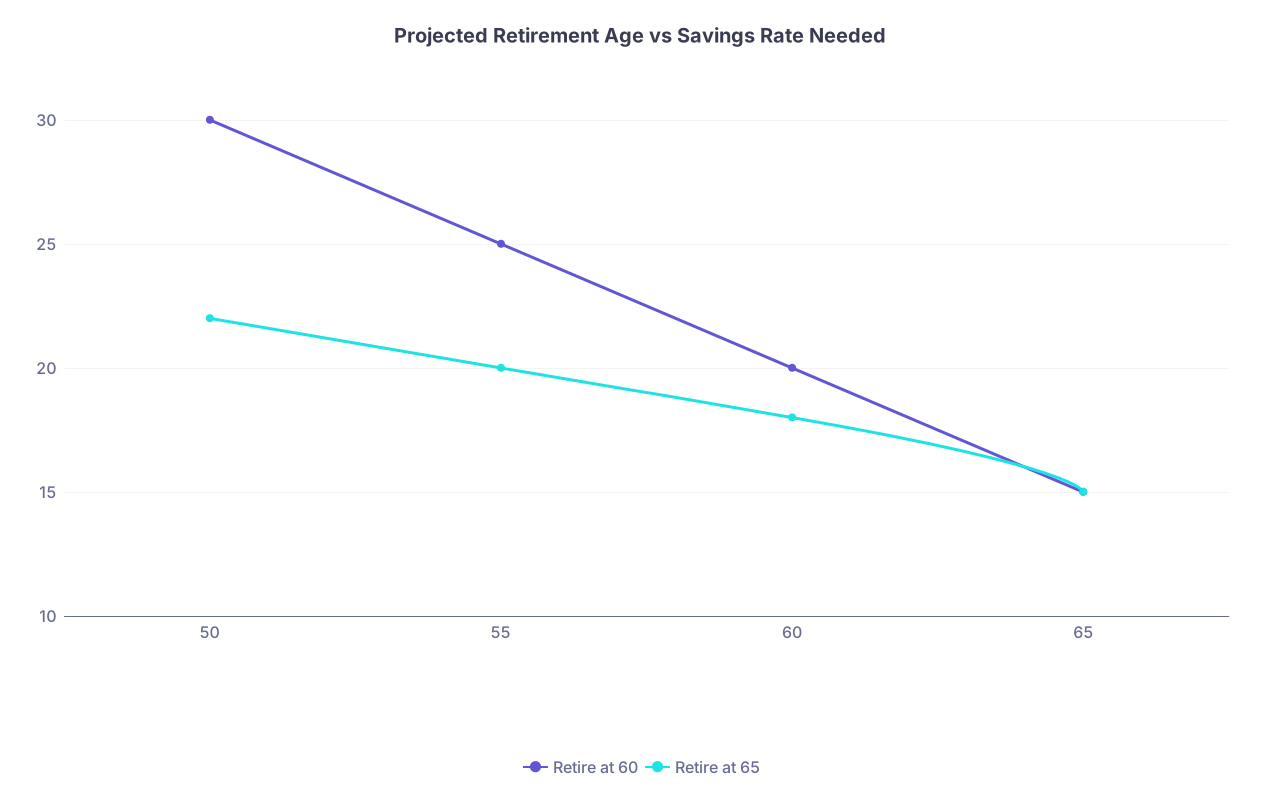
| Category | Retire at 60 | Retire at 65 |
|---|---|---|
| 50 | 30 | 22 |
| 55 | 25 | 20 |
| 60 | 20 | 18 |
| 65 | 15 | 15 |
- Tax diversification
- Some money in:
- Pre‑tax accounts (401(k), 403(b), 457(b))
- Roth accounts (Roth IRA / Roth 401(k) portions)
- Taxable brokerage account
- Some money in:
This mix gives you control over your tax bracket in retirement. Physicians who only used pre‑tax accounts feel trapped by RMDs and big tax bills later.
Age 45–50: Five‑Year Tightening Plan
Every January
- Update a real retirement projection:
- Current balances
- Savings rate
- Assumed retirement age and spending
- If the projection says you are off track, pick one lever to pull harder this year:
- Increase savings rate by 3–5 %
- Delay retirement age by 1–2 years
- Trim lifestyle / housing costs
Every Tax Season
- Meet with a CPA or tax‑savvy planner to:
- Optimize use of:
- 401(k)/403(b)
- 457(b) (if available and stable employer)
- Defined benefit / cash balance plans (common in some small groups)
- Discuss Roth conversions strategies for your 60s.
- Optimize use of:
Mid‑Year
- Portfolio review:
- Is your asset allocation still appropriate?
- At 50, a portfolio 90 % in stocks usually indicates excessive risk, not bravery.
- Consider a gradual de‑risking glide path:
- A bit more bonds / fixed income
- Less concentration in single stocks or speculative assets
- Is your asset allocation still appropriate?

Age 50 Legal and Risk Milestones
At this point you should:
- Revisit estate plan:
- Are guardians, executors, trustees still the right people?
- Do adult children need trusts or protections? - Check beneficiary designations: - 401(k), 403(b), IRAs, life insurance all aligned with your will
- Consider:
- Long‑term care insurance, especially if there is family history of cognitive decline or major disability
- Asset protection (state‑specific homestead protections, titling, etc.)
Age 60: Transition, Not Guesswork
Age 60 is no longer planning in the abstract. You are either about to retire within 5–10 years or actively choosing to work longer.
At this point you should be converting a pile of accounts and documents into an actual lifetime income plan.
By Age 60, You Should Already Have
Retirement savings that roughly “work”
- Good ballpark: 7–10x annual income saved, if you want to retire in your mid‑60s with a similar lifestyle.
- Less than 5x at 60 means:
- Either work longer,
- Or significantly lower retirement spending,
- Or both.
Paid‑off or nearly paid‑off mortgage
- Entering retirement with no housing debt simplifies everything.
- If your mortgage runs well into your 70s, you need a very intentional plan to cover it.
Defined retirement timeline
- Clear target:
- “Full‑time until 63, then 50 % until 67.”
- Or “Stop at 62, maybe occasional locums for mad money.”
- Clear target:
Distribution strategy
- You know:
- Which accounts you will tap first
- How much you can safely withdraw (rough rule: 3–4 % of portfolio per year, adjusted for risk and goals)
- How Social Security and any pensions fit into the picture
- You know:
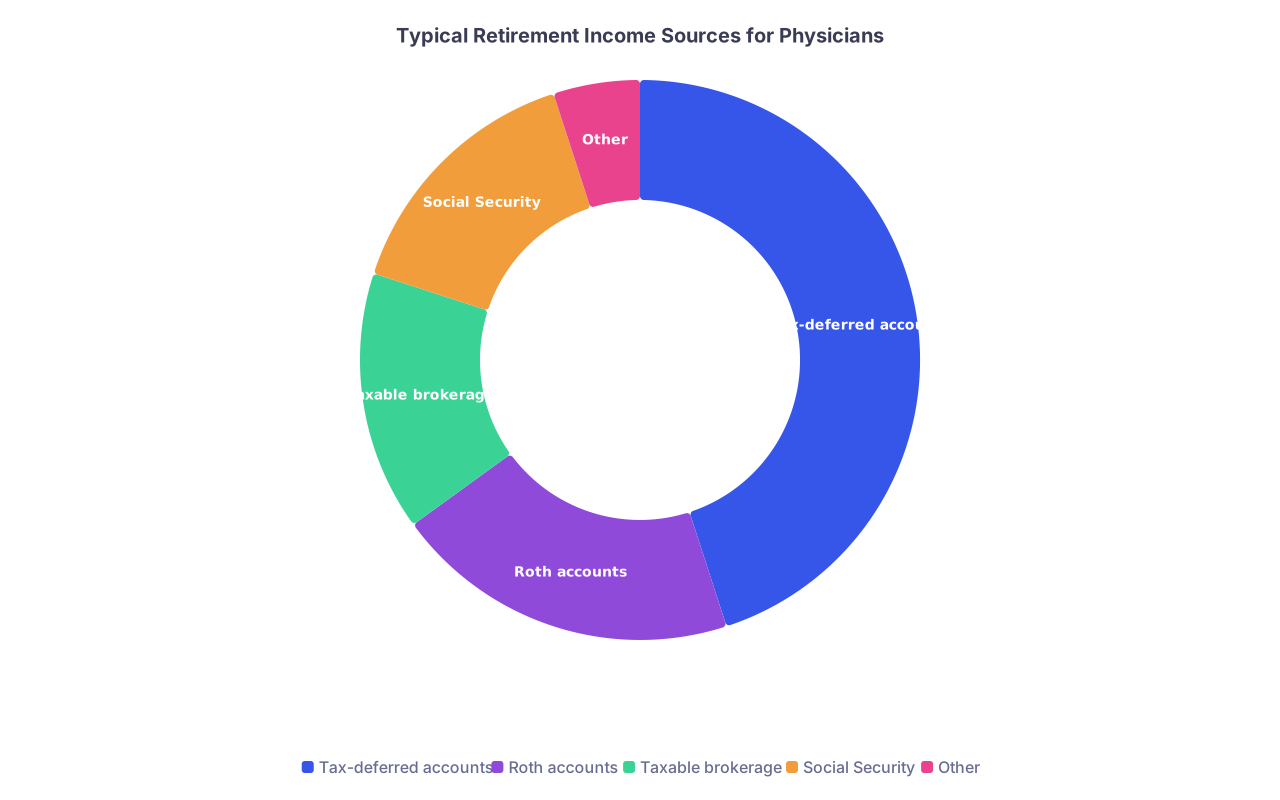
| Category | Value |
|---|---|
| Tax-deferred accounts | 45 |
| Roth accounts | 20 |
| Taxable brokerage | 15 |
| Social Security | 15 |
| Other | 5 |
Age 55–60: Year‑by‑Year Transition Checklist
5–10 Years Before Retirement (around 55)
- Run detailed projections:
- Multiple scenarios:
- Retire at 60 vs 65
- Spend $120k vs $90k per year
- Stress test:
- Market downturn early in retirement
- Higher health care costs
- Multiple scenarios:
- Adjust asset allocation:
- Shift gradually away from heavy equity exposure, but do not abandon growth completely. You still may need a 30‑40 year portfolio lifespan.
3–5 Years Before Retirement
Refine Social Security strategy:
- Decide:
- Claim at 62, full retirement age, or 70
- Many high‑earning physicians benefit from delaying for a higher guaranteed benefit, but run the numbers with your own health and family longevity.
- Decide:
Health care planning:
- If retiring before 65:
- Plan how you will cover insurance before Medicare (COBRA, exchange plans, part‑time benefits).
- At 64:
- Prepare for Medicare enrollment timing and supplemental coverage choices.
- If retiring before 65:
Finalize mortgage strategy:
- Decide whether you will:
- Pay off early
- Refinance to align payments with your retirement cash flow
- Downsize and free capital
- Decide whether you will:

Age 60 Legal and Legacy Milestones
At this point you should:
- Have a current, comprehensive estate plan including:
- Will
- Possibly a revocable living trust
- Updated powers of attorney and health care directives - Know exactly:
- Who will inherit which accounts
- How your spouse or partner would manage financially if you die first - Have discussed: - Your medical preferences near end of life with your family, not just your lawyer
This is where I see physicians’ families either thrive or scramble. The difference is not income. It is preparation.
Putting The Timeline Together
Here is the chronological “at this point you should…” path in one view:
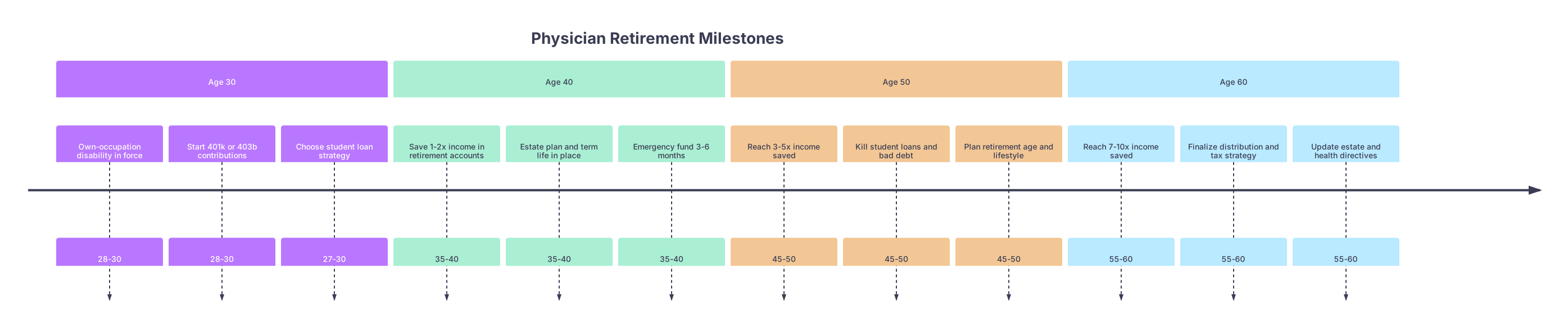
| Period | Event |
|---|---|
| Age 30 - Own-occupation disability in force | 28-30 |
| Age 30 - Start 401k or 403b contributions | 28-30 |
| Age 30 - Choose student loan strategy | 27-30 |
| Age 40 - Save 1-2x income in retirement accounts | 35-40 |
| Age 40 - Estate plan and term life in place | 35-40 |
| Age 40 - Emergency fund 3-6 months | 35-40 |
| Age 50 - Reach 3-5x income saved | 45-50 |
| Age 50 - Kill student loans and bad debt | 45-50 |
| Age 50 - Plan retirement age and lifestyle | 45-50 |
| Age 60 - Reach 7-10x income saved | 55-60 |
| Age 60 - Finalize distribution and tax strategy | 55-60 |
| Age 60 - Update estate and health directives | 55-60 |
Final Tight Summary
- Each decade has non‑negotiable milestones: protection and structure in your 30s, aggressive accumulation and legal groundwork in your 40s, course correction and tax planning in your 50s, and concrete distribution and legacy planning in your 60s.
- The earlier you hit the “must‑have” targets—disability insurance, savings rate, estate documents—the more optional your work becomes after 60. Miss them, and you trade money worries for extra years on call.