
It’s January 1st. You’ve just flipped the wall calendar in your office and done the math in your head: in about ten years, you want to be done. Not cutting back. Not “semi-retired.” Actually retired or at least fully work-optional.
You’ve got decent savings, a 401(k)/403(b) or 457, maybe a practice buy-in or some hospital stock. But the plan in your head is fuzzy. “I’ll probably work until… we’ll see.” That’s not a plan. That’s drift.
Let’s turn the next decade into an actual countdown. Year by year. What to tighten up and when.
Big Picture: Your 10-Year Retirement Clock
At this point you should be thinking in phases, not vague goals. Ten years is long enough to correct course, but not long enough to wing it.
Here’s the structure we’re going to use:
| Phase | Years Out | Primary Focus |
|---|---|---|
| Phase 1 | 10–8 years | Define target, fix savings & debt |
| Phase 2 | 7–5 years | Tax and investment optimization |
| Phase 3 | 4–3 years | Legal structure & risk protection |
| Phase 4 | 2–1 years | Income mapping & exit terms |
| Phase 5 | Final Year | Execution & handoff |
And visually:
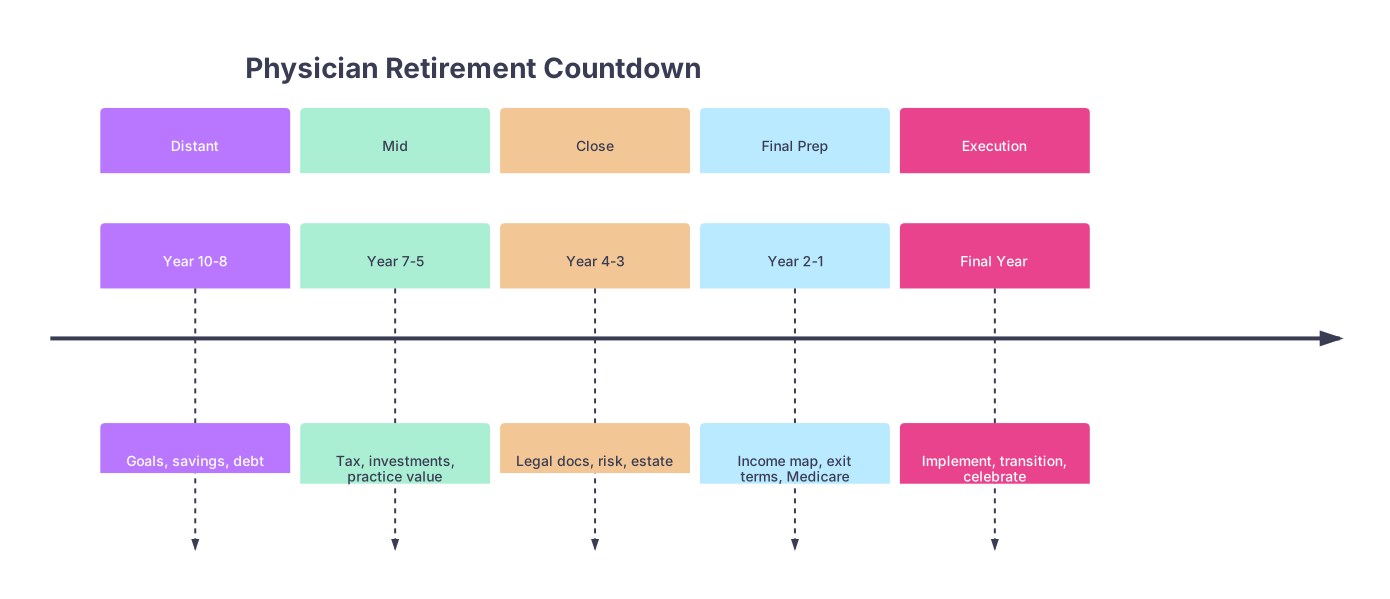
| Period | Event |
|---|---|
| Distant - Year 10-8 | Goals, savings, debt |
| Mid - Year 7-5 | Tax, investments, practice value |
| Close - Year 4-3 | Legal docs, risk, estate |
| Final Prep - Year 2-1 | Income map, exit terms, Medicare |
| Execution - Final Year | Implement, transition, celebrate |
Now we’ll walk through each phase, with “at this point you should…” guidance.
Years 10–8 Out: Define the Target and Fix the Leaks
Right now, the biggest risk is not “running out of money.” The biggest risk is not knowing your number and wasting years under-saving or over-spending.
At this point (10 years out) you should:
Pick a target retirement age window, not a single date
Example: “Age 62–64” instead of “62 exactly.” This gives flexibility for markets, health, and practice sale timing.Define your required retirement spending
Not napkin math. Real numbers.- Pull your last 3–6 months of credit card and bank statements
- Annualize them, then separate into:
- Non-negotiable (housing, food, insurance, taxes)
- Discretionary (travel, gifts, hobbies)
- Add future line items you know are coming:
- College help for kids or grandkids
- Weddings, big family trips
- Aging parents support
Your result: a base number (must-have) and a nice-to-have number.
Inventory all assets and income sources
Create a simple sheet:
- Tax-deferred: 401(k)/403(b), 457(b), profit-sharing, cash balance
- Taxable brokerage
- Roth accounts
- Practice equity / partnership interest
- Real estate (including any practice building)
- Pensions, Social Security estimates
- Other: HSA, deferred comp, side-business equity
If it’s scattered across five custodians, that’s fine. List everything with approximate balances.
Calculate your rough FI (financial independence) position
Use a conservative rule of thumb:
- Sustainable annual withdrawals ≈ 3.5–4% of your invested portfolio
- Compare 3.5–4% of your current portfolio to your projected annual spending
Example:
- Portfolio: $3M
- 3.5% = $105k/year
- Spending goal: $200k/year
- Gap: ~$95k/year → you are not there yet.
Fix the obvious leaks: high-interest debt and poor savings rate
At this stage, you cannot justify:
- Credit card balances
- Personal loans
- Big-ticket lifestyle creep without matching savings increases
Target savings rate (all-in, including employer contributions):
- Late-career physicians often need 25–35% of gross income going to retirement and investment accounts for the last decade, especially if you started late.
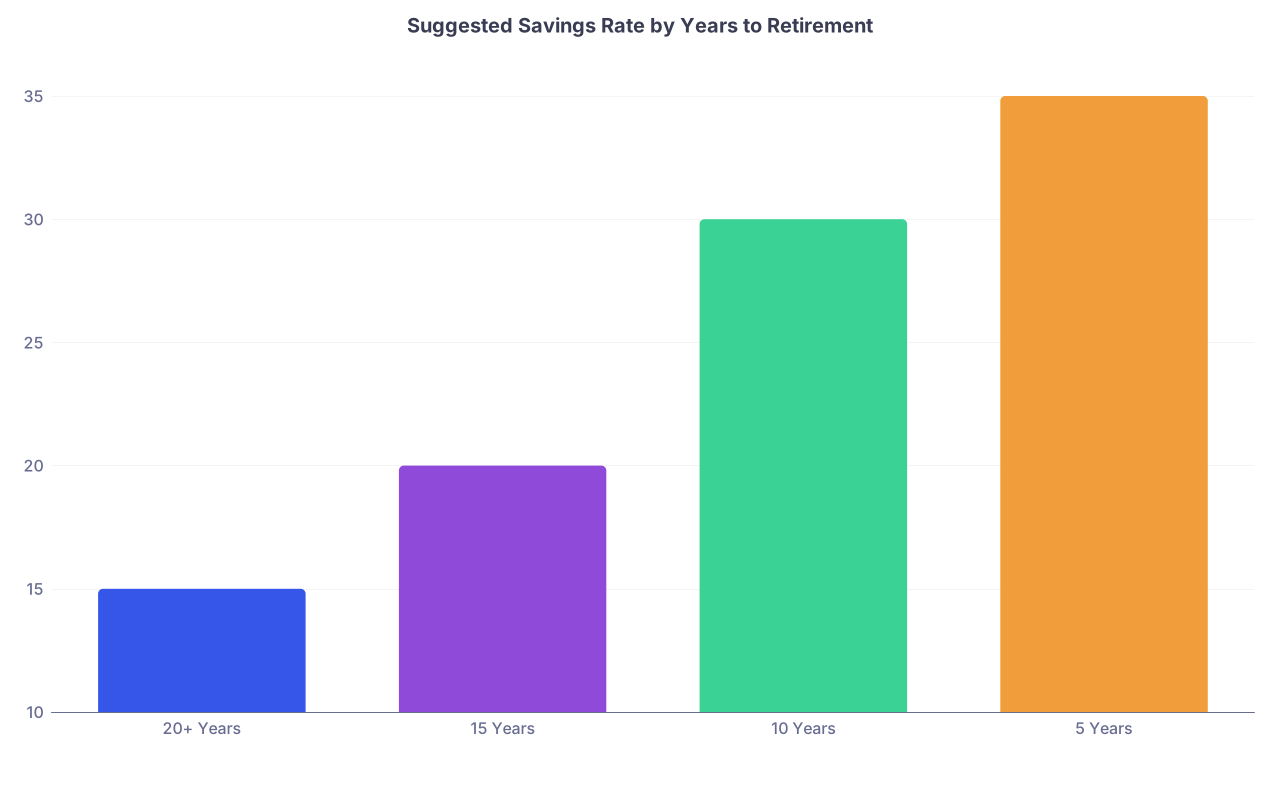
| Category | Value |
|---|---|
| 20+ Years | 15 |
| 15 Years | 20 |
| 10 Years | 30 |
| 5 Years | 35 |
If that number scares you, good. Better to be scared at 10 years out than at 2 years out.
Decide: are you a “practice equity” or “portable” physician?
- Practice equity: Private group, ASC owner, practice real estate, etc.
Your retirement depends partly on selling something. - Portable: Hospital-employed, academic, W-2.
Your retirement depends almost entirely on your portfolio and pensions.
Those paths have very different legal and financial prep later. Know which you are.
- Practice equity: Private group, ASC owner, practice real estate, etc.
Years 7–5 Out: Optimize Taxes, Investments, and Practice Value
You’ve defined the target and tightened the leaks. Now you refine the engine: how money flows into and grows inside your accounts, and how your practice will be treated.
At this point (7–5 years out) you should:
Clean up your investment strategy
This is where a lot of doctors screw it up. At 55 they’re:
- 95% in individual stocks picked by a “guy from residency”
- Or sitting on cash because “markets feel high”
- Or in 10 different target-date funds and can’t explain why
You need:
- A written investment policy statement (IPS), even if it’s one page
- Target stock/bond mix (e.g., 60/40, 70/30)
- Simple, low-cost index funds or evidence-based strategies
- A plan for rebalancing annually
Align asset location with tax planning
Basic principles:
- Higher-growth, tax-inefficient stuff → tax-deferred or Roth accounts
- Tax-efficient broad index funds → taxable brokerage
- Bonds often in tax-deferred (401(k), IRA), unless munis in taxable make sense
This is where a good tax-focused advisor is actually worth their fee. Not the one selling whole life insurance as “an investment.”
Maximize every tax-advantaged retirement vehicle
Checklist (depends on your structure):
- 401(k)/403(b) employee deferral to IRS max
- Employer/profit-sharing or cash balance plan contributions
- 457(b) if available (and you understand plan safety)
- Backdoor Roth IRAs (if not blocked by large pre-tax IRAs)
- HSA contributions if eligible
The last 7–5 years are a race: stuff as many after-tax dollars into tax-efficient buckets as legally possible.
Get serious about your practice contract and buy-out
If you’re in private practice or a partnership, this is the beginning of the value-extraction phase.
At this point you should:
- Get a clean copy of:
- Partnership or operating agreement
- Buy-sell agreement
- Practice valuation formulas
- Understand:
- How your shares are valued
- Timing of buy-out payments (lump-sum vs installments)
- What happens if you become disabled or die
If the agreements are vague or outdated, push for an update now, not when you’re 18 months from leaving.
- Get a clean copy of:
Review disability and life insurance with a retirement lens
- Long-term disability: do you still need the same benefit at 7–5 years out? Maybe. Maybe not.
- Life insurance: term policies that end just before you want to retire can create pointless anxiety or gaps.
- Whole life / permanent policies: this is when you decide whether to keep them, restructure, or extract cash value—ideally with fee-only advice, not the original salesperson.
Years 4–3 Out: Legal Structure, Risk Protection, Estate Clarity
Now you shift from accumulation to protection and control. You’re close enough that lawsuits, bad contracts, or sloppy estate planning can do real damage.
At this point (4–3 years out) you should:
Update core estate planning documents
Minimum package for a physician with assets:
- Will
- Revocable living trust (in many states, highly recommended)
- Durable power of attorney
- Healthcare proxy / advance directive
- HIPAA releases
If you have minor children or dependents, you should not be guessing who raises them or controls assets if you’re gone.
Clarify beneficiary designations across all accounts
I’ve watched families get burned by this one. Don’t be that story.
- 401(k)/403(b), IRAs, Roths
- HSAs, life insurance policies
- Deferred comp and pensions
Confirm these match your current wishes and your estate plan in writing, not “I think my spouse is listed.”
Assess asset protection and malpractice risk
If you’re in a high-risk specialty (OB, neurosurgery, anesthesiology, etc.), these few years matter. Steps may include:
- Confirm adequate malpractice coverage (including tail coverage planning)
- Consider state-specific asset protection tools:
- Proper titling of home (tenants by entirety where applicable)
- Max funding of protected retirement accounts
- Umbrella liability policy tied to home/auto
Avoid last-minute transfers that look like fraudulent conveyance. Doing this strategically 3–4 years out is smarter and cleaner.
Review and tighten business / practice legal documents
You’re looking for:
- Clear provisions for retirement vs termination vs disability
- Non-compete language (geographic range, duration)
- Treatment of accounts receivable and practice debts at exit
- What happens to your name/reputation/phone number/website after you leave (solo and small groups often mess this up)
Draft or refine your “Letter of Intent” version of retirement
This is not always a formal legal document, but a simple written outline:
- Target retirement month/year
- Desired transition period (3 months, 6 months, 1 year)
- Call reduction schedule
- Handoff/mentoring expectations for junior partners or new hires
You’ll use this as a negotiation anchor when you start formal exit talks later.
Years 2–1 Out: Income Mapping, Exit Terms, and Healthcare
Now you start moving from “someday” to calendar dates. The main threads: income, taxes, practice exit, and health coverage.
At this point (2 years out) you should:
Create a year-by-year income map for the first 5 years of retirement
On a simple grid, list for each year:
- Expected portfolio withdrawals
- Social Security status (delay or start)
- Any pension start dates
- Buy-out payments from practice
- Side income (consulting, locums, expert witness work)
The goal: no surprise tax cliffs.
- You may delay Social Security to age 70 for higher benefits
- You may intentionally have 1–2 years of lower income to do Roth conversions in a favorable tax bracket
Plan Roth conversions and tax bracket management
Talk with a tax-focused advisor or CPA. Roughly:
- If you’ll have low-income years between retirement and RMD age, that’s prime time for Roth conversions
- If you’re sitting on huge pre-tax balances, start modeling RMDs (Required Minimum Distributions) and their tax impact
Lock in your healthcare strategy
This one derails a lot of physicians.
If you retire before 65 (Medicare age), your options:
- COBRA from your employer (usually 18 months, sometimes 36 in some circumstances)
- ACA marketplace plans (subsidies depend on income; your portfolio withdrawals count)
- Spouse’s plan if they keep working
At this point you should:
- Price out 2–3 realistic scenarios with real premiums and deductibles
- Decide if retiring exactly at 63.5 makes more sense to bridge with COBRA to Medicare, or if you’re comfortable with ACA plans
Negotiate and formalize your exit with the practice or employer
For private practice:
- Confirm valuation date and formula
- Agree on:
- Final full-time date
- Any part-time/consulting continuation
- Call changes or removal
- Timeline for payout (and interest if payments are spread)
For employed physicians:
- Clarify unused PTO payout rules
- Confirm any vesting on pensions, deferred comp, or stock
- Pin down last working day and any post-employment restrictions
Begin shifting your investment risk profile
Do not swing from 90% stocks to 20% overnight. But also do not walk into retirement with “YOLO” risk.
At this point you should:
- Gradually tilt toward your target conservative allocation over 1–3 years
- Build 1–2 years of essential expenses in safer assets (short-term bonds, cash equivalents) to ride out market dips without panic selling
Final Year: Implementation, Handoff, and Legal/Financial Cleanup
Now the plan stops being theoretical. This is where details matter and procrastination hurts.
At this point (final 12 months) you should:
Set the exact retirement date and communicate it deliberately
Rough sequence:
- 12–9 months: Inform key partners/leadership privately
- 9–6 months: Begin telling closer colleagues and staff
- 6–3 months: Inform patients in waves (letters, portal messages)
- Last 3 months: Broad communication and handoffs
Execute your legal and contract details
- Sign final buy-out or separation agreements
- Confirm tail coverage:
- Who pays
- Coverage length and scope
- Update or terminate employment contracts, directorships, or medical directorship deals that might imply ongoing obligations
Tighten estate and beneficiary items one more time
Last pass before retirement:
- Reconfirm:
- Will and trust terms
- Beneficiaries on all financial accounts
- Powers of attorney and healthcare directives
- If you moved or changed states in the last decade, have a local estate attorney confirm everything still fits your current jurisdiction.
- Reconfirm:
Finalize your initial withdrawal strategy
Decide how you’ll pull money:
- Monthly withdrawals vs quarterly from which accounts
- Taxable vs tax-deferred vs Roth order in years 1–5
- How you’ll refill your “cash bucket” from investments (annual rebalancing, etc.)
Close out business and admin details
For private practice:
- Remove your name from:
- Business banking
- Lines of credit
- Vendor contracts
- Clarify:
- Who controls charts and records
- Who handles old records requests and how you’re protected
For both private and employed:
- Confirm final paychecks, bonuses, PTO payout
- Download or receive final benefit statements
- Document everything in a single retirement binder (digital or physical):
- Key contracts
- Policy numbers
- Account list and access instructions for your spouse/partner
- Remove your name from:
Mentally rehearse your first “post-retirement” year budget and lifestyle
Don’t ignore this part. The budget you wrote 8–10 years ago? Pressure-test it:
- Compare it to your actual spending now
- Decide what’s non-negotiable vs flexible if markets dip
- Agree with your spouse/partner on “rules of engagement” for big spending in the first few years
Quick Example Timeline (Condensed)

Let’s put a fictional doc on this track:
Year 10 (age 55):
- Realizes portfolio is $2.5M, spending goal is $180k/yr. Gap identified.
- Increases savings from 18% to 30% of income, kills HELOC.
- Sets retirement window: 65–66.
Year 7 (age 58):
- Consolidates four old 403(b)s into one IRA.
- Moves from scattered actively managed funds to simplified 70/30 index portfolio.
- Revises partnership agreement to clarify buy-out formula and 5-year payout at retirement.
Year 4 (age 61):
- Updates will and creates a revocable trust.
- Re-checks beneficiaries; removes ex-spouse from one old 401(k) (yes, this happens).
- Increases umbrella insurance; gets clear on malpractice tail costs.
Year 2 (age 63):
- Runs a 10-year tax projection with CPA; plans Roth conversions between 66–70.
- Prices COBRA vs ACA vs working to 65; decides to retire at 64.5 and use COBRA to Medicare.
- Negotiates exit with group: last full-time day set, call removed in final 6 months.
Final Year (age 64):
- Signs buy-out papers; shifts portfolio gradually to 60/40 with 2 years of expenses in low-risk assets.
- Executes patient handoff plan, wraps up leadership roles, confirms tail coverage.
- Walks out on last day with an actual withdrawal plan starting the next month.
One More Visual: Where Effort Belongs Over Time
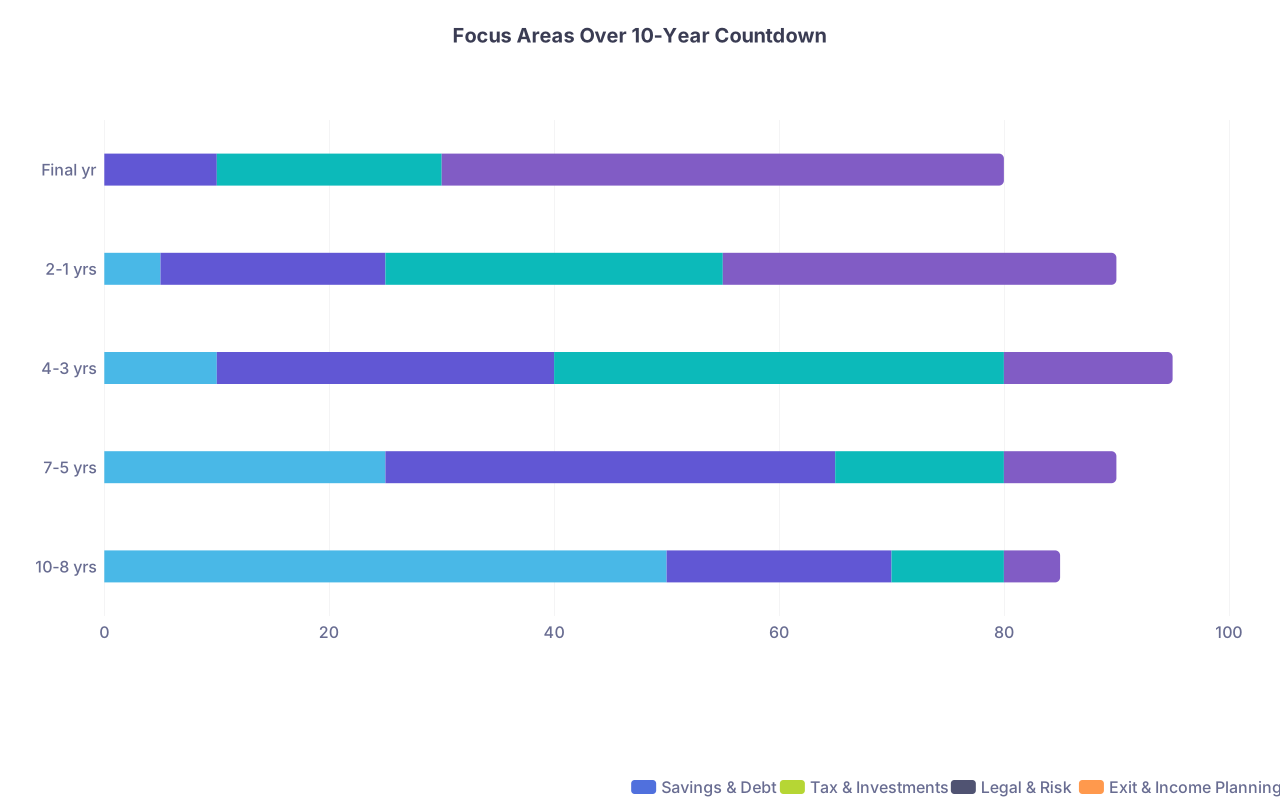
| Category | Savings & Debt | Tax & Investments | Legal & Risk | Exit & Income Planning |
|---|---|---|---|---|
| 10-8 yrs | 50 | 20 | 10 | 5 |
| 7-5 yrs | 25 | 40 | 15 | 10 |
| 4-3 yrs | 10 | 30 | 40 | 15 |
| 2-1 yrs | 5 | 20 | 30 | 35 |
| Final yr | 0 | 10 | 20 | 50 |
Numbers are rough, but the shape is right: heavy on savings early, heavy on legal/exit at the end.
Final Takeaways
- Ten years out, your main job is clarity: know your spending, assets, and target window, then fix the obvious leaks.
- The middle years are for optimization and protection: taxes, investments, practice value, and legal/estate structure.
- The last two years are where you lock it all in: healthcare, income mapping, contracts, and risk—so that retirement is a choice, not a panic.