
It’s Monday of Match Week, 10:56 a.m. Eastern.
You’re staring at your NRMP screen, heart pounding. Then the email hits:
“We are sorry, you did not match to any position.”
You already know what comes next. SOAP. You click into the unfilled positions list and feel that sick drop in your stomach. Dozens of programs. Hundreds of applicants. You had 1–2 interviews. Maybe zero. Now you’re wondering:
When my name shows up on some program director’s SOAP list… what do they actually see first? And what quietly kills me before anyone ever calls?
Let me tell you how this really works. Because what PDs say at info sessions and what they mutter behind closed doors on SOAP Monday are not the same thing. At all.
What Happens In The Program Office During SOAP
Here’s what you are up against.
SOAP opens. The list of applicants floods in. PDs and coordinators are sitting in a conference room or at someone’s office, multiple screens up, coffee that’s way too strong, time pressure high.
Nobody is “holistically reviewing” 150 SOAP applications per spot. They are triaging. Fast. Often brutally.
The first pass is not warm or thoughtful. It’s:
“Who can we trust to start July 1 without being a disaster?”
Different PDs use different filters, but the sequence of what they glance at is shockingly similar. Even across specialties.
Here’s the rough visual order your application gets seen in during SOAP:
| Priority Order | Element PD Looks At First |
|---|---|
| 1 | Match status / SOAP context |
| 2 | US grad vs IMG and visa needs |
| 3 | Exam status (Step 1/COMLEX 1 pass, Step 2 CK/Level 2 score) |
| 4 | Failed attempts / leaves / red flags |
| 5 | School / year of graduation (and gaps) |
Once you understand that, you can stop obsessing about the wrong pieces (like rewriting your personal statement from scratch at 12:30 p.m.) and focus on what actually swings decisions.
The Dirty Secret: PDs Absolutely Notice Your Lack of Interviews
Before they even dig into your file, PDs are mentally asking:
“If this person is so great, why did the regular Match not want them?”
They do not have that thought out loud, but they do think it. And yes, they notice the pattern of applicants with few or no interviews.
Here’s the unofficial internal breakdown I’ve seen more than once in committee rooms:
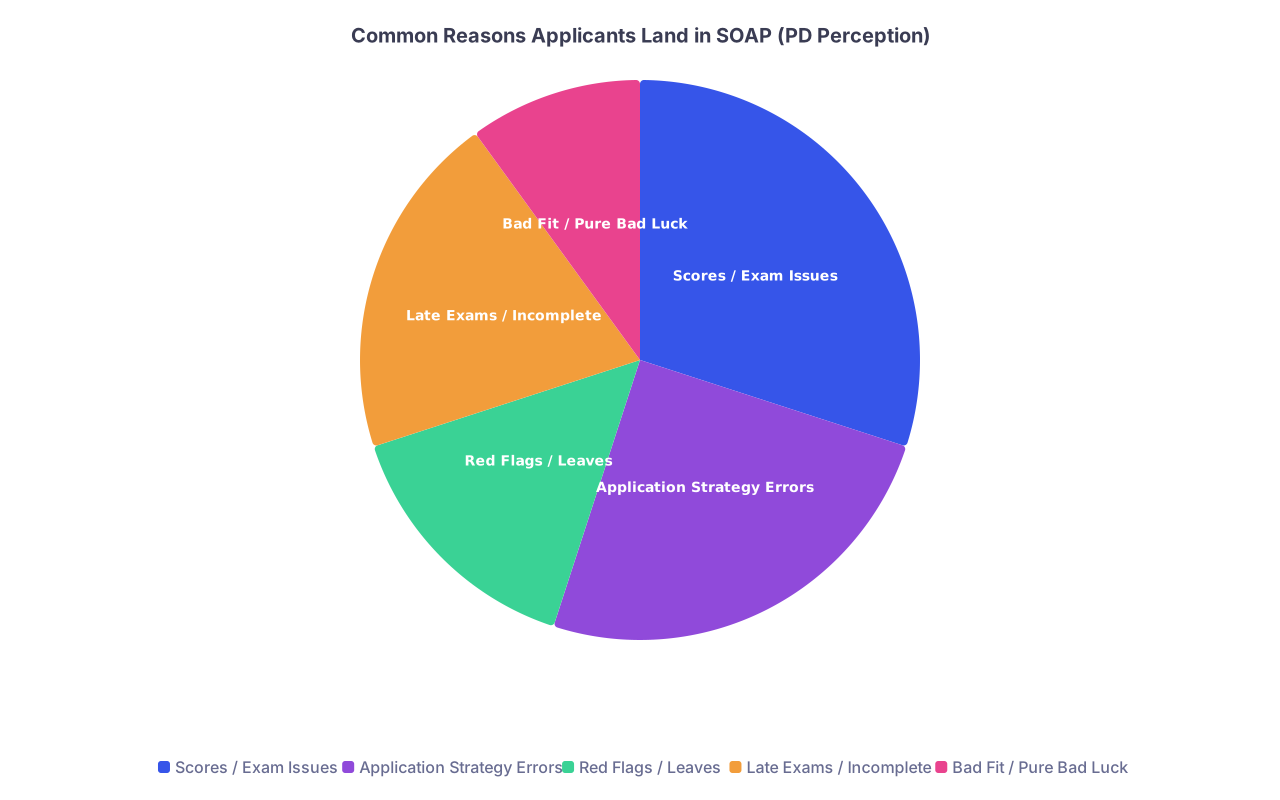
| Category | Value |
|---|---|
| Scores / Exam Issues | 30 |
| Application Strategy Errors | 25 |
| Red Flags / Leaves | 15 |
| Late Exams / Incomplete | 20 |
| Bad Fit / Pure Bad Luck | 10 |
When a PD sees someone with limited or no interviews, three questions pop into their head almost immediately:
- Is this a score/exam problem, or a professionalism problem?
- Is this a strategy/mentorship problem? (which is fixable)
- Is this applicant going to create more work for us than they’re worth?
You need your application to scream:
“I’m in SOAP because of a structural or strategy issue, not because I’m unsafe, lazy, or unreliable.”
What PDs Look At First – In Practice, Not In Brochures
1. US Grad vs IMG and Visa Status
You might not like this, but it’s the first layer of sorting in a lot of programs.
There’s often a filter conversation that sounds like this:
“Let’s pull US MD/DO first, then US citizen/permanent resident IMGs, then visa-needing IMGs if we still have gaps.”
That does not mean IMGs cannot get SOAP positions. They do. Every year. But when time is short, PDs cluster toward the path of least administrative resistance.
So on first glance, PDs notice:
- US MD vs US DO vs US-IMG vs non-US IMG
- Visa required or not
- Year of graduation (fresh vs older grad)
If you’re an older IMG, visa-requiring, and in SOAP with limited interviews? You are starting from behind. That’s just the math. You need every other piece of your file to tell a compelling story fast.
2. Step 1 / COMLEX 1: Just “Pass” Is Fine. Failures Are Not.
SOAP is not where PDs suddenly become philosophical about “holistic review.” They are trying to avoid problems.
On first scan they look for:
- Did you pass Step 1 / COMLEX 1?
- Any failures? How many? How recent?
One failure with clear recovery? Many PDs can live with that in SOAP. Multiple failures? Different energy. I have heard:
“We are not fixing someone else’s academic remediation project in March.”
Harsh. But real.
What stands out in a good way:
- Step 1/Level 1: Pass on first try
- If there was a fail: documented improvement on subsequent exams, plus a short, coherent explanation in your SOAP communication (if needed)
What makes PDs move on without a second thought:
- Multiple Step/COMLEX failures with no obvious upward trend
- Ongoing “awaiting results” for Step 2 CK/Level 2 when almost everyone else has scores
3. Step 2 CK / COMLEX Level 2: The “Can They Handle the Service?” Metric
During SOAP, Step 2 / Level 2 is often the real sorting weapon.
Here’s how they think about it:
- This score = can this person carry a cap of 8–10 patients on day one without hurting anyone?
A mid-range score with no failures is fine. Exceptional scores in SOAP actually make PDs suspicious:
“Why are they here with a 255?”
Answer in the room: “So what’s the catch?”
You need your file to answer that question fast (late application, couples match, wrong specialty strategy, personal/family issue, etc.).
If your Step 2/Level 2 is lower, PDs look for:
- Was it at least a pass on first try?
- Any upward trend from Step 1 / Level 1?
- Do your clerkship grades and letters contradict the test score by saying you perform well clinically?
This is where your limited interviews actually work against you. A PD thinks:
“If they’re clinically good, why didn’t anyone else invite them?”
Your SOAP communications and letters have to plug that gap.
4. Obvious Red Flags: Leaves, Gaps, Probation, “Irregular” Paths
PDs are not blind. They scroll for:
- LOA (leave of absence)
- Extended time in medical school
- Gaps after graduation
- “Academic probation” or professionalism committees
There is a difference between:
- “I took a year for research / family illness / health issue, then came back and performed well.”
vs. - “This person barely held it together and has a string of professionalism issues.”
What PDs notice first here is not the story. It’s the pattern:
- One disruption with a clear before/after improvement = survivable.
- Multiple disruptions, half-explained, with no sustained high performance after = they move on.
If you have a gap or leave and you had limited interviews, assume PDs will think: “This probably scared off other programs.” Your job is to give them a concise, adult explanation in your communications and/or PS that frames it as a period of struggle followed by real growth.
Not a drama narrative. A growth and stability narrative.
5. Year of Graduation and “Rust Factor”
For SOAP, recency matters more than people admit.
I’ve been in rooms where someone says:
“Anyone >2–3 years out of medical school goes in a separate pile. We will look if we have to.”
They do not phrase it publicly that way, but operationally that’s what happens in many programs.
On first read, PDs notice:
- Are you a current-year graduate or one-year out? Much easier sell.
- 3+ years out with limited interviews? Their brain jumps straight to: “Why now? What were they doing?”
If you’re an older graduate, you must:
- Show continuous relevant involvement (research, observerships, clinical work where allowed)
- Present strong, recent letters that say you’re clinically ready now, not 6 years ago
6. Specialty Shift or “Plan B” Vibes
Another thing PDs pick up on quickly: you applied somewhere else and are now diving into their specialty as a backup.
They can see your prior applications. They can infer from your PS, letters, and experiences. If you bombed in a competitive specialty with 0–1 interview and now you’re in SOAP for IM, FM, peds, psych, or prelim surgery, PDs ask:
- Is this person going to be resentful or disengaged here?
- Are they going to reapply to their “dream” next year and leave?
- Are they actually interested in my field or just taking shelter?
Your file needs to show at least minimum credibility in the SOAP specialty:
- A rotation or two in the field
- One letter from that specialty if humanly possible
- A personal statement that is clearly about this field, not generic or badly repurposed from derm/ortho/ENT
What PDs Look At Second: Patterns That Explain “Why SOAP?”
Once you survive the initial triage (pass vs fail, US vs IMG, timing, obvious red flags), then—and only then—do PDs start really reading you.
Here’s what they scan for to explain your limited interviews.
1. Geography and Application Strategy
I’ve watched PDs click into the interview tab or MSPE and say:
“They only applied in California and New York with a 220. That’ll do it.”
They are surprisingly forgiving of bad strategy. That’s fixable. Limited interviews because you only applied to 40 programs, or you were couples matching and overconstrained? PDs understand that.
What they don’t forgive easily:
- Broad application, modest scores, and still zero invites. That suggests other intangible red flags (bad letters, weird PS, poor communication, or being forgettable on paper).
Your SOAP communications are the one chance to say clearly:
“I’m in SOAP because my strategy was poor / I applied narrowly / I had a late Step 2 / I was changing specialties. Not because I am unsafe or unmotivated.”
2. Letters: Who Wrote Them and How They Sound
PDs don’t have time to read every word of every letter in SOAP. But they do skim the opening and closing paragraphs, and they absolutely look at:
- Who wrote it (chair vs community doc, specialty-aligned or not)
- Tone: enthusiastic vs lukewarm vs coded-negative
Some PDs literally search for phrases. They know the code.
Phrases that help you:
- “I give my highest recommendation with no reservations.”
- “This student is in the top 10% of all students I’ve worked with in the last X years.”
- “I would be thrilled to have them as a resident in our program.”
Phrases that quietly poison you:
- “I am confident they will be a resident somewhere.”
- “Given appropriate supervision, I believe they will do well.”
- “They completed the rotation satisfactorily.”
In SOAP, with limited interviews, one true advocate letter can rescue you. One toxic polite letter can sink you.
3. Clerkship Performance vs Test Scores
PDs look for alignment:
- High clerkship grades with weak scores? They may believe the “bad test-taker, strong clinician” story.
- Weak clinical grades and weak scores? They assume the problem is real and consistent.
For SOAP, a classic pattern that PDs like:
- Step 1: marginal pass or just okay
- Step 2: modest but improved
- Clinical evaluations: “Shows ownership, hardworking, good with patients, team player”
PDs want someone who will show up, not complain, not disappear, and not need constant rescue.
The Parts Applicants Obsess Over That PDs Barely Skim
You know what most SOAP applicants burn hours on that PDs barely care about on first pass?
- Rewriting personal statements from scratch
- Adding yet another 4-hour volunteer entry two days before SOAP
- Over-polishing research descriptions
In SOAP, PDs are not trying to be impressed. They are trying to avoid regret.
Your personal statement only matters if:
- You have a major gap / leave / score issue that needs framing
- You are switching specialties and must prove you’re serious about the new field
- You have some unusual life narrative that explains “Why SOAP?” in a way that’s credible and not self-pitying
The rest? They might skim the first few lines and the last paragraph.
How PDs Actually Choose Who To Call During SOAP
Let me map out the real process, not the sanitized one, for a typical mid-tier IM/FM/peds/psych program during SOAP.

| Step | Description |
|---|---|
| Step 1 | Download SOAP List |
| Step 2 | Filter by Eligibility |
| Step 3 | Check Step and Failures |
| Step 4 | Reject or Low Priority |
| Step 5 | Scan Letters and Clerkships |
| Step 6 | Identify 2-3 plausible reasons for SOAP |
| Step 7 | Rank Shortlist for Calls/Interviews |
| Step 8 | Phone/Video Interviews |
| Step 9 | Offer Positions |
| Step 10 | US vs IMG and Visa |
| Step 11 | Any obvious red flags |
What jumps applicants into that “shortlist” pile even with limited interviews?
- Clean passes on Step/COMLEX with at least average Step 2 / Level 2
- US grad or IMG with strong, recent clinical activity
- A simple, believable story for why they landed in SOAP (late exam, narrow geography, couples match, specialty change)
- At least one strong, enthusiastic letter from someone whose judgment PDs respect
- No arrogance, no drama, no email history of being a problem
And yes, programs absolutely Google people and check social media during SOAP if something feels off.
Specific Things That Make PDs Say “Yes, Call This One”
Here are some details that quietly move you from “just another SOAP file” to “let's talk to them,” especially with a thin interview history.
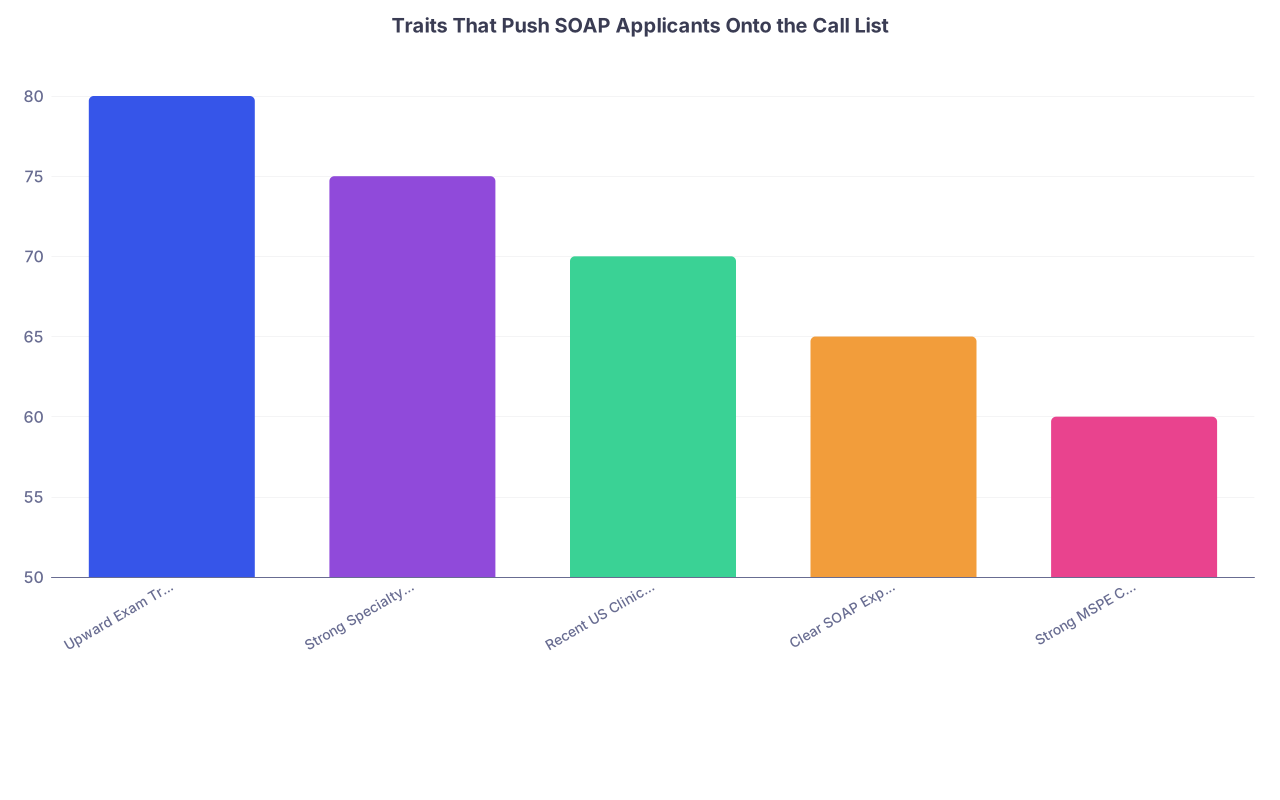
| Category | Value |
|---|---|
| Upward Exam Trend | 80 |
| Strong Specialty Letter | 75 |
| Recent US Clinical Experience | 70 |
| Clear SOAP Explanation | 65 |
| Strong MSPE Comments | 60 |
They love seeing:
- A clear upward trend: weak Step 1 but solid Step 2, plus strong clerkship comments
- An LOR that literally says: “I would rank this applicant to match in my own program.”
- Recent, hands-on US clinical experience with strong feedback, especially for IMGs
- A brief, non-dramatic explanation of why you’re in SOAP (late Step 2, couples match, initial overreach in specialty)
- MSPE comments that describe reliability, ownership, and being good to work with
On the flip side, they quietly drop you when they see:
- Vague or generic letters with zero enthusiasm
- Multiple unexplained gaps
- Vaguely defensive PS or communications (“I was unfairly overlooked,” “my scores don’t reflect my true potential” without evidence)
- Obvious shotgun SOAP behavior—applying wildly to things you’re not remotely prepared for
How To Make Limited Interviews Hurt Less In SOAP
You cannot hide that you had few interviews. PDs infer that from where you ended up. What you can do is control the interpretation.
You want them thinking:
“This person is here because of strategy/timing/context, not because they’re a risk.”
Concrete moves that actually matter during SOAP:
Craft one short, sober explanation you can reuse.
One to two sentences. Something like:
“I initially applied narrowly to the West Coast due to family reasons and submitted Step 2 CK late, which significantly limited my interviews. I’m now fully committed to training wherever I can best contribute and grow, and I’m particularly interested in your program because…”Align everything to the SOAP specialty.
Clean specialty-specific personal statement, experiences emphasized for that field, letters that at least do not contradict your interest.Own, do not excuse, any stumbles.
“I failed Step 1 on my first attempt during a difficult personal period, then refocused and passed Step 1 and Step 2 with significant improvement. Since then, my clerkship performance has been consistently strong, and I’ve demonstrated reliability on the wards.”Signal you are low-drama and high-yield.
PDs are terrified of residents who create work. If you come across as stable, mature, and willing to work hard without constant hand-holding, that alone can beat a slightly higher score.