
The biggest mistake private practice owners make is pretending they will figure out their exit “later.” Later is always too late.
If you’re just out of residency or in your first attending job and you think exit planning is a problem for 55‑year‑old you, you’re already behind. The practice you build today either becomes a sellable asset or an expensive job you can’t get rid of. That is determined in your first 3–5 years, not your last 3–5.
You need an exit strategy timeline. Here’s how it looks, step by step.
Year 0–1: Just Out of Residency – Build With the End in Mind
At this point you should be obsessing over structure, not price. No one is buying you out in Year 1. But you’re laying the bones of something someone could buy later.
Months 0–3: Decide What You’re Building
At this point you should:
Choose your basic model:
- Solo practice you’ll eventually sell outright
- Group practice with future partners
- Hybrid where associates can buy in over time
Talk to:
- At least one healthcare attorney about entity structure (PC, PLLC, LLC + MSO, etc.).
- At least one CPA who works with medical practices, not just generic small business.
And you should be asking one question repeatedly:
“How will this structure affect a future sale or partner buy‑in?”
Key decisions to lock in:
- Who owns:
- The clinical entity
- The non‑clinical assets (branding, staff, equipment leases) if separated
- How flexible ownership is for:
- Adding partners
- Selling minority shares
- Full exit
If your lawyer and accountant dodge this or say “we’ll cross that bridge later,” you need new advisors.
Months 3–6: Set Up a Clean, Sellable Foundation
At this point you should be:
- Separating your life from the practice:
- No personal expenses on the practice card.
- No “my car is half business” games that make the books messy.
- Implementing:
- A proper practice management system
- A real accounting system (QuickBooks + a bookkeeper, not an Excel sheet you update at midnight)
Your goal: a potential buyer could open your books in 5 years and quickly see:
- Revenue by payer
- Revenue by provider
- Overhead categories
- EBITDA (earnings before interest, taxes, depreciation, and amortization)
That EBITDA is what most buyers and banks will care about.
| Decision Area | Bad for Exit | Good for Exit |
|---|---|---|
| Entity Structure | One messy sole owner | PC/PLLC + clear ownership rules |
| Accounting | Spreadsheet + receipts | Bookkeeper + monthly financials |
| Contracts | Verbal agreements | Written, assignable contracts |
| Compensation | Random draws | W2 salary + bonus formula |
Months 6–12: Design the Future Partner/Buyer Path
At this point you should write down—yes, now—how someone could join or buy in later.
Decide and document:
- Will future partners:
- Buy in at a fixed formula (e.g., X times EBITDA)?
- Buy in based on independent valuation?
- How long:
- From associate start to partnership eligibility (e.g., 2–3 years)
- What expectations:
- RVU or revenue benchmarks
- Quality metrics
- Cultural fit
You don’t need final details yet, but you do need a draft partner track memo you can update.
Years 2–3: Early Practice – Make It Transferable, Not Dependent on You
Now you have some revenue, maybe a staff, maybe an associate. This is when most doctors accidentally destroy future exit value by centering everything on themselves.
Year 2: Systematize or Suffer Later
At this point you should be turning “how I do things” into “how the practice does things.”
Focus on:
- Clinical workflows:
- Standardized visit templates
- Clear refill, triage, follow‑up protocols
- Business workflows:
- New patient intake scripts
- Billing/collections processes
- Refund and complaint handling
Why? Because buyers and future partners do not want to buy chaos.
You want to move from:
- “We do it how Dr. X likes it”
to - “Here’s the SOP we follow.”
Year 2–3: Begin Measuring What Buyers Will Care About
At this point you should be tracking, monthly:
- New patient volume
- Payer mix (% commercial, Medicare, Medicaid, self‑pay)
- No‑show and cancellation rates
- Collections rate (collected vs. billed)
- Overhead % and EBITDA
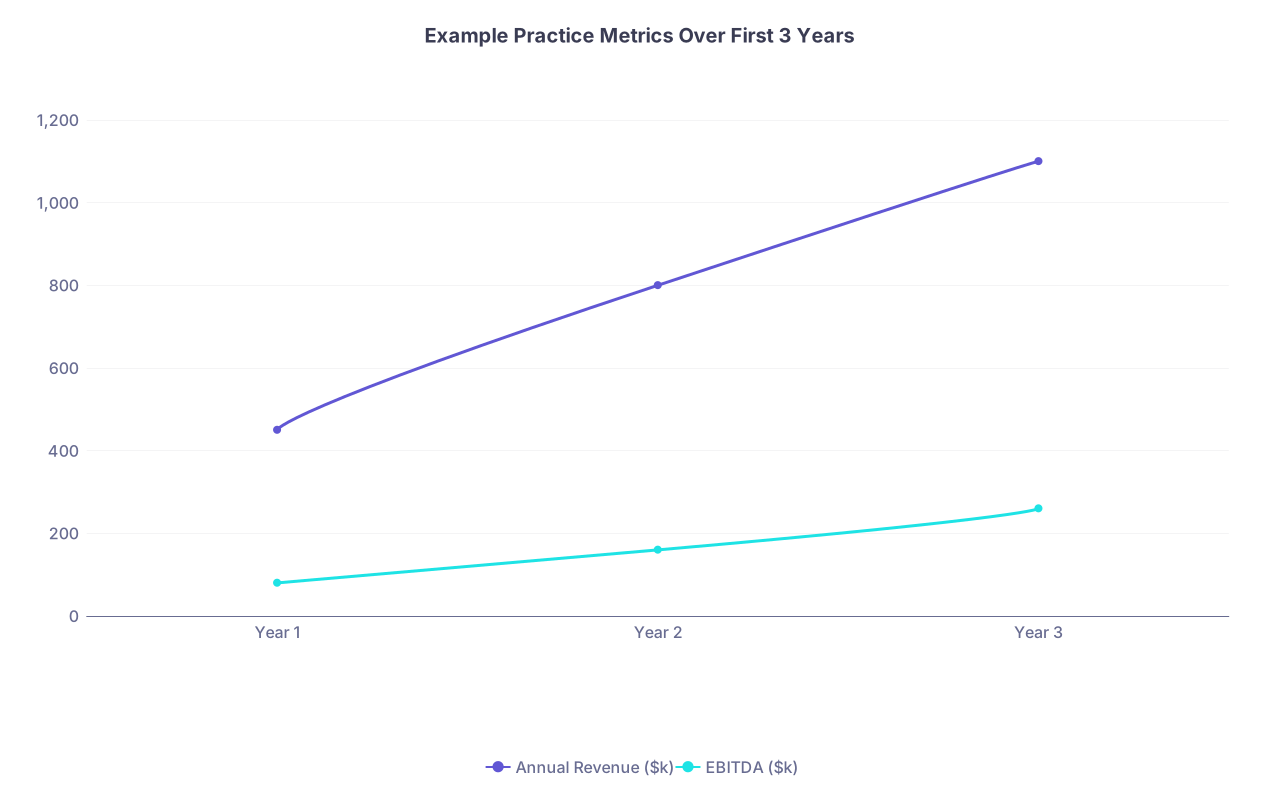
| Category | Annual Revenue ($k) | EBITDA ($k) |
|---|---|---|
| Year 1 | 450 | 80 |
| Year 2 | 800 | 160 |
| Year 3 | 1100 | 260 |
If you can’t produce this data on demand by the end of Year 3, you’re limiting who will buy you and what they’ll pay.
Years 4–5: Growth Phase – Build a Real Partner Track
By now, if growth is decent, you’re either:
- Too busy and thinking about an associate
- Already have one and wondering if they’ll stick around
This is exactly when to formalize buy‑in language.
Year 4: Recruit With an Explicit Exit Strategy
At this point you should be recruiting associates with a written:
- Partner track
- Potential future succession path
For example:
- Year 0–2: Associate period
- Year 3: Eligible for 10–20% buy‑in based on valuation formula
- Year 5+: Option to increase ownership as senior partner decreases
Spell out:
- How valuation will be determined (e.g., 3–4x trailing 3‑year average EBITDA for a small specialty practice, or whatever is realistic for your market)
- Whether goodwill is included
- How financing typically works (bank loan, seller financing, or mix)
Year 4–5: Clean Up Anything That Scares Future Partners
At this point you should be aggressively fixing:
- Any:
- Toxic staff you’re “tolerating”
- Wild variability in your schedule
- Any:
- Personal expenses still embedded in the business
- Off‑the‑books side arrangements
Future partners and buyers want a practice that:
- Runs predictably
- Has minimal legal risk
- Has no hidden liabilities or weird deals with vendors or hospitals
This is also when you should:
- Lock in longer‑term office leases with:
- Assignability clauses
- Clear terms on transfer if the practice is sold
Years 6–10: Mid‑Career – Set the Target Exit Window
Around this point, you need to stop pretending you’ll practice “as long as it feels right.”
Pick a 5‑year target window:
- Example: “I want the option to partially or fully exit between ages 52–57.”
- Or: “I want to reduce to 0.5 FTE in 8 years and be out by 12.”
Write that down. Not for rigidity. For planning.
Years 6–7: Decide Your Exit Type
At this point you should choose your preferred path (knowing life may change it):
- Internal partner buy‑in / buy‑out
- You sell gradually to partners.
- You maintain control longer, hand it off over time.
- External sale (hospital, PE, larger group, local competitor)
- You sell most or all at once.
- Usually involves:
- 2–5 year employment contract
- Productivity targets
- Hybrid
- Sell part internally, part externally.
- More complex, but possible in larger groups.
Your internal policies should tilt toward your chosen path:
- If you want internal succession:
- Start granting small equity tranches earlier.
- Build a culture of ownership.
- If you want an external sale:
- Clean up contracts.
- Make your EBITDA and growth story very clear.
- Focus on scalability and strong management.

| Step | Description |
|---|---|
| Step 1 | Mid career |
| Step 2 | Internal buy out |
| Step 3 | External sale |
| Step 4 | Hybrid |
| Step 5 | Partner track rules |
| Step 6 | Prep for corporate buyer |
| Step 7 | Layered ownership plan |
| Step 8 | Exit priority |
Years 7–10: Structure Buy‑In / Buy‑Out Formulas For Real
Your “draft ideas” from early years now become actual documents.
At this point you should be working with:
- Healthcare attorney
- Practice valuation expert
- CPA
To finalize:
- Valuation formula:
- EBITDA multiple?
- Revenue multiple? (less ideal, but still used sometimes)
- Independent appraiser each time?
- Payment terms:
- Down payment % (e.g., 10–25%)
- Installment duration (e.g., 3–7 years)
- Interest rate
- Triggers:
- Retirement
- Disability
- Death
- Voluntary withdrawal
- Termination with/without cause
This is where buy‑sell agreements and shareholder/operating agreements either save friendships or destroy them. Get these done before tensions or illness or burnout.
10–15+ Years Out: Pre‑Exit – Make It Attractive to a Buyer
Once you’re inside 10–15 years of retirement (or serious slowdown), the exit moves from abstract to concrete. You’re not dreaming anymore; you’re tuning the asset.
10–12 Years Out: Polish the Financial Story
At this point you should be:
- Reducing obvious “add‑backs”:
- Personal travel
- Family on payroll without clear roles
- Increasing:
- Documented profitability
- Predictable growth
Buyers pay for what they can see and believe, not what you tell them “could” be true if they ignore all your personal write‑offs.
You want at least 3–5 years of clean, believable financials leading into any sale or major internal transfer.
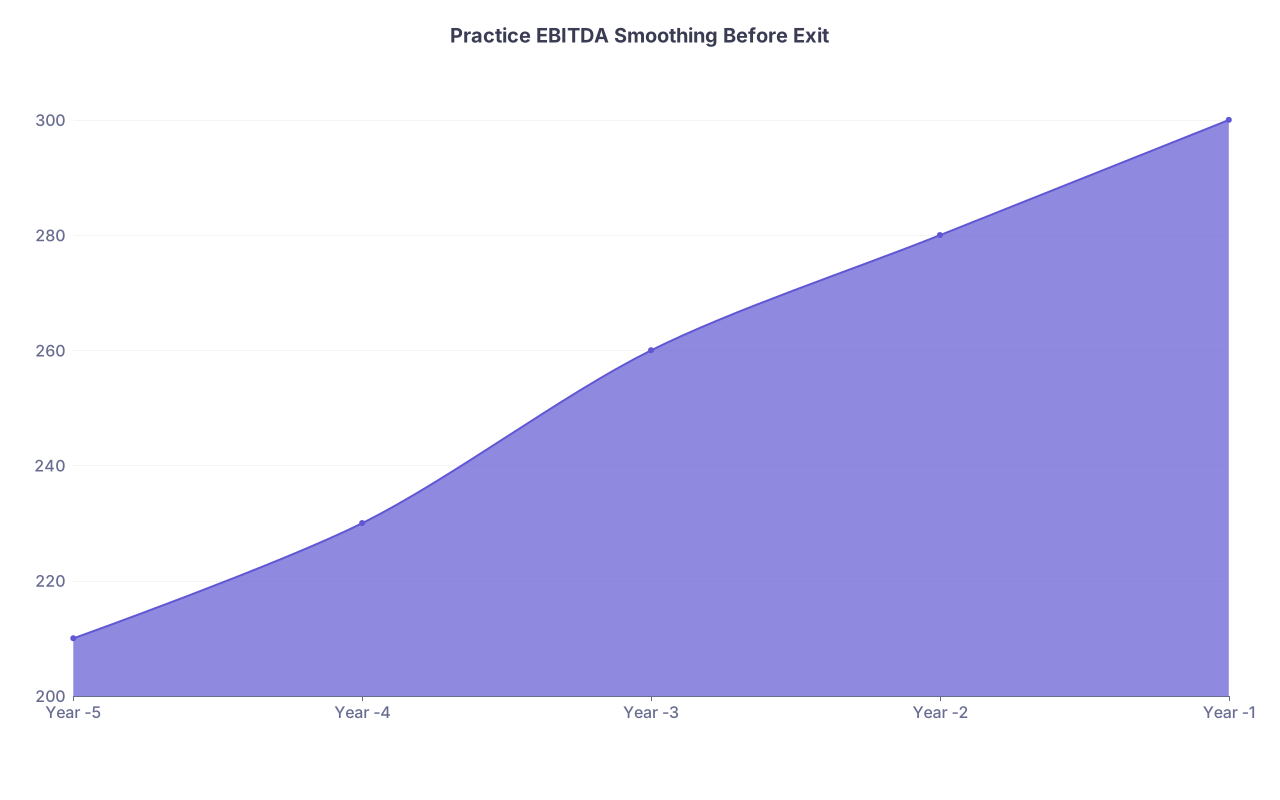
| Category | Value |
|---|---|
| Year -5 | 210 |
| Year -4 | 230 |
| Year -3 | 260 |
| Year -2 | 280 |
| Year -1 | 300 |
8–10 Years Out: Reduce Owner Dependence
At this point you should be making sure:
- Patients see:
- Multiple providers, not just you
- Referral sources:
- Know the practice brand, not just your name
- Leadership:
- Office manager or administrator can run the day‑to‑day
- Clinical protocols do not require your personal oversight on every decision
Translation: if you vanished for 3 months, the practice would dip, but it would not die.
This is what external buyers pay a premium for. And what makes internal buy‑outs survivable for the younger docs.
3–7 Years Before Target Exit: Execution Mode
Now you’re on the short clock. This is where deals get made or ruined.
5–7 Years Out: Quietly Test the Market
At this point you should:
- Talk (confidentially) to:
- A healthcare M&A advisor or broker
- Senior partners at larger groups in your specialty
- Your own junior partners or associates about their long‑term plans
You’re not signing anything. You’re gathering:
- Expected valuation ranges
- Appetite for your specialty and geography
- Deal structures people are using right now
This calibrates expectations. Many physicians discover here that the number in their head is fantasy. Better to know 5 years out than 5 months out.
3–5 Years Out: Choose a Path and Start Formal Negotiations
At this point you should commit:
- Internal path:
- Document exact ownership percentages
- Execute staged buy‑ins for junior docs
- Plan the first meaningful step‑down in your ownership
- External path:
- Hire M&A counsel
- Prepare an offering memorandum or data room with:
- 3–5 years of financials
- Payer contracts
- Provider productivity
- Compliance policies
This is also when non‑competes, non‑solicits, and post‑sale employment terms become very real. Do not sign anything without counsel who’s seen dozens of these deals.
Final 1–3 Years: Transition, Not Chaos
The last few years should feel like a glide path, not a heart attack.
1–3 Years Out: Lock In the Transaction
At this point you should be:
- Finalizing:
- Purchase price and payment terms
- Your post‑sale role (full‑time, part‑time, consulting, none)
- Communicating a phased plan to:
- Partners
- Staff
- Key referral sources (at the right time, in the right order)
For internal succession:
- Gradually:
- Shift key responsibilities
- Transfer major referral relationships
- Make sure:
- New leaders are visible and clearly “in charge” before you’re gone
For external sale:
- Honor the deal:
- Hit production targets tied to earn‑outs
- Do not sabotage new leadership even if they change things you loved
- Protect:
- Your reputation
- Your relationships with former partners and staff
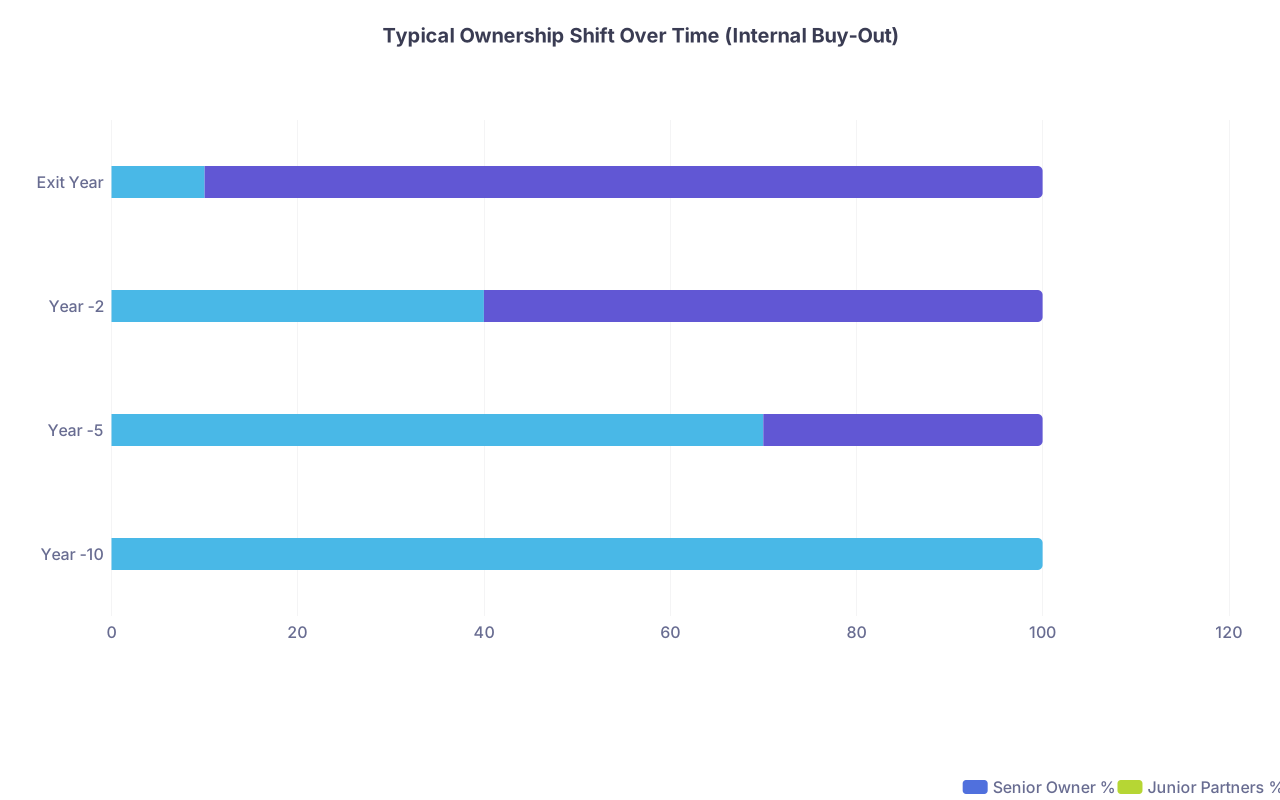
| Category | Senior Owner % | Junior Partners % |
|---|---|---|
| Year -10 | 100 | 0 |
| Year -5 | 70 | 30 |
| Year -2 | 40 | 60 |
| Exit Year | 10 | 90 |
Quick Timeline Snapshot
| Time From Exit | What You Should Be Doing |
|---|---|
| 15+ years | Choose structure, track metrics, build systems |
| 10–15 years | Set target window, reduce owner dependence |
| 7–10 years | Finalize buy‑sell rules, clarify exit path |
| 3–7 years | Test market, start internal/external talks |
| 1–3 years | Execute transaction, manage transition |

If You’re Just Out of Training: What To Do This Month, This Quarter, This Year
Let’s bring it back to where you are: post‑residency, job market, maybe starting or considering your own practice.
This Week
At this point you should:
- Write down, on one page:
- Rough age or year you’d like to slow down or exit
- Whether you like the idea of partners or prefer a solo path
- A short list of 3–5 physicians you know in private practice you can ask about their exits (or lack of one)
This Month
You should:
- Book:
- A meeting with a healthcare attorney
- A meeting with a medical‑focused CPA
- Ask them, explicitly:
- “If I want the option to sell or bring in partners later, how should we structure this from day one?”
This Quarter
You should:
- Implement:
- A real accounting system
- Basic KPI tracking (new patients, payer mix, overhead, EBITDA estimate)
- Draft:
- A one‑page “future partner / buy‑in concept” even if you’re solo

This Year
You should:
- Clean up:
- Any personal‑practice financial blur
- Document:
- Core workflows
- Start:
- Saving and organizing everything that a future buyer or partner will request:
- Contracts
- Lease
- Financials
- Compliance policies
- Saving and organizing everything that a future buyer or partner will request:
Your next step, today:
Open a blank document and title it “Practice Exit Plan – [Your Name].”
Write three lines: your ideal exit window, your preferred exit type (internal, external, hybrid), and one concrete action you’ll take this month to make that possible. Then schedule a 60‑minute block on your calendar to actually do it.