
What do you actually get if you build a concierge or membership practice from day one instead of joining the hamster wheel of 20–30 patients a day?
Let’s cut through the buzzwords and hype. You’re probably hearing:
- “Concierge is the only way to survive in outpatient medicine.”
- “Membership models are unethical / only for rich patients.”
- “You’ll never fill a concierge panel as a new grad.”
Some of that is nonsense. Some of it’s absolutely true. The trick is knowing which is which.
Below is a practical, no-BS way to decide if concierge or membership medicine fits you and your first practice after residency.
1. First, Get the Terminology Straight (Before You Sign Anything)
People throw around “concierge,” “DPC,” and “membership” like they’re all the same. They’re not. Definitions vary, but here’s the working language you actually need.
| Model Type | Insurance Billing | Patient Fee Type | Typical Panel Size |
|---|---|---|---|
| Concierge Hybrid | Yes | Annual retainer | 400–800 |
| Pure Concierge | Sometimes limited | High annual fee | 200–600 |
| DPC (Direct Care) | No (or minimal) | Monthly fee | 400–800 |
| Membership-Plus | Yes | Small fee add-on | 800–1500 |
| Traditional | Yes | No fee | 1500–2500+ |
Concierge (classic / high-end)
Think $1,500–$5,000+ per year per patient, small panel, white-glove access: same-day visits, cell phone, longer visits, lots of hand-holding. Many are hybrid: still billing insurance plus the retainer.
DPC (Direct Primary Care)
No insurance billing for professional services. Patients pay a monthly fee ($60–$120+ typically) for primary care access. Sometimes they bill for procedures in cash. Often more blue-collar or middle-class positioning than “luxury.”
Membership-Plus / Access Fee Models
Still a regular insurance-based practice, but you add a smaller membership fee ($20–50/month or $200–400/yr) for perks (portal messaging, extra access, “wellness package,” etc.). Often used as a step toward or compromise with full concierge.
Key point: Don’t get hung up on labels. What matters is:
- Do you bill insurance?
- Do patients pay a recurring fee?
- What do they get in return?
- Can you live on the revenue, ethically and legally?
2. What Concierge / Membership Medicine Actually Buys You
Ignore the marketing fluff. Here’s the real upside when it works.
A. Time with patients
This is the whole point. Smaller panel means longer visits and less chaos.
Typical visit lengths:
- Traditional primary care: 10–20 minutes (often less)
- Concierge / DPC: 30–60 minutes routinely
That means:
- You actually finish histories
- You manage multiple chronic issues in one visit
- You can do prevention instead of symptom-chasing
If you hate rushed visits and box-checking, this is the biggest selling point.
B. Predictable, recurring revenue
Membership models turn your practice into something closer to a subscription business.
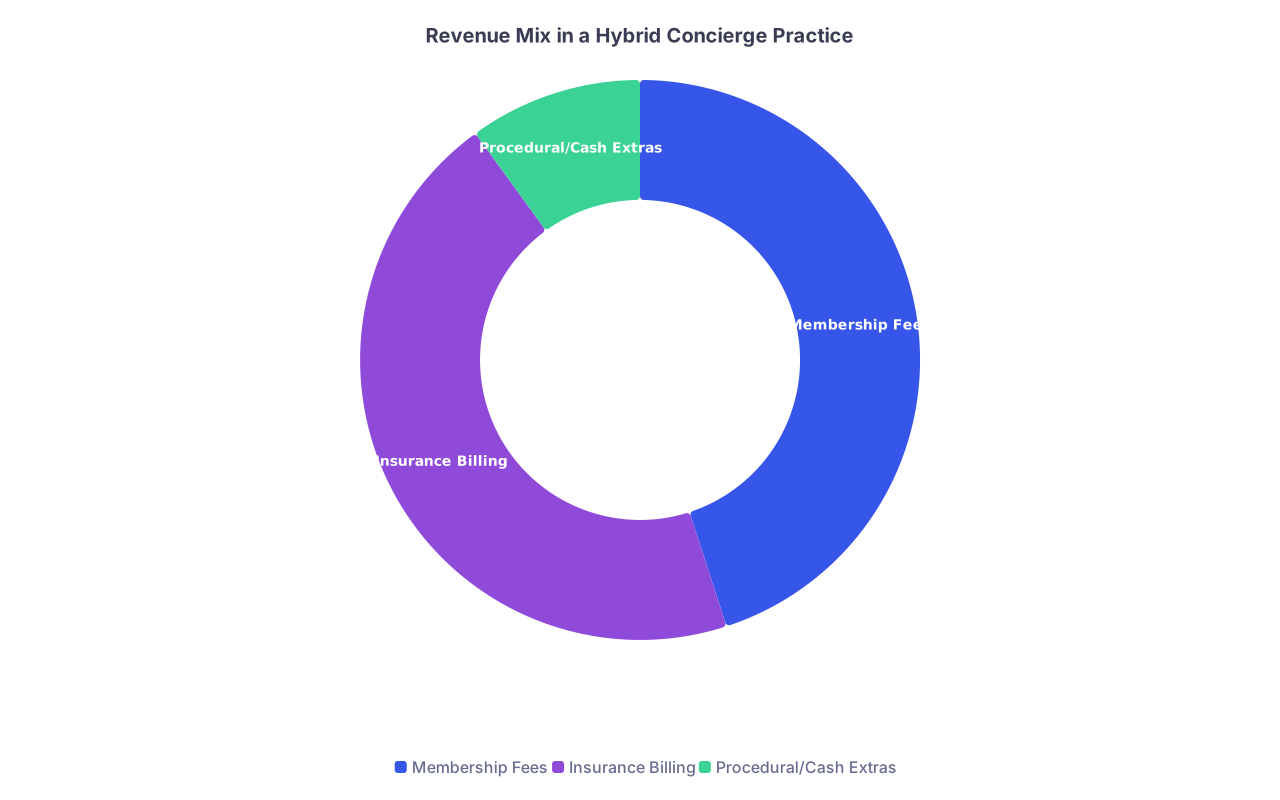
| Category | Value |
|---|---|
| Membership Fees | 45 |
| Insurance Billing | 45 |
| Procedural/Cash Extras | 10 |
Done right:
- Membership fees cover your fixed costs (rent, staff, EHR)
- Insurance billing or extra services become your “margin” or growth
- Cashflow is more stable month-to-month than pure fee-for-service
That stability is huge when you’re starting from zero and staring at loan payments.
C. Better lifestyle potential (with a catch)
Membership models can mean:
- Fewer patients on your panel
- Shorter days
- Easier call (or almost none)
- More predictable schedule
But that only happens if:
- You hold the line on panel size
- You don’t underprice your fees
- You don’t over-promise 24/7 access
A lot of burned-out docs in “concierge” practices made exactly those mistakes.
3. Hard Truth: Who Should Not Choose Concierge or Membership Right Away
Let me be blunt. If the following describes you, launching concierge from day one is probably a bad idea.
You need maximum income immediately
First year out, you might:
- Have six figures of debt
- Be in an expensive city
- Have family depending on your paycheck
Building a membership panel takes time. Like, 6–24 months to get to stable numbers. If your plan is “I need $300k Year 1,” a hospital-employed job will beat your shaky new concierge startup every time.
You hate talking about money
If you can’t stomach:
- Explaining membership fees
- Handling “why do I have to pay if I already have insurance?”
- Saying no to patients who can’t or won’t pay
…you’re going to be miserable. Membership medicine requires constant, clear communication about value and cost. You can hire help, but you will still be part of the money conversations.
You’re conflict-avoidant about boundaries
Concierge and DPC only work if you keep boundaries:
- How often can patients text you?
- What’s “urgent” vs “non-urgent”?
- How fast do you reply?
- What’s included vs extra?
If you say “text me any time” and never enforce limits, you’ll get exactly what that sounds like: constant access with no off-switch.
You have zero interest in business
Starting any practice means:
- Marketing
- Contracts
- Pricing
- HR issues
- Negotiating rent and services
Membership medicine adds:
- Recurring billing systems
- Membership marketing
- Managing renewals and cancellations
If all of this feels like a nightmare and you want to just “see patients and go home,” you’re better off employed or in a traditional group practice at first.
4. The Core Decision Framework: Is This Right for Your Situation?
Let’s run through a pragmatic decision flow.

| Step | Description |
|---|---|
| Step 1 | New Grad Planning Practice |
| Step 2 | Start Employed or Traditional |
| Step 3 | Consider Hybrid or Membership-Plus |
| Step 4 | Consider Concierge or DPC Launch |
| Step 5 | Need max income now |
| Step 6 | Comfortable with business risk |
| Step 7 | Local market can support fees |
| Step 8 | Want smaller panel and more time |
Questions you should answer honestly:
Money runway
How many months can you survive if you earn little or nothing while building your panel?- Less than 3 months: Don’t do concierge/DPC right away.
- 6–12+ months: You have room to experiment.
Market reality
Who lives near your proposed practice?- Affluent area with lots of professionals? Concierge and hybrid can work.
- Mixed or lower-income but engaged community? DPC or low-fee membership might fit.
- Very rural? Membership can still work, but you’ll need lower fees and probably more services.
Your specialty and scope
- Ideal fits: Primary care (FM, IM), Geriatrics, sometimes Pediatrics.
- Possible but trickier: Endocrine, Rheum, GI (as hybrid for easier access and care coordination).
- Hard mode: Surgical subspecialties—possible, but membership alone often won’t support your overhead.
Your tolerance for sales and marketing
You don’t have to be a sleazy salesperson, but you do have to:- Talk to employers, gyms, community groups
- Build a basic website that doesn’t look like it’s from 2009
- Ask existing patients for referrals
If the idea of even handing out your card feels like pulling teeth, this will be rough.
5. Concrete Pros and Cons (Without the Sugarcoating)
Here’s what you’re really trading off.
| Factor | Concierge/DPC Start | Traditional Insurance Start |
|---|---|---|
| First-year income | Lower, less predictable | Higher, more predictable |
| Panel size | Smaller, 200–800 | Larger, 1500–2500+ |
| Visit length | Longer, 30–60 min | Shorter, 10–20 min |
| Admin burden | Lower (DPC) / Medium (hybrid) | High (prior auths, metrics) |
| Marketing need | High | Moderate |
| Lifestyle upside | High potential | Limited early on |
Who tends to thrive in membership models
Common traits I see in docs who do well:
- Clear sense of their ideal patient and what they offer
- Reasonable financial cushion or spouse income
- Willingness to say “no” and hold boundaries
- Comfortable using tech (online scheduling, portal, telehealth)
- Some tolerance for slow early growth
Who tends to crash and burn
The ones who:
- Underprice memberships “to be nice”
- Try to be everything to everyone
- Never market beyond a website and a prayer
- Let patients treat them like 24/7 on-demand urgent care
- Depend on quick, high income without backup plans
6. How to De-Risk a Concierge or Membership Start
If you’re leaning toward it, don’t jump blind. Structure it so you don’t nuke your finances or your sanity.
Start hybrid instead of pure concierge
Especially in year one, a hybrid model is often smarter:
- See non-members with insurance (higher volume)
- Offer membership for those who want more time and access
- Slowly shift panel mix as membership grows
This gives you cash flow while you build your subscription base.
Be realistic about ramp-up
Here’s a very rough, optimistic sample for a DPC/FM solo practice:
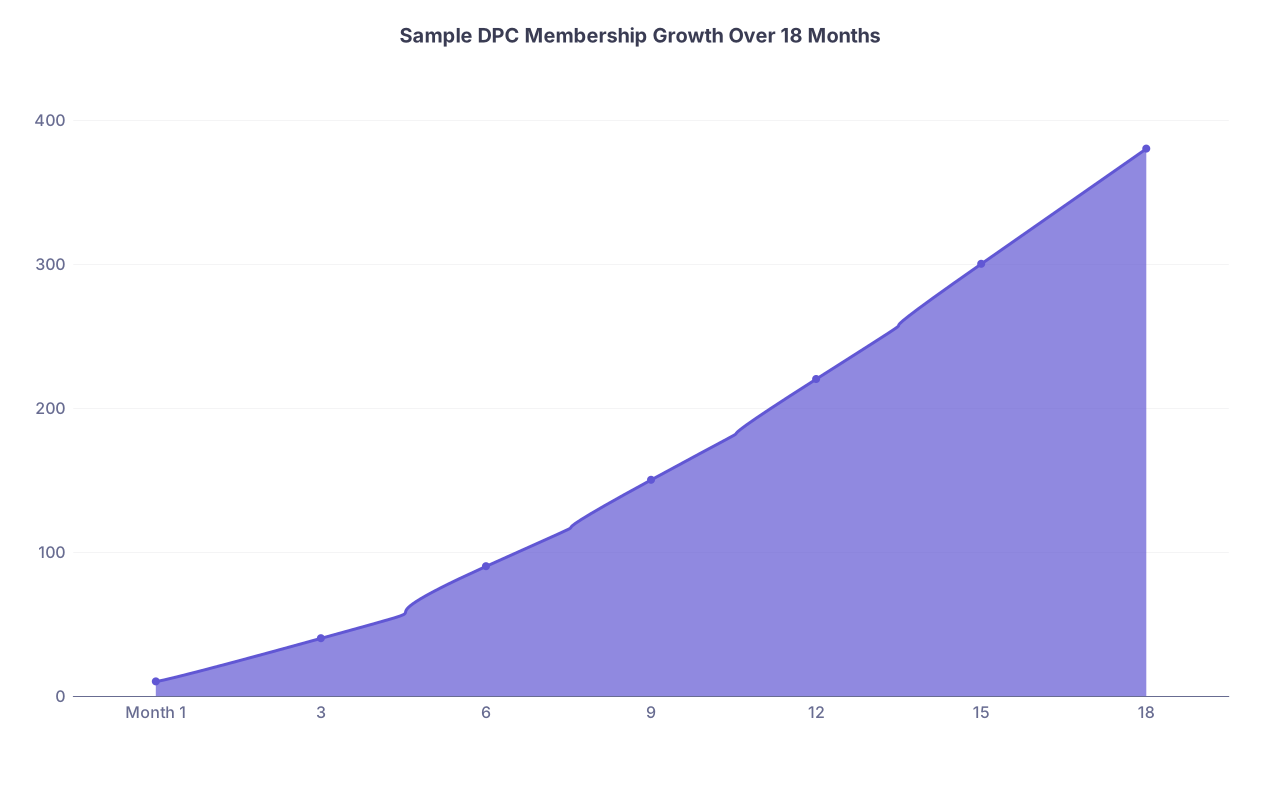
| Category | Value |
|---|---|
| Month 1 | 10 |
| 3 | 40 |
| 6 | 90 |
| 9 | 150 |
| 12 | 220 |
| 15 | 300 |
| 18 | 380 |
Even if you hit 300–400 members by 18 months (which is actually pretty solid), you’re living lean at the start. You need:
- Savings
- Lower personal expenses
- Possibly part-time urgent care, telehealth, or hospitalist shifts on the side
Nail your pricing (or you’ll regret it)
Don’t guess your fees. Work backwards:
- Decide your ideal panel size (realistically 400–600 for DPC; 300–600 for hybrid concierge).
- Decide your desired income after overhead.
- Estimate overhead (rent, staff, malpractice, tech, supplies). Many lean DPCs run $12–20k/month.
- Calculate what membership + any insurance billing must average per patient to get you there.
If the math only works with 1,000+ members or fees your market won’t pay, your model needs adjustment.
7. Ethics, Access, and Not Feeling Like a Sellout
You’ll hear it: “Concierge medicine is just abandoning patients who can’t pay.”
Sometimes that’s true. Sometimes it’s lazy criticism.
Here’s a more honest framing:
- You can’t fix the whole access problem by personally seeing 2,500 patients badly.
- You can choose to run a sustainable practice, stay in medicine, and not burn out by age 40.
- You can also build in:
- Sliding scale spots
- A few pro bono patients
- Group visits, classes, or digital education that scales your knowledge
If your values lean heavily toward serving lower-income or underserved patients, DPC with lower fees, employer contracts, or FQHC + part-time DPC might align better than high-fee concierge.
8. Practical Next Steps If You’re Seriously Considering It
If you’re more “yes, maybe” than “absolutely not” at this point, do three things before deciding:
Shadow or talk to at least 3 docs in each model you’re considering
Ask specifically:- “What surprised you the most?”
- “If you were starting over now, what would you change?”
- “How long did it take you to pay yourself a real salary?”
Run a brutally honest financial projection
- Month-by-month for 24 months
- Conservative membership growth assumptions
- Include slow months and churn
Test your appetite for business work
Spend a weekend:- Sketching your ideal patient and services
- Drafting a rough membership package
- Writing a simple one-page website outline If that feels energizing (not perfect, but interesting), good sign. If it makes you want to go back to the hospital and never leave, listen to that.

FAQ: Concierge, DPC, and Membership Medicine for New Practices
1. Can a brand-new grad successfully start a concierge or DPC practice?
Yes, but it’s higher risk than joining an employed job, and you need a plan. New grads have done it successfully, especially in family medicine and internal medicine, but the ones who succeed usually:
- Have at least 6–12 months of living expenses saved or another income source
- Treat it like a startup, not a side hobby
- Accept a modest income early on for better control and lifestyle later
If you need big income right away, don’t bank on concierge/DPC as your first and only job.
2. Is it ethical to charge a membership fee on top of insurance?
It can be, if:
- You’re transparent about what the fee covers (longer visits, direct communication, preventive planning, etc.)
- You’re not charging for services already covered by insurance without providing extra value
- You’re not misleading patients that the fee is “required” for basic medically necessary care if you still bill their insurance normally
The ethical line is about honesty and access. Gray areas exist, so talk to a healthcare attorney familiar with your state.
3. How do I know if my area can support a concierge or membership practice?
Look at:
- Median income and local cost of living
- Number of existing concierge/DPC practices and whether they’re full
- Demographics: lots of professionals, retirees with savings, or employers desperate for better primary care access
You can also:
- Call or quietly visit competitors
- Ask a few local small business owners or professionals, “If there was a doctor offering same-day access, longer visits, and texting for $X/month, would that interest you?”
If you get blank stares and “I’d never pay extra for that,” reconsider.
4. Should I start DPC (no insurance) or a hybrid concierge model?
If you want simplicity and hate insurance admin: DPC.
If you want to capture both membership fees and some insurance revenue: hybrid.
Hybrid:
- More complicated billing and coding
- Can bring higher total revenue per patient DPC:
- Clean, simple revenue model
- Forces you to be very disciplined about panel size and pricing
As a new grad, hybrid can feel safer financially but more complex operationally.
5. How many patients do I really need in a DPC or concierge practice?
Rough ballpark:
- Lean DPC solo: 400–600 members can support a solid income if your overhead is tight and fees are reasonable.
- Hybrid concierge: 300–600 members plus insurance billing for visits and procedures can be enough, depending on your pricing.
Anyone telling you “200 patients and you’re set for life” is either in a very wealthy zip code or leaving out some painful details.
6. Can I switch from traditional to concierge/membership later if I start conventional?
Yes, and many do. Common path:
- Start in traditional group or employed setting
- Learn the outpatient game, politics, and patient flow
- Build reputation and patient loyalty
- Then either convert a portion of your panel to a concierge model or open your own DPC/concierge practice and invite patients to follow
The switch is politically and emotionally messy, but it’s absolutely doable and often safer financially than launching concierge on day one.
7. Bottom line: how do I decide in one sentence?
If you have some financial runway, a real desire for time with patients, tolerance for business work, and a market that can support it, starting with a well-designed concierge or membership model can be worth it; if you’re broke, risk-averse, and unsure, start traditional or employed, learn the system, and revisit membership medicine once you’ve got your feet under you.
Key takeaways:
- Membership models trade early financial certainty for better control, time, and long-term sustainability.
- Success depends far more on your financial cushion, market, and personality than on the buzzword you choose (concierge vs DPC vs hybrid).
- You don’t have to get it perfect on day one—but you do have to be honest about what you need financially and how much risk you’re willing to carry.