
Staff turnover is not “part of the job.” It is a systems problem you can fix in 90 days if you stop treating it like bad luck and start treating it like a clinical emergency.
You are losing money, patients, and your own sanity every time another MA, nurse, or front-desk person walks out with two weeks’ notice (or less). I have watched practices crash their growth, burn out their physicians, and destroy culture because they refused to treat staffing as a core competency.
Let us fix that.
Below is a concrete, quarter-long plan to stabilize your team. Not someday. This quarter.
Step 1: Diagnose the Real Turnover Problem (Week 1)
Before you throw more money at Indeed ads, you need a diagnosis. Most practices skip this and stay stuck.
You are going to run a one-week, no-excuses assessment:
1. Pull hard numbers
You cannot improve what you are guessing about.
Collect for the last 12 months:
- Number of clinical and non-clinical staff hired
- Number who left (voluntary + involuntary)
- Average time in role before leaving (rough estimate is fine)
- Current open positions and how long they have been open
- Overtime hours per pay period for remaining staff
Turn this into something visual so it hits you in the face:
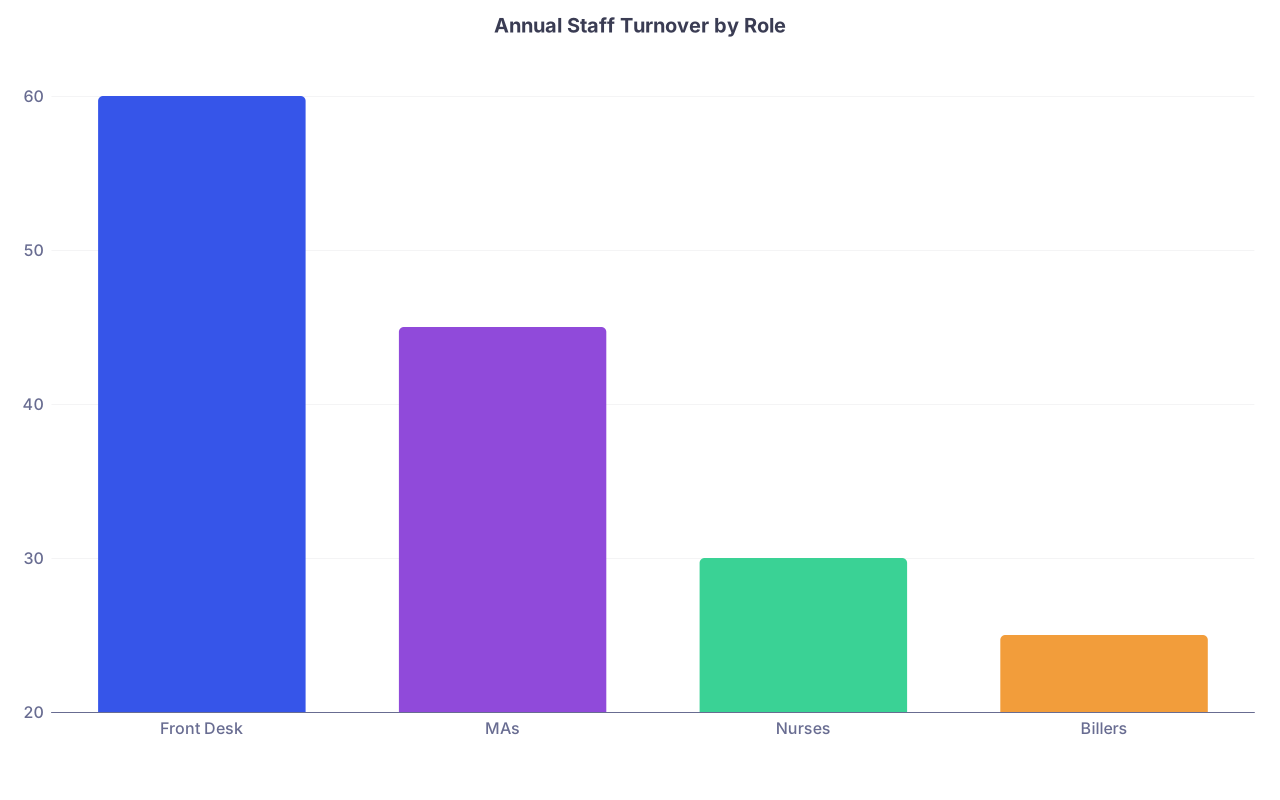
| Category | Value |
|---|---|
| Front Desk | 60 |
| MAs | 45 |
| Nurses | 30 |
| Billers | 25 |
If any category is over 30–35% annual turnover, that is a red flag. Over 50% is a siren.
2. Identify the “leaving window”
Most destructive turnover clusters in a time window:
- First 90 days: poor onboarding, mis-sold job, chaos
- 6–18 months: burnout, lack of growth, pay misaligned
- After 3+ years: plateau, no recognition, greener pastures
Build a simple sketch:
- List each person who left in last 12 months
- Note their role and months employed at departure
- Sort by months employed
You will see a pattern. That pattern tells you where to intervene first.
3. Extract actual reasons (not what they told HR)
Exit interviews are often sanitized. You want the real story.
If you had recent departures:
- Call 2–3 former staff personally.
- Script:
- “I am not trying to change your mind. I am trying to fix my practice. If you were brutally honest, what pushed you to start looking?”
- “What was hardest about working here day-to-day?”
- “What do we do that would make someone leave in under a year?”
Do not argue. Do not justify. Just write it down.
You will likely hear a mix of:
- Constant chaos / no training
- Toxic coworker or manager
- Feeling disrespected by physicians or patients
- Pay not matching workload or market
- No path forward
Good. Now you know what to target.
Step 2: Stop the Bleeding – Stabilize Existing Staff (Weeks 1–2)
You cannot recruit your way out of a retention problem. First job: keep the people you already have.
1. Run 15‑minute “stay interviews”
Pick your critical people (MAs, nurses, front desk leads, biller who knows everything).
You are going to ask them three questions, 1:1, this week:
- What makes you stay here, instead of working somewhere else?
- What makes you think about leaving, even a little?
- What is one thing we could change in the next 30 days that would make your job noticeably better?
Then you say: “I cannot promise everything. I can promise I will act on some of this quickly and be honest about what I cannot change.”
Keep it short. Listen more than you talk.
Document recurring themes. If three different people say “coverage at lunch is a disaster,” that is a priority.
2. Eliminate the worst daily friction
You want one or two quick wins that staff actually feel.
Common high-impact fixes:
Schedule sanity
- Lock in predictable shifts.
- No last-minute schedule changes unless true emergency.
- Standardize lunch coverage so nobody eats in 5 minutes in a storage closet.
Call and inbox overload
- Cap daily message volume per staffer where possible.
- Create standard protocols for the top 10 call types so staff are not improvising everything.
Rooming chaos
- Stop double-booking without extra MA support.
- Create a daily huddle to discuss outlier patients and needs.
Do not redesign the universe. Pick 2–3 concrete changes you can implement in two weeks and announce them clearly:
- “Here is the change.”
- “Here is when it starts.”
- “Here is what success looks like.”
Then do it. Staff test you on follow-through.
3. Make respect and safety non-negotiable
High-performing staff will not stay where they are yelled at, cornered, or thrown under the bus.
You need one written, enforced policy regarding:
- Zero tolerance for abuse from patients (verbal or physical)
- Process for staff to report physician or manager disrespect without retaliation
- Clear consequence for repeat offenders, regardless of RVU production
Put it in writing. Review at a brief team meeting. Do not sound fluffy:
- “No one on this team exists to be yelled at. Not by patients. Not by physicians.
If you experience that, here is exactly what you do…”
Then back it up the first time an incident happens. Word spreads.
Step 3: Fix the Onboarding That Is Quietly Killing You (Weeks 2–4)
Most practices “onboard” like this: shadow someone for two chaotic days, then sink or swim. That is why people bail in 90 days.
You are going to build a simple, 30‑day onboarding protocol. Not fancy. Just real.
1. Create a role-specific checklist
For each role (MA, front desk, nurse, biller), draft:
- Day 1 tasks
- Week 1 tasks
- Week 2–4 tasks
Limit to essentials. Example for a medical assistant:
- Day 1
- Tour, introductions
- Logins set up (EHR, phone, messages)
- Basic rooming workflow overview
- Week 1
- Shadow two different MAs on full clinic days
- Perform rooming under supervision for established patients only
- Weeks 2–4
- Take on own patient load with a defined cap
- Learn 3 specific procedures (e.g., EKG, injections)
- Check-in debrief with supervising MA and physician weekly
Print it. Check items off. If you like tools, use a simple spreadsheet or shared doc. Do not overcomplicate.
2. Assign a real mentor, not “shadow whoever is free”
One accountable person per new hire:
- A solid MA mentors a new MA.
- Front desk lead mentors front desk.
The mentor’s job:
- Answer “stupid” questions without judgment.
- Flag concerns early: “She is drowning with the EHR” or “He is very sharp but intimidated.”
- Run a structured 10‑minute check-in at end of weeks 1, 2, and 4.
You give the mentor something for doing this:
- Hourly pay bump
- One extra PTO day per year
- Small quarterly bonus per successful hire that stays 6+ months
Cheap compared to another vacancy.
3. Script expectations on day one
New staff leave quickly when the reality is a bait-and-switch.
On day one, you or a designated lead sit down and state clearly:
- Clinic hours and expected arrival/departure windows
- Dress code and phone use rules
- How breaks really work (not fantasy-world)
- Volume expectations: “You will room about X patients per day once fully trained.”
- What “good performance” looks like in that role
Then you say: “If, in the next month, this does not feel like what we described, I expect you to tell me before you just decide to quit.” That alone can buy you time to fix issues.
Step 4: Build a 90‑Day Retention Plan (Not a 5‑Year Fantasy)
Your target: reduce voluntary turnover and stop surprise resignations in the first 90 days of employment. That is the highest-yield window for private practice.
Here is a simple retention structure.
1. Weekly 10‑minute check‑ins for all new staff (0–90 days)
Not long, not therapy. Just:
- “What is going well?”
- “What is frustrating you this week?”
- “Anything you are unsure about but hesitant to ask?”
You or a manager runs this, scheduled on the calendar. Missed check‑ins send a clear message: “We do not care.” So do not miss them.
2. 30/60/90‑day mini-reviews
At each milestone, you cover:
- Skills: “Here is what you are already doing well.”
- Gaps: “Here is what we need to see improve over the next month.”
- Support: “Here is how we will help you get there.”
Keep a simple one-page template for each review. No bureaucracy. The point is clarity and early course correction.
3. Tie basic incentives to 90‑day retention
People stay when there is something real to stay for, even small.
Examples:
- $250–$500 retention bonus at 90 days for full‑time staff with satisfactory performance
- Unlocking one or two small privileges: more predictable schedule slot, preferred day off, small scrub allowance
Be explicit:
- “If you complete your 90‑day period successfully, you receive X.”
You would be surprised how often $300 is the difference between “I’m done” and “let me stick it out.”
Step 5: Pay and Benefits – Stop Competing While Blind (Weeks 2–3)
I see this constantly: a physician practice owner complaining about turnover while underpaying compared to the chain clinic down the street.
You need data, not vibes.
1. Get actual local market numbers
Use:
- Job postings within 10–15 miles for same roles
- Talk to staff who have friends at the hospital or corporate clinics
- Ask your billing person or accountant what they see other clients paying
Then summarize it clearly:
| Role | Your Current Hourly | Local Market Range | Gap vs Market |
|---|---|---|---|
| MA | $17 | $18–$22 | -$1 to -$5 |
| Front Desk | $16 | $17–$20 | -$1 to -$4 |
| RN | $32 | $34–$38 | -$2 to -$6 |
| Biller | $20 | $21–$25 | -$1 to -$5 |
If you are below mid-range for your area, you are subsidizing competitors with your training and turnover.
2. Decide your compensation strategy
You have 3 honest options:
- Match or slightly exceed market (easiest for retention)
- Match market but be radically better on schedule, culture, or PTO
- Stay below market and accept high turnover (which is financial self-harm)
If you choose 1 or 2, make targeted adjustments:
- Raise the most underpaid, high-value staff first
- Announce clearly: “We reviewed local pay and are adjusting to remain competitive. Here is your new rate starting X date.”
That sentence alone builds trust.
3. Offer “micro-benefits” staff actually feel
If you cannot build a Fortune 500 benefits package, fine. Do this instead:
- Guaranteed one weekend off per month for clinical roles working weekends
- One paid mental health day per quarter
- Paid time for an annual physical or preventive visit
- Staff appreciation lunches not tied to hitting some insane RVU metric
These are small line items that send a big message: you are not a replaceable cog.
Step 6: Fix Your Hiring Funnel So You Stop Bringing in the Wrong People (Weeks 3–6)
Many practices have a self-inflicted wound: they hire fast, from desperation, with terrible job descriptions, then act shocked when people leave.
We will clean that up.
1. Rewrite your job postings so they are not lies
Your ad should:
- Tell the truth about pace: “High-volume outpatient cardiology clinic seeing 25–30 patients per physician per day” instead of “fast-paced environment”
- Explain support structure: “You will work with 2 physicians and 3 MAs in a team-based model.”
- State real schedule: no vague “flexible hours” that become “always closing.”
- Mention actual development: “Cross-training to X area within 6–12 months for strong performers.”
Bad posting: “Busy clinic looking for team player, competitive pay, fast-paced, must be flexible.”
Better posting: “Internal medicine clinic seeking MA for 4 10‑hour shifts (M–Th) with stable schedule, no weekends, and structured 4‑week onboarding. Average 22–26 patients per MD per day. Expect frequent phone triage and EHR messaging; prior outpatient experience preferred.”
2. Add a simple, standardized screening process
Two 15‑minute filters before you waste half a day:
Phone screen (10–15 minutes)
- Why are you leaving your current role?
- What kind of environment do you not want to work in again?
- Available days/hours and pay expectations
- Comfort with EHR, phones, and multi-tasking
Short in-person working interview (1–2 hours)
- Candidate observes real clinic flow
- Brief interaction with future teammates
- Simple tasks: room one mock patient, handle a sample call script, or walk through intake process
Your staff must have a voice. After the working interview, ask the team privately:
- “Would you be comfortable working with this person every day?”
If your best MA says “absolutely not,” listen.
3. Track your hiring funnel data
You are going to keep a basic tally for the quarter:
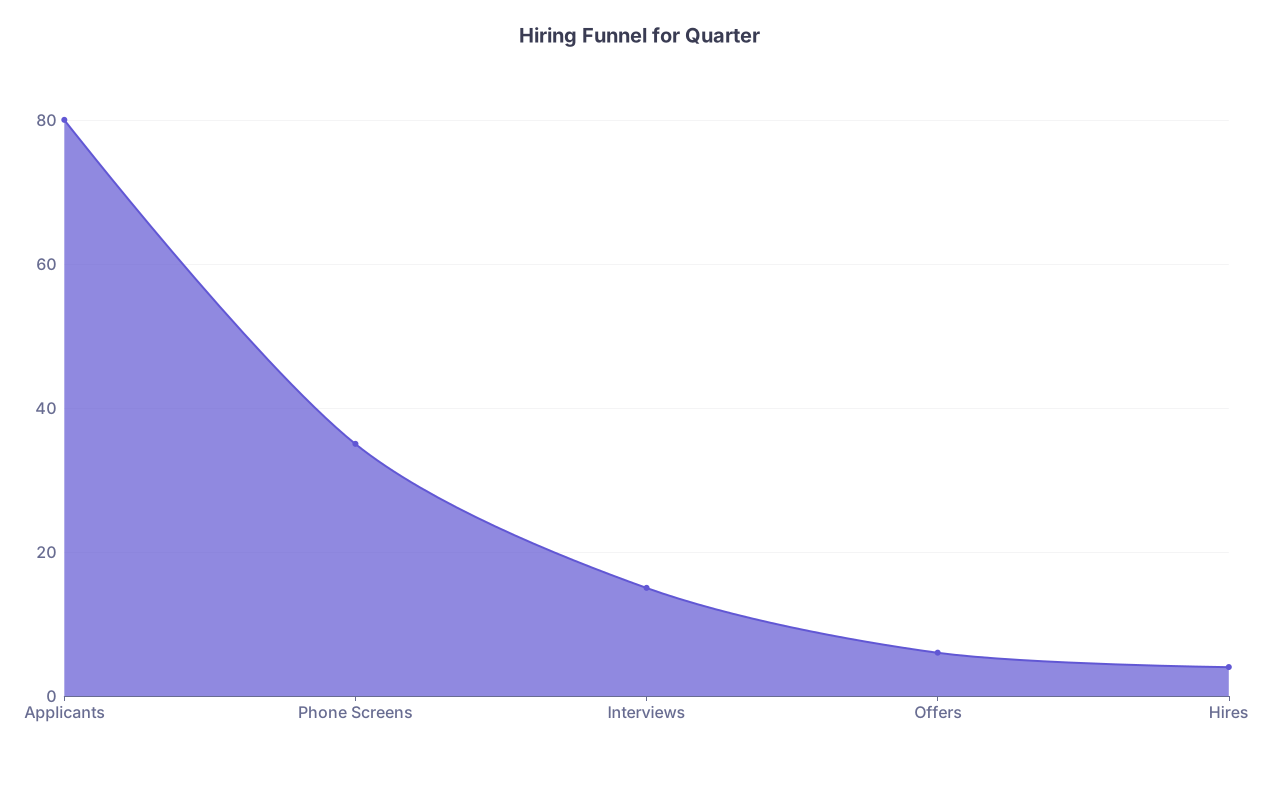
| Category | Value |
|---|---|
| Applicants | 80 |
| Phone Screens | 35 |
| Interviews | 15 |
| Offers | 6 |
| Hires | 4 |
You want:
- Numbers at each step
- Time from posting to offer
- 90‑day survival of each hire
Patterns will show whether you are filtering poorly or not attracting enough of the right candidates.
Step 7: Operational Changes That Reduce Burnout (Weeks 4–10)
You can be the kindest employer in the city, but if your operations are insane, people will still leave.
You need to tune the machine.
1. Map a typical clinic day and kill obvious inefficiencies
Use a quick process map. Ten minutes on a whiteboard.

| Step | Description |
|---|---|
| Step 1 | Patient Check In |
| Step 2 | Insurance Verify |
| Step 3 | Rooming by MA |
| Step 4 | Physician Visit |
| Step 5 | Orders and Documentation |
| Step 6 | Check Out |
| Step 7 | Follow Up Scheduling |
Then ask your staff in a quick group session:
- “Where do you get stuck or backed up every single day?”
- “What part of this flow feels stupid or redundant?”
I have seen:
- MAs walking to printers 50 times a day for consents
- Front desk staff double-entering insurance info
- Nurses repeating questions the MA already asked, because there is no shared template
Fix one bottleneck at a time:
- Move the printer.
- Automate or eliminate redundant fields in the EHR.
- Create shared intake templates.
Small time savers matter. They are not just efficiency; they are morale.
2. Standardize common protocols
Chaos kills retention.
Create brief written workflows for:
- Prescription refills
- Lab result calls
- No-show follow-up
- Same-day add-ons
Each protocol should say:
- Who is responsible
- What steps they take
- Expected time frame
When everyone is not reinventing the wheel, the job feels more predictable and less exhausting.
3. Manage physician behavior (yes, including yourself)
Physicians frequently underestimate how much their habits drive turnover.
Some hard truths:
- Snapping at staff, even under stress, has a half-life of weeks.
- Chronic lateness from you creates a domino of staying late for them.
- Using staff as emotional dumping grounds after bad patient encounters burns them out.
If you want to stabilize your team, you do this:
- Commit to one behavior change for 90 days (e.g., no yelling, no charting after staff hours that keeps them waiting, no last-minute add-on clinics without discussion).
- Ask one trusted staff member to tell you, privately, when you slip.
- Do not punish them for telling you.
I have watched a single physician temper problem cause 3 MAs to leave in 6 months. That is thousands of dollars and countless headaches you can avoid.
Step 8: Monitor and Course-Correct During the Quarter
You are not done just because you made some changes. You need a simple monitoring dashboard so this does not slide back into chaos.
1. Monthly turnover and satisfaction snapshot
Every month for the rest of the quarter, track:
- Number of resignations
- Number of new hires
- Overtime hours compared to baseline
- Sick days / call-outs
Visualize it so you see trends immediately:
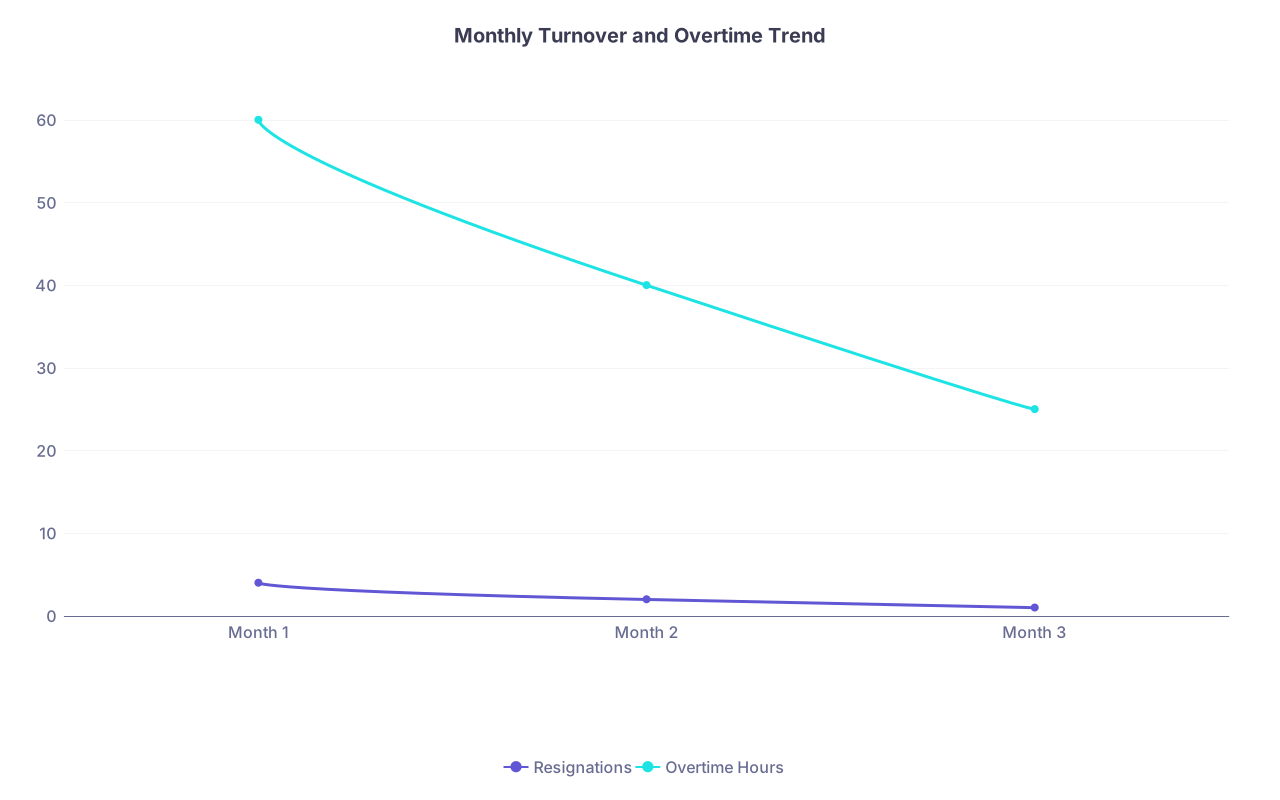
| Category | Resignations | Overtime Hours |
|---|---|---|
| Month 1 | 4 | 60 |
| Month 2 | 2 | 40 |
| Month 3 | 1 | 25 |
You want resignations and overtime trending down.
2. Short, anonymous staff pulse checks
Every 4–6 weeks, send a 3‑question anonymous survey (Google Forms is fine):
- On a scale of 1–10, how likely are you to still be working here 6 months from now?
- What is one recent change that helped your job?
- What is one thing that still makes you think about leaving?
Read every answer. Share, in broad strokes, what you heard and what you will address. Even if you cannot fix everything, staff seeing you do something keeps them engaged.
3. Protect time for leadership work
This is where many physicians fail: they try to run a practice on the margins of lunch and after-hours. That does not work if you want to stabilize staffing.
You need:
- 2–4 hours per week blocked out as non-clinical leadership time
- Use it for: check‑ins, hiring, process work, and reviewing metrics
If you do not defend this time like an OR block, turnover will eat your schedule anyway. Better to be proactive.
Putting It All Together: Your 90‑Day Stabilization Plan
Here is how this plays out over a single quarter.
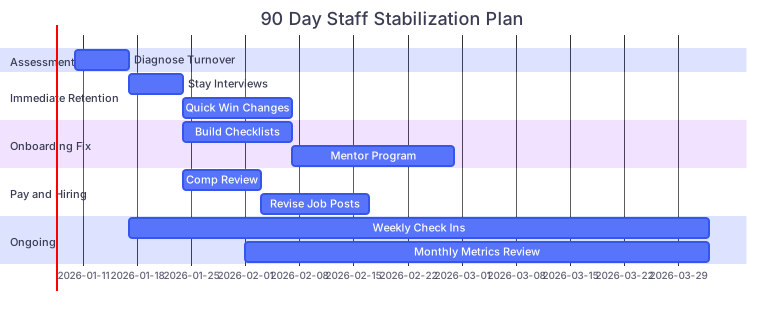
| Task | Details |
|---|---|
| Assessment: Diagnose Turnover | a1, 2026-01-10, 7d |
| Immediate Retention: Stay Interviews | a2, 2026-01-17, 7d |
| Immediate Retention: Quick Win Changes | a3, 2026-01-24, 14d |
| Onboarding Fix: Build Checklists | a4, 2026-01-24, 14d |
| Onboarding Fix: Mentor Program | a5, 2026-02-07, 21d |
| Pay and Hiring: Comp Review | a6, 2026-01-24, 10d |
| Pay and Hiring: Revise Job Posts | a7, 2026-02-03, 14d |
| Ongoing: Weekly Check Ins | a8, 2026-01-17, 75d |
| Ongoing: Monthly Metrics Review | a9, 2026-02-01, 60d |
Notice this is not a full-time job. It is structured, deliberate work folded into your existing weeks.
The Bottom Line
Three points you need to walk away with:
- Turnover is mostly a systems problem, not a “bad staff” problem. Diagnose where people are leaving and fix onboarding, daily friction, and leadership behavior first.
- You must compete on reality: pay, schedule, and respect. If you are below your local market and chaotic on top of it, no amount of “we are like family” will keep good people.
- Stabilization is a 90‑day project, not a someday dream. Run the play: assess, stop the bleeding, fix onboarding, tune pay and hiring, and monitor monthly. Do that, and your practice becomes a place people choose to stay, not escape.