It’s 10:47 p.m. You’re staring at your email drafts folder.
One email is to a program coordinator you already sent something slightly awkward to. Another is a thank‑you note you’ve rewritten six times because you’re terrified it sounds fake. Your brain is running through every tiny “unprofessional” thing you might’ve done this cycle:
Did that 2‑day delay replying to an interview invite make me look disorganized?
Was my Zoom background too messy?
Did they notice I said “hey” instead of “hello” to the PD?
Did my one late reply get screenshotted and thrown into some secret “red flag” group chat?
You’re not asking, “How do I impress them?”
You’re asking, “How do I not accidentally sink my chances by being a little human?”
Let me be blunt: programs are not usually destroyed by one big professionalism disaster. They’re reassured or quietly turned off by patterns of small habits.
The good news: a lot of those habits are fixable. Quickly. And they’re totally within your control, even if you’re not a perfect applicant on paper.
What Programs Actually Mean By “Professionalism” (Not The Brochure Version)
People throw “professionalism” around like it’s obvious. It’s not.
It’s not just “don’t yell at nurses” and “don’t post drunk pics on Instagram.” That’s the bare minimum.
When faculty talk about professionalism behind closed doors, they usually mean:
- Will this person make my life easier or harder at 3 a.m.?
- Will I have to chase them down for things?
- Will they embarrass us in front of patients or other services?
- If I leave them alone with patients/families, do I worry?
And what they use to guess that?
Not your Step score. Not your shelf exam honors.
They use a bunch of little behaviors around scheduling, communication, and follow‑through.
I’ve heard attendings say things like:
- “He was 3 minutes late to the interview and didn’t apologize. That bothers me more than his Step score.”
- “Her email response was so thoughtful and prompt. She’s going to be easy to work with.”
- “If they can’t read instructions correctly for an interview day, what’s going to happen with orders and discharge summaries?”
So if your brain is spiraling about small things… annoyingly, you’re not totally wrong.
The flip side: small, consistent good habits calm those fears on the other end.
Habit #1: Your Email Game (Where Most People Quietly Lose Points)
This is the one that scares people the most, because we all have at least one email we regret. Or twenty.
Here’s the reality: your email patterns are often the only longitudinal behavior programs see from you before interview day. It’s their “preview” of how you’ll be as a resident.
Let’s break the pieces that actually matter.
Responding On Time (Without Being A Robot)
You do not need to respond in 5 minutes. You also can’t disappear for 4 days.
Reasonable sweet spot: respond within 24 hours on weekdays, 24–48 on weekends.
If you’re going to be slower, literally say so:
- “Thank you for your email. I’m currently on a call shift and may be slow to respond, but I’ll get back to you within 48 hours with the information you requested.”
That kind of line screams, “I know my responsibilities, I anticipate delays, I communicate.”
If you missed an email for a few days and your stomach drops:
- Don’t over‑explain.
- Don’t lie.
- Do own it cleanly:
“Dear [Name],
My apologies for the delayed response — I was on a busy stretch and missed this message. Thank you for your patience. [Then immediately answer what they asked, clearly.]”
Professionalism isn’t never making a mistake. It’s how maturely you patch it.
Tone: Not A Robot, Not A Group Chat
You’re probably scared of sounding too casual or too stiff. Pick a middle lane:
- Start with: “Dear Dr. [Last Name],” or “Dear [Mr/Ms/Mx Last Name]” for coordinators.
- End with: “Best regards,” “Sincerely,” or honestly just “Best,” then your full name and AAMC ID.
Drop the “Hey guys,” and “Thx!!” stuff. Save that for your friends.
You can still sound human:
- “Thank you again for the opportunity to interview with your program.”
- “I appreciated learning more about your residents’ experience with [X].”
- “I’m really grateful for your help with scheduling.”
Sounds normal. Not stiff. Not cringey.
Your nightmare scenario: they’re reading your email out loud in a conference room.
If you’d die of embarrassment, edit it.
Habit #2: Calendar, Confirmations, And Not Being “The One They Remember”
Nobody gets extra points for being absurdly early to everything.
But they absolutely remember the person who:
- Mixed up time zones
- Showed up in the wrong Zoom room
- Emailed the wrong program coordinator about “really loving your city” (wrong city)
You don’t want to be memorable. You want to be… boringly reliable.
Simple System That Makes You Look Way More Professional
You don’t need a fancy productivity app. Just:
- One digital calendar (Google, Outlook, whatever)
- One rule: every interview, meeting, and deadline goes in the second you get it
Stuff to include for each interview:
- Time + time zone
- Zoom link / in‑person address
- Contact number/email in case something breaks
- Any special instructions (breakout rooms, social, pre‑interview session)
Yes, it’s boring. Yes, it prevents the exact horror stories coordinators complain about.
If you have back‑to‑back interviews, send yourself a little reminder note: “Check tech 15 minutes early, quiet space, water bottle.” Programs can’t see this, but the end result — you showing up calm and prepared instead of chaos — is very visible.
Confirming Things (Without Being Annoying)
You’re not “bothering them” by confirming critical details. It often reads as organized and respectful.
Example:
“Dear [Coordinator],
Thank you for the interview invitation to [Program]. I’ve confirmed my spot on [date]. I look forward to meeting your team and will be available at [time] via the Zoom link provided.
Best,
[Name, AAMC ID]”
Short. Clear. Professional. They exhale because they know you read the instructions.
Habit #3: Zoom Professionalism (Where Many People Underestimate The Basics)
Everyone panicked about Zoom early in the pandemic. Now people are too relaxed.
Programs absolutely comment on this stuff after you hang up:
- “Her background was distracting.”
- “He kept checking his phone.”
- “The lighting was terrible, I could barely see him.”
Does that alone tank someone? Usually not. But if they’re borderline about you, it doesn’t help.
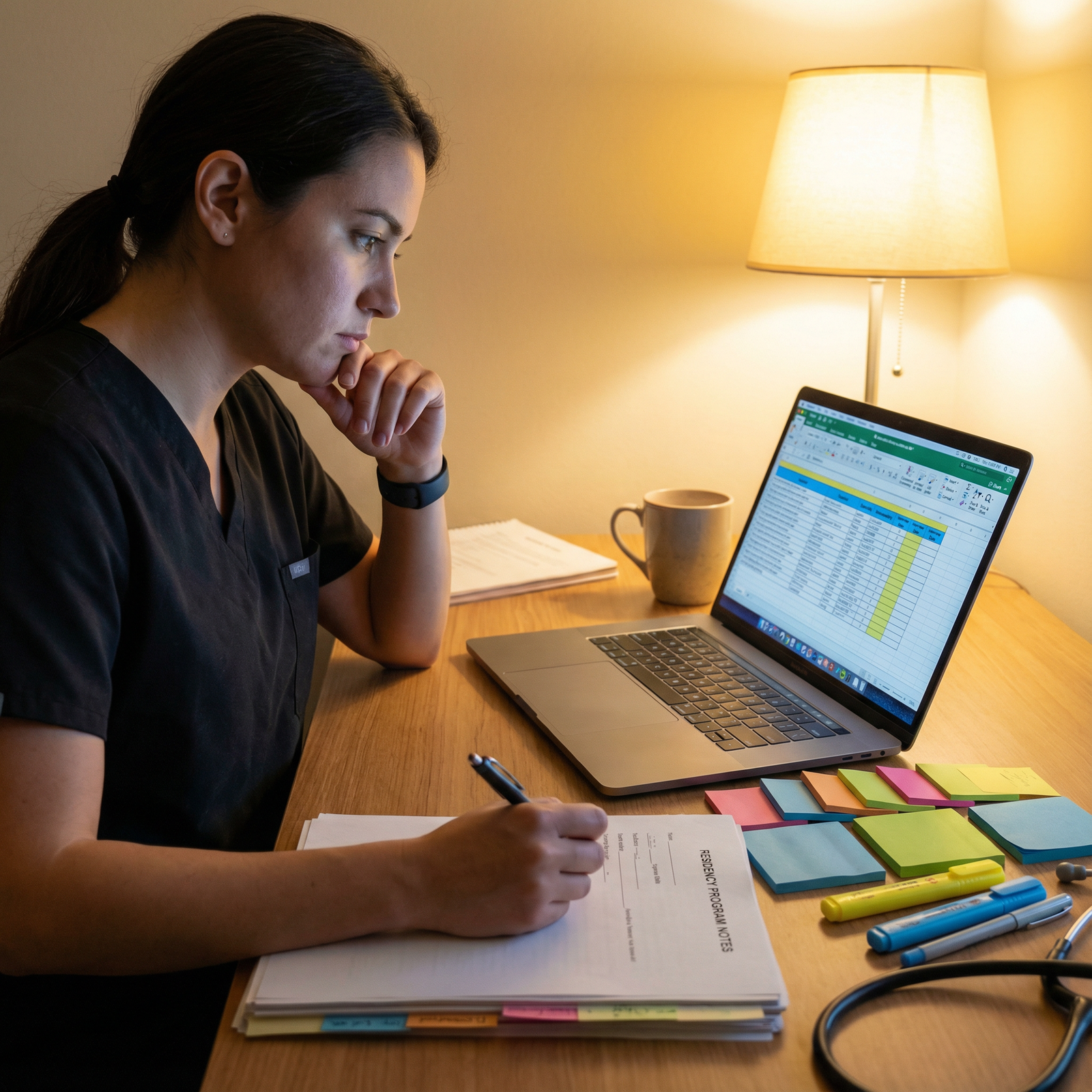
Minimum Zoom Setup That Says “I Respect This”
You don’t need a studio. You do need:
- A quiet space where no one is walking behind you
- Neutral background (plain wall, small bookcase, nothing wild)
- Decent lighting (in front of you, not behind; windows or a lamp)
- Camera at eye level (stack books if you have to)
Test once with a friend. If they can see your face clearly and not your ceiling fan, you’re good.
Behavior On Screen (The Subtle Stuff They Notice)
- Look at the camera when you’re speaking at least part of the time
- Mute if there’s background noise
- Don’t eat on camera
- Close non‑essential tabs; don’t obviously glance at your phone
If something goes wrong — your Wi‑Fi dies, Zoom crashes — your professionalism shows in how you handle it.
- Rejoin as soon as you can
- Apologize briefly: “I’m so sorry, my internet cut out for a moment. Thank you for your patience.”
- Don’t spiral on screen. Just continue.
They’re not judging you for Comcast. They’re judging how you handle disruption.
Habit #4: Thank‑You Notes, Updates, And Not Crossing Into “Too Much”
This one makes people crazy.
Am I supposed to send a thank‑you? To everyone? Right away? Am I annoying them???
Reality: thank‑you notes rarely save a disastrous interview. But they can:
- Reassure them that you’re courteous
- Reinforce specific interest
- Make them more comfortable ranking you if they liked you already
Thank‑You Notes That Don’t Sound Desperate
Keep them simple, 5–8 sentences. Use this basic spine:
- Thank them for their time.
- Mention something specific from your conversation.
- Connect that to why their program fits you.
- Close with appreciation and a generic forward‑looking line.
Example:
“Dear Dr. [Last Name],
Thank you for taking the time to speak with me during my interview at [Program]. I really enjoyed our conversation about resident autonomy in the MICU and your description of the graduated responsibility throughout training. Hearing how your seniors lead family discussions and manage complex patients confirmed that this is the type of environment where I could grow into a confident, independent physician.
I appreciate your time and the opportunity to learn more about your program.
Best regards,
[Name]”
You don’t need to say “You’re my #1!!” That crosses into “gamesmanship” that some PDs hate.
Send within 24–72 hours. If you send it 2 weeks later? Send it anyway. Late is better than not at all, as long as it’s not pretending to be prompt.
Updates: What’s Helpful Versus “Okay, Chill”
Programs don’t need a weekly newsletter about your life. But it’s appropriate to send:
- Major updates (new publication accepted, significant award)
- A Step 2 score if it’s strong and wasn’t available before
- A quick note if you’ve developed a genuine, specific interest in their program
One short, focused update email after interview season isn’t crazy. Five is.
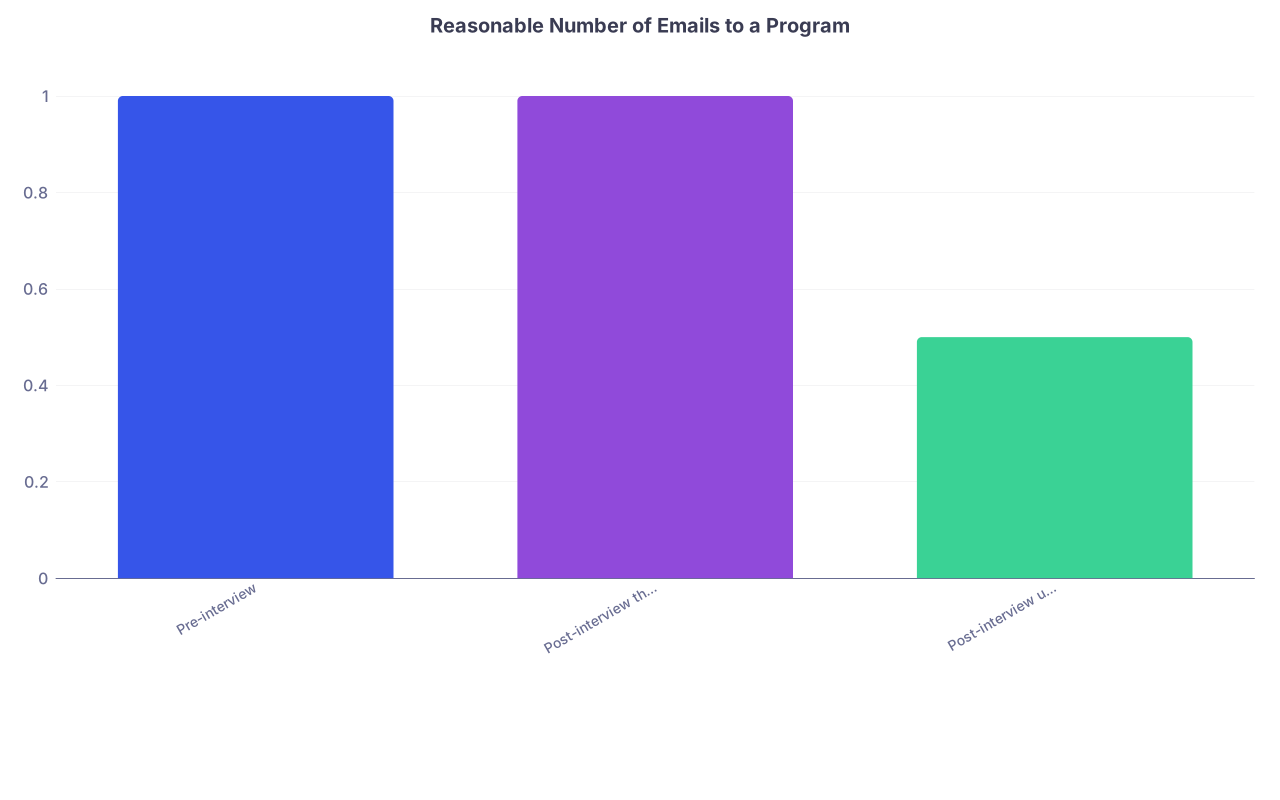
| Category | Value |
|---|---|
| Pre-interview | 1 |
| Post-interview thank-you | 1 |
| Post-interview update | 0.5 |
(That “0.5” is basically: some people will send an update, some won’t. It’s optional.)
Habit #5: How You Talk About Other People (The Hidden Professionalism Test)
Programs listen very closely to how you talk about:
- Your med school
- Other specialties
- Co‑residents and nurses
- Even other programs
If you trash talk on interview day? That’s often a hard no.
I’ve watched someone say on an interview: “Our nurses are kind of useless on nights.” The faculty literally wrote it down word‑for‑word. That applicant was done.
You can be honest without being reckless.
Instead of: “My school’s administration is terrible.”
Try: “Our administration has gone through changes, which has sometimes made scheduling challenging, but it’s also pushed me to be adaptable and proactive in planning my rotations.”
Instead of: “I hated my surgery rotation, the residents were awful.”
Try: “The culture on that rotation was very intense. It taught me a lot about how important supportive teaching is, and it confirmed that I’m more drawn to [your specialty] where I’ve experienced a more collaborative environment.”
You’re allowed to have opinions. Just don’t sound like someone who will be a constant source of drama.
Habit #6: Owning Mistakes Without Self‑Destructing
One of the quiet professionalism markers: can you acknowledge imperfection without imploding?
Programs don’t believe the “I’ve never had any issues ever” persona. That reads as rehearsed or naive.
If you’re asked about a red flag — a leave of absence, a failure, a professionalism note — the small habits around how you answer matter more than the event itself.
The pattern that reassures them:
- Brief, factual description
- Clear ownership of your part
- Concrete steps you took to fix it
- What’s changed since
What doesn’t reassure:
- Blaming everyone else
- Getting defensive or emotional in a way that derails the conversation
- Minimizing it as “no big deal” when it clearly was
You don’t need a TED Talk. You need honest, steady energy.
Something like:
“I failed [X] during my second year after underestimating the exam and overcommitting outside of school. That was a serious wake‑up call. I met with my advisor, changed my study schedule, and pulled back on some extracurriculars. Since then, I’ve passed all subsequent exams and performed well on my [shelves/Step]. It taught me to be more realistic about my limits and to ask for help earlier.”
That sounds like someone who’ll be safe to train.
Habit #7: Social Situations With Residents – “Chill Professional”
Pre‑interview dinners. Zoom socials. Resident hangouts. These are professionalism traps on both sides — you’re tired and nervous, they’re tired and sometimes too honest, and everyone forgets this all still counts.
Things that quietly reassure residents:
- You ask a few genuine questions, but you’re not interrogating them.
- You don’t get drunk. (Yes, people still do this. Yes, it still hurts them.)
- You don’t try to get them to say something negative on record about their program.
- You show baseline respect: “your ICU nurses sound amazing,” “I appreciate how transparent you all are.”
Residents 100% report back. They’ll say:
- “She was really easy to talk to, seemed humble.”
- “He was trying so hard to get us to bad‑mouth the PD, it was weird.”
- “They made a joke about patients that rubbed me the wrong way.”
You don’t have to be the funniest or most outgoing person in the room.
You just have to give off: “I’d be okay working nights with this person.”

| Step | Description |
|---|---|
| Step 1 | Email Invitation |
| Step 2 | Email Response |
| Step 3 | Interview Day Behavior |
| Step 4 | Resident Social |
| Step 5 | Post-interview Communication |
| Step 6 | Rank Meeting Discussion |
See that? Every box is another little data point for “professionalism.” None of them is usually decisive alone — but the pattern absolutely comes up when they rank you.
Habit #8: Following Instructions Like Someone They Can Trust At 2 a.m.
This one’s boring but brutal. Programs care a lot about whether you can:
- Read instructions carefully
- Follow them without 3 reminder emails
- Ask clarifying questions before the deadline, not after you’ve missed it
If the email says: “Please label your file as LastName_FirstName_Program,” and you upload “CVfinalNEWNEWversion2.pdf,” it signals more than you think.
It tells them: this person might also ignore:
- Dosing instructions
- Isolation precautions
- Discharge paperwork details
That’s why coordinators sometimes get disproportionately annoyed by small noncompliance. It’s not the file name. It’s what it represents.
So your habit here is simple:
- Slow down for anything with instructions.
- Read once.
- Read again.
- Do exactly what they asked.
If something is genuinely unclear, one short, polite question is fine:
“Dear [Name],
I had a quick question regarding the instruction to upload ‘the most recent transcript.’ Would you prefer my official medical school transcript, or is a screenshot of my online academic record acceptable?
Thank you for your guidance,
[Name]”
You sound like someone who will not make them chase down missing TB forms or flu shot proof every year.
You’re Probably More Professional Than You Think
If you’ve read this far, you’re not the problem child programs dread.
The real unprofessional people usually don’t sit at 10:47 p.m. obsessing over whether their email salutation sounded too casual.
You being anxious about professionalism means:
- You care how you come across.
- You’re likely already catching most big mistakes.
- Your “worst‑case” scenarios are often things programs forget in 24 hours.
What matters is the cumulative story your small habits tell:
- You respond reliably.
- You show up when and where you said you would.
- You’re respectful in how you talk and write.
- You handle glitches and imperfections without melting down or blaming.
That story is way louder than the random typo, the late email you already apologized for, or the one awkward moment on Zoom you keep replaying in your head.
Years from now, you won’t remember the exact wording of that email you rewrote six times. You’ll remember that, even when you were anxious and convinced one tiny misstep would ruin everything, you still showed up like the kind of colleague people could trust.