
The worst way to spend a gap year is to “stay flexible.” That is exactly how people waste 12 months and still do not match.
You treat a gap year like a bonus round. I treat it like a 12‑month recovery mission for your residency application. If you structure it correctly, it will boost your match odds. If you drift, programs will see it as a red flag.
Here’s how to plan it—month by month, then week by week—so your gap year reads as: “deliberate, productive, clearly aligned with my specialty.”
First: Decide Your Gap Year Type (Weeks 0–2)
At this point you should not be “brainstorming vibes.” You should be making a call.
You have three main profiles:
| Profile Type | Core Goal | Typical Priority |
|---|---|---|
| Score Repair | Retake Step/COMLEX, strong clinical | Exams + letters |
| CV Upgrade | Research + publications | Academic output |
| Rebrand / Redirect | Switch specialty or story | Targeted exposure |
Week 1: Brutal Self‑Assessment
Sit down with:
- Your score report(s)
- Your MSPE / dean’s letter
- Your CV
- NRMP Charting Outcomes for your desired specialty
Ask: “Why didn’t I match / why am I at risk?”
You’ll usually land in one or more buckets:
- Low or borderline scores
- Weak or generic letters
- Minimal or unfocused research
- Not enough US clinical experience (especially IMGs)
- Inconsistent story (e.g., 3 specialties explored, none deeply)
- Red flags: fails, professionalism comments, gaps
By the end of Week 1, write a one‑sentence problem statement, for example:
- “I have a Step 1 fail and no strong home‑program advocate in internal medicine.”
- “I’m switching from gen surg to anesthesia with almost zero anesthesia exposure.”
- “I’m an IMG with late Step 2 CK and only one US letter.”
Week 2: Define the Core Objective of the Year
Now you translate that into a primary gap year objective. One only. You can’t fix everything equally.
Examples:
- “Convert myself into an obvious research asset for an academic IM program.”
- “Prove I can pass high‑stakes exams and function clinically in the US.”
- “Build a focused anesthesia application: exposure, letters, and a coherent story.”
Once that’s set, everything else is secondary.
Month 0–1: Lock the Structure of the Year
At this point you should be making commitments, not just sending “interested” emails.
You need three tracks:
- Anchor role – Your main “job” (research fellow, prelim year, observer, scribe, etc.)
- Clinical exposure & letters plan
- Exam strategy (if needed)
Weeks 2–4: Secure an Anchor Role
If you do nothing else in Month 1, do this.
Common anchor options:
- Research fellow/coordinator (IM, neurology, anesthesia, etc.)
- Funded post‑doc or clinical research position
- Full‑time scribe in your target specialty
- US clinical observerships / externships (for IMGs)
- Non‑categorical or prelim year (if you already matched prelim)
Red flag: “I’ll just pick up random per‑diem shifts” or “I’ll travel and then figure it out.” This looks like drifting.
Action list (Week 2–4):
- Email 10–20 faculty in your target specialty (or program coordinators) with:
- 1‑paragraph background
- 1‑paragraph specific ask: “I’m seeking a 1‑year research position starting [month].”
- 1‑page CV attached
- Apply to every relevant posting on:
- Hospital job boards
- University career pages
- Big‑name programs’ “research fellow” or “post‑doc” listings
- For IMGs: aggressively pursue USCE (United States Clinical Experience) slots
You want a start date in the next 4–8 weeks.
Month 1–2: Set a Quarterly Roadmap
At this point you should know:
- Where you’ll be working
- Rough weekly schedule
- If you’re retaking any exam and when
Break the year into four quarters with non‑negotiable goals.
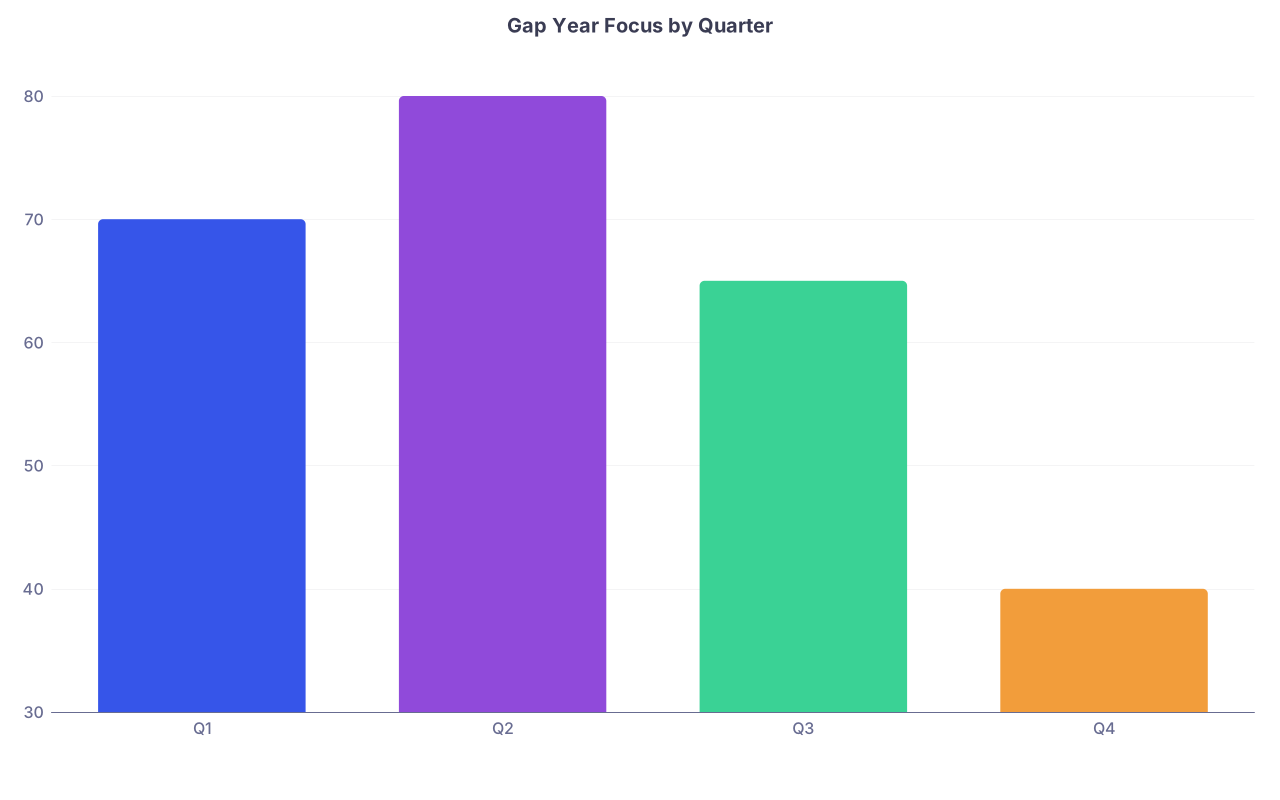
| Category | Value |
|---|---|
| Q1 | 70 |
| Q2 | 80 |
| Q3 | 65 |
| Q4 | 40 |
(Interpretation: percent of your waking energy dedicated to “future CV impact,” which should stay high early.)
Quarter 1 (Months 1–3): Build Foundations
By the end of Month 3, you should have:
- 1–2 attending‑level mentors who know your name and goals
- At least 1 clearly defined research/quality project you own a big chunk of
- A practice schedule if retaking Step/COMLEX
- A clear plan for letters: who, when, and in what context
Sample Week Structure (if doing research + exam prep):
- Mon–Fri:
- 8–5: Lab/clinic/research duties
- 6–9 pm (3 nights/wk): Question blocks + review (UWorld, Amboss, etc.)
- Saturday:
- AM: 40–80 practice questions
- PM: Data cleaning, writing, or reading papers
- Sunday: off or light review (burnout is real)
If no exam: use those 6–9 pm slots for:
- Manuscript writing
- Learning basic stats / R / SPSS
- Drafting abstracts/posters
- Reading in your specialty
Month 3–4: Convert Work into Measurable Outputs
At this point you should stop “helping” and start owning specific deliverables.
Research Track
By Month 4 you want:
- Your name on:
- 1–2 retrospective chart reviews or QI projects
- Or 1 big prospective project where you’re the main coordinator
- At least:
- One abstract submitted or ready to submit
- One poster concept in draft
Push your supervisor to let you drive something small but finishable. Half‑finished “massive” projects don’t impress anyone.
Clinical Track (USCE / Scribing / Prelim)
By Month 4, you should:
- Identify 2–3 attendings who:
- Have seen you consistently
- Work in your target specialty
- Could realistically write strong letters
- Signal early: “I’m in a gap year and planning to apply in [specialty] this fall. I’d be grateful for any feedback on how I’m doing and what I should improve to be a competitive applicant.”
You’re not asking for the letter yet. You’re preparing the ground.
Month 4–6: Prep for ERAS—Yes, This Early
At this point you should mentally move from “gap year” thinking to “upcoming application cycle.”
If You Need an Exam (Step 2 CK / OET / COMLEX)
Block out an 8–10 week ramp:
- Weeks 1–4: Mixed question blocks 5x/week + targeted review
- Weeks 5–7: 2–3 NBME/CCSSA or COMSAE exams spaced out
- Week 8–9: Address weak systems, repeat questions
- Week 10: Take the exam
Do not stack this right against ERAS opening. Aim to be done at least 4–6 weeks before applications open so scores are back.
Build ERAS Content Live
Start a working document with:
- Updated experiences (with accurate dates and hours)
- Bullet points for each role
- Running list of:
- Posters
- Abstracts
- Submitted / accepted papers
Do this in real time. No one has the discipline in August to reconstruct what they did in November.
Month 6–7: Letters and Story Cohesion
At this point you should have enough face time for strong letters.
Request Letters (6–8 Weeks Before ERAS Submission)
You want at least 3 strong specialty‑aligned letters. More if you’re an IMG or switching specialties.
How to ask:
- Email or ask in person:
- “Do you feel you know my work well enough to write a strong, supportive letter for my [specialty] residency application?”
- Offer:
- Updated CV
- Brief summary of your work with them
- Draft personal statement if they want context
If they hesitate even slightly, redirect and find someone else.
Craft a Cohesive Narrative
By Month 7, your gap year should tell a clean story:
- For IM: “I spent this year in outcomes research in heart failure and working closely with the inpatient IM team.”
- For Psych: “Full‑time psych research + outpatient clinic experience + community mental health volunteering.”
- For EM: “High‑volume ED scribing + ultrasound research + USCE in emergency departments.”
Messy story: “I did cardiology research, shadowed ortho, and am applying to anesthesia.” Programs notice.
Month 7–8: ERAS Application Build
At this point you should shift from generic productivity to application‑focused output.
Timeline: Application Prep
Use this visual as your mental track:
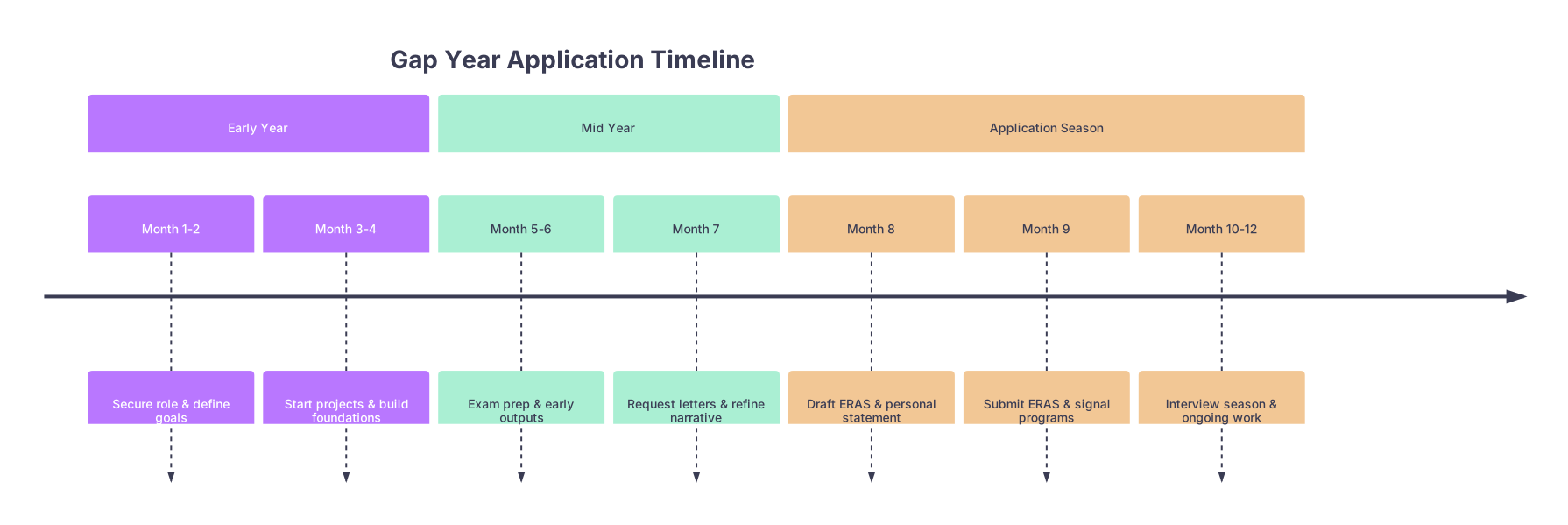
| Period | Event |
|---|---|
| Early Year - Month 1-2 | Secure role & define goals |
| Early Year - Month 3-4 | Start projects & build foundations |
| Mid Year - Month 5-6 | Exam prep & early outputs |
| Mid Year - Month 7 | Request letters & refine narrative |
| Application Season - Month 8 | Draft ERAS & personal statement |
| Application Season - Month 9 | Submit ERAS & signal programs |
| Application Season - Month 10-12 | Interview season & ongoing work |
Personal Statement (Month 7–8)
You write one primary PS for your specialty. Optional targeted variants for a few specific places.
Use your gap year strategically:
- Show growth: “After not matching, I chose to…”
- Show insight: “Working in [specific clinic/lab] changed how I view…”
- Show alignment: “This year confirmed that [specialty] is the right fit because…”
Avoid:
- Defensive tone
- Over‑explaining your failure
- Blaming others or systems
One tight paragraph on what went wrong + the rest on what you did about it works well.
ERAS Entries
For each main gap year experience:
- Use metrics:
- “Enrolled 150+ patients into registry”
- “Abstract accepted to [conference]”
- “Scribed 1,000+ patient encounters in urban ED”
- Use role language:
- “Led data collection team of 3 students”
- “Presented weekly at lab meeting”
This is where your year’s structure pays off. Random shadowing with fuzzy hours looks weak.
Month 8–9: ERAS Submission and Targeting
At this point you should be treating your gap year like a launchpad, not a holding pattern.
ERAS Opens → Submission (Usually June–September, depending on year)
Your target:
- Have all core materials ready by the date ERAS opens for editing
- Submit within the first 1–2 weeks of programs accepting applications
Late applications after a gap year scream poor planning.
Building a Program List
Use your gap year profile to be realistic:
| Applicant Type | Program Strategy | Notes |
|---|---|---|
| US MD, mild weakness | Mix of academic & community | 40–60 programs |
| US DO / IMG strong CV | Many community + some academic | 60–100 programs |
| Reapplicant with red flags | Heavy community focus | 80–120+ programs |
Leverage:
- Any institution where you did research or USCE
- Any place where your mentors have connections
- Regions you actually want to live (yes, that still matters)
Signal your true top programs consistently: through emails, away rotations, or faculty advocacy.
Month 9–12: During Interview Season
At this point you should resist the urge to coast. Programs care what you’re doing now, not just last spring.
Keep the Gap Year “Live”
During interviews, you want fresh answers when they ask:
- “What are you working on currently?”
- “Any recent updates to your CV since you applied?”
- “Tell me about a recent patient/research challenge.”
So Months 9–12 should still include:
- Ongoing involvement in your projects
- Presentations (even internal ones)
- Progress toward submissions or conferences
Interview Talking Points
Have 2–3 polished stories from your gap year:
- A complicated patient or case you followed
- A research obstacle you helped solve
- A moment that confirmed your specialty choice
These should be anchored in real details: clinic names, specific responsibilities, what you learned.
Weekly & Daily Structure That Actually Works
This is where people fall apart. A gap year without structure will devour your motivation.
Sample Weekly Blueprint (Research + Exam, heavy version)
- Mon–Fri
- 8:00–5:00: Research/clinic
- 5:30–7:30: Questions (Mon/Wed/Fri) or writing (Tue/Thu)
- Saturday
- 9:00–12:00: NBME / long block or deep work (stats, manuscript)
- Afternoon: Life admin, light reading
- Sunday
- Off or 2–3 hours of catch‑up
Sample Weekly Blueprint (Research only, no exams)
- Mon–Thu
- 8:00–5:00: Core role
- 5:30–7:00: Manuscript, abstracts, reading
- Friday
- 8:00–3:00: Role
- 3:00–5:00: “Career block” (ERAS draft, networking emails, updating CV)
- Saturday
- Optional: 3–4 hours of focused writing or analysis
- Sunday
- Off
Your calendar should show recurring blocks named for what they are:
- “UWorld IM blocks”
- “Poster draft”
- “Mentor check‑in prep”
- “ERAS update”
If every day is a blank page, you’ll fill it with nothing.
What Programs Actually See in a Strong Gap Year
Here’s how your year gets judged behind closed doors. Attendings and PDs look for:
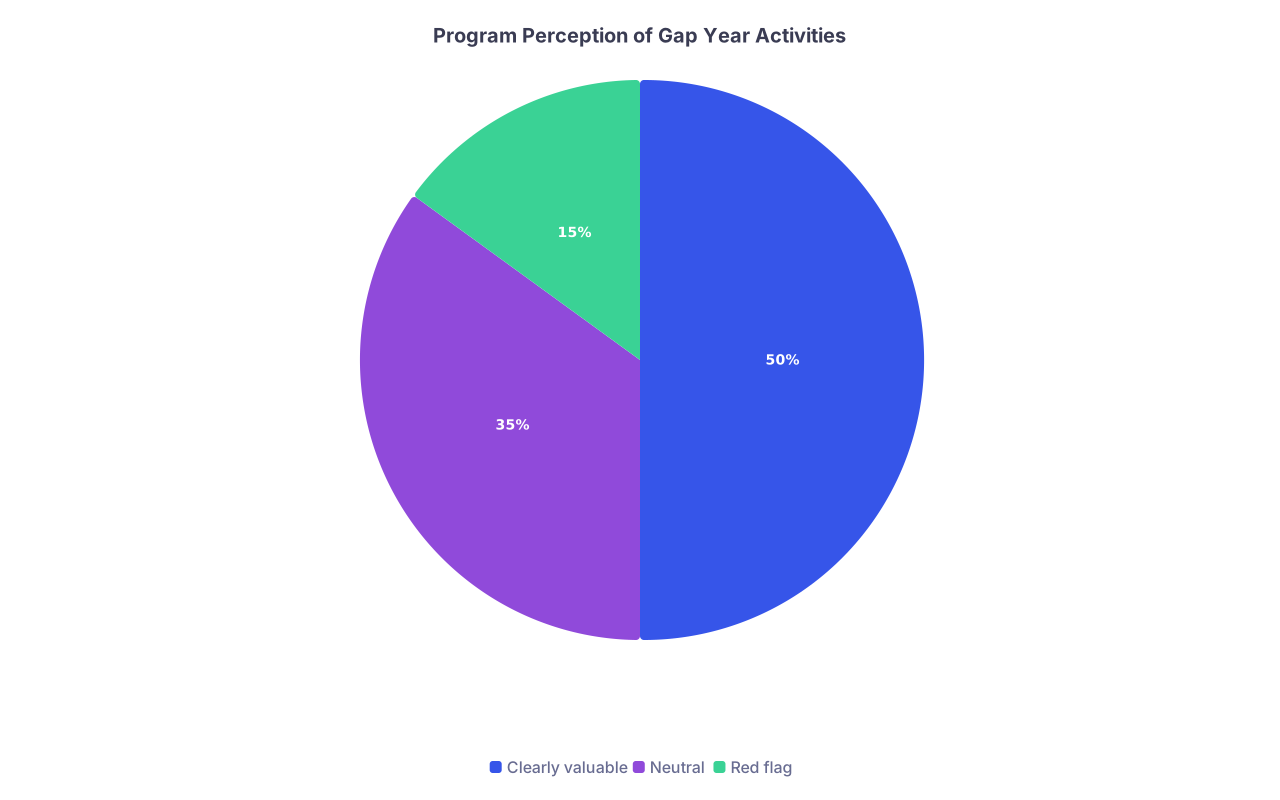
| Category | Value |
|---|---|
| Clearly valuable | 50 |
| Neutral | 35 |
| Red flag | 15 |
“Clearly valuable” looks like:
- Longitudinal commitment (9–12 months in one place or theme)
- Clear specialty alignment
- Tangible outputs:
- Abstracts, posters, publications
- Strong, detailed letters
- Maturity in explaining prior failures or concerns
“Neutral” is: random volunteering, short stints, generic shadowing.
“Red flag” is: unexplained gap, “personal time,” no supervisor who can vouch for you.
The 3 Non‑Negotiables by the End of Your Gap Year
By the time you hit “submit” on ERAS, you should be able to check off:
At least one supervisor who would fight for you.
Not just “happy to write a letter.” Someone who would email a PD and say, “You should look at this applicant.”At least one concrete product.
Abstract, poster, paper, significant QI project, leadership role. Something real you can talk through in detail.A clean, simple story.
“I spent this year doing X in order to become a stronger Y applicant.” If you can’t say that in one sentence, fix your plan now.
Open your calendar right now and block the next 12 months into quarters, then weeks. Label each quarter with its primary goal—exam, research output, ERAS build, or interviews—and assign your current and planned activities into those blocks. If something doesn’t clearly support a quarter’s goal, cut it or replace it.