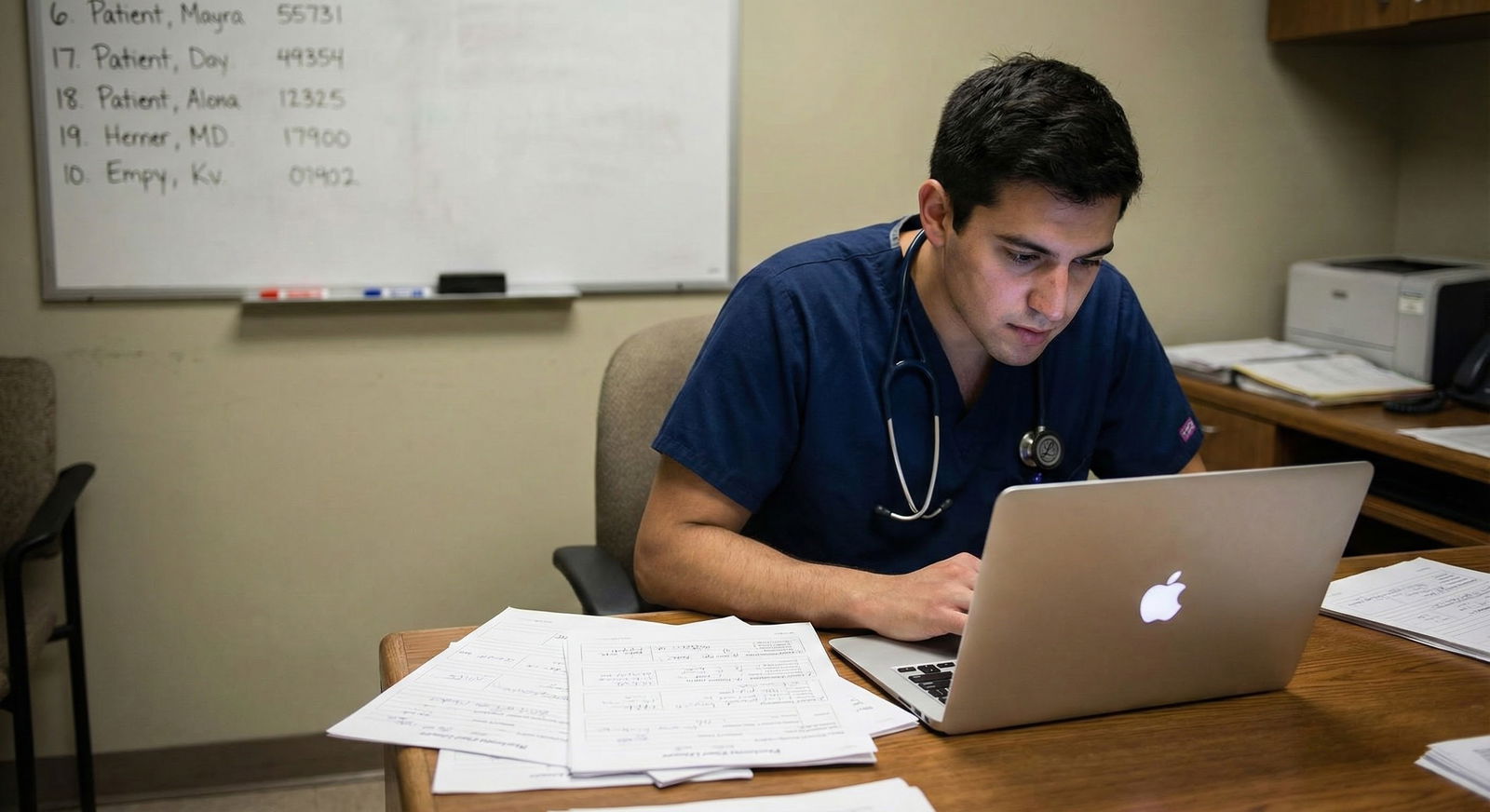
Last week on nights, between pages, a classmate looked at me and said, “Honestly, I feel like I’m just… good on the wards. That’s it. No big research, no leadership empire. Just… showing up, doing the work.” Then she paused and added, “And I’m terrified that’s not enough.”
If you’re reading this, I’m guessing that hits a little too close. You’re probably the one staying late to tuck in your patients, but going home wondering if programs will care that you stayed to adjust the insulin instead of adding another poster to your CV.
Let me say the scary part out loud: the whole system makes you feel like being good clinically is somehow the least impressive thing. Like the boring background hum, while “real applicants” stack pubs, leadership titles, and global health trips.
I’m going to push back on that. Hard.
No sugarcoating. There are specialties and programs where “clinical-only” will be a disadvantage. There are people with 15 pubs and a grant and a nonprofit. You know that already, that’s why you’re anxious. But being primarily strong clinically is not a death sentence for your application. It just means you have to be deliberate and honest about how you build and present your story.
Let me walk through this like we’re sitting in a call room, screens open, ERAS portal glaring, and you’re asking me: “Is this actually enough?”
First: Is “Only Clinical” Really Your Only Strength?
Before we talk strategy, I need to poke at the premise, because I’ve watched so many people say, “I have nothing but clinical” and their CV says otherwise.
You might be calling it “only clinical” because:
- You don’t have first-author original research in NEJM.
- You weren’t president of 3 orgs.
- You didn’t build a free clinic from scratch.
But the bar in your head is warped by comparison. Let’s zoom out a bit.
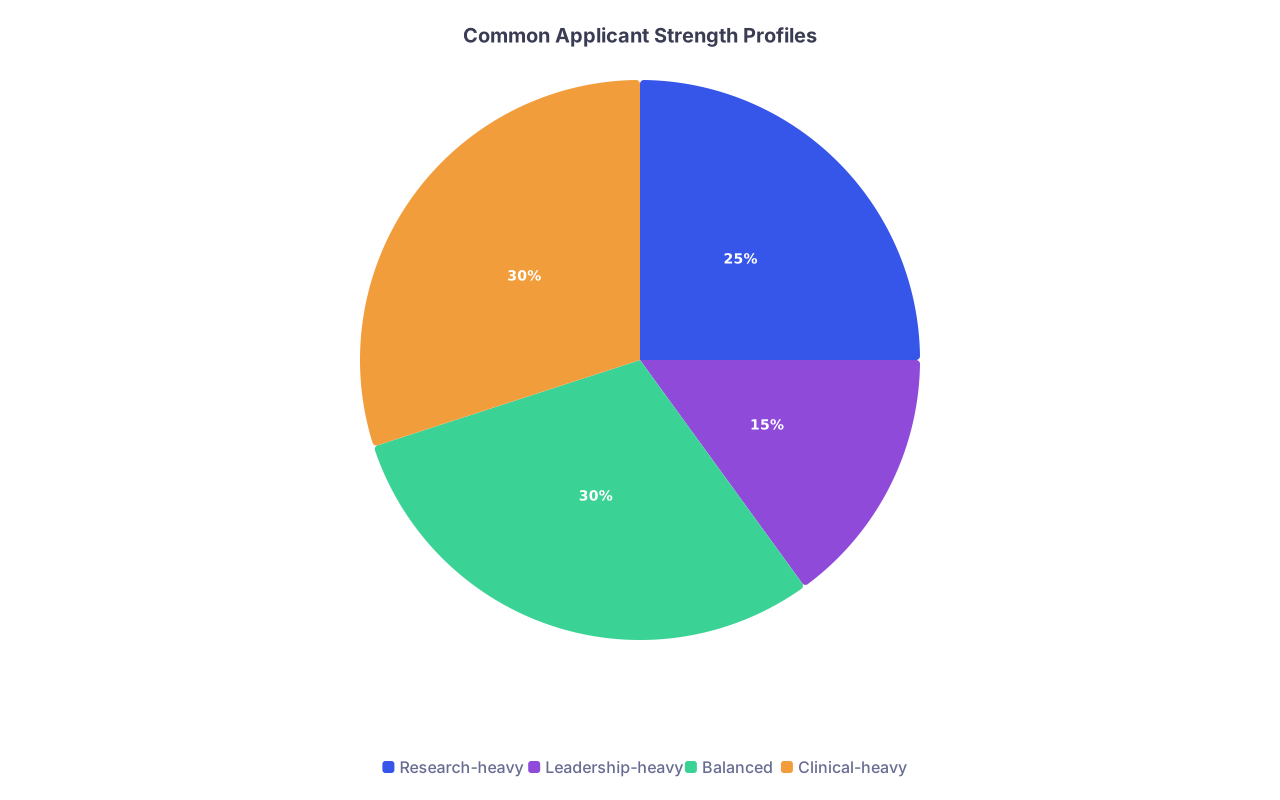
| Category | Value |
|---|---|
| Research-heavy | 25 |
| Leadership-heavy | 15 |
| Balanced | 30 |
| Clinical-heavy | 30 |
That “clinical-heavy” group? They match. All the time. Especially into community and mid-academic programs, and into specialties that actually live and die on the wards and in the clinic (IM, FM, peds, psych, EM, OB in many places).
When I look at “clinical applicants” who think they have nothing else, I usually still see:
- Solid or improving shelf scores
- Trusted by residents/attendings, with comments like “team player” or “anchor of the team”
- Evidence they show up reliably: extra shifts, helping co-students, patient follow-up
- Quiet leadership (not titles, but actions)
You might not call those “strengths” because they’re not bullet points that scream prestige. But residency programs are not just hiring researchers. They’re hiring people they have to work next to at 3 a.m.
Your “only strength” is literally the part that determines patient safety.
That said, there are situations where being mostly-clinical works better and where it’s more of a stretch.
| Situation | How Clinical-Heavy Plays |
|---|---|
| Community program IM/FM/Peds | Big asset; they want workhorses |
| Strong mid-tier academic IM | Neutral to positive if letters are excellent |
| Top 10 research-heavy IM | Often a liability without research |
| EM, Psych, OB at mixed programs | Often enough if SLOEs/letters are strong |
| Highly competitive specialties (Derm, Ortho, ENT) | Very tough without research/extra factors |
So no, you’re not doomed. But you do need to be strategic about where and how you apply.
What Programs Actually Care About (That You Might Be Undervaluing)
Strip away the noise, and residency program directors consistently say the same things matter the most:
- Clinical performance (clerkship grades, Sub-I evaluations)
- Letters of recommendation that say you’re safe, reliable, and coachable
- Step scores (enough to clear the bar, not necessarily superstar)
- Professionalism and how you function on a team
- Fit with the specialty and program
Notice what’s not at the top for the majority of programs: “first-author basic science paper.”
Research matters more in highly academic, competitive places. But for many bread-and-butter programs, it’s a nice extra, not the foundation.
The problem is: you don’t see your strengths in the same place they do.
You see:
- “No publications.”
- “Just a couple of quality improvement projects that went nowhere.”
- “Leadership? I was just the person who made sure everyone had the right sign-out template.”
They see:
- “This student shows up early and leaves late without complaining.”
- “This person knows their patients better than anyone else on the team.”
- “I would trust them with my own family member.”
If you’re truly strong clinically, your letters and evals should reflect that. That’s the currency of a “clinical-heavy” application.
The fear in your head sounds like: “What if my clinical strength doesn’t show up on paper?”
Fair question. Then your job is to drag it onto paper. Intentionally.
Turning “Good Clinician” Into Actual Application Power
Right now, your fear is: “I’m good in person, bad on paper.” Let’s fix the “on paper” part, because the in-person part (the hard part) you actually already have.
1. Make Your Letters Do the Talking
If clinical work is your primary strength, your letters are everything.
This means:
- Choose letter writers who actually saw you take care of patients, not the famous name who barely remembers you.
- Ask for letters from attendings who explicitly commented on your work ethic, team role, and clinical reasoning.
- When you ask, be clear:
“I’m hoping to go into [specialty], and my biggest strength is bedside clinical work and being a reliable team member. If you feel you can speak strongly to that, I’d be grateful for a letter.”
You want letters that say:
- “Best student I’ve worked with in the last few years.”
- “Functions at the level of an intern.”
- “Stayed late to ensure safe discharges without being asked.”
Not just “pleasant to work with, will be a fine resident.”
2. Use Your Personal Statement to Make a Coherent Story
You’re tempted to write: “I know I don’t have much research, but I really love patient care.” Don’t do that. Don’t apologize for what you’re not.
Instead, you lean into what you are:
- Someone who lights up in the room with a complicated, messy real-life patient.
- Someone who finds meaning in continuity of care, hard conversations, teaching families.
- Someone who has specific examples of times your clinical commitment mattered.
Tell stories that show:
- You caught a medication error because you read the MAR carefully at 5 p.m. when everyone was rushing to leave.
- You went back to talk to a scared patient after sign-out just because you couldn’t shake the feeling they were confused.
- You followed up on a patient weeks later, checking their MyChart or visiting them if they were readmitted.
Make it explicit: you want to be the resident who owns the day-to-day care of patients, not just pad a CV.
That’s not a consolation prize. That’s the job.
Where Being “Clinical-Heavy” Actually Beats the “Fancy CV” People
Here’s the part no one says out loud because it sounds impolite: there are applicants with glittering CVs who are mediocre—or even unsafe—clinically.
You know this. You’ve worked with some of them.
They’re brilliant at journal club, but:
- They don’t know their patients.
- They disappear when it’s time for discharge summaries.
- They can’t be trusted to actually follow up on critical labs.
Program directors have been burned by these people. Many times.
So if you have to choose between:
- Applicant A: 10 pubs, meh clinical, looks great on paper, weak letters.
- Applicant B: no pubs, stellar clinical, multiple letters saying “I’d hire them tomorrow.”
A shocking number of programs will choose B.

You’re the second one. Your job is to make sure programs know that.
Especially at community-heavy or clinically intense places, they’d rather have a reliable, clinically strong resident than a research star who will crumble on their first week of nights.
But What About Competitive Specialties?
Here’s the part you’re scared to read, so let me be straightforward.
If you’re going for Derm, Ortho, ENT, Plastics, Rad Onc, etc., and you truly have:
- No research
- No specialty-specific involvement
- Just “good clinical” and average scores
That’s going to be rough. Not impossible, but you’re starting from behind.
You have three options here, and none of them is magical:
- Accept that your application will be a long shot and apply broadly, with a very realistic backup.
- Take extra time (research year, prelim year, etc.) to build the specialty-specific pieces you’re missing.
- Re-examine whether your heart is really in that field vs another one where your strengths actually match what programs need.
What I’ve seen kill people in this position is delusion, not lack of worth. They cling to a highly competitive specialty with a CV that doesn’t match what that field demands, and then they don’t commit to a viable Plan B. That’s how you end up unmatched with a perfectly good clinical skill set that would’ve made you a stellar [IM/FM/Peds/Psych/OB/EM] resident.
So ask yourself—with brutal honesty and maybe a mentor who’s not afraid to hurt your feelings—whether your “clinical strength” aligns with the field you’re chasing.
If you do pivot to a less cutthroat specialty, your clinical strength becomes a major asset instead of an explanation.
Making Clinical Strength Visible Across Your Application
Let’s make this practical. You’re clinical-heavy. How do you make that pop on ERAS and not look “blank”?
On Your CV
No, you can’t invent research. But you can:
- List QI projects, chart review work, small QA stuff. Even if they didn’t publish, if they changed practice locally, that still matters.
- Include teaching roles: tutoring junior students on the wards, leading EKG or SOAP note sessions, whatever.
- Call out concrete clinical responsibilities: triaging in student-run clinic, managing your own panel with supervision, etc.
Even minor things matter more than you think when they’re framed as responsibility and ownership, not “I attended a meeting.”
In Your Experiences Section
Don’t just write:
“Student-run clinic volunteer.”
Write:
“Served as primary student provider for 4–6 patients per session, responsible for initial assessment, presentation, and follow-up care planning with attending oversight.”
You’re showing: I already function as a mini-intern.
Where You Apply Matters More Than You Want It To
Here’s the anxious part no one likes: you can do everything right and still get burned if you apply to the wrong mix of programs.
If you’re clinical-heavy:
- You should heavily target community and hybrid academic programs that emphasize patient care.
- You should not build a list of 80% “Top 25” academic places that publish more than they round.
- You should pay attention to what programs brag about on their websites: do they talk about community impact, patient volume, teaching? Or nonstop about grants and R01s?
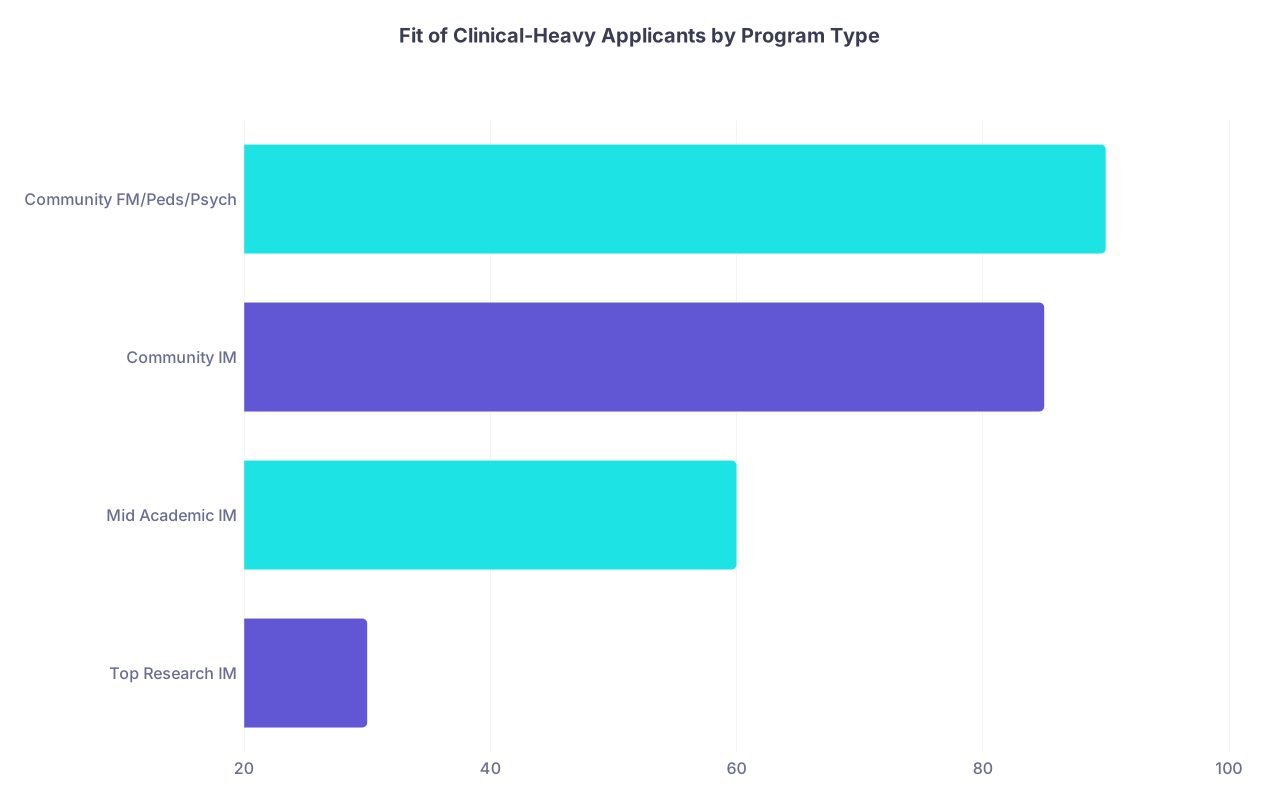
| Category | Value |
|---|---|
| Top Research IM | 30 |
| Mid Academic IM | 60 |
| Community IM | 85 |
| Community FM/Peds/Psych | 90 |
Those bottom two categories? That’s where clinical-only often becomes clinical-advantage.
You don’t need to give up on all academic programs. Just don’t build a list that assumes your clinical skill will magically substitute for a missing research pedigree at places that are research factories.
The Huge, Ugly Fear: “What If I’m Overestimating My Clinical Strength?”
You’re probably thinking this. “What if I think I’m good clinically, but my evals are actually average and my letters are lukewarm and I’m lying to myself?”
That anxiety is actually a good sign. The truly unsafe people usually think they’re amazing.
Here’s what you can do:
- Read your evaluations honestly. Do they say things like “strong clinical reasoning,” “great with patients,” “functions at intern level”? Or mostly “pleasant, works hard”?
- Ask one attending you trust:
“If you had to describe my strength as a future resident, what would you say?”
If they immediately say “clinical,” you’re not making that up. - Check your Sub-I feedback specifically. That’s the closest predictor.
If your evals are genuinely mediocre, then yes, we have a different problem. But then your fear isn’t “only clinical,” it’s “I don’t have any standout strengths yet.” That’s fixable too, but it’s a different plan: fewer assumptions, more remediation, maybe a targeted extra Sub-I or a gap year.
Most people reading this though? Your problem is not lack of strength. It’s lack of confidence and lack of translation from the wards to the application screen.
You’re Allowed To Build a Career Around Being Good With Patients
There’s this subtle shame floating around med school now that if you’re “just” into clinical medicine, you’re somehow lesser. Not a “leader.” Not “innovative” enough. Like the real stars are all doing “impactful research” and policy and startups.
It’s nonsense.
Residencies need people who:
- Show up on time.
- Know their patients.
- Don’t abandon the team.
- Care enough to follow up.
- Learn fast and don’t make the same mistake twice.
You’re allowed to be that person and be proud of it. You’re allowed to say, “My primary strength is clinical care, and I want a program that values that.”
That is not settling. That’s alignment.

| Step | Description |
|---|---|
| Step 1 | Clinical-Heavy Student |
| Step 2 | Lean Into Clinical Strength |
| Step 3 | Consider Research Year or Backup |
| Step 4 | Target Community & Hybrid Programs |
| Step 5 | Strong Letters Highlighting Clinical Skill |
| Step 6 | Build Specialty-Specific CV |
| Step 7 | Develop Realistic Backup Plan |
| Step 8 | Specialty Choice |
Quick Reality Check Before You Spiral
You’re not behind because your biggest strength is clinical work.
You’re behind if:
- You pretend your application fits hyper-competitive places when it doesn’t.
- You don’t choose letter writers who can actually see and describe your strength.
- You let shame push you into underselling your clinical excellence as “just doing my job.”
You’re ahead, quietly, if:
- Residents already rely on you when you’re on their team.
- Attendings have said, “You’ll be a great resident.”
- Patients remember you and ask for you.
- You feel more like “one of the residents” on your Sub-I than “just the med student.”
That’s not nothing. That’s the core of the job you’re trying to get.
FAQs
1. What if I have no research at all—like literally zero?
Then you focus on specialties and programs where that’s common, not rare. Internal medicine at a community or mid-tier academic program? Totally fine. Family med, peds, psych, EM in many places? Also fine. You’ll be at a disadvantage at top research-heavy institutions, but not overall doomed. Your letters, clinical evals, and personal statement just matter that much more. Own the fact that you spent your limited time pouring into patient care instead of half-hearted, checkbox research.
2. Will program directors judge me for not doing more “extra stuff”?
Some will. The hyper-academic, prestige-chasing ones probably will, yes. But a lot won’t. Many are frankly tired of shiny CVs with weak bedside skills. If your file screams “this person will take great care of our patients and won’t crash and burn on nights,” that’s incredibly attractive. Your job is to apply to enough places where that mindset exists instead of stacking your list with programs that worship h-indices.
3. Should I try to cram in a last-minute research project before ERAS?
If it’s May and you’re applying in September? A tiny poster or case report isn’t going to magically transform your application. If an authentic opportunity appears and you can finish it without destroying your sanity or grades, sure, do it. But don’t blow up your life for a line that program directors will barely notice. You’re better off doubling down on a killer Sub-I and getting letters that prove your clinical strength.
4. How do I talk about being “clinical-heavy” without sounding defensive?
You frame it as intentional, not apologetic. Instead of “I know I don’t have a lot of research,” you say, “My biggest strength is direct patient care and functioning as a reliable team member; that’s where I chose to put most of my energy.” Then back it up with specifics—stories, eval comments, responsibilities you took on. You’re not asking for pity. You’re showing them exactly what they’re getting if they rank you.
5. Can I still match at an academic program if my strength is clinical?
Yes, depending on the level of “academic.” Many university-affiliated or mid-tier academic programs care deeply about clinical performance, teaching potential, and team fit. You might have a harder time at the ultra-elite, grant-heavy programs, but those are a small fraction of spots. If you have strong letters, decent scores, and solid clerkship/Sub-I performance, you absolutely can land at an academic center that values teaching and patient care.
6. How do I know if I’m really “strong clinically” or just average and delusional?
Look at actual data, not vibes. Do your evals say things like “at or above intern level,” “top student on the rotation,” or “outstanding clinical reasoning”? Have residents told you, unprompted, that you’ll be a great intern or that they wish you were staying? Did an attending ask you to come back for Sub-I or offer to write you a “strong” letter? If the answer to those is mostly yes, you’re not delusional—you’re just underselling yourself. If not, then your task is to seek honest feedback and focus on growth during upcoming rotations rather than assuming everything’s fine.
Key points to walk away with: being “only” strong clinically is not a weakness—it’s just undervalued in loud comparison cultures. Your job is to make that strength visible through your letters, personal statement, and program choices. And if you aim where your skill set actually fits, being the person who’s rock-solid at patient care is more than enough.