
It is 11:47 p.m. You are post-call, half-asleep on the couch, scrolling through your loan servicer’s app. The number at the top of the screen makes your stomach drop. $403,217.19.
You are making $64K as a PGY-2. Your partner asks, “How bad is it?” You mumble something about income-driven repayment and hope they stop asking.
Here is the truth: four hundred thousand in med school loans feels catastrophic. It is not. It is a serious problem that demands a serious, structured plan. But it is fixable.
I am going to walk you through a 5-step stabilization protocol that I have used, in one form or another, with dozens of residents and early attendings. The goal is not to magically erase the debt. The goal is to:
- Stop the financial bleeding.
- Lock in the best long-term strategy (PSLF vs private vs hybrid).
- Give you a concrete, written plan so this stops hijacking your mental bandwidth.
You are not going to “feel better” about $400K. You are going to feel in control of it. Very different.
Step 1: Get the Exact Diagnosis (Not the Vibe)
Most people with big med school debt know one number: total balance. That is like treating a patient with “abdominal pain” and not bothering to localize it.
You need a full workup. One time, on paper.
1. Pull one complete snapshot
Sit down for 60–90 minutes. No multitasking. You are going to build a one-page “loan chart.”
Get:
- Your latest statement or online snapshot from every federal servicer (MOHELA, Nelnet, EdFinancial, etc.).
- Any private refinance loan statements (SoFi, Laurel Road, Earnest, etc.).
- NSLDS record (via studentaid.gov) to verify all federal loans and histories.
Then fill this table:
| Loan Type | Balance | Interest Rate | Program | Years in Repayment/Qualifying |
|---|---|---|---|---|
| Direct Unsubsidized | $210,000 | 6.8% | Federal | 3 years IDR/PSLF eligible |
| Direct Grad PLUS | $190,000 | 7.2% | Federal | 3 years IDR/PSLF eligible |
| Private Refi | $25,000 | 4.5% | Private | 1 year |
| Undergrad Direct | $18,000 | 4.2% | Federal | 5 years, not all PSLF eligible |
You want:
- Loan type (Direct unsubsidized, Grad PLUS, Perkins, FFEL, private).
- Interest rate for each chunk.
- Whether it is federal/PSLF-eligible or private.
- How many qualifying PSLF/IDR months so far (you can see this in your servicer account or PSLF help tool, though it is sometimes wrong; write what they show now).
2. Sort loans by “strategic value”
Not all dollars are equal. Some are “golden” dollars (PSLF-eligible) and some are “dead weight” (private at 7.5%).
Mark each loan:
-
- Direct Loans.
- Employment at 501(c)(3) or government hospital.
- You realistically expect to stay in nonprofit/academic/VA/military for at least 10 years total.
Tier 2 – Federal, non-PSLF likely:
- Direct loans but you plan on private practice or locums long-term.
- Or PSLF-eligible but you are 80% sure you will not stay 10 years.
Tier 3 – Private garbage:
- Any private refi or private med school loans.
- Not eligible for PSLF or IDR protections.
- Pure math problem: rate vs alternatives.
Circle Tier 1 loans in green, Tier 2 in blue, Tier 3 in red. You will treat each tier differently.
Step 2: Choose a Primary Path – PSLF vs Pay It Off vs Hybrid
Here is where people get stuck for years. Waffling between PSLF and refinancing to a lower rate. That indecision costs them tens of thousands in lost time and bad payment choices.
You will pick one of three paths:
- PSLF heavy – Minimize payments, maximize forgiveness.
- Aggressive payoff – Refinance and crush the loans.
- Hybrid – PSLF on some, refinance others, with a time-limited decision window.
2A. PSLF-heavy path (most residents in nonprofits)
You are a strong PSLF candidate if:
- You are at an academic medical center, VA, or county/501(c)(3) hospital now.
- You expect fellowship + early attending years also at nonprofit.
- You have $300K+ in Direct loans.
- Your heart does not scream for $800K private practice derm income immediately.
If that is you, your stabilization orders are:
Consolidate to Direct if needed.
- Most med school loans are already Direct.
- If you have any FFEL or Perkins: consolidate them into a Direct Consolidation Loan through studentaid.gov to make them PSLF-eligible.
- Be careful: consolidation can reset some PSLF counts; check the current IDR/PSLF “one-time adjustment” rules on studentaid.gov (as of late 2024, many borrowers are getting prior time credited).
Enroll in the best IDR plan for PSLF.
- Right now, that is usually SAVE for physicians with high debt-to-income.
- SAVE uses 225% FPL and excludes 50% of unpaid interest (for now), which massively reduces balance creep.
- File IDR recertification using your last tax return or current pay stub, whichever keeps payments lower during residency.
Document employment ruthlessly.
- Submit PSLF Employment Certification Form yearly and every time you change jobs.
- Keep copies of: contracts, W-2s, pay stubs, HR letters showing 501(c)(3) status.
- The horror stories you hear (“my 10 years didn’t count”) are usually documentation failures.
Bottom line: if you stick with nonprofit work, PSLF turns a $400K problem into a manageable 10-year tax-free forgiveness trajectory.
2B. Aggressive payoff path (private practice / high income / low PSLF likelihood)
You are in this camp if:
- You are planning high-paying private practice (ortho, derm, anesthesia group, EM group not 501(c)(3)).
- You are already sure your attending job will be non-PSLF eligible.
- You have the personality that will attack debt like a side gig.
Then your priorities shift:
During residency
- Still use SAVE or PAYE (if grandfathered) to keep payments low and reduce interest.
- You probably are not refinancing during residency unless a special “resident refi” beats your weighted average federal interest AND you are 100% sure PSLF is dead to you.
At attending transition
- Get competing refinance offers from multiple lenders (Laurel Road, SoFi, Earnest, ELFI, etc.).
- Compare: rate (fixed vs variable), term, borrower protections, resident and attending deferment options.
- Once you refinance federal loans, PSLF and federal IDR protections are gone. No going back.
Commit to a payoff window (5–7 years)
- You do not carry $400K for 20 years on a 10-year attending salary. That is financial malpractice.
- Aim for payoff in 5 years if single, 7 years if you need more flexibility for kids/house.
- That means $5K–$8K per month once you are an attending. Brutal, but temporary.
2C. Hybrid path (typical for people on the fence)
This is what I see most often in IM, peds, EM, anesthesia: resident at a nonprofit program, not sure if they will end up academic or private.
For you:
- You act as if PSLF is the plan during training.
- You leave the door open for refinance later, once you see your actual attending job.
The hybrid stabilization protocol:
Keep loans federal and in SAVE during residency.
Submit yearly PSLF employment certification so you are building qualifying years.
At the time of your first attending contract, do this analysis:
Quick Comparison: PSLF vs Refinance Factor PSLF Path Refinance Path Employer 501(c)(3) / gov Private group / for-profit Time horizon 10 years 3–7 years payoff Flexibility High (IDR, forbearance) Moderate to low Total paid (typical) Often less than principal Principal + interest, no forgiveness If your first attending job is at a qualifying hospital and you like it? Likely stay PSLF.
If you go private practice and plan to stay there? Refinance everything non-PSLF-viable and transition to aggressive payoff.
Do not sit in “maybe PSLF, maybe refi” land for 5 years. Decide within 6–12 months of your first attending job.
Step 3: Stop the Cash Bleed – Structure Your Monthly Payment Strategy
Once you choose your path, the monthly game becomes very tactical. The question is not “How big is my debt?” It is:
- What do I pay this year?
- On which loans?
- What happens to my balance?
3A. For PSLF-focused borrowers
Your goal is counterintuitive: you want low payments and max forgiveness, while preventing catastrophic interest ballooning.
Protocol:
Enroll in SAVE immediately (if eligible).
Use household AGI strategically.
- If you are married and your spouse makes good money: file married filing separately (MFS) so their income does not inflate your IDR payment (assuming your plan uses only your income under MFS).
- Yes, it can cost more in taxes. You do the math: extra tax vs thousands saved by lower payments and greater PSLF forgiveness.
Avoid voluntary extra payments on PSLF-eligible loans.
- Every extra dollar you pay is a dollar not forgiven at year 10.
- If you want to be “responsible,” save that extra in a “PSLF hedge fund” (high-yield savings or brokerage) in case the rules change.
Exploit interest subsidies.
- SAVE subsidizes at least 50% of unpaid interest.
- That means if your calculated payment covers $1,000 of a $1,800 interest charge, half of the remaining $800 is wiped, and only $400 adds to balance.
- Still annoying, but far better than unfettered negative amortization.
Track PSLF qualifying payments at least annually.
- Log in to your servicer (often MOHELA for PSLF) and check your qualifying payment count.
- If it looks wrong, you deal with it early, not at year 9. Send updated employment certification, keep written records, escalate if needed.
3B. For payoff-focused borrowers
Your goal is to minimize total interest paid and shorten the life of the loan. That means deliberate cruelty to your debt.
During training:
- If your rate is 6–8%: stick with SAVE/PAYE/REPAYE.
- If a resident refinance gets you down to 3–4% and you are allergic to PSLF / IDR? Maybe refinance a portion, but this is case by case.
As an attending (after refinance):
- Choose a term that hurts enough to matter (5–10 years, not 20).
- Set a minimum monthly payment based on term, then add an automatic extra payment targeted to principal.
- Many refinancers let you mark “apply to principal” or designate extra to specific loans; use that.
Attack highest-rate loans first (within same risk bucket).
- If you kept any high-interest private loans separate, throw extra at those first.
- Once they are gone, roll that freed-up cash into lower-rate loans (classic debt avalanche).
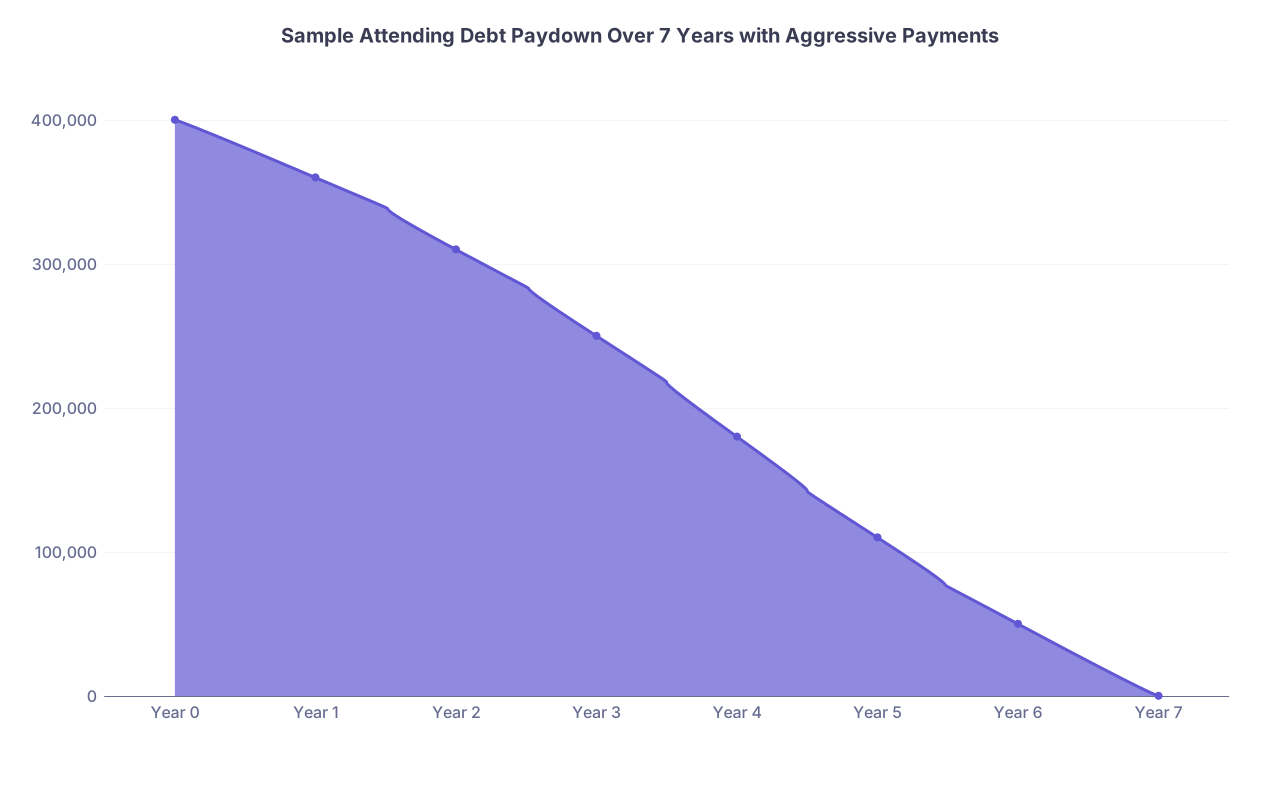
| Category | Value |
|---|---|
| Year 0 | 400000 |
| Year 1 | 360000 |
| Year 2 | 310000 |
| Year 3 | 250000 |
| Year 4 | 180000 |
| Year 5 | 110000 |
| Year 6 | 50000 |
| Year 7 | 0 |
Notice: the line is not smooth emotionally. It feels painfully slow for the first 2–3 years, then drops fast.
Step 4: Build a Legal and Financial Safety Net Around the Debt
Here is what no one mentions during resident noon conference: big debt interacts with your legal and financial life in some nasty ways if you ignore structure.
You fix that now.
4A. Protect your income and your future self
Disability insurance (own-occupation).
- Your future attending income is the engine that pays these loans.
- If that engine dies, you are stuck with six figures and less income.
- Get a true own-occupation disability policy as a resident if you can. The earlier you lock in, the better your health rating.
Term life insurance if anyone depends on you.
- Spouse, kids, partner relying on your future income? Get 20–30 year level term.
- Cheap, boring, essential.
- Never buy whole life or permanent life as a “loan strategy.” I have yet to see that play out well for residents.
Employer benefits scan.
- Some hospitals offer limited loan repayment assistance (e.g., $10–20K over a few years), or state/federal programs like NHSC, state loan repayment, or PSLF boosters.
- These have service contracts and clawbacks. Read them. You do not sign a $50K bonus in exchange for a 5-year handcuff lightly.
4B. Asset protection and legal basics
Keep retirement contributions going, even minimum.
- 403(b)/401(k)/457(b) contributions are shielded from creditors in many cases and reduce your AGI for IDR.
- Even 3–5% into retirement is a double win: tax savings now, plus not falling 10 years behind on retirement.
State-specific protections.
- You cannot discharge federal student loans easily in bankruptcy. But your other assets (home, retirement, etc.) have differing protections by state.
- If you have a partner with lower debt, sometimes it makes sense who owns what (e.g., house titled in lower-debt spouse’s name). Discuss with a student loan–savvy financial planner or attorney, not your random uncle.
Watch for contract landmines.
- Some private employer contracts try to bundle “loan repayment benefits” with punitive clauses if you leave early.
- A classic trap: $50K “loan repayment bonus” that vests linearly over 5 years but is fully repayable if you leave at year 3.
- That is basically a golden handcuff, not forgiveness. Read it like a lawyer, or pay one to do it.
Step 5: Create a 10-Year Written Plan (and Review It Every Year)
You stabilize your loans by turning them into a project plan, not a recurring nightmare. This is where you lay out the next decade on one page.
5A. Build a timeline
Use a simple year-by-year structure:
- PGY-2 (this year): On SAVE, PSLF-eligible job, payments approx. $X/month, qualifying PSLF months: Y.
- PGY-3: Same or similar. Start disability insurance.
- Fellowship years: Still nonprofit? Great—keep stacking PSLF months.
- First attending job (year X): Decide PSLF vs refinance based on employer.
- Years 6–10 after med school: Either complete PSLF or finish aggressive payoff.
Visualize it:
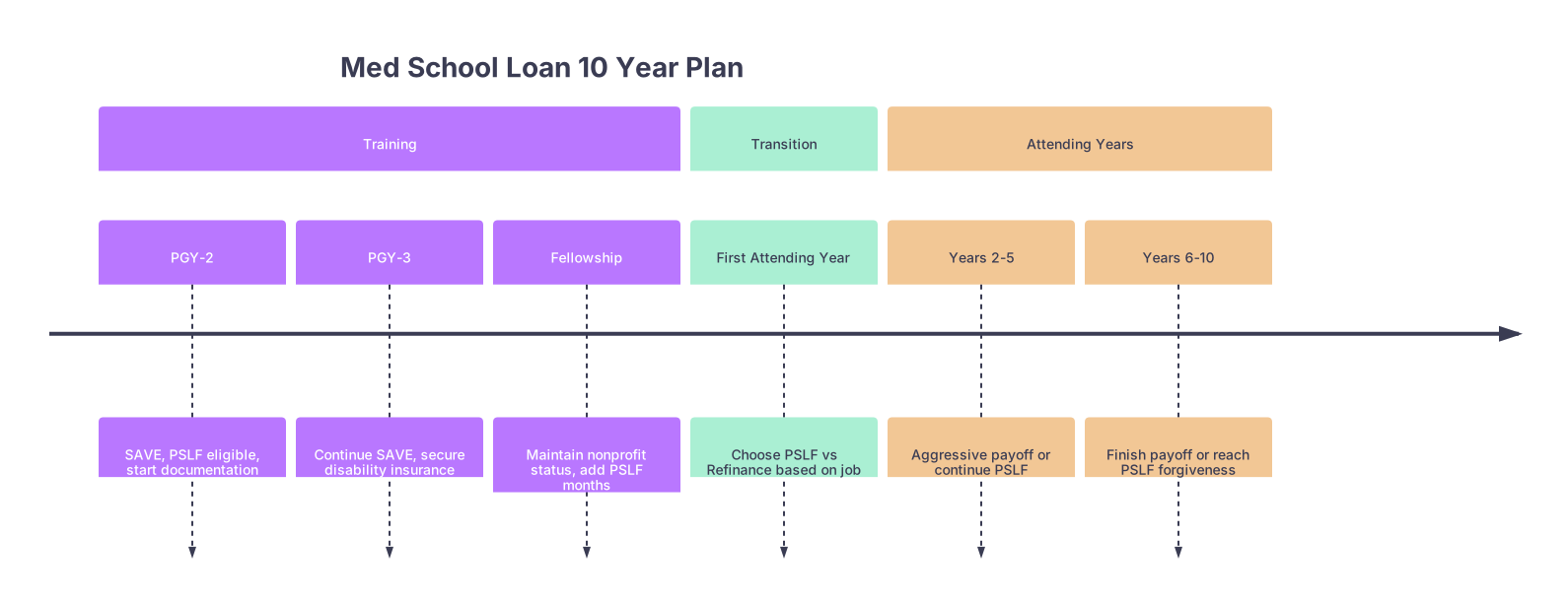
| Period | Event |
|---|---|
| Training - PGY-2 | SAVE, PSLF eligible, start documentation |
| Training - PGY-3 | Continue SAVE, secure disability insurance |
| Training - Fellowship | Maintain nonprofit status, add PSLF months |
| Transition - First Attending Year | Choose PSLF vs Refinance based on job |
| Attending Years - Years 2-5 | Aggressive payoff or continue PSLF |
| Attending Years - Years 6-10 | Finish payoff or reach PSLF forgiveness |
You are not married to this timeline. You are giving your future self a default path.
5B. Run rough numbers
You do not need an actuarial spreadsheet. You do need order-of-magnitude clarity.
Two quick sketches:
PSLF scenario:
- Current debt: $400K, average 6.8%.
- 3 more years of residency + 3 years of attending at nonprofit before PSLF = 6 more PSLF years (assuming you already have 4).
- Average IDR payment during residency: $200–300/month.
- As attending making $220K at nonprofit, SAVE payment maybe $1,300–1,600/month (depends on tax/household).
- Over 6 years, maybe you pay $70–100K total and get the remaining $350K+ forgiven tax-free. Numbers vary, but you get the idea.
Refinance/payoff scenario:
- Refinance $400K at 4.5% on a 7-year term.
- Payment: ~ $5,600–5,800/month.
- Total paid over 7 years: around $470–480K.
- You are debt-free in 7 years but you write big checks.
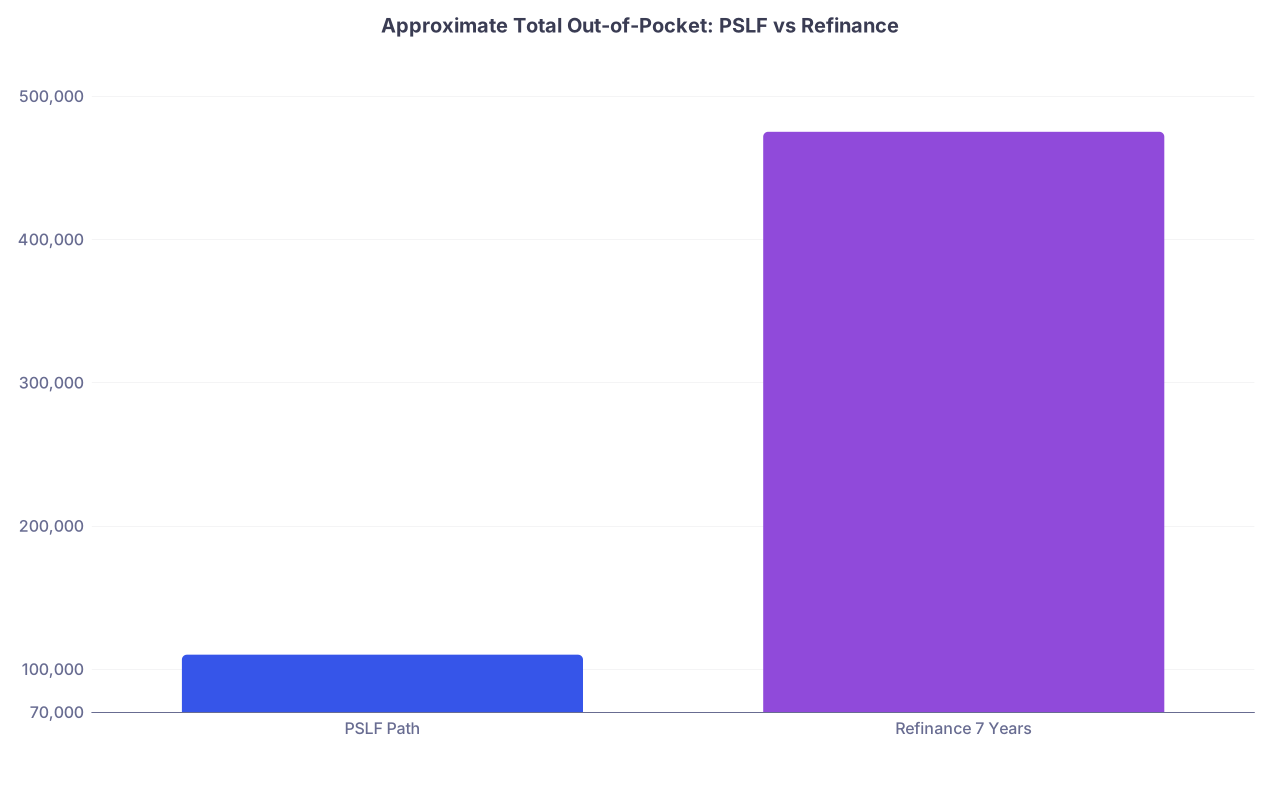
| Category | Value |
|---|---|
| PSLF Path | 110000 |
| Refinance 7 Years | 475000 |
These are not exact, but they are directionally correct. That is all you need to choose a path.
5C. Turn it into a one-page “loan playbook”
Write it out. Literally. One page. Bullet points.
Example:
- Primary Strategy: PSLF. Nonprofit career likely.
- Current Status (PGY-2):
- $405K Direct loans, 6.8% avg.
- On SAVE, payment ~$160/mo.
- 24 PSLF-qualifying payments so far.
- 3-Year Plan:
- Stay in nonprofit residency/fellowship.
- Submit PSLF forms yearly.
- Keep AGI low, consider MFS if married.
- Attending Plan (Year 4+):
- Target academic hospitalist role (nonprofit).
- SAVE payment expected ~$1,400–1,600/mo.
- Increase retirement contributions to drop AGI.
- Endgame:
- Reach 120 PSLF payments around [Month/Year].
- Expect large tax-free remaining balance forgiven.
- Maintain “PSLF hedge fund” with extra $500/mo invested, just in case.
Print it. Put it in the same folder with your disability policy and last tax return.
Then, once per year, you sit down, update that one page, and adjust for reality.
A Few Mistakes to Avoid With $400K+
Let me run through the dumbest patterns I keep seeing. You avoid these, you are 70% of the way there.
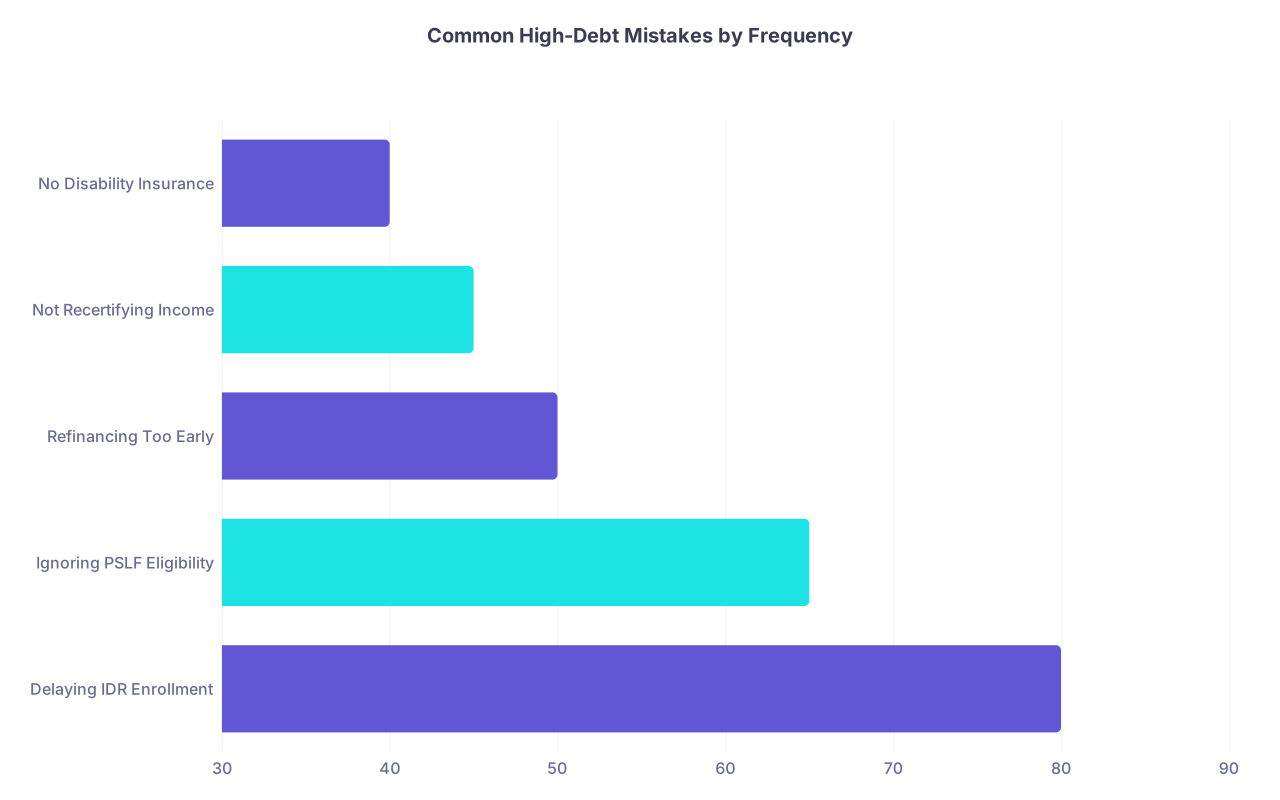
| Category | Value |
|---|---|
| Delaying IDR Enrollment | 80 |
| Ignoring PSLF Eligibility | 65 |
| Refinancing Too Early | 50 |
| Not Recertifying Income | 45 |
| No Disability Insurance | 40 |
Sitting in forbearance “to think about it.”
- Forbearance is like putting a GI bleed in the waiting room. Interest piles up, capitalizes, and destroys your long-term options. You decide under an IDR plan, not in forbearance.
Refinancing to private during residency while at a PSLF-eligible hospital.
- You are literally throwing away PSLF lottery tickets. Unless you are absolutely allergic to nonprofit work, this is almost always a bad trade in training.
Not recertifying income on time.
- Miss the IDR renewal date, payment jumps to the 10-year standard amount. Had one resident whose payment went from $180 → $4,100 because he ignored his email. That is not a fun month.
Listening to generic financial advice.
- Your uncle’s advice about “always paying off debt ASAP” does not apply to a physician with PSLF access and high future income. The incentives are different.
Letting shame delay action.
- I do not care that you feel dumb for borrowing $400K. Beating yourself up is not a plan. Getting facts on paper is.
Where to Go Next (Concrete To-Do List)
If you want this off your mental load, do the following in the next 7 days:
Build the loan snapshot.
- Log into studentaid.gov and every servicer.
- Create the one-page table of all loans, rates, and PSLF-eligibility tiers.
Pick your likely path.
- PSLF-heavy, payoff-heavy, or hybrid.
- If undecided, default to hybrid: stay federal, on SAVE, at nonprofit, and reserve decision until you sign your first attending contract.
Enroll or confirm enrollment in IDR (preferably SAVE).
- No forbearance.
- Set up auto-debit so you do not miss payments.
Submit a PSLF Employment Certification Form if you are at a qualifying employer.
- Do this once a year from now on.
Schedule a 60-minute “loan summit” with yourself (and partner if applicable).
- Draft the 10-year one-page playbook.
- Decide when you will re-evaluate (annually, or at job changes).
That is how you stabilize $400K in med school loans.
You are not going to love the number. But you will understand it, control it, and have a credible timeline where it stops owning you.
Key points:
- Treat your debt like a clinical problem: full workup, clear diagnosis, deliberate plan.
- Decide early between PSLF, payoff, or hybrid and align every move with that choice.
- Put your plan in writing, protect your income, and review once a year so this monster stays in its box instead of in your head.