
The confusion around PSLF versus aggressive payoff is costing borrowers thousands of dollars—and in many cases, people are choosing the wrong side.
You do not need more theory. You need a decision playbook.
This is that playbook: a step-by-step process that lets you decide, in under an hour, whether you should:
- Go all‑in on Public Service Loan Forgiveness (PSLF), or
- Ignore PSLF and attack your loans aggressively until they are dead.
I am going to walk you through a practical, numbers‑first system I use with high-debt professionals (especially physicians, lawyers, and grad‑degree borrowers). No fluff. Just decisions.
Step 1: Get Your Numbers on One Page
If your data is scattered, every decision will feel fuzzy. We fix that first.
You need four core numbers in front of you:
- Total federal loan balance (by loan type if possible)
- Weighted average interest rate
- Your current income and likely trajectory
- Your household situation (married? spouse income? spouse loans?)
Pull these from:
- Studentaid.gov: Download your loan data file
- Your most recent pay stub and tax return
- Any spouse loan info (federal and private)
At minimum, write down:
- Total federal loans: $____
- Average interest rate: ____%
- Current AGI (Adjusted Gross Income): $____
- Expected income 5 years from now: $____
- Marital status: single / married filing jointly / married filing separately
- Whether you’re in or planning qualifying employment (government / 501(c)(3))
You should not move to step 2 until this is written somewhere—paper, spreadsheet, notes app, does not matter.
Step 2: Confirm If PSLF Is Even on the Table
If you do not qualify for PSLF, stop thinking about it. Many people waste years “considering PSLF” when it is not a real option.
PSLF requires all of the following:
- Direct Loans only
- Qualifying repayment plan (an income-driven repayment plan – IDR)
- 120 qualifying payments (10 years)
- Full-time work at a qualifying employer:
- Government (federal, state, local, tribal)
- 501(c)(3) non-profit
- Some other not‑for‑profit organizations that meet specific criteria
Check your reality against that list.

| Step | Description |
|---|---|
| Step 1 | Do you have federal loans? |
| Step 2 | PSLF not possible |
| Step 3 | Are they Direct Loans? |
| Step 4 | Consider consolidation to Direct |
| Step 5 | Working full time at 501c3 or gov? |
| Step 6 | On income driven plan? |
| Step 7 | Switch to IDR |
| Step 8 | PSLF is on the table |
Key checks:
- If you have FFEL or Perkins loans, they must be consolidated into a Direct Consolidation Loan to qualify going forward.
- If your job is private practice, for-profit hospital, private firm, industry, PSLF is probably off the table unless you plan to switch to qualifying employment and stay there for a decade.
If, after this step, PSLF is not realistically available or you strongly dislike the idea of staying in public/non-profit work for 10 years, you are steering towards aggressive payoff. Keep reading, but mentally tilt that way.
If PSLF is clearly on the table and you are comfortable with 10 years in public/non-profit work, then PSLF is a serious contender.
Step 3: Classify Yourself into One of Three Profiles
This is where people usually get lost. They try to use “generic” PSLF advice that does not match their situation.
You are almost certainly in one of three categories:
- High-debt, moderate-income (PSLF almost always wins)
- Moderate-debt, high-income (aggressive payoff often wins)
- Middle-band “could go either way” (you must do the math)
Rough rule of thumb using Debt-to-Income (DTI) ratio:
| Profile Type | Debt-to-Income (DTI) | Likely Best Strategy |
|---|---|---|
| High-debt, moderate-income | DTI > 1.5x | PSLF strongly favored |
| Middle-band / flexible | 0.75x – 1.5x | Must model both |
| Moderate-debt, high-income | DTI < 0.75x | Aggressive payoff favored |
Example:
- PGY2 resident: $280,000 loans, $65,000 income → DTI ~ 4.3 → PSLF profile
- Attending: $200,000 loans, $320,000 income → DTI ~ 0.6 → aggressive payoff profile
- Attorney: $180,000 loans, $140,000 income → DTI ~ 1.3 → middle-band, must model
Your DTI is not the only factor, but it is a powerful first filter.
Step 4: Map Your Career Trajectory (Not Your Fantasy Version)
PSLF is a 10-year employment bet. Aggressive payoff is a 5–7-year cash-flow bet. You choose between bets.
You need a realistic view of questions like:
- Are you actually planning to stay in government / non-profit for 10 years?
- If you are a resident or fellow now, where do most grads from your program end up?
- Are you strongly drawn to private practice, industry, or entrepreneurial work?
Be brutally honest. I see this all the time:
- Medicine: Resident swears they are “definitely staying academic,” then five years later they jump to a private group for 1.8x salary.
- Law: Public defender “for life” burns out by year 5 and goes to a mid‑size firm.
- NP/PA: Starts at a 501(c)(3) hospital, then moves to a private specialty clinic.
If your heart is already halfway out the door to private sector money, do not build a PSLF plan on top of denial. You will regret it.
On the other hand, if:
- You value location stability
- You like academic centers or government work
- You care strongly about mission‑driven practice
Then PSLF gets more attractive, because the employment requirement is not a sacrifice. It is who you are anyway.
Step 5: Run the “Minimal Math” for PSLF vs Aggressive Payoff
Now we do actual numbers. Not perfect projections. Just good enough to be clearly “better or worse” by tens of thousands of dollars.
5A. Estimate PSLF Path
For PSLF, you care about:
- Total you will pay over 10 years on an IDR plan
- How much is forgiven at the end
You can use an online PSLF calculator (StudentAid’s Loan Simulator, or reputable PSLF-specific calculators). But here is the simplified logic:
Project your income over the next 10 years.
- Residents: low income for residency/fellowship, then jump to attending salary.
- Others: maybe 3–5% yearly income growth.
Choose an IDR plan (SAVE is usually best for PSLF right now because of lower payments and strong interest subsidies).
For each year:
- Estimate your monthly payment (roughly 10% of discretionary income on SAVE, with nuances).
- Multiply by 12 to get annual payment.
Add up 10 years of payments. That is your PSLF cost.
You do not need exact penny accuracy. You want the ballpark.
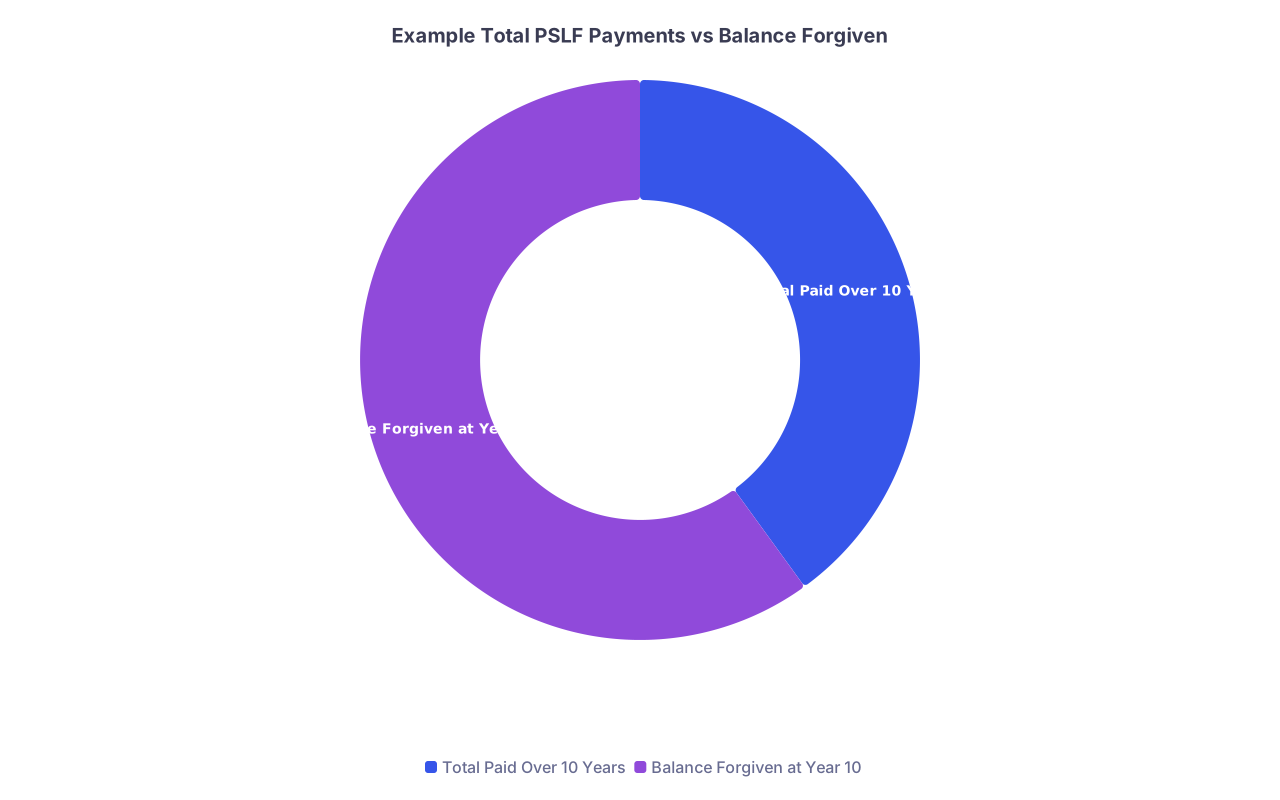
| Category | Value |
|---|---|
| Total Paid Over 10 Years | 120000 |
| Balance Forgiven at Year 10 | 180000 |
In this example:
- You pay ~$120,000 over 10 years
- ~$180,000 is forgiven, tax‑free (under current law)
If you see a very large forgiven amount relative to your income, that is a strong PSLF signal.
5B. Estimate Aggressive Payoff Path
For aggressive payoff, the question is:
If you ignored PSLF and treated this like a debt emergency, how fast could you kill the loans, and what would that cost?
Here is the minimum math:
Decide on an aggressive payoff horizon:
- Common targets: 3–7 years after training or from now.
- Shorter = more intense, but less interest paid.
Decide how much you can realistically throw at loans:
- Take your net income (after taxes and retirement contributions).
- Subtract:
- Housing
- Reasonable living expenses
- Childcare / other fixed obligations
- The remaining chunk is your max monthly loan attack.
Use a simple loan calculator:
- Input current balance, interest rate, monthly payment.
- Solve for how long it takes to pay off, or solve for required payment to be debt‑free in X years.
Note:
- Total paid over the payoff period
- Total interest paid
| Item | Value |
|---|---|
| Loan Balance | $200,000 |
| Interest Rate | 6.5% |
| Monthly Payment (aggressive) | $3,500 |
| Time to Payoff | ~6 years |
| Total Paid | ~$252,000 |
Now you have competing scenarios:
- PSLF: total paid over 10 years (with forgiveness)
- Aggressive payoff: total paid over 3–7 years (no forgiveness, but debt‑free sooner)
Step 6: Compare on Three Axes (Not Just One)
Most people only compare total dollars paid. That is not enough. You should compare:
- Total Cost (Dollars)
- Total Time in Debt
- Lifestyle Flexibility / Career Freedom
1. Total Cost
You already did the minimal math.
- If PSLF saves you $100,000+ compared to aggressive payoff, that is a major signal.
- If the difference is $20,000 or less over many years, lifestyle and flexibility may matter more than the math.
2. Time in Debt
- Aggressive payoff: maybe 3–7 years to debt freedom.
- PSLF: essentially 10 years of payments (though some might already be done).
Being debt‑free 3–5 years earlier is not just an emotional win. It frees up thousands per month for:
- Investing
- Buying a home
- Changing jobs or cutting hours
- Starting a business
You need to decide how much you value that time.
3. Lifestyle and Career Flexibility
Here is the tradeoff in plain English:
PSLF:
- Lower payments during low‑income years.
- Huge benefit if you stay in public/non-profit work.
- But you have a golden handcuff to qualifying employment for a decade.
Aggressive Payoff:
- Higher payments now, more sacrifice.
- But once loans are gone, you can do what you want—change jobs, cut hours, take risk.
Ask yourself:
- On a 1–10 scale, how much do I value job flexibility in the next 10 years?
- On a 1–10 scale, how okay am I with 10 years at a qualifying employer?
Your honest answers should line up with either PSLF or payoff.
Step 7: Use This Simple Decision Grid
Here is the blunt decision grid I use.
| Situation | Likely Better Path |
|---|---|
| DTI > 1.5, PSLF eligible, happy in non-profit | PSLF |
| DTI < 0.75, high income, private sector career | Aggressive payoff |
| DTI 0.75–1.5, PSLF saves > $75k, okay with 10 years | PSLF |
| DTI 0.75–1.5, career uncertain, PSLF savings < $50k | Aggressive or hybrid |
A hybrid means:
- Use PSLF‑optimized payments early (especially during low-income years)
- Re‑evaluate in 3–5 years
- If you leave qualifying employment, flip into aggressive payoff mode and crush the remaining balance
This is particularly useful for:
- Residents who might leave academics after training
- Lawyers who might leave public interest
- Anyone unsure about staying in government/non-profit
Step 8: Optimize Your Chosen Path
Once you choose, commit. Half‑measures are where people lose the most money.
If You Choose PSLF
Your goals:
- Maximize forgiveness
- Minimize payments
- Lock in eligibility
Do the following:
Consolidate to Direct Loans if needed
- Via studentaid.gov
- Make sure you do not accidentally include low-interest Perkins or special loans you might plan to pay separately.
Switch to the best IDR plan for PSLF
- Right now, SAVE is usually superior:
- Lower percentage of income
- Strong interest subsidies
- If married, run scenarios:
- Married filing jointly vs separately
- Whether your spouse’s income will be included
- Right now, SAVE is usually superior:
File PSLF Employment Certification annually
- Use the PSLF Help Tool
- Get HR to certify your full-time status
- Keep copies of everything
Aggressively avoid overpaying
- For PSLF, extra payments do not help; they just reduce what gets forgiven.
- Pay the required amount and invest/save the rest.
Build a PSLF risk backup plan
- Laws can change, programs can shift, your career can pivot.
- Consider:
- Maintaining an “insurance” investment account with some of the money you are not paying toward loans.
- If PSLF somehow fails you, that account becomes your payoff fund.
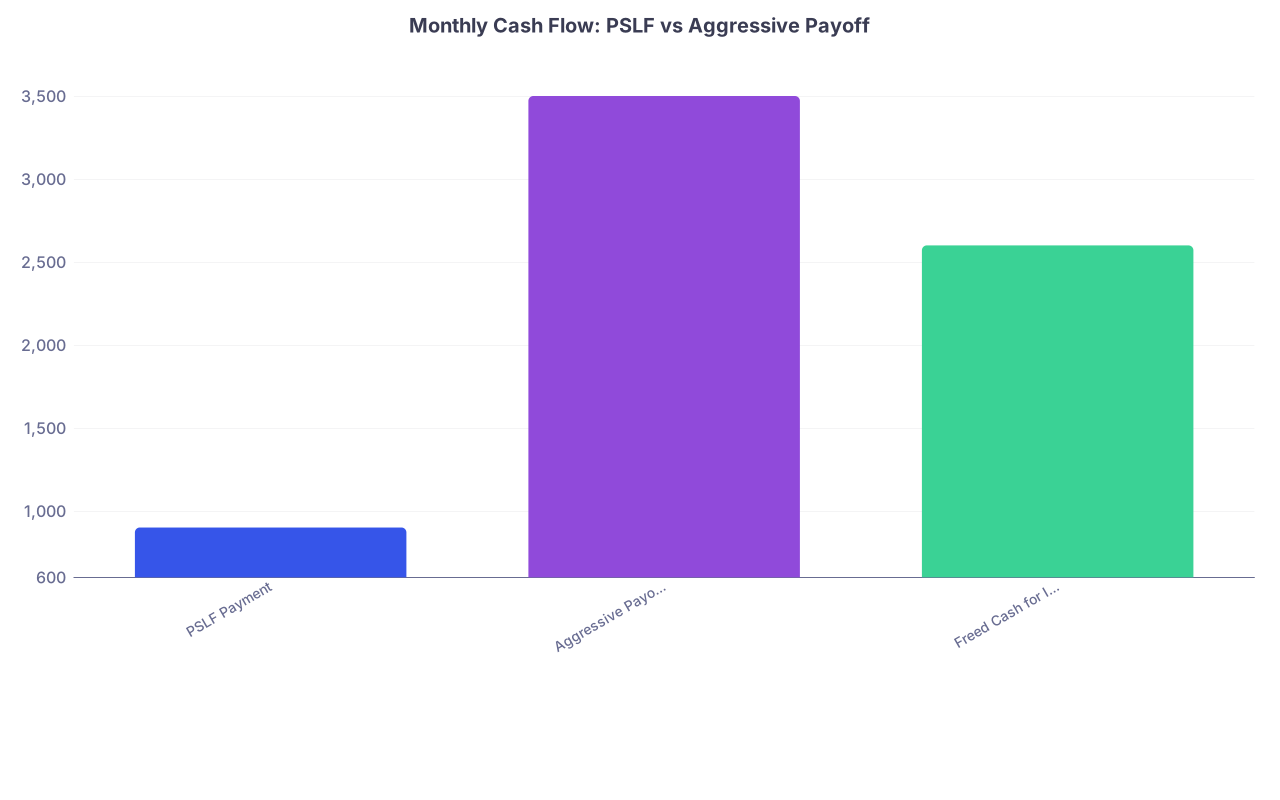
| Category | Value |
|---|---|
| PSLF Payment | 900 |
| Aggressive Payoff Payment | 3500 |
| Freed Cash for Investing (PSLF) | 2600 |
If You Choose Aggressive Payoff
Your goals:
- Minimize interest paid
- Shorten payoff time
- Avoid lifestyle creep
Do the following:
Pick a payoff date
- Example: “Loans gone by June 1, 2031.”
- Work backwards to determine the required monthly payment.
Consider refinancing (once PSLF is off the table)
- Only for private or non-PSLF federal loans
- If you are 100% sure you will not do PSLF, refinancing federal loans to lower rates can save a lot in interest.
- Watch for:
- Loss of federal protections (forbearance, IDR, PSLF, generous death/disability discharges)
Automate a large monthly payment
- Treat it like a tax. Non-negotiable.
- Apply windfalls (bonuses, moonlighting, tax refunds) directly to principal.
Keep your lifestyle intentionally below your peers for a few years
- If your friends upgrade houses, cars, and vacations, you will feel pressure. Ignore it.
- You are buying your financial freedom 5–7 years earlier.
Mark milestones
- First $50k gone.
- Halfway mark.
- Under $50k.
- Under $10k.
That psychological progress matters more than you think.
Step 9: Common Mistakes to Avoid (They Are Expensive)
I see the same mistakes again and again. They are preventable.
Floating in limbo
- Paying standard or graduated plans for years.
- Not on IDR, not pursuing PSLF, not attacking aggressively.
- This is the worst of all worlds.
Ignoring spousal strategy
- Filing taxes joint vs separate can dramatically alter IDR payments.
- Sometimes the tax increase from filing separately is smaller than the loan payment savings. You must run the numbers.
Assuming you will definitely stay at a PSLF job for 10 years
- When your specialty has 70–80% of people ultimately in private practice.
- Do not build your whole life on that assumption without backups.
Aggressive lifestyle upgrades before debt is controlled
- Buying the $80k car and $1.2M house as a new attending while still owing $300k at 7%.
- That is how golden handcuffs get welded shut.
Not revisiting your plan every 1–2 years
- Marriage, kids, job changes, moves—all of these can shift the balance between PSLF and payoff.
- A plan review every year is not optional. It is maintenance.
Step 10: Build a One-Page Summary and Commit for 12 Months
You are not writing a novel. You just need a one-page command sheet:
- Current loan balance: $____
- Strategy chosen: PSLF / Aggressive Payoff / Hybrid
- Why: 2–3 bullet justification (math + personal factors)
- Monthly payment target: $____
- Backup plan if job or law changes:
- Date you will re-evaluate the plan: [12 months from now]
Print it or save it where you will see it. Decision fatigue is real. This page lets you stop re-deciding every few weeks.
Practical Example: Resident Choosing PSLF vs Payoff
Let me show you how this looks in real life.
- PGY2 internal medicine resident
- Federal loans: $280,000 at 6.8%
- Income now: $68,000 → attending in 3 years at $260,000
- Works at a 501(c)(3) academic hospital
PSLF Path (SAVE):
- Years 1–3: Payments ~ $200–$300/month
- Years 4–10: Payments ~ $1,200–$1,600/month as attending
- 10-year total paid: roughly ~$110,000–$130,000
- Forgiven: ~$250,000+ (depending on interest and exact raises)
Aggressive Payoff Path:
- Refinances after residency to 4%
- Pays $4,000/month as attending
- Loans gone in ~7 years from now
- Total paid: ~$230,000–$250,000
Comparison:
- PSLF saves roughly $100,000+ and requires staying in academic/non-profit for 7–8 more years.
- Aggressive payoff costs more, but gives full job flexibility in ~7 years and much lower required payments if she changed jobs.
If this resident loves academics and expects to stay, PSLF is a slam dunk. If she is 50/50 on going private after fellowship, a hybrid could be smart: optimize for PSLF during training, re-evaluate once she has her attending offer.
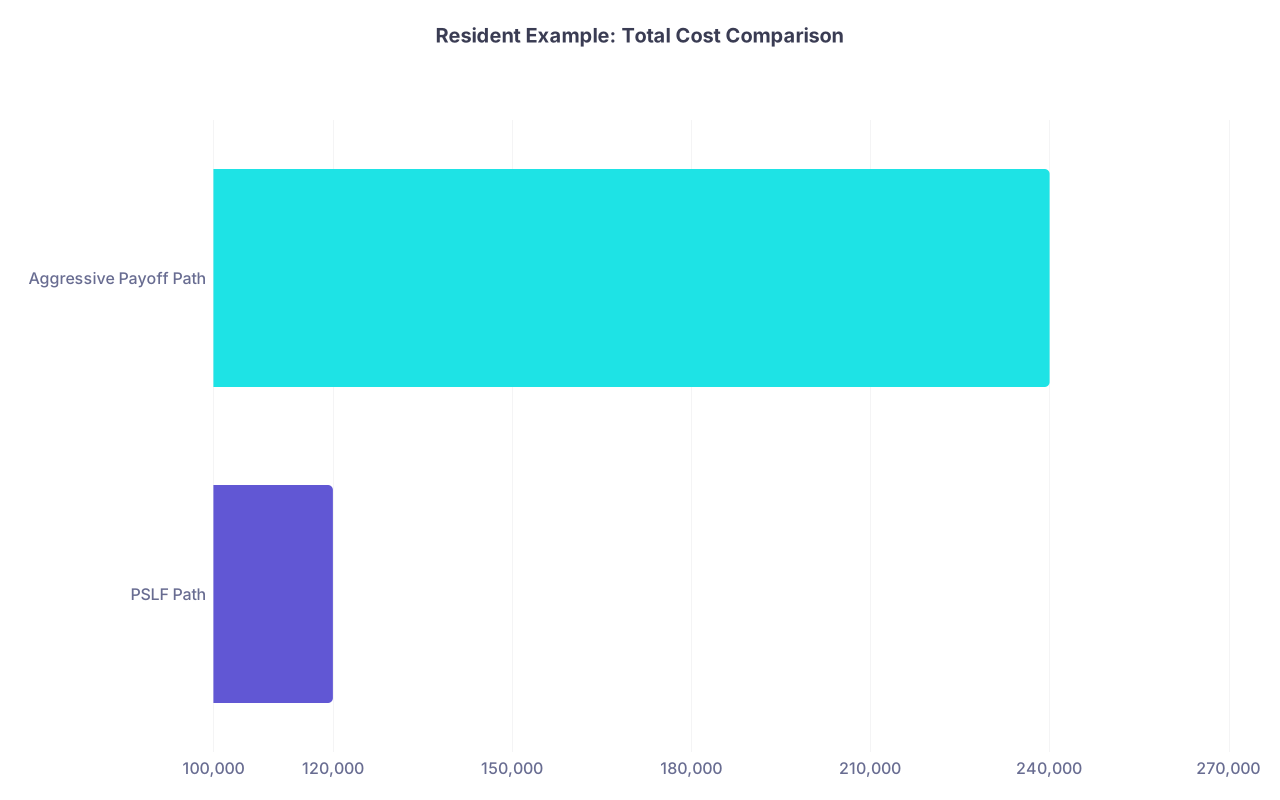
| Category | Value |
|---|---|
| PSLF Path | 120000 |
| Aggressive Payoff Path | 240000 |
Your Next Step, Today
You do not need to fully solve your loans today. You need to move from fuzzy to clear.
Do this now:
- Open a blank page.
- Write:
- Total federal loan balance
- Current income
- DTI (loan / income)
- Whether you currently work for a qualifying PSLF employer
- Based on that, circle which profile you are:
- High-debt / moderate-income
- Moderate-debt / high-income
- Middle-band
Then, schedule a 45‑minute block this week to run one PSLF scenario and one aggressive payoff scenario using any decent calculator.
You will not “feel” ready until you see your two paths side by side. After that, the choice is usually obvious.
FAQ (Exactly 4 Questions)
1. What if PSLF laws change and I am halfway through?
PSLF is written into federal law, and historically, changes have grandfathered in existing borrowers or improved benefits. Could future Congress alter it? Yes. That is why I recommend a PSLF backup plan: save/invest part of the money you are not paying toward loans. If PSLF is reduced or eliminated for you, that account becomes your self-funded forgiveness. Do not bet your entire financial life on political promises without a contingency.
2. Should I refinance federal loans if I think I will not use PSLF?
You only refinance once you are certain PSLF is off your table. Refinancing federal loans into private eliminates PSLF, IDR, and some safety nets. If you are in a private sector job with no realistic intention of moving to non-profit or government and your DTI is modest, refinancing at a lower rate can be smart. But for residents or early-career professionals, I usually prefer waiting until after training and after making a real PSLF versus payoff decision.
3. How do my spouse’s loans affect this decision?
Spousal loans complicate the math but do not change the framework. You must consider:
- Combined cash flow: Can one of you pursue PSLF while the other pays aggressively?
- Tax filing status: Married filing separately can lower IDR payments but increase taxes. You compare the added tax cost vs the payment savings.
- Whether both of you have PSLF-eligible jobs: Two PSLF paths in one household can be extremely powerful financially.
4. Is there ever a reason to switch from PSLF to aggressive payoff halfway through?
Yes. Three common reasons:
- You leave qualifying employment permanently for higher-paying private work.
- Your income explodes, shrinking or eliminating the benefit of forgiveness.
- You build up a large “PSLF backup” investment fund and decide you would rather be debt-free sooner.
In those cases, you pivot: stop relying on PSLF, consider refinancing (if appropriate), and re-plan as an aggressive payoff borrower with your new income and balance. The key is to make that decision consciously, not drift into it.