
The first 90 days of residency will make or break your financial future. Not your attending salary. Not your specialty. Your first three months.
Most residents drift. They “mean to” figure out loans later, click random choices in HR portals, and wake up three years in with $40,000–$70,000 more debt than they needed. That is preventable. You just need a clear, ruthless checklist and you need to move fast.
Here is the exact playbook: day-by-day priorities, what to click, what to avoid, and how to keep your student loans from silently detonating while you are on nights.
Big Picture: Your 90‑Day Financial Game Plan
You have three core objectives:
- Stop interest from spiraling out of control.
- Lock yourself into the right repayment / forgiveness path.
- Build a simple, low-maintenance money system you can run on 80‑hour weeks.
Everything else is noise.
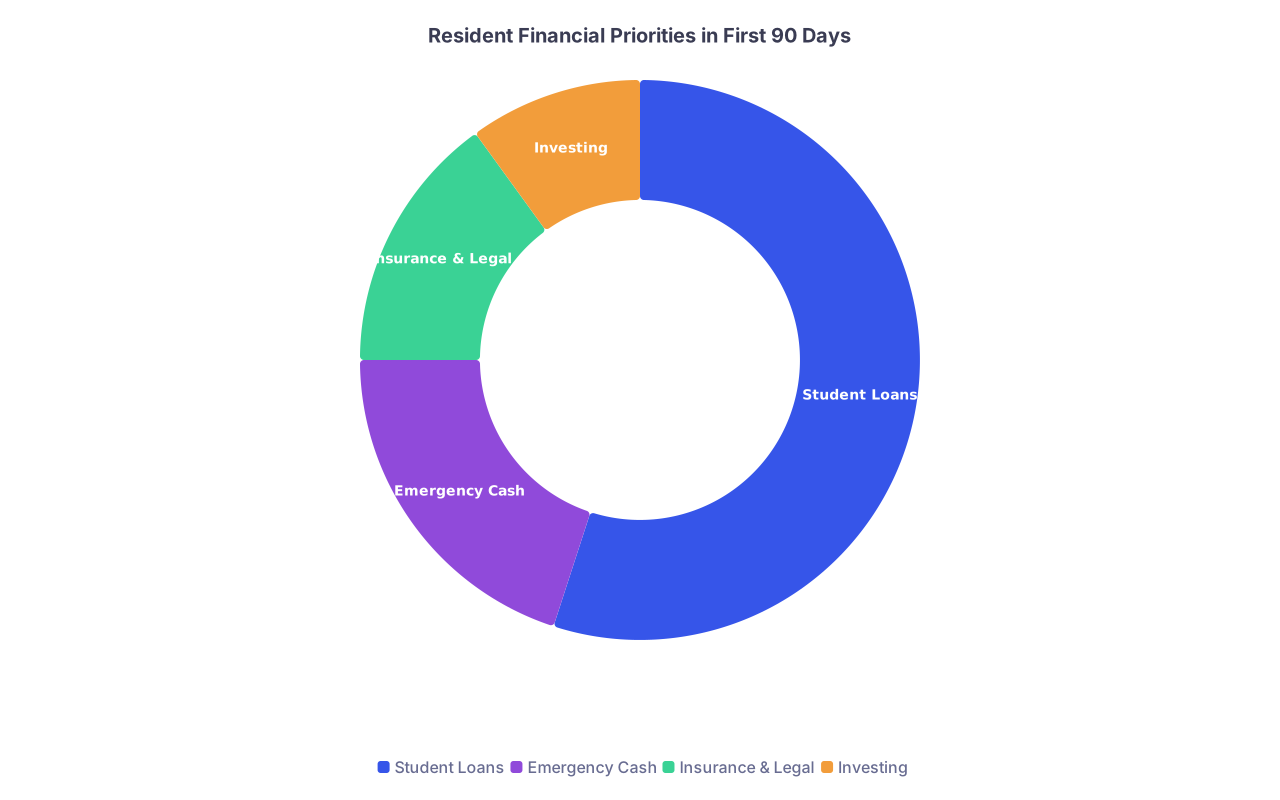
| Category | Value |
|---|---|
| Student Loans | 55 |
| Emergency Cash | 20 |
| Insurance & Legal | 15 |
| Investing | 10 |
Here is the 90‑day structure we will use:
- Days 1–7: Gather data and stop the bleeding
- Days 8–30: Lock in loan strategy (IDR vs refinancing, PSLF or not)
- Days 31–60: Build automation (cash flow, payments, protections)
- Days 61–90: Optimize and protect against future mistakes
I am going to assume U.S. federal loans. If you have a mix of federal and private, I will flag what applies to which.
Days 1–7: Get Control of the Numbers (No Guessing)
If you skip this and try to “wing it,” you will pick the wrong repayment plan or refinance when you absolutely should not.
Step 1: Get your full loan inventory
You need a precise list. Not a mental estimate.
Log into studentaid.gov
- Go to “My Aid” and download your data file and summary.
- List each loan: type, balance, interest rate, status.
Look for these key labels:
- Direct Unsubsidized – eligible for PSLF and IDR
- Direct Grad PLUS – also eligible
- FFEL or Perkins – not directly PSLF-eligible unless consolidated
- Private loans – these will be through a bank/servicer, not on studentaid.gov
Make a simple table for yourself. For example:
| Loan Type | Balance | Rate | PSLF-Eligible | Notes |
|---|---|---|---|---|
| Direct Unsubsidized | $180k | 5.8% | Yes | Med school |
| Direct Grad PLUS | $60k | 7.2% | Yes | Med school |
| FFEL Consolidation | $25k | 6.0% | No (yet) | Undergrad |
If you cannot produce a table like that, you are not ready to pick a repayment plan.
Step 2: Confirm your residency start income
Your loan plan hinges on your Adjusted Gross Income (AGI).
You need:
- Your contract salary (e.g., $62,000 PGY‑1)
- Your last tax return AGI (often much lower than resident income, especially M4 with low/no income)
- Whether your program will let you file employment certification forms for PSLF
Ask GME/HR directly:
- “Are residents employed by a 501(c)(3) or government hospital?”
- “Will my position count as full-time for PSLF?”
If the answer is no, your strategy changes dramatically (we will get there).
Step 3: Stop auto-forbearance traps
A lot of residents let servicers put loans into forbearance “to keep things simple” during transition.
That is a mistake 90% of the time.
Auto-forbearance means:
- No payments due.
- Interest continues to accrue on every loan.
- No credit toward PSLF or forgiveness.
- Interest may capitalize at the end (interest gets added to principal, so future interest is on a higher base).
If your servicer suggests forbearance “while you settle in,” your default answer is: No, I want to use an income-driven repayment plan.
Days 8–30: Choose Your Path – PSLF, IDR, or Refinance
This is the core decision block. Get this wrong, and you can lose six figures of value.

| Step | Description |
|---|---|
| Step 1 | Start |
| Step 2 | PSLF + IDR |
| Step 3 | Compare PSLF vs refinance later |
| Step 4 | Consider refinance |
| Step 5 | IDR, no PSLF |
| Step 6 | Employer 501c3 or gov? |
| Step 7 | Plan >10 years in nonprivate practice? |
| Step 8 | High rate private loans? |
Step 4: Decide if PSLF is on the table
You pursue Public Service Loan Forgiveness (PSLF) if:
- You work for a qualifying employer:
- Government or 501(c)(3) nonprofit hospital (most academic centers)
- You have Direct loans (or will consolidate to Direct)
- You can commit to 10 years of full-time qualifying payments (residency + attending years)
If you match at:
- Large academic centers (e.g., Mass General, UCSF, UMich, Mayo): very likely PSLF-eligible
- County / VA hospitals: typically PSLF-eligible
- Private community hospitals or for-profit systems: often not PSLF-eligible
If PSLF is on the table, it is almost always a mistake to refinance federal loans during residency. Do not let a private lender’s “resident refinance” pitch confuse that.
Step 5: Get on the right IDR plan – and do it early
For PSLF-eligible residents, this is the money move that counts most in the first month:
- Enroll in an income-driven repayment (IDR) plan as soon as your grace period ends or immediately if loans are already due.
The hierarchy right now:
SAVE (successor to REPAYE) – best for most residents:
- 10% of discretionary income (and may go down over time to 5% for some undergrad loans, but assume 10% for med grads right now).
- Excellent unpaid interest subsidy: a portion (often 100% for some loans) of unpaid interest is covered by the government so your balance does not balloon as fast.
- PSLF-compatible.
PAYE / IBR (old versions) – mostly for edge cases (e.g., marriage and high-earning spouse where tax filing strategy matters, or older borrowers grandfathered into better terms).
Action steps:
- Log into studentaid.gov
- Use “Apply for Income-Driven Repayment”
- Select SAVE unless you have a specific, well-reasoned reason not to.
- Use your most recent tax return AGI if it is lower than your projected residency income. This keeps your IDR payment absurdly low for Year 1, and those low payments still count toward PSLF.
If you had almost no income last year, you may see monthly payments of $0–$100. Those absolutely count as qualifying PSLF payments if everything else is lined up.
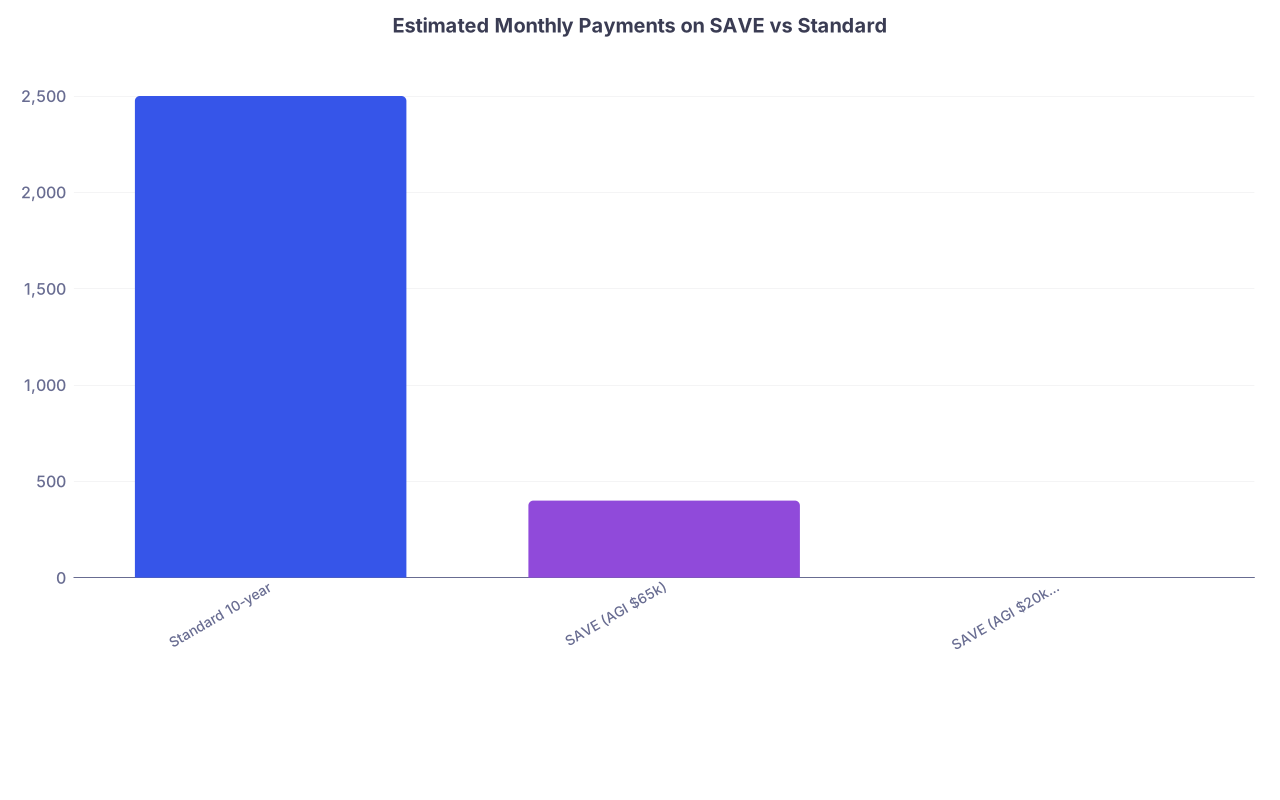
| Category | Value |
|---|---|
| Standard 10-year | 2500 |
| SAVE (AGI $65k) | 400 |
| SAVE (AGI $20k prior year) | 0 |
Step 6: File your first PSLF form (if eligible)
Do this earlier than you think. I have seen people wait 3–4 years and then discover HR misclassified their role.
- Download the PSLF Help Tool on studentaid.gov
- Complete the PSLF form with your employer information
- Have your GME or HR sign it
- Submit to MOHELA (the PSLF servicer)
This does not obligate you to stay for 10 years. It just starts the clock cleanly and documents that your residency employment qualifies.
What If You Are Not PSLF‑Eligible?
This is where many residents get sloppy. You still need a deliberate plan.
Step 7: If no PSLF, decide: IDR vs aggressive payoff vs refinance
You have three levers:
- Stay in federal IDR for flexibility and federal protections
- Refinance to private for lower rate and faster payoff
- Use a hybrid: IDR for residency, then refinance as attending
Here is the basic decision framework:
| Situation | Likely Best Move |
|---|---|
| Unsure of future, want safety | Federal loans + IDR (SAVE) |
| Very high interest private loans | Refinance private only |
| Certain high-income specialty, no PSLF | Refinance all as late PGY or new attending |
| Mixed federal + private | Keep federal in IDR, refinance private |
Avoid refinancing federal loans in PGY‑1 unless:
- You are absolutely sure you will never want PSLF or IDR protections, and
- You have a large, stable attending-level income lined up (which you do not in PGY‑1).
I have watched residents refinance, then have a major health event or want to shift to part-time or academic work. They were stuck. Private lenders do not care about your life.
Days 31–60: Build an Automatic Money System You Can Ignore on Nights
Your brain will be fried. You need your finances to run on autopilot.
Step 8: Open your “Residency Money System” accounts
Set up 3 simple buckets:
- Primary checking – where your paycheck lands
- High-yield savings – your emergency fund
- Loan autopay source – can be the same as checking, but some like a separate bill-pay checking to keep things clean
If you do nothing else, at least:
- Turn on direct deposit for your residency paycheck
- Set up automatic transfers:
- From checking to savings each pay period
- From checking to your student loan servicer for your IDR payment
Target emergency fund:
- Initial goal: $1,500–$3,000 (just to stop any random car issue or move from going on a credit card)
- Medium goal: One month of take-home pay
- Long goal: 3–6 months (you will build this over residency, not in 90 days)
Step 9: Turn on loan autopay and exploit discounts
Once your IDR plan is approved and you see your monthly amount:
- Turn on autopay with your servicer.
- Most give a 0.25% interest rate reduction for autopay. That is free money.
If cash flow is tight in PGY‑1:
- Set a calendar reminder 5 days before autopay hits to confirm you have enough in checking.
- Build a tiny cushion (even $300–$500) in checking as a “buffer” so you do not overdraft.
Days 31–60: Critical Legal and Protection Moves
You are one accident away from disaster if you ignore this part.

Step 10: Get disability insurance right
Student loans do not disappear just because you get sick.
You want:
- Own-occupation, specialty-specific long-term disability insurance
- Sufficient benefit to cover:
- Loan payments
- Rent, food, basic living costs
Start with:
- Your GME-provided coverage (understand the details: benefit amount, definition of disability, duration)
- Then layer a personal policy from a major carrier if needed
Why in the first 90 days?
- You are as healthy now as you are likely to be for a while.
- Underwriting is easier before you have chart-documented issues from residency.
Step 11: Double-check life insurance needs
If you:
- Are single with no dependents: minimal or no life insurance is often fine (beyond any free group policy).
- Have a spouse / partner / children / others depending on your income: get term life insurance.
Do not buy whole life or permanent life as an “investment.” I have watched too many residents get sold expensive garbage by someone who met them in a “free financial literacy seminar.”
Days 31–60: Tax and Filing Status – Quiet but Important
Step 12: Use tax strategy to keep IDR payments low (without cheating)
Your IDR payments are based on your AGI. You legally want AGI to reflect your true low-resident income, not an inflated number because you got cute with side hustles or bonuses.
If you are married or getting married:
- Run numbers on married filing jointly vs separately, especially if you or your spouse has high income.
- Some IDR plans (notably older IBR/PAYE) use only the borrower’s income if filing separately. SAVE uses combined income unless your spouse refuses to share info, but rules evolve – you must verify current details at studentaid.gov.
This may be a Year 1–2 issue more than a Day 1–90 issue, but you should understand the direction now.
Days 61–90: Optimize Payments and Avoid Hidden Traps
Now you have the basics in place. Time to fine-tune.
Step 13: Do not overpay your loans during residency if PSLF is in play
This feels wrong to many high-achiever residents. They hate seeing the balance not go down.
But if you are:
- PSLF-eligible
- On an IDR plan
- Planning a 10‑year PSLF path
Then the right move in residency is usually:
- Pay the minimum required payment
- Do not dump extra thousands into loans
Why? Because every extra dollar you pay now is a dollar you could have had forgiven later. You are trading cash today at your lowest earning years for reduced forgiveness when you are earning much more. That is bad math.
Use that money instead to:
- Build emergency fund
- Get disability covered
- Maybe start a small Roth IRA if cash flow allows
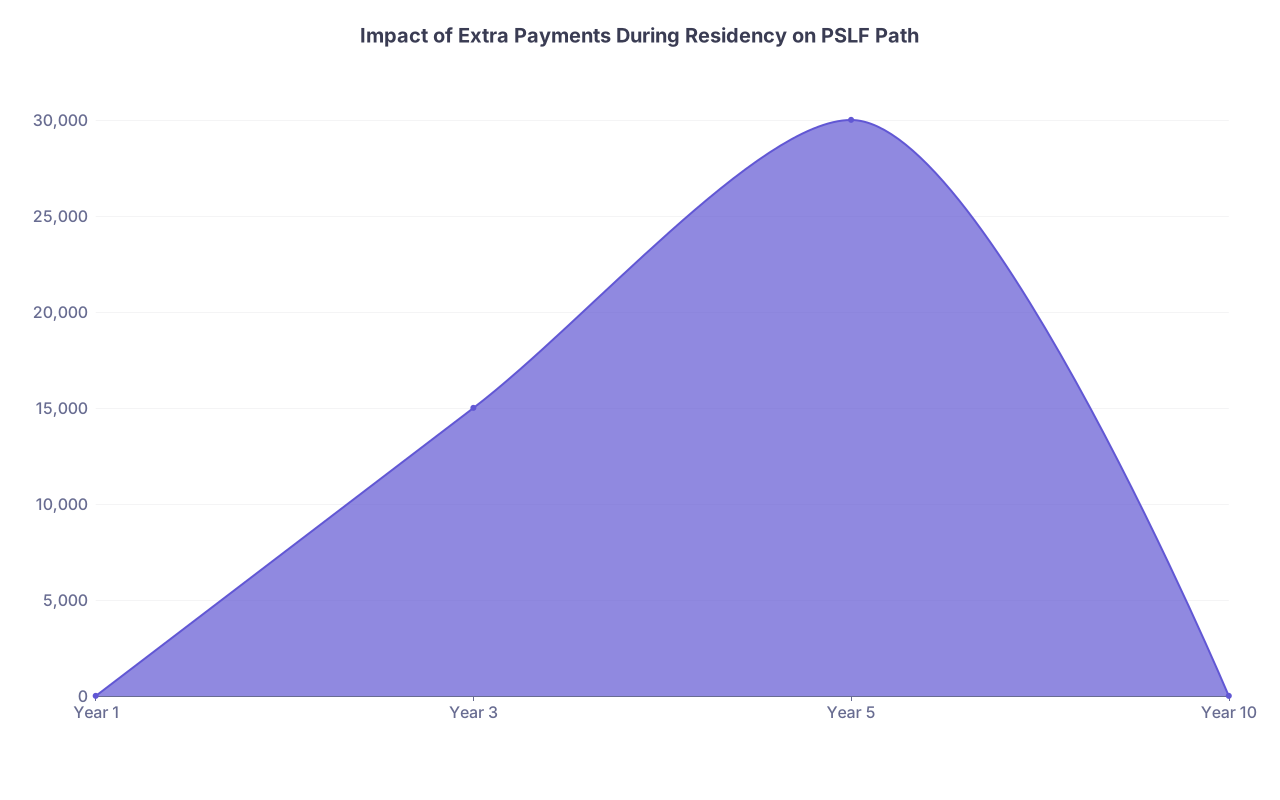
| Category | Value |
|---|---|
| Year 1 | 0 |
| Year 3 | 15000 |
| Year 5 | 30000 |
| Year 10 | 0 |
(That chart conceptually shows how extra payments made early just reduce eventual forgiveness, not your required 120 payments.)
Step 14: If no PSLF, consider a small targeted extra payment strategy
Different game if you know you are not doing PSLF.
During residency:
- Still prioritize:
- Emergency fund
- Insurance
- Not burning out from financial stress
But if you have a little surplus:
- Direct small, regular extra payments to highest-interest loans first, usually Grad PLUS or private loans.
- Label payments as “apply to principal” when possible.
You are trying to keep your total balance from exploding before your attending jump.
Step 15: Avoid these common 90‑day disasters
I see these every year:
Letting grace period run, then defaulting into standard plan
- Result: $2,000+ monthly payment offer on resident income. You panic. You take forbearance. Interest snowballs.
- Fix: IDR application before first bill is due.
Consolidating at the wrong time
- If you already had some qualifying PSLF payments (e.g., prior public service job), consolidating can wipe that count if done wrong.
- For new residents straight from med school, consolidation is often fine if needed to make loans PSLF-eligible, but you still think before you click.
Buying a car that eats your whole paycheck
- Banks will happily lend to “Dr. So-and-so” for a car you do not need. Your debt-to-income already looks bad. Do not make it worse.
Ignoring required annual IDR recertification
- If you miss it, your payment can jump to the standard amount. You then scramble and end up in forbearance again.
Set calendar reminders now: one month before your recertification date every year.
How All This Fits Together: A Sample 90‑Day Timeline
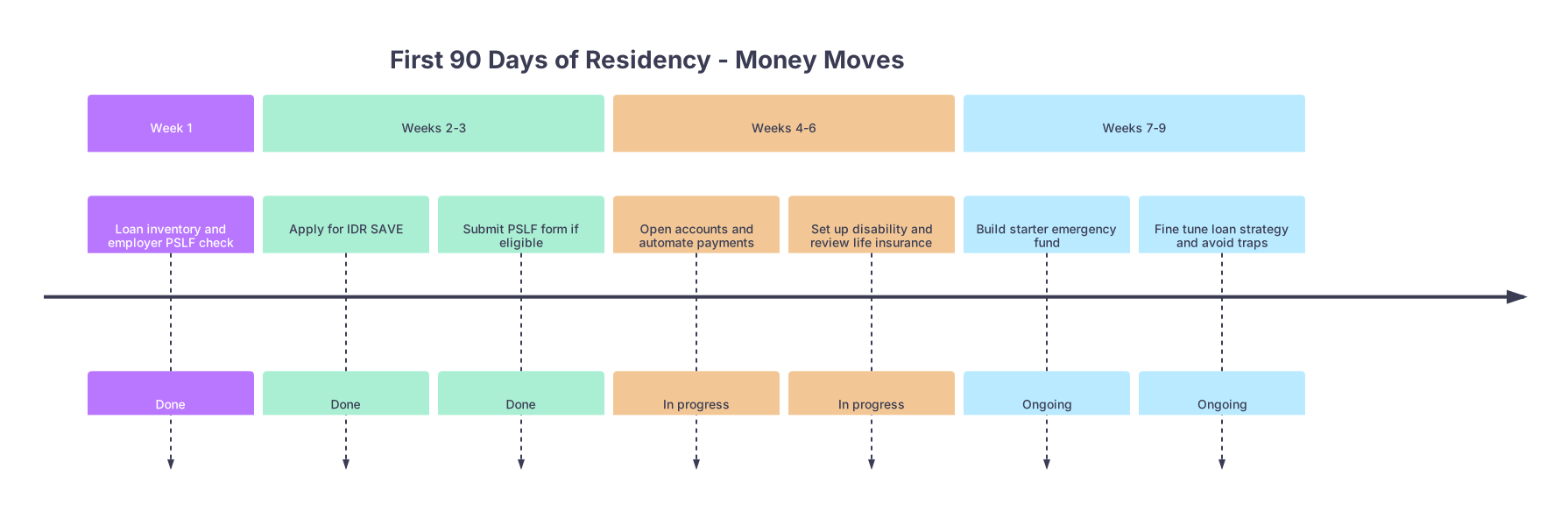
| Period | Event |
|---|---|
| Week 1 - Loan inventory and employer PSLF check | Done |
| Weeks 2-3 - Apply for IDR SAVE | Done |
| Weeks 2-3 - Submit PSLF form if eligible | Done |
| Weeks 4-6 - Open accounts and automate payments | In progress |
| Weeks 4-6 - Set up disability and review life insurance | In progress |
| Weeks 7-9 - Build starter emergency fund | Ongoing |
| Weeks 7-9 - Fine tune loan strategy and avoid traps | Ongoing |
Quick Example Scenarios
Let me make this concrete with two residents.
Example 1: PSLF-Eligible Internal Medicine Resident
- PGY‑1 salary: $65,000
- Federal Direct loans: $280,000 at blended 6.5%
- Academic hospital (501(c)(3))
Moves:
Week 1:
- Logs into studentaid.gov, confirms all loans are Direct.
- Confirms with HR that position is full-time and PSLF-eligible.
Week 2:
- Applies for SAVE using last year’s AGI of $0 (M4 with no income).
- Gets $0/month payment estimate.
Week 3:
- Files PSLF employment certification form.
- Sets reminders for yearly recertification.
Month 2:
- Auto-deposit paycheck to checking.
- Auto-transfer $200 per paycheck to high-yield savings until emergency fund hits $3,000.
- Autopay turned on for loan servicer (even if payment is currently $0, the setup matters down the line).
Month 3:
- Meets with independent agent to get own-occupation disability insurance.
End result: Minimal cash outflow during PGY‑1, but every month counts toward the 120 required PSLF payments.
Example 2: Non‑PSLF Ortho Resident at a Private Hospital
- PGY‑1 salary: $62,000
- Federal Direct: $200,000 at 6.2%
- Private loans: $80,000 at 9%
- Private, non-501(c)(3) community hospital
Moves:
Week 1:
- Confirms hospital is not PSLF-eligible. No government/501(c)(3).
- Lists federal vs private loans separately.
Week 2:
- Applies for SAVE for federal loans, using low prior-year AGI.
- Minimum payment ~ $50–$100/month.
Week 3:
- Solicits resident refinance offers for the private $80,000 only.
- Finds a reputable lender dropping rate from 9% to 5% with residency-friendly low payment structure.
Month 2:
- Sets autopay on both federal (IDR) and refinanced private loan.
- Builds $2,000 emergency fund.
Month 3:
- Directs any extra cash (say $100–$200/month) toward the refinanced private loan principal.
End result: Keeps the flexibility and protections of federal loans while aggressively taming the worst private interest rate debt.
FAQ (Exactly 2 Questions)
Q1: Should I ever refinance my federal loans during residency if I think PSLF is possible?
No, not during residency. If PSLF is even a serious maybe, you preserve that option. Once you refinance a federal loan into a private one, PSLF is gone forever. The only time refinancing federal loans makes sense is when you are essentially certain you will not use PSLF, you understand what you are giving up (IDR flexibility, federal protections, potential future programs), and you are close to or already in a stable, high-income attending job.
Q2: What if I cannot afford even the IDR payment in PGY‑1?
Then you fix the inputs, not the plan. First, make sure your IDR is using your actual AGI, preferably from a low- or no-income prior year return. That alone often drops the payment dramatically, sometimes to $0. If it is still unmanageable, audit your fixed costs before you touch your loan strategy: housing, car, subscriptions, eating out. Only after you have cut obvious fat should you consider temporary forbearance, and if you do, keep it as short as possible and understand you are pausing PSLF progress and letting interest pile up. For almost all residents, a correctly set IDR plan is affordable once lifestyle creep is controlled.
Key points to walk away with:
- In the first 90 days, your main job is to get on the right repayment path (usually SAVE + PSLF if eligible) and stop interest from running wild, not to pay everything off.
- Automate everything: paycheck in, small emergency fund out, IDR payments autopaid, annual recertification reminders set. You will not have the bandwidth later.
- Do not let anyone push you into forbearance, whole life insurance, or premature refinancing. Those three moves quietly cost residents tens of thousands of dollars every year.