
It is late May. Your kid just got into a solid mid-tier medical school. The financial aid “offer” email is open on your laptop, and the numbers do not look real. Cost of attendance: $75,000 a year. The federal loans do not quite cover it. The gap is $20,000–$30,000 a year, every year.
A financial aid officer says, “Many parents just co-sign a private loan to make up the difference. It is very common.” Your child is staring at you, waiting. You tell yourself, “They will be a physician. They will be fine. We will figure it out.”
This is the point where a lot of parents make a decision that quietly wrecks their own financial future.
You are here because you are smart enough to feel uneasy. Good. Hang on to that discomfort. Co-signing med school loans is one of those things that sounds supportive and loving. On paper. In reality, it is a legal and financial trap for parents who underestimate the risk and overestimate the guarantees of medicine.
Let me walk you through how parents get burned, and how you avoid being one of them.
1. The Big Lie: “It’s Their Loan, You’re Just Helping”
The number one mistake parents make: believing that co-signing is just “helping” with their loan.
That is not how the contract reads. Not for private lenders. Not for many institutional loans. When you co-sign, you are not a backup. You are a full borrower. Equal liability. Equal responsibility. Equal target if things go bad.
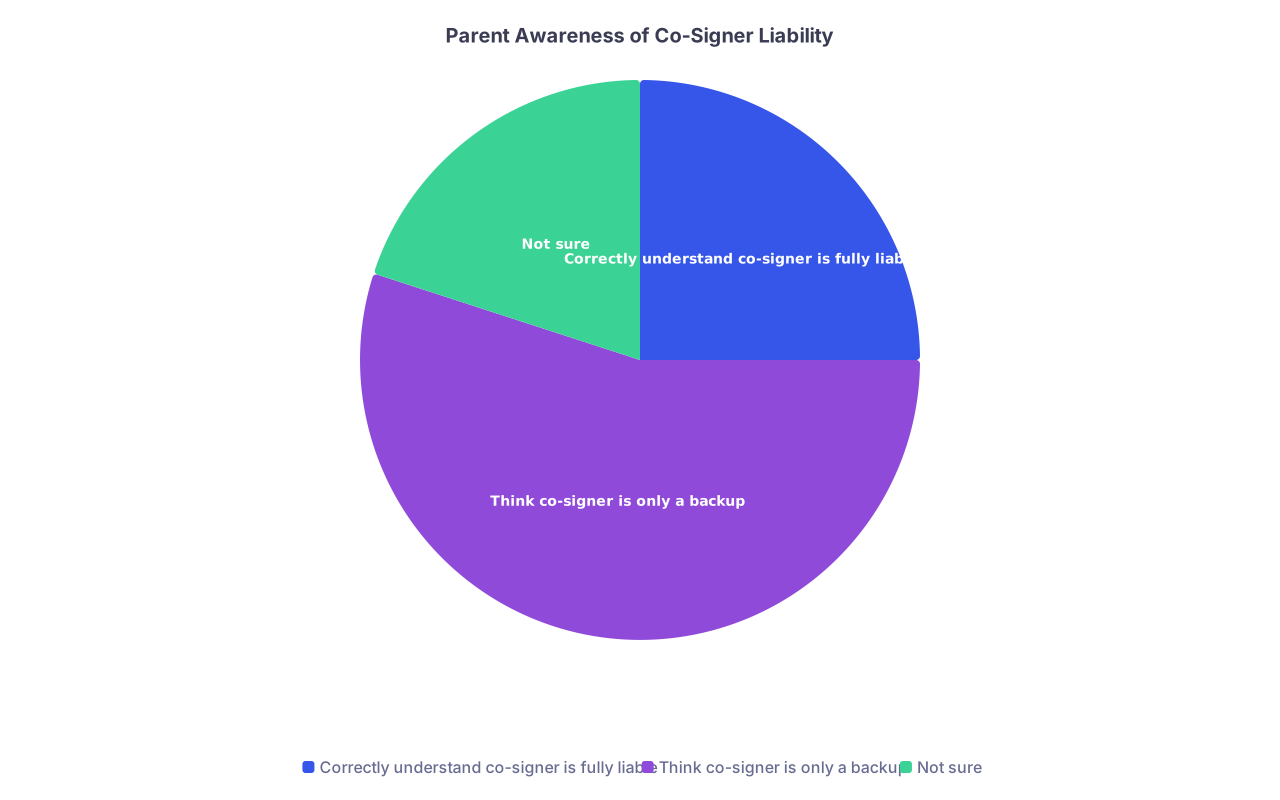
| Category | Value |
|---|---|
| Correctly understand co-signer is fully liable | 25 |
| Think co-signer is only a backup | 55 |
| Not sure | 20 |
Here is what parents get wrong:
They think: “If my child pays, I will never be involved.”
The reality: Any missed payment, late payment, or default hits your credit, triggers your phone with collections, and can lead to lawsuits with your name at the top.
They think: “The lender will go after my child first.”
The reality: The lender goes after whoever seems easiest to extract money from. Often that is the parent with a stable income and assets, not the resident making $62,000.
They think: “If something happens to them, the loan disappears.”
The reality: Some private lenders forgive loans at the student’s death or disability, some do not, and many leave the co-signer 100% on the hook. You need to read the exact clause. Most do not. Then they get surprised at exactly the wrong time.
If you walk away with one point from this section, let it be this: co-signing is not emotional support. It is a legally binding contract that treats you as if you took the loan out yourself.
2. Underestimating the Size of the Fire: Compounding and Residency Reality
Parents also underestimate the scale of these loans. I have seen moms co-sign for a “$40,000 gap” thinking it is one loan. It is $40,000 per year for four years. Plus interest. Plus capitalization.
That $160,000 private loan balance is often on top of federal loans. Plenty of new physicians are walking out with $300,000–$500,000 total debt. You co-sign on just part of that, and it can still sink you.
| Loan Type | Principal at Graduation | Interest Rate (Approx) |
|---|---|---|
| Federal Direct Unsub | $200,000 | 6–7% |
| Grad PLUS | $80,000 | 7–8% |
| Private (co-signed) | $120,000 | 5–10% |
Now layer in reality:
- Interest accumulates during school and residency.
- Many private loans do not have income-driven repayment.
- Residency pay is low compared to the debt: ~$60–70k before taxes.
Med students often tell parents: “Once I am an attending, I will wipe this out.” That is fantasy math if they choose lower-paying specialties, work in academics, or live in high-cost cities. Or if they decide to work part-time, take parental leave, or hit any career bumps.
I have seen:
- A psychiatry resident with $400,000 in debt, $120,000 of it private, making $65,000 a year and struggling to stay current.
- A family medicine attending in a major metro making ~$210,000, supporting two kids, unable to refinance because of a high debt-to-income ratio. Parent co-signer getting calls when payments are late.
The mistake is assuming “doctor” automatically equals “can easily pay anything back.” Some specialties can. Some cannot. And medicine is not the guaranteed moneymaker it was in your parents’ generation.
If you would not personally take out a $150,000–$250,000 loan for your own degree at that rate and term, do not trick yourself into thinking it is magically safer because it is “for your child.”
3. How Co-Signing Blows Up Your Own Life: Credit, Retirement, and Risk
This is where parents get hurt the most. Not from some dramatic default. From slow, grinding consequences that quietly limit their options.
Your credit score becomes hostage
That co-signed loan shows up on your credit report:
- It counts toward your total debt.
- It affects your debt-to-income ratio.
- Any late payment dings your score, even if you never see a bill.
So when you try to:
- Refinance your mortgage.
- Take out a home equity line.
- Buy a downsized retirement condo.
You get worse terms. Sometimes you get flat-out denied. I have seen financially responsible parents with 780+ credit scores drop into the high 600s because their child missed a few payments during intern year. The bank does not care that “it is their loan.” The algorithm just sees a late payment with your name on it.
Your retirement becomes collateral
This is the trap older parents fall into, especially those in their 50s and early 60s when their kid starts med school.
You co-sign, thinking: “I will retire at 67–70, they will be an attending by then, it will be fine.”
Then things shift:
- Your child picks a lower-paying specialty.
- Private practice incomes compress.
- They move to a high-cost city with insane housing and childcare costs.
- They divorce and suddenly become a single-income household.
Now the private loan payments are still large. They are juggling federal loans, maybe trying for PSLF, and the private lender is unbothered by any of that. You are next in line.
So you delay retirement. Or tap savings to help them “just this year.” Or take a loan against your 401(k). All to service debt for a degree that is not yours.
That is the nightmare scenario: working extra years not because you mismanaged your own life, but because you underwrote someone else’s.
4. The Ugly Edge Cases: Disability, Death, and Career Detours
You must think about the uncomfortable scenarios the lender has already priced in.
If your child becomes disabled
Federal loans have disability discharge options. Private loans are all over the place. Some:
- Discharge at borrower disability but keep co-signer liable.
- Offer no meaningful disability protection at all.
- Require extreme documentation and are discretionary.
If your child cannot practice medicine due to illness, injury, or mental health issues, the earning engine the loan depended on vanishes. The debt does not. Not for you.
If your child dies
Morbid, yes. But necessary.
Federal loans are discharged at death. Many private loans discharge at borrower death but not automatically for co-signers. Some do; some do not. The language matters.
I have watched families assume, “Of course it will be wiped.” Then they get a letter months after the funeral. No forgiveness clause for the co-signer. Balance due.
If your child leaves medicine
People quit. They fail Step exams. They do not match into residency. They match but flame out or get dismissed. Or they simply decide they hate clinical medicine and pivot to something else.
There is a whole quiet population of former med students with six-figure debt and no MD income to show for it. Parents who co-signed their private loans are essentially paying for a very expensive unfinished plan.
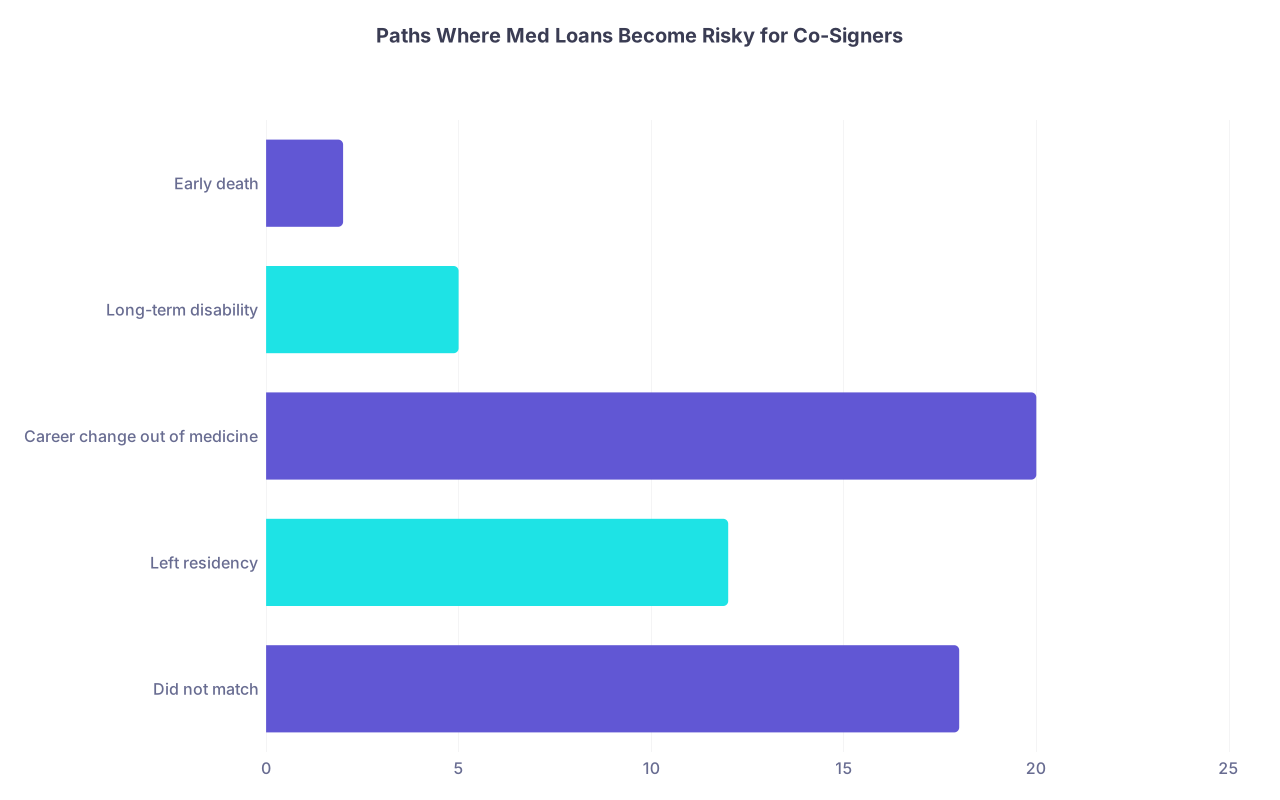
| Category | Value |
|---|---|
| Did not match | 18 |
| Left residency | 12 |
| Career change out of medicine | 20 |
| Long-term disability | 5 |
| Early death | 2 |
You cannot co-sign while pretending these scenarios do not exist. They do.
5. Red Flags in Med School and Loan Offers That Parents Ignore
There are certain combinations of facts that should ring alarms so loud you cannot hear the word “co-sign” without flinching.
Here are some:
High tuition, low rank, weak match list.
Paying $75,000–$80,000 a year for a low-prestige school with mediocre match outcomes is a very different risk than Harvard or UCSF. Harsh, but true.Caribbean or offshore schools with no guaranteed residency pipeline.
This is where I have seen the most brutal co-signer stories. Parents co-sign for big private loans, the student never matches, and the entire bet goes underwater.Massive gap between federal limits and cost of attendance.
If the gap is consistently $20,000–$40,000 per year, ask why this school is even on the table. Do not let “dream school” override basic arithmetic.Aggressive lender marketing through the school.
If financial aid is pushing a specific private lender unusually hard, you are not getting advice; you are being sold.Loans with no clear co-signer release path.
Some lenders dangle “co-signer release” after X years of on-time payments. Many make the bar so high it is practically unreachable. Or they simply do not offer it.
| Feature | Safer Option | Risky / Avoid |
|---|---|---|
| Co-signer release | Clear terms after 24–48 months | No release or vague conditions |
| Death/disability terms | Full discharge for all parties | Co-signer still liable |
| Rates/fees | Competitive, transparent | Variable rates, high origination |
| Repayment flexibility | Some income-based or forbearance | Rigid terms, harsh late penalties |
If you see multiple red flags and your plan still relies on co-signing, you are walking into a fire with your eyes open.
6. Smarter Ways to Support a Med Student Without Destroying Yourself
Supporting a child through med school does not have to mean co-signing a giant private loan. There are other routes. None of them are perfect. Some are just less terrible.
Max out federal options first
You would be amazed how many students and parents do not realize:
- Grad PLUS loans exist.
- Federal loans have safeguards: death and disability discharge, income-driven plans, PSLF potential.
Are the interest rates high? Yes. Are they still better than being personally liable as a co-signer on a private loan with no safety net? Often, yes.
If your child is already maxing federal and still short, that is not a signal for you to co-sign blindly. It is a signal to re-examine:
- School choice.
- Living situation.
- Timeline (gap years to work and save).
- Alternative funding (scholarships, service commitments, military HPSP, NHSC, etc.).
Use cash help, not legal entanglement
If you genuinely have the resources and want to help, cash is cleaner than co-signing:
- Give a defined annual amount you can truly afford to lose without delaying retirement.
- Pay part of their rent or insurance directly rather than becoming liable for six figures of principal.
- Help with board exam fees or interview travel, not long-term principal obligations.
You stay supportive without tying your future to theirs with a legal chain you cannot break.
If you still consider co-signing, set hard conditions
If, after understanding all this, you are still tempted to co-sign, at least do it with discipline:
- Cap your total exposure. For example: “We will co-sign up to $40,000 total, never more.”
- Put expectations in writing with your child. Who pays, when, what happens if they miss payments, how communication will work.
- Require them to apply to less expensive schools and seriously consider any public or lower-cost options where private loans would be unnecessary or much smaller.
- Review the actual promissory note with a lawyer if the total amount is large. Yes, pay a few hundred dollars for legal review. You are on the hook for six figures.
If your child balks at any of this, that is a warning sign about their financial maturity. Do not ignore it.
7. Med Students’ Blind Spots: Why You Cannot Rely on Their Optimism
I am going to be blunt: most med students are financially naive when they sign these loans. They have never:
- Carried six-figure debt.
- Bought a house.
- Funded a retirement account.
- Lived on attending income with real-world expenses.
They think in “future attending salary” numbers, not in net income after taxes, malpractice, daycare, housing, and loan payments. They often quote attending salaries from Reddit threads and salary surveys that over-represent the top end.
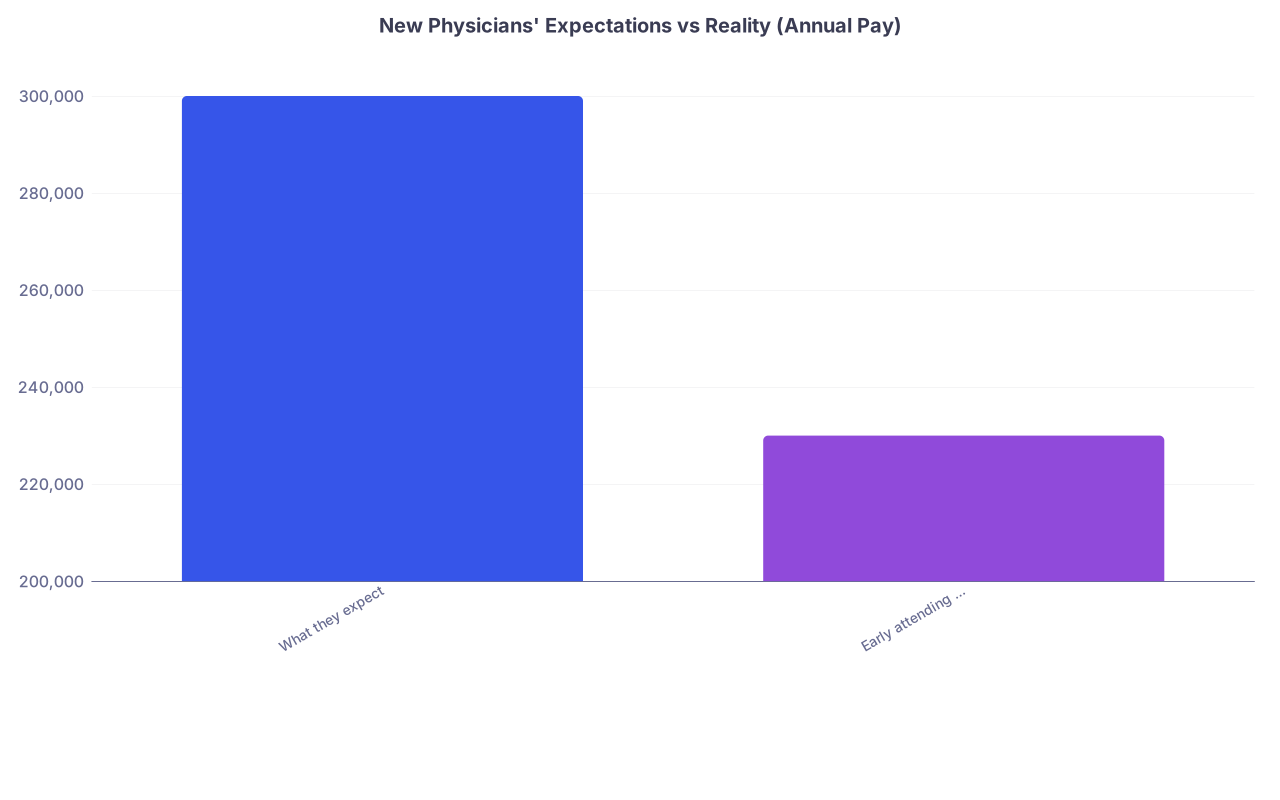
| Category | Value |
|---|---|
| What they expect | 300000 |
| Early attending median | 230000 |
You love your kid. But love does not equal financial judgment. Your job as the older adult is not to match their optimism. It is to protect the family from decisions made with half the facts.
If your child says, “Everyone does this,” translate that as, “Everyone on my group chat is terrified and copying each other.” Group panic is not due diligence.
8. When the Damage Is Already Done: Steps for Parents Who Have Co-Signed
If you are reading this with a knot in your stomach because you already co-signed, you are not alone. The question now is how to reduce harm.
Concrete steps:
Get the full picture.
List every loan you co-signed: lender, balance, rate, term, and any co-signer release clauses. Do not guess. Get the actual statements.Pull your credit reports.
See how these loans are appearing and impacting your score and debt-to-income.Have a blunt conversation with your child.
No guilt monologue. No martyr act. Just: “Here is our exposure. Here is what we cannot risk. We need a joint plan.”Explore refinancing options once they are attendings.
If and only if:- They have stable income.
- They can qualify for refinancing without a co-signer.
- They are not eligible for PSLF or other federal benefits they would lose by refinancing.
Goal: get your name off as soon as humanly possible.
Protect your retirement.
Adjust your own savings and retirement age assumptions as if the worst-case happens. If that math is terrifying, you have just learned how tight the margin actually is. Act accordingly—cut discretionary support, say no to additional loans, and tighten exposure.
Final Thoughts: The 3 Things You Cannot Afford to Ignore
Keep it simple:
Co-signing a med school loan makes you a full borrower, not a backup. If you would not take the loan out for yourself, do not take it out for them.
Medicine does not guarantee an income high enough, early enough, to erase bad loan decisions—especially in lower-paying specialties, high-cost cities, or disrupted career paths.
Your retirement is not a scholarship fund. Once you jeopardize your own financial stability, you add one more future burden your child will have to carry.
You can support your future physician without chaining your financial life to theirs. Your job is not just to help them become a doctor. It is to make sure you do not burn your own life down getting them there.