
Most interns waste their first surgical year hoping case numbers will just “happen.” That is how you finish PGY‑1 with a flimsy case log and flimsy skills.
You are not here to survive intern year. You are here to build a core surgical case base—systematically, quarter by quarter—so that by July 1 of PGY‑2 you’re the resident people trust to close, to run the floor, and to actually operate.
I’ll walk you through intern year in four quarters. At each point I’ll tell you:
- What your case mix should look like
- What skills you should lock in
- What specific moves you should make day‑by‑day to grow your volume instead of watching it happen to you
We’ll also talk about the uncomfortable truth: if you are not tracking your cases and asking for opportunities, you will fall behind. I’ve watched it happen every single year.
Quarter 1 (July–September): Survival Mode With a Surgical Agenda
At this point you’re thinking about not killing anyone, not about “core case base.” Fair. But this first quarter quietly sets the ceiling on how fast you grow.
Your targets in Q1
By the end of September, you should:
- Have logged 30–50 cases total, even if many are minor
- Have scrubbed at least:
- 5–10 laparoscopic cholecystectomies
- 5–10 appendectomies
- 5–15 basic wound/abscess cases (I&Ds, debridements, bedside procedures if your program counts them)
- Know your login, categories, and workflow for ACGME case logging cold
If you’re at 10 total cases and it’s late September, that’s a warning sign. Not fatal, but you need to get aggressive.
| Case Type | Minimum Goal | Healthy Goal |
|---|---|---|
| Lap Chole | 5 | 10 |
| Appendectomy | 5 | 10 |
| Abscess / I&D | 5 | 15 |
| Hernia (any) | 2 | 5 |
| Misc minors | 10 | 20 |
Week 1–2: Learn the system, not just the workflow
Right now, your job is to learn how cases happen at your hospital:
- What time does the OR board freeze for next‑day add‑ons?
- Who actually decides who scrubs: chief, fellow, attending, charge nurse?
- Which services “own” common emergencies (appys, gallbladders, bowel obstructions)?
In your first two weeks, you should:
- Get your ACGME/ACG system login working and do at least one practice entry
- Add your program’s case minimum sheet to your phone (they all have one, often buried in the handbook)
- Ask a PGY‑2 or PGY‑3, explicitly:
- “Which cases are considered intern bread‑and‑butter here?”
- “Who should I talk to when an add‑on case pops up?”
Week 3–4: Become the reliable add‑on intern
This is where you start trading convenience for volume.
At this point you should:
- Tell your chief: “If there’s any late‑day appy or chole, I want to scrub it. I’m happy to stay late.”
- On call days, check the OR board yourself around:
- 0600
- 1000
- 1400
- 1700
Look for:
- “Add‑on” or “urgent” cases, especially GS, acute care surgery, trauma
- Simple bread‑and‑butter you should be in: appy, chole, incarcerated hernia, I&D
You are not asking permission to want more cases. You are signaling that you are hungry and reliable. Attendings notice that by week 3.
Daily Q1 checklist
Every single OR day in Q1, do this:
- Check tomorrow’s schedule before you leave (board or EMR)
- Identify 1–2 cases you want to be in and tell your senior
- In the case:
- Ask for a job: “Can I place the Foley?” “Can I close the skin?”
- Verbally mark your learning: “This is my first/third lap appy—I’d like to focus on port placement today.”
- Same day: log the case before you go home (takes 2–3 minutes)
If you build that habit now, your Q2 and Q3 numbers explode almost automatically.
Quarter 2 (October–December): From “Extra Hands” to “Primary Intern”
By now, your floor skills aren’t terrifying. You know where the bathrooms are. Time to deliberately shift from passive helper to primary intern operator on basic cases.
At this point you should…
- Have 60–90 total logged cases by the end of December
- Be comfortable as primary intern on:
- Uncomplicated lap appy
- Uncomplicated lap chole
- Simple umbilical or inguinal hernia (at least the open parts, if not the entire thing)
- Start tracking your own gaps (e.g., “I’ve seen no vascular, very little colorectal”)
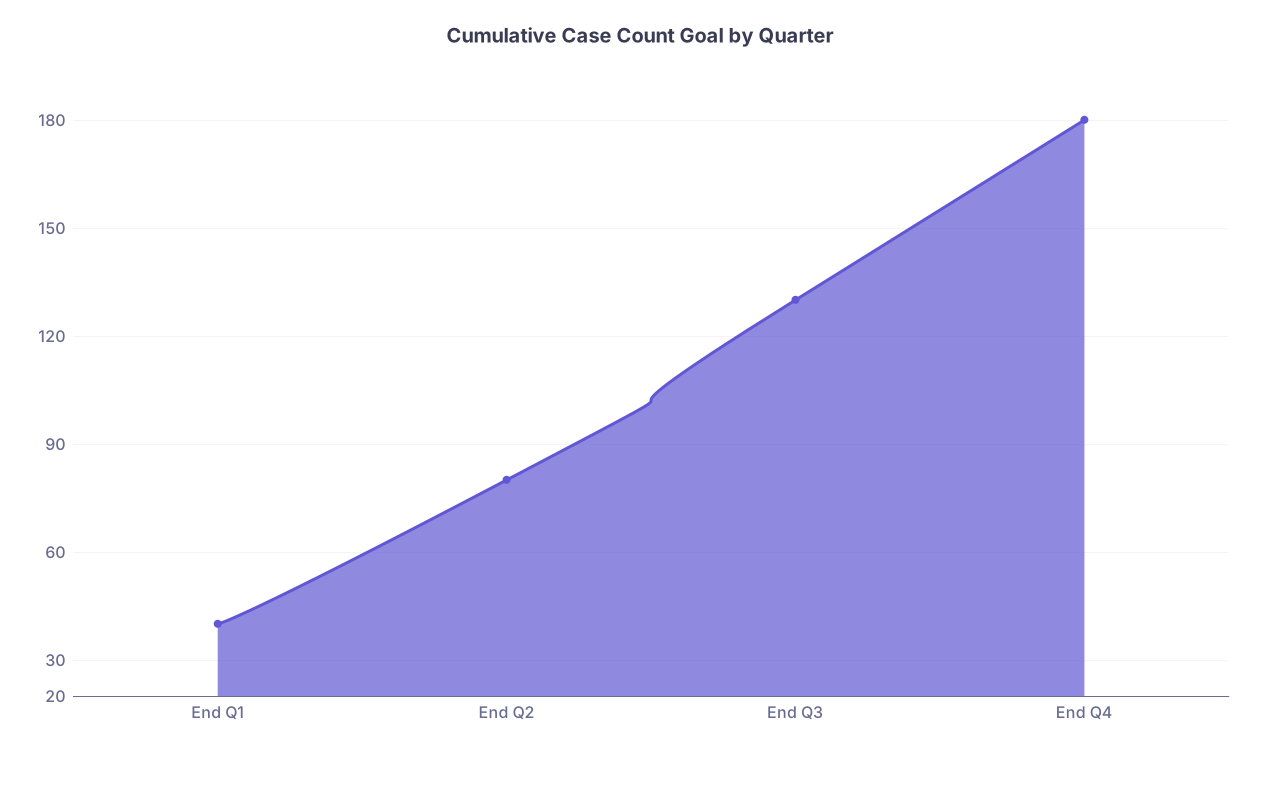
| Category | Value |
|---|---|
| End Q1 | 40 |
| End Q2 | 80 |
| End Q3 | 130 |
| End Q4 | 180 |
Early Q2 (October): Pick 2–3 “ownership” procedures
You’re still an intern. You won’t master Whipple anatomy. But you can absolutely start to “own” a few core procedures.
By mid‑October, choose 2–3 core cases to really lean into. For general surgery, a sane list is:
- Laparoscopic appendectomy
- Laparoscopic cholecystectomy
- Simple inguinal or umbilical hernia repair
Your rule: any time one of your chosen procedures is on your service, you:
- Read a 5–10 minute resource the night before (e.g., Behind the Knife, DeVirgilio, or a solid YouTube from a known group, not random shaky‑cam stuff).
- Show up to the case knowing:
- Indications
- Key steps
- Common pitfalls
- Post‑op issues you’ll see on the floor
This is where attending trust starts to shift: “Let the intern do the port placement / dissection / close.” That trust = more volume.
Mid Q2 (November): Build trauma and acute care habits
If you rotate on trauma/ACS in this window, it’s a goldmine for case numbers if you don’t hide.
At this point you should:
- Be the one who runs to the trauma bay when the pager goes off (within reason and hierarchy)
- Call the OR yourself (with senior approval) for emergent cases and ask to scrub
- Have done:
- Several trauma laparotomies (even as second or third assist)
- Multiple washouts/debridements
- Central line and chest tube attempts (not all successful, that’s fine)
You want trauma labeled in your case log early. Later you’ll be too senior to get the “easy reps” as often.
Late Q2 (December): Force yourself to review your log
Before the holidays, sit down one evening with your case log and a pen. No one does this; you should.
Ask:
- How many total cases? (Real number, not vibes.)
- What are my top three case types by volume?
- What’s missing? (Colorectal? Vascular? Breast? Endoscopy?)
Then do one simple thing:
- Email your program director or assistant PD:
- “I’ve reviewed my case log and notice I’m light on [X]. Is there a rotation or attending I should connect with in the next 6 months to strengthen that exposure?”
That’s the kind of email PDs remember—in a good way.
Quarter 3 (January–March): Consolidation and Stretch Cases
You’re halfway through intern year. This quarter separates the ones who become strong PGY‑2s from the ones who are still fumbling for instruments next July.
By the end of March, you should:
- Have 120–150 total cases logged
- Be able to:
- Set up a laparoscopic tower and ports correctly without supervision
- Close an abdominal incision efficiently and safely
- Run the post‑op care on your bread‑and‑butter cases with minimal attending correction
January: Tighten your technical foundation
At this point you should be ruthlessly honest about your weak technical skills:
- Knot tying (open and laparoscopic)
- Camera holding: horizon straight, centering field, anticipating moves
- Basic suturing speed and accuracy
Pick one technical skill per week in January and deliberately work it:
- Week 1: 15–20 minutes a night of knot tying with a shoelace and a doorknob or a practice kit
- Week 2: Suture on a foam pad or pig’s foot every other day
- Week 3: Watch 2–3 high‑quality full‑length videos of your core cases from incision to closure and follow the steps out loud
- Week 4: Ask an upper level to watch you close and give blunt feedback, then go fix those issues
The better your fundamentals, the more attendings will let you actually do during cases.
February: Start asking for defined roles in the OR
You’re no longer the “just happy to be here” intern. Act like it.
For each case you scrub this month, try something like:
- “Dr. Smith, I’ve done a few of these as camera holder. I’d like to try taking the first port and doing some of the dissection today if you’re comfortable with that.”
- “Can I do the entire skin closure with subcuticular suture?”
You will not always get a yes. You’ll get it often enough that your case quality (not just count) improves.
Also, in February:
- Aim to do at least:
- 5–10 more lap choles
- 5–10 more appys
- 3–5 hernia repairs where you do a meaningful portion of the case
March: Cross‑service exposure and future planning
This is where the “future of medicine” part starts to matter. Surgical practice is changing; your case base needs to anticipate that.
At this point you should:
- Notice which services are heavy in:
- Robotic cases
- Endovascular or hybrid procedures
- Advanced laparoscopy
- Ask to just be in the room for some of these, even if you’re not the main operator yet
Even as an intern, you can:
- Dock a robot
- Hold the camera for a robotic case
- Help with port placement and closure on advanced laparoscopic surgery
You’re building fluency in modern OR environments, not just raw case numbers.
Also in March: preview your PGY‑2 rotations. If you know you’ll have a big vascular block early PGY‑2, and you’ve logged zero vascular exposure, that’s your cue to seek out one or two vascular cases now just to see the flow.
Quarter 4 (April–June): Finish Like a PGY‑2 in Training, Not a Scared Intern
Last quarter. This is not the time to shut down and “protect” yourself. It’s the time to finish intern year as the de facto junior resident on many cases.
By June 30, you should:
- Have at least 170–200 total cases logged (many programs will land you higher, but this is a sane baseline)
- Be trusted to:
- Run a basic case skin‑to‑skin with supervision (e.g., simple hernia, some appys/choles)
- Close almost all incisions on your team’s cases
- Teach a brand‑new intern or student how to scrub, drape, and tie basic knots
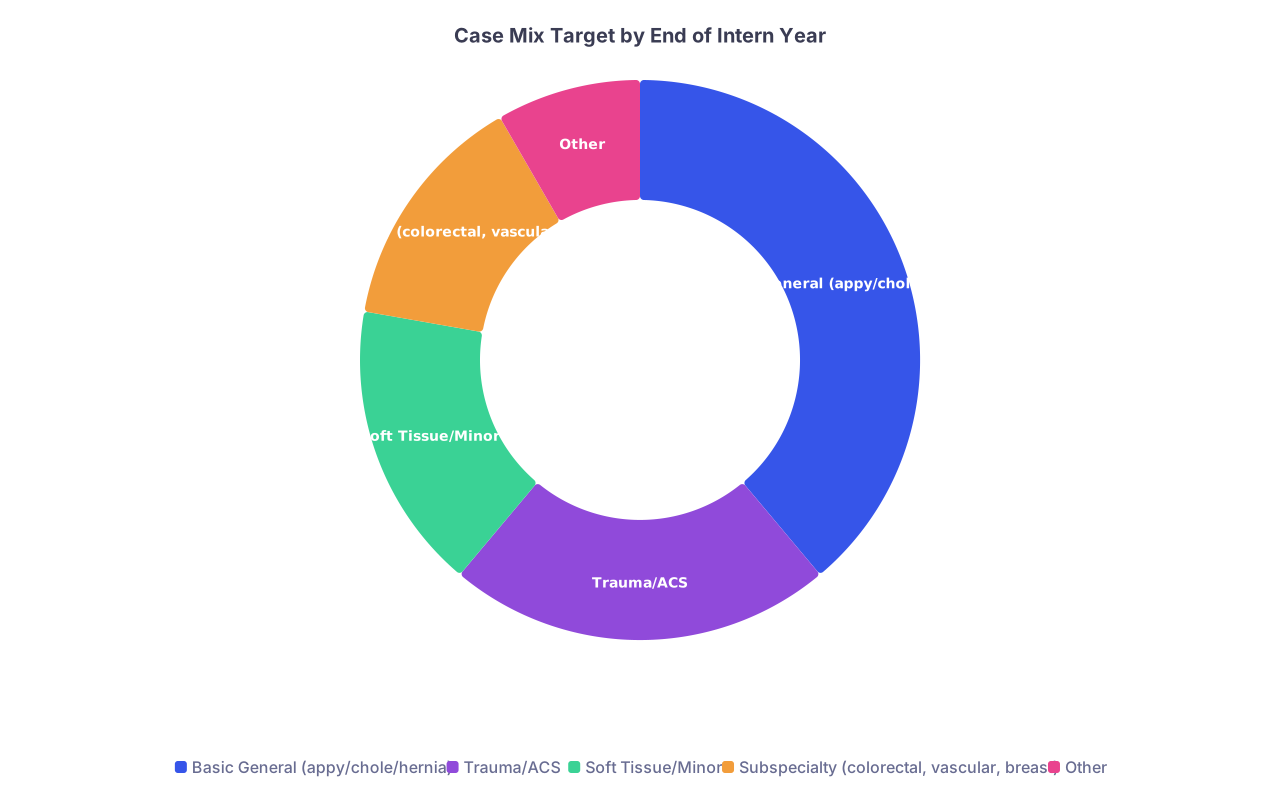
| Category | Value |
|---|---|
| Basic General (appy/chole/hernia) | 70 |
| Trauma/ACS | 40 |
| Soft Tissue/Minor | 30 |
| Subspecialty (colorectal, vascular, breast) | 25 |
| Other | 15 |
April: Teach to cement your skills
By this point, you actually know things. Act like it.
Every time you’re in a case with a student or a brand‑new intern, do one of these:
- Talk them through:
- The indication for the case
- The key steps as they happen
- Let them:
- Hold the camera while you concentrate on anatomy
- Place a trocar skin incision while you guide their hands
Teaching forces you to organize your own mental model. It also advertises to the attending that you’re comfortable enough to focus on more than just surviving.
May: Fill your gaps intentionally
In May, do a second hard review of your case log. This time, be surgical about it.
Look for:
- Zero or near‑zero categories:
- Endoscopy
- Vascular
- Breast
- Colorectal
- Lopsided exposure (e.g., tons of trauma, almost no elective hernia work)
Then:
- Talk to your chiefs and PD about:
- Trading a couple of clinic days for OR days on a specific service
- Joining a half‑day block with a subspecialty surgeon known for letting interns help
Even getting 3–5 cases in a weak area can change your comfort level and reading habits going into PGY‑2.
June: Deliberate PGY‑2 handoff
Last month of intern year. Many people mentally check out. Don’t.
At this point you should:
- Identify which PGY‑2 skills you’ll be expected to have day one (often: running a room as the main resident, teaching interns/students, taking consults)
- Align your last few weeks around those expectations:
Concrete moves:
- Ask to run a straightforward case as if you’re the PGY‑2:
- You present the patient, position, do the pre‑op checklist, lead the time‑out, close, write the op note (with review)
- Request to be the one who:
- Handles a consult from ED to OR (under supervision), including organizing imaging and consent
End of June, write down on a single sheet:
- Total cases
- Top 10 procedures by volume
- 3 areas you want to grow in PGY‑2 (e.g., endoscopy, complex laparoscopy, vascular exposure)
Keep that sheet. Refer back to it in October of PGY‑2. You’ll be shocked how clearly it predicts your growth.
Quick Quarter‑By‑Quarter Snapshot
| Quarter | Focus | Total Case Goal | Key Milestones |
|---|---|---|---|
| Q1 | Learn system, get in room | 30–50 | First appys/choles, logging habit |
| Q2 | Own bread‑and‑butter cases | 60–90 | Primary intern on appy/chole/hernia |
| Q3 | Consolidate & stretch | 120–150 | Trauma/ACS reps, better technical skills |
| Q4 | Finish as junior‑level | 170–200 | Run simple cases, teach juniors |