
The biggest mistake PGY-2s make is assuming case volume will “naturally” jump in PGY-3. It will not. It only jumps if you engineer it.
You are crossing the line from helper to operator. From holding the camera and retractors to owning cases. That transition does not happen automatically on July 1. It happens because you plan for it six to nine months earlier.
Here is a chronological, no-excuses guide for making sure your case volume and responsibility spike from PGY‑2 to PGY‑3.
Big Picture: What Your PGY‑3 Volume Curve Should Look Like
Before we go month by month, you need a target.
By the end of PGY‑3 in a typical ACGME surgical residency (general surgery as the anchor example, but this maps to most operative specialties), you should:
- Be consistently the primary surgeon on bread‑and‑butter cases
- See a 30–50% increase in logged cases over PGY‑2
- Show a clear shift from assistant to surgeon junior in your ACGME logs
- Have enough autonomy that attendings are comfortable stepping back, not just narrating
If PGY‑2 was “exposure and reps,” PGY‑3 is “ownership and progression.”
Here is roughly how the volume trajectory should trend across PGY‑1 to PGY‑3:
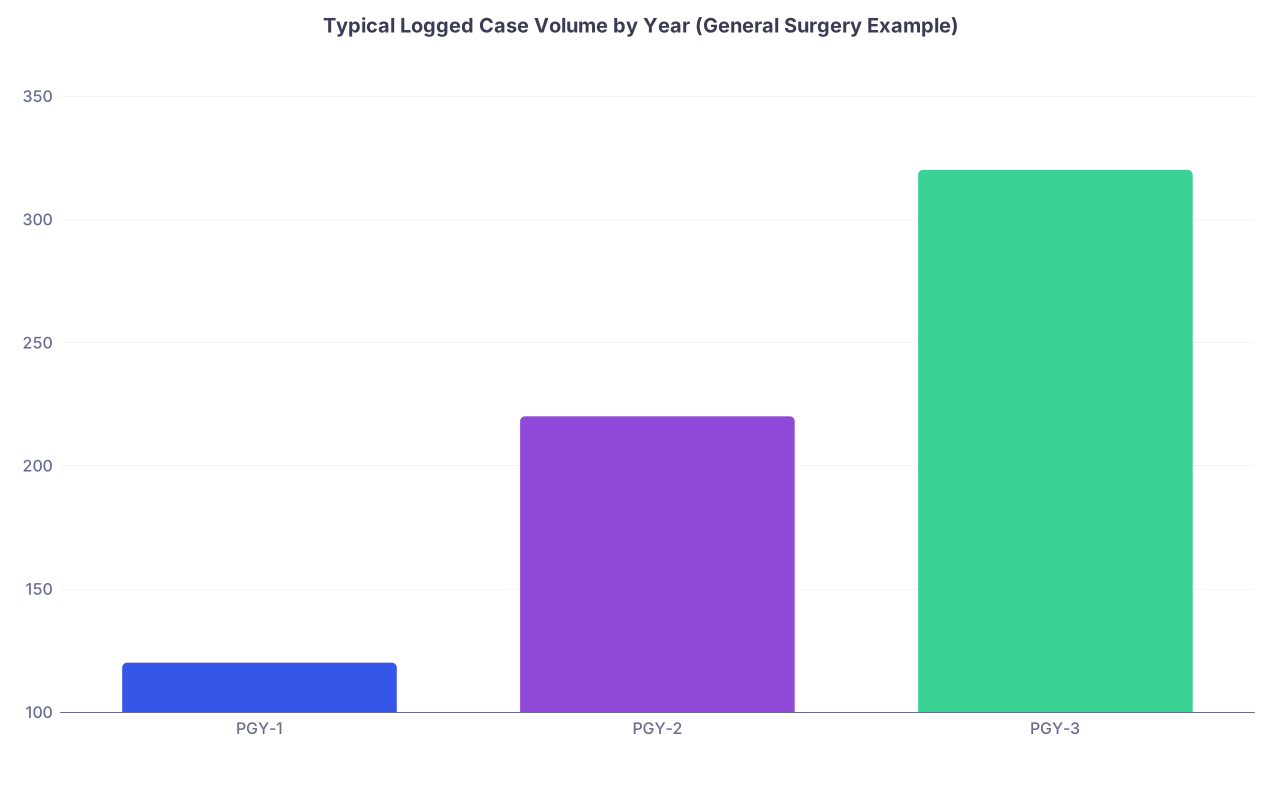
| Category | Value |
|---|---|
| PGY-1 | 120 |
| PGY-2 | 220 |
| PGY-3 | 320 |
If your PGY‑2 and early PGY‑3 stacks look identical, something is wrong. Either your rotation structure, your advocacy, or your documentation. We will hit all three.
6–9 Months Before PGY‑3: Lay the Groundwork (Fall–Winter of PGY‑2)
At this point you should stop thinking like a victim of the schedule and start thinking like someone who is about to run rooms.
1. Audit Where You Actually Stand (One Evening, No Excuses)
Pick a quiet night and do this:
- Export your ACGME case logs to a spreadsheet.
- Sort by CPT / case category and count:
- How many times you were Surgeon Junior / Primary
- How many you were Assistant
- Compare with your program’s historical norms:
- Ask your chief: “What were your case numbers at the end of PGY‑2? Roughly how many primaries?”
- Glance at old ABS case requirements and program summary reports if you can.
You are looking for gaps. The most common ones I see when residents bring me their logs:
- Tons of hernia and lap chole assists, very few as primary
- Very weak endoscopy numbers
- Random holes: almost no breast, vascular, or peds exposure
Write down three categories where you are light. Not ten. Three.
| Category | Current PGY-2 Cases | Goal by End of PGY-3 | Gap |
|---|---|---|---|
| Lap Chole (Primary) | 8 | 30 | 22 |
| Inguinal Hernia (Primary) | 5 | 25 | 20 |
| EGD/Colonoscopy | 10 | 75 | 65 |
These numbers should drive your PGY‑3 battle plan.
2. Have the “I Need Volume” Meeting with Leadership (Late Fall)
By November–January of PGY‑2, you should already be talking about PGY‑3.
Set up brief meetings with:
- Your program director
- At least one core surgical faculty who actually operates with you
- Your future PGY‑3 rotation coordinator or chief
Script it simply:
“I reviewed my case logs. I am light on X, Y, Z. I want to ensure that in PGY‑3 I am primary on bread‑and‑butter general surgery. How can we structure my rotations and room assignments so my volume jumps next year?”
You are not complaining. You are showing that you have data and a specific ask.
Outcomes you should push for:
- Strategic assignment to high-yield services as PGY‑3 (acute care, endoscopy, bread‑and‑butter general surgery, high‑volume community rotations)
- Assurance that you will not be buried on months that are notorious black holes (e.g., certain non‑operative consult services) during critical case‑building time
If you do this in May? Too late. Schedules are done. You get leftovers.
3–4 Months Before PGY‑3: Pre‑Position Yourself (Spring of PGY‑2)
Now the schedule is being finalized and your reputation is hardening in faculty minds.
At this point you should focus on two things: competence and visibility.
3. Become Obvious PGY‑3 Material in the OR
Faculty give cases to the resident they trust, not the one who “deserves a turn.” You build that trust in PGY‑2.
From March–June of PGY‑2:
- Master the setup
- Be the person who always:
- Checks imaging yourself
- Knows the consent details cold
- Confirms the right side, right patient, right procedure with confidence
- Be the person who always:
- Ask for the critical steps now
- Start saying: “Can I do the critical view?” instead of “Can I close?”
- Take the camera but also ask to switch to the “dangerous” instrument: hook cautery, endo shears, vascular clamps
You are signaling: “Next year, I will not just be closing port sites.”
A faculty member deciding room roles in PGY‑3 will remember who, months ago, already looked like a junior attending in the way they prepared and thought.
4. Pre‑Negotiate Autonomy on Known High‑Yield Rotations
Look ahead at your PGY‑3 schedule draft. For each major operative rotation:
- Acute care / trauma
- Community surgery
- Endoscopy
- Specialty months (vascular, thoracic, colorectal, MIS)
Grab the key attendings early:
“I will be on your service in September as a PGY‑3. My goal is to run a room independently and significantly increase my primary case numbers. What do you expect of me so you feel comfortable letting me drive cases?”
Now they will be watching you. In a good way. They will see you as someone to groom for autonomy, not just another warm body.
The PGY‑3 Year: Quarter‑by‑Quarter Case Volume Plan
Now let us break PGY‑3 itself into chunks, because the timing matters. Most residents waste the first three months just “figuring things out.”
You do not have that luxury.
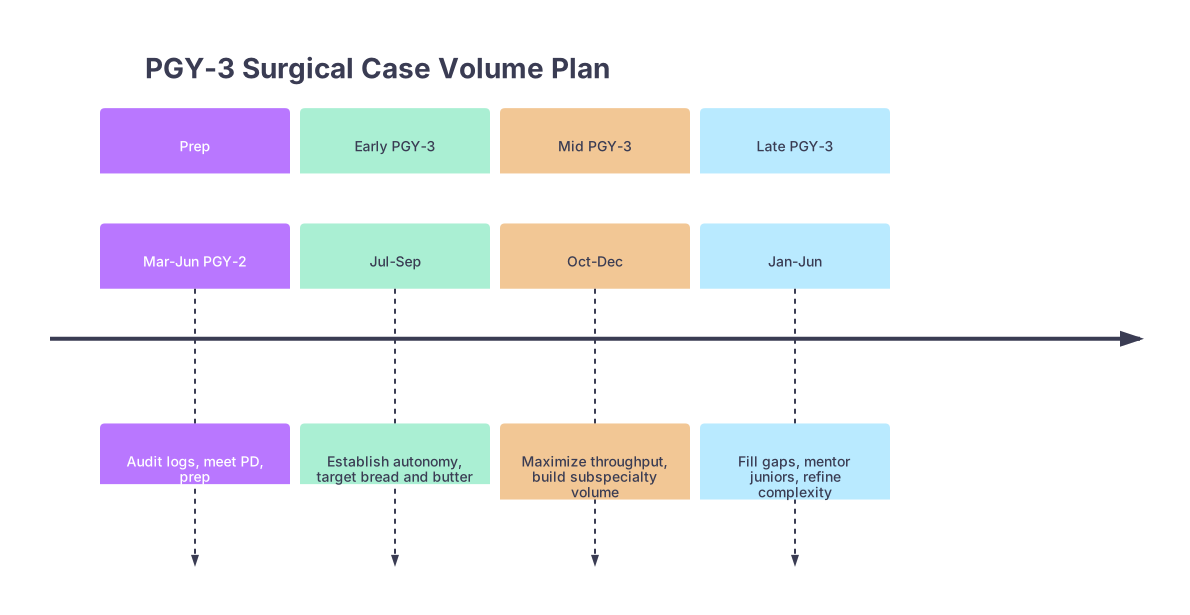
| Period | Event |
|---|---|
| Prep - Mar-Jun PGY-2 | Audit logs, meet PD, prep |
| Early PGY-3 - Jul-Sep | Establish autonomy, target bread and butter |
| Mid PGY-3 - Oct-Dec | Maximize throughput, build subspecialty volume |
| Late PGY-3 - Jan-Jun | Fill gaps, mentor juniors, refine complexity |
Q1 (July–September): Establish Yourself as the Primary Operator
At this point you should make it obvious, every single OR day, that you are the default surgeon junior.
Weekly Structure for the First 8–10 Weeks
Every Monday morning:
- Review all scheduled cases for the week on your service
- Identify:
- Which cases are ideal for you as primary (lap choles, hernias, appys, EGDs, colonoscopies, simple vascular access, port placements)
- Which may be better for a chief or attending (complex re-dos, oncologic resections beyond your level)
Then:
- Send a short, professional email or talk to your chief:
“For this week’s cases, I would like to be primary on these: [list 3–5 cases]. I will have consented and pre‑rounded on them. I am happy to assist or step back on the more complex cases.”
You are doing two things here:
- Showing initiative and planning.
- Making it very easy for the chief to say yes.
Each operative day:
- Arrive early, see the patients, review imaging, brief the team.
- In the room before incision, tell the attending (with the chief present if needed):
“My goal is to perform the case as surgeon junior, with you guiding the critical steps. I have reviewed the anatomy and steps and am ready to lead.”
This is how you shift from “assistant who hopes to be thrown a bone” to “person who is expected to operate.”
By End of September You Should Have:
- A noticeable rise in cases logged as Surgeon Junior or Primary
- Clear ownership of bread‑and‑butter cases on at least one rotation
- At least one attending who openly says in sign‑out: “Let [your name] run that room.”
If this is not happening by October 1, stop hoping. You need to change tactics fast.
Q2 (October–December): Maximize Throughput and Subspecialty Exposure
Now the focus shifts from “prove I can be primary” to “how many appropriate cases can I safely pack into the year.”
At this point you should zoom out and become ruthless about throughput.
1. Use the Board and Add‑On List Aggressively
Twice a day on any operative rotation:
- Check the OR board and add‑on list
- Identify short, high‑yield cases:
- Incision and drainages
- Port placements
- Simple scopes
- Washouts, debridements
- Ask the chief or attending:
“If staffing works, I would like to peel off and do that port / scope as primary. I will pre‑round, consent, and have the note ready.”
People who operate more do not magically get scheduled. They stalk the board.
2. Trim Non‑Essential Time Wasters
This is where a lot of PGY‑3s fail. They hold every pager, answer every non‑urgent call, write every consult note. Then they complain, “I never get to the OR.”
Make deals:
- With your PGY‑2 / interns:
- “If I am scrubbed, you are the primary on floor calls that are not life‑threatening.”
- “I will trade: I will do your hard consults if you protect me during cases.”
- With your chief:
- “If I run this room efficiently and get cases done, can I skip some non‑urgent clinic blocks to keep operating?”
You are not above scut. But PGY‑3 is the inflection point where over‑owning low‑yield tasks will permanently blunt your case numbers.
Q3 (January–March): Patch the Gaps and Raise Complexity
By mid‑PGY‑3, the raw volume should be climbing. Now the question is: where are you still shallow?
At this point you should do a mid‑year case audit just like you did as PGY‑2.
- Pull your logs
- Sort by category and role again
- Identify:
- Categories still light (e.g., you have 50 appys but only 6 open hernias)
- Cases where you are always assistant and never surgeon junior
Then you construct a “gap list” and share it with:
- Your program director
- The chiefs running services you will rotate on for the rest of the year
- Supportive attendings
Example gap list:
- Need 10–15 more primary open inguinal hernias
- Need at least 20–30 more endoscopies as operator
- Want increasing role in segmental colectomies (mobilization, anastomosis)
Then you ask:
“Over the next three to six months, what opportunities are there to build these specific numbers? On which services or with which attendings should I be aggressive?”
You would be amazed how often this simple ask triggers deliberate “give them that case” behavior.
This is Also When You Start Climbing Complexity
You should not still be doing only skin and port closures.
On complex but appropriate cases, ask for:
- Full dissection and exposure under supervision
- Taking the proximal and distal control on vascular segments
- Leading the anastomosis on routine small bowel or colon resections
- Driving the entire EGD / colonoscopy with minimal attending manipulation
Be explicit:
“Today, I would like to do the anastomosis start to finish, with you guiding but not taking over unless there is a problem.”
If you do not ask, many attendings will default to “teaching by doing it themselves.” And you will log “assistant” again.
Q4 (April–June): Cement Autonomy and Prepare for Senior Role
End of PGY‑3 is not about squeezing out a few more simple cases. It is about making sure you enter PGY‑4 or senior years as someone capable of:
- Running a room
- Making real intraoperative decisions
- Balancing service needs with OR time
At this point you should:
1. Start Running the Service Like a Junior Chief
On at least one rotation in late PGY‑3, deliberately practice:
- Assigning cases among juniors fairly but strategically
- Deciding who goes to which room based on educational need
- Negotiating with anesthesia and charge nurses for case priority
This might sound like “chief stuff,” but when you can show you already think this way, you get more latitude.
You also ensure that:
- You do not hoard all the easy cases (bad look)
- You still reserve enough volume for yourself where it matters (gaps and bread‑and‑butter)
2. Hand Off Lower‑Yield Steps to Juniors… Strategically
Paradox: one of the best ways to raise your effective autonomy is to delegate.
- Let PGY‑1s / PGY‑2s close skin and port sites.
- Let them place foleys, position patients, and open.
You then focus your time and energy on:
- Key dissections
- Anastomoses
- Vascular control
- Endoscopy driving
You are still responsible for the whole case. But you are practicing the role you will live in PGY‑4/5.
Daily and Weekly Micro‑Habits That Make Volume Jump
All the big‑picture planning will still fail if your day‑to‑day behavior does not match someone hungry for cases.
Here is what that looks like on the ground.
Daily (Mon–Fri Operative Days)
At this point you should:
0600–0700:
- Quickly pre‑round on all your OR patients
- Update notes only as necessary to be safe and compliant
- Skim imaging and labs for each operative patient
Before each case:
- Review a 3–5 minute video or brief operative atlas section on that procedure (yes, even laparoscopic chole #25)
- Walk in with a one‑sentence plan:
- “We will enter via infraumbilical Hassan, two 5mm ports, start with fundus-down approach if Calot’s is scarred.”
In the OR:
- Verbally call out steps as you go. Faculty love this, and it reassures them you can be left to operate:
- “I have identified the cystic duct and artery, achieving the critical view of safety. I am now clipping the cystic duct.”
- Verbally call out steps as you go. Faculty love this, and it reassures them you can be left to operate:
After cases (same day):
- Log them immediately. Role, complexity, key notes. If you wait, data will be wrong and you will underestimate your deficits.
- Briefly debrief with attending when possible: “What would you let me do next time?”
Weekly
Once each week:
Look at the upcoming schedule and mark:
- Must‑get cases (for your gaps)
- Teachable cases where you can let a junior take larger parts while you supervise
Send one short email or have a quick chat with:
- Chief or attending: “These are the 3–5 cases I am particularly targeting this week. Any concerns if I lead these?”
It is not about perfection. It is about being systematic enough that, over 52 weeks, your numbers cannot help but climb.
Common PGY‑3 Case Volume Killers (And When to Fix Them)
Let me be blunt. I have seen residents sleepwalk through PGY‑3 and then panic in PGY‑5 when the ABS case minimums suddenly matter.
Here are the main traps and when to attack them:
Trap 1: You are “too nice” and never ask to be primary.
- Fix: July–September. After Q1, this is much harder to reverse.
Trap 2: You cling to floor work because you are fast and comfortable at it.
- Fix: Q2. Make explicit deals with juniors and chiefs. Get out of your comfort zone.
Trap 3: You do not log cases accurately or promptly.
- Fix: Immediately. Today. Back‑enter what you can, then never fall behind again.
Trap 4: You accept bad rotations as fate.
- Fix: PGY‑2 fall–spring. By PGY‑3 start, most of this is locked.
Trap 5: You accept that attendings “just like to operate themselves.”
- Fix: Any quarter. Use data and specific asks. If you consistently get blocked, identify other attendings who will actually teach.

Specialty Variations and the Future of Case Volume
This framework applies broadly, but the details shift a bit by field.
| Specialty | PGY-3 Volume Focus | Core Autonomy Goals |
|---|---|---|
| General Surgery | Bread-and-butter + endoscopy | Lap chole, hernia, scopes as primary |
| Ortho | Fracture fixation, scopes, basic arthroplasty | Nail/plate fractures, simple scopes |
| ENT | Tonsils, tubes, endoscopy, sinus basics | Independent tonsil/tube lists |
| OB/Gyn | C/S, basic gyn laparoscopy | Primary C/S, diagnostic laparoscopy |
| Neurosurgery | Bread-and-butter spine, cranial assists | Lead straightforward spine cases |
One more reality: case volume expectations are evolving.
- Simulation is getting better.
- Robotics is shifting what counts as “hands‑on.”
- Case minimums may change with ABS / RRC pressures.
Do not bet your competency on future flexibility. Programs and boards still judge heavily by logged volume and documented autonomy. You want to be safely above the floor so you can absorb whatever policy shift shows up during your training.
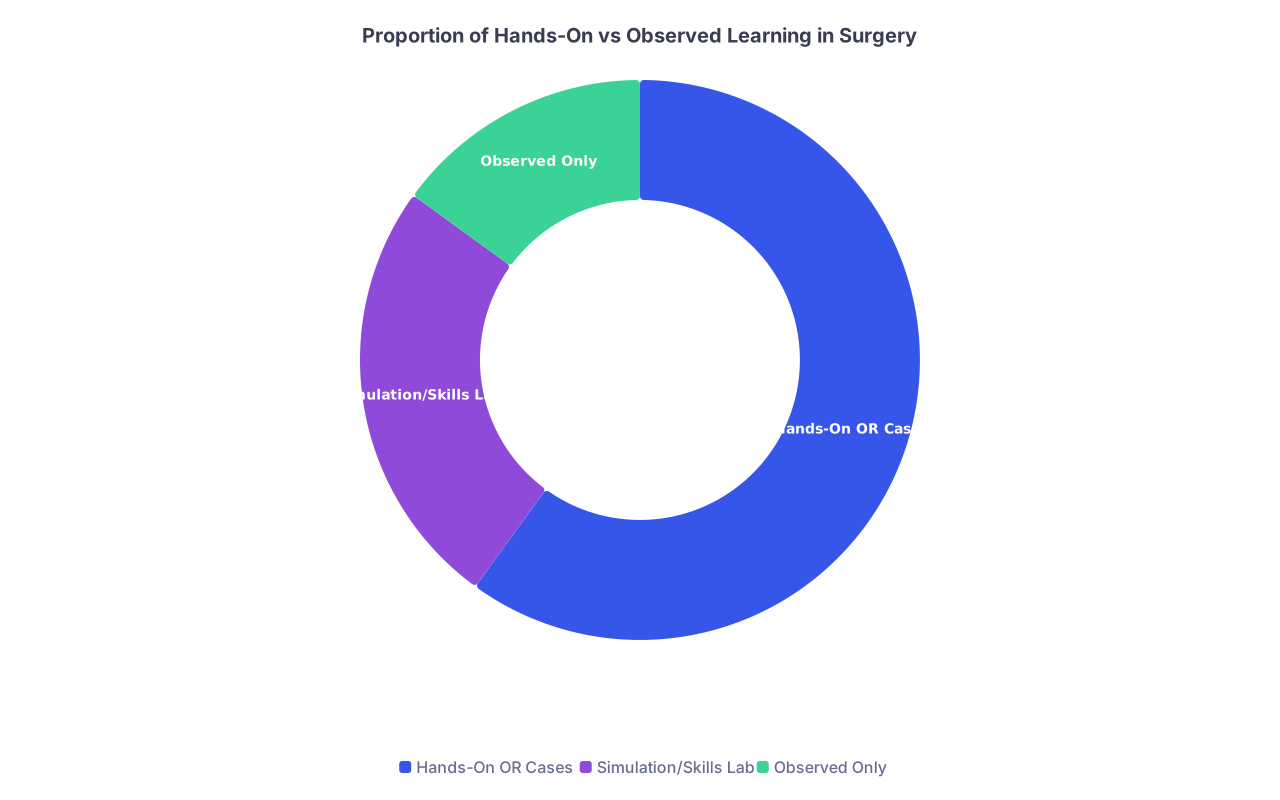
| Category | Value |
|---|---|
| Hands-On OR Cases | 60 |
| Simulation/Skills Lab | 25 |
| Observed Only | 15 |
PGY‑3 is when that 60% “hands‑on” either becomes reality for you—or stays theoretical.

What You Should Do Today
Do not wait until July 1. Or until your semi‑annual review. Those are too late.
Today, before you forget:
- Open your ACGME case log export.
- Sort by category and mark three areas where your numbers are clearly low or your role is mostly assistant.
- Draft a short email to your program director or a trusted attending that says:
- “I reviewed my logs. I am light on X, Y, Z. I want to make sure my PGY‑3 year has a clear plan to increase my primary case volume in these areas. Could we set up 15 minutes to talk about specific rotations and strategies?”
Send that email. That one action starts the chain that makes your PGY‑3 case volume jump on purpose, not by accident.