
You’ve just landed your first US externship. New hospital badge, borrowed short white coat, and a nervous smile. The attending walks in, introduces themselves quickly, and within five minutes you’re hustling behind them on rounds, trying to understand both the medicine and the hidden rules.
You want a strong letter. You want them to like you. You do not want to be the “weird IMG” story they tell to the next group.
This is where people blow it.
They don’t mess up the medicine first. They mess up the boundaries. Power dynamics. Professional distance. In the US, those unwritten rules are just as important as knowing the creatinine.
Let me walk you through the most common boundary mistakes IMGs make with attendings during externships—and how to avoid turning a great opportunity into a quiet blacklist.
1. Acting Like a Friend Instead of a Trainee
Here’s the core problem: many IMGs come from cultures where hierarchy is extreme or, ironically, where once you’re in the inner circle, it gets very informal very fast. US attendings are somewhere in the middle. Friendly, yes. Your friend, no.
Mistake: Over‑familiar communication
I’ve watched students do all of this:
- Calling attendings by their first name on day 1: “Hey John, I had a question…”
- Sending casual DMs on Instagram/X or friend requests on Facebook during the rotation
- Replying to an attending’s email with emojis and chatty language: “lol that was crazy on rounds today 😂”
This reads as: “doesn’t understand boundaries” or “not professional in US context.”
Use formal address unless explicitly told otherwise: “Dr. Smith.” Even if the residents call them “John,” you don’t. You’re at the bottom of the power ladder. That comes with rules.
Email like this: “Dear Dr. Smith, Thank you for allowing me to present on rounds today…” Not: “Hi John, Thanks for letting me talk this morning :)”
Mistake: Oversharing your personal life
You’re exhausted, stressed about the Match, homesick, maybe in a visa mess. And you think, “If they understand my struggle, they’ll root for me more.”
So you unload:
- Family drama
- Financial problems
- Relationship issues
- Your depression history or therapy details
That’s too much. Attendings are not your therapist, immigration lawyer, or best friend. Oversharing makes them uncomfortable and undermines their confidence in you as a future resident.
Safe zones:
- General background: where you’re from, type of school, clinical interests.
- Light personal info: hobbies, general life situation (“My family is back home in India; I’m here on a B-1 visa for this externship.”)
Skip the heavy details unless they directly, and appropriately, affect your availability (e.g., “I have a pre-scheduled legal appointment this afternoon that I mentioned to the coordinator.”)
2. Boundary Violations Around Letters of Recommendation
This one ruins people.
You need letters. They know you need letters. But your timing and tactics can make you look desperate, manipulative, or tone-deaf.
Mistake: Asking for a letter too early
Worst version: You ask in week 1 or 2 of a 4-week externship.
What the attending hears: “You barely know me, but I want you to attach your name to my career.”
They may say yes politely. Then write you a generic, useless letter—or quietly avoid writing at all. Some will never forget how pushy you were.
General rule: ask toward the end of the rotation, ideally in the final week, only if:
- You have worked closely with them
- You’ve shown up prepared and reliable
- They’ve seen you present, think, and improve
Mistake: Cornering them for a letter in awkward moments
I’ve seen this happen:
- In the hallway between patients: “Dr. Lee, can you write me a strong letter for residency?”
- In front of other students: “Can I get a LOR from you too?”
- While they’re visibly rushed or annoyed
This feels intrusive and self-centered.
Better: send a short, professional email, or ask in a quiet moment after rounds, one-on-one, when they’re not rushing to the OR or a meeting.
Mistake: Asking for a “strong” letter from someone who barely knows you
You shouldn’t say, “Can you write me a strong letter?” if they can’t honestly do that. And they hate being boxed into that wording when it’s not true.
Ask like this: “Dr. Smith, I’ve really appreciated working with you this month. Do you feel you know my clinical work well enough to write a supportive letter for my residency applications?”
That gives them a graceful exit:
- “I don’t think I know you well enough; maybe Dr. X could write you a stronger letter.”
If you push anyway, you just proved their instinct correct: poor judgment.
3. Blurring Digital and Social Media Boundaries
US physicians are extremely cautious about digital boundaries. HIPAA, hospital policies, professionalism standards—they’re not playing around.
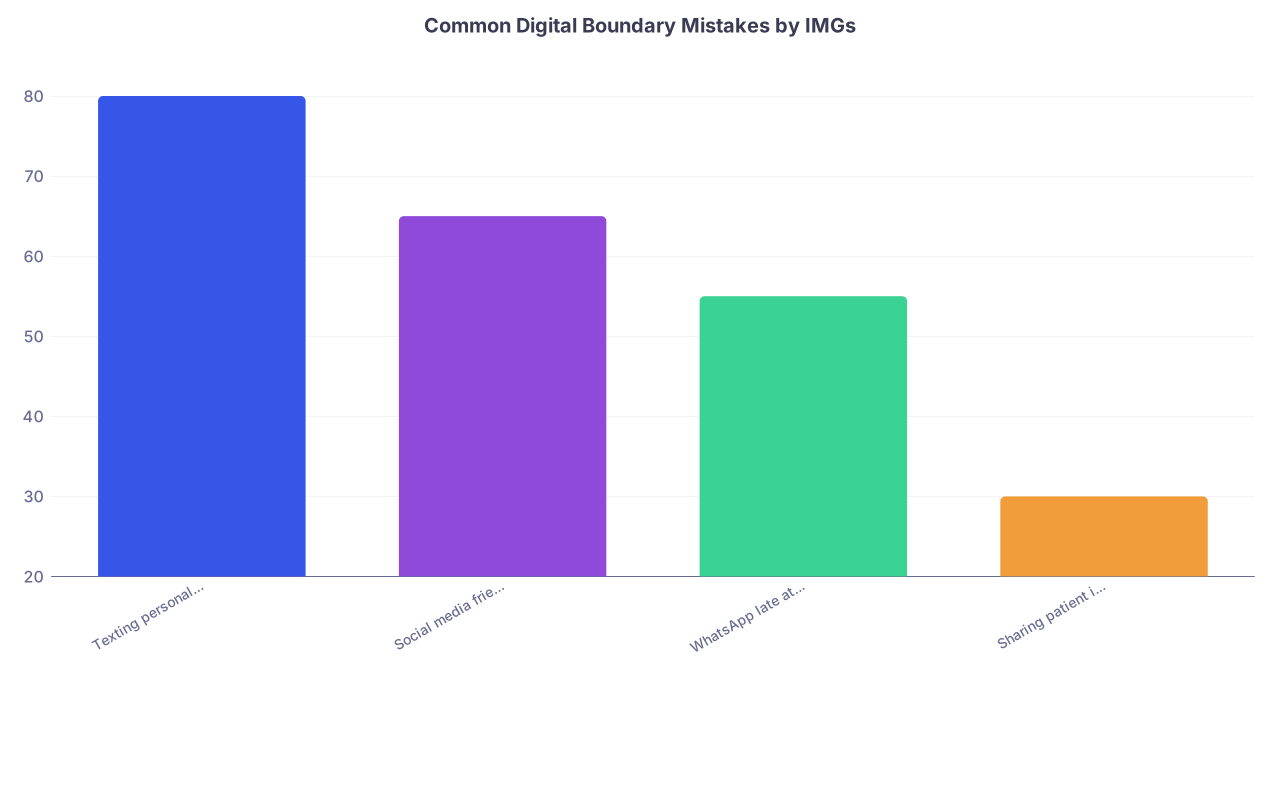
| Category | Value |
|---|---|
| Texting personal phone | 80 |
| Social media friend request | 65 |
| WhatsApp late at night | 55 |
| Sharing patient info online | 30 |
Mistake: Texting their personal number too casually
If they give you their number, that’s for:
- Urgent clinical updates if you’re covering something
- Logistical issues related to the rotation
Not for:
- Sending memes
- “Just wanted to say hi and thanks again!”
- Asking non-urgent career questions at 11 PM
Keep texts short, professional, and necessary. If it can wait until email or tomorrow, let it wait.
Mistake: Social media friend requests during the rotation
Do not:
- Send Instagram or Facebook friend requests
- DM them on social media
- Comment on their personal photos
During the rotation, that’s a boundary violation. After the rotation, maybe LinkedIn or a professional networking platform is acceptable, but even then keep it professional, not social.
And never screenshot, share, or post photos that include them or clinic/hospital spaces without explicit permission and strict de-identification.
4. Time and Access: Not Knowing Where the Line Is
Externs often either:
- Cling too closely (“shadowing shadowing shadowing”) and annoy everyone, or
- Completely disappear and seem disinterested.
Both can kill you.
Mistake: Hovering and following them everywhere
Yes, you want maximum exposure. But shadowing them into every single space without permission is how you annoy an attending fast.
Don’t:
- Walk into closed-door meetings unless invited
- Follow them into staff-only lounges if they look like they want a break
- Stand right behind them during every computer session breathing down their neck
Ask once: “Is it okay if I follow you into this, or would you prefer I wait here?” Then respect the answer—and their body language.
Mistake: Ignoring stated working hours and boundaries
Examples:
- Staying super late uninvited and forcing them to worry about you
- Showing up on their non-clinical days asking to “just discuss cases”
- Texting/emailing at odd hours and expecting quick responses
Your enthusiasm becomes a burden when it creates work or emotional load for them.
If they say the workday ends for you at 5:00 PM, don’t keep “just sticking around” till 8 unless there’s a clear invitation and structure.
5. Physical Space and Touch: Different From Many Home Countries
This one’s uncomfortable, but critical.
Some IMGs come from cultures where physical touch—handshakes, shoulder taps, even hugs—is much more common in professional settings. US medicine is very cautious.
Mistake: Uninvited physical contact
I’ve seen:
- Students putting a hand on an attending’s arm while making a point
- Attempting a hug at the end of a rotation
- Standing too close in small spaces
Do not do that. It makes people deeply uncomfortable and can be interpreted as violating personal space or even harassment.
Safe standard:
- Handshake if they offer theirs (or if it’s obviously appropriate at an intro)
- Maintain a respectful distance in discussions
- No touching unless it is 100% clearly invited and appropriate (which it almost never is)
6. Getting Too Personal About Their Lives
You want to “build rapport,” so you ask personal questions. Done right, this is fine. Done poorly, it feels intrusive.
Mistake: Digging into their private life
Too far:
- “Are you married? Any kids? How old are they?”
- “Where do you live? Is your house nearby?”
- “You seem tired—are you having problems at home?”
Stay away from their family, finances, politics, or health unless they freely volunteer the information and it’s very clear they’re open to small talk about it.
You can be curious about:
- Their training path
- Why they chose their specialty
- Career advice
Professional, not personal.
7. Boundary Problems Around Feedback and Disagreement
You will be wrong. You will be corrected. That’s the point of an externship. How you handle that matters more than the mistake itself.
Mistake: Arguing with attendings in front of others
Big red flag:
- Correcting them aggressively on rounds
- Challenging their decision in front of patients, nurses, or other students
You can—and should—think critically. But you pick your moment.
If you disagree:
- Ask questions, not accusations: “Can you explain why you chose X instead of Y? In my home country we often do Y first.”
- If you think there’s an actual error, ask in private: “Dr. Smith, I may be misunderstanding, but I thought the patient had a severe penicillin allergy—was Augmentin still okay?”
Mistake: Taking feedback personally and emotionally
If they say: “You need to be more concise when presenting,” and you respond with visible anger, tears, or defensiveness, that’s a problem.
You’re allowed to have emotions. But in the US system, professional maturity means you control the reaction in front of them, especially an attending you need a letter from.
Write down the feedback. Process it later. Don’t debate it in the moment unless there’s a true misunderstanding.
8. Mistaking Mentorship for Therapy or Rescue
Sometimes an attending is kind, supportive, and really “gets” you. That’s good. But IMGs often push this into a dependency that feels suffocating.

| Step | Description |
|---|---|
| Step 1 | Extern meets attending |
| Step 2 | Healthy: Periodic advice, boundaries respected |
| Step 3 | Unhealthy: Constant messages, emotional dependency |
| Step 4 | Attending withdraws |
| Step 5 | Long-term mentor relationship |
| Step 6 | Professional support |
Mistake: Endless emails and questions
I’ve watched students send:
- Page-long life stories
- Weekly updates asking for endless detailed feedback
- Panic messages about every small decision
You become “high maintenance.” People avoid high maintenance.
Use mentorship wisely:
- Ask focused questions
- Space them out
- Respect when their responses get shorter or slower: that’s a signal to pull back.
Mistake: Expecting them to “fix” your entire residency profile
Your externship attending cannot:
- Rewrite your entire CV
- Fix failed exams
- Overcome weak scores with one magical letter
They can help a little. Not rescue you. Treating them as a savior is both unfair and unrealistic.
9. Cultural Misreads That Look Like Boundary Issues
Some of what I’m describing is cultural misunderstanding, not bad character. But the system will not explain this gently. It will just not invite you back.

Mistake: Over-deference that becomes passive
In some cultures, questioning a senior is disrespectful. In US medicine, never speaking up looks disinterested or uncritical.
You need to find a middle ground:
- Ask clinical questions
- Offer differential diagnoses
- Present your thought process
But not like you’re challenging their authority—like you’re learning from it.
Mistake: Interpreting friendliness as equality
Many US attendings are informal. They joke. They share little personal details. They might say, “Call me Mike.”
This does not mean:
- You can text them like a buddy
- You can treat them like a peer
- You can ignore all the boundaries above
Friendly ≠ friend. Keep that straight.
10. Practical Do/Don’t Summary
You probably want a quick comparison. Here you go.
| Area | Healthy Behavior | Unhealthy Behavior |
|---|---|---|
| Address | "Dr. Smith" unless told otherwise | First-name use on day 1 |
| Communication | Professional email, limited texts | Late-night texts, social media DMs |
| Personal Sharing | Brief background, career goals | Family drama, mental health oversharing |
| Letters of Rec | Ask late in rotation, private, polite | Ask week 1, in hallway, demand "strong" |
| Physical Space | Handshake if offered, respect distance | Uninvited touch, standing too close |
If you stay on the left column, you’re fine.
FAQ (Exactly 5 Questions)
1. Is it ever okay to add an attending on LinkedIn or social media after an externship?
LinkedIn, yes—usually acceptable if you keep it professional and do it after the rotation ends. Send a short note: “Thank you again for the opportunity to rotate with you at X Hospital.” Instagram, Facebook, TikTok—generally no. Those are personal spaces for most attendings, and you risk crossing a line or seeing things you shouldn’t comment on.
2. How many times is it reasonable to email an attending after the externship ends?
A few times a year is fine: an initial thank-you email, an update when you apply for residency (especially if they wrote a letter), and maybe a brief note if you match somewhere. Monthly life updates? Too much. If they become your long-term mentor, you’ll feel that naturally—do not force it.
3. What if I already made a boundary mistake—can I repair it?
Often, yes. If you overshared or asked for a letter too early, you can reset a bit by pulling back and behaving more professionally. For something big (e.g., inappropriate message or touch), a brief, direct apology is better than pretending it didn’t happen. Then correct course and don’t repeat it. They’ll pay more attention to your pattern than to one misstep.
4. Should I tell an attending about my visa issues or USMLE failures?
Only if it’s directly relevant and you’re strategic about it. Visa status might matter if you’re asking for career advice or they’re discussing program types. USMLE failures—share sparingly, and only if you’re asking for targeted advice and have a plan to show growth. Do not dump every problem at their feet hoping they’ll fix it.
5. How can I tell if an attending is uncomfortable with my behavior?
Watch for: shorter replies, less eye contact, them delegating you to residents, or avoiding one-on-one conversations. That’s often quiet distancing. If you sense it, tighten your professionalism: reduce messages, formalize your language, stick to clinical topics, and respect their time and space. Do not ask, “Did I do something wrong?”—that puts them in an awkward spot. Just adjust.
Key points to walk away with:
- You’re not trying to be their friend; you’re trying to be their most professional, reliable trainee.
- Boundaries around time, communication, and personal space matter as much as your medical knowledge.
- When you’re unsure, err on the side of formality and distance. You can always become more casual later. You rarely get a second chance to fix a bad first impression.