
You’re staring at your email. Three US clinical experience offers. All in the same week. One is at a big-name hospital you’ve heard of, one is at a private clinic that promised “hands-on,” and one is in a random city you had to Google. You can’t do all three. You know picking wrong could hurt your residency application.
Here’s how to choose—without guessing, and without getting seduced by the wrong things.
Step 1: Get Clear On Your Real Goal (Not The Brochure Goal)
Before you compare anything, you need to answer one question honestly:
What do you need this USCE to do for your residency application this year?
For most IMGs, it’s one or more of these:
- Get strong US letters of recommendation (LoRs) in your target specialty
- Prove recent, relevant US clinical experience (especially with a gap or older YOG)
- Show commitment to a specific specialty
- Build connections that might translate into interviews
- Gain actual familiarity with US healthcare systems so you don’t look lost on day one
Write down your top 2 priorities. Not 5. Two.
That becomes your decision filter. Every offer you compare should be judged by:
“Does this rotation make it easier to get [priority #1] and [priority #2]?”
If an option sounds fancy but doesn’t move those two priorities, it’s a distraction.
Step 2: Compare The Right Variables (Not The Marketing Lines)
Most programs will all say the same keywords: “hands-on,” “teaching,” “great learning environment,” “team-based care.” Useless.
Here’s what actually matters, side by side.
| Factor | Why It Matters |
|---|---|
| Specialty match | Stronger narrative and better LoRs for that specialty |
| Setting (academic vs community vs clinic) | Impacts exposure, letters, and perceived rigor |
| Letter writer profile | Name, specialty, and how well they'll know you |
| Degree of involvement | Observership vs externship vs sub-I style |
| Timing | Alignment with ERAS and LoR upload deadlines |
Now I’ll break down each one.
Step 3: Start With Specialty Alignment
Rule 1: If you know your target specialty, prioritize USCE in that field.
Internal medicine applicant? Cardiology clinic is fine. Dermatology clinic? Useless for your IM story.
Ranking when you’re choosing between offers:
- Same specialty, inpatient or mixed (inpatient + outpatient)
- Same specialty, outpatient only
- Related specialty that commonly cross-refers (e.g., cardiology for IM, neurology for IM/FM, heme/onc for IM)
- Completely unrelated specialty – last choice, unless there’s an exceptional reason (like direct pipeline to a program you want)
Don’t get distracted by “big name” in the wrong specialty. A derm observership at a top-10 hospital won’t help an internal medicine application as much as a strong IM letter from a mid-tier community hospital.
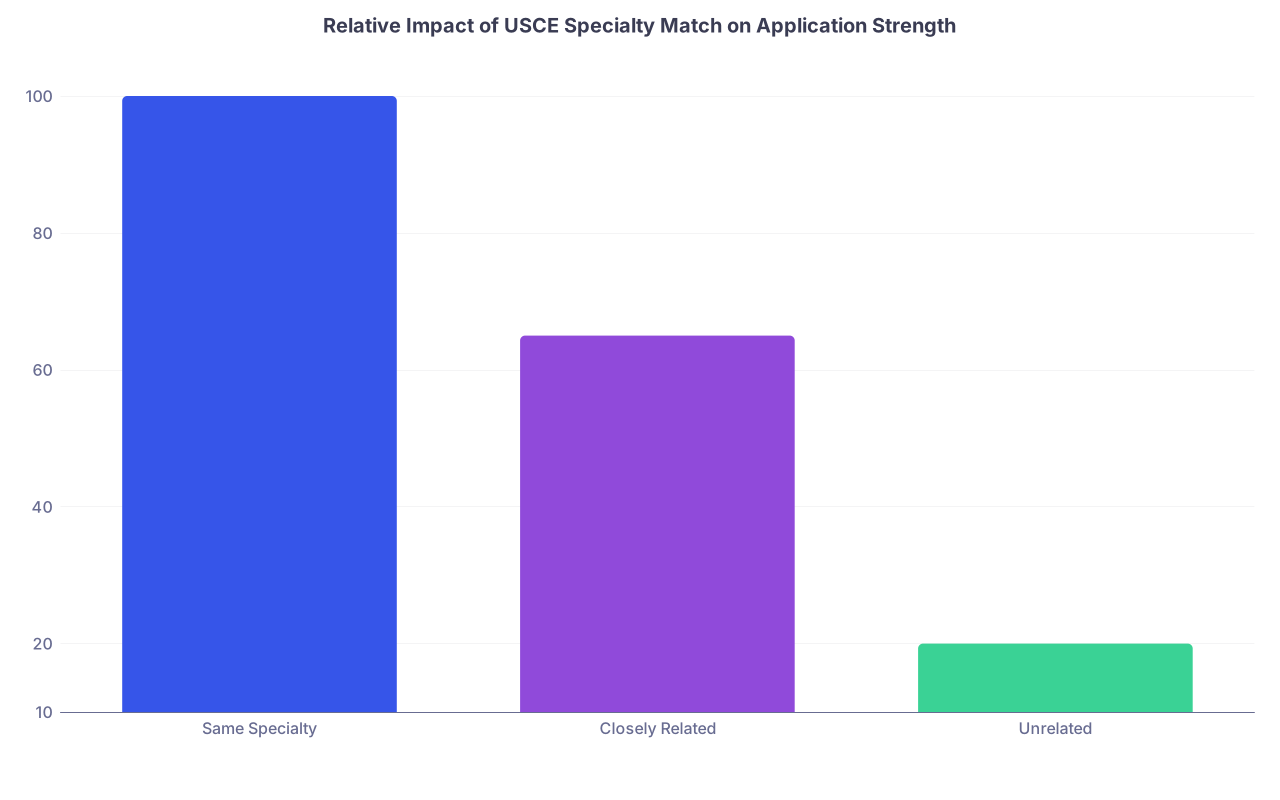
| Category | Value |
|---|---|
| Same Specialty | 100 |
| Closely Related | 65 |
| Unrelated | 20 |
Step 4: Academic vs Community vs Private Clinic
You’re usually choosing between:
- Academic hospital (university or teaching hospital)
- Community hospital (non-university but has residency programs)
- Private clinic / office (no residency program attached)
Here’s how I’d rank them for residency impact, assuming similar quality:
Hospital with residency in your specialty
- Best for networking and potential interviews
- Attendings used to writing LoRs that programs respect
- You see actual residents’ workflows
Hospital without your specialty’s residency, but with good inpatient exposure
- Still valuable, shows you can function in US inpatient settings
- Good for general medicine skills, even if program name isn’t huge
Purely outpatient clinic with no residency connection
- Still useful for experience, but letters sometimes weaker
- Often more hands-on, but less impressive on paper
If one offer is in a hospital with an internal medicine residency and the other is just a random outpatient clinic—even if the clinic promises “hands-on procedures”—for residency purposes, I’d usually pick the hospital.
Step 5: Letters of Recommendation: The Make-or-Break Factor
This is where most IMGs underestimate things.
You’re not just choosing where you’ll rotate. You’re choosing who might write your letter.
Ask (politely, by email or phone, before committing if possible):
- Will I be working primarily with one attending or many?
- Do IMGs usually get letters from this rotation?
- How are students evaluated (any formal evals you can later reference)?
- What is the attending’s role? Core faculty? Program director? Chair? Community physician?
Ranking letter-writer strength:
- Program Director / Associate PD / Clerkship Director in your specialty
- Core faculty in a residency program in your specialty
- Hospitalist or specialist with teaching experience and US academic affiliation
- Solo community physician with no teaching role (still okay, but weaker)
But here’s the nuance:
A detailed, specific letter from a mid-tier core faculty > a generic, two-line letter from a big-name but barely-saw-you attending.
If one offer gives you daily direct supervision with a single attending who’s known to write strong IMG letters, and another rotates you through 10 attendings who’ll barely remember your name, pick the first.
Step 6: Hands-On vs Observership – What Actually Counts
Everyone chases “hands-on.” Programs care more about how well you understand and function in the system than whether you physically touched the patient or not.
In reality, what matters is your level of involvement:
Top tier:
- You present patients
- You write notes (even if not in the official EMR)
- You develop differential diagnoses and plans
- You call consults or discuss plans with nurses under supervision
Middle tier:
- You take histories
- You do focused exams
- You discuss your assessment with the attending
Low tier:
- You stand at the back of the room and watch
Look past the label “externship” vs “observership.” Ask:
- Will I be presenting patients?
- Will I be asked for my assessment and plan routinely?
- Will I do any documentation, even shadow charts?
- How many other students or observers are usually there?
If one offer clearly gives you structured responsibility and the other sounds like “you can watch us and ask questions,” go with responsibility every time.

Step 7: Timing Relative to ERAS And Match
This is where people sabotage themselves without realizing.
If you’re applying this upcoming Match cycle, priority goes to rotations that:
- Occur before or by September
- Allow letters to be uploaded to ERAS by mid-September–early October
An incredible rotation in December is less valuable than a solid one in July if the December letter arrives too late to influence interview offers.
If you’re choosing between:
- June–August rotation with solid letter potential
- October–November rotation at a slightly “better” name
For this year’s match, I’d usually pick the earlier one.
For people applying next year, you have more flexibility, but still—letters ready early in the season are gold.
Step 8: Location, Cost, and Visa — Don’t Ignore Reality
You’re not a robot. Money, logistics, and visa status matter.
Look at:
- Cost of living (NYC vs midwestern city is a huge difference)
- Housing support (some programs have lists or options)
- Transportation (can you get to the site without a car?)
- Visa documentation (some institutions are better with paperwork than random clinics)
If two offers are roughly equal on educational and CV value, pick the one that won’t destroy you financially or logistically.
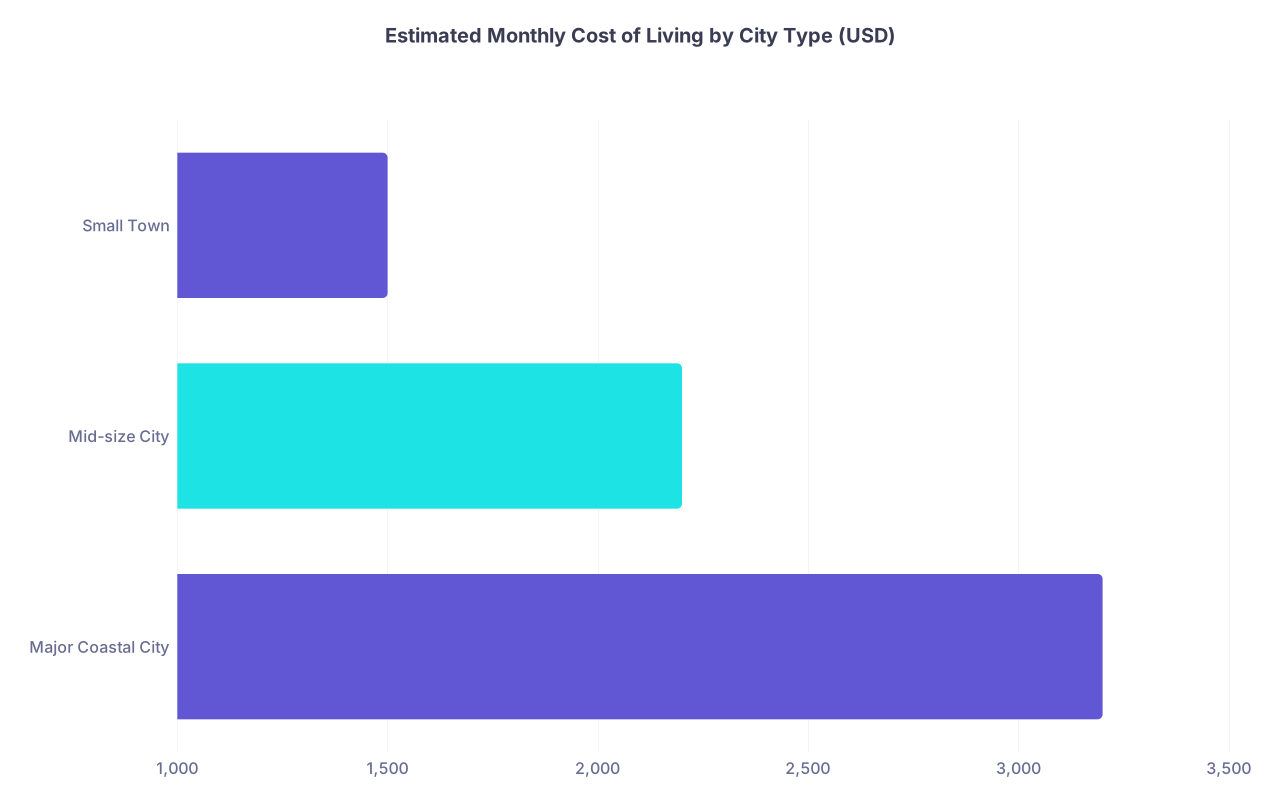
| Category | Value |
|---|---|
| Major Coastal City | 3200 |
| Mid-size City | 2200 |
| Small Town | 1500 |
Step 9: Think Strategically About Stacking Rotations
You’re often not choosing “one forever.” You’re choosing the next one or two.
Pattern that works well for many IMGs:
- First rotation: Solid community or mid-tier academic program in your specialty, where you can be active, learn the system, and get your first decent LoR.
- Second rotation: Slightly more competitive or well-known program, now that you’re more comfortable, where you can really impress and secure a strong letter.
So if your offers look like this:
- Option A: Big academic center, very competitive, minimal hands-on, many observers
- Option B: Smaller community hospital, more responsibility, likely letter
I’d often do B first, then hunt for another A-like option once you’re more confident and have one US letter already.

| Step | Description |
|---|---|
| Step 1 | Start Planning |
| Step 2 | Rotation 1: Community/Mid-tier Hospital |
| Step 3 | Obtain First Strong LoR |
| Step 4 | Rotation 2: Academic/University Hospital |
| Step 5 | Obtain Second Strong LoR |
| Step 6 | Finalize ERAS Application |
Step 10: Put It All Together – A Simple Ranking Framework
Here’s a brutal but useful way to score your options. For each offer, rate 1–5 on:
- Specialty alignment
- Letter writer potential
- Setting (hospital with residency vs clinic)
- Level of involvement/responsibility
- Timing for this year’s ERAS
- Practicality (cost, logistics, visa)
Total each out of 30.
The highest number usually wins. But here’s my real advice: if one option clearly gives you a strong letter in your target specialty, at a place with a residency program, in time for ERAS, it almost always beats the rest—even if the name isn’t shiny.

Red Flags – When To Say No, Even If You’re Desperate
I’ve seen IMGs waste thousands on garbage rotations. Watch out for:
- No clear supervising physician named
- No guarantee of working with attendings in your specialty
- Vague promises like “maybe letters if you perform well” with no history
- Overcrowded programs (8–10 observers per attending regularly)
- Places that refuse to provide any documentation of completion
A mediocre but legitimate hospital rotation beats a sketchy “hands-on” clinic every time.
Quick Example: How To Decide Between 3 Offers
Let’s say you have:
- Offer 1: 4-week Internal Medicine, community hospital in Ohio with IM residency, July, 1–2 students per team, chance for LoR from core faculty.
- Offer 2: 4-week Cardiology clinic, big-name East Coast hospital, purely outpatient, status as “observer only,” September, LoR “maybe.”
- Offer 3: 4-week Family Medicine clinic, private solo physician in Florida, very hands-on, no residency affiliation, August.
You’re aiming for Internal Medicine.
My pick?
Offer 1. Every time.
Why:
Same specialty, hospital environment, residency on-site, lower student:attending ratio, strong letter potential, and perfect timing for ERAS. That’s exactly what IM programs want to see.
FAQ: Choosing Between Multiple USCE Offers as an IMG
1. Should I choose a famous hospital name over a smaller place with better hands-on experience?
Not automatically. A big-name hospital helps, but only if the rotation gives you:
- A strong, personalized letter of recommendation
- Real involvement in patient care
- Exposure in your target specialty
A smaller program where you’re known, trusted, and evaluated usually beats standing anonymously at a famous hospital.
2. How many USCE rotations do I actually need as an IMG?
For most IMGs aiming at internal medicine or family medicine:
- 2–3 solid rotations in your specialty is usually enough
- 1–2 must be in the US, with letters
- At least 1 should be inpatient or hospital-based
If you have a big gap or older YOG, aim for more recent, continuous experience (e.g., 3–4 months in the year before applying).
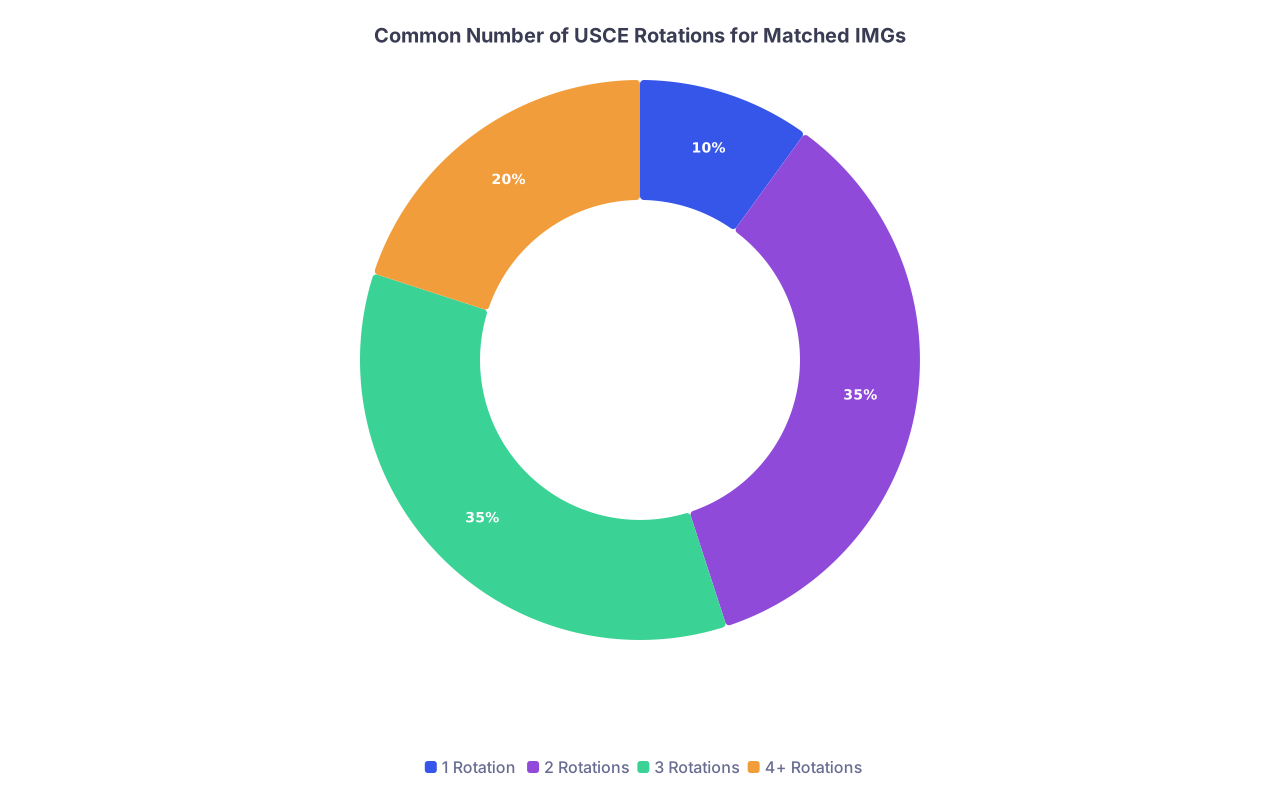
| Category | Value |
|---|---|
| 1 Rotation | 10 |
| 2 Rotations | 35 |
| 3 Rotations | 35 |
| 4+ Rotations | 20 |
3. Is an outpatient-only USCE rotation enough for internal medicine?
It’s acceptable, but not ideal as your only experience. Internal medicine is heavily inpatient in residency. Programs like to see at least one inpatient rotation if possible. If you must choose only outpatient, make sure:
- The attending is IM and used to writing residency letters
- You’re actively presenting and forming assessments/plans
4. How late is “too late” for a USCE rotation before applying?
If you’re applying this year, you want letters uploaded by mid-September to early October. Rotations ending after October start cutting it close. November/December rotations are fine for experience and maybe late-added letters, but they’re less likely to influence initial interview offers that season.
5. If I’m undecided between two specialties, how should I pick USCE offers?
You can split, but do it smartly:
- Don’t do 3 completely different specialties (IM, psych, surgery) if you’re applying to just one
- If you’re truly split (say, IM vs psych), do:
- 1 rotation in IM
- 1 rotation in psych
Then commit before application season and make sure your personal statement and LoRs line up with that specialty. Mixed signals are a fast way to get ignored.
Open a blank page right now and list your offers down the left. Across the top, write: specialty match, letter potential, setting, involvement, timing, practicality. Score each 1–5. Circle the highest total. That’s your starting point—and the option you should interrogate hardest to make sure it gives you the letter and experience your application actually needs.