
If you’re asking whether to prioritize USCE or research first as an IMG, the answer is blunt: US clinical experience comes first for most applicants. Research is powerful—but it rarely replaces weak or absent USCE.
Let me walk you through this like I would with an actual IMG sitting in my office, because this exact question comes up constantly.
The Core Answer: For Most IMGs, USCE > Research
Programs don’t rank applications in some mystical way. They look at very specific boxes:
- Can you function safely and effectively in a US clinical system?
- Will you help the program publish and boost its academic profile?
- Are you trainable, reliable, and not a risk?
USCE answers #1 directly. Research mostly strengthens #2 and indirectly helps with #3.
If you have:
- No US clinical experience
- No US letters
- Decent scores and maybe some home-country experience
…and you’re debating “observership vs unpaid research assistant,” you should prioritize USCE first.
Why? Because for IMGs, lack of USCE is a filtering criterion at a huge number of programs. Especially in Internal Medicine, Family Med, Psych, Peds, and Neurology.
Research helps you stand out. USCE keeps you from being filtered out. Very different roles.
What Program Directors Actually Care About
Here’s where people get misled. They see big-name programs bragging about “X% of residents with publications.” They think, “I must do research first.”
But when you talk to program directors, you hear phrases like:
- “We need to know they can handle US wards.”
- “We’ve had too many IMGs who’ve never worked in the US system.”
- “Letters from US attendings are critical.”
So let’s map reality.
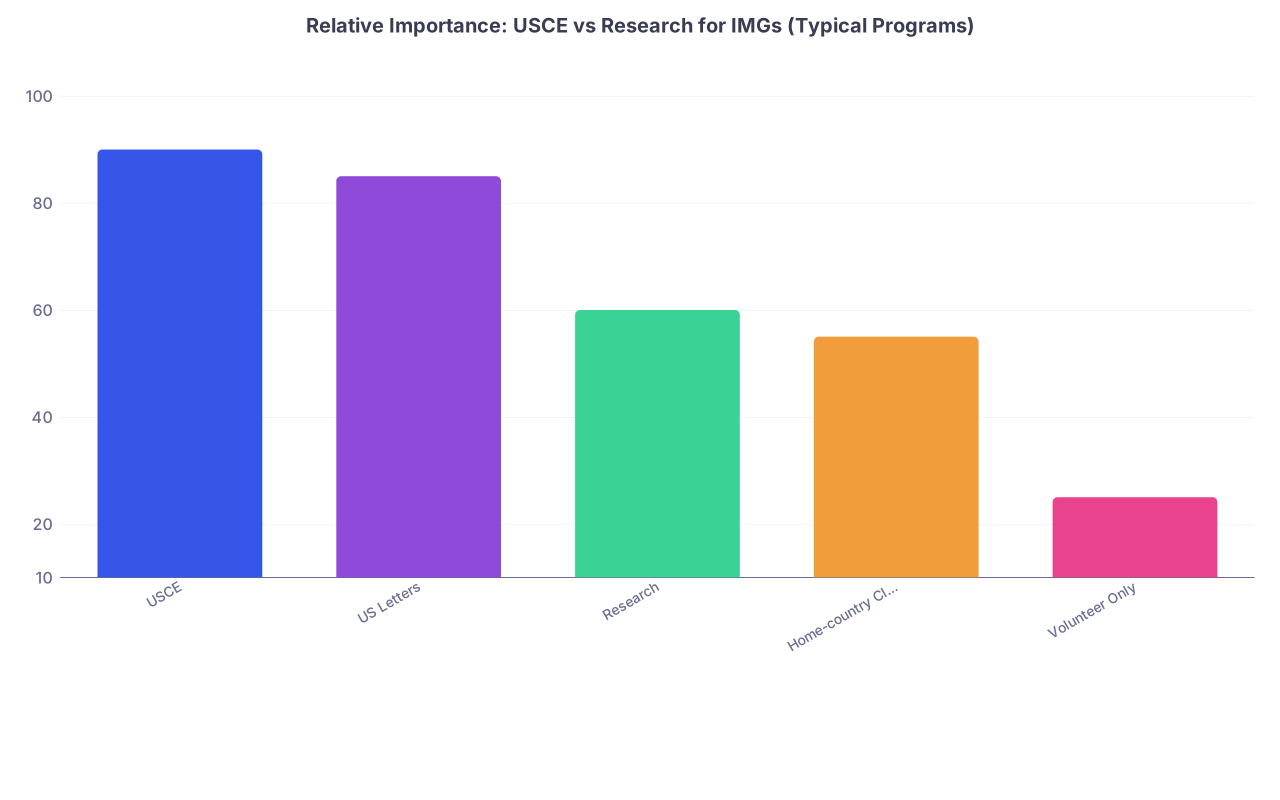
| Category | Value |
|---|---|
| USCE | 90 |
| US Letters | 85 |
| Research | 60 |
| Home-country Clinical | 55 |
| Volunteer Only | 25 |
Does every program weigh it exactly like this? No. But this is directionally accurate based on what I’ve seen and heard over and over.
Key points:
- USCE and US letters often determine whether your file even gets serious attention.
- Research is “nice to strong” depending on specialty, but rarely trumps zero USCE.
- Home-country experience helps, but doesn’t replace USCE, especially if you’ve been out of clinical practice for years.
So: if you have zero USCE and zero research, start with USCE.
If you already have some credible USCE and a couple of solid US letters, then adding research can be a game-changer—especially for academic and competitive programs.
Step 1: Identify Your Target Specialty and Profile
Before you choose, you need to know what battlefield you’re fighting on.
Ask yourself:
- What specialty am I realistically targeting?
- What’s my exam score profile?
- How many years since graduation (YOG)?
- Do I already have any US exposure?
Here’s how that changes the calculus.
| Profile | Priority |
|---|---|
| Fresh grad, high scores, no USCE | USCE → then research |
| 5+ YOG, no USCE | USCE, urgently |
| Strong USCE, no research | Add research (if aiming academic) |
| Aiming very competitive specialty | Research + USCE both |
| Low scores, no USCE | USCE first |
If you’re going for:
- Internal Medicine, Family Medicine, Psych, Peds: USCE usually wins.
- Neurology, Pathology: USCE still matters a lot, but research has more weight.
- Radiology, Dermatology, Neurosurgery, Ortho: You need both; research may even slightly edge first if you already have some USCE.
- Transitional/Prelim spots: USCE and good letters matter more than research.
When You Must Prioritize USCE First
Here’s when I tell people: don’t overthink it. You need USCE, now.
1. You have zero or minimal USCE
If your “US experience” is a single 2-week observership or an online rotation, that doesn’t count as robust USCE. You want:
- Hands-on where possible (sub-internships, externships, clerkships)
- Inpatient or strong outpatient with meaningful responsibility
- Direct evaluation and interaction with residents and attendings
You’re aiming for at least 8–12 weeks of real USCE if possible.
2. You lack recent clinical experience
If you’re 4–5+ years out of graduation and mostly doing non-clinical work (lab, admin, gaps), research alone doesn’t fix that problem.
Programs will worry:
- Are you still clinically sharp?
- Can you handle fast-paced US care?
- Are your skills current?
USCE, especially recent and continuous, is what reassures them.
3. You need US letters of recommendation (LORs)
Strong US letters are currency. And you rarely get them from just research.
You want letters that say:
- “I supervised them directly in clinical care.”
- “They functioned at the level of a sub-intern/junior resident.”
- “They worked well with our team, communicated clearly, took ownership.”
That comes from solid USCE, not from pipetting in a lab.
When Research Might Take the Lead (But Only Then)
There are situations where you should chase research aggressively—even before more USCE.
1. You already have good USCE and letters
Example:
- 3 months of inpatient USCE at community or mid-tier academic hospitals
- 2–3 strong US letters
- Step 2 CK 245+
- Aiming for academic Internal Medicine, Neurology, or Pathology
Here, research buys you access to:
- University programs that care about publications
- Mentors who can make phone calls on your behalf
- Abstracts, posters, and PubMed lines that stand out on ERAS
You’re not fixing a deficiency anymore. You’re upgrading your odds at better programs.
2. You’re targeting research-heavy or competitive fields
If you’re going after:
- Radiology, Radiation Oncology
- Dermatology
- Neurosurgery, Orthopedics
- Physician-Scientist or PSTP-style tracks
Then a year of serious US-based research with publications and strong letters from well-known faculty might be almost mandatory.
But. Don’t confuse this with “research instead of USCE.” You still need demonstrated clinical ability somewhere in your file.
3. You’re already in the US long-term and can stack both
If you’re on a visa or permanent residency and can stay 12–24 months, you can be more strategic:
- First 3–6 months: intensive USCE + letters
- Next 6–12+ months: research, ideally at the same or nearby institution
- Keep 1–2 clinical half-days if possible while doing research
That combo plays very well.
Concrete Decision Framework: Which Should You Do Next?
Use this quick flow.

| Step | Description |
|---|---|
| Step 1 | Start |
| Step 2 | Prioritize USCE now |
| Step 3 | Target 8-12 weeks USCE |
| Step 4 | Get more USCE with LOR focus |
| Step 5 | Balanced: Some research after USCE |
| Step 6 | Research block 6-12 months |
| Step 7 | Any meaningful USCE? |
| Step 8 | Have 2-3 strong US clinical LORs? |
| Step 9 | Target specialty research-heavy? |
If you’re answering “No” at the USCE or LOR stages, that’s your priority. Research can wait 6–12 months. A missing publication never killed an IMG’s chances as fast as missing USCE does.
Smart Ways to Combine USCE and Research
You don’t actually need to choose a lifelong path. You’re choosing what to do first and how to structure your time.
Some practical combinations I’ve seen work:
Morning USCE, afternoon research (or vice versa)
Great if you’re local to an academic center and can commit several months.Sequential blocks:
- 2–3 months USCE
- Followed by 6–12 months research at related department
Use USCE to find research
One of the most underrated plays:- Impress an attending during USCE
- Ask: “Do you or your colleagues have any ongoing clinical projects I could help with?”
- Slide into chart-review, QI, or retrospective studies
Use research to improve future USCE
At big-name places, a research role can lead to:- Shadowing
- Later structured USCE or visiting student spots
- Strong letters from academic names
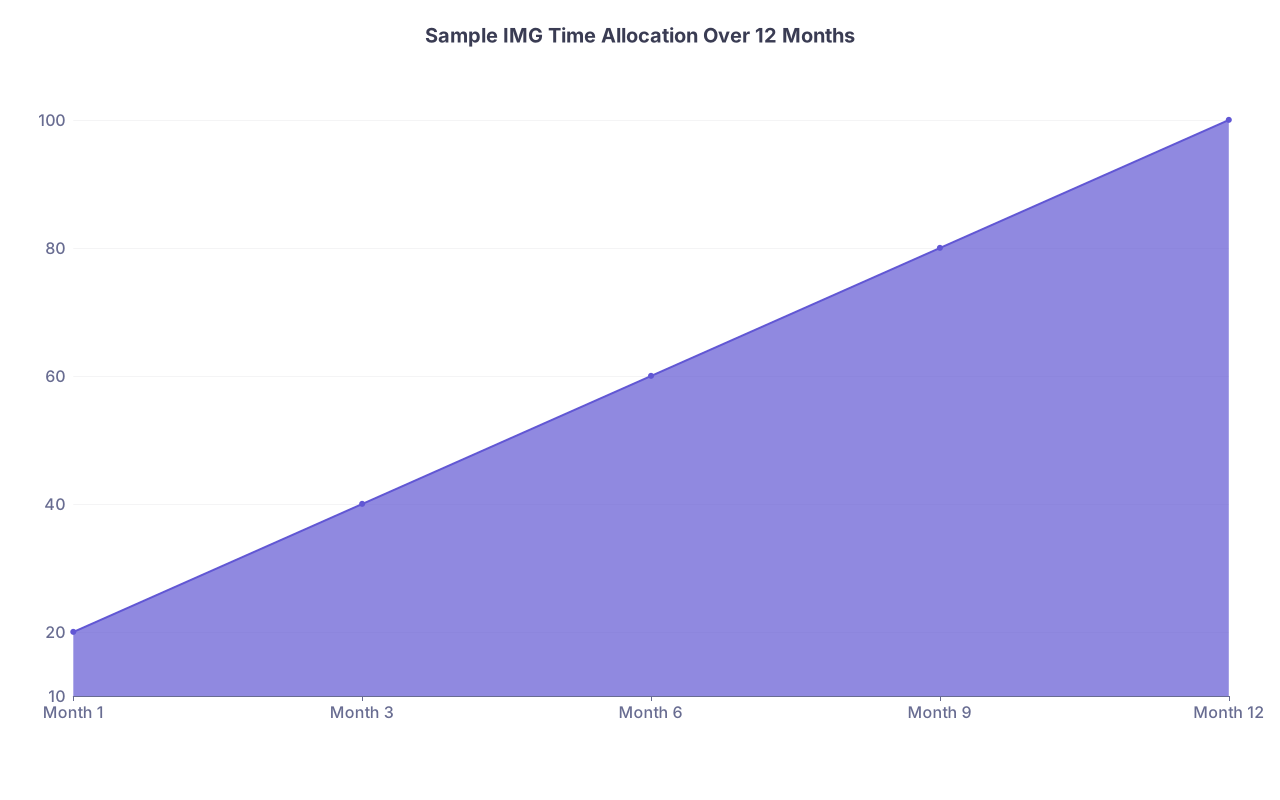
| Category | Value |
|---|---|
| Month 1 | 20 |
| Month 3 | 40 |
| Month 6 | 60 |
| Month 9 | 80 |
| Month 12 | 100 |
Think of this as a ramp-up of your combined “US profile”: early months heavier on USCE, later months stacking research and productivity.
Practical Realities: Money, Visas, and Time
The honest constraints shape your decision more than theory.
If money is tight
Unpaid research for 12 months with no side income is brutal. If you need something short and impactful:
- Choose a 4–8 week USCE rotation at a place known to actually write letters
- Focus on being the hardest-working person on the team
- Ask early who usually writes letters and what they look for
If you can only afford one major US experience, it should almost always be USCE, not research.
If your visa options are limited
Many IMGs use:
- B1/B2 for short-term USCE (observerships, externships)
- J or H visas for later research or employment
Programs care that you’ve functioned in the US clinically. Immigration logistics don’t change that. Use whatever legal route you can to secure at least one solid block of USCE with letters.
Typical Scenarios (And What You Should Do)
Scenario 1: Fresh grad, Step 2 CK 250, no US anything
You want Internal Medicine or Neurology.
Order of operations:
- 2–3 months of USCE at reasonably solid but reachable institutions
- Secure 2–3 US letters
- Then pursue research 6–12 months if you want more academic or university programs
Don’t start in a lab. You don’t have any US clinical story yet.
Scenario 2: 6 years since graduation, working in non-clinical job, low 230s, no USCE
You want any IM/FM spot you can realistically get.
Your first and probably only priority:
- USCE, as much and as recent as you can get
- Focus on showing you are current, reliable, and safe
- Letters that specifically address your recency and clinical performance
Research is optional and secondary here. Many community programs will not care much as long as your clinical profile is strong enough.
Scenario 3: Already did 3 months USCE, have 3 US LORs, CK 245, aiming for academic IM
Here I’d say:
- Yes, absolutely prioritize a research position next
- Preferably at a university-affiliated IM department
- Aim for at least: 1–2 abstracts, 1 publication or in-progress paper, plus a strong letter from a PI
You already solved the “USCE” problem. Now you’re upgrading the type of places likely to look at you.
FAQ: Should I Prioritize USCE or Research First as an IMG?
1. If I can only afford ONE—USCE or research—what should I pick?
USCE. Every time, for almost all IMGs. Without it, you’re auto-screened at many programs. Research helps you climb higher, but USCE gets you into the building.
2. How many months of USCE is “enough” before I focus on research?
Aim for at least 8–12 weeks of meaningful, supervised USCE and 2–3 strong US clinical letters. After that, extra USCE adds diminishing returns, and research becomes more valuable if you’re aiming for academic or mid–high tier programs.
3. Does observership count as USCE?
Weakly. Hands-on clerkships, externships, and sub-internships are ideal. Observerships help a bit, especially for letters, but you should push toward at least some setting where you’re part of the team, not just watching from the back.
4. Can strong research compensate for no USCE?
Not reliably. Even with publications, many programs—especially community ones—will be uncomfortable ranking someone with zero US clinical exposure. You might get interviews at academic places, but it’s risky. For most IMGs, no USCE is a serious handicap.
5. I’m targeting a highly competitive specialty. Do I still need USCE?
Yes. For Derm, Rad Onc, Neurosurgery, etc., research is huge, often essential. But they still need proof you can function clinically. Ideally: early USCE to get letters and clinical credibility, then a serious research year or two at a strong institution.
6. Should I do research in the same specialty I’m applying to?
Strongly recommended. IM research for IM, Neuro research for Neuro, etc. Cross-specialty research (e.g., doing pure bench cancer biology but applying to Family Medicine) has limited impact, unless the PI and letters are extremely strong.
7. How do I use USCE to get research opportunities?
Be excellent on your rotation. Show up early, read on your patients, volunteer for small projects (case reports, QI). Then ask an attending or chief: “Are there any ongoing projects where an extra pair of hands would be helpful?” You’d be surprised how often that turns into a clinical research role.
Bottom line:
- USCE is your foundation. For most IMGs, it should come before research.
- Once you have solid USCE and letters, research becomes the lever that moves you toward stronger and more academic programs.
- If you’re forced to choose one, choose USCE. If you can do both, start with USCE and then use it to open research doors.