
The way you study for Step 1 is broadcasting things to your research mentor that you don’t realize. And yes, we talk about it.
You think Step 1 is “just” an exam. Your research mentor sees it as a live, high‑stakes stress test of how you’ll function as a resident, a collaborator, maybe even a future faculty member. They are inferring more from your prep style than from your last three “I’m very interested in research” speeches combined.
Let me tell you what they really pick up on.
How Mentors Actually Learn About Your Step 1 Prep
They almost never ask, “So, how are you studying for Step 1?” directly. That would be too crude. They pick it up around the edges.
I’ve watched this play out on both sides of the table.
They notice patterns like:
- When your email responsiveness changes
- How you negotiate (or fail to negotiate) time off from the lab
- Whether your story about your “dedicated” period matches your behavior
- If you evaporate vs. deliberately hand off your responsibilities
And then there’s the casual probing:
“Do you know when you’re taking it?”
“Are you mostly doing questions now?”
“How’s your schedule looking these days?”
Those are not small talk questions. That’s a personality biopsy.
They’re asking one thing: Can I trust this person long‑term? Your Step 1 prep is the case study.
The Two Big Dimensions Mentors Judge: Ownership and Self‑Awareness
Every attending, PI, or research mentor I’ve seen evaluate students during Step 1 season ends up judging you on two core axes, even if they don’t label them this way.
Ownership. And self‑awareness.
They’re not counting your daily Anki cards. They’re watching how you handle a major, months‑long project that only you own and nobody micromanages.
Let’s be blunt.
Ownership: Do You Act Like This Is Your Problem?
A PI will quietly clock:
- Did you come to them early to plan your Step 1 block and lab schedule?
- Or did you spring it on them late: “By the way I’m taking Step 1 in 3 weeks so I won’t be around much”?
The first screams: “I plan ahead. I respect your time and the project.”
The second screams: “I treat other people’s schedules as background noise.”
Specific behaviors mentors read as high ownership:
- You proactively set an end date for active involvement in a project before dedicated, and you communicate it clearly.
- You create a written handoff for your lab duties, not just a vague “X will cover it.”
- You protect your Step 1 time without pretending the research project evaporated.
What they see as low ownership:
- Vanishing from lab without a clear plan.
- Leaving other students or the tech to discover at 5 pm that you’re “in dedicated now” and gone for 6 weeks.
- Acting like Step 1 is a universal excuse to abdicate all responsibility, rather than something to coordinate around.
Mentors absolutely remember who disappeared.
Self‑Awareness: Do You Know How You Work Under Pressure?
Mentors want one thing above almost everything else: trainees who understand their own limits and their own patterns.
So when you talk about Step 1 prep, they’re listening for clues:
If you say:
“I’m just doing whatever everyone else is doing—Boards and Beyond, Anki, UWorld, Pathoma, the usual. I’ll figure it out as I go.”
What they hear:
“I haven’t actually thought about what I need. I follow the herd.”
Versus:
“I don’t memorize well from long videos, so I’m leaning heavily on UWorld and Anki. I blocked off mornings for questions when I’m freshest, then review and weak topics later.”
What they hear:
“This person has watched themselves carefully enough to build a custom system.”
That second kind of thinking is what mentors associate with:
- Strong future residents
- People who can troubleshoot a failing experiment
- People they’re comfortable attaching their name to on a paper or letter
Your Prep Style Archetype: What Mentors Assume About Each
Every mentor I know keeps informal mental categories for Step 1 prep styles. They don’t all use the same words, but the patterns are almost identical.
Here’s the unspoken taxonomy.
| Prep Style | Mentor Inference |
|---|---|
| Hyper-Structured Planner | Reliable, promotable |
| Ghost / Vanisher | High risk, low trust |
| Overcommitted Hero | Poor boundaries |
| Anxious Spinner | Needs support, not autonomy |
| Quiet Professional | Strong candidate, under the radar |
1. The Hyper‑Structured Planner
This is the student who sends an email like:
“I’m planning to take Step 1 on June 10. I’d like to remain involved with data analysis until April 15, then taper my lab hours to 4–6/week for the final month to focus on studying. Before that, I’ll finish the figures for the abstract and hand off recruitment to John. Would that work for you?”
Mentors love this student.
What they infer:
- You understand timelines and can work backwards from a high‑stakes deadline.
- You’re future chief resident material.
- You’re safe to put first author on things because you think in systems, not vibes.
One PI told me bluntly: “If they can plan their Step schedule like that, they can plan a clinical trial.”
2. The Ghost / Vanisher
You’ve seen this. You might be this.
Shows up normally in January. By March, they’re “super busy,” slowly dropping meetings. Then one day:
Auto‑reply: “I’m currently on Step 1 dedicated. I’ll respond after my exam.”
No warning. No handoff. Just gone.
Mentors assume:
- You’ll do the same thing with manuscripts, IRB deadlines, or patient follow‑ups.
- You’re not malicious, just unreliable when stressed. Which is almost worse.
- Any letter they write will be lukewarm at best, because they can’t guarantee follow‑through.
I’ve literally heard: “He was fine until Step 1, then vanished. I’m not putting my name behind that.”
3. The Overcommitted Hero
This is the “I can do everything” student.
They tell the mentor, “Oh I’ll still come to lab 20 hours a week during dedicated, no worries.” They insist they can keep collecting data, writing a paper, TA’ing anatomy, and do full‑time UWorld.
By week three they’re:
- Behind in UWorld
- Half‑present in lab
- Sending late‑night guilt emails: “Sorry I didn’t finish the figures, I’ll get to them soon, Step is just a lot.”
Mentors infer:
- You have poor boundaries and weak prioritization.
- You want to impress, but you don’t actually respect the time demands of either project.
- As a resident, you’re the one who will say yes to everything, then quietly drown—and take the team down with you.
They’d rather you cut back early and clearly than overpromise and underdeliver.
4. The Anxious Spinner
This student updates their mentor weekly on Step 1 anxiety, changes their study resources every 5 days, and keeps saying some version of:
“I’m not sure this is working. Maybe I should switch back to X. Or add Y. What do you think?”
Mentors aren’t judging you for being anxious. Everyone gets anxious. They’re judging how you handle it.
What they infer:
- Under pressure, you spin rather than execute.
- You might be brilliant, but you’ll need heavy guidance in crises.
- They’ll hesitate to put you in independent roles (e.g., running your own project) because your default is “change the plan” not “work the plan.”
Contrast that with the anxious but disciplined student:
“I’m pretty stressed, but the system seems to be working—my NBMEs are trending up. I’m just going to keep hammering questions and reviewing weak areas. I’ve blocked off time to panic, but then I go back to the schedule.”
That’s anxiety with executive function. Huge difference.
5. The Quiet Professional
This one often flies under the radar.
They don’t brag about their schedule. They’re not loudly posting their flashcard stats. They just:
- Tell the mentor their exam date and general plan
- Gradually hand off responsibilities with clean documentation
- Maintain minimal but predictable communication (“I check emails twice a week during dedicated.”)
After the exam, they come back:
“Step went fine. I’ll be ramping back up next week. Here’s what I can realistically commit to through next semester.”
Mentors love this even more than the hyper‑structured planner, because it signals sustained maturity, not just a one‑time over‑performance.
The inference is simple: this is someone I can give a project and not worry.
What Your Resource Choices Signal (Beyond Content)
Most mentors don’t care whether you use Boards and Beyond vs Sketchy vs Anking. But they do listen to how and why you chose them.
Here’s the subtext they’re reading.
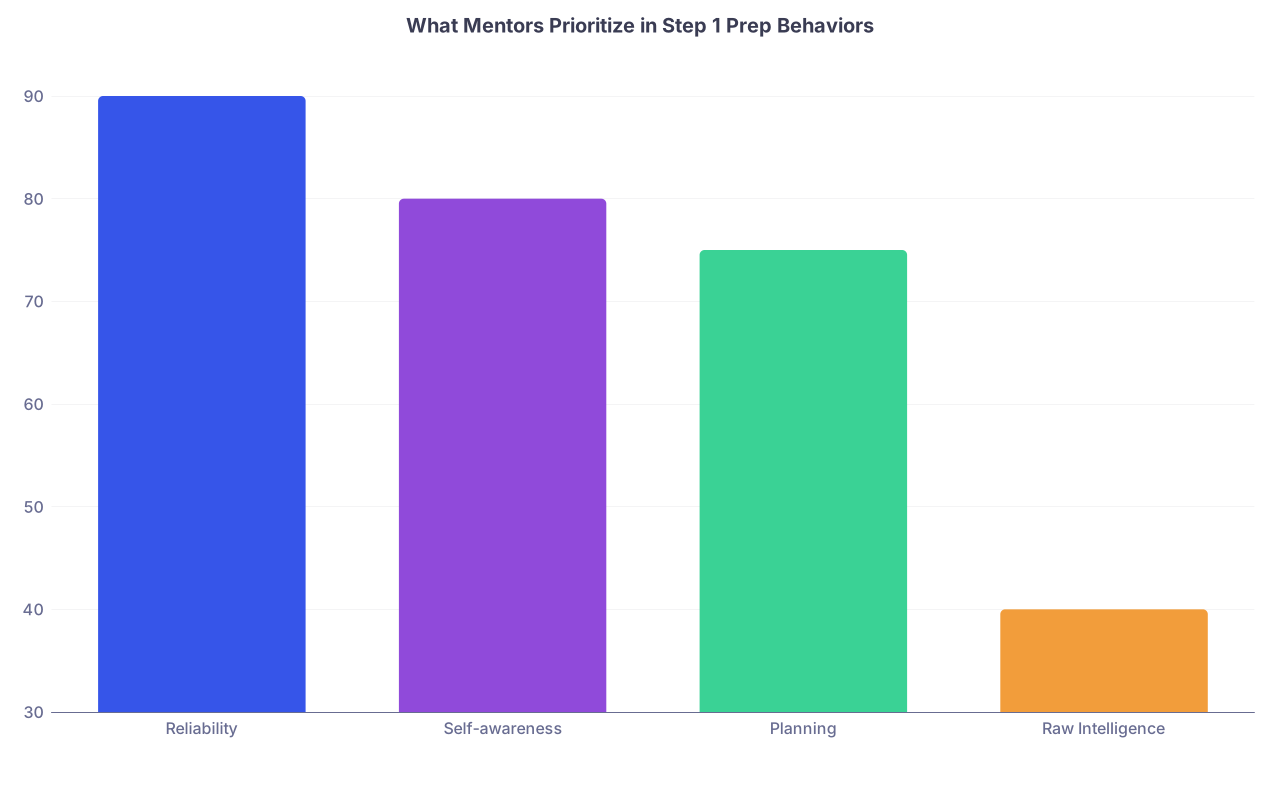
| Category | Value |
|---|---|
| Reliability | 90 |
| Self-awareness | 80 |
| Planning | 75 |
| Raw Intelligence | 40 |
When you say:
“I’m just using what my classmates are using. Everyone says this is the best deck.”
They hear:
“I outsource my judgment to the crowd. I haven’t done a real self‑assessment.”
When you say:
“I trialed a few things last semester. I don’t retain well from long video series, so I’m leaning heavily on UWorld explanations + targeted Anki. I still use some videos for weak topics.”
They hear:
“This person collects data on themselves and then acts on it.”
Or:
“I know I’m prone to burnout, so I scheduled one lighter day a week, but I protected it in my calendar. I’ll likely extend my test date a week if my NBME trend isn’t where it needs to be.”
Translation:
“I can modulate my effort, not just slam the gas until I crash.”
That’s a resident skill, not a student skill. Mentors notice.
Time Management Around Step 1: The Signals You Don’t Intend to Send
The way you handle non‑study time during Step 1 prep tells mentors more than your Anki stats.
Email Responsiveness and Boundaries
No one expects you to reply instantly during dedicated. But here’s what they do judge:
- Do you go completely dark for six weeks?
- Or do you set expectations: “I’m on Step dedicated from May 1–June 10. I’ll be checking email about twice a week, so responses may be delayed”?
The first looks disorganized. The second looks like someone who’s already functioning like a junior faculty member: clear boundaries, proactive communication.
How You Step Away From Projects
I’ve seen students do this perfectly:
“Dr. K, my dedicated starts May 1. By April 20 I’ll finish cleaning the dataset and writing the Results draft. I’ve created a short SOP for the research assistant on how to continue enrollment. I’ve also scheduled a 30‑minute handoff meeting with her next week.”
Compare that to:
“I’m going to be really focused on Step starting soon so I might not be around as much.”
Vague equals unreliable. Mentors notice the difference.
Letters of Recommendation: What Step 1 Style Actually Ends Up On Paper
This is the part no one tells you. Your Step 1 prep style absolutely bleeds into your letters—even when Step 1 itself is pass/fail.
Here’s how it shows up in the subtext.

For the high‑ownership, self‑aware student, letters sound like this:
“During an intense period of Step 1 preparation, they proactively communicated their availability, handed off responsibilities responsibly, and returned to the lab with a clear plan. Their maturity and reliability under pressure were striking for their level of training.”
That paragraph is gold. Program directors read that and mentally move you up a tier.
For the ghost student, letters get vague:
“They contributed well to our research project while balancing their pre‑clinical responsibilities.”
Translation in PD brain: “There were issues I’m not putting in writing.”
For the overcommitted hero:
“They are enthusiastic and eager to be involved in many activities. At times, taking on too much has been a challenge, but they are clearly passionate and hardworking.”
That “at times” clause is a red flag. People who read hundreds of letters per cycle know exactly what it means.
Your Step 1 behavior gives your mentor specific stories to use. You want those stories to be about planning, responsibility, and execution—not about last‑minute scrambling or disappearing.
How to Handle Step 1 in Front of Your Mentor Without Looking Like a Mess
Let’s get concrete. If you want research mentors to infer the right things from your Step 1 prep, here’s what you actually say and do.
1. Have the Conversation Early
Ideally 2–4 months before dedicated, you say:
“I’m planning to take Step 1 around late June. I wanted to talk with you early so we can plan how my role in the project will change during that time.”
That opening line alone puts you in the top 20% of students for most mentors.
Then:
- Propose a rough timeline for your contributions up to your dedicated start
- Identify specific tasks you’ll finish before stepping back
- Ask what they would most value from you before you reduce hours
This frames you as a collaborator, not an employee ducking out.
2. Be Honest About What You Can Actually Do
Do not promise full‑time lab work during dedicated. It’s stupid, and everyone can see through it.
Instead:
“If possible, I’d like to stay minimally involved during dedicated—maybe 2–4 hours a week for brief check‑ins or simple tasks, as long as it doesn’t compromise my studying. If you’d prefer I fully step away for that period, I understand.”
Now you look:
- Committed
- Realistic
- Respectful of the exam and the project
Mentors trust students who can say no or “less,” because it means your yes actually means something.
3. Script Your Status Updates
You do not need weekly Step 1 emotional reports. But you should send two key emails:
One about 2–3 weeks before dedicated:
“Just a quick update—I’m still planning to start dedicated on May 1, with my test date June 10. I’ll finish [X tasks] by April 20 and schedule a brief handoff with [colleague]. During dedicated I’ll check email about once or twice a week.”
And one right after the exam:
“I took Step 1 last week. I appreciate your flexibility during that time. I’d like to start coming back to lab the week of [date]. My realistic availability will be [Y hours/week] this semester. Could we meet briefly to set priorities?”
No drama. No oversharing. Just operational clarity.
What Mentors Think When You Score High vs. Barely Pass
You’re probably wondering how much they care about the result now that Step 1 is pass/fail.
Here’s the truth from faculty rooms:
- A very high Step 2 or old numeric Step 1 helps them argue you’re strong on the exam side.
- A pass is fine if your behavior during prep showed maturity, consistency, and growth.
- A barely‑passing pattern + chaos during prep = they back off on the “future academic star” language.
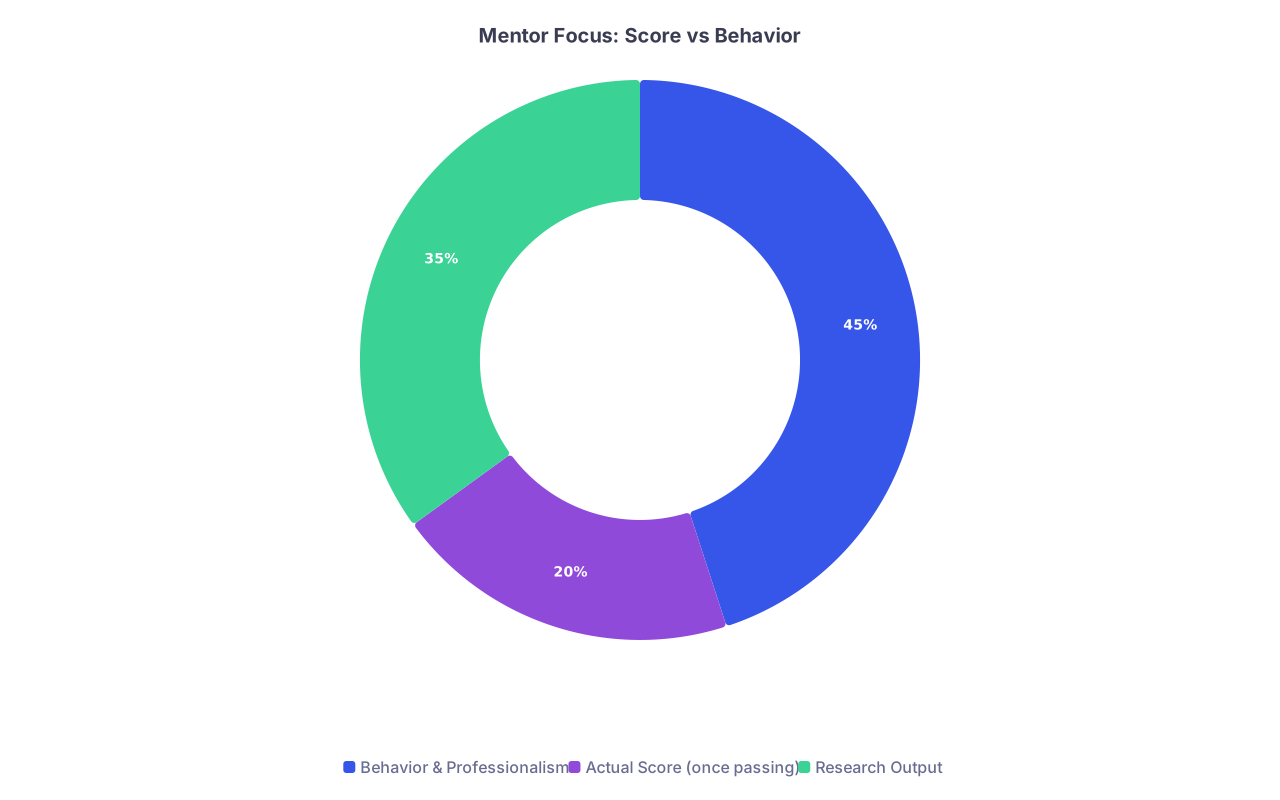
| Category | Value |
|---|---|
| Behavior & Professionalism | 45 |
| Actual Score (once passing) | 20 |
| Research Output | 35 |
I’ve watched mentors defend a student with an average score fiercely because:
“She handled Step 1 like a consummate professional. That’s how she’ll handle residency.”
And I’ve watched them cool on a 260+ student because:
“He’s brilliant, but during Step he left multiple people hanging. Makes me nervous about high‑stakes clinical situations.”
The exam is one data point. Your prep behavior is the trendline.
How This All Plays Out Later: Residency, Fellowships, Future Jobs
You are not just being judged as “Can this person pass Step 1 and maybe publish?” Mentors are asking:
- Would I hire this person as a fellow?
- Would I trust them to run a study with my name on the grant?
- Would I want them taking 3 a.m. calls about our ICU patients?
Your Step 1 prep gives them an early preview.
The planner with good boundaries and clean communication? They look like someone who will:
- Manage a ward team
- Keep track of consults
- Not implode when taking boards or applying for fellowships
The ghost? They look like the resident who disappears when things get uncomfortable.
The anxious spinner? They look like the person who’ll need constant oversight and reassurance to function during crunch time.
And mentors remember that when opportunities appear years later: research fellowships, chief recommendations, jobs at their friends’ institutions.
A Quick Visual: How Mentors “Score” Your Step 1 Prep
This is closer to how it works than you’d like to think.
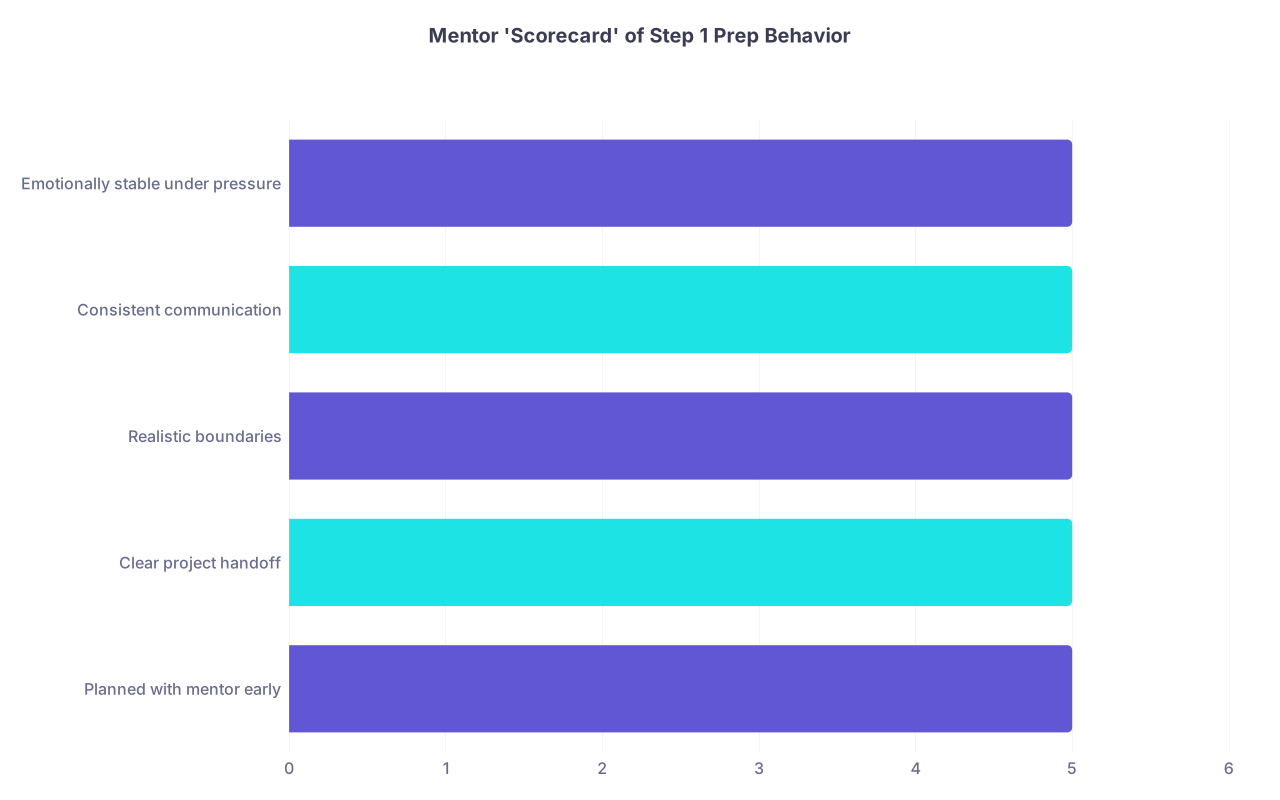
| Category | Value |
|---|---|
| Planned with mentor early | 5 |
| Clear project handoff | 5 |
| Realistic boundaries | 5 |
| Consistent communication | 5 |
| Emotionally stable under pressure | 5 |
Each behavior you show during Step 1 is a quiet plus or minus on this mental scorecard. They never write it down. But when it’s time to choose:
- Who gets the best letter
- Who goes first on the paper
- Who gets recommended for the competitive residency
That scorecard decides.
FAQ (3 Questions)
1. Should I hide how stressed I am about Step 1 from my research mentor?
No. Hiding stress makes you look dishonest or detached from reality. You should filter how you present it. “I’m definitely stressed—it’s a big exam—but I have a schedule that seems to be working and I’m sticking to it” signals maturity. Daily blow‑by‑blow panic updates signal emotional volatility. Talk about your strategy and progress more than your fear.
2. Is it better to completely quit research during dedicated or stay minimally involved?
For most students, the best signal is a clean, deliberate taper with a minimal, realistic involvement during dedicated—if that involvement is truly low‑load and clearly defined. A total, unexplained quit looks flaky. Overcommitting looks naive. The sweet spot is: hand off major responsibilities, do not start anything new, but remain reachable with expectations you’ve set in advance.
3. If my Step 1 score is mediocre, can my behavior during prep really compensate in a letter?
Yes. I’ve seen this repeatedly. Once you pass, program directors care much more about reliability and performance under pressure. If your mentor can say, “They managed Step 1 prep with outstanding professionalism and never dropped the ball on our project,” that narrative softens a mediocre score far more than another point or two would. Your behavior gives them a story to tell—and stories are what get remembered.
Key points you should walk away with:
- Your Step 1 prep is not private. Your mentor is interpreting it as a live test of your reliability, self‑awareness, and professionalism.
- Early planning, honest boundaries, and clean handoffs impress mentors more than superhuman promises or martyr behavior.
- The way you handle Step 1 will echo in your letters, your reputation, and the opportunities you get long after the exam itself stops mattering.