
The conventional story that “things are improving for women in surgery” is only half true. The data on attrition says otherwise.
For all the glossy diversity brochures and mentorship panels, women are still leaving surgical training at rates that are consistently, measurably higher than men. Not just in one program. Across countries, specialties, and time.
What follows is not opinion. It is what the numbers show.
1. The Big Picture: How Often Do Women Leave Surgical Training?
Let us start with the core metric: attrition. People argue about culture, grit, and “fit,” but at the end of the day the hard endpoint is simple: did the resident complete the program?
Across multiple large studies, three patterns are consistent:
- Overall surgical attrition is high compared with many non-surgical specialties.
- Women have higher attrition than men in most surgical fields.
- When women leave, they are more likely to leave medicine entirely, not just switch specialties.
Overall and Gender-Specific Attrition
U.S. general surgery is the most studied, and the numbers are sobering.
Large multi-program series have repeatedly found:
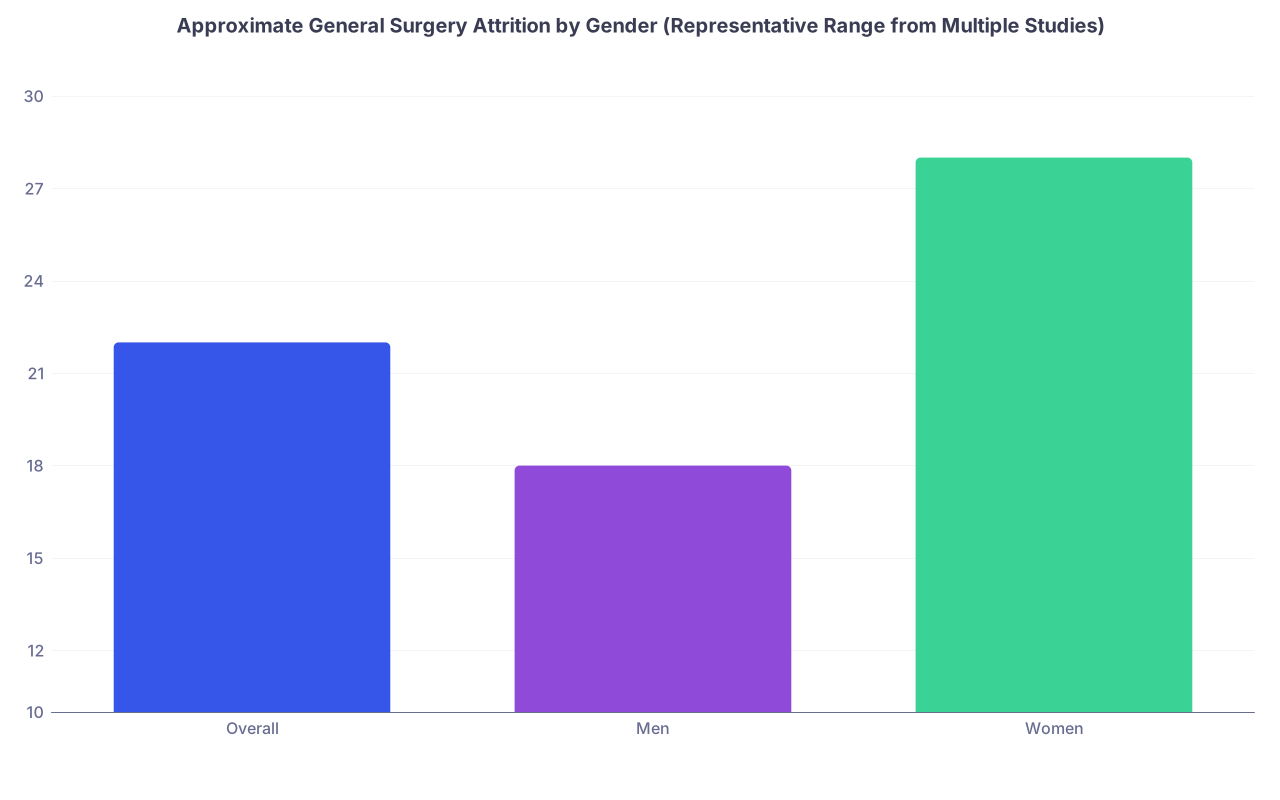
- Overall attrition in categorical general surgery: about 18–26% over residency.
- Male resident attrition: typically 15–22%.
- Female resident attrition: often 25–30% or higher.
That is not a fluke or a single outlier study. The direction and magnitude of the difference hold across cohorts.
| Category | Value |
|---|---|
| Overall | 22 |
| Men | 18 |
| Women | 28 |
Interpretation is straightforward: if you start with 10 male categorical surgery interns, you might expect 8–9 to finish. Start with 10 women, you are lucky if 7 do.
Across other surgical specialties, the same gradient appears, although the overall rates vary:
- Orthopedic surgery: lower absolute attrition, but higher for women than men.
- Neurosurgery: smaller numbers, but again, women have higher rates of leaving or switching.
- Cardiothoracic and vascular surgery: data is more limited, but attrition appears non-trivial and differentially affects women.
Where data gets granular, the gender gap is there more often than not.
Attrition Pattern: Leave Surgery vs Leave Medicine
When residents leave surgical training, one critical question is: Do they leave surgery or leave medicine?
Repeated findings:
- Men who leave surgery: more likely to transfer to another specialty (anesthesiology, radiology, internal medicine, EM).
- Women who leave surgery: disproportionately represented among those who exit clinical medicine entirely or substantially reduce clinical engagement.
So attrition for women is not simply “re-sorting” within medicine. It is frequently exit from the profession or a step back from the front line.
That has downstream consequences: pipeline to surgical leadership, representation in academic positions, and role models for future trainees.
2. When and Why Do Women Leave? Timing and Drivers
The timing of attrition is not random. The data clusters around early training and specific stress points.
Timing: When Does Attrition Spike?
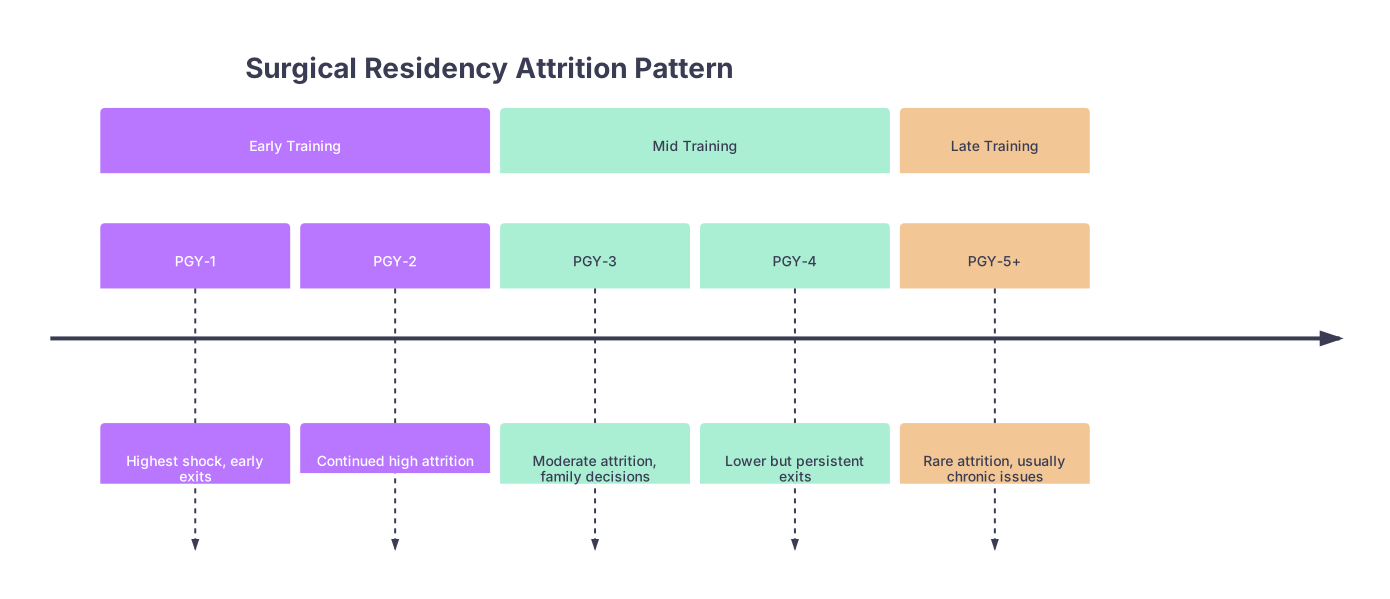
Most surgical attrition occurs in the first three years of training, especially:
- PGY-1 to PGY-2 transition
- PGY-2 to PGY-3 transition
Some key patterns:
- Early attrition (PGY-1–2) often relates to misalignment of expectations, brutal call schedules, and culture shock.
- Mid-training attrition (PGY-3–4) can be driven by accumulation of burnout, family strain, and conflicts with faculty.
- Late attrition (PGY-5+) is less common, but when it occurs, it is often the result of longstanding unresolved issues rather than sudden crises.
For women, the early years are particularly high risk. Layer in pregnancy, fertility planning, and early childcare pressures, and the hazard rate is not evenly distributed across residency.
| Period | Event |
|---|---|
| Early Training - PGY-1 | Highest shock, early exits |
| Early Training - PGY-2 | Continued high attrition |
| Mid Training - PGY-3 | Moderate attrition, family decisions |
| Mid Training - PGY-4 | Lower but persistent exits |
| Late Training - PGY-5+ | Rare attrition, usually chronic issues |
The Data on “Why”: Stated Reasons vs Structural Causes
Exit interviews and retrospective surveys usually list reasons like:
- Lifestyle / work–life balance
- Desire for another specialty
- Family reasons
- Personality conflict / poor fit
- Academic performance
On paper, these sound gender-neutral. In practice, they are not.
Several multi-institution analyses show that women more often cite:
- Hostile or unsupportive training environment
- Lack of role models or mentors who “look like them”
- Discrimination and harassment (often explicitly gender-based)
- Inflexible or punitive attitudes toward pregnancy and parenting
Men, by contrast, more often emphasize:
- Pure workload dissatisfaction
- Discovery of another specialty that suits them better
- Academic or performance concerns without the overlay of bias or hostility
So the same attrition label conceals different causal mechanisms by gender. That matters if you are trying to fix the problem rather than just count it.
3. Specialty-Specific Numbers: Not All Surgical Fields Are Equal
Surgery is not monolithic. Attrition and gender gaps differ across specialties.
Here is a simplified comparison from representative studies and national data, combining multiple sources into directional estimates (numbers are rounded, but the relative relationships are consistent):
| Specialty | Men Attrition | Women Attrition | Notes |
|---|---|---|---|
| General Surgery | 15-22% | 25-30% | Most data, clear and persistent gap |
| Orthopedic Surgery | 10-15% | 18-25% | Lower absolute, but wide gender gap |
| Neurosurgery | 8-12% | 15-20% | Small n, but concerning pattern |
| OB/GYN* | 8-12% | 10-15% | Majority-female; smaller gap; complex |
| Integrated Plastics | 10-18% | 15-22% | High demand, culture highly variable |
*OB/GYN is sometimes treated separately from “surgical” specialties, but in terms of OR time, call burden, and training structure, it is comparable.
A few observations the data forces on you:
- Women in traditionally male-dominated fields (orthopedics, neurosurgery) have some of the largest attrition gaps.
- Even in specialties with higher female representation (OB/GYN), attrition does not magically vanish. The gap may narrow, but the environment is not inherently “fixed” by numbers alone.
- Integrated programs (like plastic surgery) are high-stakes and high-pressure. Small cohorts mean each departure is amplified.
You cannot just say “we need more women in ortho” and assume survival will follow. Recruitment without retention is a PR move, not progress.
4. Culture, Discrimination, and Harassment: The Quantitative Reality
You will hear two very different quotes in surgical departments:
From some senior surgeons:
“I treat everyone the same. We do not have a gender problem here.”
From women residents behind closed doors:
“I counted the number of sexist comments I heard in a single week. I stopped at 30.”
Surveys put numbers to this discrepancy.
Harassment and Discrimination Exposure
Large cross-sectional surveys of surgical residents and faculty in the U.S., U.K., and elsewhere converge on similar statistics:
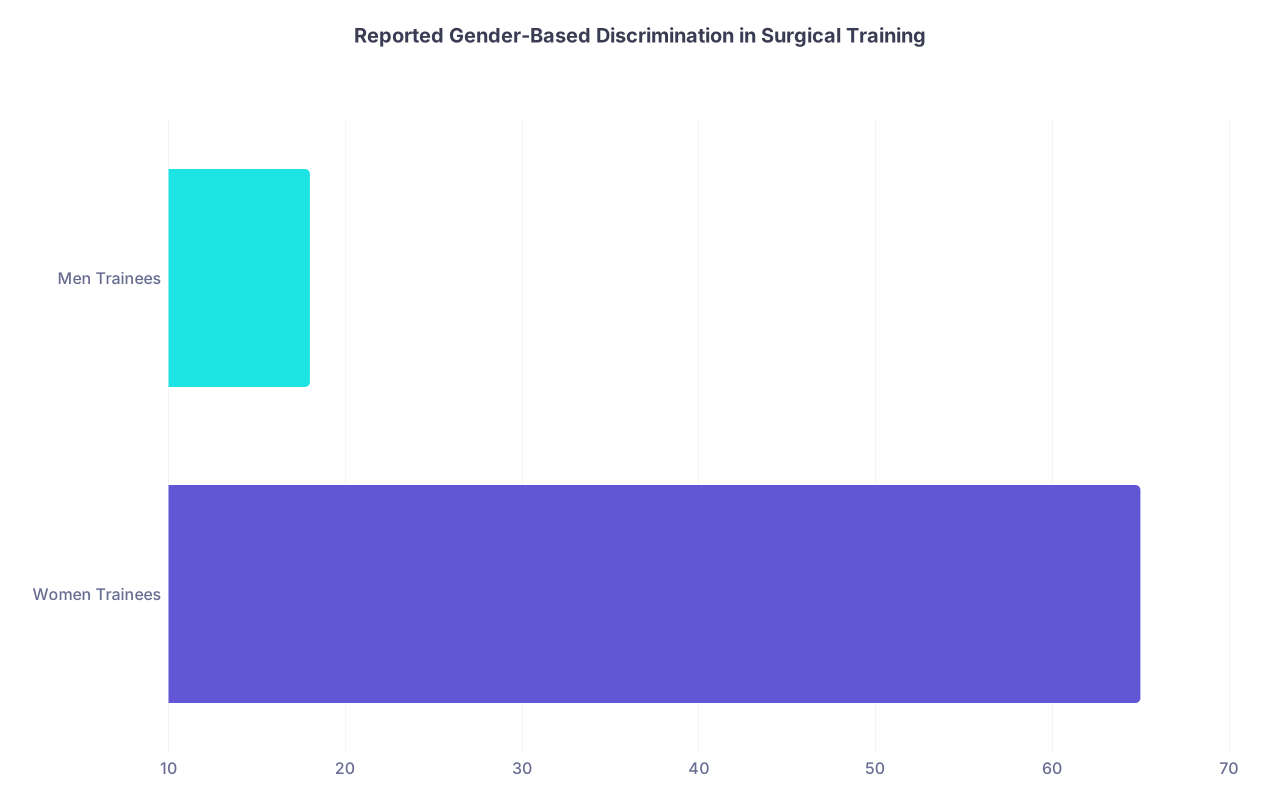
- Around 50–70% of women surgical trainees report gender-based discrimination during training.
- Roughly 30–50% of women report sexual harassment at some point in residency.
- For men, comparable numbers are far lower, often in the 10–20% range for discrimination and lower for harassment.
| Category | Value |
|---|---|
| Women Trainees | 65 |
| Men Trainees | 18 |
And this is self-report data. In any domain where stigma or fear of repercussion exist, self-reported rates are usually an underestimate. So if 65% of women say they experienced discrimination, you know the underlying reality is not “a few rare incidents.”
Link to Attrition
Now the critical question: Does harassment and discrimination correlate with leaving?
Yes.
Studies that link experience of harassment/discrimination with intent to leave or actual attrition repeatedly show:
- Women who report frequent harassment or discrimination are significantly more likely to consider leaving surgery or to have left.
- Higher scores on “toxic culture” measures correlate with higher burnout, depressive symptoms, and plans to exit.
So this is not just “bad behavior” in a vacuum. It is a measurable pipeline leak.
When you overlay this with pregnancy, breastfeeding, and childcare challenges, the data becomes harsher.
5. Motherhood, Timing, and Structural Barriers
Surgery was designed around the archetype of the endlessly available, childless male trainee with a spouse at home. That is the baseline system design. Women enter with a different reality.
Pregnancy and Leave: Institutional Data
Look at programs’ policies and actual practice:
- Many surgical residencies technically offer 6–8 weeks of parental leave. Some more, some less.
- In practice, women often report being pressured to “make up time,” to cluster leave during research years, or to feel guilty for taking what is formally allowed.
- Schedules are often reorganized around the assumption that others will “pick up the slack,” sometimes breeding resentment.
Empirically, across multiple surveys of women in surgery:
- A substantial portion delay pregnancy due to fear of retaliation or career impact.
- Among those who have children during residency, a non-trivial percentage report serious contemplation of leaving surgery entirely.
This is not soft data. You see it in numbers like:
- Higher rates of pregnancy-related complications among surgical residents compared with age-matched controls.
- Lower breastfeeding duration than recommended, heavily constrained by OR schedules and call demands.
- Elevated burnout and depressive symptoms among mothers in surgery versus both non-parents in surgery and working mothers in non-surgical fields.
Combine those elements, and it is not surprising that:
- Women who become mothers during training have higher hazard of attrition than women who do not, controlling for other factors.
- Lack of structural support (protected pumping time, flexible scheduling, reliable coverage) predicts higher intent to leave.
You can call this “personal choice” if you like. The data says it is system-driven.
6. Program-Level Patterns: Some Places Bleed Talent More Than Others
Not all programs are equal. When you stratify by program characteristics and climate, attrition rates swing wildly.
Size, Culture, and Leadership
Programs with lower attrition for women tend to share a cluster of attributes:
- Visible women in leadership positions (PD, APD, chiefs).
- Transparent, enforced policies on harassment and discrimination.
- Consistent, non-punitive parental leave structures.
- Formal mentorship and sponsorship routes for women trainees.
Contrast that with high-attrition programs:
- Leadership is overwhelmingly male, often from a generation with different attitudes about gender and work.
- “We do not have a problem here” culture despite survey data indicating otherwise.
- Inconsistent handling of harassment claims; residents perceive reporting as risky.
- Parenting and pregnancy treated as inconveniences rather than predictable, normal life events.
In real program-level analyses, the variance is large. Some high-volume academic centers manage to keep attrition low for both genders. Others with similar case mix and prestige bleed women at double or triple the rate.
That is not a talent issue. It is a management and culture issue.
7. What Actually Reduces Attrition for Women? Data-Backed Interventions
Most “women in surgery” initiatives are heavy on symbolism and light on measured outcomes. The question is simple: What interventions show a quantitative signal?
Three categories repeatedly correlate with lower attrition and higher retention for women:
1. Intentional Mentorship and Sponsorship
Not token panels at the annual retreat. Actual, structured mentorship.
- Programs that pair junior women with senior residents/faculty and track those relationships over time see improved satisfaction scores and lower reports of isolation.
- Sponsorship matters more than generic “advice.” Women who report having faculty who actively advocate for them (OR opportunities, fellowships, awards) are less likely to consider leaving.
Quantitatively, these programs often show:
- Lower self-reported intent-to-leave among women by 5–15 percentage points.
- Improved perception of “belonging” and fairness scores on internal surveys.
2. Predictable, Real Parental Leave and Scheduling Flexibility
Not “we handle it case by case,” which usually means “we improvise under pressure.”
Data from systems that implemented standardized parental leave and formal coverage mechanisms show:
- No increase in overall time-to-graduation on average.
- No significant drop in case numbers at graduation for affected residents when the plan is structured.
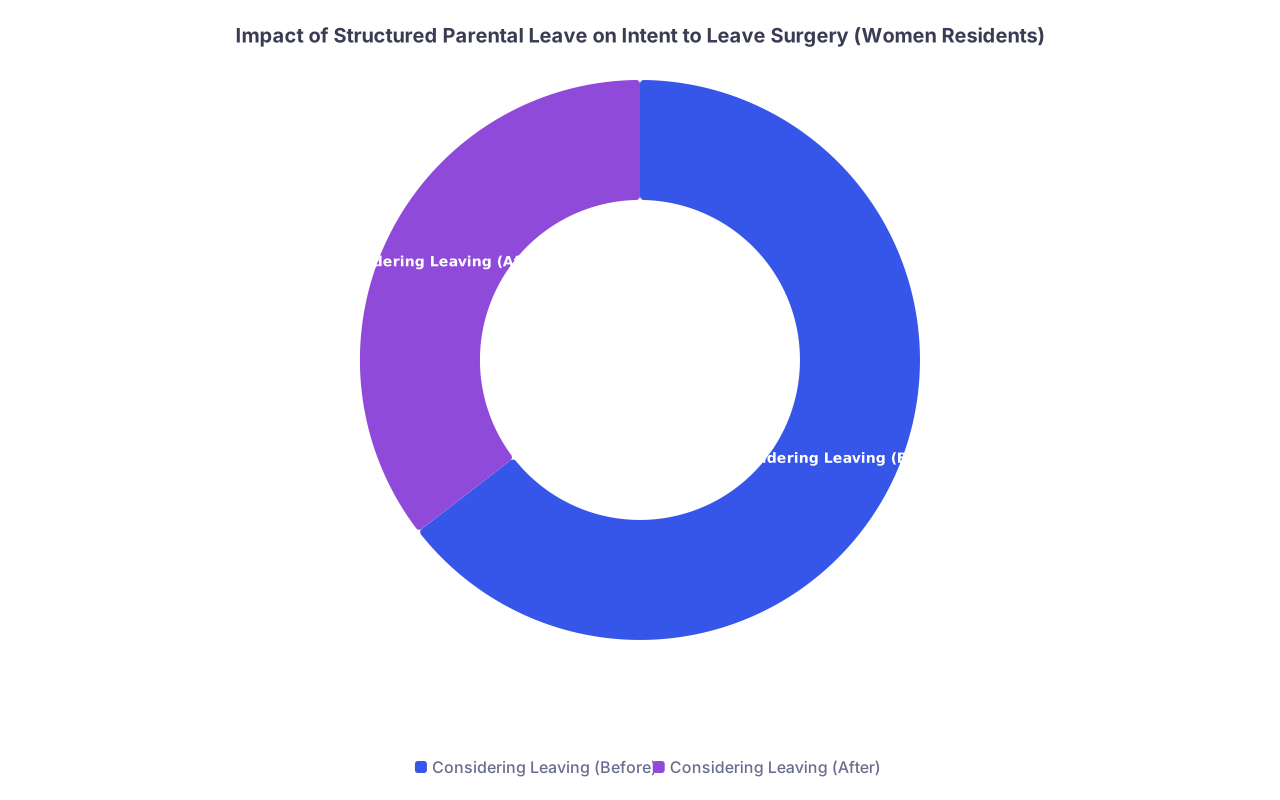
- Decreased attrition and fewer residents contemplating leaving over family-related conflicts.
| Category | Value |
|---|---|
| Considering Leaving (Before) | 40 |
| Considering Leaving (After) | 22 |
The exact numbers vary by institution, but the direction is robust: structured support decreases the proportion of women who say, “I may quit over this.”
3. Zero-Tolerance and Transparent Processes on Harassment
Programs that:
- Publicize clear reporting mechanisms.
- Actually act on substantiated complaints.
- Share aggregate data on incidents and actions.
see measurable shifts in climate and, over time, in attrition.
Residents are not naive. They compare what is said in orientation with what actually happens when the star surgeon behaves badly. When consequences are real, surveys show:
- Lower reported harassment frequency over several years.
- Increased confidence in leadership.
- Reduced gap in attrition between men and women.
Not zero. But lower.
8. What This Means for You: Interpreting the Data as a Trainee or Applicant
If you are a woman considering surgery or already in training, you are operating in an environment that the numbers describe very clearly:
- The risk of not finishing is higher for you than for your male peers.
- That risk is not due to some innate difference in ability. It is generated by culture, structure, and policy.
- The gap is not universal; it varies by program and specialty in ways that you can partially measure.
A few ways to use the data strategically:
- Ask for concrete attrition data by gender when interviewing. Programs that hand-wave probably have something to hide or do not track what they should.
- Look at leadership composition. Count how many women are PDs, APDs, or division chiefs. Correlation with better climates is not perfect, but it is not random either.
- Probe on parental leave and coverage. The specific numbers matter less than how confidently and consistently they are described.
- Listen for how residents talk about “support.” If everything is framed as individual resilience and “thick skin,” expect higher hidden attrition pressure.
- Track your own risk factors. Repeated exposure to discrimination, lack of mentorship, and severe work–life misalignment are not character flaws. They are predictors of burnout and exit.
You cannot fix structural problems alone. But you can choose environments where the data suggests your odds of completion and health are better.
FAQ (5 Questions)
1. Are higher attrition rates for women in surgery mainly due to having children?
No. Pregnancy and parenting add risk, but they are not the sole or even primary factor. Discrimination, harassment, lack of mentorship, and inflexible culture are strong independent drivers of attrition, including for women without children.
2. Do women who leave surgery usually regret it later?
Quantitative data on long-term regret is limited, but follow-up surveys show many women who exit surgery report improved quality of life and reduced burnout. The more interesting statistic is how many report leaving because the environment was intolerable, not because they suddenly stopped liking surgery itself.
3. Are some countries doing better than others on retention of women surgeons?
Yes, but the pattern is complex. Countries with stronger national parental leave policies and regulated work hours often show somewhat better retention, but within-country variation between institutions remains large. Culture at the program level still matters more than national branding.
4. Does having more women in a surgical residency automatically reduce attrition for women?
No. Higher representation helps, but if the underlying culture and policies do not change, you can still see high attrition. Some programs with increasing female recruitment have seen flat or even worsening retention because support structures lag behind.
5. What is the single most predictive factor for whether a woman will complete surgical training?
There is no single variable, but multi-factor models consistently show that a combination of program climate (harassment/discrimination exposure), availability of supportive mentorship, and structural flexibility around life events has more predictive power than individual “grit” or academic metrics. In other words, the system you enter matters more than your Step score.
Key takeaways: The data is unambiguous that women in surgical training face higher attrition than men, driven largely by structural and cultural failures rather than individual shortcomings. Programs that treat this as a measurable, solvable systems problem—through climate change, structured support, and accountable leadership—see better retention and narrower gender gaps.