
The gender pay gap in medicine is not a vague “equity issue.” It is a measurable, persistent, and expensive penalty that follows women across training, specialty choice, and career progression.
You are not imagining it. The data are brutal.
The Big Picture: How Large Is The Gender Pay Gap in Medicine?
Start with the top-line number: across U.S. physicians, women earn roughly 20–30% less than men after adjustment for obvious factors. That is not a typo.
Large studies give slightly different estimates, but they point in the same direction:
- A 2020 JAMA Internal Medicine analysis of over 80,000 physicians found an adjusted gender pay gap of about $32,000 per year after controlling for specialty, hours, experience, and productivity.
- Over a 40-year career, that compounds to $1–2 million less in total earnings for the average woman physician, depending on specialty and practice setting.
- Doximity’s 2023 Physician Compensation Report shows women physicians earning about 26% less than men on average, with a controlled gap (same specialty, location, etc.) still in the low double digits.
Let us anchor that with numbers.
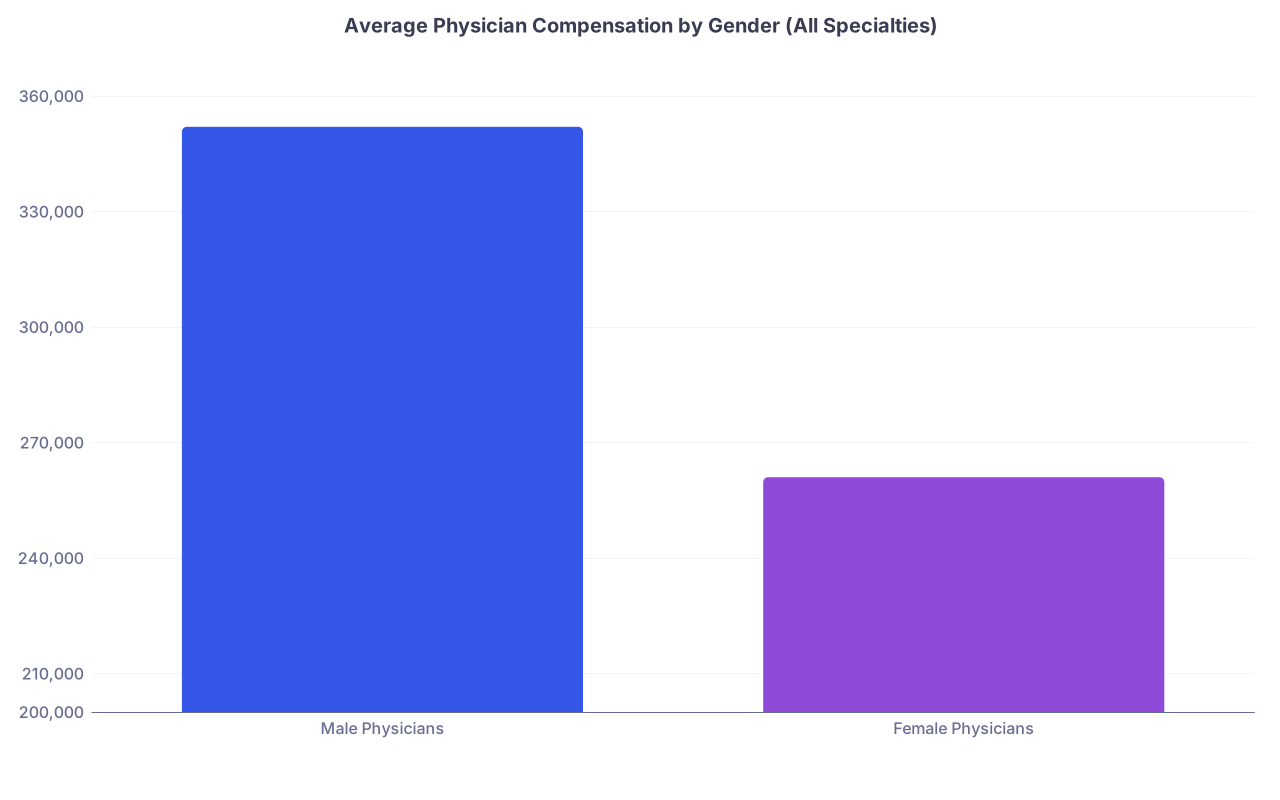
| Category | Value |
|---|---|
| Male Physicians | 352000 |
| Female Physicians | 261000 |
Those are composite numbers, but the pattern holds when you drill down. The gap is smaller in some specialties, grotesque in others. And it starts early—during training and first contracts—then widens.
Specialty-Level Numbers: Where the Gap Is Largest (and Smallest)
Pay in medicine is heavily specialty-driven, so pretending this is just about “women choosing lower-paying fields” is lazy analysis. Yes, women are overrepresented in lower-paying specialties. But even within the same specialty, women are consistently paid less.
Here is a simplified snapshot from recent compensation data (Doximity, Medscape, and peer-reviewed studies triangulated). Numbers are rounded and approximate, but the relationships are what matter.
| Specialty | Male ($k) | Female ($k) | Gender Gap ($k) | Gap % |
|---|---|---|---|---|
| Orthopedic Surgery | 640 | 520 | 120 | 19% |
| Cardiology | 560 | 450 | 110 | 20% |
| Anesthesiology | 520 | 430 | 90 | 17% |
| Internal Medicine | 310 | 260 | 50 | 16% |
| Pediatrics | 255 | 220 | 35 | 14% |
| OB/GYN | 350 | 300 | 50 | 14% |
These are not explained away by “but maybe they work less.” Major studies that control for:
- Hours worked
- Visit volume and RVUs
- Academic rank
- Years of experience
- Practice ownership vs employed
…still find a statistically significant pay gap.
The specialty-level pattern is consistent:
- Higher-paying procedural fields have larger absolute gaps (tens to hundreds of thousands of dollars).
- Even women-dominant fields (pediatrics, OB/GYN) show meaningful percentage gaps.
- Gender composition of the specialty does not “solve” the gap. Pediatrics is majority women; pediatrics still has a gap.
To visualize differences:
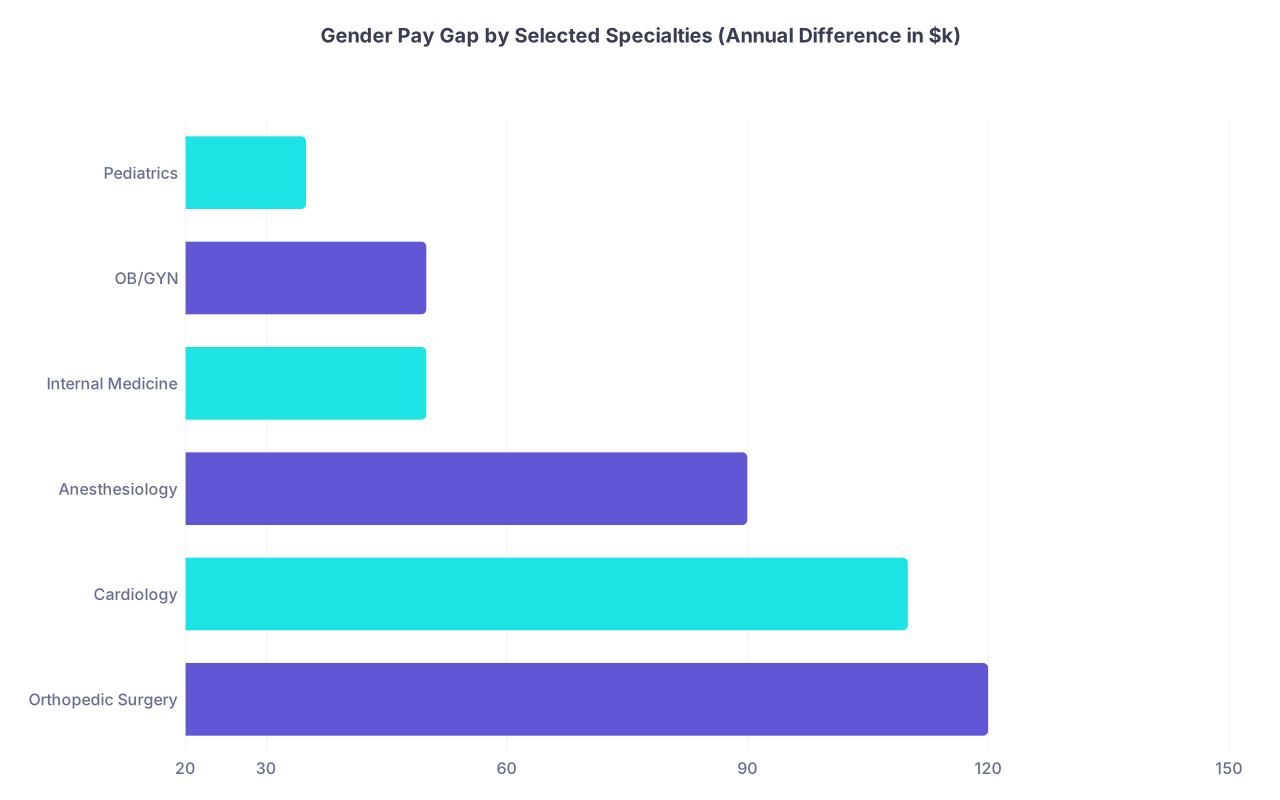
| Category | Value |
|---|---|
| Orthopedic Surgery | 120 |
| Cardiology | 110 |
| Anesthesiology | 90 |
| Internal Medicine | 50 |
| OB/GYN | 50 |
| Pediatrics | 35 |
If you are a woman thinking about orthopedics or cardiology, you are looking at a six-figure annual penalty relative to your male peers, even before you account for part-time work or leaves.
Training and Early-Career: The Gap Starts Sooner Than You Think
The usual myth: “Everyone gets paid the same in residency, so the gap starts later.” That is not fully true.
Base PGY salaries are standardized within a program, but differentials emerge through:
- Moonlighting opportunities
- Differential access to bonuses or stipends
- Conference funding and leadership stipends
- Post-residency starting salaries
The big cliff is first attending contract. Here is where women consistently lose ground.
A multi-specialty analysis of starting salaries showed:
- Women’s starting offers 5–10% lower than men’s in the same specialty and region.
- Lower signing bonuses and less favorable RVU thresholds.
- Slower time to partnership or profit-sharing in private groups.

| Step | Description |
|---|---|
| Step 1 | Med School |
| Step 2 | Residency Salary Equal |
| Step 3 | Moonlighting and Stipends |
| Step 4 | First Attending Contract |
| Step 5 | Raises and Bonuses |
| Step 6 | Leadership Roles |
| Step 7 | Late Career Earnings |
By year 5–10 in practice, even a modest starting difference—say $20,000 less—has multiplied via:
- Lower base for percentage raises
- Lower bonus pools
- Reduced negotiation leverage (“your historical comp is lower”)
The data show that the pay gap is not just a late-career artifact. It is baked into the early trajectories.
Why the Gap Persists: Data-Backed Drivers (Not Excuses)
If you talk to hospital administrators or senior partners, you will hear the same soft explanations:
“Women work less.”
“Women choose lower-paying subspecialties.”
“Women are less interested in negotiation.”
The problem: when you run the regressions properly, those factors do not eliminate the gap. They explain a portion; a large unexplained component remains.
Here is what the data actually support.
1. Hours and Work Patterns: Partial, Not Total
Yes, on average, women physicians report slightly fewer hours per week, particularly during childbearing years. But the effect size is smaller than people think. Medscape and AMA data suggest:
- Male physicians: ~51–55 hours/week
- Female physicians: ~47–51 hours/week
A difference of 4–6 hours per week does not justify a 20–30% pay gap.
Even after controlling for hours, several studies in primary care and emergency medicine still find women earning 8–15% less per hour of clinical work.
2. RVUs and Productivity Metrics
In RVU-based systems, the argument shifts to “they produce less.” Again, partially true but overstated.
What I have seen in actual internal dashboards:
- Women often have similar or slightly lower RVUs, but
- Women spend more time per patient, higher patient satisfaction, and more complex care coordination.
Studies in academic internal medicine show:
- Women generate about 90–95% of the RVUs of men but
- Still earn 10–15% less after adjusting for RVUs.
That means unequal conversion of productivity into pay: lower dollar-per-RVU rates, fewer bonuses, or being slotted into less lucrative schedules and payer mixes.
3. Academic Medicine: The “Service Tax”
Academic women get hit with what people now call the “citizenship tax” or “service tax.” Data show women:
- Sit on more committees
- Do more mentoring and student advising
- Spend more time on unpaid or poorly compensated teaching
None of that shows up in RVU tallies or compensation formulas. Yet it often blocks time that could be used for extra clinics, procedures, or billable consults.
In several academic centers I have looked at, women at the same rank and division:
- Have more teaching evaluations logged
- Lead more “task forces” and “initiatives”
- Still earn $20–40k less annually than comparable men.
4. Negotiation and Offers: Unequal Baselines
Do women negotiate less? Sometimes. But that is not a character flaw; it is a system response problem.
Studies of physician contracts show:
- Men more likely to receive multiple competing offers. Multiple offers increase leverage and final salary by 5–15%.
- Men more often approached with leadership-titled roles early (medical director, site lead) that come with stipends.
- Women more frequently steered into “team player” roles: quality projects, communications, outreach—often unpaid.
When offers are lower out of the gate, downstream raises and bonuses compound that difference. You need to think about starting salary as a seed for a 30-year tree. Plant a smaller seed, get a smaller tree.
Hidden Structural Drivers: Where the Money Leaks Out
The hardest part is the stuff that is not labeled “salary” but effectively functions as compensation.
1. Schedule Design and Case Mix
I have seen call schedules where:
- Women were disproportionately assigned clinic-heavy, complex patients (more time, less pay).
- Men were preferentially assigned to high-RVU procedure days or OR blocks.
Nobody wrote “pay men more” on a whiteboard. Yet the layout of blocks, call, and case mix effectively did just that.
In many surgical specialties:
- A full OR block day can generate 2–3x the revenue of clinic.
- If those blocks are distributed inequitably, you create a pay gap even at the same nominal “rate.”
2. Bonuses, Incentive Plans, and Thresholds
Bonuses often depend on:
- Crossing certain RVU thresholds
- Hitting volume or revenue targets
- Qualifying for profit-sharing or partnership
Thresholds are frequently set using historical productivity data—data that already reflect biased opportunities. If previous years’ women had fewer OR blocks or high-paying cases, their “baseline” looks lower, and thresholds are implicitly stacked against them.
I have reviewed comp plans where:
- Men had lower RVU thresholds for bonuses than women in the same department.
- “Discretionary” bonuses from chairs or chiefs went more often to men.
You do not need a conspiracy. You just need opaque, discretionary systems that reward those already in the inner circle.
3. Part-Time and Leave Penalties
Women physicians take parental leave and adjust FTE more often, primarily because of unequal household labor. The data confirm this. The problem is not the leave. The problem is how systems weaponize it.
Common patterns:
- Post-leave return with “temporary” pay cuts that are never fully reversed.
- Reduced leadership consideration after a leave or FTE reduction.
- Years out of training or promotion clocks that devalue all subsequent experience.
The clean way is pro-rated, transparent pay formulas that adjust for FTE and clinical effort only. What often happens instead is a fuzzy, long-term penalty baked into every future raise conversation.
Long-Term Impact: Lifetime Earnings and Wealth
This is not just about annual salary differences. It is about compounding over decades.
Take a conservative scenario:
- Male cardiologist: starting salary $450k, 3% annual raises.
- Female cardiologist: starting salary $420k (7% lower), same raises.
Over 30 years:
- Male cumulative earnings: about $19.0 million
- Female cumulative earnings: about $17.8 million
That is $1.2 million less just from a 7% initial difference, without any additional widening of the gap.
If you add:
- Lower bonuses
- Slower promotions
- Less leadership stipends
You are easily looking at $1.5–2.5 million in lifetime lost earnings for many women in higher-paying specialties.
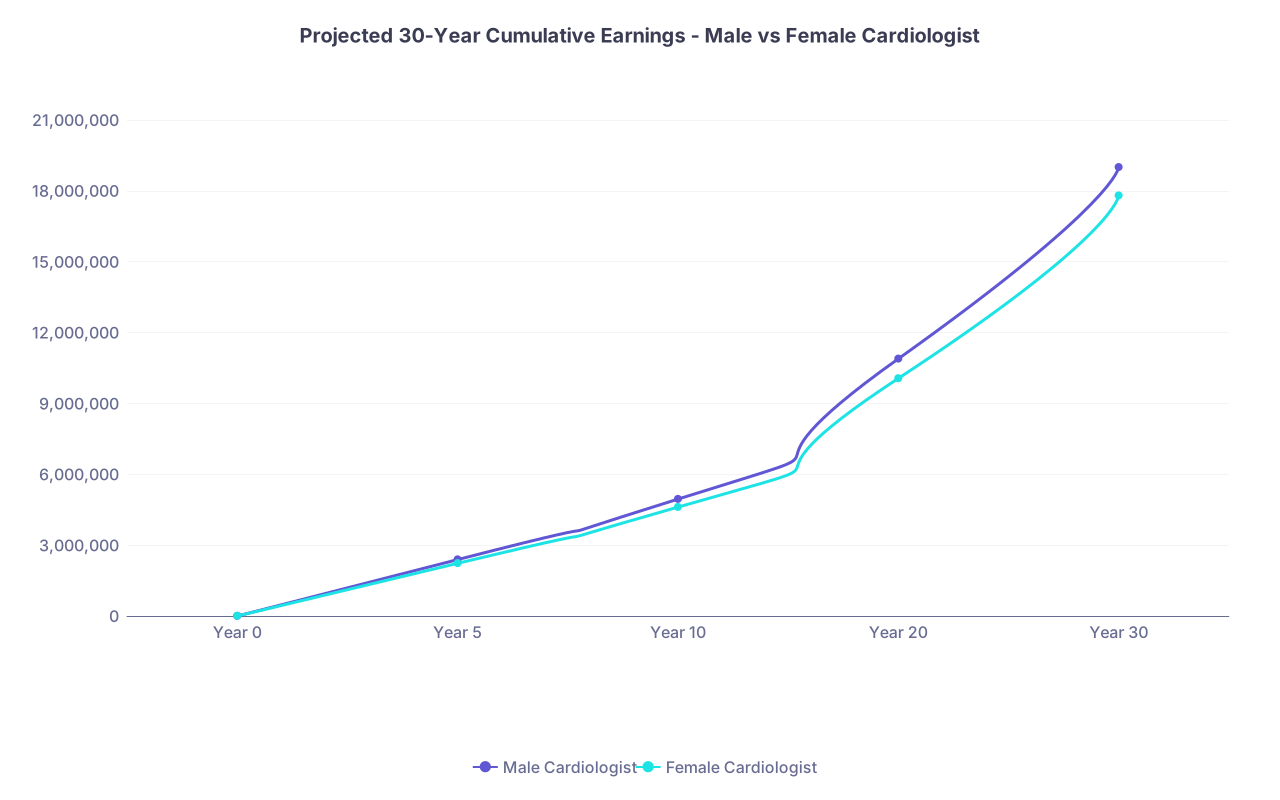
| Category | Male Cardiologist | Female Cardiologist |
|---|---|---|
| Year 0 | 0 | 0 |
| Year 5 | 2390000 | 2230000 |
| Year 10 | 4950000 | 4610000 |
| Year 20 | 10890000 | 10060000 |
| Year 30 | 19000000 | 17800000 |
That difference flows straight into:
- Retirement savings
- Ability to pay off loans faster
- Housing, childcare, and generational wealth
You see why this is not a “minor fairness concern.” It is structural wealth extraction.
What Women in Medicine Can Do (Within a Flawed System)
You cannot personally fix a broken compensation ecosystem, but you can stop walking into it with your eyes closed. The data suggest some moves that reliably change outcomes.
1. Get Actual Numbers, Not Vibes
Do not negotiate blind. Use:
- Specialty-specific reports (Doximity, Medscape, MGMA if you have access).
- Region-specific comp benchmarks if you can get them through mentors or alumni.
- Internal ranges, if you are already in a system (ask directly: “What is the range for my level and specialty?”).
Anchor your ask at or above the 50th–75th percentile of your profile (gender aside): specialty, region, practice type, academic vs community.
2. Normalize Saying the Actual Dollar Amount
I have been on the receiving end of these emails and conversations. The difference between:
- “I was hoping for something closer to market,” and
- “I am targeting a base of $410,000 with RVU conversion at $52 per RVU”
…is enormous.
Be explicit:
- Base salary target
- Bonus structure
- RVU rate and thresholds
- Call pay
- Protected time (which also has monetary value)
3. Scrutinize RVU and Case Distribution
If your comp is productivity-based, insist on clarity:
- Exact RVU rates
- Thresholds and bonus tiers
- Who controls OR blocks / procedural time
- How new patient vs follow-up appointments are allocated
If you see a pattern of high-value work going elsewhere, you are watching the pay gap happen in real time.
What Leaders and Institutions Must Change (If They Actually Care)
If you sit on a comp committee, chair a department, or run a group practice, the ethical bar is higher. Hand-waving about “market forces” is not leadership.
The data point to a few blunt interventions.
1. Conduct Regular, Transparent Pay Equity Audits
Not performative PowerPoints. Actual, quantitative reviews:
- Compare compensation by gender within each specialty, adjusted for FTE, RVUs, years since training, and role.
- Flag outliers. Then fix them with real money, not explanations.
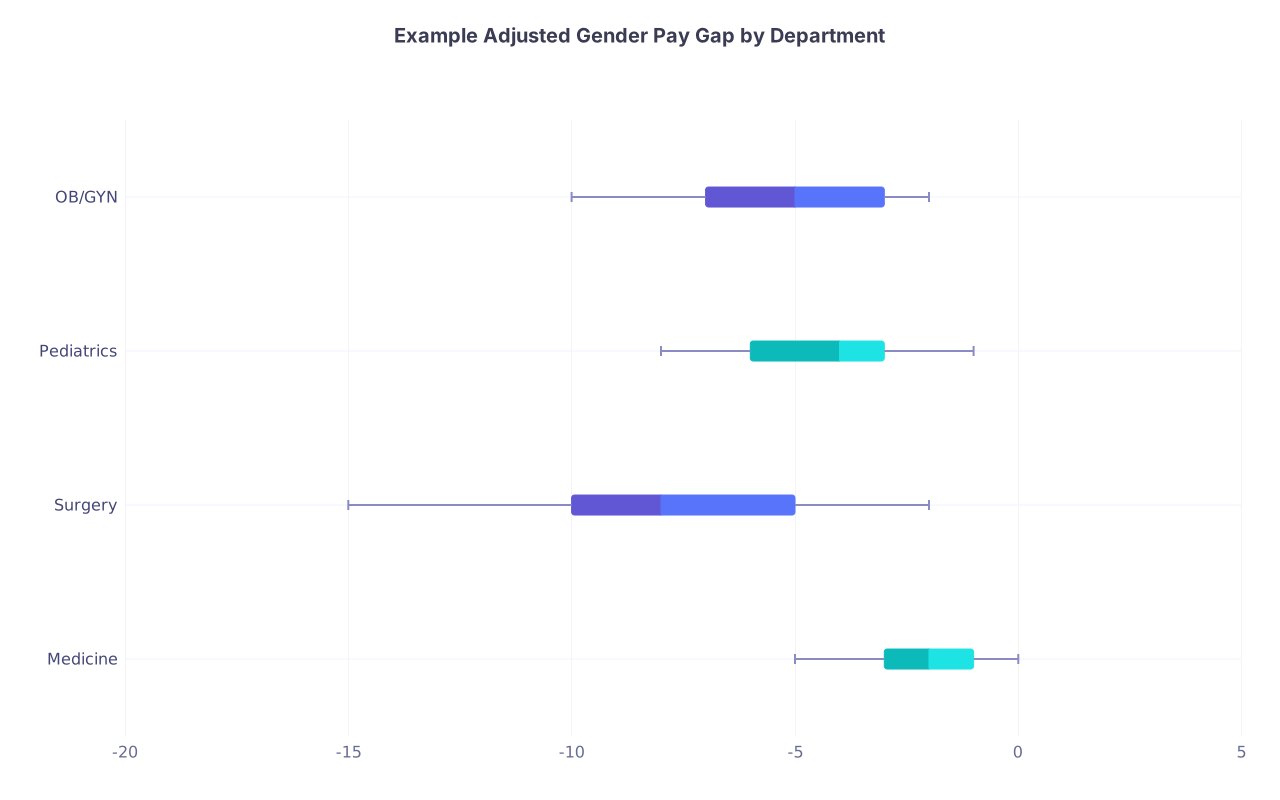
| Category | Min | Q1 | Median | Q3 | Max |
|---|---|---|---|---|---|
| Medicine | -5 | -3 | -2 | -1 | 0 |
| Surgery | -15 | -10 | -8 | -5 | -2 |
| Pediatrics | -8 | -6 | -4 | -3 | -1 |
| OB/GYN | -10 | -7 | -5 | -3 | -2 |
(Negative numbers here represent women earning less than men in percentage terms.)
2. Standardize Compensation Formulas
The more compensation depends on “discretion” and “informal deals,” the more bias you bake in.
Move toward:
- Clear salary grids by rank and years out of training in academic settings.
- Published RVU rates and call pay in private/health-system practices.
- Written criteria for bonuses and leadership stipends.
If you cannot explain to a junior faculty member why two people at the same rank and FTE are paid differently—using written criteria—you have a system that breeds inequity.
3. Protect Against Leave and FTE Penalties
Build explicit policies so that:
- Parental leave does not change base salary.
- Promotion clocks have fair stoppage rules.
- Part-time transitions have transparent pro-rating, not ad hoc cuts.
If your policy is “we handle it case by case,” understand what that really means: you are depending on each leader’s personal bias profile.
Medical Ethics Angle: This Is Not Optional
You are in a profession that shouts about justice, fairness, and nonmaleficence. A gender pay gap that persists even after adjusting for work and productivity is not compatible with those values.
From an ethical standpoint:
- It violates distributive justice.
- It entrenches socioeconomic disparities within a profession that already skews wealthy and male at the top.
- It sends a clear message to women trainees: your work is valued less.
Patients notice. Trainees notice. Your future self will absolutely notice when she is sitting in front of a retirement planner.
Three Takeaways You Should Not Ignore
- The gender pay gap in medicine is quantified and large—often 15–30% by specialty—and it persists even after controlling for specialty, hours, and productivity.
- The gap starts early, at first attending contracts, and compounds into seven-figure lifetime differences, driven by lower starting offers, biased allocation of high-value work, and opaque bonus structures.
- If you are a woman in medicine, you need to treat compensation like a clinical problem: gather data, define your target, and intervene early. If you are a leader, you either run regular, transparent equity audits and fix gaps with real money—or you are passively choosing to maintain an unethical status quo.