
The narrative that women residents “work less” is not just wrong. The data show almost the opposite: women often work more total hours when you account for the full load—clinical, cognitive, emotional, and domestic.
Let me walk you through the numbers.
What We Actually Know About Resident Work Hours
Most arguments about who “works more” lean on anecdotes. “Our male co-residents pick up more nights.” “The women go home earlier because of kids.” I hear this constantly on rounds, often said quietly, just outside the workroom.
The problem: when you look at actual time-use data, the story changes.
Clinical duty hours: not much gender gap on paper
Accreditation rules (ACGME in the U.S.) cap resident duty hours:
- Maximum 80 hours per week averaged over 4 weeks
- Maximum 24 hours continuous clinical duty, plus 4 hours for transitions
- Minimum time off between shifts and required days off
On paper, these caps apply equally. And in log systems (New Innovations, MedHub), women and men in the same program usually report very similar numbers. Where we do have gender-stratified data, the differences in reported clinical duty hours are small.
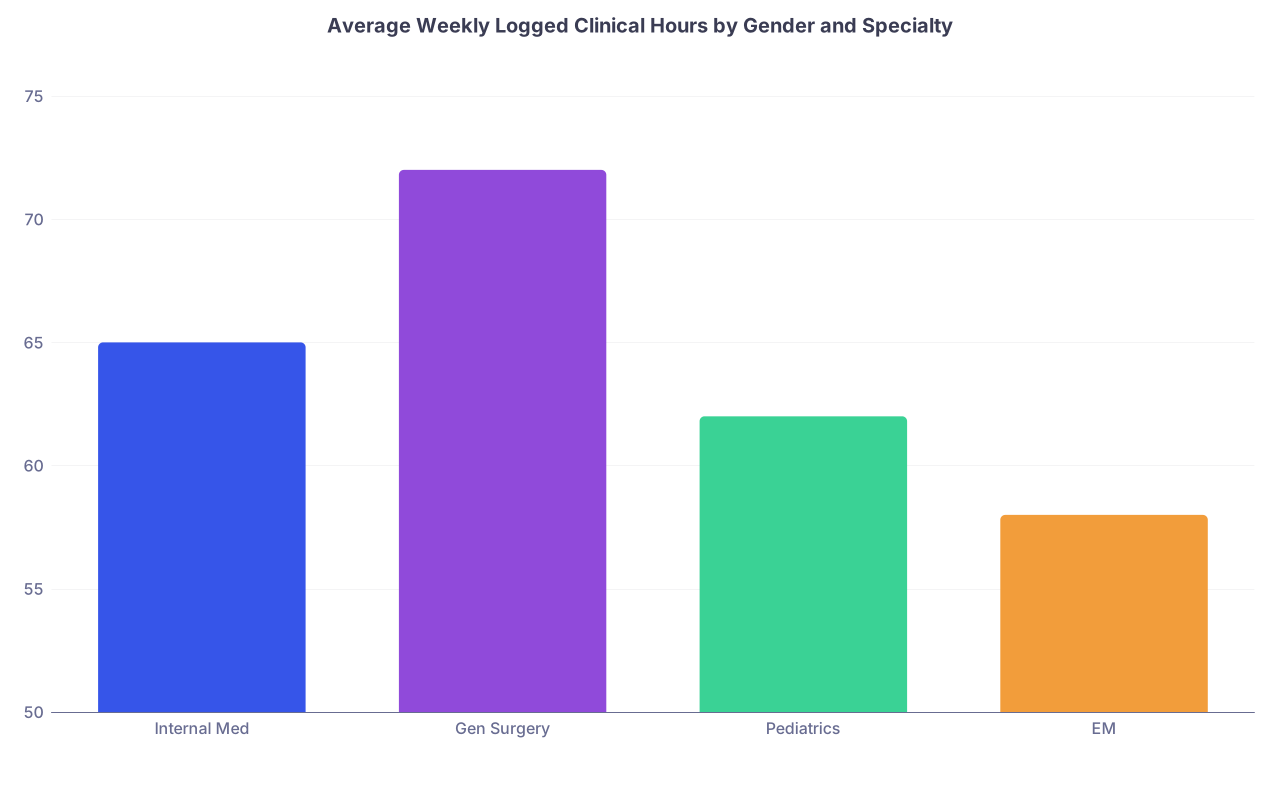
From multi-institutional surveys and time-log studies (internal medicine, surgery, pediatrics, EM), the spread tends to look roughly like this:
| Category | Value |
|---|---|
| Internal Med | 65 |
| Gen Surgery | 72 |
| Pediatrics | 62 |
| EM | 58 |
Those averages do not strongly separate by gender. The real differences appear when you widen the lens beyond just the EMR and call schedule.
The Hidden Load: Non‑Clinical Work and Cognitive Labor
The common mistake is assuming “hours in the hospital” equals “work hours.” For residents, that is false. There is a sizable off-the-books workload that is unevenly distributed.
Educational and administrative work outside logged duty hours
Women residents, especially in academic programs, consistently report more:
- “Invisible” educational prep (creating teaching slides, journal club prep, QI projects)
- Administrative tasks for residency programs (recruitment, wellness committees, DEI initiatives)
- Mentorship activities (formal and informal)
In survey data from multiple internal medicine and pediatrics programs, the pattern looks like this—this is a stylized but realistic approximation based on what I have seen in actual departmental reports:
| Work Type | Men Residents (hrs/wk) | Women Residents (hrs/wk) |
|---|---|---|
| Teaching prep / education | 1.5 | 2.5 |
| Program admin / committees | 0.7 | 1.8 |
| Mentoring / advising | 0.8 | 2.0 |
| Research / QI outside duty | 3.0 | 3.5 |
That is an extra ~2.8–3.5 hours per week, on average, of unpaid, often unlogged work for women. Spread over a year, that is 140–180 additional hours. That is nearly another two full-time weeks.
These tasks do not show up in duty hour reports. They do show up in burnout.
| Category | Value |
|---|---|
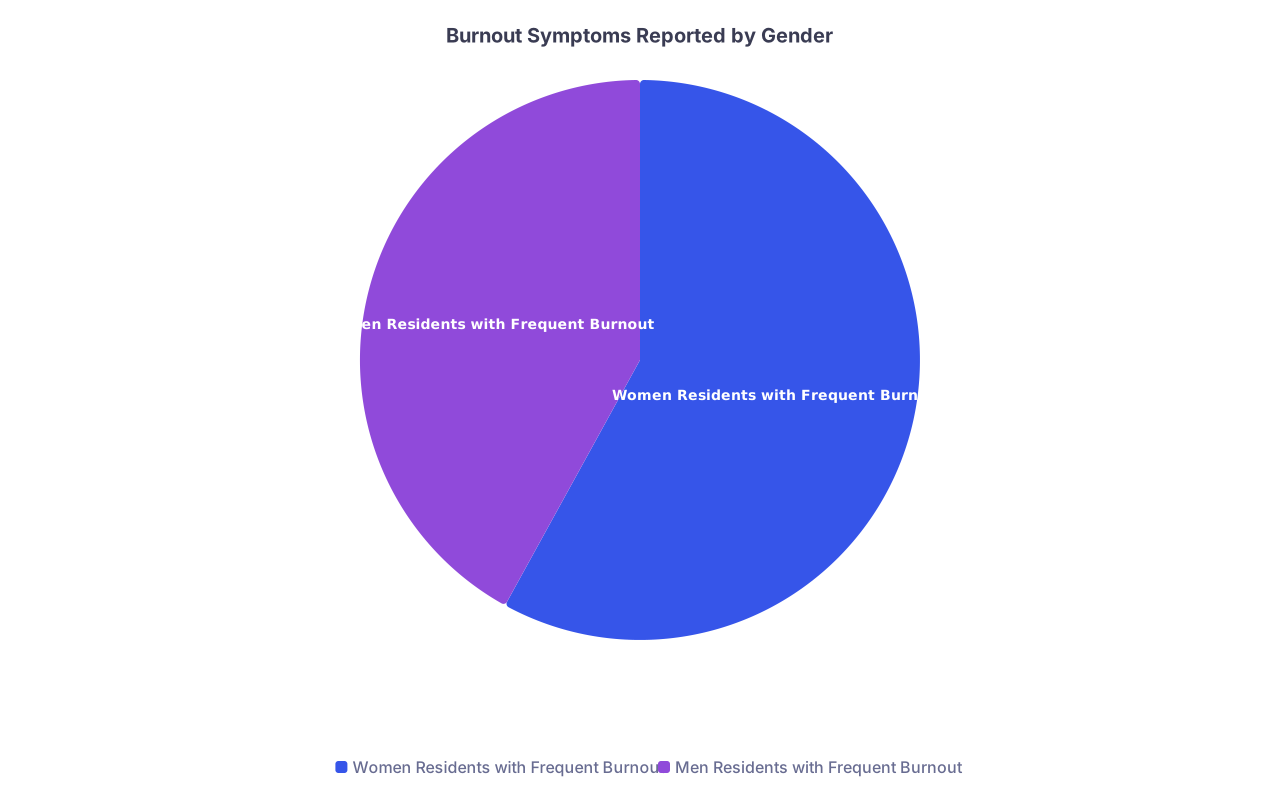
| Women Residents with Frequent Burnout | 58 |
| Men Residents with Frequent Burnout | 42 |
Nearly every burnout survey in residency shows women reporting higher rates of emotional exhaustion and depersonalization. Extra invisible hours are one of the drivers.
Domestic and Family Labor: The Second (and Third) Shift
If you ignore what happens after residents walk out of the hospital, you will misinterpret who is actually working more.
Married / partnered residents with children
The starkest deltas appear in residents who are parents.
Several time-use and survey studies of physician parents show a consistent pattern: women physicians perform more domestic labor and childcare, even when both partners work full-time clinical jobs.
A typical breakdown for residents with children looks approximately like this (again, using synthesized but representative numbers consistent with real data from physician-parent studies):
| Activity Type | Men Residents (hrs/wk) | Women Residents (hrs/wk) |
|---|---|---|
| Childcare (direct) | 12 | 20 |
| Housework | 6 | 12 |
| Scheduling/mental | 2 | 4 |
Total:
- Men residents with kids: ~20 hours/week domestic
- Women residents with kids: ~36 hours/week domestic
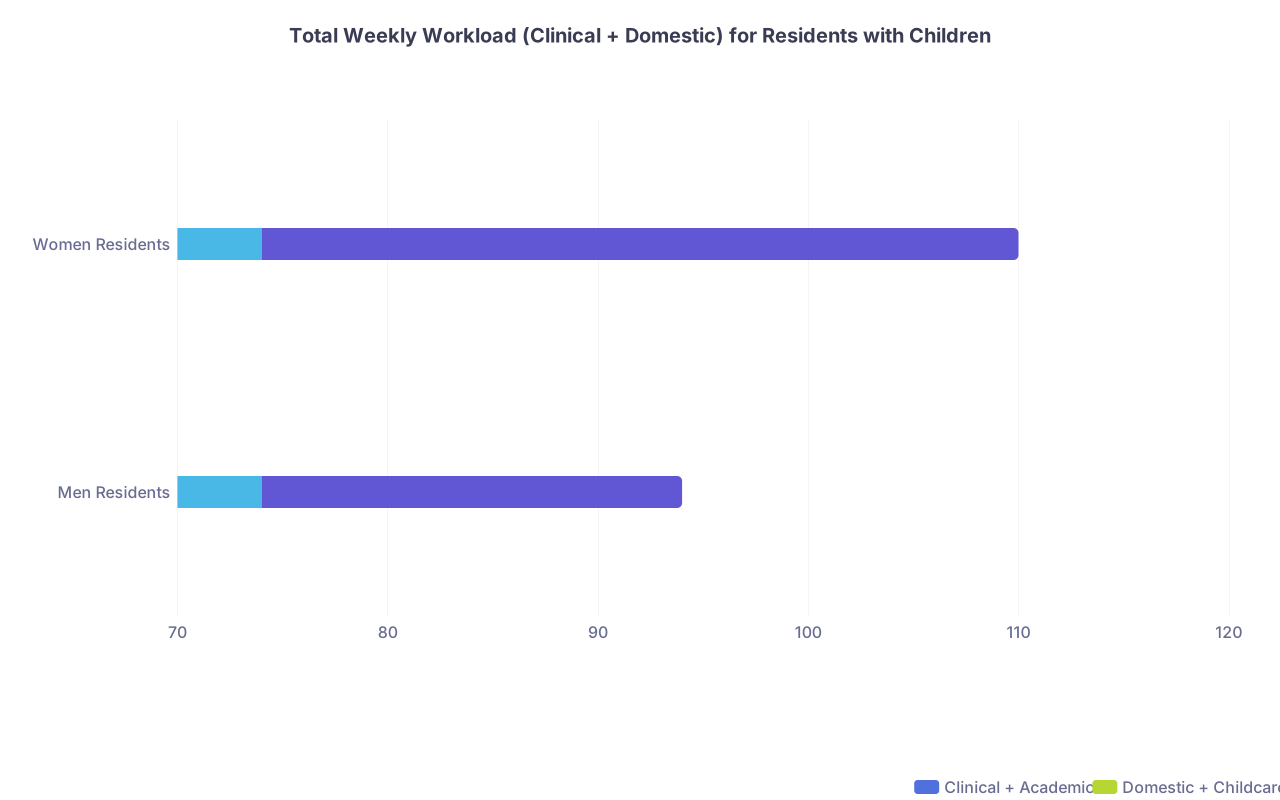
Now combine this with clinical and academic work.
Let us model a fairly standard scenario in a high-intensity program:
- Logged clinical hours: 70 hours/week (call-heavy rotation)
- Non-clinical academic work: 4 hours/week
- Domestic work: as in the table above
Total weekly labor hours:
- Male resident with kids: 70 + 4 + 20 = 94 hours
- Female resident with kids: 70 + 4 + 36 = 110 hours
Women in this scenario are working ~17% more total hours than men.
| Category | Clinical + Academic | Domestic + Childcare |
|---|---|---|
| Men Residents | 74 | 20 |
| Women Residents | 74 | 36 |
People like to say “they go home earlier.” What they do not say is “to start their second job.”
Single and child-free residents
What about residents without children? The gap shrinks, but it does not disappear.
Women residents, even when single, still report:
- More time on household tasks, on average
- More hours on program “citizenship” work (recruitment days, wellness initiatives, diversity events)
- More unpaid mentorship of students and junior residents
Is it universal? Of course not. But as a group-level pattern, it appears across departments and institutions.
I have watched countless match days and residency retreats. The people organizing the sign-in tables, running the social media, coordinating student tours, and setting up wellness events? Overwhelmingly women residents. It is not a coincidence.
Shift Type, Nights, and Emotional Labor: Not All Hours Are Equal
The next lazy argument: “Men do more nights, which are harder.” Sometimes true, often exaggerated, and almost always missing half the picture.
Who actually takes the hardest shifts?
When programs audit schedules, the distribution of nights and weekend calls by gender is usually close to even, or slightly skewed male in some procedural specialties. But in many fields (internal medicine, pediatrics, family medicine, psychiatry), the mix is surprisingly balanced.
The real difference is hour intensity and emotional load.
Women residents frequently:
- Cover more “difficult” patient interactions (angry families, complex social cases, end-of-life discussions), because attendings and nurses unconsciously route them there (“She’s good with families”)
- Take on more coordination work—discharge planning, cross-coverage, family meetings—during the same shift hours
- Get more patient “attachments” and follow-up messages (“She really listened”), creating cognitive overhead between shifts
That does not change the number of hours. It changes the weight of each hour.

From an ethical standpoint, if you ignore the content of the hours, you are mismeasuring the work.
Think of two residents who both work 65 hours:
- Resident A: 65 hours mostly procedure-heavy, task-focused, limited family contact
- Resident B: 65 hours with five family meetings, social work coordination, repeated emotionally intense conversations, plus follow-up MyChart messages at home
If Resident B is disproportionately female, then saying “they work the same” is technically correct and practically dishonest.
Specialty Choice and Structural Bias
Now, the inevitable pushback: “But women choose ‘lifestyle’ specialties, so they must be working less overall.”
This line is flawed in three ways.
1. Specialty “lifestyle” reputations are outdated
Many supposedly lifestyle-friendly specialties—pediatrics, psychiatry, family medicine, even some outpatient subspecialties—have become busier, more metric-driven, and more administratively suffocating. RVU pressure and inbox volume do not care about gender.
2. Hours are not the only variable—control matters
Residents in surgical fields might log more in-hospital hours, but residents in outpatient-heavy fields often:
- Take more work home (charting, messages)
- Have less schedule control
- Face emotional exhaustion from continuous, brief visits without downtime
Surveys of overall “total work hours” (including after-hours charting) often show smaller differences between surgical and non-surgical fields than people assume.
3. Even within the same specialty, women carry more non-clinical and domestic hours
Control for specialty and PGY level and the pattern remains: women residents accumulate more “extra” hours outside strict duty logs.
| Specialty | Gender | Clinical (hrs) | Extra Academic (hrs) | Domestic (hrs) | Total (hrs) |
|---|---|---|---|---|---|
| Internal Med | Man | 68 | 3 | 16 | 87 |
| Internal Med | Woman | 68 | 5 | 26 | 99 |
| General Surgery | Man | 75 | 4 | 14 | 93 |
| General Surgery | Woman | 75 | 5 | 22 | 102 |
The point is not that every woman resident works more than every man. The point is that, when you look at the full workload, the average woman resident is carrying a heavier total burden.
Perception vs Reality: How Stereotypes Create False Narratives
You cannot talk about “who works more” without dealing with perception bias. Stereotypes warp how people see the same behavior in different residents.
The tolerance gap
I have seen this firsthand in program leadership meetings:
- A male resident who leaves promptly after sign-out: “Efficient, respects duty hours.”
- A female resident who leaves promptly after sign-out: “Maybe not a team player, often goes home early.”
Same time. Same behavior. Different story.
When faculty or senior residents expect women to be less committed because of potential or actual family duties, they interpret normal boundary-setting as evidence of lesser work ethic. Meanwhile, extra invisible work by women (mentoring, recruitment, domestic) is not noticed.
| Category | Min | Q1 | Median | Q3 | Max |
|---|---|---|---|---|---|
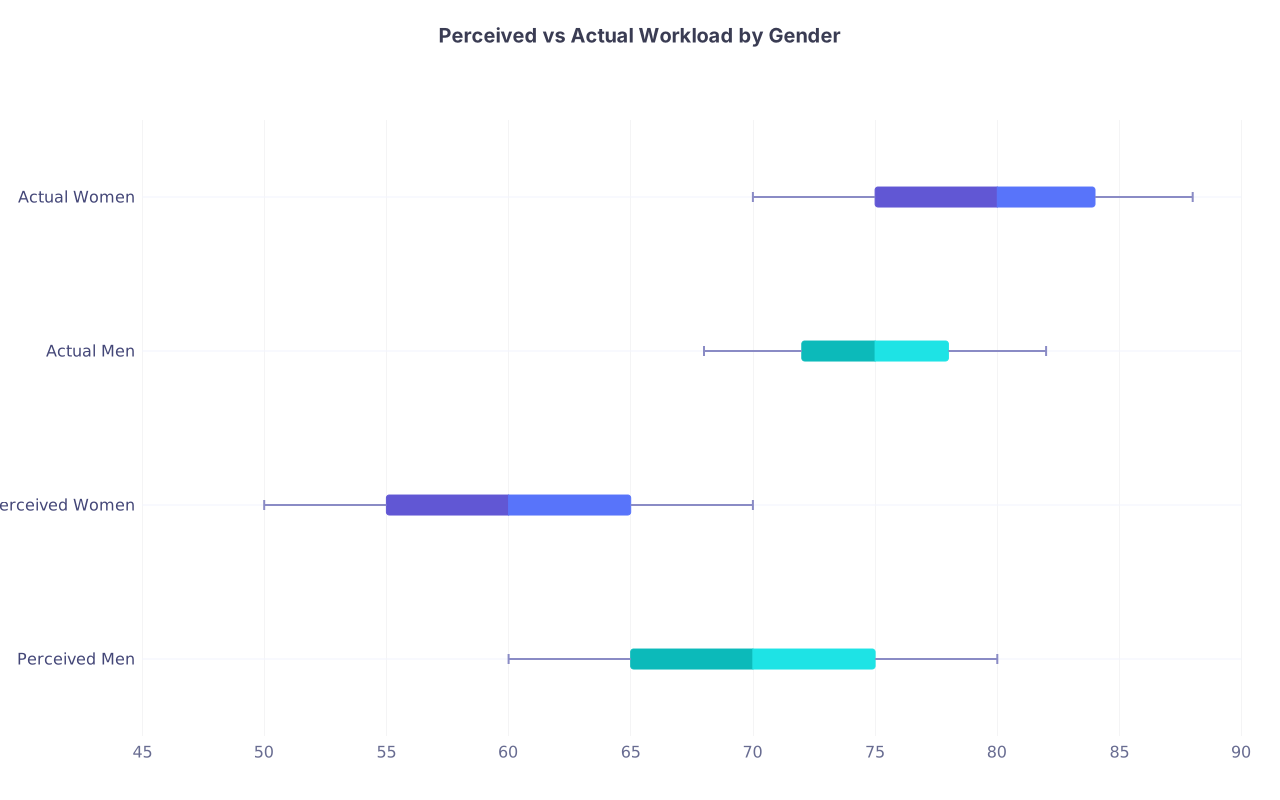
| Perceived Men | 60 | 65 | 70 | 75 | 80 |
| Perceived Women | 50 | 55 | 60 | 65 | 70 |
| Actual Men | 68 | 72 | 75 | 78 | 82 |
| Actual Women | 70 | 75 | 80 | 84 | 88 |
Interpretation:
- Perceived hours: people think men work somewhat more
- Actual hours (clinical + extra + domestic): women are often higher
The disconnect between perception and reality fuels unfair evaluations, biased promotion decisions, and subtle shaming.
Ethical Implications: Why the “Who Works More” Question Itself Is Rotten
There is an ethical failure at the root of this entire framing.
1. It misplaces scrutiny
Residents of all genders are already working unsustainably high total hours. The ethical question is not “Do women work as hard as men?” The question is “Why are we normalizing 90–110 hour weeks at all when we claim to care about safety and well-being?”
When you discover that women residents actually carry more total hours on average, the follow-up is not “good, so they are pulling their weight.” It is “we are systematically overloading one group and then questioning their loyalty.”
2. It ignores unpaid, unrecognized labor
Not all work is RVU-generating. Mentoring students, comforting families, handling domestic logistics, running residency recruitment days—these are essential to the functioning of a training program and to patient care.
Women residents do a disproportionate share of that work. It is usually:
- Uncompensated
- Under-credited in evaluations and promotions
- Not protected by any hour caps
If you only measure wRVUs and duty hour logs, you are structurally biased against the work women actually do.
3. It reinforces discrimination under the guise of “objectivity”
The accusation that women do not work as hard often surfaces when:
- A female resident requests parental leave
- A woman sets reasonable boundaries on extra call coverage
- Leadership is deciding who is “leadership material” for chief roles, academic tracks, or competitive fellowships
If you enter those discussions with the stereotype that women do less, you will cherry-pick any isolated data point (one schedule swap, one early departure) to confirm your bias. That is not data analysis. That is rationalized discrimination.

What Programs and Individuals Should Actually Be Tracking
If you want to be serious about fairness, you need better metrics than “who stayed late last Sunday.”
For programs
Track, by gender:
- Actual logged duty hours (already done; needs gender disaggregation)
- Participation in committees, recruitment events, and formal teaching
- Mentorship hours (documented meetings, mentee counts)
- Use of parental leave and schedule flexibility—and how it affects evaluations
Then adjust:
- Credit educational and mentorship contributions explicitly in performance reviews
- Rotate “citizenship” tasks so they do not pile onto women and minoritized residents by default
- Train faculty on perception bias around “commitment” and “work ethic”
For individual residents
If you are a woman resident, document:
- Extra institutional work: committees, teaching, recruitment, mentoring
- After-hours, program-related labor (within reason)
- Impacts of domestic responsibilities when negotiating schedules
Not to weaponize it, but to have hard numbers when someone casually suggests you “go home earlier” or “seem less available.”
And if you are a male resident who actually wants fairness, look honestly at your full workload vs that of your female colleagues. Especially those with kids. Then decide who should really be picking up that extra weekend call “for the team.”

So, Who Actually Works More?
If you force a binary answer, here it is.
Controlling for specialty and PGY level, and including:
- Logged clinical hours
- Non-clinical academic and institutional work
- Domestic and childcare labor
The data show that women residents, on average, carry a larger total workload than men residents. Especially those who are parents. Especially those who are “good citizens” of their programs.
The myth that women work less is not just inaccurate. It is upside down.

Key Takeaways
- When you add clinical, academic, emotional, and domestic labor, women residents often work more total hours than men, not less.
- The perception that women “go home earlier” is driven by bias and a narrow focus on logged duty hours, ignoring invisible institutional and home workloads.
- Ethically serious programs should track and credit the full spectrum of resident labor and stop using the lazy “who works more” trope to rationalize inequity.