
Most people wait way too long to ask for help. That’s the real problem—not picking between therapist, coach, or sleep.
You’re not trying to become a wellness philosopher. You just want to know: Am I burned out? Anxious? Just exhausted? Who do I actually need to see—if anyone?
Let’s answer that directly.
The Fast Triage: Therapist vs Coach vs Sleep
Start with this blunt test. Read each of these groups and see where you fit most often in the last 2–4 weeks.
Group 1 – This screams “therapist first”
If several of these are true, you don’t start with a coach or a new pillow. You start with a mental health professional.
- You’ve lost interest in things you usually enjoy (friends, hobbies, even your specialty).
- Your sleep/appetite/weight have changed noticeably without trying.
- You feel hopeless, numb, or like “nothing will actually get better.”
- You’re having panic attacks, constant dread, or racing thoughts you can’t control.
- You’re self-medicating (alcohol, weed, benzos, stimulants) more days than not.
- You’ve had thoughts like “I wish I wouldn’t wake up” or “People would be better off without me”—even if you’d never act on it.
- You can’t reliably function at work (charting piling up, missing tasks, mistakes).
- Past trauma is getting triggered by current situations (certain patients, attendings, procedures).
If you’re here: you likely need a therapist (and possibly also a physician/psychiatrist) as the primary support.
Group 2 – This looks like “coach + structural changes (+ probably more sleep)”
These are more in the realm of performance, boundaries, and habits:
- You’re constantly behind and overwhelmed but still technically getting things done.
- You procrastinate and then pull heroic catch-up days that wipe you out.
- You say yes to everything and then resent it.
- You’re stuck on big decisions (fellowship vs general practice, academic vs community) and go in circles.
- You’re not where you want to be professionally, but you’re not falling apart either.
- You feel “meh” or underutilized more than acutely distressed.
If this is you: a coach (ideally someone who understands medicine) is often the right first call—with deliberate sleep and schedule changes.
Group 3 – This is “you’re sleep-deprived and human”
These are classic under-slept, overworked symptoms:
- You’re more irritable and snappy on post-call days.
- You can’t focus after back-to-back nights.
- You cry easily when exhausted, then feel mostly okay after real rest.
- You fall asleep instantly when you finally lie down.
- Your mood and patience clearly track with your call schedule.
If the main variable is sleep, and everything improves when you’re rested, you probably need better sleep and workload boundaries first, not a formal therapist or coach.
Key point: these groups can overlap. It’s common, especially in medicine, to need two of the three.
What Each Option Actually Does (And Doesn’t Do)
Let’s strip away the fuzzy marketing language.

What a therapist is for
A therapist is not just “someone to vent to.” They’re for when there’s emotional pain, patterns, or symptoms that aren’t shifting with willpower or good intentions.
Therapist is the right fit when you’re dealing with:
- Depression, anxiety, panic, OCD, PTSD, eating disorders, substance use.
- Reactions that are clearly bigger than the situation (full meltdown over a minor feedback comment).
- Childhood or relationship patterns that keep repeating in harmful ways.
- Moral injury and ethical distress—feeling complicit in systems that violate your values.
A good therapist helps you:
- Understand what’s actually driving your reactions (not just “I’m stressed”).
- Learn specific tools: cognitive restructuring, exposure, emotion regulation, trauma processing.
- Build a life where symptoms don’t run the show.
What they’re not primarily for:
- Pure career strategy or negotiation.
- Systems-level constraints they can’t change (call schedule, RVU demands).
- Teaching you to write a better CV, negotiate a contract, or pivot specialties.
What a coach is for
A coach assumes you’re basically stable enough emotionally to work on goals, performance, and decisions.
Right fit when you’re dealing with:
- Time management disasters: constant rework, chaos, no prioritization.
- Leadership challenges: managing conflict with colleagues, running a team.
- Career crossroads: choosing specialties, jobs, academic vs private, side projects.
- Burnout where the main issue is workload, boundaries, and misalignment—not severe clinical depression or suicidality.
A good coach helps you:
- Clarify what you actually want (not what you “should” want).
- Design systems: when you chart, when you exercise, how you manage email.
- Practice difficult conversations (telling your chair you can’t take on another committee).
What they’re not for:
- Treating diagnosable mental illness.
- Handling trauma or serious risk (self-harm, addiction, severe eating disorders).
- Acting as your therapist on the side.
If a coach tries to “treat” your depression, run. That’s unethical.
What better sleep is for
Sleep is not a personality upgrade. It’s basic brain maintenance.
Adequate, somewhat consistent sleep:
- Improves mood reactivity (you’re less likely to go from 0 to 100).
- Boosts attention, working memory, and decision-making.
- Makes all the other help—therapy or coaching—far more effective.
But here’s the uncomfortable truth: if you’re a resident on Q4 call or a hospitalist doing 7-on/7-off, you can’t “optimize” sleep into a 9–5 civilian schedule. So the question becomes: Can you improve it at all, even 10–20%? That often matters more than people think.
A Simple Decision Flow You Can Actually Use

| Step | Description |
|---|---|
| Step 1 | Noticing problems |
| Step 2 | Therapist now / ER if acute |
| Step 3 | Therapist first |
| Step 4 | Coach plus sleep changes |
| Step 5 | Prioritize sleep and schedule |
| Step 6 | Start with therapist consult |
| Step 7 | Safety concerns? |
| Step 8 | Daily function impaired? |
| Step 9 | Mostly goals and performance? |
| Step 10 | Symptoms track with sleep? |
Walk through:
Any suicide thoughts, self-harm, dangerous substance use, or “I might lose my license if this continues”?
→ Therapist/psychiatrist immediately. If it’s acute, ER or crisis line.Is your basic functioning at work or home clearly impaired?
→ You’re missing shifts, messing up charts, forgetting kids’ stuff, can’t keep up at all.
→ Therapist first. Coaching can come later.Are you generally functioning but stuck with goals, boundaries, or decisions?
→ Coach plus deliberate sleep strategy.Does everything get dramatically better with a single solid night or two of sleep?
→ Prioritize sleep and workload adjustments first, then reassess.Still unsure? Book one consult with a therapist and say: “I’m not sure if this is clinical or life-structure. Can you help me sort that out?” A good clinician will.
How Medical Ethics Fits In: You’re Not a “Bad Doctor” If You Need Help
You work in a culture that quietly worships self-neglect. Long hours, skipped meals, “I had pneumonia on call and still admitted 18 patients.”
Here’s the ethical knot: you’re held to standards of nonmaleficence and beneficence, but the system you work in actively undermines your ability to stay healthy enough to uphold them.
That tension alone will wreck your head if you don’t name it.
A few non-negotiables from an ethics standpoint:
- You’re obligated to manage impairment. If your mental health is compromising patient safety, your duty is to seek help, not “tough it out.”
- Self-care is not selfish; it’s risk management. Burned-out, sleep-deprived physicians make more errors. That’s not moral weakness, it’s human neurobiology.
- Confidential care is part of professionalism. Many institutions have physician-only therapists, confidential hotlines, and off-the-books referrals for this reason.
If you feel guilty about needing therapy or coaching, flip it around:
If your intern came to you with the symptoms you’re showing, what would you advise them to do? That’s your ethical answer.
Concrete First Steps for Each Path

If you’re leaning toward a therapist
Decide your format: in-person vs telehealth.
Telehealth lowers friction; you’re more likely to actually go.Look for:
- Someone who works with physicians/healthcare or high-stress professionals.
- Experience in your likely issue: mood disorders, anxiety, trauma, burnout.
- Comfort talking about licensing, fitness for duty, and documentation.
Red flags:
- They minimize your concerns: “Everyone’s stressed in medicine, you’ll be fine.”
- They don’t seem to understand training structures (match, call, RVUs, duty hours).
- They push one-size-fits-all “mindfulness only” without real assessment.
If you’re on the fence, schedule 2–3 sessions and treat it as an experiment, not a lifelong commitment.
If you’re leaning toward a coach
Be specific about your goals:
- “I want to leave clinic on time 3 days a week without charting at home.”
- “I need to decide between two fellowships in 6 weeks.”
- “I want to stop saying yes to every committee request.”
Vet them:
- Do they understand healthcare reality, not just generic corporate life?
- Do they clearly distinguish coaching from therapy?
- Do they talk about ethics/confidentiality in a concrete way?
Avoid:
- Grandiose promises: “I guarantee you’ll triple your income in 90 days.”
- Shame-based framing: “You’re just not committed enough.”
- Zero screening for mental health red flags.
Good coaching feels like focused, challenging collaboration, not a pep rally.
If sleep is clearly a disaster
You know the clichés. Sleep hygiene, dark room, no screens. You’ve heard that. Let’s talk realistic, especially for healthcare:
Pick one non-negotiable sleep rule per week.
Example: “Post-call, I do nothing but shower, eat, and sleep. No errands.”Protect one anchor: either wake time or bedtime on non-call days.
Consistency matters more than perfection.Kill the “revenge bedtime procrastination.”
When you’re tired but scrolling because you “deserve downtime,” remember: this is how tomorrow’s version of you gets screwed.If you snore, choke, or wake gasping: get screened for sleep apnea.
Yes, even if you’re young and “fit.” I’ve seen residents with AHI in the 30s who thought they were just “bad sleepers.”
If, after 2–4 weeks of serious attempts at better sleep, your mood and functioning are still rough, go back to the therapist bucket.
How They Can Work Together (The Combo Approach)
You don’t have to marry one option forever.
Plenty of people do this:
- Start with a therapist for 3–6 months to get depression/anxiety/moral injury under control.
- Layer in a coach once they’re stable to handle career strategy and boundaries.
- Keep sleep and recovery as the foundation throughout.
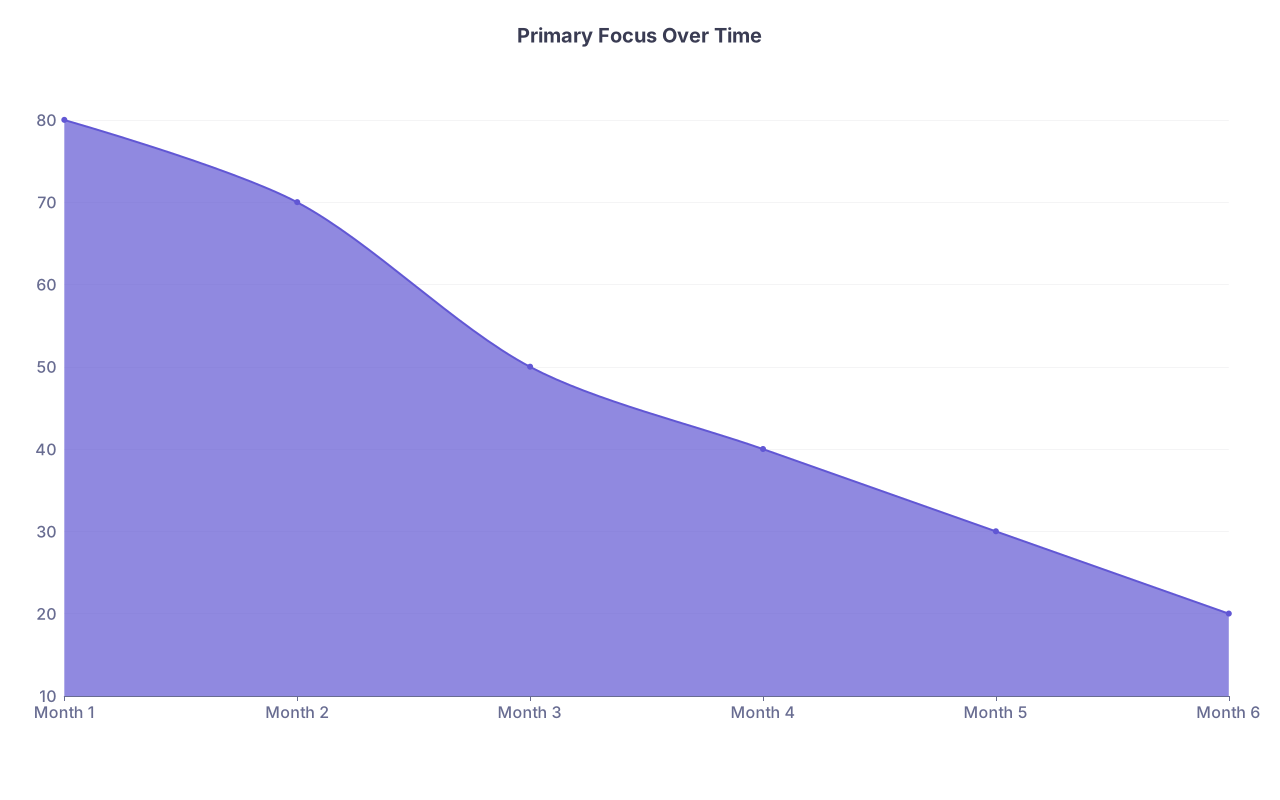
| Category | Value |
|---|---|
| Month 1 | 80 |
| Month 2 | 70 |
| Month 3 | 50 |
| Month 4 | 40 |
| Month 5 | 30 |
| Month 6 | 20 |
(Imagine that area curve as distress decreasing over time as treatment, coaching, and rest combine.)
You can also:
- Do therapy weekly and coaching monthly.
- Pause coaching if life blows up and you need more intensive therapy.
- Use a short coaching package just to get through a transition (new attending job, leadership role).
The only real mistake is trying to white-knuckle everything alone for years because “other people have it worse.”
Quick Comparison Table
| Best First Step | Main Problems | Typical Signals |
|---|---|---|
| Therapist | Mood, anxiety, trauma, impairment | Hopelessness, panic, can’t function reliably |
| Coach | Goals, performance, decisions | Overwhelm, procrastination, unclear direction |
| Better Sleep | Fatigue, irritability, cognitive drag | Symptoms track with call schedule and rest |

FAQ: Therapist vs Coach vs Sleep
If I’m not sure, should I start with a therapist or a coach?
Start with a therapist. They’re trained to assess safety and clinical symptoms. You can always pivot to coaching once you’re sure there’s no significant mental health issue underneath. A good therapist will tell you if coaching is a better primary fit.Won’t going to therapy risk my medical license or credentialing?
In most places, seeking outpatient therapy by itself does not threaten your license. The bigger risk is untreated impairment that leads to errors, complaints, or formal investigations. Check your state board’s exact wording; many are moving away from “have you ever sought care” toward “are you currently impaired.”How do I know my problems aren’t just from residency or a brutal job?
Look at persistence and proportionality. If your distress is wildly out of proportion to the actual stressor, or it doesn’t improve even during lighter rotations or vacations, it’s likely more than just the job. That’s therapist territory.Can a coach help with burnout, or is that only for therapists?
Both can help, but from different angles. If your burnout is mainly structural (too many hours, no boundaries, poor workflow), a coach can be great. If it’s symptomatic (hopelessness, dread, depersonalization, thoughts of quitting medicine entirely, suicidal ideation), you start with a therapist.What if I don’t have time for therapy or coaching sessions?
Then you have a scheduling problem, not a time problem. You’re already spending that time on inefficient coping (doomscrolling, complaining, procrastinating). Start with one 45–60 minute block every 1–2 weeks. If your schedule truly can’t fit that, you’re in unsafe territory clinically and ethically—that alone is a sign you need to renegotiate your workload.How long should I try better sleep and self-care before seeking professional help?
If you’re safe and functioning, give it 2–4 weeks of serious effort: consistent bed/wake times, some exercise, decent food, reduced substances. If mood, anxiety, or functioning aren’t clearly improving, stop guessing and book a therapist. If at any point your thoughts or behavior scare you, skip the experiment and get help immediately.
Bottom line:
- If you’re not safe or your function is falling apart → Therapist now.
- If you’re stable but stuck on goals, boundaries, or decisions → Coach + better sleep.
- If everything swings with how rested you are → Fix sleep first, then reassess.
You don’t get extra points for suffering longer. Pick one next step and book it.