
The idea that remote medical writing is a “stable backup career” for physicians is wildly overstated.
Yes, it can be good. Yes, it can pay decently. But if you think you’ll step out of clinic on Friday and step into a permanent, cushy, remote six‑figure writing job on Monday, you’re believing marketing, not data.
Let’s strip the fantasy down to what actually happens when doctors try to do this.
The First Myth: “Medical Writing Is a Safe, Stable Plan B”
The common story:
You’re burned out, done with call, and LinkedIn keeps feeding you posts about “remote medical writing jobs” where MDs sit at home in sweatpants, editing manuscripts for $150k and never talking to patients again.
Here’s the catch: that job exists. For some people. After they grind for years.
Medical writing as a whole is a stable industry. That’s true. Pharma, med device, health tech, CME, and publishers always need content. But “industry is stable” ≠ “your job is stable” and definitely ≠ “easy for physicians to walk into.”
Most physicians who “switch to medical writing” fall into one of four buckets:
| Path | Risk Level | Time to Stable Income | Common Outcome |
|---|---|---|---|
| Freelance, no niche | High | 12–24 months | Inconsistent, often quit |
| Freelance, clear niche | Medium | 6–18 months | Can stabilize, variable income |
| Industry role (med comms/MA) | Medium | 6–12 months | More job-like, some office days |
| In-house content/copy roles | Medium | 6–18 months | Stable if company survives |
Three patterns I keep seeing:
- People underestimate how long it takes to build a client base or land a decent industry role.
- They overestimate how much “MD” alone matters to hiring managers.
- They confuse remote with flexible and are shocked at the deadlines and volume.
The stability isn’t automatic. It’s built. Or it’s not there.
What the Market Actually Looks Like
Let’s talk demand and money.
Medical writing overall is growing, powered by:
- Pharma / biotech drug pipelines
- Explosion of digital health companies
- Ever-expanding CME / educational content
- Health media and patient‑facing platforms
So yes, the work is there. But it isn’t all designed for physicians, and it’s not all stable.
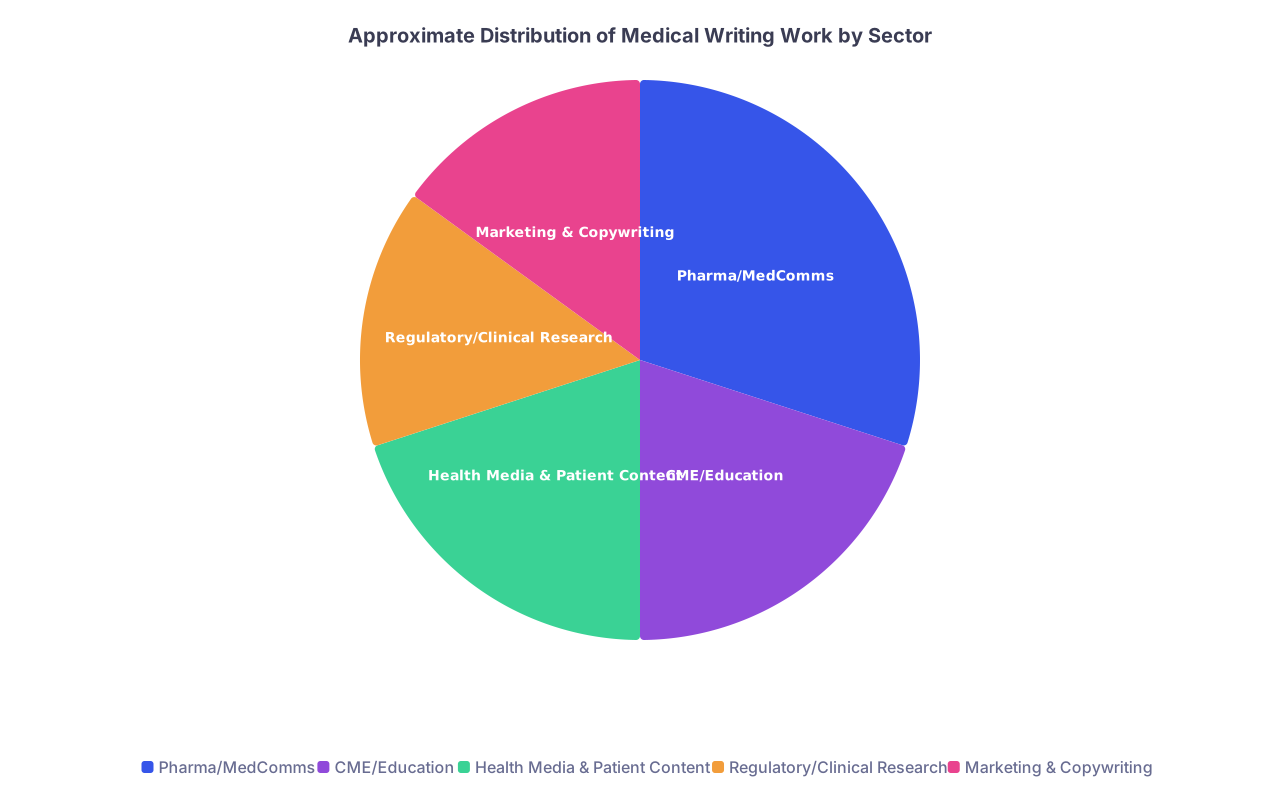
| Category | Value |
|---|---|
| Pharma/MedComms | 30 |
| CME/Education | 20 |
| Health Media & Patient Content | 20 |
| Regulatory/Clinical Research | 15 |
| Marketing & Copywriting | 15 |
Where physicians tend to fit:
Strong fit, higher pay, more stability
Regulatory/clinical research writing, medical communications agencies (med affairs, publications), CME content. These often want serious writing samples, familiarity with guidelines, and sometimes previous industry experience.Moderate fit, variable pay, decent pipeline
Patient‑facing education, health media, blog-style content for hospitals or health tech. Here, the MD is a bonus but not unique—NPs, PAs, PhDs, and even strong non-clinical writers compete.Lower fit for most doctors, but high upside for a few
Direct-response copywriting, marketing funnels, SEO-heavy content mills. Can pay very well if you understand marketing psychology. Most physicians do not, and many think they’re above it. The market does not care.
Here’s the uncomfortable truth: an MD with no portfolio is less attractive than a non-MD with five strong writing samples and a track record of meeting deadlines. Credentials are not a substitute for proof.
Income Stability: Freelance vs “Real Job”
This is where people get burned.
Physicians are used to:
- Predictable paycheck
- Benefits
- Malpractice as a given
- Clear role and hierarchy
Remote medical writing, especially freelance, spits on all of that.
Freelance Reality
Most docs start here because job postings say “3+ years medical writing experience,” and guess what you do not have.
Early on you see:
- Feast‑or‑famine workload
- Month‑to‑month income swings
- Clients who vanish after one project
- Scope creep if you don’t know how to push back
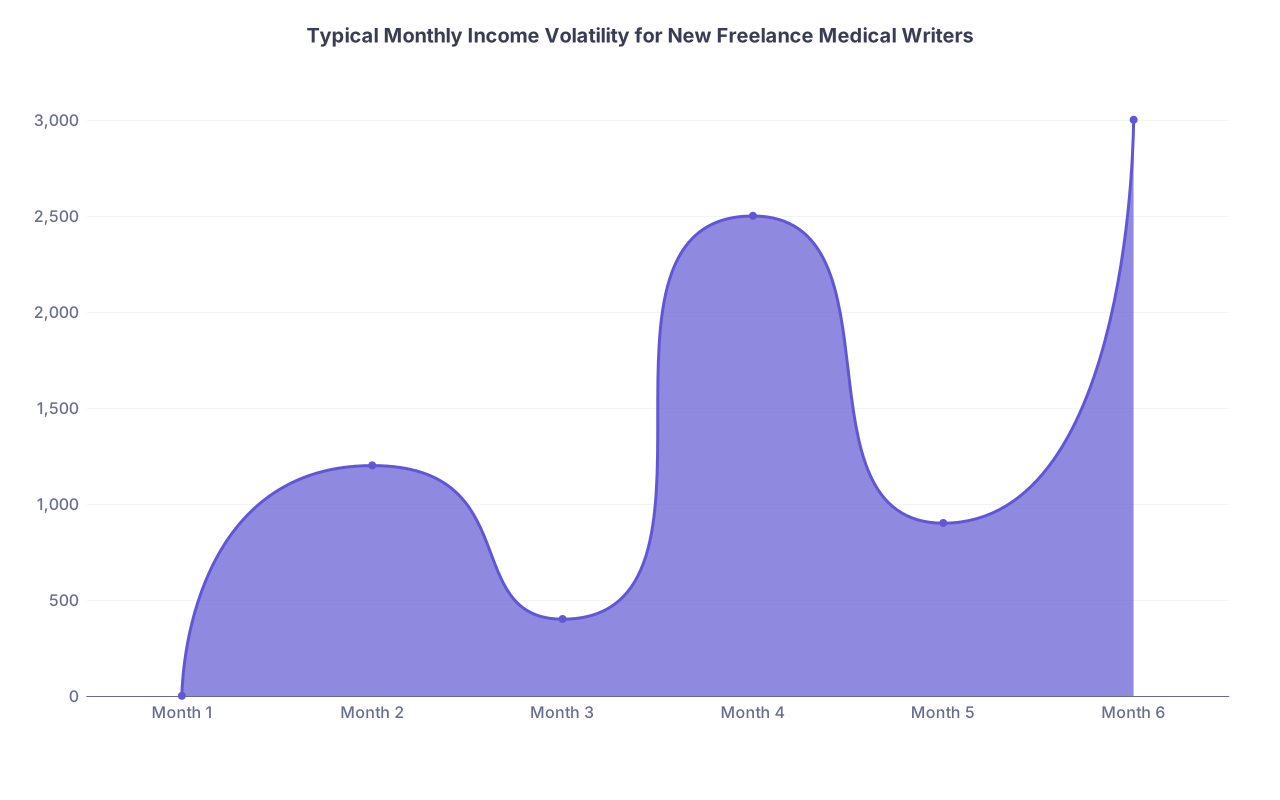
| Category | Value |
|---|---|
| Month 1 | 0 |
| Month 2 | 1200 |
| Month 3 | 400 |
| Month 4 | 2500 |
| Month 5 | 900 |
| Month 6 | 3000 |
That squiggly line is not exaggerated. I’ve seen former attendings go from $25k/month clinically to panicking over a $900 month in writing because two regular clients paused budgets.
Over 12–24 months, if you specialize and treat it like a business, that line can flatten into something resembling stability. But you have to:
- Narrow into a niche where your clinical background actually matters (e.g., oncology manuscripts, cardiology CME, neurology med affairs)
- Learn client acquisition like it’s your new board exam: networking, email outreach, LinkedIn presence
- Set boundaries on scope, revisions, and timelines the way you’d protect your time from extra add-on clinic slots
Physicians who treat freelance like “doing some writing on the side and hoping Upwork saves them” never get to stability. They quit or crawl back to per diem locums.
Employment Reality
Then there are actual jobs:
- In‑house medical writer at a med comms agency
- Scientific writer in pharma med affairs or clinical development
- Content lead for a health tech or digital health company
- CME medical writer/planner
These are much more stable than freelance if (and this is the kicker) you land them.
Pros:
- Salary, benefits, taxes withheld
- Usually a 40–50 hr/week expectation, not 70–90
- Some structure, team support, and training
- More predictable workload
Cons:
- Most want prior writing or industry experience
- Many are “remote‑first but not remote‑only” (on-site meetings, specific time zones)
- You’re at the mercy of company finances and M&A like everyone else in tech and pharma
I’ve watched physicians land med comms roles at $110–140k remote. Within 18 months, one agency lost a big pharma account and cut a third of their team. The doctors were not magically protected.
Is that less stable than clinical medicine? Depends. Private practice in a hostile payer environment is not exactly a rock either.
How Physician Skills Actually Translate (And Where They Don’t)
Another myth: “I’ve written notes and a few case reports; I’ll pick this up quickly.”
You can pick it up. But recognize what’s transferable and what is not.
Where you’re ahead:
- Understanding of clinical reasoning, guidelines, and risk–benefit thinking
- Ability to read and interpret primary literature fast
- Comfort with medical terminology, pathophysiology, and treatment frameworks
- Authority and credibility, especially in your specialty
Where you’re not special:
- Plain‑language patient education writing
- SEO writing for consumer health websites
- Slide decks, white papers, marketing emails
- Manuscript structuring, journal guidelines, and submission wrangling
- Regulatory language, labeling, and compliance constraints
Non‑MD writers have been doing those things for years. You’re not “automatically better” than the PhD who has written 30 clinical evaluation reports or the RN who has been churning patient education content for ten years.
Stability here comes from one thing: being reliably good and easy to work with. That means:
- Hitting deadlines without excuses
- Taking brutal edits without acting personally wounded
- Adapting style to client, not to your ego
- Asking smart questions early so you do not rewrite the entire piece the night before submission
Physicians who bring their attending persona—“I’m the expert, defer to me”—into writing get labeled “difficult” and quietly dropped.
Remote ≠ Low Stress, and It Definitely ≠ Low Control
People idealize “remote” as if it means “do what I want, when I want.” Not how this works.
The stresses just shift:
- Instead of pager alerts, you get 11 pm emails from a global team in three time zones.
- Instead of clinic running late, it’s a client adding three “tiny revisions” that take four extra hours.
- Instead of patient complaints, you deal with a brand manager who wants “more excitement” in a piece about anticoagulation.
Is it better than endless call? For many, yes. But it’s not zero-stress.
If anything, early on it’s more stressful because:
- You have less identity security (“I’m a hospitalist” → “I guess I’m a freelancer?”)
- Your income is tied to performance in a field you’re new to
- You’re isolated socially—no residents, no colleagues, just Slack and email
Long-term stability in remote work comes from building systems: time blocking, project tracking, clear communication norms with clients or your team. The physicians I know who are genuinely content in remote writing roles treat their workday with as much structure as a clinic schedule—just with fewer bodily fluids.
So, Are Remote Medical Writing Jobs Actually Stable?
They can be. But not in the simplistic, “just hop over and everything will be fine” way.
Here’s the pattern I see in physicians for whom it is stable:
They do a hybrid phase first.
They test the waters instead of burning the clinic down in one go.
A common success arc looks like this:
- Keep 0.5–0.8 FTE clinical for 6–18 months
- Use the other time to build a writing portfolio in a focused niche
- Gradually replace low‑ROI clinical shifts with higher‑paying, more predictable writing work
- Decide later whether to drop clinic entirely or keep a toe in
And the folks who get stuck?
They quit cold turkey with zero portfolio, apply to 60 “medical writer” jobs on Indeed, get ghosted, then start underpricing themselves on content mills and wonder why “medical writing doesn’t pay.”
If you want stability, you need leverage: skills, samples, a network, and ideally, more than one income stream (retainer clients, part‑time clinical, or diverse projects).
The Bottom Line: What the Data and Experience Actually Support
Let’s cut the noise:
Medical writing as an industry is stable; your personal job stability depends entirely on niche, execution, and whether you treat it like a profession instead of a side hobby.
Remote does not mean easy or automatically flexible. It trades one kind of unpredictability (patients, call, census) for another (deadlines, clients, company budgets).
For physicians, the most stable remote paths are not low-paying content mills but niche, higher‑value work—med comms, regulatory, CME, and specialized education—paired initially with some ongoing clinical work while you build real leverage.