
Most smart people in medicine absolutely butcher networking at pharma and medtech events.
Not because they’re incompetent. Because they treat these events like either:
- Job fairs, or
- Social hours with free canapés.
Both are wrong. And both will quietly kill your chances of breaking into alternative medical careers.
You’re dealing with an industry where everyone talks to everyone. Your reputation travels faster than your CV. One bad impression can follow you across companies and continents.
Let’s make sure you do not become “that doc” everyone complains about over drinks later.
1. Treating the Event Like a Job Hunt (Instead of a Relationship Game)
This is the single most common, career‑limiting mistake.
You show up with:
- A stack of CVs
- A rehearsed “I want to transition to pharma” speech
- A low-level desperation for someone to “see your potential”
And then you start asking strangers, 3 minutes into a conversation:
“So… are you hiring?”
That’s how you get mentally labeled as:
- Transactional
- Clueless about how the industry actually works
- Someone to politely escape from
Why this backfires
In pharma/medtech:
- Most roles are filled via warm referrals, not cold conference encounters.
- People want to help colleagues, not random strangers with a pitch deck in their bag.
- Hiring decisions are slow, political, and need trust—trust you can’t build in 90 seconds.
You’re trying to harvest before you’ve planted anything.
What you should be doing instead
At these events, your goals are simple:
- Learn who does what
- Understand how decisions are really made
- Leave people thinking, “This person gets it. I’d happily talk to them again.”
So do this:
- Ask about their work: “What’s kept you busiest this quarter?”
- Ask about their path: “How did you go from residency into medical affairs?”
- Ask about their world: “What do you wish clinicians understood about working on the industry side?”
Then later—days or weeks later—follow up on LinkedIn, build the relationship, and only then, carefully, talk about roles.
Do not walk around like a walking job application. You’re building a network, not begging for rescue.
2. Opening With “I’m Just Exploring Options” (AKA: Saying Nothing)
“I’m just exploring nonclinical options right now.”
“I’m kind of open to whatever in pharma.”
I hear this constantly. It sounds harmless. It’s not. It makes you instantly forgettable.
Industry people are busy. They don’t have the time or energy to reverse-engineer what you want from vague, mushy statements. So they mentally file you under: “Lost clinician, no clear direction.”
Why this is a problem
- Vague ≠ flexible. Vague = unhelpful.
- They don’t know who to introduce you to.
- You sound like you haven’t done your homework.
They’re not going to design your career strategy for you in a hallway conversation.
How to fix this without boxing yourself in
You don’t need a perfect job title. But you do need some signal.
Better options:
- “I’m interested in medical affairs or clinical development, especially around device trials.”
- “I’m exploring roles that sit between clinicians and engineering teams—maybe clinical specialist or medical science liaison.”
- “I want to move into roles where I translate clinical needs into product or trial design.”
Short, concrete, directional. That’s enough.
Then ask:
“Based on what you’ve seen, are there roles where my background would obviously help or obviously not fit?”
Now they can actually help you instead of nodding politely and escaping to the coffee station.
3. Ignoring the Power Players Hiding in Plain Sight
Another blind spot: you focus only on the people who look obviously senior—VPs, Heads of Clinical, giant titles on badges.
That’s a mistake.
Because in pharma and medtech, influence isn’t just in the org chart. There are three groups you underestimate at your own risk:
- Mid‑level managers (Medical Affairs Managers, Clinical Project Leads)
- Field people (MSLs, Clinical Specialists, Sales with strong clinical credibility)
- Regulatory and safety folks (they look quiet; they control entire pipelines)
Why ignoring them is dumb
These are often:
- The people actually doing the work you think you want
- The people who know where the real hiring needs are
- The people senior leaders ask: “Is this person any good?” after meeting you
If you only chase VPs, you signal you don’t understand how things actually run.
How to spot the right people to talk to
Look for badges that say things like:
- “Clinical Affairs Manager”
- “Medical Science Liaison”
- “Clinical Specialist – Neuromodulation”
- “Global Safety Physician”
- “Senior Regulatory Affairs Associate”
And then ask very specific, operational questions:
- “What does a typical week look like for you—where does your time actually go?”
- “Who do you interact with most: clinicians, regulators, internal teams?”
- “What surprised you most when you first moved from the clinic?”
You’ll get better intel from them than from a polished VP talk on stage.
4. Over‑Selling Your Clinical Authority (And Underplaying What They Really Care About)
You’ve probably seen this one. Or done it.
The doctor who introduces themselves with:
- “I’m a board‑certified [specialty] with 15 years of experience.”
- Then proceeds to dominate every conversation by explaining how they treat X, how their hospital does Y, and how “industry really should…”
They think they’re impressing people. They’re not.
They’re broadcasting: “I don’t realize I’m not the center of the universe here.”
What industry actually cares about
Yes, your clinical background matters. But for pharma/medtech roles, they look for:
- Ability to work in cross‑functional teams
- Comfort with ambiguity and slow, regulated progress
- Skills in communication, writing, and stakeholder management
- Respect for regulatory constraints (not just “the right thing for patients” in the abstract)
If you sound like a “know‑it‑all clinician,” they assume:
- You’ll be painful in meetings
- You’ll fight with regulatory, commercial, and legal
- You’ll struggle to adapt from individual patient focus to population, product, or portfolio focus
How to signal you “get it”
When you talk about your clinical background, frame it like this:
- “I realized over time that my impact was limited to one patient at a time. I’m interested in roles where I help shape tools or data that affect thousands.”
- “At my hospital, I worked closely with device reps and research coordinators, so I’ve already seen how messy and cross‑functional this world is.”
- “I’ve learned that what’s clinically obvious isn’t always operationally feasible. I’m interested in being in the room where those trade‑offs are actually made.”
That tells them: clinical, yes. But not arrogant. Collaborative.
5. Sticking to People Just Like You (The Comfort Cluster Trap)
Doctors cluster with doctors. Engineers with engineers. Regulators with regulators.
It’s human. It’s also a networking disaster.
If you spend the entire event talking to other clinicians:
- You learn almost nothing new about the industry structure.
- You miss out on people who could actually influence your future hiring.
- You leave with a warm fuzzy feeling and cold hard zero progress.
Why this is especially dangerous for career changers
You’re already at a disadvantage:
- No internal experience
- Limited understanding of titles and functions
- No track record in their world
If your entire contact list is other clinicians also trying to “break in,” you’ve just built an echo chamber of anxiety, not a bridge into pharma or medtech.
Force yourself out of the comfort zone
Give yourself rules:
- For every 1 clinician you talk to, talk to 2 non‑clinicians.
- Sit with strangers at lunch instead of your cohort.
- Attend at least one session clearly outside your domain (e.g., regulatory, reimbursement, market access).
And when you meet non‑clinicians, do not talk only about patients. Ask:
- “What’s the biggest constraint on your side that physicians usually underestimate?”
- “When you hire someone from a clinical background, what tends to go wrong?”
You’ll hear the things no one puts on job descriptions. That’s where the competitive edge lives.
6. Treating Vendor Booths Like Sales Tables Instead of Intel Goldmines
Most attendees walk past company booths unless they’re grabbing swag. That’s lazy.
Those booths are staffed with:
- Clinical specialists
- MSLs
- Product managers
- Regional managers
All people who can give you unfiltered insight into:
- How roles actually function day‑to‑day
- What backgrounds they’ve seen succeed or fail
- Which skill gaps block clinicians from getting hired
The mistake: asking the wrong questions
If you walk up and say:
- “So, are you hiring physicians?”
You’ve already wasted it.
Better:
- “Who here works on the clinical or medical side of this product?”
- “Could I ask whoever’s in clinical affairs or medical a quick question about their role?”
Then:
- “How do clinicians typically enter your company—field roles, medical affairs, safety?”
- “For someone with my background, where would you see near‑term fit vs longer‑term goals?”
Ask for information, not a job. You’ll be remembered as thoughtful, not needy.
7. Spamming Business Cards and LinkedIn Requests Without Context
Handing your card to everyone as if it’s candy isn’t networking. It’s broadcasting.
Here’s the ugly truth:
- Most business cards end up in hotel trash cans.
- Random LinkedIn requests with “great to connect” and no substance get ignored.
Mistakes that quietly make you look amateur
- Shoving your card into someone’s hand without a meaningful conversation
- Sending connection requests with no reminder of who you are or what you talked about
- Following up with a 6‑paragraph life story and attached CV
How to do it like a professional
Earn the card.
Don’t offer yours until you’ve had at least one real exchange (3–5 minutes minimum) where:- You asked about their work
- You learned one specific thing they mentioned (a project, their team, their background)
Send a targeted LinkedIn request within 48 hours.
Use a short, specific note:- “We spoke at [Conference] about your work in clinical development for cardio devices. I appreciated your comment about how you measure trial success. Would love to stay connected.”
Follow up later with a light ask.
Not “Can you get me a job?”
Try:- “If you ever have 15 minutes, I’d value your perspective on which roles are realistic entry points for someone with my [X] background.”
Short. Specific. Respectful of their time.
8. Saying Things That Scream “I Don’t Understand Industry”
Certain phrases instantly mark you as an outsider who hasn’t done their homework.
Watch out for:
- “I just want to get out of clinical medicine.”
- “I don’t want to deal with patients anymore.”
- “I’ll take anything in pharma.”
- “It must be nice not to worry about malpractice.”
- “Industry makes so much money off sick people.”
You may feel some of that. Say it to your therapist, not at a networking event.
Why this is deadly
People in pharma and medtech are:
- Tired of being painted as villains
- Proud of what they build and the scale of their impact
- Hyper‑aware of compliance, ethics, and scrutiny
If you lead with bitterness about clinical work or moral suspicion of industry, they’ll think:
- “You’re not ready for this world.”
- “You might be a compliance risk.”
- “You’ll badmouth us later when you’re unhappy.”
Better framing for your motivation
You can be honest without being reckless:
- “I realized my strengths are better used in systems and strategy than in day‑to‑day frontline care.”
- “I’m looking for roles where I can combine my clinical insight with data, teams, and product decisions.”
- “Clinical work has been meaningful, but I’m ready for a different kind of impact.”
You’re shifting, not running away screaming.
9. Forgetting That People Are Watching You Outside the Sessions
Here’s the part most people underestimate:
Your behavior at the coffee station, the bar, and in Q&A sessions matters just as much as what’s on your CV.
I’ve watched hiring managers cross names off mental lists because of:
- Rude interactions with event staff
- Talking over others in roundtables
- Dominating Q&A with long “questions” that are actually speeches
- Getting visibly drunk at evening receptions
This industry is small. Word travels.
Behaviors that quietly help you
- Asking concise, thoughtful questions at sessions (not grandstanding)
- Introducing quieter people into group conversations: “You mentioned working in safety before—how does what she said line up with your experience?”
- Thanking speakers with one specific thing you appreciated from their talk
Someone in that room is evaluating you, even if they never say so out loud.
10. Leaving Without a Follow‑Up Plan (And Letting Every Connection Die)
You think the event ends when you board your flight home. That’s wrong. The real value is what you do in the 2–3 weeks after.
The common mistake:
- You collect a handful of good conversations
- You tell yourself you’ll email “when you have time”
- You get swallowed by clinic or other work
- Six weeks later, it’s awkward to reach out—so you don’t
Congratulations. You just burned the main benefit of the entire trip.
Build a ruthless, simple follow‑up system
Right after each meaningful conversation, jot down:
- Name
- Role + company
- 1–2 specific details you discussed
- Whether it’s someone to: learn from, keep warm, or eventually ask about roles
| Contact Type | Timeframe | Action |
|---|---|---|
| High-value (hiring power) | 3–5 days | LinkedIn + short thank you |
| Peer / fellow transitioner | 5–7 days | Connect + share resources |
| Potential mentor | 7–10 days | Request brief advice chat |
Then block 60–90 minutes in your calendar within 3 days of the event:
- Send all LinkedIn requests with personalized notes
- Write 2–3 short thank-you emails
- Schedule 1–2 brief Zoom/phone calls
If it’s not scheduled, it won’t happen. And if it doesn’t happen, the event might as well never have existed.
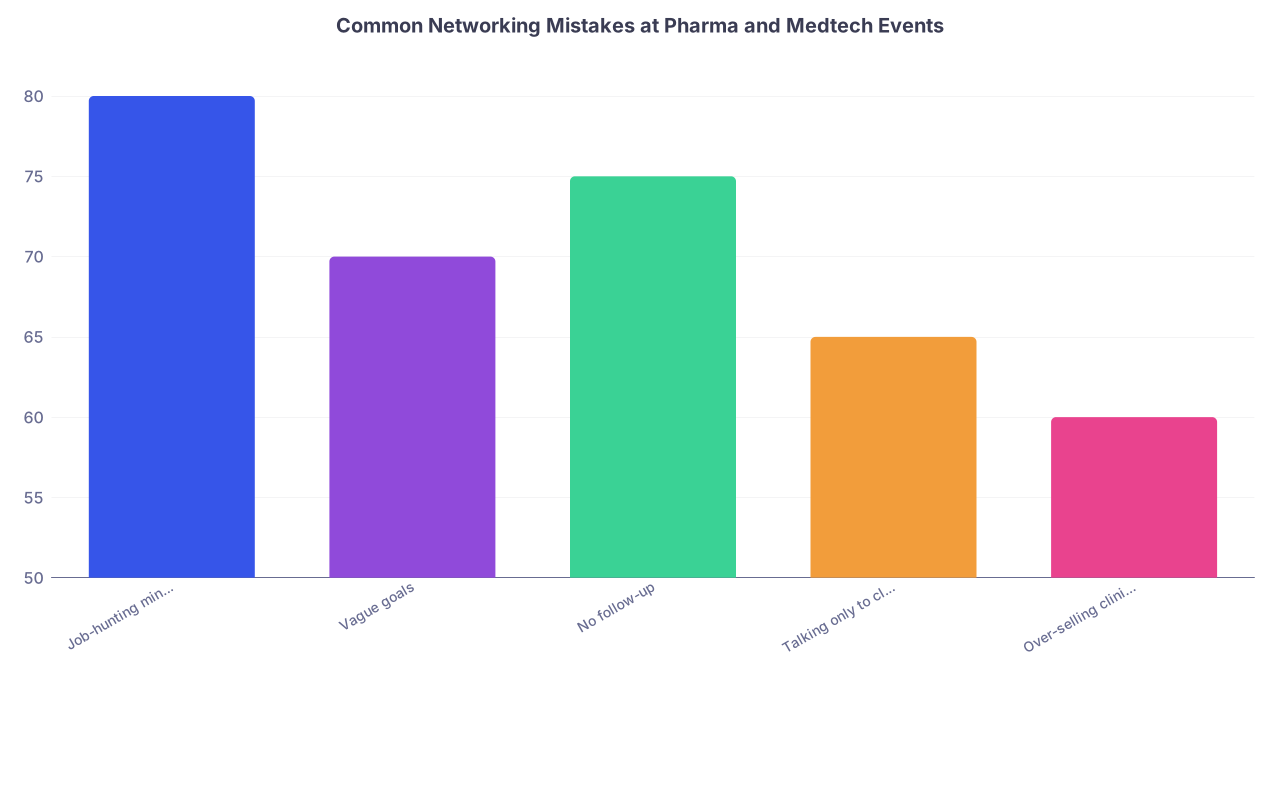
| Category | Value |
|---|---|
| Job-hunting mindset | 80 |
| Vague goals | 70 |
| No follow-up | 75 |
| Talking only to clinicians | 65 |
| Over-selling clinical status | 60 |
11. Red Flags You Should Notice About Them Too
One more thing people forget: you’re not the only one being evaluated.
You should also be quietly evaluating companies and people.
- Everyone from a company seems burned out, cynical, or evasive about culture
- Leaders brag about “pushing the envelope” in ways that sound like “we dance on the edge of compliance”
- Nobody can clearly explain what success in their team looks like
- You hear “we just need clinicians to sign off on things” more than once
Those are places you’ll be miserable, no matter the salary.
Good signs:
- People disagree respectfully on panels without ego
- Employees talk about development, not just headcount and deliverables
- They’re honest about trade‑offs (regulatory delays, market constraints) and still seem engaged
You’re not just trying to get in. You’re trying to avoid getting stuck in the wrong corner of the industry.

| Step | Description |
|---|---|
| Step 1 | Attend Event |
| Step 2 | Set clear directional goals |
| Step 3 | Initiate focused conversations |
| Step 4 | Ask about their work and path |
| Step 5 | Offer brief relevant context about you |
| Step 6 | Exchange contact details |
| Step 7 | Send personalized follow up |
| Step 8 | Schedule short advice chats |
| Step 9 | Maintain light ongoing contact |
FAQs
1. I’m a resident with almost no industry exposure. What’s the biggest mistake I should avoid at my first event?
The worst move is pretending you know more than you do. Don’t posture. Say explicitly:
“I’m early in exploring nonclinical paths and trying to understand which functions clinicians fit into best.”
Then ask questions and listen more than you talk. You get far more respect for honesty and curiosity than for fake sophistication.
2. Should I bring printed CVs or resumes to a pharma/medtech conference?
Bringing a small number (3–5) is fine. Handing them out widely is not.
Use them only if:
- Someone explicitly asks for it, or
- You’ve had a substantial conversation and they say, “Send me your resume,” in which case email is usually better anyway.
Do not walk around passing them out like flyers. That screams “I don’t understand how this industry hires.”
3. How do I talk about wanting better work‑life balance without sounding lazy?
Frame it in terms of sustainability and impact, not “I don’t want to work hard.” Try:
“I’ve realized 80‑hour weeks in acute care aren’t sustainable for me long term. I’m looking for roles where I can do deep, consistent work over years, rather than sprinting from crisis to crisis.”
That sounds thoughtful, not lazy.
4. What’s a good way to handle it if a conversation is going nowhere?
Don’t cling. Politely exit. You can say:
“I don’t want to monopolize your time—this was really helpful. I’d love to connect on LinkedIn and maybe follow up with a couple of questions later.”
Then move on. Killing 30 minutes in a dead‑end conversation is a networking failure all by itself.
5. What’s one concrete thing I can do before my next event to avoid these mistakes?
Pick two roles (e.g., Medical Science Liaison and Clinical Development Physician) and learn:
- What they do day‑to‑day
- Typical backgrounds
- Common skills required
Then craft a 2–3 sentence directional intro that links your current experience to those roles. That way, every conversation starts from clarity, not vague “I’m exploring” fog.
Open your calendar right now and block 60 minutes this week to:
- Choose your two target roles, and
- Draft that 2–3 sentence intro.
If you do not fix your message before the event, you’ll repeat the same networking mistakes again—just in a nicer venue.