You are two days into writing your ERAS personal statement when it hits you: your entire identity is “I want to be an academic neurosurgeon / dermatologist / ortho attending with an R01.” And your chosen specialty? Statistically brutal. You start to think about backup specialties, then immediately worry you are betraying your research goals.
You do not want to “just be a clinician.” You do not want to give up on protected time, multi-center trials, and the possibility of serious grant funding. But you also do not want to be SOAPing into a prelim year with zero plan because you applied to one hyper-competitive field and prayed.
This is exactly where you need to get specific, not sentimental.
Let me break this down.
Step 1: Be Honest About What “Research-Heavy” Actually Means
Before you pick backups, you need a clean definition of what you are trying to preserve.
Most students conflate three distinct things:
- Doing some QI/retrospective chart reviews
- Being “academic faculty” in name only
- Being a true physician-scientist (K/R funding, >50% protected time)
Those are not the same. At all.
Think in three tiers:
Tier 1 – True physician-scientist track
NIH or equivalent funding is realistic. You have:- 40–80% protected time
- Genuine lab or data infrastructure
- Departmental pressure to publish and bring in grants
- Often dual-degree peers (MD/PhDs) as colleagues
Tier 2 – Clinician-investigator with robust scholarly activity
You are primarily clinical, but:- 10–30% protected time
- Ongoing involvement in trials, outcomes research, or education research
- First/last author papers still happening
- Promotion criteria explicitly value scholarly work
Tier 3 – Clinician with opportunistic research
You are full-time clinical and:- Do research in spare time or occasionally carve out small blocks
- Mostly QI, case series, small single-center projects
- Publications possible but hard to sustain at scale
You must decide which tier you are actually aiming for. Because the list of viable backup specialties changes depending on that.
If you’re dead-set on Tier 1, some “cushy” backups you are thinking of are simply not realistic. And if you are comfortable with Tier 2, your options open up a lot.
Step 2: Know Which Specialties Actually Support Heavy Research
Here is the blunt truth: some specialties are structurally built to support academic careers. Others have isolated academic oases surrounded by a desert of pure RVU grinding.
At a national level, these specialties are historically friendly to robust research careers (especially at top academic centers):
- Internal Medicine (with strong subspecialties)
- Pediatrics (especially subspecialties)
- Radiation Oncology
- Pathology
- Neurology
- Psychiatry (for certain types of research)
- OB/GYN (mainly MFM, Gyn Onc)
- General Surgery and its subs (for the top programs)
- Emergency Medicine (for clinical and public health research, at select centers)
- Anesthesiology (for perioperative, outcomes, and basic science in certain departments)
The problem is not “can you ever do research in X.” You can do research in almost any specialty if you are stubborn enough. The real questions:
- Are there established physician-scientist pipelines?
- Do departments actually protect time for early-career investigators?
- Are promotion and tenure processes aligned with research output?
Let’s structure this a bit.
| Specialty Group | Typical Research Support Level | Notes |
|---|---|---|
| IM subspecialties (cards, heme/onc, pulm/crit, ID, GI) | High | Strong R01/K culture at top centers |
| Pediatrics subspecialties | High | Similar to IM, with strong NIH presence |
| Pathology, Rad Onc | High | Heavy lab / translational / outcomes work |
| Neurology, Psychiatry | Moderate–High | Strong in neuroimaging, translational, trials |
| EM, Anesthesia | Moderate (center-dependent) | Few true R01 faculty, but growing |
| Generalist IM/Peds/FM | Variable | Strong in outcomes/epidemiology at select places |
So if your primary target is, say, neurosurgery or dermatology, and you still want an academic career as a backup, you should be looking at specialties that:
- Actually match your research style (basic/translational vs clinical vs health services)
- Have a proven track record of supporting non-MD/PhD physician-scientists
That short list, across institutions, tends to include:
- Internal medicine → heme/onc, cards, pulm/crit, ID, nephro (yes), GI
- Pediatrics → heme/onc, pulm, critical care, neonatology, ID
- Pathology → especially molecular, neuropath, heme path
- Neurology → especially movement disorders, epilepsy, neuroimmunology, stroke research hubs
- Psychiatry → for imaging, genetics, clinical trials, addictions, early psychosis
- Radiation oncology → though the job market is currently tense, research structure is strong
- Certain EM and anesthesia departments with explicit research tracks
Step 3: Match Your Primary Specialty to Logical Backups
Let us get concrete. Your backup cannot just be “something less competitive.” It needs to be:
- Plausible to enjoy clinically
- Aligned with how you like to think and work
- Realistically able to support your research ambitions
If You Are Aiming For: Neurosurgery / Ortho / ENT / CT Surgery
You like procedure-heavy fields, anatomy, high-stakes decisions, and probably some mix of basic and translational science.
Reasonable academic-viable backups:
General Surgery (academic programs)
- Still surgical, still ICU, still technically demanding
- Strong research in surgical oncology, trauma/critical care, outcomes, HPB, transplant
- Many programs have research years, T32 grants, and explicit physician-scientist tracks
Neurology (for neurosurgery applicants)
- Overlaps with neuro-onc, stroke, epilepsy, neuromuscular
- Strong opportunities in imaging, neuroimmunology, neuro-oncology research
- Can still be lab-heavy in some departments
Radiation Oncology
- If you are heavy into neuro-onc or onc generally
- High research density (physics, translational, clinical trials)
- But job market variability is a real concern right now
Anesthesiology (select programs)
- Acute care, physiology, perioperative medicine
- Research in outcomes, ICU, pain, pharmacology
- Fewer hardcore lab PIs, but some exist
If You Are Aiming For: Dermatology / Ophthalmology / Plastics
You probably like visual diagnosis, procedures, clinic-based care, and often some cross into immunology or oncology.
Academic-viable backups:
Internal Medicine → Rheumatology, Allergy/Immunology
- Perfect if your derm interest is autoimmune / inflammatory skin disease
- Rich translational immunology research world
- Grants and serious lab presence at many centers
Internal Medicine → Heme/Onc
- For oncologic derm or ocular oncology interest
- Massive trial infrastructure, NCI-designated centers, strong R01 density
Neurology (if into neuro-ophtho, demyelinating disease, neuroimmunology)
- Visual pathways, MS, neuromyelitis optica, neuroimmunology research
If You Are Aiming For: Radiology (especially IR) / Interventional Fields
You probably enjoy imaging, procedures, tech-driven care.
Backups that preserve academic options:
Diagnostic Radiology (if IR is primary target)
- Still highly academic in many centers
- Lots of imaging-based research, AI/ML, outcomes, data science
Internal Medicine → Cardiology / Pulm/CC
- For those drawn to hemodynamics, imaging, complex acute care
- Echo, advanced imaging, cath-adjacent academic work possible
Emergency Medicine
- Ultrasound, imaging-heavy acute care
- Academic EM departments can be surprisingly research-dense in some centers
If You Are Aiming For: Competitive Cognitive Fields (Road specialties with research focus)
Derm, ophtho, radiology, anesthesiology, etc. Your best “maximal research” backup is almost always:
- Internal Medicine at a research-heavy institution
- Pediatrics at a research-heavy institution
Because they open doors to:
- Heme/Onc
- Pulm/CC
- ID
- Cardiology
- GI
- Nephrology
- Endocrinology
- Various pediatric equivalents
Where major trials, registries, and lab-based groups live.
Step 4: Align Backup Specialty With Your Research Modality
This is where many applicants get it wrong. They pick a backup purely by competitiveness and forget to check whether their research “style” even fits.
What kind of researcher are you actually trying to be?
1. Basic / Translational Laboratory
If you care about mice, organoids, CRISPR, flow cytometry, and R01s, your best bets:
- Internal Medicine or Pediatrics → subspecialties anchored in immunology, oncology, cardiology, pulmonary, ID, nephrology
- Pathology → molecular pathology, cancer biology, genomics
- Neurology / Psychiatry → neuroimmunology, neurogenetics, synaptic biology, etc. at powerhouse centers
- Radiation Oncology → radiosensitizers, tumor biology, immuno-oncology crosstalk
Picking something like community EM or procedural-heavy private-practice-focused fields as backup if you are truly bench-oriented is a mismatch. You will be fighting your environment every day.
2. Clinical Trials / Translational Clinical
You like protocols, multi-center RCTs, targeted therapies, procedure comparisons, pragmatic trials.
High-yield homes:
- Heme/Onc (adult and pediatric)
- Cardiology
- Pulm/CC, critical care
- GI/hepatology
- Stroke neurology
- ICU-focused anesthesia or surgery (select centers)
- Rad Onc (huge trial infrastructure)
- Some high-end EM groups
This is where internal medicine and pediatrics again dominate.
3. Health Services / Outcomes / Population Science
You care about big data, registries, healthcare delivery, quality metrics, policy.
Almost any specialty can host outcomes researchers at an academic center, but the strongest ecosystems tend to be:
- General Internal Medicine
- Hospital Medicine
- Family Medicine at large academic centers
- EM at big urban institutions
- Surgical outcomes and perioperative medicine groups
- Pediatrics (esp. NICU, PICU, chronic disease populations)
If your dream is to be an NIH-funded outcomes researcher, your backup should be one of these, at an institution with robust public health / biostats infrastructure.
Step 5: Understand Program-Level vs Specialty-Level Reality
You are not matching into “internal medicine” generically. You are matching into a specific program that either supports scholarship or quietly crushes it with service demands.
Within the same specialty, the difference can be dramatic:
- One IM program: built-in research blocks, T32s, required scholarly products, robust mentorship
- Another IM program: 80-hour weeks on multiple services, “research time” is basically your one golden weekend
So when you pick backups, you are really choosing:
- A specialty that can support academics
- A subset of programs in that specialty that demonstrably do
Look for:
- Track records of residents matching into academic fellowships at name-brand institutions
- Presence of physician-scientist tracks, PSTP-like structures, or T32-supported pathways
- Clear mention of protected research time in PGY2/3
- Resident publication lists on websites (not just “opportunities exist”)
- Departments with significant NIH or foundation funding
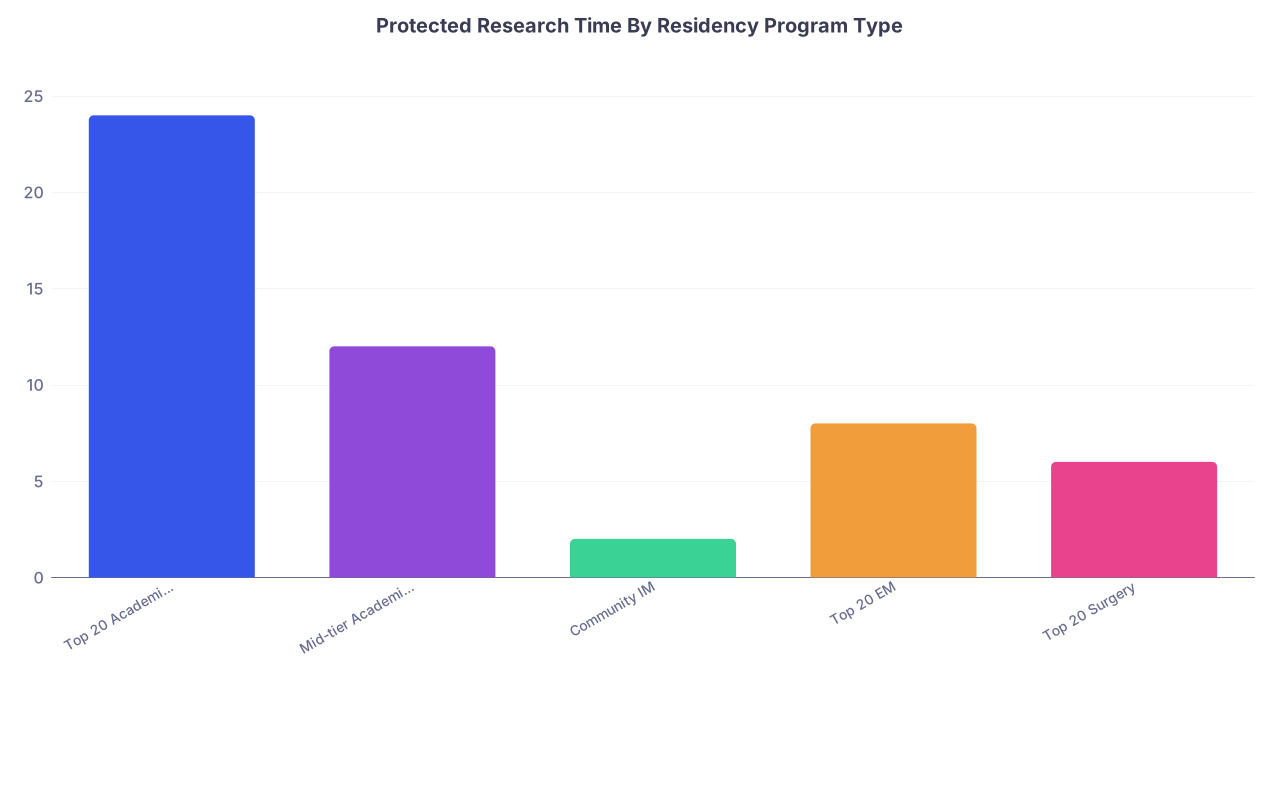
| Category | Value |
|---|---|
| Top 20 Academic IM | 24 |
| Mid-tier Academic IM | 12 |
| Community IM | 2 |
| Top 20 EM | 8 |
| Top 20 Surgery | 6 |
(Values are approximate average weeks of protected time over three years. The pattern is what matters: program type matters more than specialty label alone.)
Step 6: Build a Tiered Application Strategy That Is Still Academic
This is where people panic and either:
- Apply to only their dream hyper-competitive specialty and one token prelim medicine program
- Or swing to the other extreme and add backups that kill their long-term academic goals
You want a tiered but coherent list.
Example: Applicant Focused On Basic Neuroscience Research
Primary dream: Neurosurgery, heavy basic science.
Rational academic-preserving strategy could look like:
- Apply neurosurgery broadly, emphasizing physician-scientist track programs
- Simultaneously apply to:
- 20–30 Internal Medicine programs with strong neuroscience and physician-scientist tracks (Penn, WashU, UCSF, Columbia, etc.)
- 10–15 Neurology programs at similar institutions with explicit research pathways
You are not “giving up.” You are saying: “If neurosurgery blocks me, I still want to live in the neuroscience space as a physician-scientist.”
Example: Derm Applicant Focused On Immunology / Translational Work
Primary dream: Dermatology, autoimmune/oncologic slant.
Backup strategy:
- Apply Derm at research-heavy centers
- Also apply:
- Internal Medicine at places with powerhouse rheum and heme/onc divisions
- Possibly a few categorical IM programs closely aligned with major immunology research centers
If you match IM at a strong place, you can later go into rheum, allergy/immunology, or heme/onc and still do high-level immunology research. Academia is preserved.
Example: IR-Radiology Applicant Focused On Device and Outcomes Research
Primary dream: Integrated IR or DR with IR focus.
Backup strategy:
- Apply both integrated IR and DR programs primarily at big academic medical centers
- Also target:
- Some IM programs with strong cardiology and interventional subs
- A small number of EM programs with very strong research operations
Your theme: acute care, imaging, device/procedure outcomes. Not “I panicked and added psychiatry because it seemed chill.”
Step 7: Be Realistic About Competitiveness And Your Application
You must overlay all this with a sober read of your own stats:
- Step/Level scores (or pass/fail context plus shelf performance)
- Class rank / AOA / Gold Humanism
- Research productivity (number of pubs, first-author, quality of journals)
- Letters and institutional support
The harsher reality:
- If your application is borderline for your dream competitive specialty, it might still be strong for academic IM, peds, neuro, or path at legitimate research centers
- If your application is weak across the board, your priority might need to shift: match into something with at least some academic potential, then carve a niche
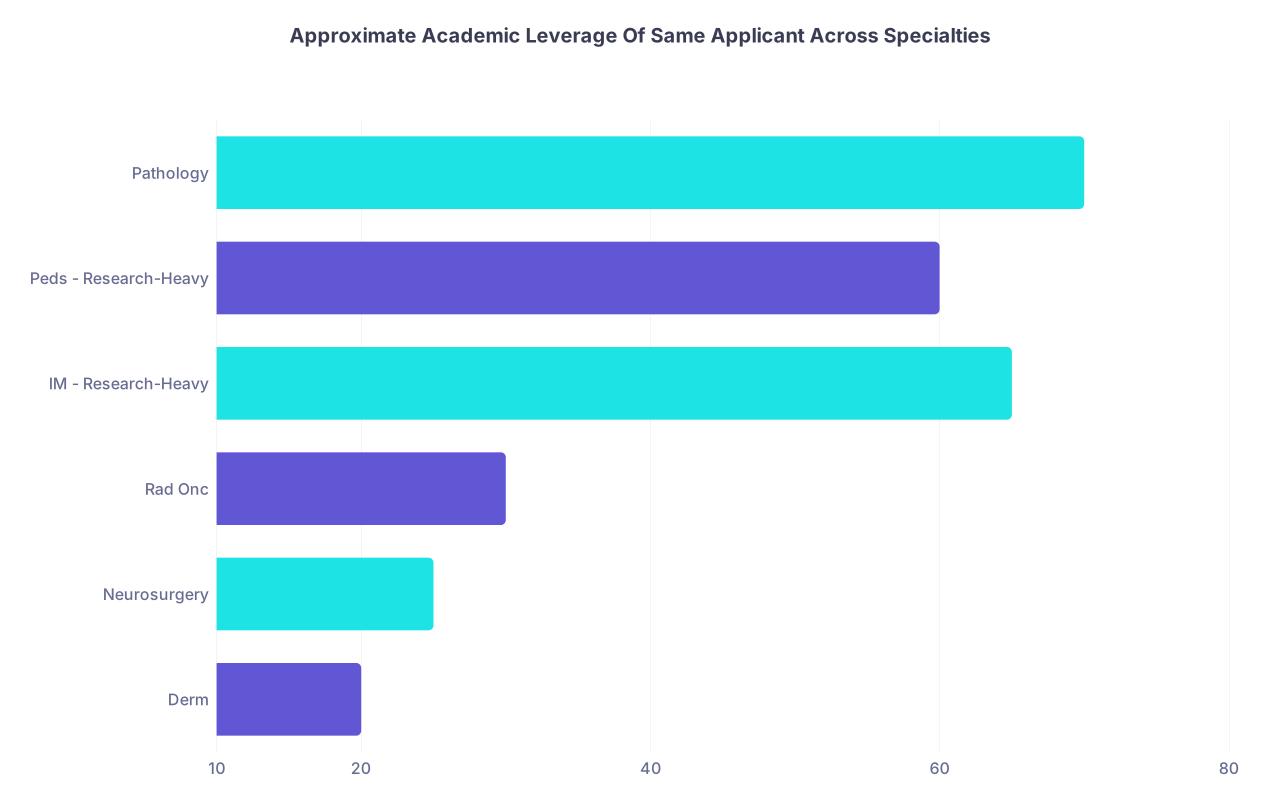
| Category | Value |
|---|---|
| Derm | 20 |
| Neurosurgery | 25 |
| Rad Onc | 30 |
| IM - Research-Heavy | 65 |
| Peds - Research-Heavy | 60 |
| Pathology | 70 |
Think of that graph as “relative likelihood of landing in a research-supportive environment” for the same mid-range candidate. The exact numbers are made up. The pattern is what matters.
You might have far more academic leverage in IM at a top-20 research program than in a low-tier version of your dream competitive field that barely does any research.
Step 8: How To Signal Your Backups Without Looking Flaky
Once you pick academic-friendly backups, you still need to communicate a coherent narrative.
The worst move: sending a derm program a PS about “lifelong passion for skin” and then sending an IM program a PS about “lifelong passion for internal medicine” with zero connecting tissue.
You need a through-line. Example structure:
Core Identity:
“My long-term goal is to be a physician-scientist studying immune-mediated disease with a focus on translational work that bridges bench immunology and clinical care.”Primary Clinical Lens (for main specialty):
For derm: “Dermatology provides a unique window into immune dysregulation at the skin surface…”Backup Clinical Lens (for IM):
For IM: “Internal medicine, and particularly rheumatology or heme/onc, provides a comprehensive view of systemic immune disease that aligns closely with my research focus…”
Same backbone: immune-mediated disease, translational research, physician-scientist.
Different clinical shells: derm for one set, IM subspecialty for the other.
Do that for whatever pair you pick. Neurosurgery and neurology. Ophthalmology and neurology. Ortho and general surgery. Radiology and internal medicine. The research spine stays consistent.
Step 9: Use Rotations And Away Electives Strategically
You are late in the game but not powerless.
If you are thinking about academic backup specialties, use any remaining flexibility to:
- Rotate at your home institution in that backup field, specifically on services run by research-active attendings
- Ask to be paired with a mentor who has grants or is PI on trials
- Produce at least one concrete scholarly output in that backup field (abstract, poster, or small project) before interview season if possible
That gives you:
- A letter that proves you are serious about that specialty
- Credibility with programs who see you are not just panic-applying to them
- Evidence that your research identity genuinely fits in more than one department
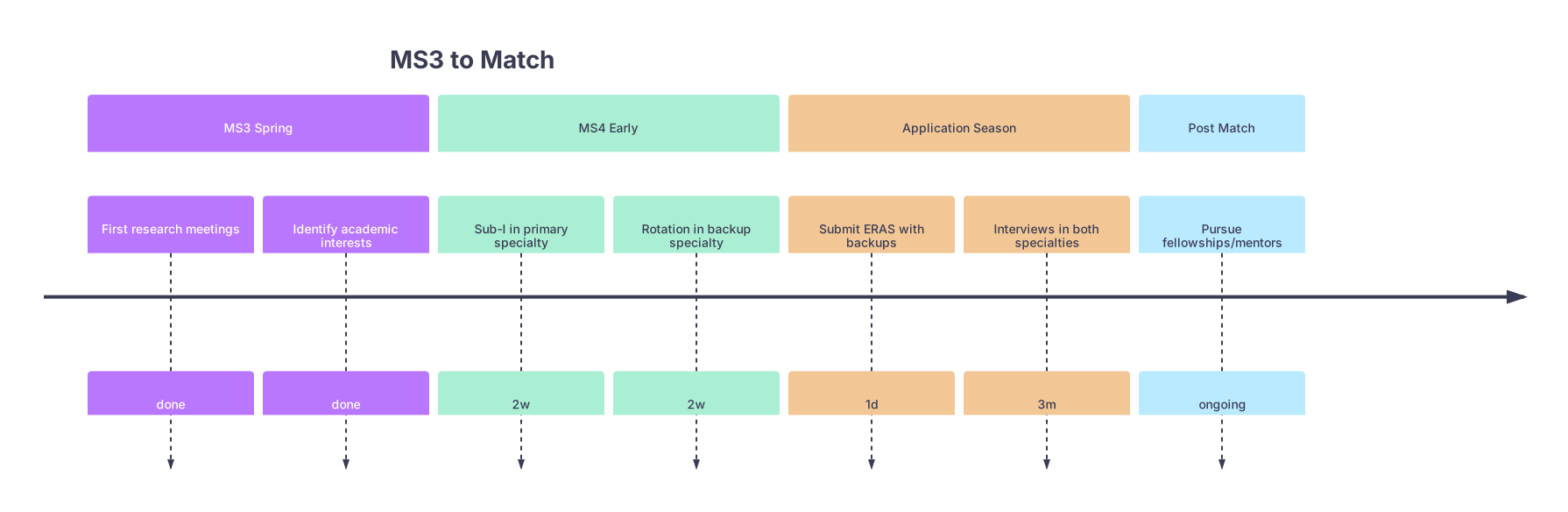
| Period | Event |
|---|---|
| MS3 Spring - First research meetings | done |
| MS3 Spring - Identify academic interests | done |
| MS4 Early - Sub-I in primary specialty | 2w |
| MS4 Early - Rotation in backup specialty | 2w |
| Application Season - Submit ERAS with backups | 1d |
| Application Season - Interviews in both specialties | 3m |
| Post Match - Pursue fellowships/mentors | ongoing |
Step 10: Plan The Long Game Beyond Match Day
One misconception I see constantly: “If I do not match [insert competitive research-y specialty], my dream of academia is dead.”
No.
What is dead is a specific shape of that dream. But the underlying academic identity is surprisingly plastic if you choose your backup wisely.
Example trajectories I have actually seen:
- Missed neurosurgery → matched neurology at big research center → did vascular neurology fellowship → now PI on stroke imaging R01s
- Missed derm → matched IM → rheumatology fellowship → translational immunology lab, K08-funded
- Missed rad onc → matched IM → heme/onc → PI on novel radiation-sensitizing agent trials in lymphoma
- Missed ortho → matched general surgery → surgical oncology fellowship → disease-specific research leadership role
The common denominator: the backup specialty was chosen with research infrastructure in mind, not just “less competitive and kind of okay.”
If you match into:
- An academic IM or peds program with strong fellowship pipelines
- A solid pathology program with molecular emphasis
- A research-heavy neurology or psychiatry program at a name-brand institution
You are still very much in the game.
Quick Reality Checks Before You Lock Your Backup List
Ask yourself these questions, bluntly:
- If I match only into my backup specialty, can I see myself doing this clinical work for 30 years without hating it?
- Does this specialty, at the programs I am ranking, have real physician-scientists, not just “we support scholarly activity” fluff?
- Does this backup logically connect to my existing research so I do not look like two different applicants stapled together?
- Am I targeting programs, not just specialties, that offer protected time, mentors, and fellowship pipelines?
And finally:
- If I landed in a top-10 academic IM/peds/path/neuro program and never touched my original target specialty again, would my academic ambitions still be possible?
If yes, you have picked a real backup. If no, you picked a comfort fantasy.
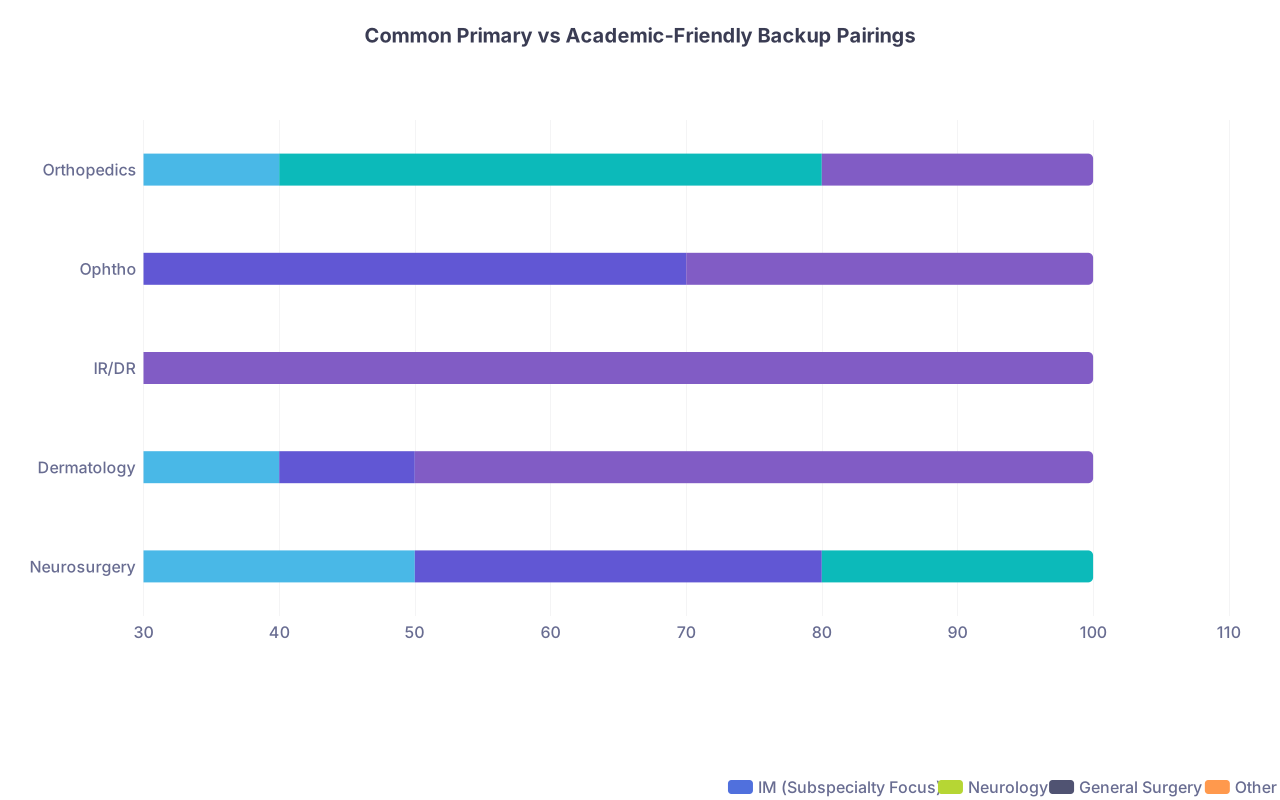
| Category | IM (Subspecialty Focus) | Neurology | General Surgery | Other |
|---|---|---|---|---|
| Neurosurgery | 50 | 30 | 20 | 0 |
| Dermatology | 40 | 10 | 0 | 50 |
| IR/DR | 30 | 0 | 0 | 70 |
| Ophtho | 30 | 40 | 0 | 30 |
| Orthopedics | 40 | 0 | 40 | 20 |


| Step | Description |
|---|---|
| Step 1 | Research heavy identity |
| Step 2 | IM/Peds subspecialty, Path, Neuro |
| Step 3 | IM/Peds subspecialty, Rad Onc, Heme/Onc |
| Step 4 | IM, Peds, EM, Surg outcomes |
| Step 5 | Rank academic friendly backups high |
| Step 6 | Proceed with primary specialty |
| Step 7 | Bench vs Clinical vs Outcomes |
| Step 8 | Primary specialty fails? |
The Three Things To Remember
- Do not pick backups by competitiveness alone. Pick them by alignment with your research modality and by the existence of real physician-scientist infrastructure.
- Internal medicine, pediatrics, pathology, neurology, and a few others are not consolation prizes. At the right programs, they are some of the strongest platforms for serious academic careers.
- Your story has to be coherent: one clear research identity, expressed through different but logically related clinical homes, rather than a random scatter of “safety” specialties.