
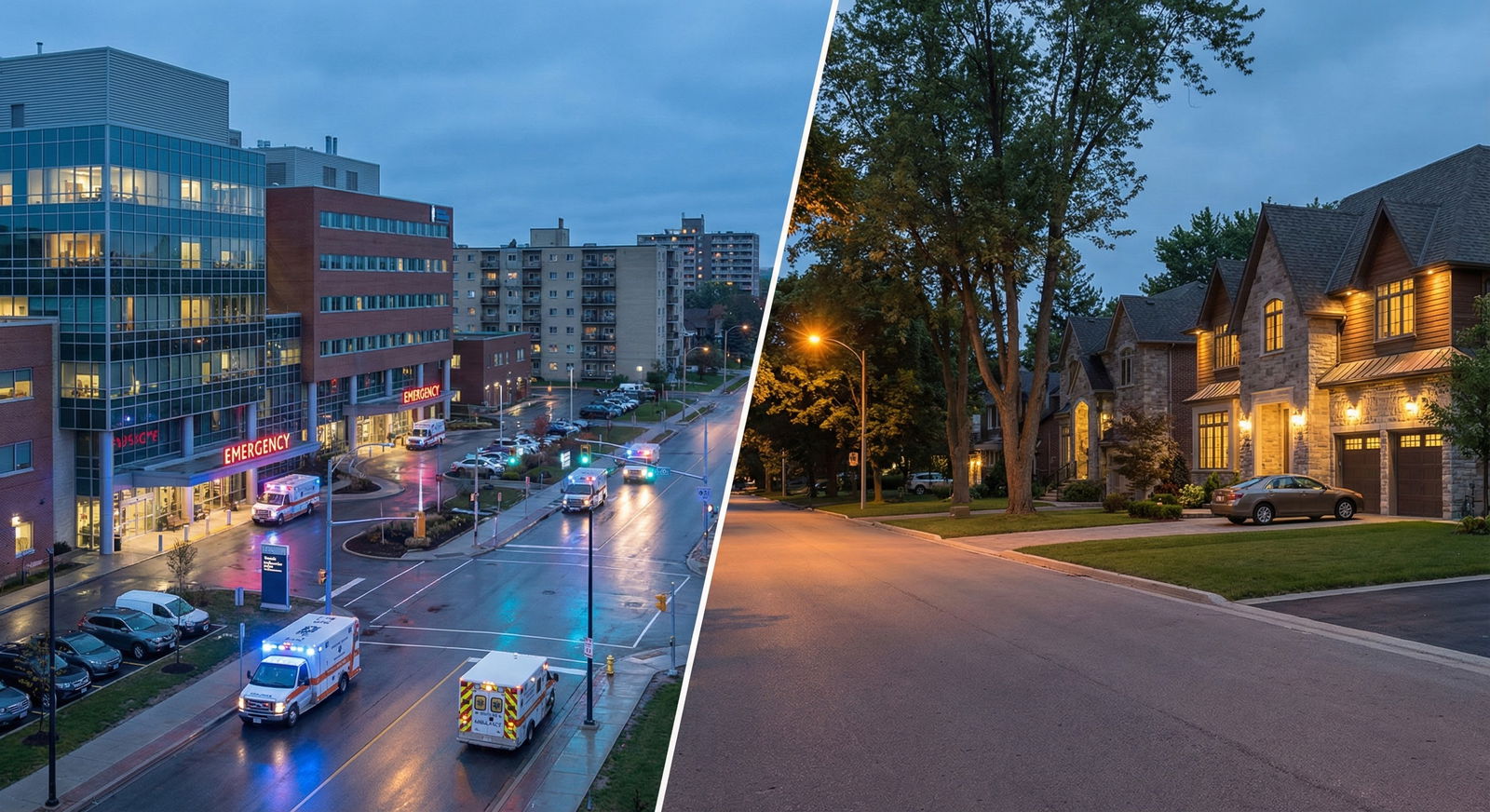
42% of physicians in a recent locums survey said neighborhood safety was their top factor in choosing where to work—more than salary, schedule, or staffing.
They’re not wrong to care. But they are very wrong if they think “low crime rate” automatically equals “this is a great place to practice medicine.”
It often does not.
Let me be blunt: some of the safest zip codes in America are absolutely miserable places to be a physician. Professionally dead, financially underwhelming, politically micromanaged—or all three. Meanwhile, some “rough around the edges” areas quietly offer the best combination of autonomy, money, case mix, and team culture you’ll ever see.
You’re being sold a very simple story:
Safe neighborhood = good job.
High-crime city = bad job.
The data—and what physicians actually report once they’re stuck there—tell a very different story.
The Safety Myth: What People Think They’re Optimizing
When a physician says, “I want a safe neighborhood,” they usually mean a bundle of half-connected ideas:
- Low violent crime
- Good schools
- Nice houses / property values
- Short, low-stress commute
- “Stable” patient population
Reasonable on the surface. But here’s what tends to get smuggled into that one word “safe”:
- Affluent, insured patients (translation: fewer Medicaid / uninsured)
- Higher reimbursement (assumed, not always real)
- Less chaos on call (fewer traumas, overdoses, social disasters)
- Better administration (because wealth = competence, right?)
These assumptions are wrong often enough to wreck careers.
The story administrators and recruiters love:
“Come to our safe, family-friendly community with great schools.”
What they never put on the billboards:
- Your RVUs will tank because volume is low and patients are scattered
- You’ll be buried in patient satisfaction nonsense from affluent, demanding families
- Cost of living will quietly erase your “competitive salary”
- You’ll get politically annihilated if you push back on leadership, because it’s a small, comfortable oligarchy and you’re the outsider
Safety is nice. But it’s not the lever you think it is.
What the Data Actually Shows About “Good” Places to Practice
There are a few ways to measure whether a place is good for physicians:
- Compensation adjusted for cost of living
- Autonomy and burnout rates
- Practice environment (support staff, EMR, admin interference)
- Patient mix and clinical complexity
- Lifestyle factors: commute, housing, schools, partner’s career options
Crime and neighborhood safety? They show up as one small part of that decision, not the driver.
Let’s look at how locations actually stack up.
| Area Type | Crime Rate | COL-adjusted Pay | Autonomy | Case Mix | Admin/Politics |
|---|---|---|---|---|---|
| Affluent Suburb | Low | Often mediocre | Low–Med | Low–Med | High |
| Urban Core | Higher | High | Med–High | High | Variable |
| Rural/Frontier | Low–Med | Very high | High | High | High variance |
| Mid-market City | Med | Solid | Medium | Medium | Medium |
That “safe suburb with top schools” everyone thinks is the dream? Run the math with cost-of-living and real workload, and it often loses to:
- Mid-size cities with mixed neighborhoods
- Slightly gritty urban cores with strong academic or safety-net systems
- Rural regions that seem “nowhere” but pay outsize salaries and grant huge autonomy
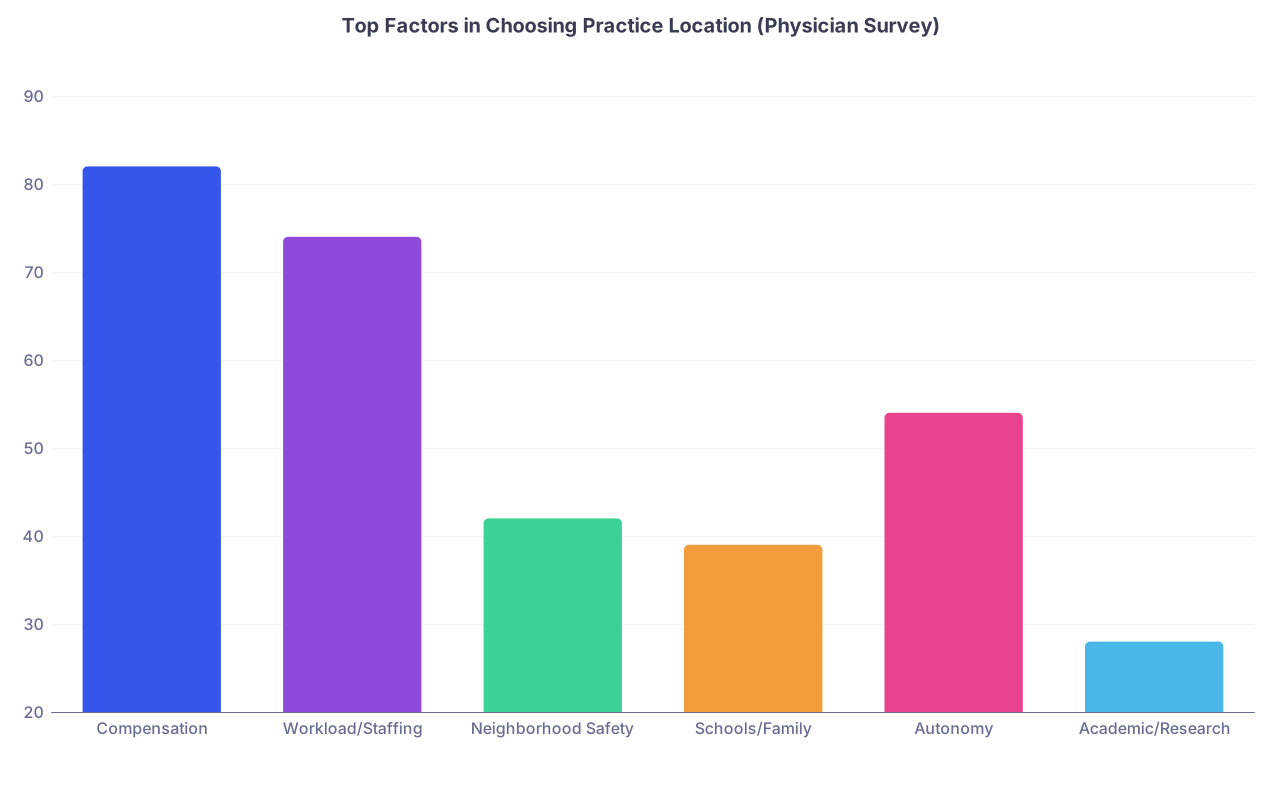
Now let’s see how physicians actually vote with their feet.
| Category | Value |
|---|---|
| Compensation | 82 |
| Workload/Staffing | 74 |
| Neighborhood Safety | 42 |
| Schools/Family | 39 |
| Autonomy | 54 |
| Academic/Research | 28 |
Safety matters—but it consistently trails compensation, workload, and autonomy. Yet when doctors talk about where they want to move, “safe neighborhood” often dominates the conversation, especially early in their careers or when they have young kids.
There’s a mismatch between what actually sustains your career and what your brain locks onto during Zillow browsing.
Where “Safest” Turns Into “Worst” For Physicians
Let’s go through some painful but common patterns I’ve watched play out.
1. Affluent Bubbles with “Great Schools,” Terrible Medicine
You know the pitch:
- “Top 10 school district in the state”
- “Median home value $800k”
- “Low crime, family-friendly”
What recruiters do not mention:
- Your call schedule is miserable because the group is chronically understaffed and no one wants to move there who isn’t already from there
- The affluent patient base expects concierge-level service at community-hospital staffing levels
- Your clinical decisions are second-guessed nonstop by patients armed with Google, Facebook groups, and lawyers on speed dial
- Your admin is terrified of bad Press Ganey scores from wealthy donors, so your leadership is spineless on clinical boundaries
Burnout in these settings isn’t always screaming chaos. It’s slow suffocation.
A typical week I’ve seen in these “safe” suburbs:
- Clinic days filled with low-acuity, high-expectation visits (“I saw an article about…” “I want a CT just to be sure”)
- Constant pressure to “keep them happy” even when they’re demanding inappropriate tests or antibiotics
- Night calls where a single upset family triggers three emails from leadership the next morning
Very safe neighborhood. Emotionally unsafe practice.
2. Low-Crime But Professionally Isolated
Another trap: small “safe” towns that look adorable on a weekend visit.
Quiet streets, kids on bikes, no sirens at night. Then reality:
- You’re the only specialist for 60 miles
- Your spouse’s career prospects are nonexistent
- Call coverage is brutal because the group is tiny and recruiting is nearly impossible
- Weak backup—no tertiary center nearby, limited ICU, outdated equipment
So yes, you can jog at 9 p.m. without worrying about getting mugged. You just might also be:
- Up every second or third night
- Drinking from the firehose clinically with minimal peer support
- Watching your skills stagnate because the complex cases go out of town
Safe zip code. Unsafe career trajectory.
3. “Safe” On Paper, Financially Dangerous in Reality
People forget that financial stress is its own kind of safety risk—for you and your family.
In a high-cost, low-crime suburb:
- Median home: $900k
- Property taxes: painful
- Childcare: astronomical
- Private schools: everyone else is doing it, social pressure is real
I’ve watched young attendings chase “safe + nice schools” into suburbs where their $280–300k salary buys:
- A huge mortgage
- Two car payments that feel mandatory to “fit in”
- Constant anxiety about saving for retirement and college
Then they realize they could:
- Move to a mid-sized city with 20–30% lower cost of living
- Earn the same or more
- Have a 10–15 minute commute
- Live in a perfectly fine, moderately safe neighborhood with good enough schools
Trade a tiny uptick in neighborhood safety stats for a massive improvement in financial and time safety. But the myth keeps them locked.
When “Gritty” Neighborhoods Quietly Win for Physicians
Now the other side. The places that get written off because they’re “unsafe,” yet physicians who work there often refuse to leave.
Urban Safety-Net Hospitals
Ask EM docs, hospitalists, trauma surgeons where they feel most clinically alive. You’ll hear the same thing:
- “The safety-net hospital downtown”
- “The Level 1 trauma center in the ‘bad’ part of town”
Why they stay despite higher neighborhood crime:
- Complex, meaningful clinical work—less “worried well,” more real pathology
- Tight-knit teams; when the pressure’s high, people actually rely on each other
- Often better staffing ratios than the squeezed suburban hospitals chasing margins
- Strong sense of mission and purpose, even if no one says it in those exact words
Is it for everyone? No. Commuting in may feel different than living around the corner. But professionally, these environments often:
- Keep your skills sharp
- Give you clear, immediate impact
- Offer extra pay for “undesirable” location or shifts
Some of the best EM and IM docs I know live in a safer suburb or mid-safety neighborhood… and gladly commute into a hospital in a statistically “worse” zip code because the work is simply better.
Rural and Underserved Communities
Rural doesn’t always mean “crime-free,” but violent crime rates are often lower. The danger here isn’t people on the street; it’s professional infrastructure.
Yet when it’s done right, rural can be a goldmine:
- Huge autonomy—no one looking over your shoulder every five minutes
- Broad scope of practice; you’re really using your training
- High salaries, loan repayment, signing bonuses
- Zero commute and cheap housing
I’ve seen physicians in “middle-of-nowhere” towns:
- Pay off loans in 5–7 years
- Work 4-day weeks
- Live on acres of land with ridiculous quality of life
Is the town statistically safer than a major city? Often yes. But the professional safety—job security, financial margin, community support—matters at least as much.
The Real Risk Calculation: Personal vs Professional Safety
Let’s separate out what you’re actually trying to protect:
- Physical safety of you and your family
- Psychological safety at work (not being constantly undermined or harassed)
- Financial safety (margin between income and expenses)
- Professional safety (skills, reputation, ability to pivot)
Focusing only on neighborhood crime is like buying a car based only on color. Sure, it matters a little. It’s not the engine.
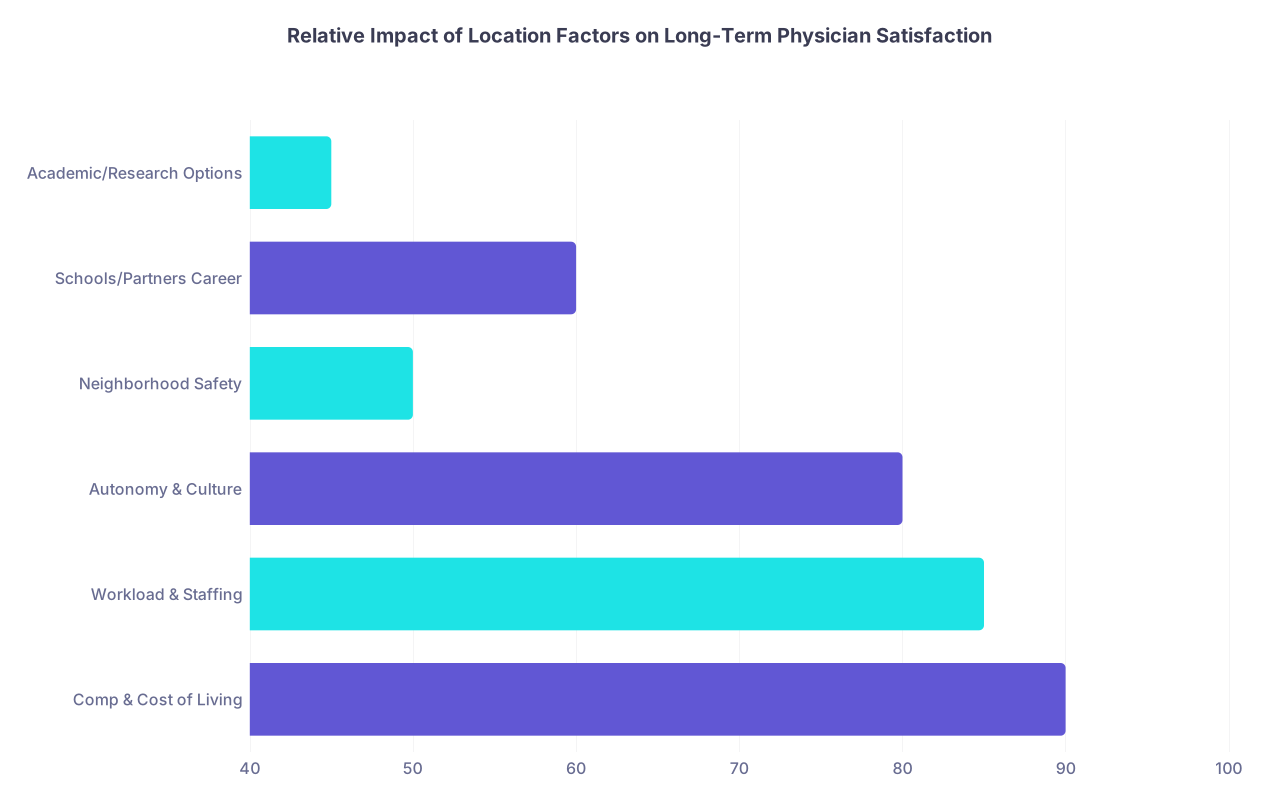
Here’s how those trade offs often shake out:
| Category | Value |
|---|---|
| Comp & Cost of Living | 90 |
| Workload & Staffing | 85 |
| Autonomy & Culture | 80 |
| Neighborhood Safety | 50 |
| Schools/Partners Career | 60 |
| Academic/Research Options | 45 |
The punchline: neighborhood safety is solidly mid-tier. Not irrelevant. Not decisive.
You can absolutely live in a physically safe place and simultaneously:
- Work in a psychologically unsafe culture
- Stay financially unsafe from lifestyle inflation
- Become professionally unsafe by letting your skills narrow or atrophy
But recruiters and glossy brochures will never put those safety metrics on the first slide.
How to Think About “Safe” Locations Like a Grown-Up, Not a Zillow Addict
If you want to be rational about this—and not just seduced by granite countertops and low crime stats—do this instead:
Rank your actual priorities.
Not the ones you say in interviews. The ones that wake you up at 3 a.m. Is it debt? Kids? Autonomy? Academic niche?Separate where you work from where you sleep.
You can work in a sketchy-ish area and live 10–20 minutes away in a calmer neighborhood. Don’t conflate hospital zip code with your home address.Score offers on 4 axes, not 1:
- Work environment (support, staffing, admin sanity)
- Money vs cost of living
- Professional development (case mix, mentorship, academic options)
- Personal life (schools, commute, partner’s career, neighborhood safety)
Talk to people actually working there, not just one “tour guide” partner.
Ask brutally specific questions:- “When was the last time someone left, and why?”
- “How often do you feel truly unsafe—at work vs at home?”
- “What would make you leave in the next year?”
Watch for red-flag marketing words.
The more a place leans on “safe, family-friendly, great schools,” the more I start hunting for what’s missing: workload transparency, turnover data, compensation details.
The Bottom Line
- A safe neighborhood does not automatically equal a good place to practice medicine. Some of the most “family-friendly” suburbs are professional dead ends or slow-burn burnout factories.
- Crime rate is one variable among many. Long-term physician satisfaction tracks much more closely with autonomy, workload, cost-of-living–adjusted pay, and culture than with how often the local police blotter updates.
- The smartest physicians treat “safety” as a multi-dimensional problem—physical, financial, psychological, professional—and choose locations that balance those, not just the lowest-crime zip code with the prettiest brochure.


