

The idea that “big-name cities automatically give you the best doctor lifestyle” is wrong.
If you care about call schedule and family life, prestige cities often give you the worst deal.
Here’s the real pattern: the best balance usually lives in mid-sized metros and strong secondary markets, not in the places that make the front page of medical journals.
Below I’ll walk through specific city types, concrete examples, and how to evaluate any city you’re considering—because the truth is, there’s no single “best city,” but there absolutely are better markets if you want predictable call, sane workloads, and a real life with your family.
The Core Trade‑Off: Prestige vs. Predictability
Before naming cities, you need the basic equation.
Hospitals in hyper‑competitive metros (Boston, San Francisco, NYC, DC, Chicago core) tend to offer:
- More academic prestige, cutting‑edge research, complex cases
- Higher patient complexity and volume
- More night coverage gaps (read: more call and “we’re a bit short” texts)
- Higher cost of living that pressures you to work more
Hospitals in mid‑tier or secondary markets tend to offer:
- Better compensation per unit of work
- More standardized schedules and protected time
- Easier access to part‑time/0.8 FTE or hospitalist/no‑call setups
- Lower cost of living = less pressure to grind
You’re not choosing “good vs. bad.” You’re choosing “status + chaos” vs. “stability + family time.”
Most doctors who actually want to coach their kid’s soccer team or eat dinner at home regularly end up in that second group of cities.
City Archetypes: Where Call and Family Life Actually Work
Let’s break this into realistic buckets instead of pretending there’s one magic city.
1. The Strong Secondary Metros (Often the Sweet Spot)
These are cities with:
- 1–3 major health systems
- Enough competition to prevent exploitation
- Not so many training programs that residents absorb all the bad call
Examples people quietly rave about for balance:
Raleigh–Durham, NC
You’ve got Duke, UNC, UNC Rex, WakeMed, and a growing private practice world. Academic plus community options. Call is often more structured; many service lines have night float or nocturnists. Cost of living is reasonable (though rising fast).Minneapolis–St. Paul, MN
Large integrated systems (HealthPartners, Allina, M Health Fairview). Strong culture of work‑life boundaries, decent staffing ratios, and a population that expects physicians to have a life. Winters are brutal, but family life is excellent: schools, parks, kid‑friendly everything.Charlotte, NC
Atrium and Novant competing, big enough to spread call across several groups, lots of hospitalists covering nights. Suburbs with short commutes and manageable traffic. Many outpatient specialties can negotiate 1:6 or better call, sometimes phone‑only.Denver, CO (with caveats)
Lifestyle draw makes it popular, so some jobs are oversubscribed. But if you avoid the most prestigious academic posts and look at large community groups or hospitalist models, you can get 7‑on/7‑off or light call and then ski with your kids. Cost of living is high but not Bay‑Area insane.Nashville, TN
Health‑care hub with HCA and multiple systems. Mix of academic and community. Good for hospitalist and proceduralists; call intensity can vary but many groups have volume to justify proper shift‑based models.
These are cities where you’ll hear attending physicians say things like, “I’m home for dinner most nights,” without irony.
2. Affordable Mid‑Sized Cities With Strong Health Systems
These don’t look glamorous on Instagram, but they quietly deliver excellent physician lifestyle.
Think:
- Madison, WI – University town + integrated systems, bike‑to‑work possible, strong schools, academic/community hybrid roles with defined call blocks.
- Grand Rapids, MI – Spectrum Health/Corewell and a growing medical scene. Many specialties have 1:6+ call and actual backup.
- Greenville, SC – Prisma Health anchor, growing population but still reasonable housing. Short commutes and many colleagues with families.
- Des Moines, IA – Several systems, stable patient base, low cost of living. Physicians often have call that looks almost quaint compared to coasts.
- Boise, ID – Rapid growth, St. Luke’s and St. Alphonsus. Some specialties are still a bit stretched, but hospitalist and many outpatient roles are very family‑friendly.
What you tend to get in these cities:
- Call schedules that are published and respected
- Actual time off post‑call
- Reasonable patient volumes that do not require you to see 30+ a day to stay afloat
- Space and cost structure to live close to work, which effectively gives you hours back every week
3. Suburban Rings of Major Academic Cities
This is where a lot of people eventually land: you train in the academic core, then realize the life you want is 30–60 minutes away.
Patterns I’ve seen repeatedly:
- Outside Boston – Worcester, Burlington, and southern NH (Nashua, Manchester, Salem) have community hospitals and multi‑specialty groups with less insane call, better parking, and more houses with yards.
- Outside Philadelphia – Main Line suburbs, South Jersey, and Delaware systems offer lighter or better‑structured call than the flagship academic centers.
- Outside Washington, DC – Northern Virginia and suburban Maryland community systems have more defined shifts, particularly for hospitalists, EM, anesthesia, and radiology.
- Outside Seattle – Tacoma, Everett, Olympia, and Spokane (a bit further) often have more predictable call and cheaper housing.
The trade‑off: you lose some resident coverage and academic glamour, but you often gain:
- 1:6–1:10 call instead of every 3–4 nights
- More stable staffing (less churn of fellows and rotating learners)
- A community where your kids can stay in the same school system long‑term
4. “Lifestyle” Markets That Are Overrated for Family Life
A tough pill to swallow: cities that get marketed heavily as “great lifestyle” often punish physicians the hardest.
Common offenders:
- San Francisco Bay Area – Call can be fine in some systems, but cost of living and commute times eat your life. You may technically be off call yet still sitting in traffic for 90 minutes.
- New York City – Residents absorb a lot of call, but as an attending you’ll still feel volume, documentation load, and a daily grind that’s not family‑friendly unless you’re very well compensated and very intentional.
- Los Angeles – Fragmented systems, unpredictable commutes. You can find good jobs, but the baseline isn’t family‑optimized.
- Miami – Some great groups, but also high volume, tourist surges, and patchy staffing. Lots of “can you pick up an extra call?” texts.
Are there perfectly happy families in these cities? Of course. But you need to be far more selective about group culture and contract terms to avoid being trapped.
How to Evaluate Any City for Call and Family Life
Instead of memorizing “best cities,” you need a framework. Otherwise you’ll chase anecdotes.
Here’s how I’d assess a potential city or job:

| Step | Description |
|---|---|
| Step 1 | Identify City |
| Step 2 | Research Health Systems |
| Step 3 | Check Physician Supply and Demand |
| Step 4 | Review Call Structure |
| Step 5 | Ask Lifestyle Questions on Site Visit |
| Step 6 | Compare With Family Needs |
| Step 7 | Decide Accept or Decline |
1. Look at Physician Supply vs. Demand
Overstaffed markets = more call coverage options, but sometimes lower pay.
Underserved markets = high pay, but call can be brutal.
Search:
- Number of hospitals and large groups in the metro
- Number of residency programs in your specialty (residents can reduce call burden or hide ugly schedules)
- Population growth trends
Growing city + multiple systems + moderate training programs = usually better for lifestyle.
2. Dissect the Actual Call Structure
During interviews, do not accept vague answers. Ask specifically:
- How many physicians share the call pool?
- Is call home or in‑house?
- How many calls per month, on average, over the last year—not “in theory”?
- Is there a nocturnist or night float model backing you up?
- What happens if someone is sick—who covers?
Push for data. “We all just pitch in” is code for “you will be miserable.”
3. Ask Lifestyle Questions Out Loud (People Avoid This)
On site visits, I routinely suggest asking:
- “How many of you get home for dinner most nights?”
- “On a bad week, what does your schedule look like?”
- “Who here has kids under 10, and what’s your typical weekday?”
- “How often does your post‑call day get ‘eaten’ by meetings or add‑ons?”
Watch who answers and how quickly. Watch for the nervous laugh. The best groups answer plainly: “Most of us are out by 5:30, except post‑call days, which are protected. I coach Little League on Tuesdays.”
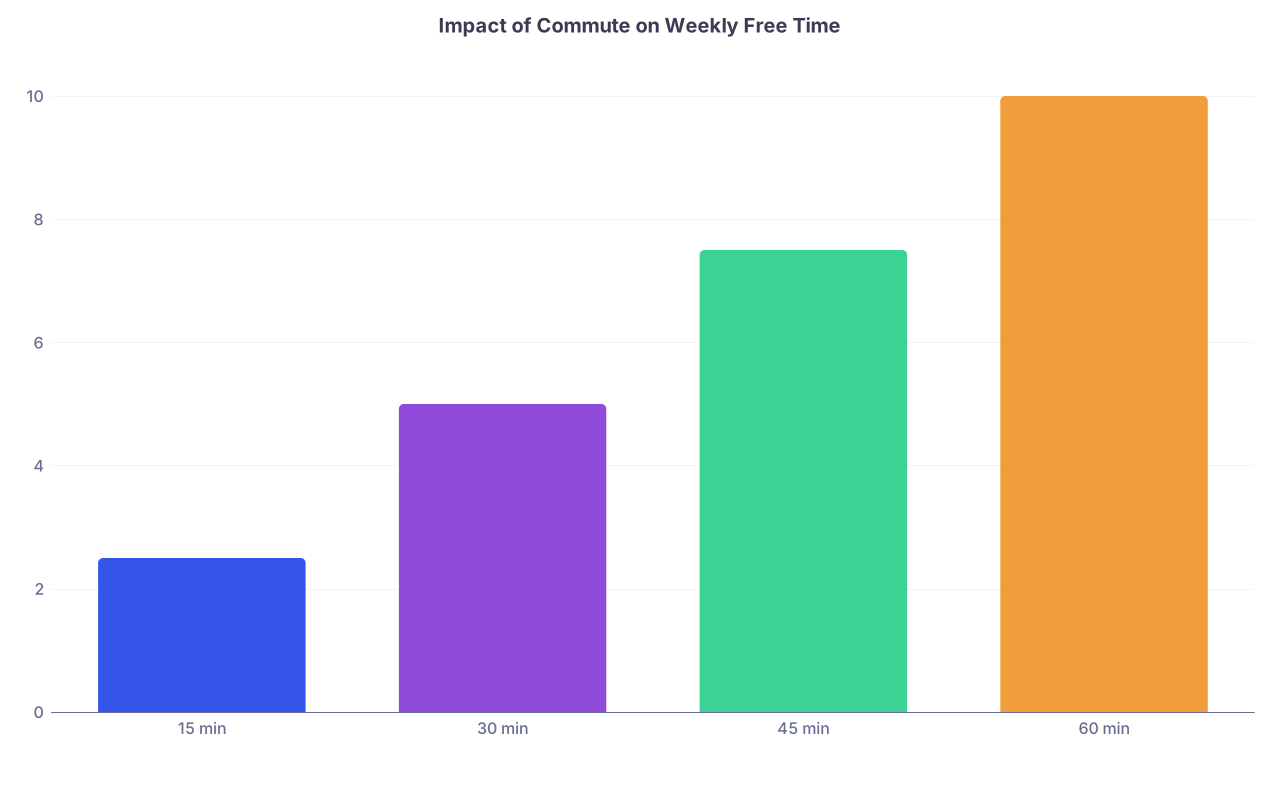
4. Layer in Cost of Living and Commute
Even with the same call schedule, these two variables will radically change your family life.
| Category | Value |
|---|---|
| 15 min | 2.5 |
| 30 min | 5 |
| 45 min | 7.5 |
| 60 min | 10 |
(Those numbers are hours per week spent commuting, assuming 5 days a week, round trip.)
If you can live 10–20 minutes from the hospital in a mid‑sized city, you effectively gain 5–7 hours a week with your family compared to someone in a big‑city suburb with a 60–90‑minute slog.
Concrete City Examples by “Family‑Friendly” Profile
These are not exhaustive and they’re not perfect. But they match patterns many attendings talk about when they whisper the real story behind closed doors.
| City/Region | Typical Profile | Family-Life Strength |
|---|---|---|
| Raleigh–Durham, NC | Academic + community mix | Very strong |
| Minneapolis–St. Paul, MN | Large integrated systems | Very strong |
| Madison, WI | University + mid-sized | Strong |
| Charlotte, NC | Competing large systems | Strong |
| Boise, ID | Growing regional hub | Moderate–Strong |
That table is a starting point, not a ranking. You can absolutely build a great family life in dozens of other metros that look similar on paper.
Future Trends: Where Work–Life Balance Is Headed
The good news: the market is slowly shifting in your favor.
Two important trends:
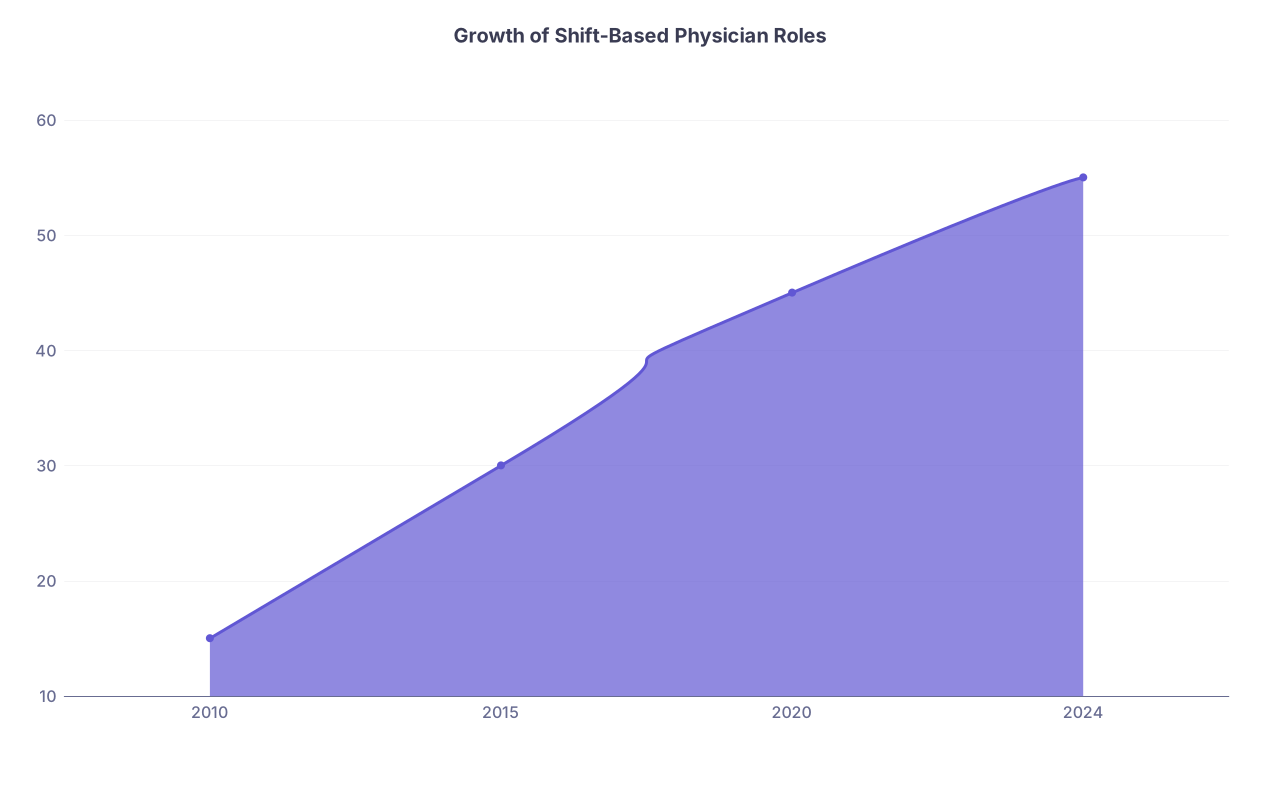
Shift‑based care is spreading.
Hospital medicine, ED, anesthesia, critical care, even some subspecialties are moving toward more defined shifts and nocturnist models. That’s inherently more family‑friendly than old‑school 1:3 home call with constant pages.Telemedicine and hybrid models are quietly reshaping “call.”
Some groups now use tele‑coverage for nights and weekends: teleradiology, tele‑ICU, tele‑stroke, tele‑psych.
That can mean:- Less in‑house overnight coverage
- More predictable escalation protocols
- Ability to handle some things from home without dragging you in
| Category | Value |
|---|---|
| 2010 | 15 |
| 2015 | 30 |
| 2020 | 45 |
| 2024 | 55 |
(Percent of physician roles estimated to be primarily shift‑based.)
Where this matters for you: cities with large integrated health systems and modern telehealth investments are more likely to protect your nights and weekends going forward.
How to Match City Type to Your Family Priorities
Your best city depends on what you care about most. Be honest with yourself.
If your top priorities are:
- Highly predictable schedules
- Minimal call, real post‑call days
- Being present for young kids
Then you should lean toward:
- Hospitalist roles in secondary or mid‑sized markets
- Large multi‑specialty groups with in‑house call pools
- Cities like: Madison, Raleigh–Durham, Greenville, Des Moines, Boise, Grand Rapids, or suburban systems around big metros
If you care about:
- Academic prestige
- NIH‑level research
- Tertiary/quaternary care
You can still protect family life, but you’ll need to:
- Be more selective about departments (some are notorious for toxic call)
- Negotiate hard on protected time and call distribution
- Possibly live in the suburbs or nearby mid‑sized cities and commute in

And if you want:
- Big‑city culture, restaurants, airports, diversity
- But still need real family time
Then your strongest play is often:
- Live in the outer ring of a large metro
- Work at a community or satellite hospital with a larger system brand
- Negotiate for defined shifts or 0.8–0.9 FTE
Think: suburbs around Boston, Philly, DC, Seattle, Atlanta, and similar.
Quick Reality Check: Red Flags That a City/Job Will Crush Family Life
No matter the city, walk away if you see this combination:
- “We don’t really have a nocturnist” + “We’re growing really fast”
- “We’re like a family here” used to justify frequent extra call coverage
- No documented policy for post‑call days
- Partners quietly admitting their spouse is “basically a single parent during the week”
That’s not a city problem. That’s a group culture problem. But culture is heavily shaped by the local market, and you’ll see this more often in:
- Isolated single‑hospital towns with no competing employer
- Prestige‑obsessed academic centers in big metros
- Tourist or seasonal markets that surge unpredictably
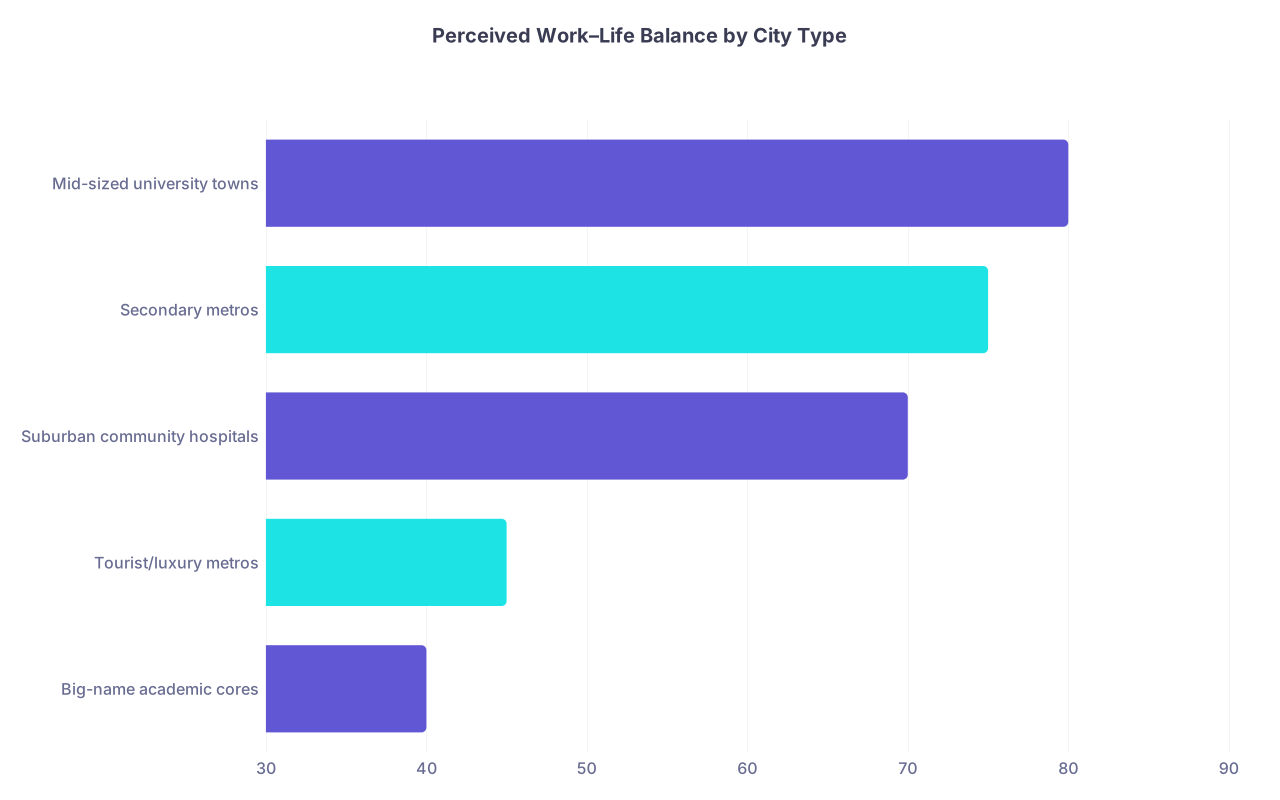
Visual Snapshot: City Types vs. Lifestyle
| Category | Value |
|---|---|
| Big-name academic cores | 40 |
| Tourist/luxury metros | 45 |
| Suburban community hospitals | 70 |
| Secondary metros | 75 |
| Mid-sized university towns | 80 |
(Values here are illustrative “lifestyle scores” out of 100, based on common patterns physicians report.)

FAQs

1. What’s the single best city for doctors with families?
There isn’t one. But the best category is usually: mid‑sized, affordable metros with 1–3 big health systems and decent schools—places like Raleigh–Durham, Madison, Grand Rapids, Greenville, and Minneapolis–St. Paul. Those cities consistently offer better call schedules, shorter commutes, and enough competition that hospitals have to treat you reasonably well.
2. Are rural jobs better or worse for call and family life?
They’re extreme. Some rural jobs are fantastic—high pay, light volumes, true appreciation, and a slow pace. Others are brutal because you’re the only show in town and you’re on call every other night. The key is backup: if there’s only one of you in your specialty and no tele‑coverage, assume the call will be heavy.
3. Can you have good family life in New York, SF, Boston, or LA as a doctor?
Yes—but you have less margin for error. You must be picky about your group and specialty, avoid the worst‑offending departments, and pay close attention to commute and cost of living. Many physicians in these cities do fine by choosing hospitalist or shift‑based roles, living very close to work, and being okay with a smaller home in exchange for time.
4. For residents picking fellowship, should city lifestyle matter now?
It should matter somewhat, but not more than training quality. Residency and fellowship are temporary by design. It’s usually a mistake to choose clearly inferior training just for lifestyle. That said, if you’re already burning out, going from malignant residency into a malignant fellowship in a punishing city is a fast track to quitting medicine altogether. Balance the two.
5. What specialties have the best call schedules for family life, regardless of city?
Generally more predictable: dermatology, pathology, radiology (depending on call model), outpatient psychiatry, many outpatient surgical subspecialties with good coverage (ophtho, ENT, ortho in large groups), and hospitalist medicine with true shift work. More punishing on average: general surgery, OB/GYN in small groups, neurosurgery, cardiothoracic surgery, interventional cardiology in small call pools, and some inpatient subspecialties in understaffed markets.
Bottom line:
- The best balance of call and family life usually lives in secondary metros and mid‑sized cities, not the famous coastal cores.
- City matters, but group culture and call structure matter more than the name of the place.
- If you want a real family life, optimize for predictable schedules, short commutes, and sane call pools, even if that means choosing a less glamorous zip code.


