

You’ve got an offer from a big-name academic center in a major city. You’ve also got a solid offer from a community hospital in a smaller town. Your inbox is full of contract PDFs and your friends are asking, “So where are you going?”
You’re stuck on the real question:
Should you start your career in a big academic city or a smaller community?
Let me give you the short version first:
- If you care most about subspecialty depth, research, prestige, and complex pathology, start in the big academic city.
- If you care most about autonomy, lifestyle, broad hands-on practice, and less bureaucracy, start in the smaller community.
But the right answer for you depends on a few specific, non-fluffy things: what you actually want your day to look like, how much debt you have, how you handle politics, what kind of medicine you enjoy, and who else is in your life.
Let’s go through this like an attending who doesn’t have time to sugarcoat things.
First: What Actually Changes Between Big Academic vs Small Community?
Strip away the branding and the brochures. Practicing medicine is still: see patient, make decisions, document, repeat.
The differences that really matter in early career:
- Case mix and complexity
- How many bosses you effectively have
- Speed of autonomy
- Money vs cost of living
- Future options it opens or closes
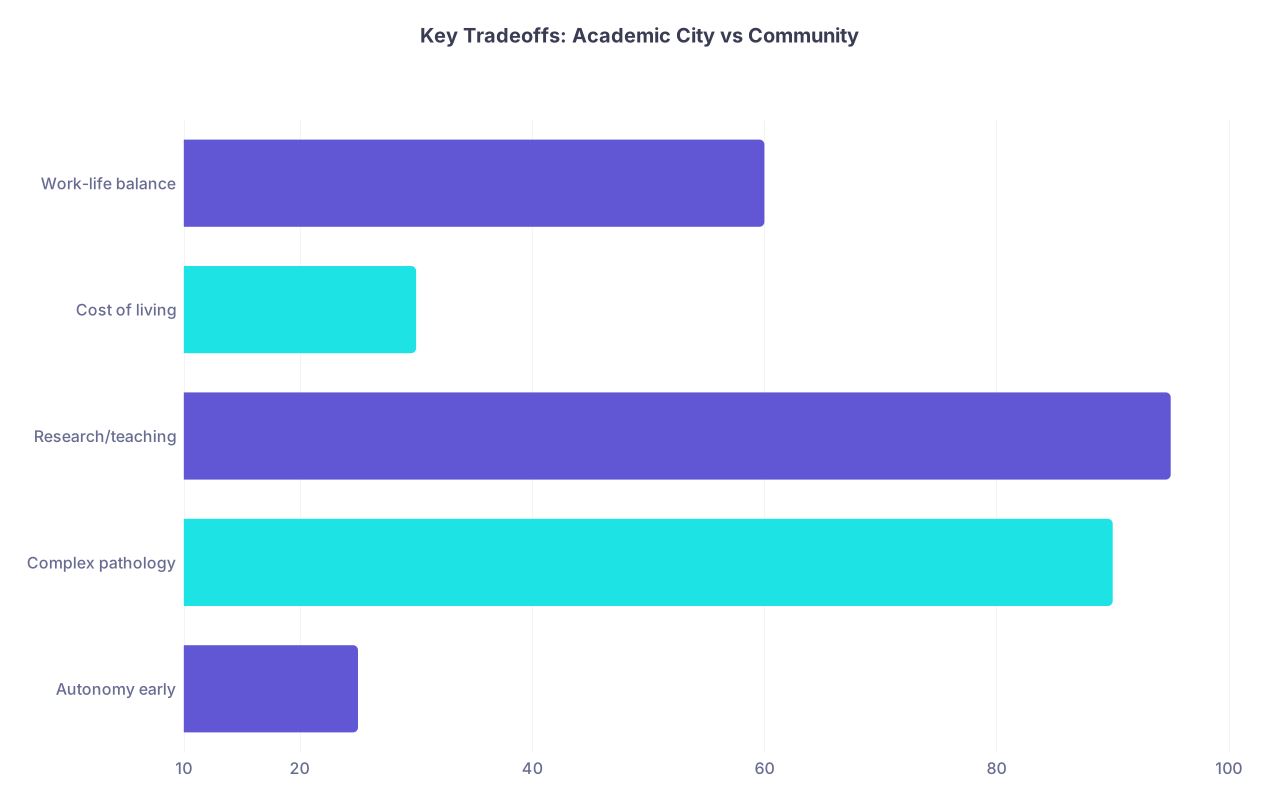
| Category | Value |
|---|---|
| Autonomy early | 25 |
| Complex pathology | 90 |
| Research/teaching | 95 |
| Cost of living | 30 |
| Work-life balance | 60 |
(Think of 100 as “strongly academic-leaning” and 0 as “strongly community-leaning.” This is directional, not math.)
Here’s the thing most residents underestimate:
Your first 3–5 years set your habits, your reputation, and often your trajectory. The environment you choose now will push you in a direction whether you’re intentional or not.
So you cannot outsource this decision to “prestige” or “better lifestyle.” Those are slogans, not decisions.
How to Decide: A Simple Framework That Actually Works
Forget personality quizzes. Use this 5-question framework and answer them in writing. Yes, actually write.
- What kind of clinical work do I enjoy the most? Complex niche vs broad bread-and-butter.
- How much do I care about teaching and research in my real week, not in theory?
- What level of autonomy do I want in my first 2 years?
- How urgent is it that my income stretches (debt, family, housing)?
- Do I need an academic brand on my CV for future goals (fellowship, leadership, niche career)?
Your answers will tilt you hard in one direction. Let’s break the two paths down with real tradeoffs.
Starting in a Big Academic City
Think: Mass General in Boston, UCSF in San Francisco, NYU in Manhattan, Hopkins in Baltimore, Mayo in Rochester (yes, small town but very “big academic” in function).
What you actually get
- High-complexity, niche pathology
You will see things you only read about in board review books.
In heme/onc? You’ll see rare leukemias managed on cutting-edge protocols. In neurology? Uncommon movement disorders, complex epilepsy surgery candidates.
That does two things early:
- Your diagnostic skills in complex patients get very sharp.
- Your perspective on “sick” vs “very sick” changes fast.
If you’re aiming long-term for national-level expertise in a narrow area, this environment feeds that.
- Built-in teaching and academic structure
You’ll have:
- Residents and medical students on almost every service
- Regular grand rounds
- Easy access to mentors who publish, speak, and lead societies
If you actually like explaining things, supervising, and giving chalk talks, you’ll find a clear lane here.
But be honest with yourself. A lot of people say they love “teaching and research” because it sounds noble, then hate prepping lectures at 10 pm after a full clinic day.
- Bureaucracy and layers of approval
The downside of a big machine: it is a big machine.
- Committee for everything
- Scheduling is rigid
- Innovation is slow unless it comes from the top or from a well-connected PI
You will have attendings, service chiefs, division chiefs, department chairs, quality committees, and “strategic initiatives” between you and any real change.
If you’re conflict-averse or sensitive to politics, academic centers can feel like wading through mud.
- Prestige and doors opened later
This part is real, not hype.
Coming from a well-known academic center can help with:
- Future fellowships (if you’re not done training)
- Industry roles (medical affairs, consulting, device/pharma)
- National committee roles or society leadership
- Academic/teaching jobs in other cities later
You’re essentially renting institutional reputation to put on your CV.
- Money vs cost of living
Bluntly: you will often earn less in pure salary than a similar job in a community setting, and your cost of living is higher.
| Setting | Base Salary | Typical City Size | Cost of Living Index* |
|---|---|---|---|
| Big Academic City | $190,000 | Major metro | 140 |
| Suburban Community | $220,000 | Mid-size city | 105 |
| Small Town Community | $240,000 | Rural/small city | 90 |
*Index 100 = average US cost of living
So yes, cool restaurants, culture, conferences next door. But after daycare, rent, and parking, your financial traction may be limited.
- Workload and call
You’re not seeing fewer patients just because it’s academic.
Often, you’ll be:
- Seeing similar volumes
- Handling more complex patients
- Doing more documentation to satisfy academic, research, and quality metrics
The “cushier” reputation of academics is largely fiction for early-career attendings.
Starting in a Smaller Community
Now think: 200–300 bed community hospital in a mid-sized city or town. Systems like Mercy, SSM, regional HCA hospitals, independent community hospitals.
What you actually get
- Broader, hands-on medicine
You’ll often practice wider rather than deeper.
Examples I’ve seen:
- Community general surgeons who also do endoscopy, basic vascular, some trauma coverage
- IM hospitalists managing a lot independently because consultants are limited
- Family docs doing OB, procedures, inpatient, and clinic early in their careers
If you want to “be the doctor” for the whole problem, not just a slice of it, community is fantastic.
- Faster autonomy
This is probably the biggest selling point.
- Fewer layers of supervision
- You become “the” cardiologist, “the” intensivist, “the” nephrologist for large chunks of the area
- Your decisions matter immediately; there is no fellow to hand things to
This is exciting and terrifying. Some new attendings thrive. Others feel overwhelmed by being the last stop at 2 am.
- Lifestyle and cost of living
Shorter commute. Cheaper housing. Often better schedules.
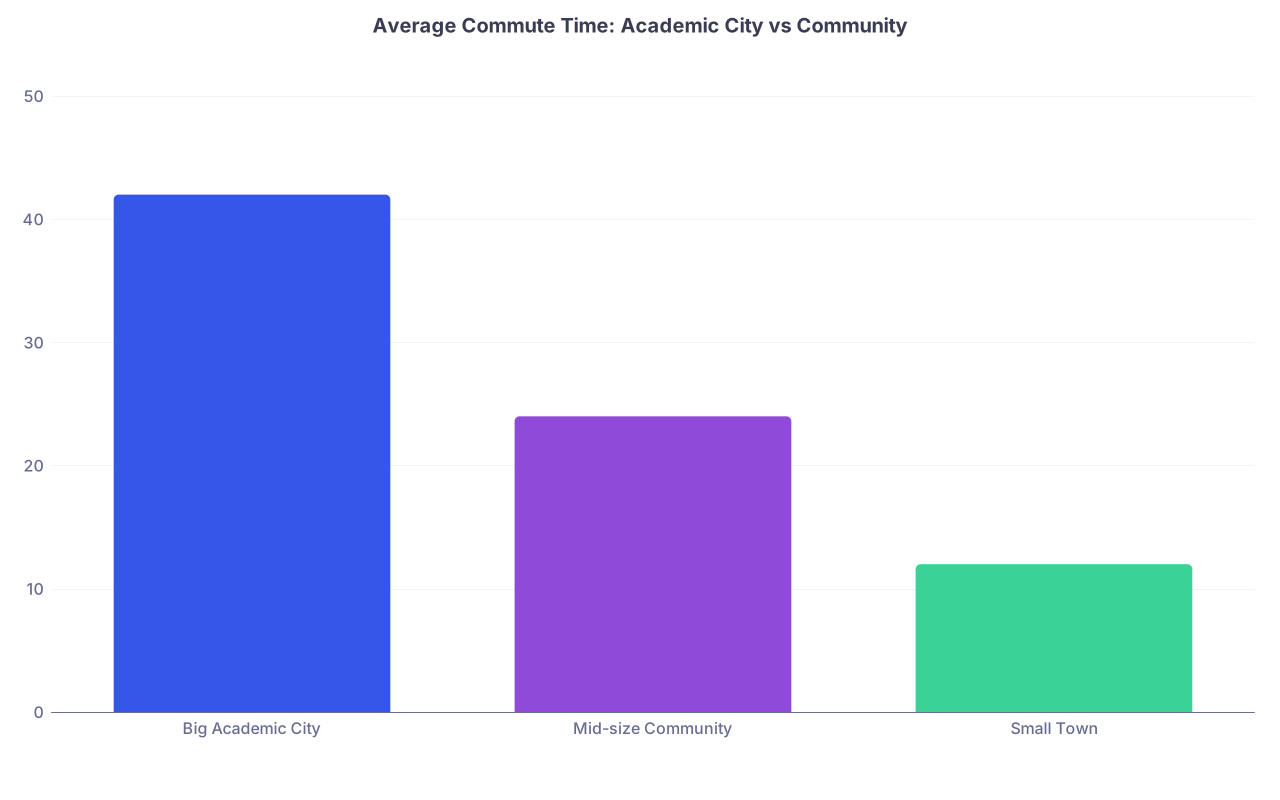
| Category | Value |
|---|---|
| Big Academic City | 42 |
| Mid-size Community | 24 |
| Small Town | 12 |
You won’t be sitting in 90 minutes of traffic each way just to see 18 patients in clinic.
If you have:
- Kids or want them soon
- A partner who needs a reasonable life too
- Heavy loans and need to build savings fast
Community practice makes that easier. Full stop.
- Money and negotiating power
You will often earn more, earlier, and have more leverage in negotiation:
- Signing bonuses
- Loan repayment
- RVU bonuses
- Pathway to partnership in independent groups
Hospitals in smaller markets know they have to work harder to recruit and retain physicians.
But you must ask the right questions:
- How many docs have left in the last 3–5 years, and why?
- Who actually controls the schedule?
- What happens if volumes drop?
- Fewer academic trappings
Yes, you can still teach residents (some community hospitals are major teaching centers). You can still publish if you’re motivated. But the infrastructure isn’t built around that.
If you genuinely want to build a research-heavy or national academic career, starting in a random community hospital makes that significantly harder, not impossible but uphill.
If your dream is to be a program director at a major academic center or a national PI on multi-site trials, go academic first.
Which Choice Keeps More Doors Open?
This is where people get scared of “closing doors” and stall out.
Here’s the honest version:
- Academic → Community is easy. Happens all the time.
- Community → Academic is possible but harder, especially if you’ve been out a while with no publications or teaching track record.
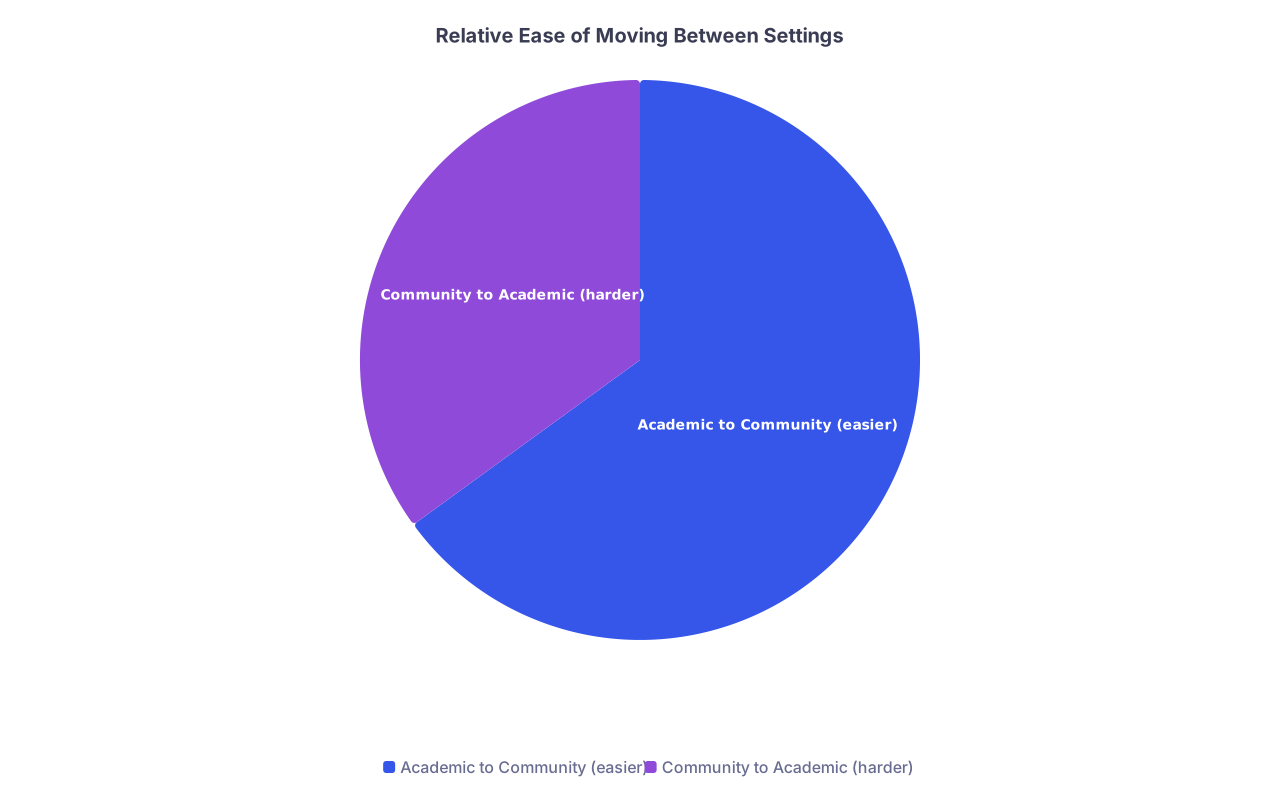
| Category | Value |
|---|---|
| Academic to Community (easier) | 65 |
| Community to Academic (harder) | 35 |
So if you’re truly undecided and you suspect you may want academic leadership, research, or fellowship 2.0 down the road, starting in an academic center is the safer play for options.
On the other hand, if you are very clear that you:
- Don’t care about publishing
- Don’t want to chase grants
- Just want to be a damn good clinician, go home, and have a life
Then you are not “closing doors” by skipping academics. You’re just ignoring doors that lead to rooms you probably don’t even like.
Other Factors People Forget to Consider
Your partner and family reality
Not the fantasy version. The real one.
- Does your partner have a career that needs a big city?
- Will your support system be within driving distance?
- Are you okay being a flight away from aging parents?
A small town can be soul-crushing if you’re socially isolated and your partner is miserable.
A big city can be exhausting if you’re paying half your paycheck to daycare and parking.
Your tolerance for politics
Academic centers: more formal politics, committees, legacy hierarchies.
Community hospitals: fewer layers, but politics are more personal and can be sharper because everyone knows everyone.
You’re choosing which kind of politics you prefer, not whether they exist.
Malpractice and risk comfort
In some hyper-litigious areas, being the lone specialist in a community setting can feel risky.
In some academic centers, the complexity of patients and visibility can also raise risk.
You need to ask about:
- Malpractice coverage (claims-made vs occurrence)
- Tail coverage if you leave
- Support systems for difficult cases
What I’d Tell You Based On Common Profiles
Let’s be specific. See where you land.
| Profile | Better Starting Environment | Why |
|---|---|---|
| Wants research/teaching career | Big Academic City | Needs infrastructure and mentors |
| Heavy loans, wants income fast | Smaller Community | Higher pay, lower cost of living |
| Loves rare, complex cases | Big Academic City | Higher volume of complex pathology |
| Wants broad, hands-on practice | Smaller Community | Wider scope, more autonomy |
| Unsure, wants maximal flexibility | Big Academic City | Easier to move to community later |
If you recognize yourself in more than one, prioritize. You cannot build a life optimized for everything. Pick the 1–2 things that matter most for the next 5 years.
How to Pressure-Test an Offer Before You Decide
Do not decide based on “vibes” from the interview day. You were seeing the performance, not the reality.
For big academic city jobs, ask:
- In the last 3 years, how many junior faculty left, and where did they go?
- What percentage of my time is truly protected for research/teaching, and who enforces that?
- Who actually controls my schedule? (Service chief? Corporate scheduling?)
- What does a “bad week” look like for someone in this role?
For smaller community jobs, ask:
- How many patients per day is “average” in clinic? On service?
- Who covers call and how often, really, not on paper?
- What’s the track record for partnership or leadership progression?
- What support is in-house vs transferred out? (ICU level, subspecialties, night coverage)
Then verify. Talk to someone not on the official interview list. A junior physician who has been there 1–3 years is usually the most honest.
The Future of Medicine Angle: Will This Still Matter in 10–15 Years?
Short answer: yes.
- Academic centers will keep concentrating super-subspecialty and cutting-edge therapies.
- Community hospitals will keep handling the vast majority of routine and semi-complex care.
- Telemedicine and AI will change how you practice in both places, but they won’t erase the cultural and structural differences.
If anything, the split may widen:
- Academic: more data-heavy, team-heavy, protocol-driven, research-linked.
- Community: more hybrid roles, more telehealth support from big centers, but still local, relationship-based care.
So you’re not just choosing a job. You’re choosing the culture of medicine you want to grow up in as an attending.
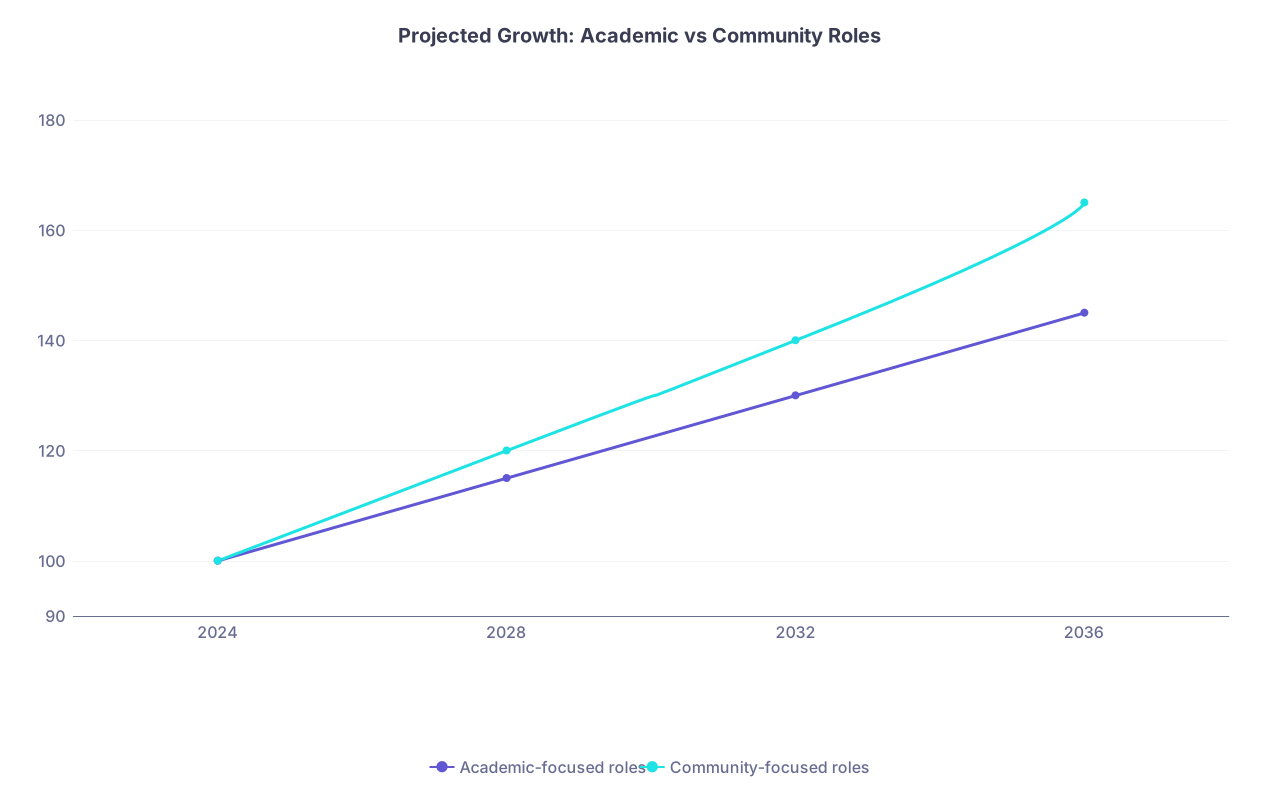
| Category | Academic-focused roles | Community-focused roles |
|---|---|---|
| 2024 | 100 | 100 |
| 2028 | 115 | 120 |
| 2032 | 130 | 140 |
| 2036 | 145 | 165 |
Both are growing. Community probably faster. But they’re different ecosystems.
Bottom Line: How To Make the Call Without Regretting It
Here’s the ruthless summary:
Choose big academic city to:
- Build an academic CV
- See rare pathology
- Teach and maybe do research
- Keep doors open for fellowships, leadership, industry roles
- Accept lower pay / higher cost of living and more bureaucracy
Choose smaller community to:
- Gain autonomy fast
- Practice broad, practical medicine
- Improve lifestyle and financial stability early
- Become “the doctor” for your patients, not “one of many consultants”
- Accept less institutional prestige and fewer built-in academic opportunities
Now the next step is simple and not theoretical:
Today, sit down and write two one-page “day in the life” stories.
- One for yourself in a big academic city job 18 months from now.
- One for yourself in a smaller community job 18 months from now.
Include:
- Wake-up time, commute, who’s in the house with you
- Number and type of patients you see
- Who you talk to during the day (residents? APPs? partners? nurses?)
- What you do after work and how you feel walking to your car
Then read both and ask yourself one question:
Which version of you looks more like a life you actually want to live, not just a title you want to claim?
Circle that one. That’s your answer.


