The way most residents try to handle board prep while moving for fellowship is a recipe for burnout and mediocre scores.
You cannot “just squeeze it in” around packing, goodbye dinners, and a new city. If you’re taking your boards and then moving straight into fellowship, you need an actual plan that assumes chaos, exhaustion, and bad wifi… and still works.
Let’s build that.
1. Understand the Triple Collision You’re In
You’re not “just studying for boards.” You’re in a three-way collision:
- Finishing residency (often on heavier, senior months)
- Prepping hard for a high‑stakes board exam
- Planning and executing a move for fellowship
Most people pretend one of those doesn’t exist. Usually the move. Then they’re doing UWorld on their phone while arguing with the cable company in the Penske truck.
Here’s the reality:
- Your cognitive peak is limited. You get maybe 3–4 truly high-quality study hours per day when you’re also working.
- Your decision-making bandwidth is finite. Endless small decisions about moving (dates, utilities, apartments, childcare) eat your brain.
- Your emotional bandwidth is drained. You’re leaving your support system and walking into a new one where you’re low man again.
So you don’t build a board plan like a med student with nothing else going on. You build it like a senior resident in a storm.
That means three rules:
- Front-load the heavy lifting before the true move crunch.
- Design a “bare minimum survival plan” for the 4–6 weeks around the move.
- Build backup options for the things that always go wrong (schedule shifts, delays, fatigue).
2. Backwards Plan from Two Hard Dates: Exam Day and Move Day
You have two immovable objects: your board date and the day you physically relocate. Everything else is negotiable.
Step 1: Put both dates on paper
Not in your head. On paper or in your calendar:
- Board exam date
- Last day of residency
- Fellowship start date
- Actual physical move date (or window)
Then mark a “no chaos” window around those:
- 7–10 days before your exam
- 3–5 days before your move
- 2–3 days after your move
- 3–5 days before fellowship starts
Those windows are not for intense studying or massive tasks. Those are for:
- Sleep stabilization
- Light review
- Logistics only if absolutely necessary
Step 2: Create phases
Your life around this looks more like a set of stages than a smooth curve. Use that. Rough structure:
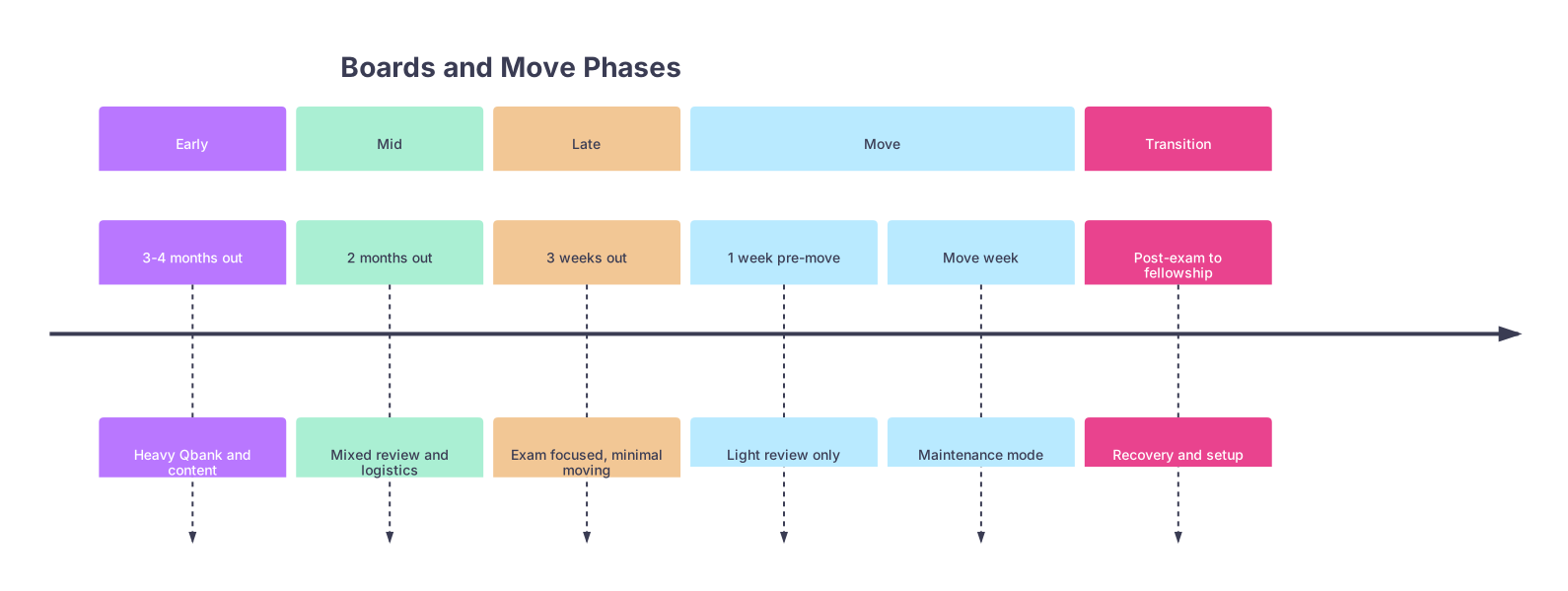
| Period | Event |
|---|---|
| Early - 3-4 months out | Heavy Qbank and content |
| Mid - 2 months out | Mixed review and logistics |
| Late - 3 weeks out | Exam focused, minimal moving |
| Move - 1 week pre-move | Light review only |
| Move - Move week | Maintenance mode |
| Transition - Post-exam to fellowship | Recovery and setup |
More concrete:
Phase 1 – Heavy Study, Light Move (3–4 months before exam)
Maximize board prep. Moving tasks are just scouting and decisions.Phase 2 – Study + Move Prep (6–8 weeks before exam)
Board work continues but you start booking movers, housing, etc.Phase 3 – Exam Priority (2–3 weeks before exam)
Move tasks almost stop. Exam is the priority.Phase 4 – Exam → Move (0–2 weeks after exam)
Very light review only if needed. Moving and mental recovery.Phase 5 – Fellowship Ramp (week before start)
No hardcore studying. Sleep, logistics, basic settling.
If your dates are tight (exam and move within a week or two), Phase 3 and 4 partially overlap. That makes the earlier phases even more critical.
3. Build a Study Plan That Survives Chaos
Most board plans die the first week of q4 nights. Or when the landlord pushes your move‑out date forward.
So you create a study core that’s robust:
- The non‑negotiables: what must get done by exam day.
- The nice‑to‑haves: done only if life allows.
Decide your “core” by numbers, not vibes
For something like ABIM, for example, a solid but realistic target when moving:
- 2,000–3,000 high-yield questions total (e.g., UWorld + another bank or wrongs review)
- One primary text/resource fully skimmed or audio’d (e.g., MOC review book, OnlineMedEd/MedStudy)
- At least 2–3 full-length practice exams or simulated blocks
You then assign:
- Core minimum: a specific number of questions and blocks per week that must happen unless you’re literally in the ER or driving cross‑country.
- Stretch goal: higher number that happens on calm weeks.
| Phase | Core Minimum Qs | Stretch Goal Qs |
|---|---|---|
| Heavy Study (3–4 mo out) | 250–300 | 350–450 |
| Study + Move Prep | 200 | 300 |
| Exam Priority | 150–200 | 250 |
| Move Week | 50–75 | 100 |
When a week blows up (sick call, moving disaster), you hit the core minimum and stop feeling guilty. The guilt is what burns people out, not the schedule.
4. Align Your Study Modes with Where You Physically Are
Here’s where most residents mess up. They try to do detailed, concentration-heavy content review in the least conducive environments: post‑call, at the auto shop, in a hotel room with no desk.
Different phases of your move need different study formats:
A. While still stable at your current home
This is when you:
- Do your hardest question blocks (timed, mixed, exam conditions)
- Watch any dense videos or lectures
- Handwrite or type your main notes/flashcards
Schedule:
- 1–2 blocks of 20–40 questions each day you’re not on call
- Review all explanations (right and wrong) same day
- One longer review session on your day off
B. “Stuff is half packed” stage (2–4 weeks pre‑move)
You’re living among boxes and Craigslist furniture deals.
Shift your study style:
- Use a tablet or laptop only — books are half in boxes anyway.
- Shorter blocks: 10–20 questions in 20–30 minutes. - Audio content for commutes and chores.
This is when an audio review course or your own recorded notes are gold. You can listen while:
- Breaking down furniture
- Doing final laundry
- Dropping off stuff at Goodwill
C. Travel / actual moving days
You’re not doing focused internal medicine board questions in the U‑Haul. Stop pretending you will.
What actually works:
- Audio: recorded pearls, summary lectures, or question explanations
- Flashcards on your phone (Anki, etc.)
- Very short untimed question sets (5–10) at rest stops or in airports
Plan this deliberately:
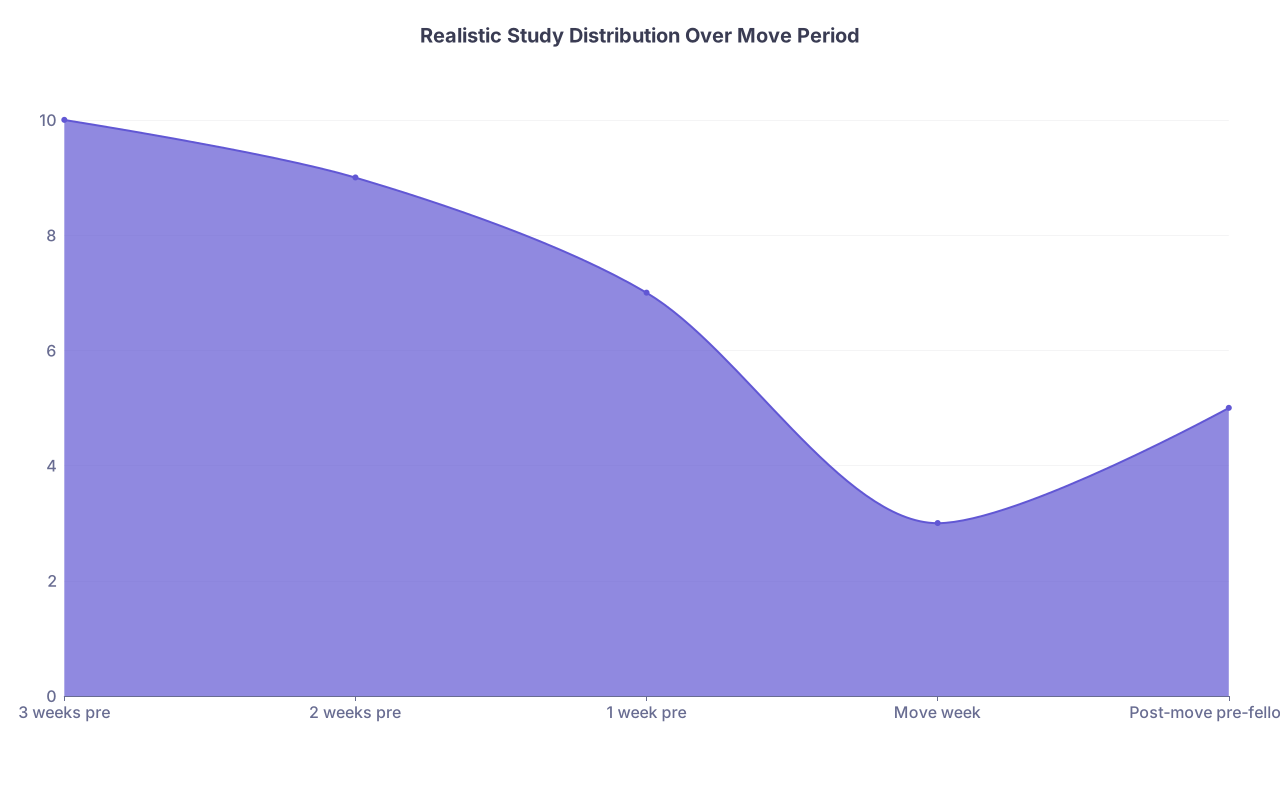
| Category | Value |
|---|---|
| 3 weeks pre | 10 |
| 2 weeks pre | 9 |
| 1 week pre | 7 |
| Move week | 3 |
| Post-move pre-fellowship | 5 |
That “3” during move week? That’s maybe 30–45 minutes a day, max. That’s fine. The work should already be mostly done.
5. Practical Logistics: Make the Move Study‑Proof
You’re not just moving your couch. You’re moving your brain, your routines, and your test-day setup. Here’s what to lock down early.
A. Internet and workspace at both ends
On your current side (pre‑move):
- Keep a functional study setup until after the exam if you can.
If exam is before you move, do not dismantle your desk two weeks before.
On your new side (fellowship city):
- Schedule internet to be active before or on move‑in day.
- Pack a “study go‑bag”: laptop, charger, headphones, one key book, notebook, ID, exam confirmation, snacks. This never goes on the moving truck.
I’ve watched people scramble to find their government‑issued ID and exam permit the night before the boards because it’s in Box #47. Do not be that person.
B. Timing your exam relative to the move
You have three basic options. Each has pros and cons.
| Option | Pros | Cons |
|---|---|---|
| Exam weeks BEFORE move | Stable environment | Studying while still working heavy shifts |
| Exam days AFTER move | Could take a few days off to settle | New city, unknown distractions |
| Exam in BETWEEN residency & move | Maximum focus if you can stay put | Temporary housing, added cost |
If you can swing it, taking boards before moving is usually best:
- Known testing center
- Known sleep environment
- No moving boxes screaming at you to pack
If you must take it after moving:
- Do a “mini mock” test day in the new city: drive to the test center at the same time of day, plan parking, find coffee.
- Book your exam late enough that you’re not literally taking it two days after unloading the truck.
6. Protect Your Brain: Sleep, Shifts, and Saying No
You will be tempted to steal sleep for study time. Especially as the exam looms and the move gets messy. That’s how you end up reading the same cardiology explanation four times and retaining nothing.
A. Leverage your schedule early
3–4 months out, look at your rotation schedule:
- If you have a brutal block (ICU, nights) right before the exam:
Start your heavy studying earlier. You cannot “make up” for an ICU month in the last two weeks. - If you have a lighter block (clinic, consults) pre‑exam:
Protect it. Stop volunteering for extra things during that window.
I’ve seen people wreck a beautiful outpatient month by agreeing to every extra shift “for the money before fellowship.” Then they’re fried and behind on boards.
B. Set non-negotiable rest rules
For the 2–3 weeks before the exam:
- Minimum 7 hours in bed each night. Non‑negotiable.
- No “starting a question block” if it means bedtime slips by more than 30–45 minutes.
- One true off evening per week where you do nothing board‑related.
This feels counterintuitive when you’re behind. Do it anyway. Boards are not a brute-force, 4‑AM cramming exam. They’re long, attention-heavy days. You need cognitive stamina, not just content.
7. Emotional Side: Identity Whiplash and Anxiety
You’re closing one identity (senior resident, known by staff, in control) and walking straight into another (brand-new fellow, zero status, high expectations). At the same time, a national exam is judging if you “deserve” the letters after your name.
That messes with people more than they admit.
Here’s how it usually shows up:
- Procrastination masked as “I need to organize the move first.”
- Doom-scrolling fellowship hospital forums instead of questions.
- Hyper-fixation on one weak topic (EKGs, rheum, stats) while ignoring everything else.
Three practical things that help:
One weekly reality check
Once a week, look at:- How many questions you did
- Your average over the last 100–200 questions
- What you’ll do differently this week
Not daily. Weekly. Daily fluctuations are noise.
Script out a worst-case / best-case
Write:- Worst case: I barely pass, or I fail and have to retake.
- What that would actually mean step‑by‑step.
- Best case: I hit above average and walk into fellowship with confidence.
When your brain has seen the actual logistics of “worst case,” the vague dread loses some power.
Protect one non-medical ritual
Run, lifting, yoga, church, poker night. Something that anchors you for an hour a week where you’re not “the person moving and studying for boards.”
8. Concrete Weekly Templates You Can Steal
Let’s get uncomfortably specific. Here are two sample weeks.
Scenario A: 6 weeks pre-exam, on wards, not yet packing
- Mon–Fri:
- Pre‑round: 15–20 minutes flashcards (coffee + Anki)
- Post‑work (if not post‑call): 1 block of 20–30 questions, timed, mixed
- 30–40 minutes review of explanations
- Sat:
- Morning: 2 blocks back‑to‑back, simulate exam conditions
- Afternoon: review explanations, make brief notes
- Sun:
- 1 lighter block or topic-based review of weak area
- 30 minutes logistical move tasks (apartment search, movers) — capped
Scenario B: 1 week before exam, partial packing, one day off
- Mon–Wed:
- 2 shorter blocks/day (15–20 questions each), mixed, timed
- Focus on high‑yield weak systems (cards, pulm, renal)
- 60–90 minutes max per evening of total study
- Thu (day off):
- One half‑day “mock” test (3–4 blocks)
- Light review, then stop by late afternoon
- Evening: pack, but stop by 10 pm
- Fri:
- 1 light block or just flashcards
- Confirm exam logistics (route, parking, ID, permit)
- Weekend:
- No new hard content. Quick skim of personal “brain dump” notes
- Early bedtime before exam
You’ll notice: no heroic “15-hour study days.” Those are fantasy for residents still working and moving.
9. Common Mistakes Residents Make in This Situation
I’ve watched versions of this several times every year. Same patterns.
Packing their study materials too early
Then using that as a subconscious excuse not to study. Keep one small, clearly labeled “exam box” or backpack that never leaves your side.Scheduling the exam too close to move or fellowship start
They take the boards 48 hours after moving into a new place with no curtains, bad sleep, and still‑lost kitchen stuff. Or 3 days before starting fellowship orientation. Avoid that.Letting guilt and perfectionism wreck consistency
They miss a planned big study day, feel behind, and then avoid doing anything because “one block is pointless now.” No. One focused block is always better than none.Ignoring their body’s warning signs
Headaches daily, palpitations, dread. If that’s you, cut volume by 20–30% for a week, keep high-yield work only, and sleep. You don’t “earn” your way into burnout-proof status.
10. Quick Checklist: If Boards + Move Are Both in the Next 2–3 Months
Run down this and fix what’s missing:
Do you have:
- Board date and move date written down?
- A weekly question target and a core minimum?
- Your exam permit and ID set aside in a safe, non‑packed place?
Have you:
- Booked your exam at a testing center you can reliably reach?
- Scheduled internet to be functional at your new place by or before move‑in?
- Looked at your call/rotation schedule and protected your lighter weeks?
Is there:
- One audio or mobile-friendly resource ready for travel days?
- A clear “no chaos” window of at least 5–7 days pre‑exam?
- One non-medical routine you’re keeping no matter what?
If you can’t honestly check most of those, don’t “promise yourself” you’ll handle it later. Fix two of them tonight. Then two more in a few days.
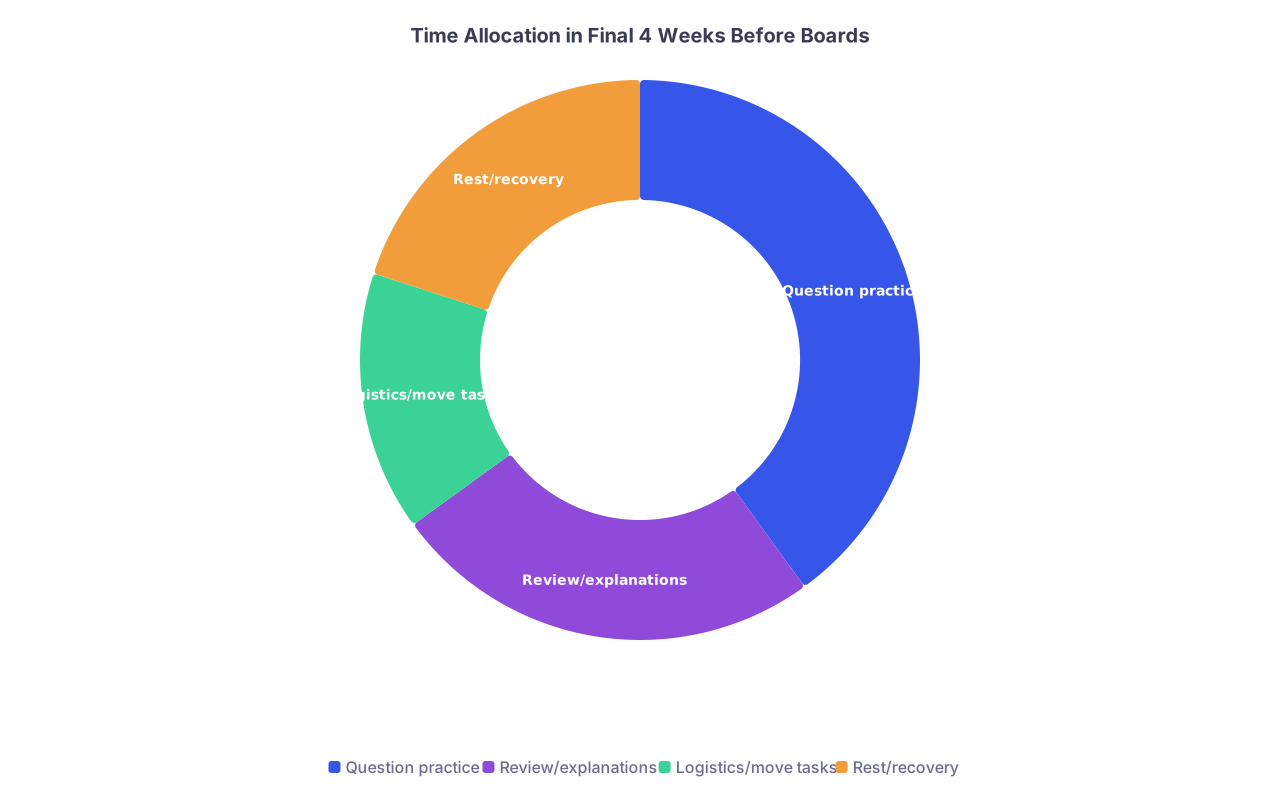
| Category | Value |
|---|---|
| Question practice | 40 |
| Review/explanations | 25 |
| Logistics/move tasks | 15 |
| Rest/recovery | 20 |


FAQ (Exactly 4 Questions)
1. Should I delay my boards until after I’m settled in fellowship?
If your current schedule and move make adequate prep impossible, delaying can be rational. But be honest: fellowship will not be magically easier. You’ll have new call schedules, new EMR, new expectations. If you’re within 4–6 weeks of readiness and can carve focused time now, I’d lean toward taking it before you’re fully immersed in fellowship responsibilities.
2. Is one question bank enough if I’m also moving?
Yes, if you use it well. I’d rather see you thoroughly work through one strong bank (UWorld, for example) with careful review and maybe 2–3 self-assessments than half‑ass two different banks. If you’re short on time, prioritize depth of review over sheer number of questions.
3. How many “days off to study” should I schedule around exam day?
Aim for at least 1 full day off before the exam and the exam day itself totally protected. If you can swing 2 days before, great, but make the penultimate day lighter to avoid last-minute panic marathons. Do not plan a heavy moving day within 48 hours before the exam if you can possibly avoid it.
4. What if my practice test scores are borderline and I’m up against the move?
Look at trends, not one bad exam. If your last 2–3 self-assessments and recent 200–300 questions are in the general passing range, tightened review plus good sleep may be enough. If you’re consistently below passing, you may need to either:
- Push the exam back a few weeks (if allowed and financially feasible), and reduce moving chaos where you can, or
- Accept a longer runway, schedule the next available date after some fellowship months, and design a slower, sustainable plan while you’re more settled.
Key takeaways:
- Treat your boards and move as one combined project with phases, not two unrelated disasters.
- Front-load serious studying, define a bare-minimum plan for move weeks, and protect your sleep.
- Pack your logistics and your brain with the same discipline: exam date, move date, and a realistic weekly study core are non-negotiable.