
What if you tell your program you’re behind on board studying… and they quietly decide you’re not “fellowship material” anymore?
That’s the nightmare playing in your head, right? Not just “I’m behind.” It’s “If I admit this, I’ll be labeled. Weak. High risk. The resident they talk about in closed-door meetings.”
You’re not alone. This is way more common than anyone admits out loud.
Let’s walk through what’s actually at stake, what programs really do with this info, and how to ask for help without setting off every alarm bell in the building.
First: Are You Actually in Trouble, or Just Scared You Are?
There’s a difference between:
- “I feel behind compared to everyone else”
vs. - “I’m failing practice tests and my in‑training exam is tanking.”
Your brain probably isn’t making that distinction right now. It’s just screaming:
“You’re failing. Everyone else is fine. If anyone finds out, you’re dead.”
Let’s make it more concrete.
| Situation | Level of Concern |
|---|---|
| Haven't started structured studying, but pass all rotations | Mild |
| Low practice scores but trending up with effort | Moderate |
| Repeated failing scores, no upward trend | High |
| Prior step failure + current failing practice scores | Very High |
If you’re in the “moderate to high” concern range, hiding this forever is actually riskier than telling someone.
Because here’s the ugly truth:
Programs don’t get spooked because you’re struggling.
They get spooked when:
- They’re blindsided by a board failure they never saw coming.
- There’s no documentation that you ever reached out.
- They realize you were drowning for months and said nothing.
The resident who quietly spirals and fails boards without warning? That’s the one they remember as a “problem.”
The resident who says, “Hey, I’m worried. Here’s what I’m doing. I think I need more structure”?
That person looks mature, not weak.
You probably don’t believe that yet. Keep reading.
What Programs Actually Care About (That No One Says Directly)
You’re scared they’ll think:
- You’re dumb
- You can’t handle the specialty
- You’re unsafe with patients
- You’re going to tank their board pass rate
Here’s what they really care about, underneath all the fake professionalism:
Accreditation and board pass rates
They’re terrified of being the program with multiple board failures. It hurts them with ACGME/ABIM/etc., recruitment, everything.Patient safety
If you’re struggling with basic concepts that show up on boards and also on rounds, they’ll worry you’re missing critical things clinically.Insight and reliability
They want to see:- Do you recognize when you’re not where you need to be?
- Do you ask for help early or wait until everything’s on fire?
Notice something? None of that requires you to be perfect.
They’d actually rather have:
“I’m struggling, I know I am, and I’m trying to fix it,”
than
“I’m good, everything is fine,” right up until you fail the real exam.
The thing that kills trust isn’t the struggle.
It’s the surprise.
Worst-Case Scenario Thinking (Let’s Drag It into the Light)
You’re probably running through horror stories in your head:
- “They’ll put me on probation immediately.”
- “They’ll tell fellowship PDs I’m a red flag.”
- “I’ll never match into my desired fellowship.”
- “They’ll tell other residents I’m the weak one.”
- “I’ll be that story they tell to future classes: ‘Don’t be like them.’”
I’ve watched this play out in real programs. Here’s what actually tends to happen:
What usually does NOT happen just because you say you’re struggling:
- You don’t get kicked out of residency.
- You don’t immediately go on formal probation.
- You don’t automatically lose all hope for fellowship.
- They don’t broadcast your struggles to the entire department.
Could those things ever happen? Sure, if:
- You’ve already failed multiple major exams
- You’ve ignored earlier warnings
- There are major clinical performance concerns too
- You’re refusing help or not following through
But if you’re still functioning clinically and you’re coming forward early? That’s different.
What actually does tend to happen when residents speak up early:
- They document the conversation (because they have to).
- They may set up a plan or “learning contract.”
- They might connect you with a board review course, tutor, or extra resources.
- They often adjust your schedule a bit (more elective time, less ICU during crunch time).
- They check in with you. Sometimes annoyingly often.
Is it fun? No.
Does it mean they think you’re doomed? Usually not.
It means they’re trying to avoid their nightmare scenario: you failing boards and them getting called out for “not supporting you.”
Before You Talk to Anyone: Get Your Data Straight
Walking into your PD’s office with “I’m just scared” and no numbers?
That’s how you trigger vague concern instead of focused support.
You need receipts.
Collect:
- Last in‑training exam score and percentiles
- Practice test scores (NBME, UWorld self-assessments, etc.)
- Question bank stats: percent completed and correct %
- Any prior Step/Level scores and whether you had close calls or fails before
If you can, plot your scores over time.
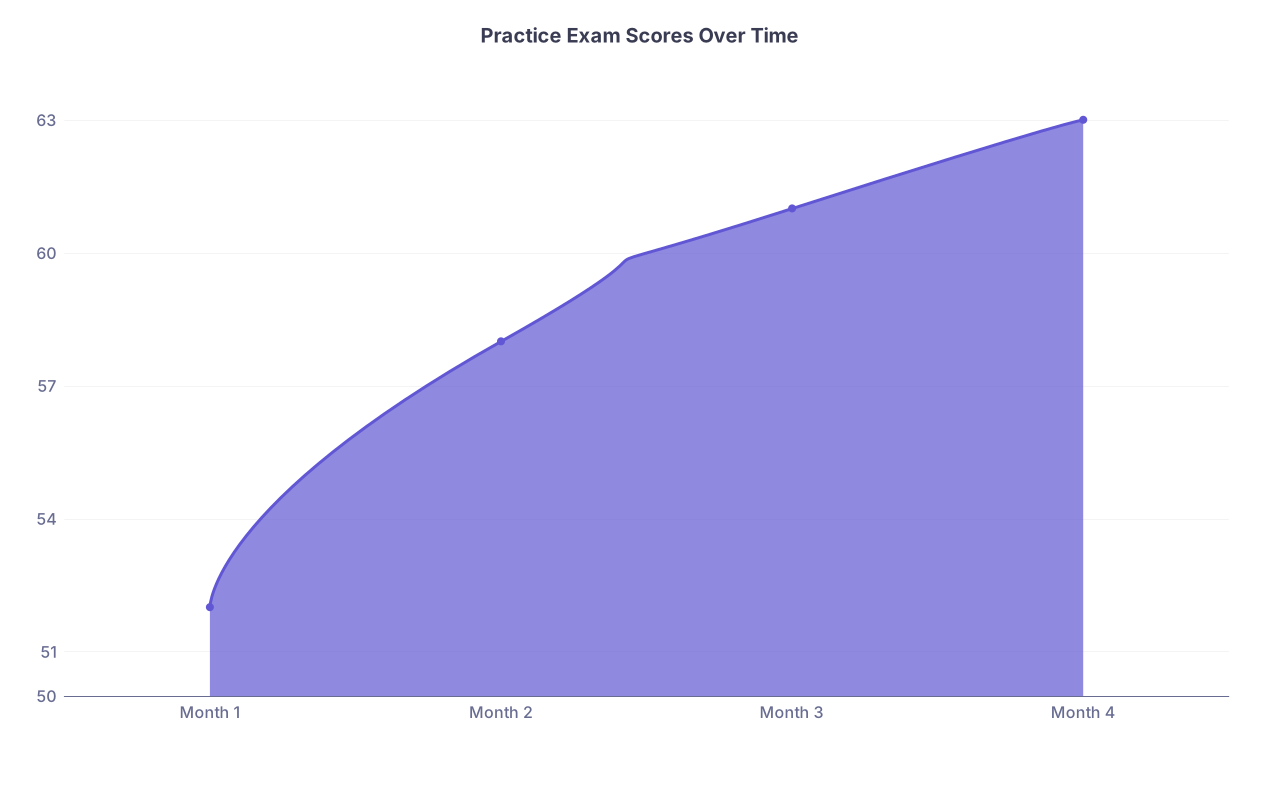
| Category | Value |
|---|---|
| Month 1 | 52 |
| Month 2 | 58 |
| Month 3 | 61 |
| Month 4 | 63 |
Even if the numbers aren’t great, showing trends and effort makes you look responsible, not helpless.
Now ask yourself:
- Are my scores stable but low?
- Dropping despite effort?
- Improving, but not fast enough for the timeline?
That answer will shape the conversation.
How to Tell Your Program You’re Struggling (Without Setting Off Every Alarm)
You don’t walk in and say:
“I’m failing everything, I’m a disaster, please don’t fire me.”
You walk in and say three things, clearly:
- I’m concerned.
- Here’s the data.
- Here’s what I’m already doing / willing to do.
Think of it like this: you’re not dropping a problem in their lap.
You’re inviting them into a plan you’ve already started.
Here’s a sample script you can steal and tweak:
“Dr. Smith, could I schedule 15–20 minutes with you to talk about board prep? I’m a bit concerned about where I am and I’d like your guidance before this becomes a bigger problem.”
Then in the actual meeting:
“I wanted to be upfront because I know it’s better to address this early. My last in‑training exam was in the Xth percentile. My recent practice tests have been around Y–Z%. I’ve been studying with [resource] about [X] hours per week, but I’m not seeing the improvement I need.
I’m not asking for less work; I’m asking for smarter structure. I’d really appreciate your advice on how residents in this situation have successfully turned it around, and whether there are program resources I’m not using yet.”
See what that does?
- You admit the issue.
- You show data.
- You show effort.
- You ask for guidance, not rescue.
That’s what makes you look like a professional, not a sinking ship.
Who Should You Tell First? (Hint: Not Always the PD)
Going straight to the Program Director is high‑stakes. Sometimes necessary. Sometimes not.
You have options:
- Chief resident – often the safest first step. They know who to approach, what the PD worries about, and what’s worked for other residents.
- Associate PD – especially the one “in charge of education” or “board prep.” They’re usually more hands-on and less scary than the PD.
- Trusted attending/mentor – someone you’ve worked closely with who’s seen you function clinically and can vouch for you.
- Program Director – especially if your issues are big, recurrent, or already on their radar.
You can start softer:
“Hey, I’m a little anxious about my board prep and I’m not sure if this is ‘normal struggling’ or something I need to formally talk to the PD about. Can I run my scores and plan by you?”
Let them help you judge how serious this looks from the program side.
What They Might Offer (and How to Not Waste It)
If you open up, don’t be surprised if they respond with structure. A lot of it.
Here’s the kind of stuff I’ve seen programs do:
| Support Type | What It Looks Like |
|---|---|
| Study plan | Weekly schedule, set goals, check-ins |
| Resources | Paid board course, Qbank, flashcards |
| Schedule changes | Elective instead of ICU pre-exam |
| Monitoring | Regular meetings, progress tracking |
And yes, some of it will annoy you.
You’ll feel watched. Judged. Box‑checked.
The key is this:
If they invest in you, use it.
Don’t agree to weekly check-ins and then show up having done nothing. That’s how “concern” turns into “this resident is unreliable.”
You want them thinking:
- “They were behind, but they hustled and turned it around.”
Not: - “We tried to help and they didn’t follow through.”
What If You Already Have a Red Flag (Past Fail, Low In-Training)?
This is where the fear goes from loud to screaming.
You’re thinking:
“I already failed Step 1 / COMLEX / In‑Training. If I say I’m struggling again, they’ll assume I’m hopeless.”
Honestly? Programs will take it more seriously. But that doesn’t mean they want you gone. It means they’re worried about:
- Multiple failures = harder to pass the boards on time
- Accreditation issues if you don’t pass by graduation
- How much remediation they need to build around you
So you have to be even more precise with your message.
Focus on:
- What worked and didn’t work in your last attempt
- What’s different this time
- How early you’re asking for help (earlier = more hopeful)
For example:
“I know my Step 1 failure is already a concern on my record. That’s part of why I wanted to talk now rather than later.
Last time, my biggest issues were [content gaps / test-taking anxiety / timing]. I passed on my second attempt by doing [specific strategies].
Right now my practice scores are [X], and I can tell I’m not where I need to be. I’d like to build a more structured plan now, rather than wait until I’m in crisis like last time.”
That framing tells them:
“I’ve learned from my past, and I’m not stumbling into the same wall blindly.”
How to Protect Your Future (Including Fellowship) While Being Honest
This is the part no one spells out:
You’re not just scared about now. You’re scared about the email the PD will write later.
“Their board prep was a concern.”
“Needed significant remediation.”
“Academic struggles.”
Here’s how you lower the odds of that kind of language ending up in your letters:
- Come forward early – “proactive insight” sounds much better than “crisis management.”
- Show a clear upward trend – programs love improvement arcs. “Started low, ended strong” is way better than “fine, then crashed.”
- Follow through – do what you say you’ll do. It builds trust.
- Stay solid clinically – if your patient care is strong, that buys you a lot of goodwill.
Most fellowship PDs know residents struggle with exams. What they fear most is:
- Residents with poor clinical judgment
- Residents with no insight
- Residents who need hand-holding for everything
If your story becomes:
“They struggled, took ownership, worked hard, and passed”…
that’s actually a positive narrative in a lot of letters.
You Still Might Be Thinking: “Should I Just Keep Quiet?”
Let’s be brutally honest:
You can try to handle it alone. Some people do. Some pull it off.
But ask yourself:
If you keep quiet and then fail your boards on the first try, what story gets written about you?
- “We had no idea they were struggling.”
- “They never mentioned concerns.”
- “We’re not sure why this happened.”
Now compare that to failing after you’ve asked for help early and worked with them:
- “Despite structured support and effort, they struggled with standardized testing.”
- “They were very engaged in remediation.”
Both outcomes suck. I won’t sugarcoat that.
But the second one at least shows you weren’t oblivious or avoidant.
And again, if you’re coming forward now, there’s a decent chance you won’t fail.
You’re just catastrophizing yourself straight into paralysis.
A Simple Step‑by‑Step Plan for the Next 7 Days
You don’t need a five‑year strategy. You need to not freeze this week.

| Step | Description |
|---|---|
| Step 1 | Today - Gather scores |
| Step 2 | Day 1-2 - Analyze trends |
| Step 3 | Day 2 - Draft study plan |
| Step 4 | Day 3 - Talk to trusted chief or mentor |
| Step 5 | Day 4-5 - Refine plan with feedback |
| Step 6 | Day 5-7 - Schedule meeting with PD or APD |
| Step 7 | Start formal plan and document progress |
That’s it. One week.
Not “fix everything.” Just:
- Know your numbers
- Make a rough plan
- Loop in one person
- Then, if needed, loop in leadership with data and a proposal
You’re Not Broken. You’re Scared.
The thing eating you alive isn’t just the material.
It’s the shame.
You’re imagining everyone else cruising through Qbanks after 28‑hour calls, while you reread the same explanation three times and still feel lost.
You’re not the only one.
I’ve seen:
- The “star” resident barely pass boards on the second try
- The quiet, anxious intern who thought they’d fail… score above average
- Programs quietly rally behind residents who were honest early
What you’re going through sucks. It’s heavy. But it’s also fixable.
You don’t have to pretend you’re fine until something explodes.
You just have to be brave enough to say, “I’m not where I need to be yet. Help me get there.”
That’s not weakness. That’s what an actual physician does when they hit a limit—they don’t hide it, they manage it.
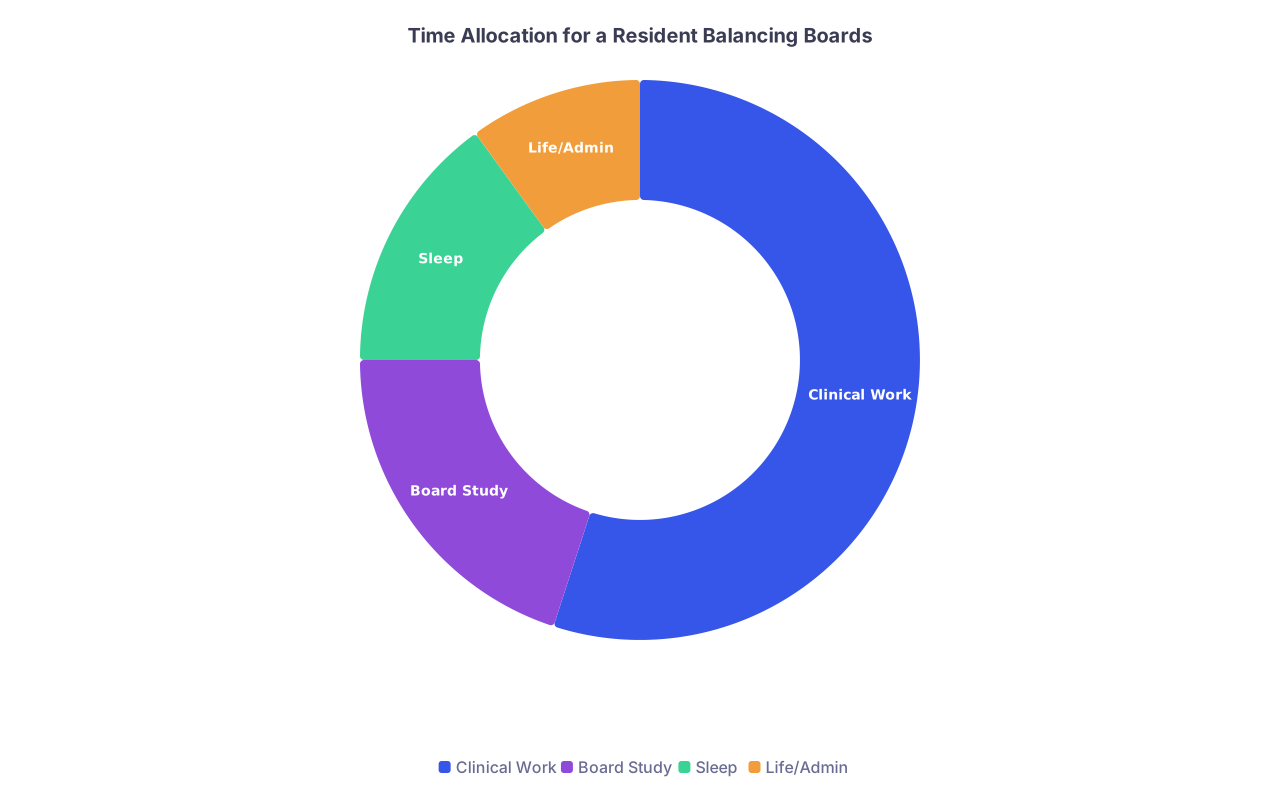
| Category | Value |
|---|---|
| Clinical Work | 55 |
| Board Study | 20 |
| Sleep | 15 |
| Life/Admin | 10 |


FAQ (Exactly 6 Questions)
1. If I tell my program I’m struggling, will it go in my permanent record?
Yes, in some form. They almost always document academic concerns and remediation. But that’s different from “permanent black mark.” It usually looks like: “Resident expressed concern about board prep; plan created; follow-up arranged.” Programs care more about how you responded over time than the fact you once struggled.
2. Can my program stop me from taking boards if they think I’m not ready?
Some boards and specialties allow programs to delay or restrict your exam scheduling if they believe you’re unprepared. That’s rare and usually reserved for very low scores, multiple past failures, or total lack of progress. Most of the time, they’ll strongly recommend a delay and back it up with data and a structured plan.
3. Will this ruin my chances at fellowship?
Not automatically. What hurts fellowship chances is a pattern: repeated failures, poor clinical evaluations, and no insight. A single period of struggle, followed by solid performance and a passing board score, is usually survivable—especially if your letters highlight your work ethic and growth.
4. What if my PD reacts badly or seems annoyed I brought this up?
Some PDs are… not great at being reassuring. That doesn’t mean you were wrong to tell them. You’re protecting yourself and your future. If they’re dismissive, follow up with email summarizing the conversation and your plan so there’s at least a paper trail that you reached out. And keep working with chiefs or mentors who are more supportive.
5. How low do my practice scores have to be before I say something?
If you’re repeatedly below passing range (or hovering just above) on multiple practice exams despite consistent studying, that’s a sign. Also, if you have a prior failure and your current practice scores aren’t clearly trending up, that’s enough reason to bring it up early. You don’t need to wait until disaster is certain.
6. What if my real issue is time—my rotation is brutal and I physically can’t study enough?
Then that’s exactly what you say. “I can’t maintain safe patient care, meet rotation demands, and do the level of board prep I clearly need on this block.” Programs sometimes adjust schedules, swap rotations, or carve out dedicated study time—especially for residents in legitimate jeopardy. They can’t fix what they don’t know about.
Key points:
You’re not the first resident to be behind on board prep, and you won’t be the last.
Programs usually fear silence and surprises more than honest struggle with a plan.
Get your data, loop in someone you trust, and ask for structured help before things fall apart.