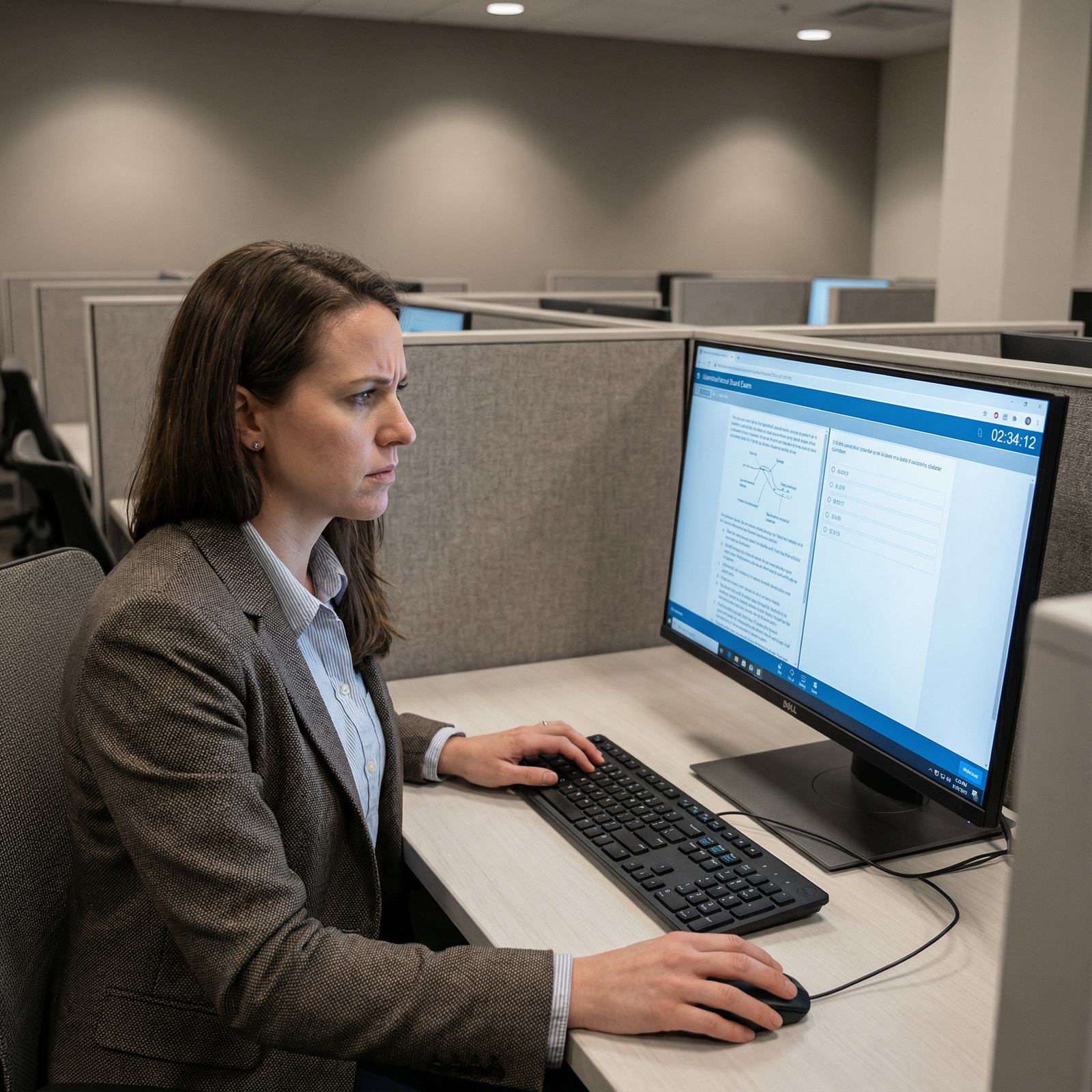
Why does your private practice attending shrug when you mention your upcoming board exam… and then you hear they blocked two weeks for their own recertification review course?
Let’s kill this myth properly: “Private practice attendings don’t care about boards.”
Wrong. They care a lot. Just not in the way residents think.
Residents usually mean:
“They don’t care about my in‑training exam or board prep schedule.”
Attendings mean:
“I care about patient volume, RVUs, malpractice risk, referral streams, hospital bylaws, and my own board certification status.”
Those are not the same thing. But they intersect more than you think.
Myth Setup: Where This Idea Comes From
You’ve probably seen some version of this:
- Academic attendings ask about your ITE scores, send you question banks, give noon conferences on exam pearls.
- Private practice attendings say, “Eh, those scores don’t matter that much, you’ll be fine,” then hand you three add‑on patients at 4:45 pm.
From your seat as a resident, the conclusion is obvious: academics care about boards, private practice doesn’t.
Except when you look at actual behavior and hard numbers, that narrative cracks.
Let’s start with the only thing physicians universally respect: threats to their license, privileges, or income.
What The Data Actually Shows: Boards Matter For Private Practice
Board exams are more than residency drama. For private practice attendings, they’re tied to four concrete things:
- Hospital privileges
- Insurance paneling and reimbursement
- Malpractice risk and optics
- Marketability and competitive positioning
None of this is theoretical.
| Area | How Boards Affect It |
|---|---|
| Hospital Privileges | Many hospitals require board certification within X years of finishing training |
| Insurance Contracts | Some payers require or strongly prefer board‑certified physicians |
| Malpractice Defense | Board certification used as evidence of competence in court |
| Job Mobility | Large groups and systems screen for board status |
Now layer in specialties. In some fields, failing boards is a career‑level problem.
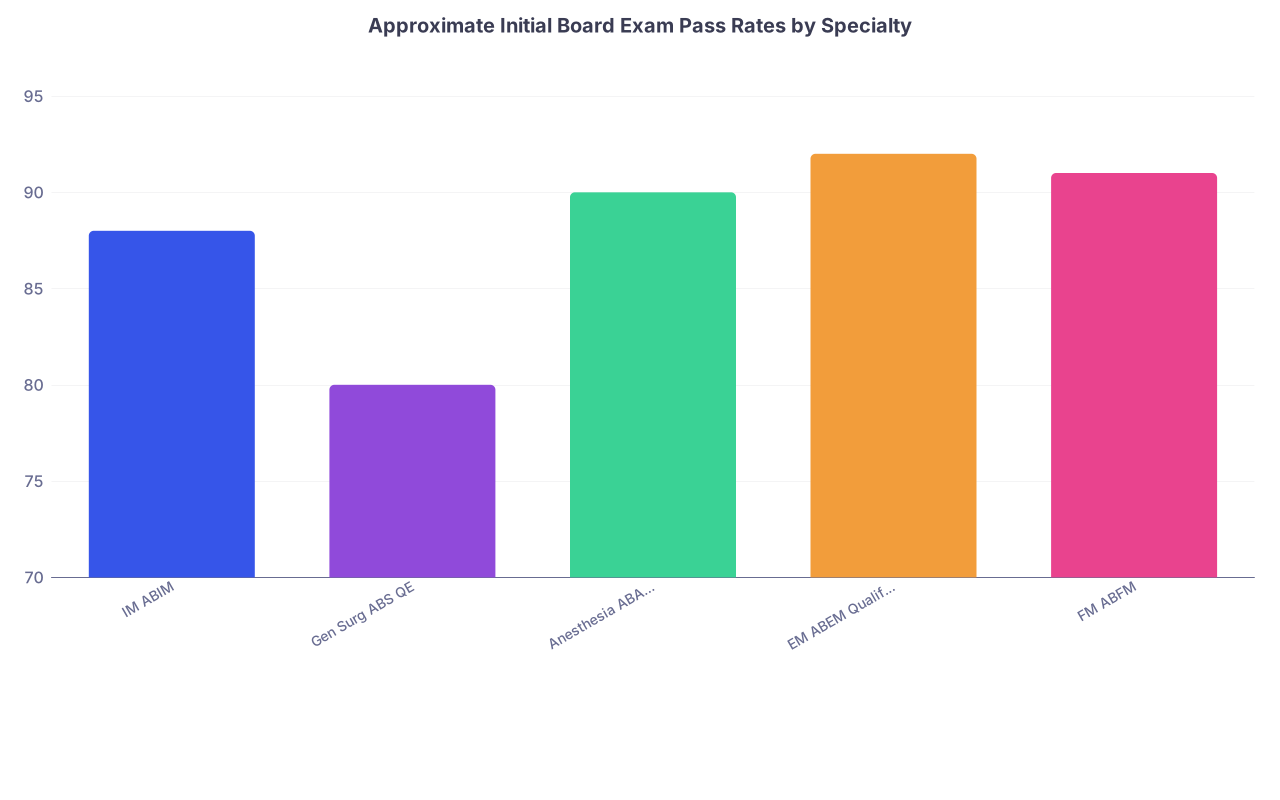
| Category | Value |
|---|---|
| IM ABIM | 88 |
| Gen Surg ABS QE | 80 |
| Anesthesia ABA Basic | 90 |
| EM ABEM Qualifying | 92 |
| FM ABFM | 91 |
These are rough, recent ballpark figures, but the point stands: 1 out of 10–5 residents fail first‑time. That failure hits private practice hardest because they don’t have an academic institution to swallow some of the fallout.
So no, private practice attendings are not zen monks who do not care if boards exist. Their practice is partially built on those letters after their name.
What they’re often signaling is: “I do not care about your neurotic obsession over a 5‑point percentile swing on the in‑training exam.”
Which is not the same thing as boards “not mattering.”
Why They Act Like They Don’t Care About Your Boards
Here’s the uncomfortable part: the incentives around your board performance are misaligned.
For an academic attending
Your ITE scores and board pass rate:
- Go into program‑level data
- Affect ACGME accreditation optics
- Show up on recruitment material (“Our ABIM first‑time pass rate is 98%!”)
- Influence how chairs view divisions and PDs
In other words, your exam performance is a report card on the program.
For a private practice attending
Your scores:
- Do not affect their job
- Do not show up on their group’s website
- Do not change their RVUs
- Do not factor into their malpractice premiums
If you fail, their life doesn’t change tomorrow. Yours does.
So what do they actually care about?
- Whether you’re safe
- Whether you’re efficient
- Whether you make their clinic/OR run
- Whether patients, nurses, and referring docs like working with you
If you’re clinically solid and moving the list, but your ITE went from 55th to 40th percentile, they’re not losing sleep. And honestly? They’re not wrong.
The RVU Problem: Why Your Study Time Gets Steamrolled
Let’s talk money, because that’s what shapes behavior in private practice.
Private practice compensation is dominated by productivity—RVUs, collections, or both. That means:
- Every resident clinic blocked for “board study day” = real lost revenue
- Every time an attending says “We’ll cancel cases so the resident can study” = OR time wasted, staff idled, admin angry
- Coverage for your time off = more work for someone else who’s already at capacity
So even an attending who intellectually “supports” your boards will resist anything that looks like:
- Frequent half‑day clinics blocked for “study time”
- Refusing add‑ons citing “I need to study”
- Demanding a quiet, perfect schedule in a high‑volume practice
Not because they don’t value boards, but because the system punishes them when they value your boards more than throughput.
You’re living inside a misdesigned incentive structure and blaming it on people. Common mistake.
But I’ve Heard Private Docs Say Boards Don’t Matter
So why do you still hear lines like:
- “The boards are a joke, real medicine isn’t on that test.”
- “Once you’re out here, nobody cares about those scores.”
- “I barely studied and passed, you’ll be fine.”
Three reasons.
1. Selective Memory
I’ve watched older attendings who failed a recertification exam quietly disappear for three months, then magically have a “sabbatical” while they remediate. Nobody advertises failure.
You mostly hear from the folks who passed and now rewrite their memory as:
“Yeah, it wasn’t that bad.”
Survivor bias, plain and simple.
2. Status Flexing
Downplaying how hard you studied is a classic doctor ego move.
Residents do it with Step 1 (“I only did UWorld once”). Attendings do it with boards (“I skimmed a review book and went in”).
What you don’t see is:
- The weekend question blocks
- The flights to review courses
- The late‑night panic reading UpToDate on niche topics right before recertification
I’ve seen attendings ordering expensive board review packages and then mocking residents for “overstudying.” The hypocrisy is not subtle.
3. Coping With a Broken Exam‑Practice Gap
They’re right about one thing: board exams often test edge cases, zebras, and trivia that barely show up in day‑to‑day practice. So they trash‑talk the exam to preserve their clinical identity:
“I take care of real patients, not esoteric test stems.”
Fair. But underneath the rant, they still go sit in the testing center every 7–10 years, because again—privileges, payers, malpractice.
How Private Practice Actually Reacts When Residents Fail
Forget the speeches. Look at what groups do when residents or new hires fail.
Pattern I’ve seen:
- A resident fails boards → suddenly “maybe we should give people more time to study next year.”
- A new partner fails recertification → group renegotiates contract, adds “must maintain certification”; someone quietly picks up some of their responsibilities.
- A candidate with repeated failures applies → gets filtered out before interview in many larger practices.
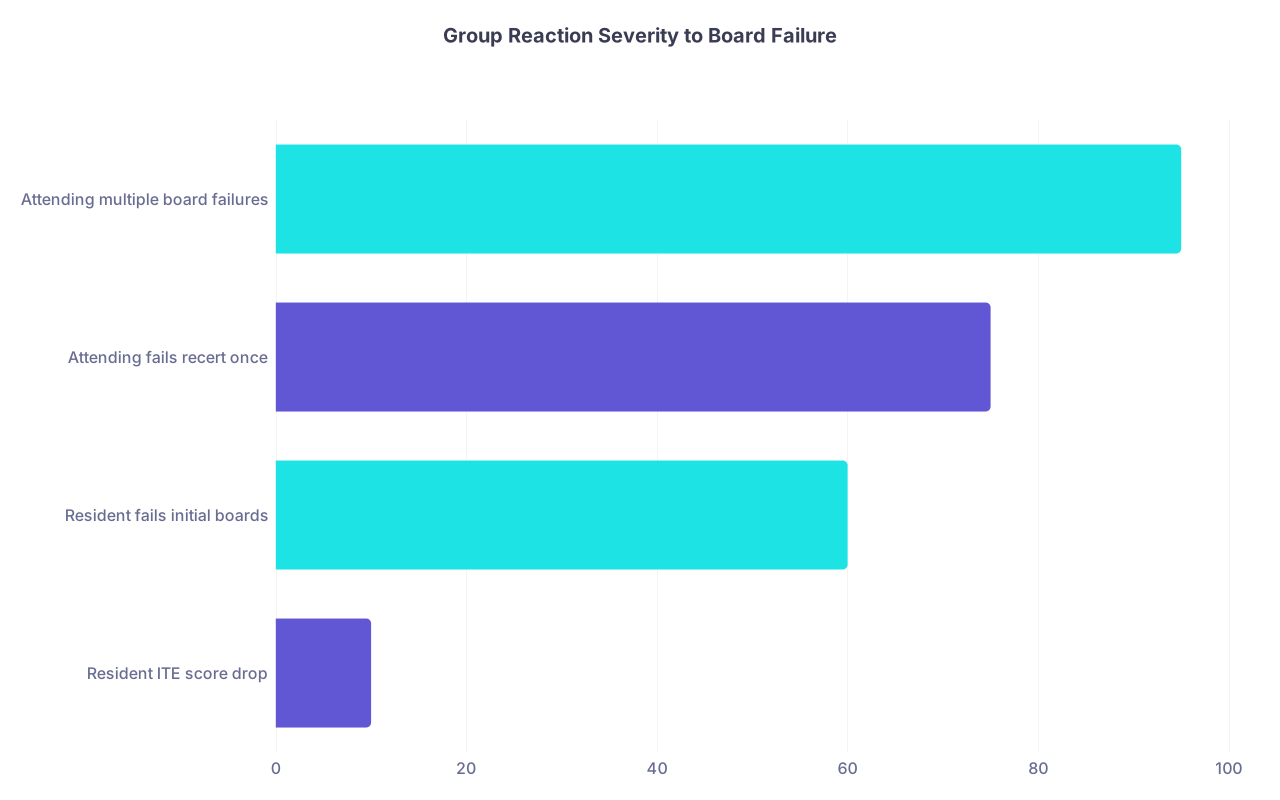
| Category | Value |
|---|---|
| Resident ITE score drop | 10 |
| Resident fails initial boards | 60 |
| Attending fails recert once | 75 |
| Attending multiple board failures | 95 |
(Think of those numbers as “how much the group actually changes behavior,” not precise percentages.)
Your academic program might officially “support” you more on paper, but private practice has very real skin in the game when one of their own loses board status. It complicates scheduling, call, contracts, and hospital negotiations.
So they care. They’re just reactive instead of proactive.
The Real Divide: Score Obsession vs. Pass Obsession
Residents talk about:
- 70th vs 90th percentile
- Which question bank is “best”
- Whether they need 2,000 or 5,000 questions
- How many dedicated weeks is “safe”
Private practice attendings talk about:
- “Pass the thing. Then get back to work.”
They are not optimizing for your ego or fellowship competitiveness. They’re optimizing for the binary outcome:
- Board certified vs. not board certified.
To them:
- 99th percentile vs barely passing = identical impact on your future in community practice.
- Missing months of clinic to chase a 90th percentile score = bad trade.
So when you interpret their indifference to your target percentile as “they don’t care about boards,” you’re just misreading the goal.
They do not care about your vanity metrics.
They absolutely care whether you pass.
How To Actually Work With Private Practice Attendings On Boards
Let’s be practical. You’re stuck in a system that rewards volume, supervised by people whose lifestyle depends on that volume. You still need to pass a high‑stakes exam.
Here’s how to play it like an adult instead of a victim.
1. Stop Leading with Anxiety
Telling a busy attending, “I’m really stressed about boards,” five times a week just trains them to tune you out.
Lead with specifics instead:
- “I’ve blocked 9–10 pm for questions every night and protected one weekend day. I’m aiming for one lighter clinic session per week the month before the exam. Can we look at the schedule together to pick a half‑day that hurts the practice least?”
Now you sound like someone balancing responsibilities, not someone asking to be carried.
2. Reference Their Reality, Not Just Yours
Use their incentives:
- “Hospital X requires everyone to stay board certified for privileges. If I pass on the first try, that keeps our resident‑to‑attending pipeline clean and avoids last‑minute remediation headaches.”
Is that slightly manipulative? Yes. It’s also accurate.
3. Ask For Targeted, Not Global, Support
Instead of vague “I need more time to study,” try:
- One protected half‑day per month during the 3 months before the exam
- Clear understanding you won’t get hammered with new clinic add‑ons the day before test day
- Focused teaching on high‑yield topics during slower parts of clinic or the OR
You’re asking for precise accommodations, not a personality transplant.
4. Use Their Own Behavior As a Mirror (Carefully)
If your attending is signed up for a recert course, you can gently leverage that:
- “I saw you’re going to the ABA review course next month. I’m building my own plan and trying to align some of my studying with what you’re doing—what resources have you found actually useful?”
You’re reminding them: you care about boards the way they care about boards—as a necessary piece of professional survival.
What This Means For How You Should Think About Boards
Let me be blunt.
- If you want academics or competitive fellowship: your scores matter. A lot.
- If you want long‑term community or private practice: passing matters; the exact score only matters until you land your first job.
Private practice attendings are acting out that second reality. They’re not pretending the exam is optional. They’re just not worshipping it.
Your mistake is assuming that emotional intensity equals importance. It doesn’t.
Private practice attendings are often less emotionally dramatic about boards exactly because they grasp the adult calculation:
- You have to pass.
- But you also have to learn to function under workload, clinical chaos, and limited time.
- Being able to do both is the job.
Two Things You Should Stop Believing Today
“Private practice attendings don’t care about boards.”
No. They don’t care about your percentile drama. They care a lot about the pass/fail line and their own certification status, because it’s tied directly to income, privileges, and malpractice optics.“If my attendings aren’t obsessed with my exam, it must not matter.”
Also wrong. Their incentives are different from your program director’s. You still only get one reputation when it comes to board performance. Protect it.
Boards matter in private practice. Just not the way you’ve been taught to measure “mattering.”