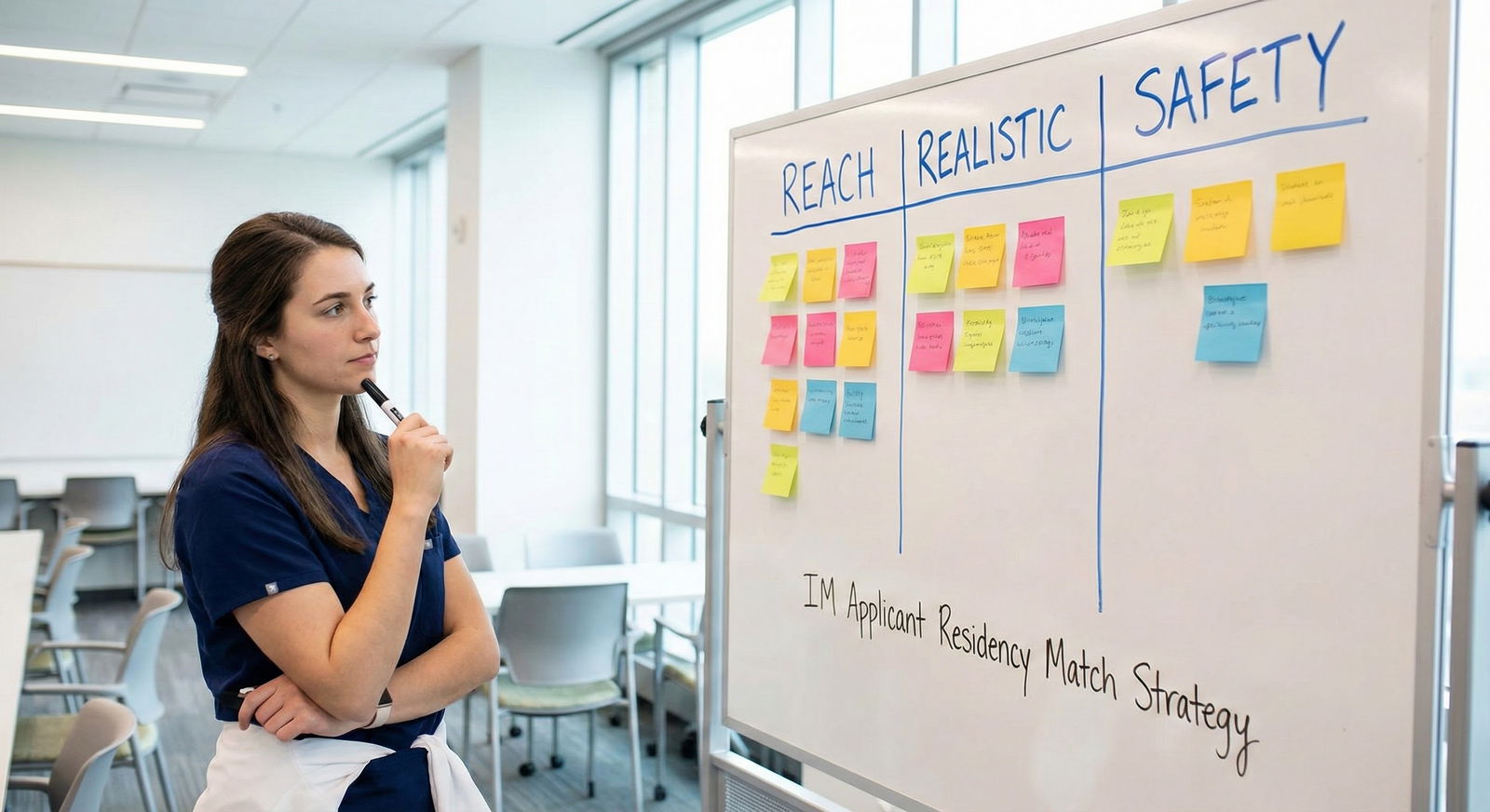
It is a Tuesday afternoon at a big-name children’s hospital. You are on your third away rotation. Between consults, a fellow casually mentions: “Honestly, if you want cards, you train where the research machine is already built.” You nod, but you are thinking what every MS4 secretly thinks: “How exactly do I see that from the outside?”
Let me break this down specifically. Academic pediatrics programs love to sound fellowship-strong. “Robust subspecialty exposure.” “Multiple T32s.” “Strong track record of fellowship placement.” The website copy all looks the same.
Your job is to separate marketing from infrastructure. You want to know: if I match here, how well positioned am I for competitive pediatrics fellowships (NICU, cards, heme/onc, GI, pulm, etc.) three years from now?
This is not about vibes. There are hard structural signals that correlate with fellowship strength. If you know what to look for, you can walk through a program’s website, interview day, and a single preinterview dinner and get a pretty accurate read.
1. The Core Signal: Where Do Their Graduates Actually Go?
If a program cannot show you outcomes, I do not care how “academic” they claim to be.
You start with one question: “Where did your graduates match for fellowship in the last 3–5 years, by subspecialty?” If they dodge, or hand-wave, that is already a data point.
A. Concrete fellowship placement data
You are looking for a pattern, not one superstar every few years.
Ideal scenario: the program keeps a simple, public list of resident outcomes. Something like a PDF or webpage: “Class of 2024: 6 fellows (NICU – CHOP, Cards – Texas Children’s, Heme/Onc – Cincinnati, etc.), 4 hospitalists, 3 general peds.”
You want three things from that list:
Do their graduates consistently match into:
- Competitive fellowships (NICU, cards, heme/onc, GI, pulm, endocrine)
- At solid academic centers (not necessarily “top 5,” but real children’s hospitals)
Do people routinely stay in-house for fellowship?
- A strong in-house fellowship ecosystem is a major advantage (more on this later).
- But the best signal is a mix: some stay; some go to other strong programs. That tells you they are competitive externally, not just getting “home-field” spots.
Is there breadth across subspecialties?
- If every fellow is NICU and hospitalist, and no one in 5 years has matched cards or heme/onc, that tells you something about mentoring and infrastructure in those fields.
| Feature | Residency A (Strong) | Residency B (Weaker) |
|---|---|---|
| Public outcome list | Yes, 5-year data | No |
| Avg graduates / year | 18 | 12 |
| Fellows / year | 9–11 | 2–3 |
| Competitive subspecialties match | Most cycles | Rare |
| External fellowships | Regularly (regional/national) | Rare, mostly local or none |
If you cannot even get this level of info from a PD, chief, or current resident, assume the track record is not great.
B. Ask the right version of the question
Do not ask: “Is it possible to get heme/onc from here?”
Almost anywhere will say yes. One person once did it.
Ask instead:
- “In the last 5 years, how many residents have applied in [subspecialty] and how many matched?”
- “Where are the current fellows in that field coming from? Locals vs external applicants?”
Then shut up and listen. People will tell you more than they mean to.
2. Subspecialty Ecosystem: Depth, Not Just Presence
Many programs list 15+ pediatric subspecialties on their website. That does not mean they are all equally robust. You care about the ecosystem around each field.
A. The “big four” subspecialties as barometers
If I want a quick read on a program’s academic muscle, I look at four services first:
- NICU (especially level IV, regional referral)
- Cardiology
- Heme/Onc
- GI
These tend to be research-heavy, procedure-heavy, and grant-heavy. If a program is strong academically, you nearly always see it here first.
Go to the faculty pages:
- How many attendings are in each division?
- How many have recognizable research profiles? (R01s, K awards, T32s, frequent first/last author papers)
- Is there a fellowship in that subspecialty at your institution?
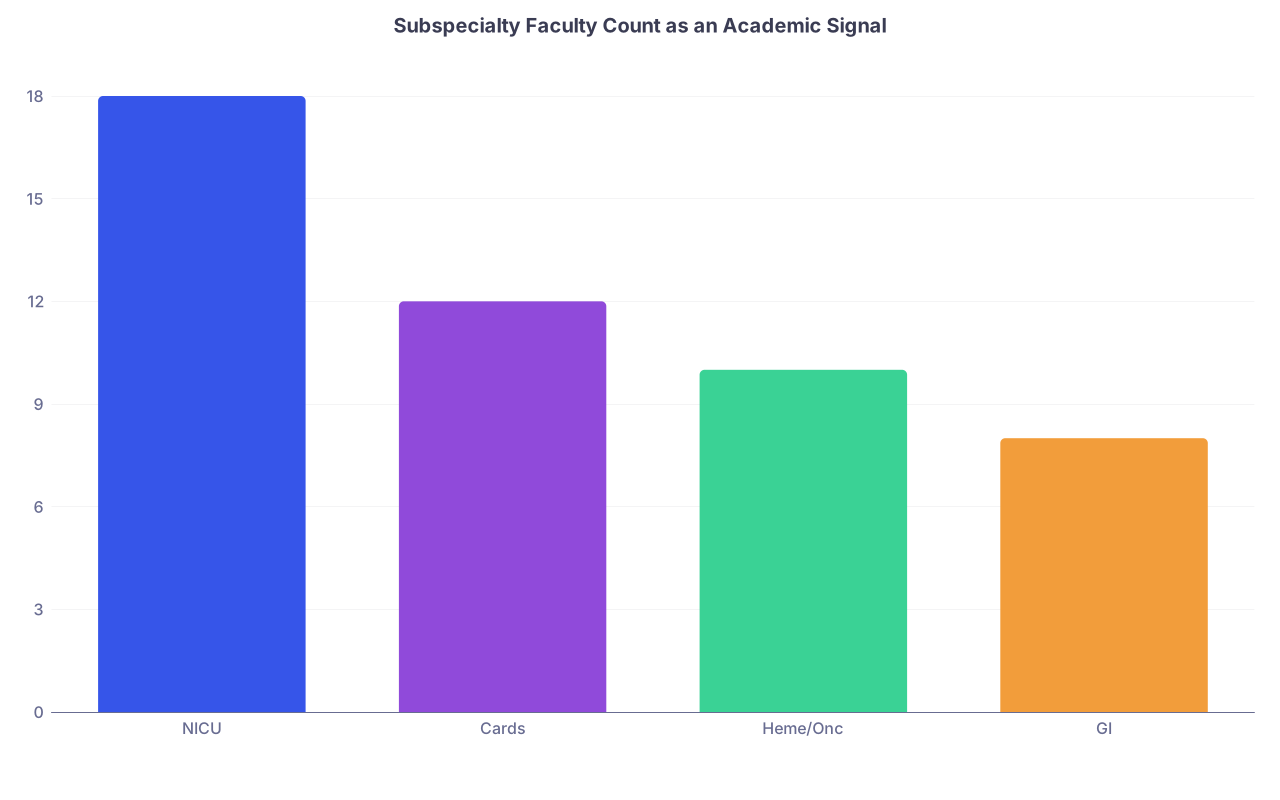
| Category | Value |
|---|---|
| NICU | 18 |
| Cards | 12 |
| Heme/Onc | 10 |
| GI | 8 |
The numbers above are what you might see at a flagship children’s hospital. At a smaller program you may see NICU 6, cards 3, heme/onc 3, GI 2. That can still support fellowship matches, but the ceiling is lower.
B. Fellows on the ground: asset or competition?
Blunt truth: for fellowship preparation, having subspecialty fellows around is usually an advantage, not a threat.
Strong signals:
- There are cardiology, NICU, heme/onc, GI, and PICU fellows in-house.
- Residents still get meaningful autonomy and procedural time.
- Fellows are visibly involved in teaching: noon conference, bedside teaching, journal club.
Weak signals:
- Residents say, “We barely ever work with the fellows,” or “We only see them as names in notes.”
- Or worse: “All the interesting cases bypass us and go straight to the fellow and attending.”
On interview day, ask:
- “On subspecialty rotations, how is teaching divided between attendings and fellows?”
- “How much of your exposure to subspecialty medicine is through consults vs primary service?”
If fellows are integrated teachers and collaborators, that is fellowship-friendly training. If they are shadow faculty who never engage with residents, that division may not be developmentally oriented toward making you competitive.
3. The Research Engine: Funding, Structure, and Real Mentorship
If you want an academic fellowship, you will be judged on scholarship. Period. I have seen outstanding clinicians get squeezed out of competitive spots because they had one case report and a “working on a manuscript” line.
So you need to ask: does this residency make it easy—or at least realistic—to build a scholarly portfolio?
A. Look for real funding and protected time
Protected time is useless if it is 2 weeks total and buried in your intern year when you are barely functional.
Ask very specifically:
- “How many months of protected research time are guaranteed, and in which years?”
- “Is that call-free and clinic-free, or are there strings attached?”
- “Can residents extend to a 4th year as a research chief or research track?”
Strong programs will say things like:
- “We have 3–4 months of protected scholarly time in PGY-2 and PGY-3, truly free of clinical duties.”
- “We support 1–2 residents per year in a research pathway or 4th-year research chief role.”
- “We fund travel to present at PAS or national subspecialty meetings if your abstract is accepted.”
Weak programs:
- “We encourage research if residents find something they are interested in.” (Translation: ad hoc, no structure.)
- “Protected” time that is nights-only or sandwiched around ward blocks so you are constantly pulled back into service.
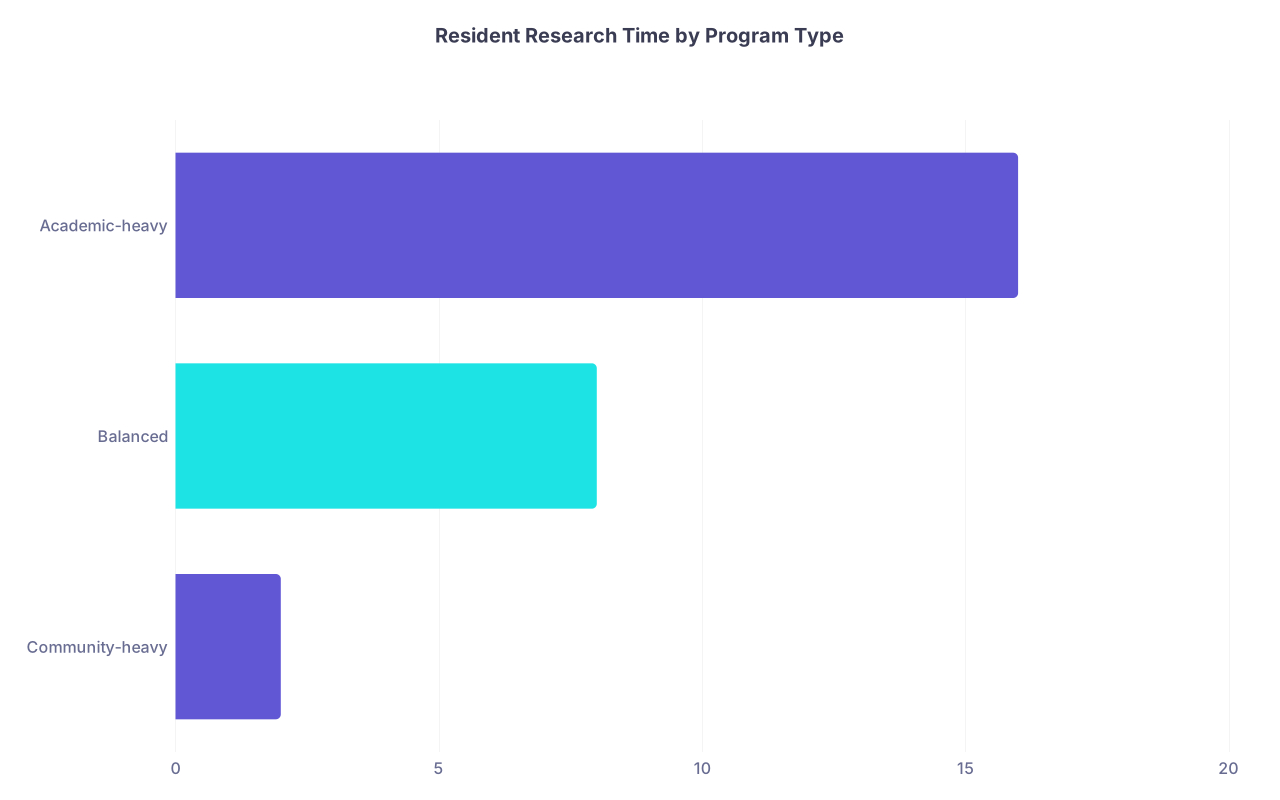
| Category | Value |
|---|---|
| Community-heavy | 2 |
| Balanced | 8 |
| Academic-heavy | 16 |
Those are months of truly protected time across 3 years. You do not need 16. But if a program is at 0–2 total, you will be doing your scholarship at 10 p.m. in your call room.
B. T32s, K awards, and who actually mentors residents
You will hear buzzwords like “T32” tossed around. The presence of NIH-funded training grants in pediatrics subspecialties (especially NICU, heme/onc, pulmonary, endocrinology) usually tracks with robust research ecosystems.
But you need to ask one more level down:
- “How many residents in the last 5 years have been on a T32 or worked in labs funded by these grants?”
- “Is it realistic for a resident to plug into these grants, or are they essentially reserved for fellows and postdocs?”
Then, mentor structure:
- Is there a formal process for pairing residents with research mentors early (PGY-1 or early PGY-2)?
- Is there a scholarly oversight committee or a research director for the residency?
Best case:
- Formal scholarly tracks (research, QI, educator).
- Someone whose whole job is: “I help you get a project, move it forward, and present/publish before graduation.”
Worst case:
- “Just email around and see who will take you.”
This is how you get stuck doing data entry on a dead-end database that will never see publication.
C. Output that actually counts
On interview day, ask residents:
- “How many of your classmates have abstracts, posters, or publications so far?”
- “How many go to PAS or subspecialty meetings to present each year?”
Look for:
- Most residents interested in fellowship have at least:
- 1–2 national posters,
- plus 1–2 manuscripts (submitted, in press, or published) by mid-PGY-3.
If the norm is “a few people do a poster at local research day,” that is not a fellowship-strong environment.
4. Clinical Volume and Case Complexity: The Hidden Curriculum
You cannot match into a solid fellowship if you are clinically shaky. Fellowship PDs notice. Several have literally said: “I can teach you research. I cannot fix 3 years of soft clinical training.”
So you want a residency that exposes you to volume and complexity without reducing you to a scut monkey.
A. Tertiary/quaternary care footprint
Look for:
- Free-standing children’s hospital or a significantly large children’s hospital within a bigger system.
- Level I trauma center (for PICU, EM people).
- Level IV NICU (for NICU, cards, pulm, neuro people).
- Regional referral pattern—do they pull in weird pathology from 2–3 states?
If the biggest shock cases from surrounding hospitals all land in their PICU and NICU, that is where you grow.
Signs you are at a high-acuity center:
- Residents talk about complex ECMO cases, transplant kids, metabolic crises like they are routine.
- There are transplant programs (cardiac, liver, kidney), and residents at least see those patients.
B. Resident role vs “service”
Here is where programs can fool you. Yes, they have all the bells and whistles. But are residents actually involved in the interesting, teachable parts of those cases?
Ask pointedly:
- “On PICU and NICU, who is the primary decision maker at the bedside—residents, fellows, or attendings?”
- “Do residents routinely perform procedures (LPs, central lines, intubations) or are those mostly done by fellows/NPs?”
- “On subspecialty consults, are you the one seeing, presenting, and following patients, or are you just ‘putting in notes’?”
Competent fellowship directors can spot the difference between:
- A resident who has been a primary clinician on sick, complex kids, versus
- Someone who watched consults go by and dictated other people’s plans.
You want heavy responsibility, but with backup. Not glorified secretarial work.
5. Academic Culture: Are Fellows and Faculty Actually Visible?
I have walked into places that looked good on paper and immediately knew they were academically weak. Why? Because no one was talking about ideas, scholarship, or curiosity. It was all about throughput and “RVU efficiency.”
Fellowship-strong programs, in contrast, have a feel.
A. Conferences that are not dead air
You care less about the number of conferences and more about who shows up and what happens there.
Key questions:
- “Who leads morning report? Residents only, or do fellows and subspecialists attend and push clinical reasoning?”
- “How often do fellows present at noon conference or run sub-specialty-specific teaching sessions?”
- “Do you have regular journal clubs? Who selects the articles and guides the critical appraisal?”
Look for:
- Fellows giving talks on up-to-date management of bronchiolitis, sepsis bundles, complex congenital heart disease.
- Faculty pushing residents to question dogma and read primary literature.
- Sessions that clearly use real, local cases—especially complicated ones.
Dead signals:
- Residents roll their eyes and say, “Conferences are usually canceled because of staffing.”
- No one can remember the last time a fellow taught anything.
B. Accessibility of subspecialty mentors
During interview day:
- Ask to meet or talk with at least one subspecialty faculty member in your area of interest.
- Or ask if you can speak with a current resident who is aiming for the same fellowship you want.
Strong programs:
- Quickly connect you to an appropriate person.
- Have residents who can rattle off, by name, which attendings sponsor fellow-bound residents in NICU, cards, etc.
Weaker programs:
- Struggle to find anyone to connect you with.
- Residents say things like, “I’m not really sure who does research in that area,” or “I just kind of haven’t gotten around to it.”
6. Structured Career Development: Are They Intentionally Producing Fellows?
You want to know if the system is designed with “future fellow” as a default possibility, or as a rare exception.
A. Tracks, pathways, and individualized mentorship
Do not be fooled by generic “resident as teacher” or “advocacy” talks. I am talking about systematic career-building.
Ask:
- “Do you have a formal academic pediatrics track, research track, or clinician–educator path for residents?”
- “Is there a standing ‘fellowship application’ curriculum—mock interviews, CV review, letter strategies, help with personal statements?”
- “Who writes the majority of fellowship letters here—PD only, or also subspecialty mentors who know you well?”
Some of the best programs:
- Start fellowship conversations early (PGY-1/early PGY-2).
- Expect you to build a portfolio by mid-PGY-2 if you are serious.
- Have faculty whose unofficial job is “pipeline director” into certain fellowships (cards, NICU, heme/onc, etc.).
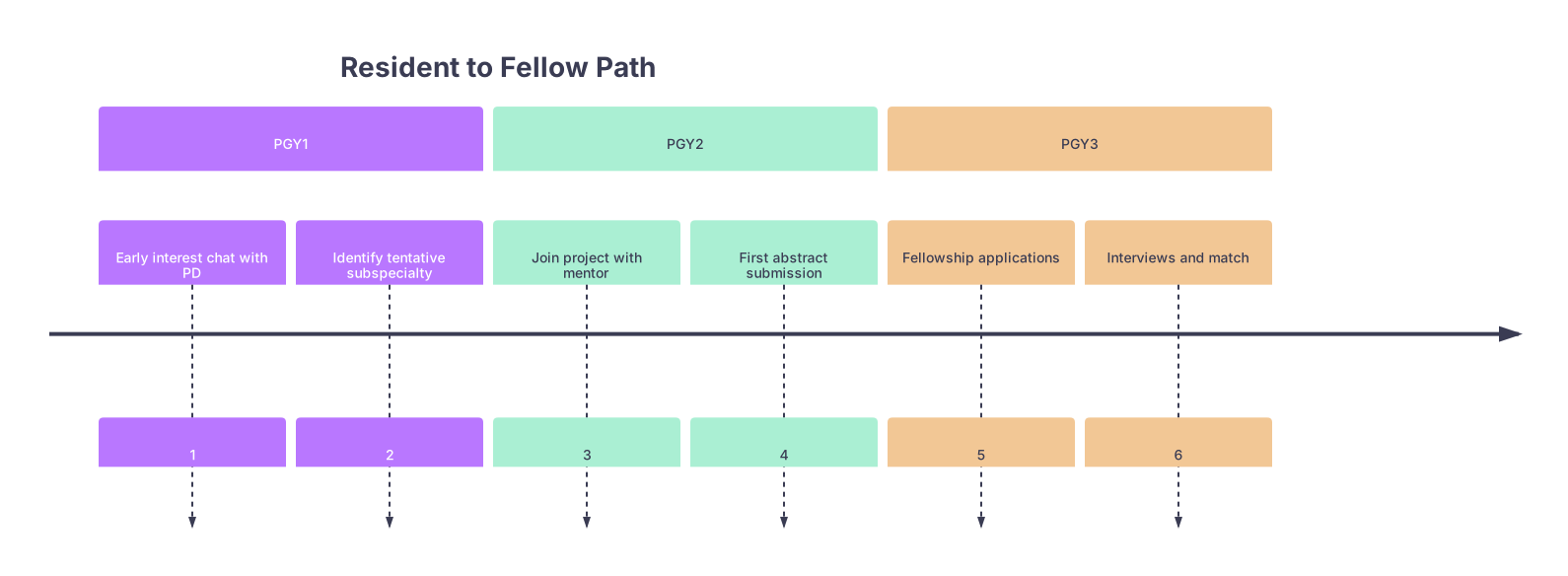
| Period | Event |
|---|---|
| PGY1 - Early interest chat with PD | 1 |
| PGY1 - Identify tentative subspecialty | 2 |
| PGY2 - Join project with mentor | 3 |
| PGY2 - First abstract submission | 4 |
| PGY3 - Fellowship applications | 5 |
| PGY3 - Interviews and match | 6 |
If a program starts talking about fellowship only in February of your PGY-3, you are already behind by at least a year.
B. Network and name recognition
This part is uncomfortable, but real. Some program names open doors. But it is not only about prestige; it is about the network of your faculty.
Ask subtly:
- “At your top subspecialty targets, how often do faculty pick up the phone and call PDs on behalf of applicants?”
- “Where did your faculty train for fellowship? How many maintain active relationships with those institutions?”
You are not looking for humblebrags about “top 5” everything. You are looking for a pattern: faculty who trained at recognizable places and stay plugged in.
7. Red Flags That a Program Is Not Built for Future Fellows
Let’s be blunt. If you see several of these, and you know you want a subspecialty fellowship, think very hard before ranking that program highly.
Major red flags:
No meaningful, recent fellowship placement data.
Or the list is short, sparse, and mostly low-acuity subspecialties.Minimal or zero protected research time.
Everything is “on your own time.”No in-house fellows in most subspecialties, and limited subspecialty depth.
A couple of general cardiologists, no advanced imaging, no cath lab, no transplant.Residents do not know who the “go-to” research mentors are.
They shrug or say, “I think Dr. X does something with QI, but I’m not sure.”Conference culture is dead.
Lots of cancellations. No journal clubs. No visible academic energy.Residents describe their training as:
- “Very service heavy,”
- “All about throughput,”
- “We are essentially managing urgent care and low-acuity floor patients.”
PD or faculty minimize fellowship aspirations:
- “Most of our residents go into general pediatrics.”
That by itself is not bad. But if it is said with a hint of, “Fellowships are kind of extra,” that is not your place.
- “Most of our residents go into general pediatrics.”

8. How to Use Interview Day to Audit Fellowship Strength
You do not have infinite time on interview day. You will get a vague overview talk, a few interviews, and some resident Q&A.
Here is how I would “audit” a program fast.
A. Before you show up (website and pre-interview homework)
Pull their resident outcomes list, if it exists.
Make your own rough count of:- How many fellows per year?
- Which subspecialties?
- Which institutions?
Scan subspecialty divisions for:
- Faculty count.
- Research keywords (R01, K award, T32, major trials).
- Presence of in-house fellowships.
Note 1–2 subspecialties you are most interested in.
Write down 3–4 very specific questions to ask repeatedly all day.
B. Questions to ask residents (and what their answers really mean)
Sample questions:
- “If someone comes in wanting cards or NICU, what do they actually do here from PGY-1 to PGY-3?”
- “Who are the main research mentors for residents interested in heme/onc or GI?”
- “How many of your classmates are applying to fellowship this year, and what does their CV look like?”
Pay attention to:
- Whether they can name names.
- Whether they talk about tangible projects, abstracts, and publications.
- Whether fellowship-bound residents are seen as normal, or outliers.
C. Questions for PD / APD / faculty
You can be direct. That is their job.
Ask:
- “Walk me through your typical applicant profile for residents who successfully match into competitive fellowships.”
- “What structural supports exist for residents aiming for academic careers?”
- “What do you see as your biggest strengths and weaknesses for preparing future fellows?”
A confident PD at a strong academic pediatrics program will have clear, concrete answers. They will not pretend to be perfect, but they will know their own pipeline.
9. Tradeoffs: When a “Balanced” Program Is Enough
Not everyone needs a hyper-academic behemoth. Let’s be clear.
You definitely want an academically heavy program if:
- You already know you want a highly competitive subspecialty (NICU, cards, heme/onc, GI, pulm, neuro).
- You care about research, education, or leadership as core parts of your career.
- You want to leave doors open for big-name fellowships.
You may be fine at a balanced or mid-tier academic program if:
- You are targeting a less-saturated subspecialty (endocrine, allergy/immunology, maybe rheum, ID in some regions).
- You are okay with regional fellowships rather than national-name programs.
- You are self-directed enough to build your own scholarly portfolio with less structure.
What you should avoid, if fellowship is even a remote interest:
- Purely community programs with limited subspecialty depth.
- Places where almost no one in the last 5 years has matched into your target field.

10. Putting It Together: A Quick Mental Checklist
When you are comparing two programs for fellowship strength, run through this in your head:
- Do they have recent, consistent fellowship matches across several subspecialties?
- Do they have in-house fellowships and robust subspecialty divisions (especially in the “big four”)?
- Do residents get real, protected scholarly time and active mentorship?
- Do fellows and subspecialists visibly teach and engage at conferences and on the wards?
- Is there a structured pathway and culture that treats “future fellow” as normal, not exceptional?
If the answer to most of those is yes, you are standing in a fellowship-strong residency.
If most are no, then you will be swimming upstream—and in pediatrics, competitive fellowships already feel upstream from day one.

FAQ (Exactly 5)
1. Do I absolutely need a “top 10” pediatrics program to match a competitive fellowship like NICU or heme/onc?
No. You need a program with real academic infrastructure and proof of recent fellowship matches, not necessarily prestige branding. I have seen excellent applicants from mid-tier academic programs match at high-level fellowships because they had solid clinical training, two or three strong projects, and letters from well-known subspecialists. A “top 10” name can help at the margins, but it does not override a weak CV or limited mentorship.
2. How many research projects or publications do I realistically need for a competitive pediatrics fellowship?
For most competitive pediatric fellowships, a realistic target is: at least 1–2 national-level abstracts or posters, plus 1–2 manuscripts (submitted, in revision, or published) by the time applications go in. Case reports alone are weak currency. One strong first-author original study or well-done retrospective analysis can carry as much weight as several low-impact side projects. Quality and coherence with your stated interests matter more than raw count.
3. If my residency is clinically strong but academically weaker, can I still get a good fellowship?
Yes, but you will need to be aggressive and early about finding mentors and projects, and you may need to leverage external collaborations (through national organizations, virtual research, or away electives). You will be building what stronger programs hand their residents ready-made. It is doable, but the burden shifts heavily onto you. If you already know you want a competitive subspecialty, I would prefer you train at a place where at least a few people have already done what you are trying to do.
4. How important is it to have an in-house fellowship in the subspecialty I want?
Very helpful, not strictly mandatory. In-house fellowships give you direct access to subspecialty mentors, fellow teachers, ongoing projects, and consistent exposure to the complex end of that field. They also create a natural “home-field” fellowship option. That said, you can still match into a subspecialty that your institution does not offer if the faculty are strong, your projects are good, and your PD and mentors are well-connected. But it is undeniably harder.
5. When during residency should I start positioning myself for fellowship?
If you are even 60–70 percent sure about fellowship, you should start laying groundwork in PGY-1: meeting potential mentors, reading around your area, maybe joining a smaller project to learn the ropes. By early PGY-2, you should be attached to at least one meaningful project. By late PGY-2, you want at least one abstract submitted and a manuscript in progress. Programs that are truly fellowship-strong will expect and support roughly that timeline.
With this lens in place, you are no longer at the mercy of glossy brochures and vague promises. You can walk into any pediatric residency interview and, in a day, build a sharp picture of its true fellowship strength. The next step is aligning that reality with your own risk tolerance and ambitions. Once you choose your training ground, then the work shifts from reading signals to becoming the kind of resident fellowship directors fight over—but that is another conversation.