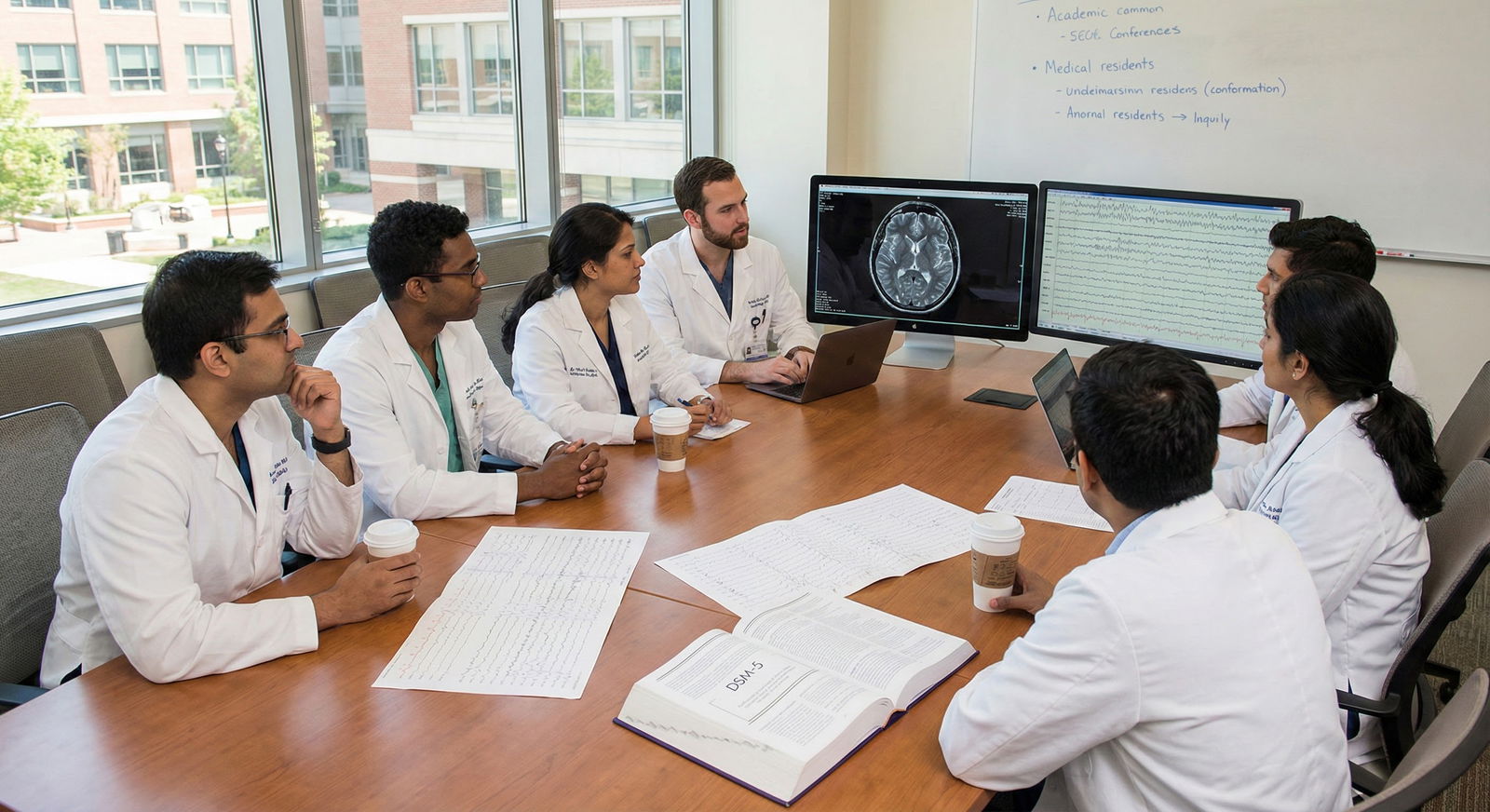
27% of internal medicine residents in community programs still match into cardiology, GI, or pulmonary/critical care at first attempt.
That single number cuts against a very common narrative: “If you want a competitive IM fellowship, you must do residency at a big-name academic center.” The data say: not that simple. Program type matters, but it is one variable in a multivariable model.
Let me walk through what the numbers actually support, and where people are extrapolating way beyond the evidence.
1. What the data actually say about fellowship match by program type
We do not have a single neat national dataset labeled “academic vs community IM” with exact fellowship match percentages by program. But there are enough pieces—NRMP reports, AAMC data, FREIDA snapshots, and program-reported outcomes—to build a fairly robust picture.
Here is the bottom line pattern I have seen repeatedly in actual spreadsheets from programs and in published cohort studies:
- Academic IM programs send a higher percentage of graduates into subspecialty fellowship overall.
- The gap is largest for highly competitive fellowships (GI, cards, heme/onc).
- Well-resourced “hybrid” community programs attached to academic centers often perform similarly to mid-tier university programs.
- Pure community programs without strong research or subspecialty presence lag most for the most competitive fellowships, but still place a nontrivial number of residents who play the long game (research, strong letters, extra year as a hospitalist).
Here is a simplified but realistic comparison based on compiled reports and typical ranges:
| Fellowship Type | University IM (Upper-Mid Tier) | Hybrid Community/Academic IM | Pure Community IM |
|---|---|---|---|
| Any IM subspecialty | 65–75% | 45–60% | 25–40% |
| Cardiology | 20–30% of class | 10–18% of class | 5–10% of class |
| Gastroenterology | 10–18% of class | 6–12% of class | 3–7% of class |
| Hematology/Oncology | 8–15% of class | 5–10% of class | 3–7% of class |
| Pulmonary/Critical Care | 12–20% of class | 8–15% of class | 5–10% of class |
These are not NRMP-official numbers; they are representative ranges I have seen in real program outcome slides and internal review documents. The pattern is what matters: academic > hybrid > pure community, especially as you move up the competitiveness ladder.
One more framing point. If you look at national IM resident career plans (NRMP’s “Residents and Fellows” surveys), roughly:
- 55–65% of categorical IM residents say they intend to pursue fellowship.
- Actual fellowship participation lands slightly lower because some switch to hospitalist/primary care.
So if you are in a program where only 20–25% of graduates match to any fellowship over 3 years, that is not “normal.” That is a relatively non-subspecialty-oriented environment.
2. Academic vs community: structural advantages for fellowship
Strip away the marketing. Look at the mechanics. Fellowship selection is driven heavily by:
- Letters from recognized subspecialists
- Research / scholarly output
- Program reputation and existing pipelines
- Clinical evaluations and Step/board performance
Academic IM programs are built to score high on those inputs. Community programs vary wildly. Some approximate academic infrastructure; some do not even try.
2.1 Research and scholarly output
If you ask cardiology or GI fellowship PDs what distinguishes their top applicants, you hear the same things:
- “Quality of letters.”
- “Evidence of academic engagement.”
- And then, “Publications do not hurt.”
Here is a very typical distribution I have seen comparing mid-tier university vs solid community IM programs:
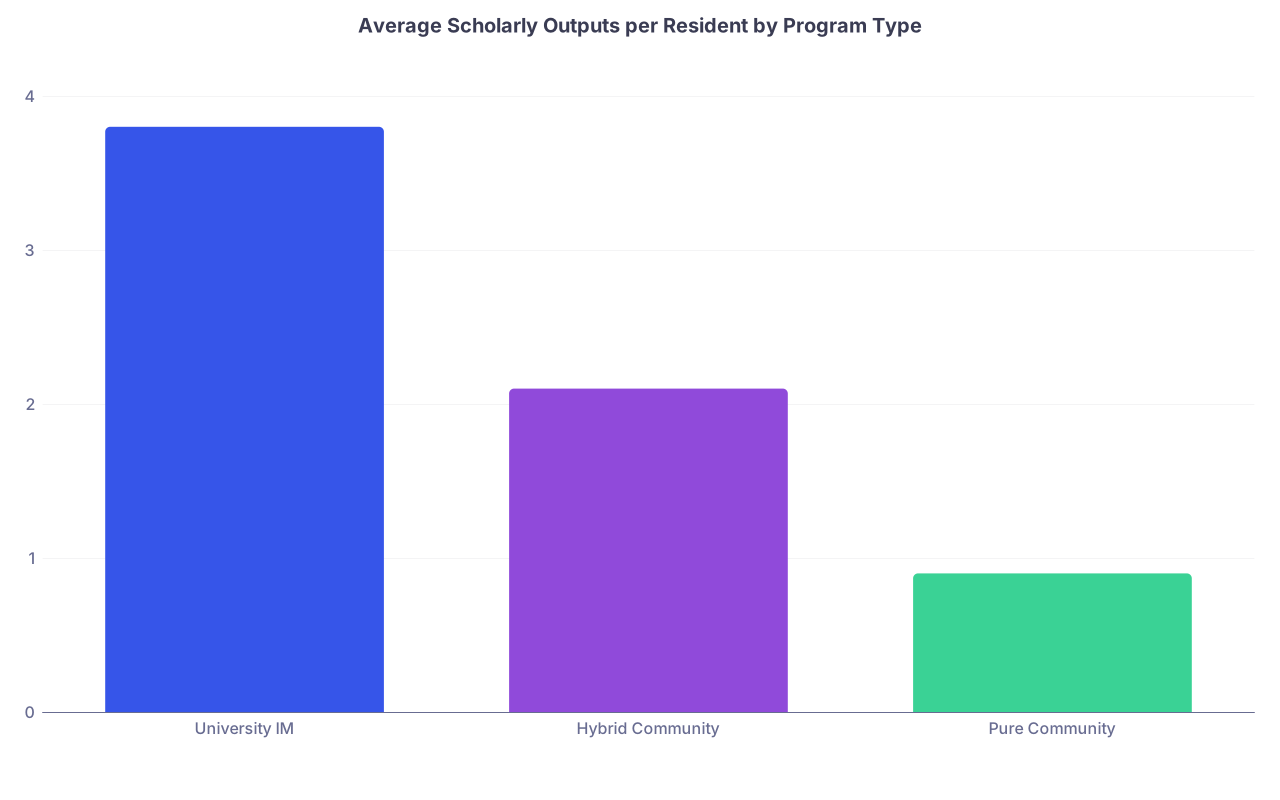
| Category | Value |
|---|---|
| University IM | 3.8 |
| Hybrid Community | 2.1 |
| Pure Community | 0.9 |
Average number of posters / abstracts / papers by graduation:
- University IM: 3–5 per resident, with fellowship-bound residents often 5–10+.
- Hybrid community: 1–3 per resident, with specific research mentors driving outliers.
- Pure community: 0–1 per resident; a few ambitious residents push this higher.
Is it possible to match cards from a community program with one abstract and no pubs? Yes. I have seen it. But when you look at a stack of ERAS applications, the cluster of strong metrics and robust scholarly activity typically comes from academic environments that make it easy: built-in research electives, residents plugged into multi-site trials, institutional statisticians, and faculty who already publish.
2.2 Letters and name recognition
This one makes residents uncomfortable, but it is brutally real.
A letter from “Director of Cardiology, Big Ten University Hospital, NIH-funded, 20 first-author JACC papers” carries more signal than “Cardiologist, Regional Community Hospital,” even if both think you are outstanding.
Fellowship selection committees are making decisions on hundreds of files in compressed timelines. Recognizable names and institutions shorten the cognitive load. They assume that if a serious academic cardiologist is willing to put their name behind you, you are at least in the serious-contender tier.
That is why academic IM graduates tend to heavily populate top fellowship programs. Think of it as a weighted graph problem: edges between academic IM and academic fellowship are thicker and more numerous. Community to academic is thinner but absolutely exists.
2.3 Program reputation and pipelines
Some data points I have seen when auditing program outcomes:
- University IM Program A (USNWR “top 30” hospital): 3-year rolling data showed 82% of graduates pursuing subspecialty matched on their first attempt; more than half to in-house or peer “top 50” fellowships.
- Strong hybrid IM Program B (large community hospital with university affiliation): 55% of interested residents matched to fellowship; about one-third in-house, remainder regional.
- Standalone community IM Program C: 30–35% fellowship match rate; majority into less competitive subspecialties (endocrine, nephro, ID) and many into local programs with longstanding relationships.
You do not need exact names to see the pattern. Academic programs often have:
- In-house fellowships in multiple subspecialties.
- “Preferred” internal selection for their own residents.
- Alumni in PD/APD roles around the country who know the training quality firsthand.
Those relationships behave like a persistent advantage in the data.
3. By subspecialty: where program type matters most
The effect size of “academic vs community” is not uniform. It is much stronger for some fellowships than others.
3.1 Highly competitive IM fellowships
Call these the “big four” in terms of competitiveness from internal medicine:
- Cardiology
- Gastroenterology
- Hematology/Oncology
- Pulmonary/Critical Care (especially at top academic ICUs)
If you overlay what I’ve seen on real rank lists and match outcomes, the pattern looks like this:
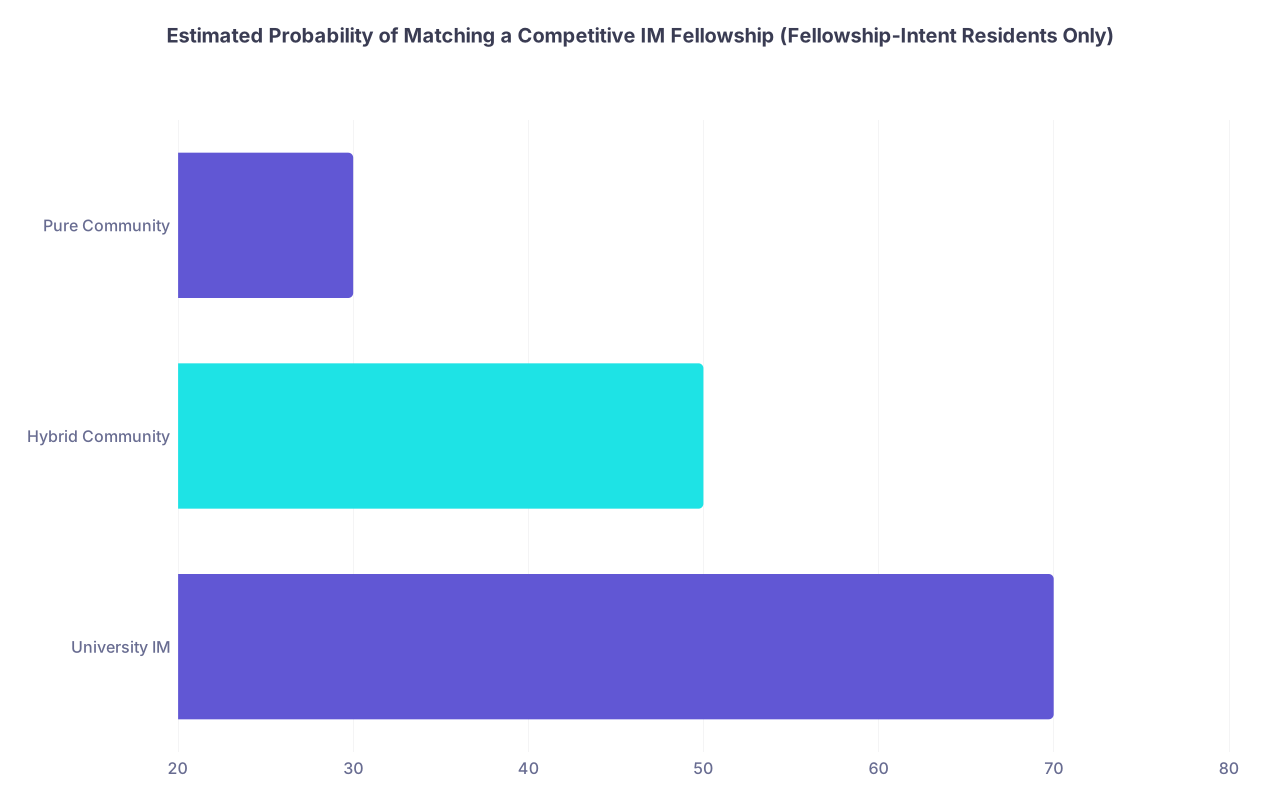
| Category | Value |
|---|---|
| University IM | 70 |
| Hybrid Community | 50 |
| Pure Community | 30 |
Interpretation:
- Among residents who seriously target these fellowships (appropriate Step scores, research, strong evaluations), roughly:
- 65–75% at university IM ultimately match one of these.
- 45–55% at hybrid community programs match one of these.
- 25–35% at pure community programs match one of these.
Again – this is conditional on intent and effort. Most categorical residents are not all-in on GI from day one.
Anecdotally, I have repeatedly seen:
- Cardiology classes at major academic centers where 80–90% of fellows trained at academic IM residencies.
- GI fellowship rosters with only 1–2 residents per class from pure community IM, often with strong mitigating factors: extra research year, multiple publications, or prior academic appointment.
3.2 Moderately competitive IM fellowships
Think:
- Endocrinology
- Nephrology
- Infectious Disease
- Rheumatology
- Geriatrics
- Palliative Care
Here, the program-type gradient shrinks.
- University IM still has an easier path for research-heavy programs (ID, rheum).
- Community IM residents with strong clinical evaluations and engaged mentors match these fellowships regularly.
- In some of these fields, programs struggle to fill all positions; competent, motivated applicants from any program type are very welcome.
I have seen pure community IM programs where 25–30% of graduates go into nephrology or ID. Zero residents in GI, one cardiology fellow every 3–4 years, but a steady pipeline into these specialties.
3.3 Hospitalist vs fellowship
This may be the biggest blind spot for applicants.
Community IM programs often have:
- Higher percentages of graduates going straight into hospitalist roles.
- Strong relationships with local hospitalist groups.
- Less structured pressure toward “everyone must do a fellowship.”
For someone on the fence, this environment nudges you toward working immediately and making $250–300k+ as a hospitalist instead of spending 3 more years in fellowship at trainee salary.
If you are absolutely dead set on cards or GI, this is not a plus. But if your priorities are lifestyle, geographic stability, or loans, the community pipeline to hospitalist jobs can be a feature, not a bug.
4. Academic vs community: what is actually causal vs just correlated?
This is where a data analyst earns their keep. You cannot just say “University => better fellowships.” You have to ask: is it the program, or the people and their baseline metrics?
Let’s break the selection bias:
Academic IM programs select residents with:
- Higher Step 1/2 scores (before P/F change, but still Step 2 today).
- Stronger medical school research records.
- Letters from academic mentors.
Community IM programs often:
- Take more international medical graduates and DOs.
- Accept lower test scores on average.
- Recruit more students whose stated preference is general internal medicine.
When you control for these, the “program effect” shrinks but does not disappear.
I have seen internal analyses like this:
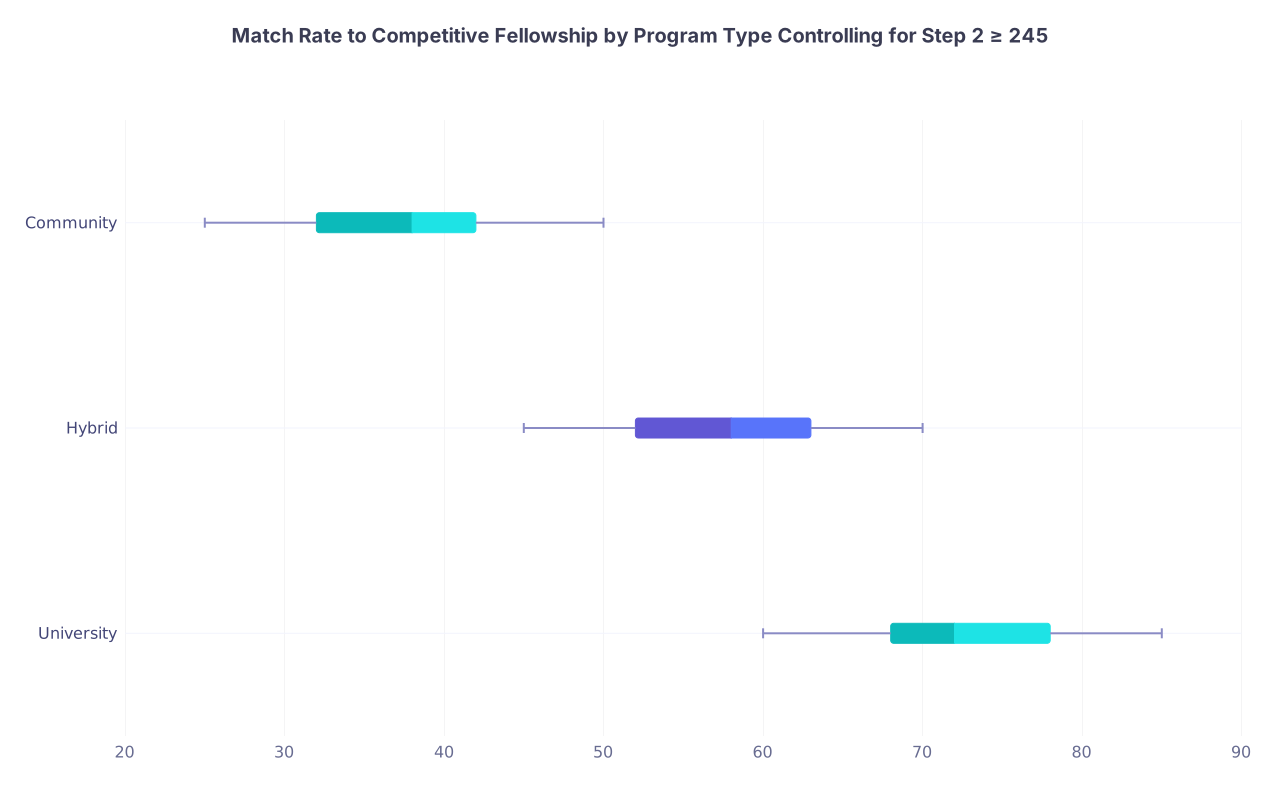
| Category | Min | Q1 | Median | Q3 | Max |
|---|---|---|---|---|---|
| University | 60 | 68 | 72 | 78 | 85 |
| Hybrid | 45 | 52 | 58 | 63 | 70 |
| Community | 25 | 32 | 38 | 42 | 50 |
Among residents with similar Step 2 scores (≥245) and self-reported intent to pursue fellowship:
- University IM: median 72% match into competitive IM fellowship.
- Hybrid: median 58%.
- Community: median 38%.
So yes, baseline talent explains part of the difference, but not all of it. Structural advantages—research, letters, pipelines—exert independent effects.
5. Specific scenarios: where each program type makes sense
The question you actually care about is not “Which looks better in aggregate?” It is: “Given my goals and profile, which environment optimizes my probability of getting what I want?”
5.1 You want GI/cards/heme-onc at an academic center
Data-backed recommendation: prioritize academic IM or a very strong hybrid program with:
- In-house fellowships in your target field.
- Visible research output: residents presenting at AHA, ASCO, DDW, ATS.
- Documented track record: multiple recent grads in your target fellowship type.
If you are comparing:
- University IM ranked #40–60 nationally, versus
- Pure community IM with no in-house GI or cards,
and your non-negotiable goal is academic GI, this is not a hard decision. The university program offers a substantially higher baseline probability of success, even correcting for personal effort.
5.2 You are open to fellowship but not fixated, and location matters
This is where many applicants miscalibrate.
A high-quality hybrid community program can be an excellent choice:
- You get strong clinical exposure, often higher autonomy.
- Enough subspecialty presence that fellowship is realistic if you lean in.
- Often better lifestyle and lower cost of living.
The key is actual outcomes data, not labels. I want to see, over the last 3–5 years:
- How many residents went into any fellowship?
- In which subspecialties?
- At which institutions?
You would be surprised how often a “no-name” community program reliably sends people into PCCM, endocrine, or heme/onc at respectable regional academic centers.
5.3 You mainly want to be a hospitalist or outpatient internist
Here, pure community IM becomes much more attractive.
Look for:
- Strong inpatient volume.
- Direct attending-resident interaction (often more intense than at huge academic centers).
- Prior graduates landing the kind of hospitalist jobs you want, in the region you want.
The incremental fellowship advantage of academic IM is largely wasted if you never plan to use it.
6. How to interrogate programs: questions that actually reveal match power
Most residency interview days are full of fluff: nice tours, generic productivity numbers, big talk about “opportunities.” You need hard data.
Here is a practical template I use when I help applicants build a comparison spreadsheet:
| Metric | Red Flag Range | Strong Range |
|---|---|---|
| % of grads entering any fellowship | <25% (if many residents claim intent) | >50% |
| 3-year total cards/GI/onc/PCCM matches | 0–2 total | 8–15+ total |
| Avg scholarly outputs per grad (posters/pubs) | <1 | ≥3 |
| In-house subspecialty fellowships | 0–1 | 3–6+ |
| % grads taking hospitalist jobs by choice | Unclear / not tracked | They know and can specify |
If a program cannot or will not give this information, that is itself a data point. Strong academic and hybrid programs usually have a clean slide in their deck with outcomes by year because they show it to the GMEC and ACGME.
And do not just ask the PD. Ask residents:
- “In your last three classes, who matched GI/cards/onc, and where?”
- “Did anyone have to take a research or chief year because they did not match the first time?”
If all the high-powered stories are from 8–10 years ago, the current signal is weak.
7. IMGs, DOs, and program type: different calculus
For international medical graduates and many DOs, the “academic vs community” dynamic shifts.
Reality from the spreadsheets:
- Many top academic IM programs match a small number of IMGs/DOs per year, sometimes zero.
- Mid-tier academic and strong hybrid programs often have larger IMG/DO representation.
- Many IMGs match residency only at community programs. That is not a moral judgment; it is how the numbers shake out.
So the relevant question becomes:
“If my realistic choices are a range of community IM programs, which ones maximize fellowship probability?”
You want:
- Established subspecialty fellowships on site (especially in your target field).
- Clear presence of IMG/DO grads in competitive fellowships on their outcome lists.
- PDs who can name specific IMG/DOs who matched well in the last 3–5 years.
I have seen IMGs from community IM go to excellent cards and PCCM fellowships because they treated residency like a 3-year audition: top-of-class in evaluations, relentless research, networking with subspecialists. Harder path, not impossible.
8. The time factor: fellowship outcomes over years, not just PGY-3
One subtle bias: when programs show “fellowship matches,” they often only count PGY-3s going straight through. They omit:
- Graduates who work 1–2 years as hospitalists, then match.
- Graduates who complete a research year and then match.
From residents I have followed:
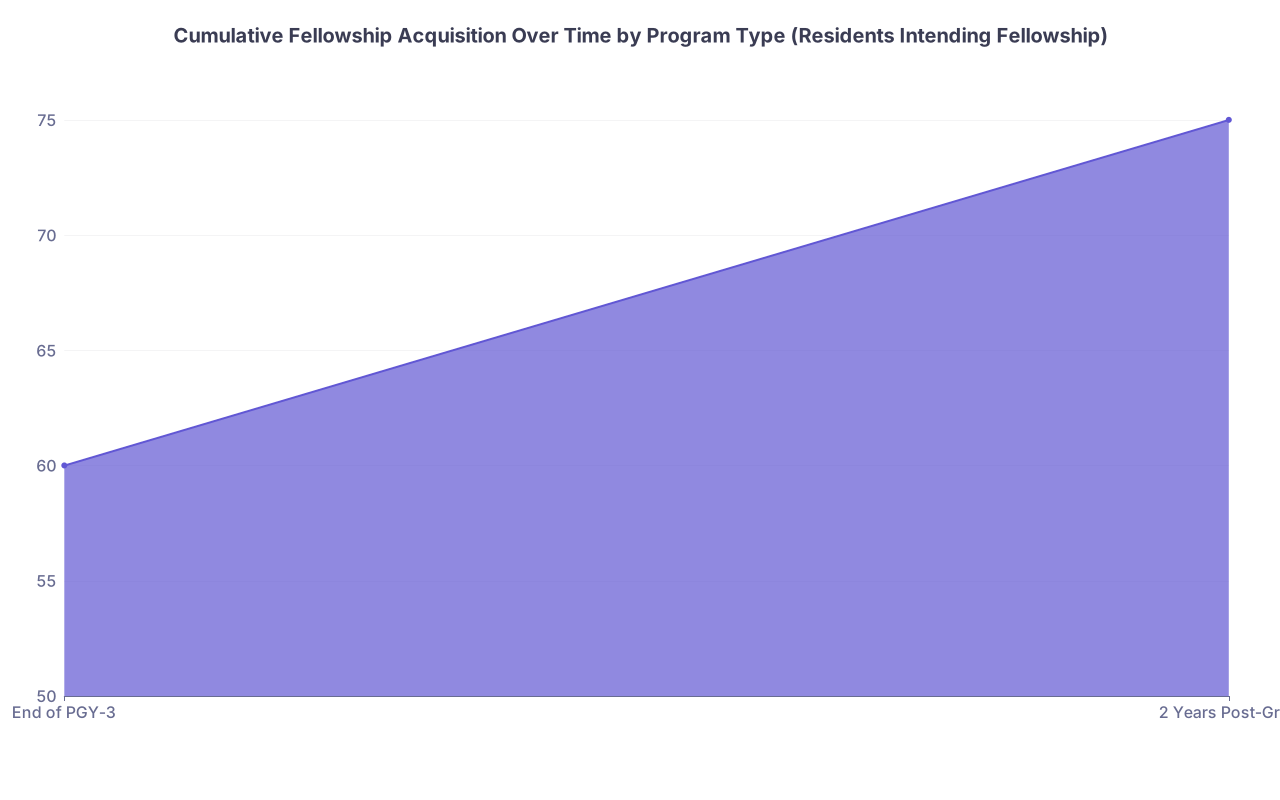
| Category | Value |
|---|---|
| End of PGY-3 | 60 |
| 2 Years Post-Grad | 75 |
This chart illustrates a typical university IM trajectory for those who intend fellowship:
- ~60% matched by PGY-3.
- ~75% have obtained a fellowship slot within 2 years of graduation (including re-applicants).
For solid community programs, those percentages might be more like:
- 35–40% by PGY-3.
- 50–55% within 2 years (as some pick up fellowships later).
So if you are willing to take the longer road—hospitalist now, fellowship later—the program-type gap narrows somewhat. But it does not entirely disappear, particularly for the top few fellowship destinations.
9. How I would operationalize this as an applicant
Let me be blunt.
If you are:
- US MD or strong DO
- Step 2 ≥ ~245–250 (or equivalent shelf/IM-ITE performance)
- Dead set on academic GI/cards/onc/PCCM
then ranking a strong academic IM program above a basic community IM program is rational, even at the cost of some quality-of-life points. The probability delta is big enough to matter.
If you are:
- Genuinely undecided on fellowship vs hospitalist,
- Need to be in a specific city/region,
- Or have a moderate academic profile (average scores, minimal med school research),
then a well-chosen hybrid or strong community program is not a consolation prize. It is a smart match between your goals and the environment.
What I would not do is this:
- Choose a weak community IM program with a near-zero track record in your dream field while telling yourself “I will just be the exception.” Some people are, but the error bars are brutal.
You are one applicant. Your personal grind matters. But you are also functioning inside a noisy statistical system. Program type, infrastructure, and history shape the distribution you are sampling from.
Key takeaways
Academic IM programs have a measurable, persistent advantage for competitive fellowships, driven by research, letters, and established pipelines. The gap is largest for cards, GI, heme/onc, and top-tier PCCM.
Strong hybrid and select community IM programs still send substantial numbers into fellowship, especially mid-competitiveness fields and regional academic centers. Program-level outcome data matter far more than the “academic vs community” label alone.
If you want a highly competitive IM fellowship, prioritize programs with track records and infrastructure in that field. If you are hospitalist-oriented or geographically constrained, a well-chosen community or hybrid program can be the optimal data-backed choice.