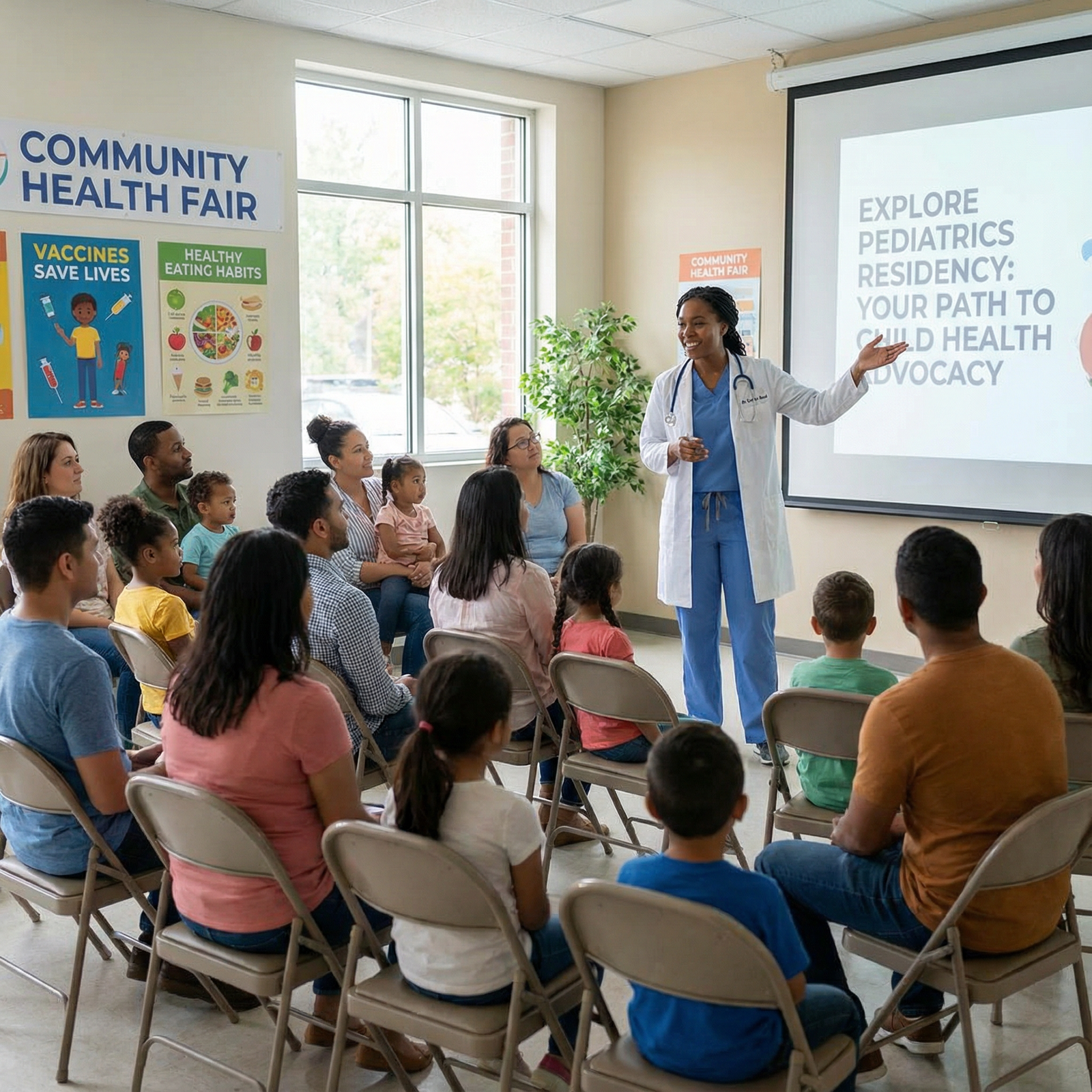
Most “global health” tracks in pediatrics and family medicine are branding, not substance. The top 10–15 programs are playing a completely different game.
Let me break down what that actually means, program by program, structure by structure, so you can tell who is serious and who just slapped “global” on their website to impress applicants.
What “Real” Global Health Tracks Have That the Pretenders Do Not
The best global health tracks in Pediatrics (Peds) and Family Medicine (FM) share a recognizable architecture. Once you see it, you cannot unsee it. Anything that does not check most of these boxes is a hobby track, not a training pathway.
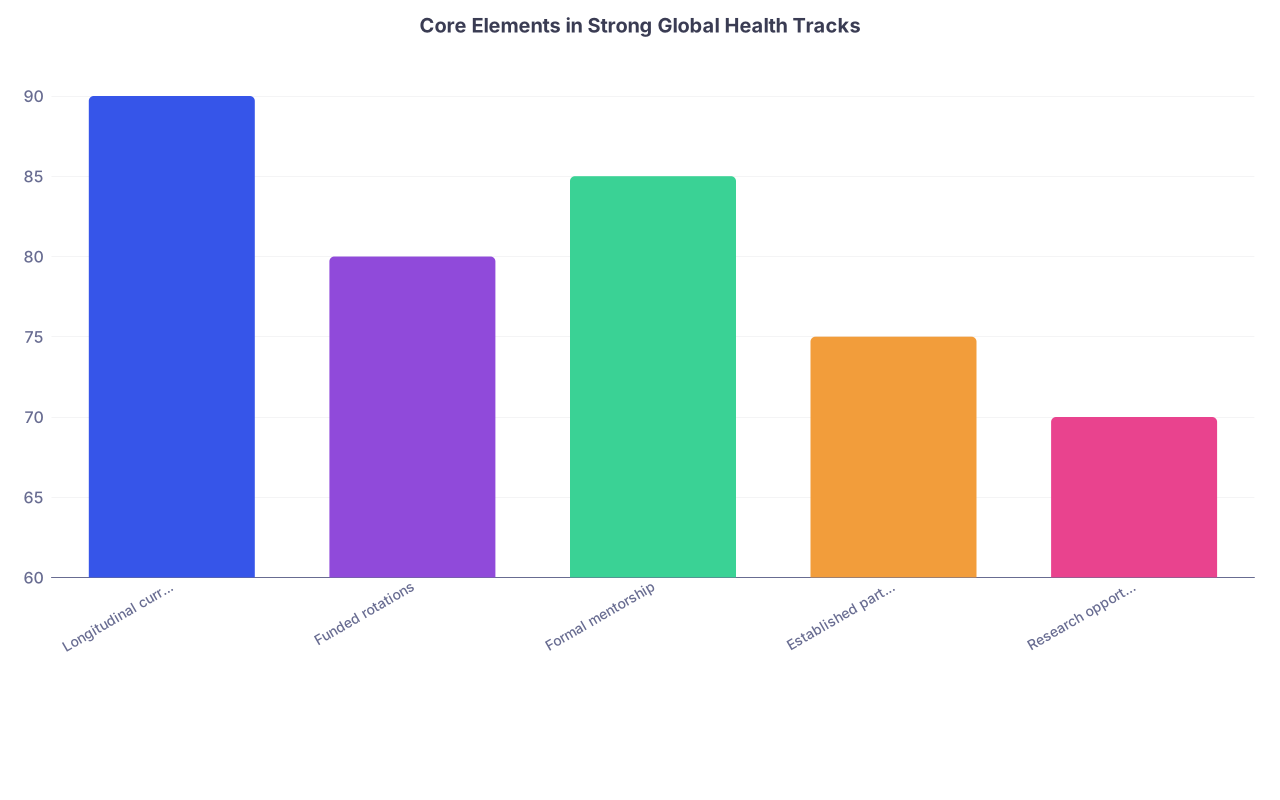
| Category | Value |
|---|---|
| Longitudinal curriculum | 90 |
| Funded rotations | 80 |
| Formal mentorship | 85 |
| Established partner sites | 75 |
| Research opportunities | 70 |
1. A Longitudinal, Structured Curriculum (Not One Elective and a Journal Club)
Serious programs run a multi-year curriculum with clear learning objectives, not just “we talk about global issues sometimes.”
You will see things like:
- A defined global health pathway or certificate (e.g., “Global Health Track,” “Global Health Distinction,” “HEAL or Doris Duke tie-in”).
- Scheduled didactics 1–2 times per month: global epidemiology, health systems, ethics, implementation science, refugee/asylum medicine, tropical diseases, research methods.
- A capstone or scholarly project requirement tied to a partner site or population.
Red flag: If a program director says, “We definitely support people going abroad” but cannot hand you a curriculum document or schedule, they are improvising. That will become your problem as a resident.
2. Funded, Established Partner Sites (Not “Find Your Own Rotation”)
The strongest tracks are built on durable, bilateral relationships with specific sites. Names that come up over and over:
Peds:
- Mulago/Mbarara (Uganda)
- Kijabe (Kenya)
- Haiti (various sites – often with long institutional ties)
- Guatemala, Honduras, Nicaragua clinics
- Indian tertiary hospitals through academic MOUs
FM:
- Rural Central America (Guatemala, Honduras, El Salvador)
- SE Asia (Laos, Thailand, Cambodia)
- Sub-Saharan Africa primary care clinics
- Indian or Pakistani primary care / community health networks
And stateside:
- Refugee clinics
- Indian Health Service (IHS)
- Federally Qualified Health Centers (FQHCs) with large immigrant communities
Serious programs:
- Have pre-approved MOUs and institutional agreements.
- Rotate residents annually to the same sites with preceptors who know the program.
- Provide at least partial funding (travel, housing, sometimes salary support if off-cycle).
Weak programs:
- Say “you can set up a global elective wherever you want, we are flexible.”
- Have no dedicated partner faculty on the ground.
- Offer little to no funding, vague supervision, and last-minute GME approval drama.
3. Protected Time and Structural Support
You cannot run a meaningful global project on leftovers from Golden Weekend.
Top programs:
- Protect elective time (often 2–4 weeks / year, sometimes concentrated in PGY-2 or PGY-3).
- Offer an extra year or customized pathway for deep-dive global work (chief/resident scholars, MPH, HEAL).
- Provide administrative support (visa letters, licensure, travel clearances, IRB help).
If a PD says, “We really prioritize service to our local patients, so it is hard to get time away,” that is code for: global track is optional at best, ornamental at worst.
4. Mentorship That Extends Beyond Residency
This might be the biggest differentiator.
At the best programs:
- You know exactly which attendings are “global people.”
- Those faculty have real field time (not a 2-week mission trip once in fellowship).
- Several of them have funding (NIH Fogarty, Gates, HRSA, NGO leadership roles).
- Alumni are in recognizable global roles: WHO, CDC, Ministries of Health, academic GH divisions, HEAL Fellows, PIH.
Weak programs:
- Have one faculty who “did some work in Haiti” a decade ago.
- No track record of grads going into global careers.
- No clear pipeline to fellowships, MPH programs, or jobs.
How Global Health Looks Different in Pediatrics vs Family Medicine
Global health in Peds and FM overlaps a lot, but the emphasis is different. The best fit depends on what kind of work you see yourself actually doing.

Pediatrics: Tertiary Care Meets Public Health
Peds global work at strong programs usually clusters in three domains:
Hospital-based care in low-resource settings
Neonatal care, pediatric sepsis, severe malnutrition, high-acuity wards with limited monitoring. You will see:- Nocturnal rounds in 40-bed wards, two kids per bed.
- Oxygen concentrators that may or may not work.
- Attending who trained locally plus visiting faculty from your institution.
Vertical programs and disease-specific projects
Examples:- Neonatal resuscitation training (Helping Babies Breathe).
- HIV-exposed infant follow-up.
- Vaccine delivery / EPI support.
- Sickle cell screening and follow-up systems.
Child development, disability, and systems of care
- Early childhood development interventions.
- Autism / developmental disability services in low-resource settings.
- Pediatric rehab and community-based inclusive education.
The stronger programs deliberately connect ward work with system-level projects. You are not just plugging holes; you are building capacity.
Family Medicine: Systems, Continuity, and Breadth
FM global health at its best looks like:
Comprehensive primary care and continuity
- Antenatal care, deliveries (in some settings), postnatal follow-up.
- Chronic disease management (HTN, DM, HIV).
- Pediatric visits, adult medicine, geriatrics – all in the same clinic day.
- Integrating mental health into primary care.
Community and health systems work
- CHW (community health worker) program design and evaluation.
- Task-shifting and clinical protocols for nurses / officers.
- Population health interventions (vaccines, TB screening, NCD clinics).
Policy, leadership, and training the trainers
- Helping start family medicine residency programs abroad.
- Designing national guidelines, referral systems, or training curricula.
- Embedded work with Ministries of Health or NGOs.
If you gravitate to “clinic plus system design plus teaching,” FM global tracks often give you more sandbox to play in.
Concrete Examples: What Top-Tier Programs Actually Offer
Let me be very clear: I am not ranking. I am giving you patterns you will see at stronger programs. Names here are illustrative, not exhaustive.
| Program Type | Typical Features |
|---|---|
| Big-name Peds university | Global health track, multiple partner hospitals, dedicated faculty, funding |
| Community FM with GH focus | Long-term Central America site, FQHC work, bilingual curriculum |
| Peds/FM combined site | Joint global track, refugee clinic, international partner electives |
| FM with MPH pipeline | Built-in MPH, HEAL partnership, domestic underserved + international |
| Peds with research emphasis | Fogarty-style mentored research project, longitudinal abroad work |
Pediatrics – Strong Program Patterns
You will often see something like:
- A named center: “Center for Global Child Health,” “Global Pediatrics Program,” “International Health Program.”
- 5–10 core global pediatrics faculty.
- 3–6 partner sites across continents, each with:
- Longstanding institutional relationships.
- Shared supervision models (local and visiting faculty).
- Clear objectives for residents (not just ‘see what you see’).
Common features:
- 1–2 months of international elective time, usually in PGY-2 or PGY-3.
- Funded housing and partial travel support.
- A required global pediatric seminar series.
- Project or QI requirement at a partner site or domestically (refugee clinic, border clinic, urban underserved).
Programs that tend to stand out share a few traits:
- Their residents actually publish or present global work.
- They host global pediatric fellows or post-docs.
- They have a pipeline into global health fellowships.
Family Medicine – Strong Program Patterns
The stronger FM global programs almost always integrate:
Domestic underserved + international
They do not separate “global” from “community.” You might rotate:- At an FQHC or county clinic with heavy immigrant/refugee load.
- On IHS or rural US/Canadian sites.
- At an international partner site with continuity over years.
Language and cultural training
- Spanish tracks with certified interpreter-level skills or near.
- Didactics on cross-cultural care, health systems, migration medicine.
Ethics and equity focus
- Explicit teaching on historical harm in global health.
- Anti-extractivist models: local partners drive agenda, not the US program.
Career pathway clarity
- Alumni who work in Partners In Health, MSF, MOH roles, or academic GH.
- Established link to HEAL, GH fellowships, or MPH programs.
The weaker ones:
- Advertise “international rotations” that happen once every 2–3 years.
- Have no language or cultural preparation.
- Present global work like voluntourism.
What the Best Programs Do Exceptionally Well (That Others Don’t Even Recognize)
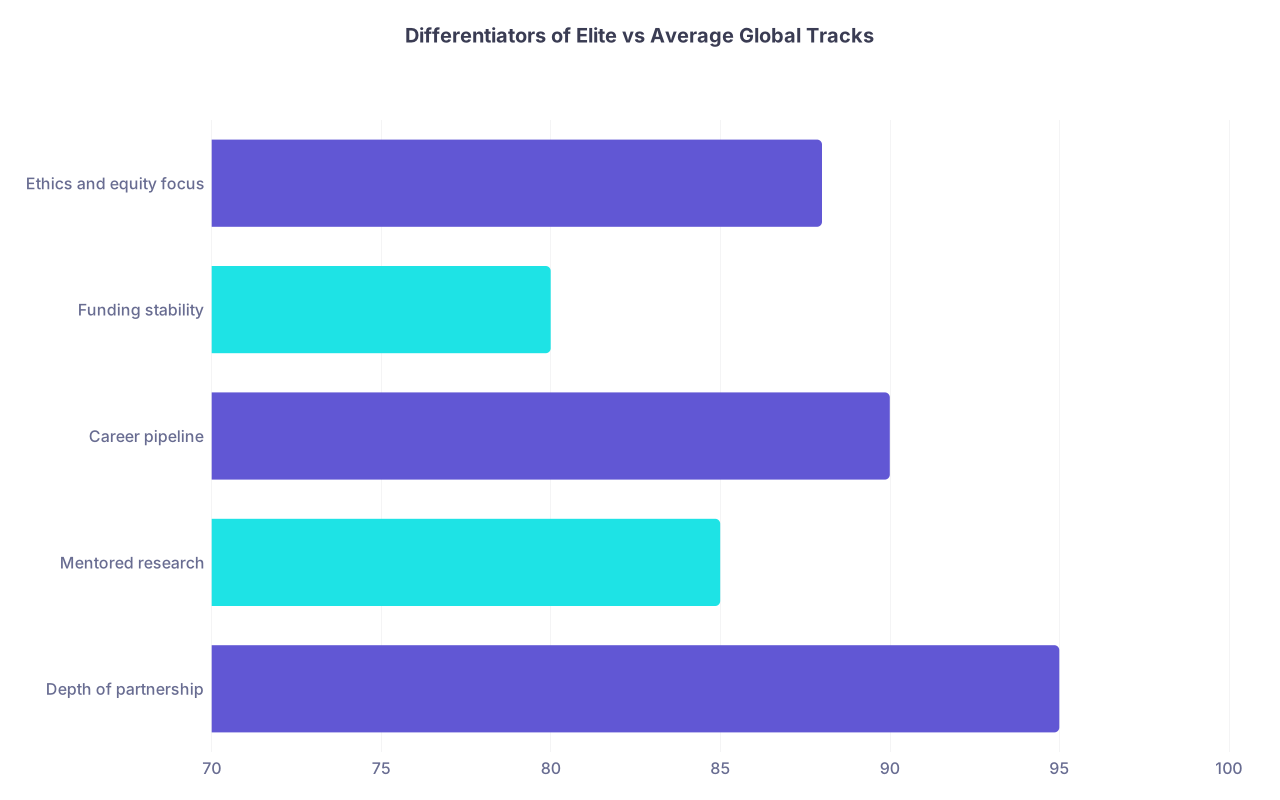
| Category | Value |
|---|---|
| Depth of partnership | 95 |
| Mentored research | 85 |
| Career pipeline | 90 |
| Funding stability | 80 |
| Ethics and equity focus | 88 |
1. They Treat Global Health as a Career Path, Not a Side Interest
Look at their outcomes:
- Graduates in leadership roles at NGOs, academic GH divisions, or Ministries.
- Multiple grads admitted into the same elite GH fellowships.
- People with actual job titles like “Director of Global Child Health,” “Medical Officer at WHO,” “Program Director, Community Health Initiative.”
They have:
- Detail about graduates’ roles abroad/with underserved populations.
- Dedicated time for global work during residency plus a clear step after graduation.
- A network effect: alumni take current residents under their wing.
2. They Have Baked-in Research or Evaluation Capacity
Not everyone wants to be a researcher. That is fine. But the best programs:
- Have at least one or two faculty with R01-equivalent or major NGO/implementation grants.
- Run IRB-approved projects at partner sites.
- Offer residents chances to join ongoing:
- Impact evaluations.
- Implementation science studies.
- Epidemiologic surveillance or registry projects.
You see:
- Posters at PAS, STFM, APHA, ASTMH.
- Publications with resident co-authors on global topics.
- Structured mentorship for manuscript and abstract writing.
Weak programs tell you “you can do research if you find your own mentor.”
3. They Understand Power, Equity, and Sustainability
You should hear explicit conversations about:
- Task-shifting vs. dumping work on under-resourced partners.
- Bidirectional exchange: do partner trainees come to the US/Canada? Are there funded observerships?
- Avoiding short-term, photo-op missions that disrupt care.
Top programs:
- Involve local leadership in curriculum planning.
- Have Memoranda of Understanding that clarify mutual expectations.
- Support local trainees (funding, training programs, joint publications).
If all the stories are about “our residents going to help people in X country,” without mentioning what the local team gains, run.
4. They Invest in Domestic Global Health
Global health ≠ passport stamps.
Strong tracks usually integrate:
- Refugee/asylum-seeker clinics.
- Street medicine.
- Care for migrants and farmworkers.
- Indigenous health.
- Border health work.
Because the skills are the same:
- Working in low-resource settings.
- Navigating unfamiliar health systems.
- Language and culture gaps.
- Equity, structural violence, trauma-informed care.
How to Evaluate Global Health Tracks When You Interview
You will not get the truth from the website. Everyone claims “global reach.” Your job is to interrogate the structure.

| Step | Description |
|---|---|
| Step 1 | Start - Interested in Global Health |
| Step 2 | Travel elective only - de-prioritize |
| Step 3 | Ask about curriculum |
| Step 4 | Weak structure - proceed with caution |
| Step 5 | Ask about partner sites and funding |
| Step 6 | High DIY burden - risky |
| Step 7 | Ask about mentorship and alumni outcomes |
| Step 8 | Decent but limited career support |
| Step 9 | High-quality GH program - keep on list |
| Step 10 | Formal GH track exists |
| Step 11 | Longitudinal + required project |
| Step 12 | Established, funded partnerships |
| Step 13 | Clear alumni pipeline |
Here is what you ask. Directly. Do not be shy.
1. “Tell me about your global health track structure.”
You are listening for:
- “We have a formal track / distinction.”
- “Here is the exact didactic schedule for the year.”
- “Residents do X weeks abroad and Y weeks at our domestic global sites.”
- “There is a required scholarly project with mentored support.”
Vague answers = weak structure.
2. “Which specific partner sites are available, and how long have you been there?”
Strong answers:
- “We have been working with Hospital X in Country Y for 10+ years.”
- “We send 2–3 residents annually, always with at least one faculty.”
- “Our local partner is Dr. Z, who leads pediatrics there.”
Red flags:
- “Our residents sometimes set up rotations in [wide-open list of locations].”
- “We used to go to [country], but it is on hold right now.”
- “We are always open to new ideas if you want to start something.”
3. “Is there funding for travel and housing? Or is this self-funded?”
If they flinch, that is your answer.
Elite programs:
- Have a dedicated pot of money: alumni fund, department fund, grant support.
- Can at least partially cover flights and local housing.
- Understand that asking residents to pay $3–5k for ‘global’ is inequitable.
4. “Who are the core global health faculty, and what are they working on now?”
You want names and projects, not vibes. For example:
- “Dr. A leads our Uganda partnership and runs a neonatal outcomes registry.”
- “Dr. B is our FM global lead; she splits time between clinic and an NGO in Guatemala.”
- “Dr. C recently completed a Fogarty fellowship on NCDs in Kenya.”
If they cannot produce more than one name, that is not a robust track.
5. “What are recent graduates with a global focus doing now?”
Top programs can answer this immediately:
- “One of our grads is with Partners In Health in Sierra Leone.”
- “Two are HEAL fellows.”
- “One leads a global health equity clinic focusing on refugees.”
If all you hear is “They work in community clinics” with no global linkage, then the track is not a proven pipeline.
Choosing Between a Strong Peds vs FM Global Track
You have to make a specialty decision irrespective of the track. But if both Peds and FM are on the table for you, global aspirations can push you in one direction.
Choose Pediatrics if:
- You want to anchor your work in child health, neonatal care, and pediatric disease.
- You see yourself in tertiary centers or children’s hospitals abroad.
- You are drawn to NICU/ward-based projects, maybe subspecialty training later (ID, heme/onc, NICU, etc).
- You want to work in global child health academics with strong research ties.
In peds, you will still do community work, but the clinical anchor is children and adolescents.
Choose Family Medicine if:
- You like breadth: maternity, adult medicine, pediatrics, mental health, geriatrics.
- You see yourself as a systems person—designing care delivery models, supervising health centers, leading NGOs.
- You want the option to combine global work with domestic underserved or rural primary care.
- You want to be the “swiss army knife” clinician who can step into any clinic and build something.
FM is often better if you imagine running a district hospital, leading a rural health network, or starting a residency.
Warning Signs: Global Health Tracks That Look Good on Paper but Fail in Real Life
You will see plenty.
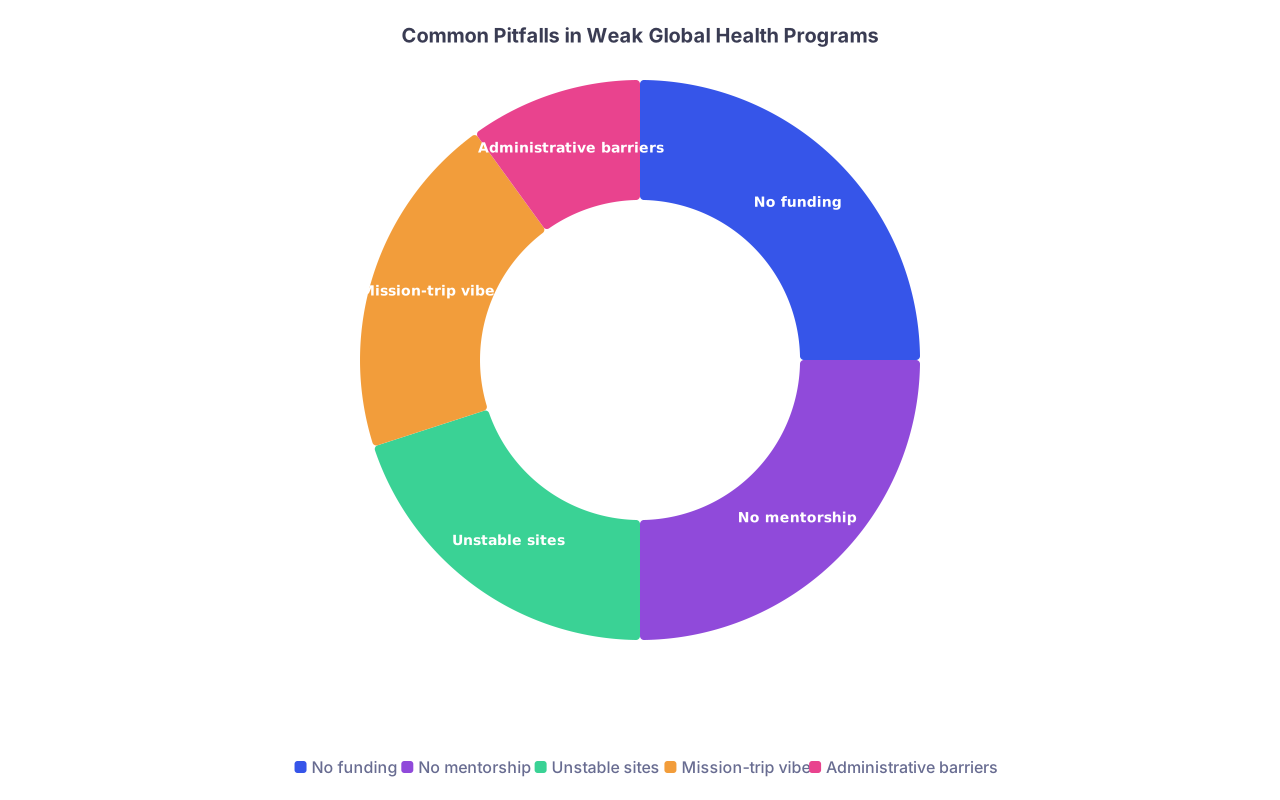
| Category | Value |
|---|---|
| No funding | 25 |
| No mentorship | 25 |
| Unstable sites | 20 |
| Mission-trip vibe | 20 |
| Administrative barriers | 10 |
Watch for:
Rotations that keep getting “postponed”
Program brags about long-standing site, but:- “We have not sent anyone in a couple of years because of [vague reason].”
- No one in the current resident cohort has actually gone.
No domestic global options
If all global activity is “over there” and there is zero mention of refugees, immigrants, or marginalized domestic communities, the philosophy is shallow.Mission-trip photos all over the website
Lots of pictures of residents in scrubs holding babies, not much discussion of:- Local leadership.
- Capacity building.
- Long-term impact.
Administrative resistance Residents whisper:
- “GME gives us a hard time every time we try to go.”
- “Malpractice and credentialing are huge battles.” Strong programs have solved that already.
Track director turnover “Our global health leader just left; we are in transition.” Translation: you will be rebuilding this from scratch while trying to survive residency.
How to Position Yourself Competitively for These Tracks
If you are serious about global health, act like it before you apply.
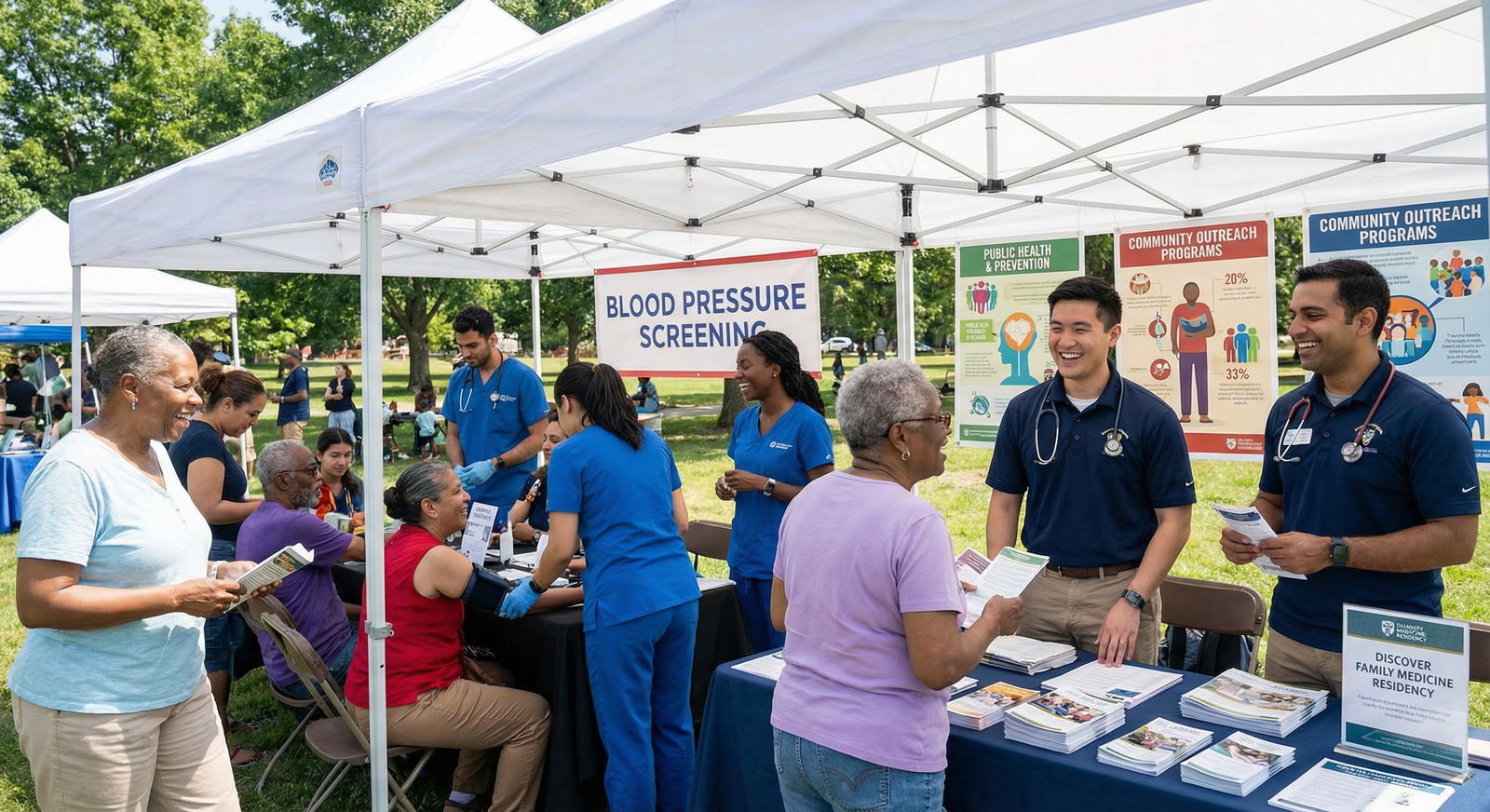
The stronger programs expect:
Real prior commitment
Not just one pre-med mission trip. They look for:- Longitudinal local work (refugee clinic, FQHC, migrant camp).
- Research, QI, or leadership projects with underserved populations.
- Language skills (Spanish, French, Portuguese, Arabic, etc).
Evidence of reflection and ethics
In your personal statement and interviews, they want to hear:- Awareness of power dynamics.
- Humility about your role.
- Clarity about career direction (even if not perfect).
Scholarly output helps but is not mandatory
Posters or small papers on global / health equity topics signal seriousness. Not required everywhere, but they separate “interested” from “committed.”
During interviews, do not oversell. Faculty have heard every cliché about “helping the less fortunate.” Center systems, equity, and partnership, not savior narratives.
FAQ (Exactly 6 Questions)
1. Do I need to have done international work before residency to match into a strong global health track?
No, but you need evidence of sustained commitment to underserved or marginalized populations. Domestic work with refugees, immigrants, indigenous communities, or urban/rural underserved counts as much as international time, sometimes more. What matters is duration, depth, and reflection, not geographic distance.
2. Are global health tracks in pediatrics or family medicine more competitive than standard tracks?
Often yes, slightly. Some programs have a separate application or internal selection process for the track after you match. Others simply attract more applicants who care deeply about this area, which raises the bar. You do not need superstar stats, but you do need a coherent story and track record.
3. How many weeks abroad can I realistically expect during residency?
At strong programs, typical ranges are 4–12 weeks total over residency, usually concentrated in PGY-2 and PGY-3. Some offer more if you take an extra year, chief year, or research year. Any program promising half your residency abroad is either exaggerating or compromising your core training.
4. Is it risky for my clinical training to spend time abroad in low-resource settings?
Not if the program is well-designed. The best tracks ensure:
- Comparable or supervised clinical duties.
- Clear educational goals.
- Adequate supervision by qualified faculty. If your time abroad replaces core rotations or has minimal supervision, that is a problem. Properly structured, global rotations sharpen your diagnostic, procedural, and systems-thinking skills.
5. Do I need an MPH or additional degree to have a career in global health after Peds or FM?
Helpful but not mandatory. Many strong global health careers are built through:
- Fellowships (global health, HEAL, ID, etc.).
- Longitudinal field work and mentorship. An MPH or similar degree is valuable if you want to lead research, run programs, or work in policy, but you can acquire it mid-career, not necessarily during residency.
6. How do I avoid exploitative or “voluntourism” style global experiences during residency?
Choose programs that:
- Have long-term, bidirectional partnerships.
- Center local leadership and capacity building.
- Offer structured pre-departure training on ethics, culture, and safety. Ask explicitly how local partners are involved in designing the rotation and how residents’ presence benefits the host site beyond short-term labor. If no one can answer that clearly, look elsewhere.
If you remember nothing else:
- Strong global health tracks in Peds and FM have structure, funding, mentorship, and a proven career pipeline.
- Named sites, named faculty, and named graduates beat vague promises every single time.
- Your best training will blend domestic underserved work with carefully built international partnerships, not one-off trips.