
You’re a third-year med student on your peds inpatient month. You loved your cards elective. Now you’re stuck on the question that quietly drives a lot of people crazy:
“If I want to do cardiology, do I pick Internal Medicine or Pediatrics? And what exactly changes if I aim for adult cardiology vs pediatric cardiology?”
Here’s the answer you’re looking for, laid out cleanly.
Big Picture: Two Different Endpoints, Two Different Cores
Let me be blunt.
- If you want to treat adult heart disease → you go Internal Medicine → Adult Cardiology fellowship.
- If you want to treat babies, kids, congenital heart disease → you go Pediatrics → Pediatric Cardiology fellowship.
There is no “shortcut” and no hybrid residency that lets you decide later between adult and peds cardiology. Your residency choice (IM vs Peds) essentially locks in which heart population you’ll work with for the rest of your career, unless you do extra combined or advanced training later (rare, more on that later).
So step one: you’re not choosing “IM vs Peds” in abstract. You’re choosing:
- “Do I see myself as an adult cardiologist?”
- Or “Do I see myself as a pediatric / congenital cardiologist?”
The residency flows directly from that.
Training Path: IM→Cards vs Peds→Peds Cards
Let’s map out the structural differences first.
| Path | Residency Length | Fellowship Length | Typical Total Training |
|---|---|---|---|
| Adult Cardiology (IM) | 3 years IM | 3 years general cardiology | 6 years after med school |
| Interventional Card (adult) | 3 years IM + 3 years cards | +1 year interventional | 7 years |
| Pediatric Cardiology (Peds) | 3 years pediatrics | 3 years pediatric cardiology | 6 years |
| Advanced Peds Card Subspecialty | 3+3 | +1 (e.g., interventional or EP) | 7 years |
The skeleton is similar: 3 years core residency, 3 years fellowship. But the flavor and the patient population from day one are totally different.
How the Daily Work Feels Different
Think less about the org chart and more about what your life actually looks like.
Internal Medicine → Adult Cardiology
On IM residency:
- You live on medicine wards, ICU, consults. Typical patients: 50–90 years old, multiple comorbidities, polypharmacy.
- Lots of CHF exacerbations, NSTEMIs, AFib with RVR, COPD, sepsis, cirrhosis.
- You get fluent in chronic disease management: diabetes, CKD, CAD, hypertension, atrial fibrillation.
On cardiology fellowship:
- You spend a big chunk of time doing cath lab, echo, CCU/ICU, EP exposure, consults.
- You manage advanced heart failure, post-MI care, cardiogenic shock, TAVR patients, LVADs.
- Lifestyle: in many places, pretty intense. Call-heavy, procedural, high-stakes, high-earning.
Pediatrics → Pediatric Cardiology
On peds residency:
- Your bread and butter: bronchiolitis, asthma, neonatal sepsis, FTT, febrile kids, premies.
- NICU, PICU, general peds floor, outpatient well-child checks, developmental issues.
- Most “cardiology” during residency is congenital heart disease recognition, murmurs, cyanosis, failure to thrive, post-op congenital heart surgery patients.
On pediatric cardiology fellowship:
- You focus on congenital heart disease (CHD) across lifespan: prenatal diagnosis, newborns, kids, and adult congenital clinics.
- You read pediatric echos, do pediatric caths, manage single ventricle physiology, post-op CHD, arrhythmias in kids.
- The vibe: smaller teams, often tight knit; intensity can be high (especially in large congenital centers) but overall the field is smaller and a bit less “industrial” than adult cards.
Core Question: Adult Cardiology vs Pediatric Cardiology – Which Fits You?
Stop thinking “IM vs Peds” as abstract culture differences and ask:
- Whose problems do you want to solve?
- What kind of heart disease excites you?
- What patient interactions don’t exhaust you?
Adult Cardiology – What You’re Signing Up For
You’ll be dealing with:
- CAD, MI, stents, AFib, SVTs, ventricular arrhythmias
- Heart failure, valvular disease, cardiomyopathies
- Risk factors and chronic management: obesity, smoking, diabetes, hypertension
- A lot of patient education about lifestyle that hasn’t changed in 20 years (and often won’t)
Typical adult cardiology scenarios:
- Middle-aged smoker with STEMI in the cath lab at 2 a.m.
- 80-year-old with severe aortic stenosis getting TAVR.
- 65-year-old with ischemic cardiomyopathy being evaluated for LVAD or transplant.
- Outpatient: stable CAD, angina follow-ups, echo follow-ups.
If you like procedures, acute care, high-volume, and don’t mind the constant background of adult comorbidities, adult cards is excellent.
Pediatric Cardiology – What You’re Signing Up For
You’ll be dealing with:
- Complex congenital lesions: Tetralogy, TGA, HLHS, VSD/ASD, AV canal, truncus, etc.
- Fetal cardiology, neonatal ductal-dependent lesions, post-op congenital surgical care.
- Pediatric arrhythmias, cardiomyopathies, myocarditis, Kawasaki, MIS-C (lately), etc.
- Family dynamics: lots of time explaining to anxious parents and caregivers.
Typical pediatric cardiology scenarios:
- Fetal echo showing a major congenital defect; counseling the family on what to expect.
- Newborn with cyanosis in the NICU; figuring out ductal-dependent physiology.
- Child after Fontan procedure in the PICU with complex hemodynamics.
- 10-year-old with a new murmur in clinic; deciding if it’s benign vs needs workup.
If you like growth, development, families, congenital anatomy, and long relationships that may start before birth and last decades, peds cards is where that happens.
Culture & Lifestyle: IM vs Peds and How That Echoes in Cards
You’re not just picking a disease set. You’re picking a culture.
Internal Medicine Culture
- More algorithmic, guideline-driven, chronic disease-heavy.
- Morbidity can be high; lots of patients never really “get better,” they just get managed.
- Personalities: everything from nerdy academic types to aggressive proceduralists.
- Cardiology specifically is a power specialty: high revenue, big departments, often competitive personalities, fast-paced.
The downside: burnout can be real. You’ll see a lot of preventable disease. You’ll occasionally feel like you’re putting stents into a system problem.
Pediatrics Culture
- Generally more collaborative and family-centered.
- You see kids get better. A lot. Even your sick kids often bounce back in dramatic ways.
- Peds cardiology culture tends to be smaller, more niche. People know each other nationally.
- More emphasis on communication with parents and caregivers, teaching, long-term follow-up.
The downside: when things go bad, it’s rough. Losing a baby or a child with congenital heart disease stays with you. The emotional load is different, not necessarily lighter.
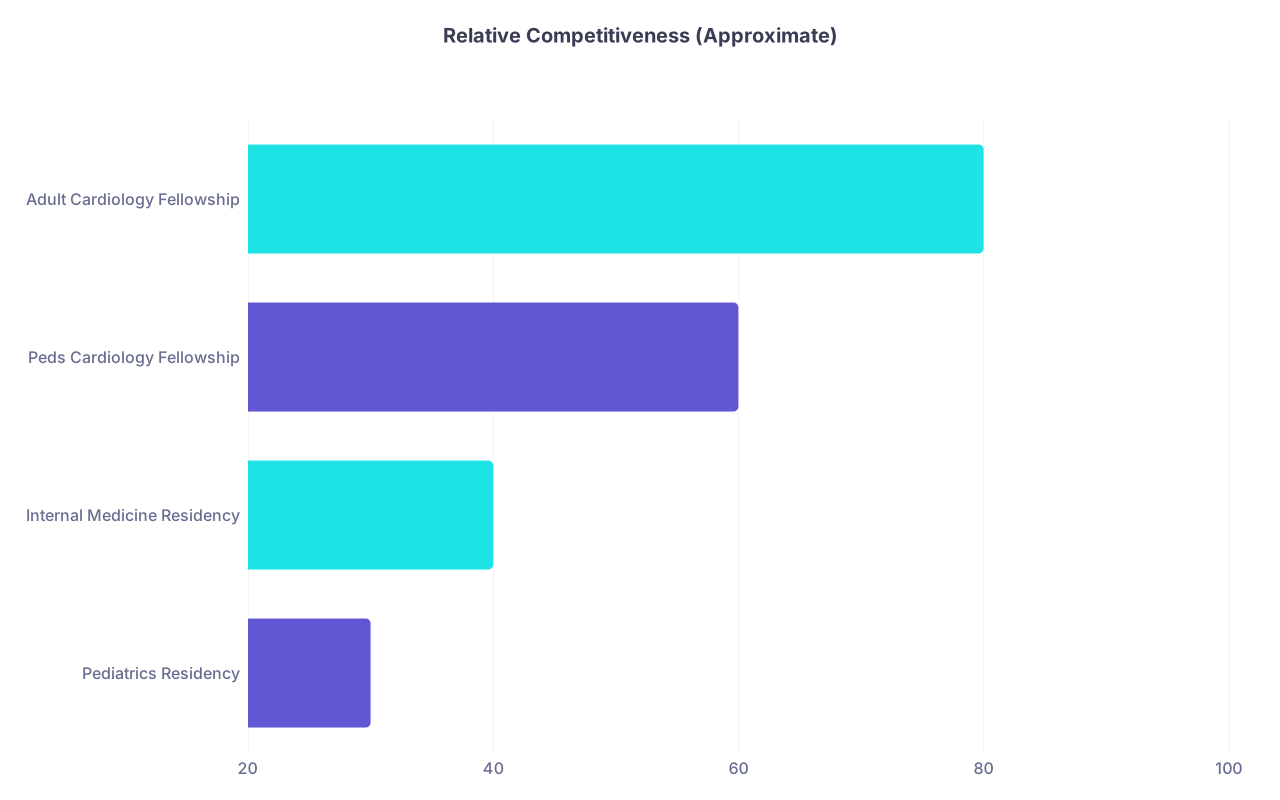
Competitiveness: How Hard Is It To Match?
Let’s talk numbers and reality.
| Category | Value |
|---|---|
| Pediatrics Residency | 30 |
| Internal Medicine Residency | 40 |
| Peds Cardiology Fellowship | 60 |
| Adult Cardiology Fellowship | 80 |
These numbers are illustrative, not literal match rates, but the hierarchy is real:
Residency
- Pediatrics is generally less competitive than Internal Medicine at the top academic programs, but most good students can match either if they apply broadly.
- Top IM programs (think MGH, UCSF, Hopkins) are more numbers-and-CV sensitive than most peds programs.
Fellowship
- Adult cardiology is very competitive, especially for procedural or academic tracks.
- Pediatric cardiology is also competitive but somewhat less cutthroat than adult cards; the applicant pool is smaller.
So if you’re thinking, “I’ll do the less competitive residency then jump into the more prestigious cardiology,” that’s not really a strategy. Both routes require:
- Solid Step scores / board exams (Step 1 now P/F, so Step 2 matters more).
- Strong letters, ideally from cardiologists.
- Research helps a lot, especially for academic programs.
Day-to-Day Differences in Fellowship and Beyond
Adult Cardiology Fellowship
Rotations usually include:
- CCU / CVICU
- Cath lab (diagnostic and interventional exposure)
- EP lab
- Echo, nuclear, CT/MR imaging
- Consult service, outpatient clinics
Procedural volume is high. If you sub-specialize (interventional, EP, structural), it can become almost entirely procedural.
Pediatric Cardiology Fellowship
Rotations usually include:
- Inpatient peds cardiology service
- NICU / CICU (cardiac ICU) for congenital cases
- Echo (lots of complex congenital anatomy)
- Cath lab (diagnostic and interventional congenital procedures)
- Fetal cardiology
- Adult congenital heart disease clinic (ACHD) in many centers
More focus on anatomy and physiology of congenital lesions and mixed inpatient–outpatient care.
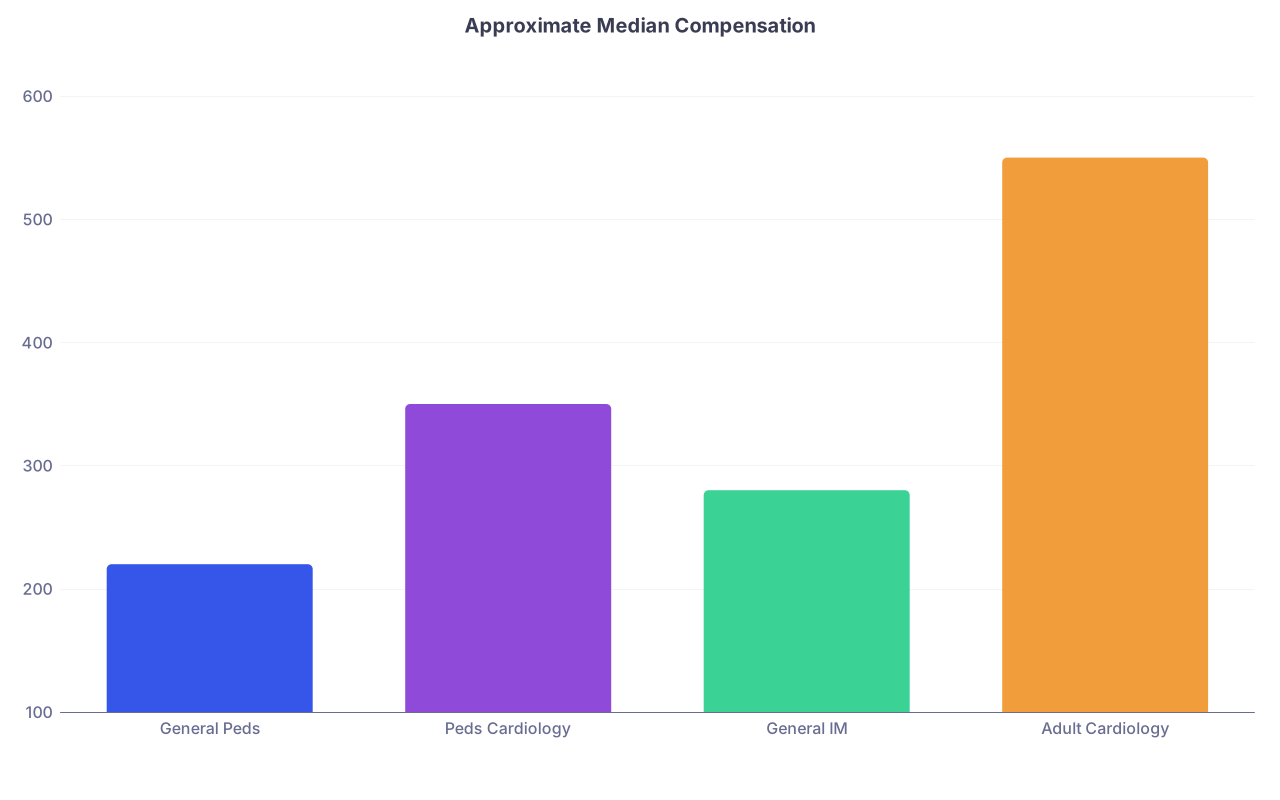
Money, Jobs, and Future Landscape
Let’s not pretend income isn’t a factor.
| Category | Value |
|---|---|
| General Peds | 220 |
| Peds Cardiology | 350 |
| General IM | 280 |
| Adult Cardiology | 550 |
Again, rough ballpark and highly location-dependent, but trends are clear:
- Adult cardiology earns substantially more than pediatric cardiology on average.
- Within adult cardiology, interventional and EP tend to earn more than non-invasive.
- Pediatric cardiologists earn more than general pediatricians but usually less than adult cardiologists.
Job market:
- Adult cards: robust demand, but in some metro areas, saturation in the most desirable groups. Rural and community demand is strong.
- Peds cards: fewer positions overall (smaller field), but also fewer fellows. Jobs usually tied to children’s hospitals and academic centers. If you want big-city tertiary centers only, you might have to be flexible.
What If I’m Genuinely Torn Between Adults and Kids?
This is where people get stuck.
Here’s the practical framework I use with students:
Ask yourself which patient scenario makes you feel more like “this is my place.”
- A 62-year-old smoker, obese, NSTEMI, family pushing for “do everything.”
- Or a 3-day-old with transposition in the NICU, terrified parents at bedside.
Think about your emotional bandwidth.
- Does the idea of chronic adult lifestyle disease frustrate you?
- Or does the idea of telling parents bad news about their baby hit you harder?
Look at your experiences:
- Have you actually done a dedicated peds cardiology or adult cardiology elective?
- If not, that’s your next move. You’re guessing in the dark without that.
There are extremely niche combined paths (adult congenital heart disease, some combined IM–Peds followed by dual fellowships), but they’re long and not the standard. Don’t bank on a unicorn pathway to avoid making a choice.
Concrete Differences: Snapshot View
| Aspect | Adult Cardiology (IM) | Pediatric Cardiology (Peds) |
|---|---|---|
| Core Patients | Adults, mostly >40 | Fetuses, neonates, children, some ACHD adults |
| Main Diseases | CAD, MI, HF, arrhythmias, valvular | Congenital lesions, pediatric arrhythmias, cardiomyopathies |
| Residency Vibe | Algorithmic, comorbidity-heavy | Family-centered, development-focused |
| Procedures | High potential (cath, EP, structural) | Cath, EP, interventions – fewer but highly specialized |
| Income (typical) | Higher | Moderate–high |
| Emotional Load | Chronic disease, lifestyle-related | Children with life-threatening conditions, intense family dynamics |
Do at least:
- One adult cardiology inpatient or consult elective.
- One peds cardiology or at least inpatient peds + time with peds cards team.
Then be honest about how you felt at 3 a.m. on call, not just in the shiny moments.
Mistakes I’ve Seen People Make
I’ve seen this a few times, and it ends badly:
- Choosing Peds because “kids are cute” but actually loving procedures and hating talking to parents.
- Choosing IM because “it’s more prestigious” while every adult patient interaction drains them.
- Banking on switching from one track to the other after starting residency. It’s possible, but painful and not guaranteed.
Your gut reaction during rotations matters. So does your tolerance for each population’s “hard parts.”
FAQs
1. Can I do Internal Medicine then switch into Pediatric Cardiology later?
Realistically, no. Pediatric cardiology fellowships recruit from pediatric residencies. You’d need to go back and do a full pediatrics residency or some version of serious re-training. Nobody’s doing that in practice.
If you want pediatric cardiology, you match into pediatrics first.
2. What if I want to take care of adults with congenital heart disease?
That’s the Adult Congenital Heart Disease (ACHD) niche. Two routes usually:
- Peds → Peds Cardiology → ACHD focus/training
- IM → Adult Cardiology → ACHD focus/training
There is a formal ACHD subspecialty, but it still builds on one of those cores. You don’t bypass the initial choice.
3. Is adult cardiology “too competitive” if I’m not top of my class?
You do not need to be valedictorian. But you do need:
- Strong Step 2 / board scores
- Good IM residency (doesn’t have to be top-10, but solid)
- Research or scholarly activity in cardiology
- Strong letters from cardiologists
If you’re mid-class with decent scores and you hustle in residency, you can absolutely match cards. Community and mid-tier academic fellowships match many people every year.
4. Is pediatric cardiology more “chill” than adult cardiology?
Not really. Different, not chill. NICU and CICU calls for ductal-dependent lesions, ECMO kids, post-op congenital cases… that’s not a spa day. Overall volume might be lower, and some outpatient roles can feel more balanced, but the intensity is very real. The emotional stakes with sick kids are high.
5. What’s one thing I should do this month if I’m undecided?
Set up back-to-back exposure: one week with adult cardiology and one week with pediatric cardiology (or the closest equivalents your school has). Keep a simple note daily: “Energy 1–10, would I want more days like this?” At the end of two weeks, look at the pattern—don’t rely on your memory.
Today’s actionable step: email your clinical coordinator or a trusted attending and ask for help arranging both an adult cardiology and a pediatric cardiology experience in the next 3–6 months. Get it on the calendar before you keep spinning this in your head.