
The specialties with the most geographic flexibility are not the ones most students obsess over. Prestige specialties lock you in; boring-sounding “bread and butter” fields often set you free.
If you’re asking “Where can I actually live after residency?” instead of “What sounds coolest on Match Day?”, you’re already thinking smarter than most of your classmates. Let’s sort this out like an attending who’s seen a thousand job offers and contract fiascos.
The Short List: Specialties With True Geographic Flexibility
Here’s the core answer you’re looking for: if your main goal is being able to live almost anywhere in the country and still find a job, these specialties are your best bets:
- Family Medicine
- Internal Medicine (especially outpatient / hospitalist)
- Emergency Medicine (with caveats)
- Psychiatry
- Pediatrics
- General Surgery (community-focused, not hyper-subspecialized)
- Anesthesiology
These are the workhorse specialties. Every hospital, every health system, every mid-size town needs them. You’re not chasing a handful of academic centers; you’re fishing in a lake stocked with jobs.
Now let’s be concrete and not hand-wavy about why.
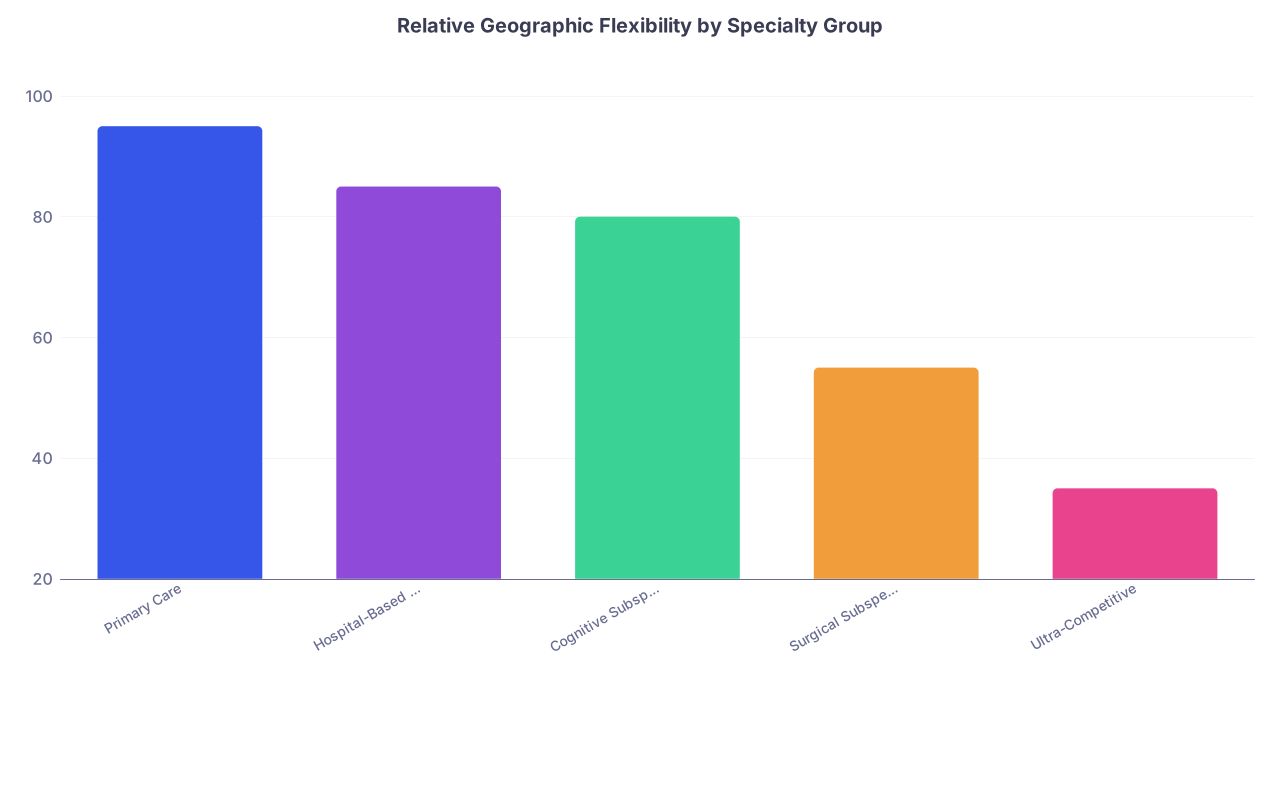
| Category | Value |
|---|---|
| Primary Care | 95 |
| Hospital-Based Core | 85 |
| Cognitive Subspecialties | 80 |
| Surgical Subspecialties | 55 |
| Ultra-Competitive | 35 |
(Values are rough relative “can you work almost anywhere?” scores, not exact percentages.)
How to Think About Geographic Flexibility (Framework That Actually Works)
Geographic flexibility isn’t magic. It comes down to five things:
- How many jobs exist in that specialty overall
- How widely those jobs are distributed (big cities vs everywhere)
- Whether you need very specific infrastructure (da Vinci robot, cath lab, transplant center)
- Whether patients/insurers can live without you for a while (elective vs urgent vs emergent)
- Your willingness to compromise on compensation, call, or setting to get your location
If a specialty is highly procedure-heavy, needs advanced equipment, and is mostly elective? Your job market is concentrated. Think dermatology, plastics, ortho subspecialties.
If a specialty handles common, constant needs (primary care, inpatient coverage, mental health)? Your job market is broad.
Keep that in mind as we go specialty by specialty.
The Big Winners: Primary Care and Core Hospital Fields
1. Family Medicine – King of “Live Almost Anywhere”
If your #1 priority is “I want to pick the city/town first and job second,” family medicine is hard to beat.
Why it’s so flexible:
- Every small town needs primary care
- You can work outpatient clinic, urgent care, hospitalist (in some places), occupational medicine, telemedicine
- Health systems are constantly hiring FM in almost every region
I’ve seen FM grads:
- Move with a spouse to a tiny rural Midwest town and get multiple offers
- Move to coastal cities where everyone swore “there are no jobs” and still find work (maybe not perfect pay, but jobs exist)
- Work 100% remote telehealth while living in a low-cost area
Geographic flexibility: Extremely high
Trade-off: Pay won’t touch ortho or derm, and some markets (San Diego, Boston) are saturated enough that you’ll compromise on salary or clinic load.
2. Internal Medicine – Especially Outpatient & Hospitalist
Internal medicine is your Swiss Army knife. The trick is not to over-subspecialize if you want maximum flexibility.
Outpatient general IM:
- High flexibility in suburbs, smaller cities, medium metros
- Harder in ultra-desirable urban cores unless you join big systems with mediocre compensation
Hospitalist IM:
- One of the most geographically flexible job types in medicine
- Every hospital with adult beds needs them
- 7-on/7-off jobs let you live in one place and fly to another
Where IM loses flexibility:
- Super-narrow subspecialties that require big tertiary centers (advanced heart failure/transplant, interventional pulmonology, etc.)
Geographic flexibility: High if you stay broad; moderate if you pick a rarefied niche.
3. Emergency Medicine – Flexible, But The Market Is Changing
Ten years ago, EM was the obvious answer for “work anywhere.” It’s still flexible, but the supply/demand balance is shifting.
Pros for geographic flexibility:
- Every ED in the country needs staffing
- Lots of small community hospitals in less competitive locations have open positions
- You can often find per diem or part-time work in many regions
Caveats:
- Some urban markets are saturated with EM grads plus midlevel expansion
- “I want to be in a big coastal city with great hours and top pay” is not guaranteed
- Corporate staffing groups (you know the names) can control big chunks of the market; you may not like their contracts
Geographic flexibility: Still relatively high, especially if you’re open to community/rural settings and not just top cities.
4. Psychiatry – Quietly One of the Best for Location Freedom
Psych is in chronic shortage almost everywhere. Outpatient, telepsych, inpatient units—everyone’s hiring.
Why it’s so good:
- Massive mental health demand nationwide
- Telemedicine broadened the market massively
- Private practice options in almost any city of reasonable size
I’ve seen psych attendings:
- Live in one state, hold multiple licenses, and see patients across several states from home
- Move to secondary and tertiary cities and immediately fill their panels
- Negotiate very favorable part-time arrangements
Geographic flexibility: Extremely high
Bonus: You can often choose practice type (outpatient vs inpatient vs consults) in many locations.
5. Pediatrics – Broad but Slightly More City-Centered
General peds has strong flexibility, but a bit more tied to population density than adult primary care.
Where peds shines:
- Any city with young families needs pediatricians
- Community clinics, FQHCs, hospital-affiliated practices, urgent care, NICU follow-up clinics
- Growing telepeds and developmental/behavioral needs
Limits:
- Very small or aging towns may prioritize adult primary care over peds
- Highly specialized pediatric subs (peds cardiothoracic, peds heme-onc) cluster around children’s hospitals in large cities
Geographic flexibility: High for general pediatrics, moderate for subspecialists.
Hospital-Based Workhorses: Anesthesia & General Surgery
6. Anesthesiology – Very Good, With Lifestyle Trade-Offs
Hospitals doing surgery need anesthesia. Simple as that.
Pros:
- Community hospitals and surgery centers in many regions are hungry for anesthesiologists
- Strong need in less-desirable or mid-tier regions
- Plenty of locums options if you want flexibility of time/location
Limiters:
- Ultra-desirable cities may have tighter job markets
- Highly specialized practices (cardiac, transplant heavy) are tied to bigger centers
- CRNA utilization patterns vary by region and can impact job density
Geographic flexibility: High, especially if you’re okay with non-glamorous markets.
7. General Surgery – Good If You Stay… General
Not talking about hepatobiliary-oncologic-transplant gods here. I mean community general surgeons doing bread-and-butter cases.
Why it works:
- Many small and mid-sized hospitals need at least a couple of general surgeons
- Plenty of jobs in non-major-metro areas
- Trauma/general in Level II/III centers is widely needed
Constraints:
- Very sub-specialized surgeons get tied to big academic/tertiary centers
- Big coastal metros can be saturated or politically closed groups
- Elective-heavy practices in rich suburbs are fewer and more competitive
Geographic flexibility: Moderate to high for true generalists; moderate to low for subspecialists.
The Middle Ground: Flexible, But With Real Constraints
Some specialties are “okay” for flexibility but not elite. You can often find a job, but not necessarily in your exact dream neighborhood.
Radiology
Strong demand nationwide, especially:
- Community hospitals
- Regional imaging groups
- Rural and mid-size cities
Plus:
- Teleradiology opens up remote options, but often nights/evenings and high volume
Catch:
- Most new grads want big metros and lifestyle jobs; those fill fast
- Academic subspecialty work lives in major centers
Geographic flexibility: Good if you’re open to non-premium metros and/or telerad.
OB/GYN
You can usually find an OB/GYN job in most populated areas, because babies are everywhere. But:
- Many groups in desirable cities are stable and not hiring often
- Lifestyle concerns and call requirements narrow your true options
- Rural areas often desperate for OB coverage, but those jobs can be demanding
Geographic flexibility: Solid, especially in non-elite markets and if you can tolerate call-heavy roles.
Neurology
Pretty straightforward:
- Neurologists are needed in most mid-size or larger cities
- Hospital-employed and outpatient clinic roles are common
But:
- Niche subspecialties (neuro-onc, complex neuroimmunology, advanced epilepsy) cluster in academic centers
- Very small towns rarely have comprehensive neuro services
Geographic flexibility: Moderate to high for general neuro; moderate for niche subs.
The Least Flexible: Niche, Elective, and Hyper-Competitive Fields
Here’s where people get burned. They chase the marquee name, then find out there are three jobs in the country that fit their criteria.
Classic Low-Flexibility Examples
- Dermatology (especially cosmetic-heavy): Very city/suburb focused, extremely competitive markets in “cool” areas.
- Ophthalmology: Needs ORs and specialized infrastructure; more urban/suburban than rural.
- ENT, Ortho subspecialties, Urology, Plastics: Procedure-heavy, skewed toward wealthier, denser populations.
- Radiation Oncology: Small specialty, shrinking job market, very tied to big centers.
Can you work in different places? Yes. But:
- Your negotiating power in your dream city is low
- Openings are fewer and often controlled by entrenched groups
- You’re not choosing between 8 offers in one zip code
Geographic flexibility: Often low to moderate. Especially if you’re picky about setting and lifestyle.
Comparing Flexibility Across Common Specialties
| Specialty | Flexibility Tier | Notes |
|---|---|---|
| Family Medicine | Very High | Jobs almost everywhere |
| Internal Med (Gen/Hosp) | Very High | Big spread of options |
| Psychiatry | Very High | Telehealth boosts options |
| Emergency Med | High | Good, but market tightening |
| Pediatrics (Gen) | High | Strong in cities and suburbs |
| Anesthesiology | High | Great in community/rural settings |
| Radiology | High | Especially with telerad |
Strategy: How To Maximize Geographic Freedom Within Any Specialty
Let’s say you’re already in (or committed to) a less-flexible specialty. You’re not doomed. But you need to be strategic.
Here’s what helps almost everywhere:
Be less picky about hyper-narrow subspecialization
- A general cardiologist has way more geographic options than a structural-only interventionalist.
- A general ortho surgeon beats a hand-only micro-subspecialist for sheer location flexibility.
Keep your skill set broad during training
- Don’t avoid bread-and-butter work because it feels less glamorous. That’s what most jobs are.
Build a reputation as low-drama and high-value
- Tight markets hire people they know they can trust, not just big CVs.
Be honest about what you really care about
- If you truly need to be within 30 minutes of one specific city, pick an in-demand, generalist field.
- If you care more about the type of work than the exact zip code, then yeah, subspecialize away.
Visual: How Specialty Choice Changes Your Location Options

| Step | Description |
|---|---|
| Step 1 | Choose Specialty |
| Step 2 | Primary Care or Core Hospital |
| Step 3 | Subspecialty or Elective Field |
| Step 4 | Jobs in Most Regions |
| Step 5 | Jobs in Fewer Cities |
| Step 6 | Moderate Flexibility |
| Step 7 | Generalist or Niche |
| Step 8 | Needs Specialized Center |
Quick Reality Check: Desirable Cities Are Competitive For Everyone
One thing nobody tells you as a student:
Even in “flexible” specialties, top-tier cities and lifestyle markets (NYC, SF Bay, San Diego, Seattle, Denver, Boston, Austin) are competitive.
What your specialty does is change:
- How many total possible metros you can realistically work in
- How hard you’ll have to compromise on pay/call/scope to land in your dream area
- Whether you can say, “I want to live in this broad region” vs “I’ll go wherever the jobs are”
If you want the power to say “I’m living in this state” and almost guarantee a job? Stick to the high-flexibility list.
FAQs
1. Which single specialty gives me the most geographic flexibility?
Family medicine, hands down. Psychiatry is close, especially with telehealth. But if you want to be able to live in truly tiny towns, mid-size cities, or big suburbs and still have work, family med wins.
2. Is emergency medicine still a good choice if I want to live anywhere?
It’s not the automatic slam dunk it used to be, but yes, it’s still relatively flexible. You’ll have more options in community and rural hospitals than in big coastal academic centers. If you’re okay with less “sexy” locations, EM remains very workable.
3. Does doing a fellowship hurt my geographic flexibility?
Usually, yes—at least somewhat. The more niche you get, the more your job options cluster around big centers. A general internist can work almost anywhere; an advanced heart failure/transplant cardiologist has a very short list of viable cities. If location freedom is your top priority, be careful about over-subspecializing.
4. I want derm/ortho/ENT but also want location freedom. Is that impossible?
Not impossible, just narrower. You’ll likely be tied to denser, wealthier populations and may have less leverage in ultra-desirable cities. If you’re willing to work in secondary/tertiary metros or less-saturated suburbs and be flexible about practice setup, you can still have decent options—but it won’t match family med or psych.
5. How early in training should I think about geographic flexibility?
Now. Before you lock yourself into a narrow path “because it’s competitive” or “everyone says it’s the best lifestyle.” If you already know you need to be near family, a spouse’s career hub, or a specific city, that should heavily influence your specialty choice. It’s much easier to choose a flexible field now than to claw back options later.
Bottom line:
Pick a generalist, high-demand specialty if you want true geographic freedom.
The more niche and device-heavy you get, the more your job market shrinks to a handful of cities.
If you care where you live more than what’s on your white coat, plan your specialty choice around flexibility—because job markets are a lot harder to bend than they look from MS2.