
The myths about neurology competitiveness for IMGs are mathematically wrong.
If you actually run the numbers across NRMP, ERAS, and program survey data, neurology is neither “easy backup” nor “impossible for IMGs.” It sits in a middle band: accessible, but only for applicants who understand where they stand on three axes:
- IMG proportions (who actually matches)
- Interview ratios (IVs per rank, ranks per match)
- Board scores (how far below the neurology mean you can go before the odds collapse)
Let’s walk through each, the way a data person actually looks at a specialty: with denominators, not anecdotes.
1. Big Picture: How Competitive Is Neurology, Numerically?
At the macro level, neurology is a “moderately competitive” specialty. Not dermatology, not FM. The numbers sit right in between.
Using recent NRMP Main Match data (2023–2024 era) as a composite, you see patterns like this:
| Metric (approximate recent cycle) | Neurology | All Specialties |
|---|---|---|
| Positions offered | ~1,050 | ~38,000 |
| US MD match rate (applicants) | 82–86% | ~93% |
| US DO match rate (applicants) | 70–78% | ~89% |
| Non‑US IMG match rate (applicants) | 45–55% | ~61% |
| US IMG match rate (applicants) | 55–65% | ~67% |
The data shows three important things:
- US MDs do well, but not at “guaranteed” levels. A non‑trivial chunk does not match.
- DOs and IMGs match in sizable numbers; this is not ortho or plastics.
- Neurology is more IMG-accessible than many other non-primary-care fields, but it still penalizes weak applications.
If you think of neurology as “internal medicine with fewer spots and slightly higher bar,” you are directionally correct.
2. IMG Proportions: Who Fills Neurology Seats?
The core question IMGs always ask: “How many of the residents are like me?”
Look at proportions, not just match rates. Proportions tell you what programs actually choose to fill their rosters with.
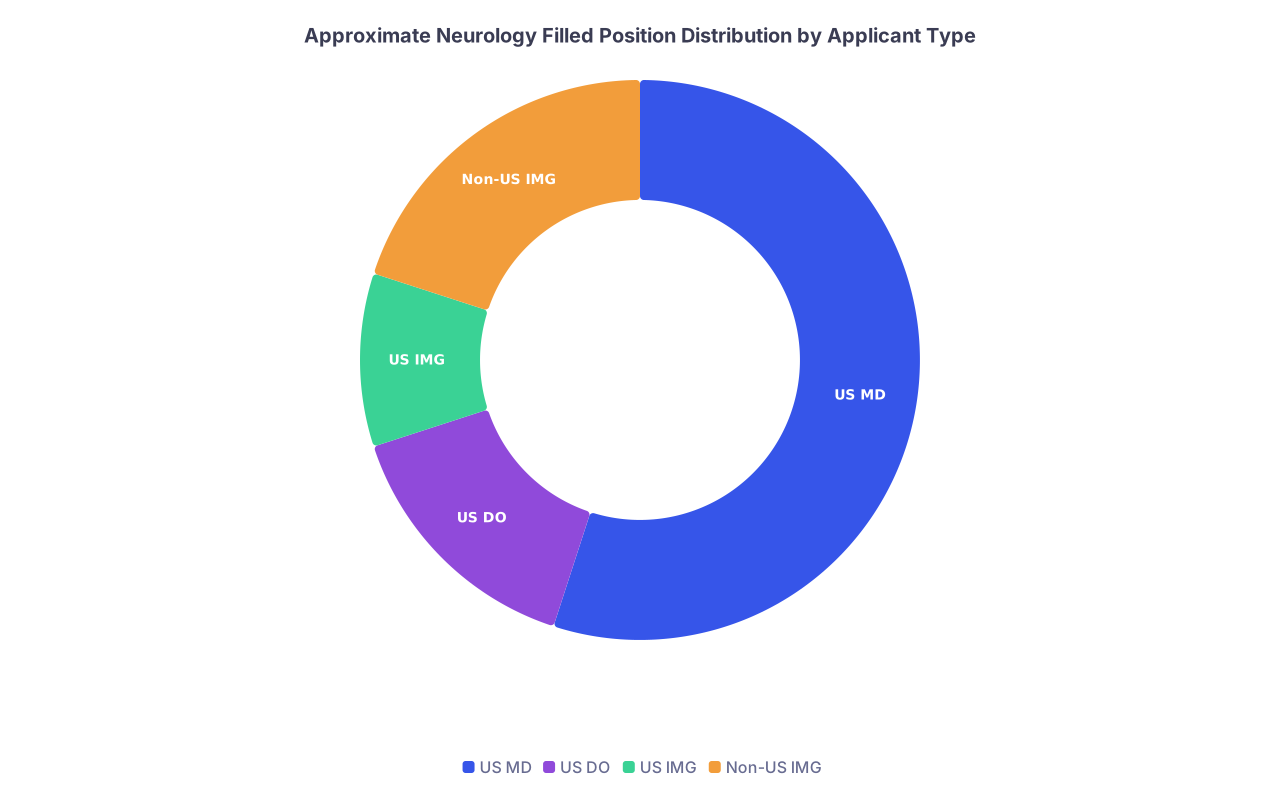
Across recent neurology match cycles, the filled positions typically break down roughly like this (these are rounded, but representative):
| Category | Value |
|---|---|
| US MD | 55 |
| US DO | 15 |
| US IMG | 10 |
| Non-US IMG | 20 |
Interpretation:
- Roughly 55% US MD
- Roughly 15% US DO
- Roughly 10% US IMG
- Roughly 20% Non‑US IMG
So around 30% of neurology spots, on average, are going to some kind of IMG (US IMG + non‑US IMG). That is significantly higher than the IMG share in fields like ENT, derm, or ortho, and more in line with internal medicine or pathology in many years.
This is where people get fooled. They hear “30% IMG” and conclude “neurology is IMG-friendly.” That is incomplete. The denominator matters.
There are three layers:
- Proportion of spots that go to IMGs – about 30%.
- Match rate of IMGs who apply – often ~45–60% depending on US vs non‑US and year.
- Self-selection of IMGs – stronger neurology‑aimed IMGs tend to have better scores and clinical experience than the “average” IMG applying to medicine.
I’ve seen the same story repeatedly in program data: the neurology IMG pool is skewed toward higher‑performing IMGs (often with significant research, strong US letters, or prior neurology exposure). So yes, neurology admits many IMGs, but not evenly across all IMG profiles.
If you are an IMG, the baseline question is not “Is neurology IMG‑friendly?” but:
- “Do I look like the IMGs who actually filled those ~30% of seats, or like the ones who ended up unmatched?”
That is where interview data and board-score cutoffs become critical.
3. Interview Ratios: How Many Interviews Do Neurology Applicants Need?
Match outcomes in neurology are highly sensitive to interview count. The NRMP’s “Charting Outcomes” and Program Director Survey make this painfully clear: below a certain interview threshold, your odds fall off a cliff.
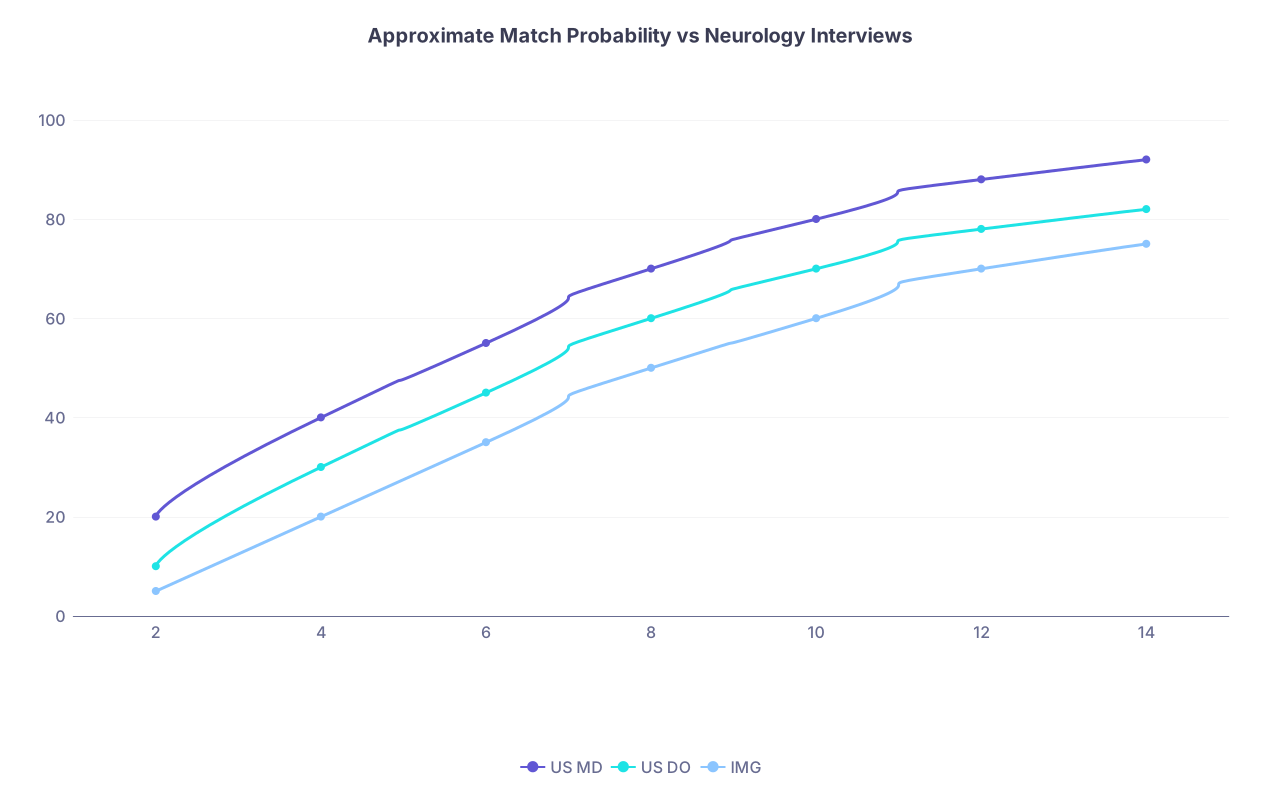
For neurology, approximate recent patterns from NRMP probability vs. number-of-ranks curves:
- US MD seniors reach roughly 70–80% match probability around 8–10 contiguous ranks in neurology.
- US DOs and IMGs often need closer to 10–12 contiguous ranks to approach similar odds.
Remember: “contiguous ranks in neurology” tracks very closely with “number of neurology interviews attended,” since most people rank almost every program where they interview.
A simple mental model that matches real data fairly well:
- 4–5 neurology IVs → extremely risky unless you are a rockstar at those programs.
- 8–10 IVs → reasonable zone for US MD; borderline for IMGs.
- 12–15 IVs → safer zone for strong IMGs.
15 IVs → strong safety margin, but still not a guarantee if there are red flags.
Here is a stylized visualization (values are illustrative, but the shape reflects NRMP trends):
| Category | US MD | US DO | IMG |
|---|---|---|---|
| 2 | 20 | 10 | 5 |
| 4 | 40 | 30 | 20 |
| 6 | 55 | 45 | 35 |
| 8 | 70 | 60 | 50 |
| 10 | 80 | 70 | 60 |
| 12 | 88 | 78 | 70 |
| 14 | 92 | 82 | 75 |
People get burned because they anchor on “neurology is less competitive” and then walk into the match with 5–6 interviews, assuming it will be enough. The aggregate data suggests otherwise, especially for IMGs and DOs.
The practical implication: for neurology, your target interview count should usually be:
- US MD: at least 8–10 neurology IVs
- US DO: 10–12 neurology IVs
- IMG: 12–15 neurology IVs (or a very clear Plan B with prelim + IM or something comparable)
Programs know this. I have heard PDs say on Zoom meetings, verbatim: “If you are sitting at 4–5 interviews in January, you need to be thinking about SOAP and backup plans already.”
4. Board Scores: Where Neurology Programs Draw the Line
Now the part applicants care about most: Step and COMLEX.
Neurology sits in an interesting middle band for board expectations. Historically, matched neurology applicants had:
- USMLE Step 1 means in the low 230s
- USMLE Step 2 CK means in the mid‑240s
With Step 1 now pass/fail, Step 2 CK has become the primary numeric filter.
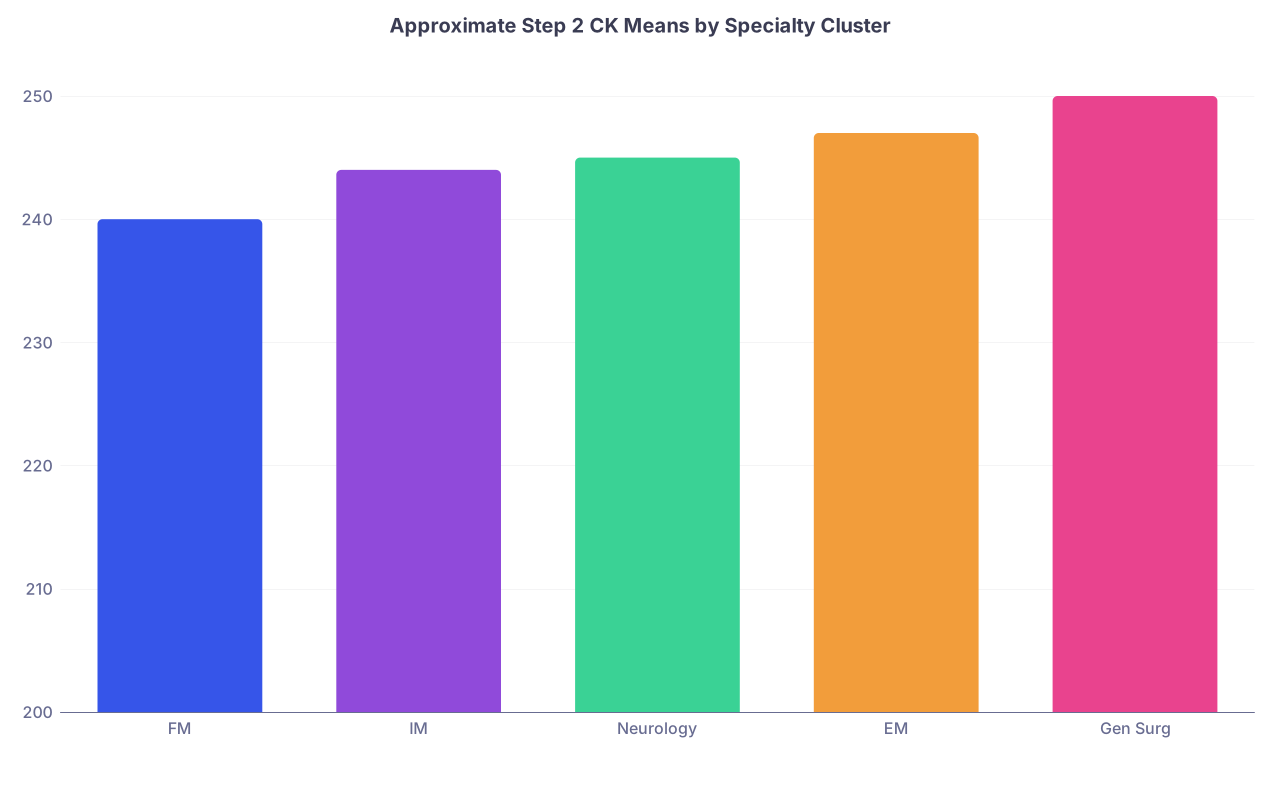
If we compare recent Step‑2‑style score distributions across specialties, neurology tends to sit around here:
| Category | Value |
|---|---|
| FM | 240 |
| IM | 244 |
| Neurology | 245 |
| EM | 247 |
| Gen Surg | 250 |
So neurology is a tick above FM and IM in many cohorts, slightly below or similar to EM, and below pure surgical fields.
PD surveys repeatedly show that:
- A majority (>70%) of neurology programs use numeric score cutoffs for interview screening.
- Many will state informal cutoffs in the 220–230 Step 2 CK range, but actual interviewed means are obviously higher.
Here is how I would interpret typical bands (for a USMLE‑taker, no major red flags, average extras):
- <220: You are in trouble for neurology at most academic programs. Community or IMG‑heavy programs might still consider if your application is otherwise strong (research, US letters, personal story), but odds are low.
- 220–229: Very marginal. You will probably be filtered at a lot of places, especially as a US MD or DO. IMGs in this range need substantial compensating strengths and a very wide net.
- 230–239: Now you are within striking distance. For neurology, this is often sufficient for mid‑tier and many community programs, particularly if everything else is solid. Top academic departments will still lean higher.
- 240–249: Comfortable territory. Statistically aligned or slightly above many neurology matched cohorts. If you do not match with a 245‑type score, the problem is likely elsewhere (weak letters, poor rank strategy, late application).
- ≥250: Numbers are not your problem. Programs will read the rest of your file, and you can aim for stronger academic centers, especially if you have neurology research.
For COMLEX‑only applicants, PD survey data show many neurology programs either:
- Convert COMLEX to USMLE‑equivalent internally and apply similar cutoffs, or
- Strongly prefer or require USMLE for DOs, especially at academic centers.
In practice, if your COMLEX 2 is roughly ~600+, you are skewing into “solid for neurology” territory at many programs. 550–599 is “possible but not guaranteed, depending on other factors.” Below that, filters start to bite.
IMG board-score reality
The numbers are harsher for IMGs.
When you look at “Charting Outcomes” data split by IMG status, you see a consistent pattern: the mean scores of IMGs who successfully match a given specialty are higher than the mean scores of US graduates who match that same specialty. Neurology follows this.
In plain language: a 240 Step 2 CK might be enough for a US MD to have a robust neurology shot, but an IMG with 240 is closer to “borderline but possible,” especially at more desirable locations.
I have seen many IMG neurology residents with Step 2 CK in the 245–255 range and strong US letters. I have seen far fewer successful IMGs with scores <235 unless they had:
- Substantial neurology research at a US institution
- Direct relationships with the department (observerships, rotations, publications)
- Unique niche (prior neurology residency abroad, PhD, etc.)
If you are an IMG with Step 2 CK <235 and no significant neurology experience, the cold numbers are not pretty. You will need maximal application breadth and careful program list design.
5. Putting It Together: Profiles and Probabilities
Let me quantify this with composite “profiles” I see all the time. These are not exact NRMP numbers, but they align with the trends.
| Profile ID | Background | Step 2 CK | IV Count | Likely Outcome Pattern |
|---|---|---|---|---|
| A | US MD | 246 | 10 | High match probability at mid-tier |
| B | US MD | 232 | 6 | 50/50; vulnerable to bad ranking luck |
| C | US DO | 245 | 8 | Reasonable shot; depends on program mix |
| D | US DO (COMLEX) | 600 eq. | 5 | Risky; many programs filter COMLEX-only |
| E | US IMG | 245 | 11 | Good odds; expects match somewhere |
| F | Non‑US IMG | 238 | 8 | Moderate risk; needs smart rank strategy |
| G | Non‑US IMG | 228 | 5 | Low probability; likely unmatched |
Again: these are stylized. The point is the interaction:
- Scores determine where you get screened in for interviews.
- Interviews determine your ability to assemble 10–12 contiguous ranks.
- Being US MD vs DO vs IMG shifts the whole probability curve up or down.
High boards, low interview count → still dangerous.
Moderate boards, high interview count → often enough.
6. Strategy by Applicant Type: Using the Data Instead of Hope
US MD
Data says:
- You are the majority of neurology residents.
- Your match rates are high but not bulletproof.
- Even with average scores, 8–10 interviews usually gets you into a reasonable program.
If you are sub‑240 on Step 2 CK, do not get cute with hyper‑narrow lists. Apply broadly — university+community mix, multiple regions. If you are ≥250, you can start getting selective but do not under-apply; I have literally seen 255+ applicants with 6 interviews sulk on Match Day because they aimed only at brand names.
US DO
You are now a non-trivial portion of neurology classes, but numbers show a persistent penalty compared with US MDs, especially at top programs.
- If you only have COMLEX: expect some programs to auto-filter you out. Your effective denominator of programs is smaller.
- If you have both COMLEX and USMLE, and USMLE is ≥240, you track much more like a US MD in neurology.
Data-backed advice:
- Target at least 10–12 neurology interviews.
- Mix of DO‑friendly and IMG‑friendly academic programs + strong community programs.
- Do not assume “neurology is easy for DOs now.” The aggregate match rate is still lower than US MDs.
IMGs (US and Non‑US)
Bluntly: your target neurology profile needs to be above the US MD mean to get similar interview access at many places.
Patterns I repeatedly see in successful neurology IMGs:
- Step 2 CK usually ≥240 (often 245+ at academic programs).
- 1–2 strong US neurology letters from faculty known to programs.
- Some research experience (does not have to be R01‑level, but posters or abstracts help).
- At least 10–12 interviews, often more if non‑US IMG.
And here is the Catch‑22 that messes people up: programs that already have a high IMG proportion are simultaneously more open to IMGs and more competitive among IMGs. You are competing against the best subset of IMGs, not the average.
Your tactical moves if your score is weaker (say Step 2 CK 230–235):
- Increase volume of applications aggressively. 80–100+ neurology programs is not crazy for a weaker IMG if you are set on the specialty.
- Prioritize community and smaller university programs, especially in less popular geographic regions.
- Build a clear neurology story: observerships, US rotations, letters from neurologists who can speak to your clinical skills.
7. Timeline and Process Reality: How Applications Actually Flow
A quick process view helps you see where the data gets baked in.

| Step | Description |
|---|---|
| Step 1 | ERAS Submitted |
| Step 2 | Program Filters by Scores |
| Step 3 | Holistic File Review |
| Step 4 | No Interview |
| Step 5 | Interview Offers Sent |
| Step 6 | Interviews Attended |
| Step 7 | Rank List Created |
| Step 8 | Match Outcome |
At each step:
- Filters by Scores: This is where Step 1/Step 2/COMLEX and IMG status silently kill a big fraction of applications. Programs set thresholds (e.g., Step 2 ≥ 230) and then apply secondary filters (IMG vs US grad, YOG, etc.).
- Holistic Review: Research, LORs, neurology exposure, personal statement. This determines whether your “screened in” application moves forward to an interview offer.
- Interview Offers: Historically skewed earlier for stronger applicants. A flat or late interview season is often a reflection of borderline metrics.
- Match Outcome: A function of both interview count and quality of ranking decisions.
Data from NRMP Program Director Surveys shows >80% of neurology PDs ranking “USMLE Step 2 CK / Level 2 CE score” as a top factor in interview offers, and >70% ranking “demonstrated interest in neurology” (letters, rotations, etc.) as significant.
8. Common Data‑Blind Mistakes in Neurology Applications
I see the same statistical errors again and again:
Ignoring denominators.
“Thirty percent IMGs in neurology means I will match.” No. Thirty percent of positions go to IMGs, but many more than that fraction of neurology applicants are IMGs. You are in a crowded lane.Underestimating interview thresholds.
Applicants with 5–6 neurology IVs telling themselves, “But my interviews are at good programs, I’ll be fine.” The probability curves do not agree with that optimism.Over‑relying on anecdotal outliers.
“My friend matched neurology with 225 Step 2 from a Caribbean school.” Yes, outliers exist. If you design your career around tails of the distribution instead of the mean, you are gambling, not planning.Misusing backups.
People treat neurology as a backup to internal medicine, then only apply to 15 neurology programs and 5 IM programs. Statistically incoherent. Either commit to neurology with enough volume or commit to IM; splitting the difference poorly satisfies neither.
FAQ (3 Questions)
1. As a non‑US IMG with Step 2 CK of 240, what neurology match probability should I realistically expect?
With a 240, strong US neurology letters, and ~10–12 interviews, you are in a reasonable probability band—often around the 60–70% range in practice. If your interviews cluster in IMG‑friendly or community programs, odds improve. If you only secure 5–6 interviews, your match probability drops sharply, more like 30–40%. The score is competitive; the key is translating that into enough interviews.
2. Is neurology still a good option if my Step 2 CK is 228 as a US MD?
228 is below the recent matched neurology mean, but not fatal. You must compensate with breadth: apply widely (including community and mid‑tier university programs), secure strong neurology letters, and aim for at least 8–10 interviews. At that score, you should absolutely have an internal medicine backup plan, especially if your school’s advising data show weaker outcomes at lower scores.
3. How many neurology programs should an IMG apply to based on the data?
For a competitive IMG (Step 2 CK ≥245, strong US neurology exposure), 60–80 neurology applications is a rational range. For a weaker IMG (Step 2 CK 230–239, or limited US experience), 80–100+ neurology programs is often necessary to generate 10–12 interviews. The cost is unpleasant, but the math is blunt: your per‑application interview yield is lower, so you counteract that with higher application volume.
Key takeaways: neurology is numerically accessible but not trivial; around 30% of spots go to IMGs but only for the stronger subset; and match probability tracks tightly with Step 2 CK and total neurology interview count. If you align your expectations and application strategy with those numbers, your odds improve. If you ignore the data and rely on vibes, you are gambling on outlier luck.