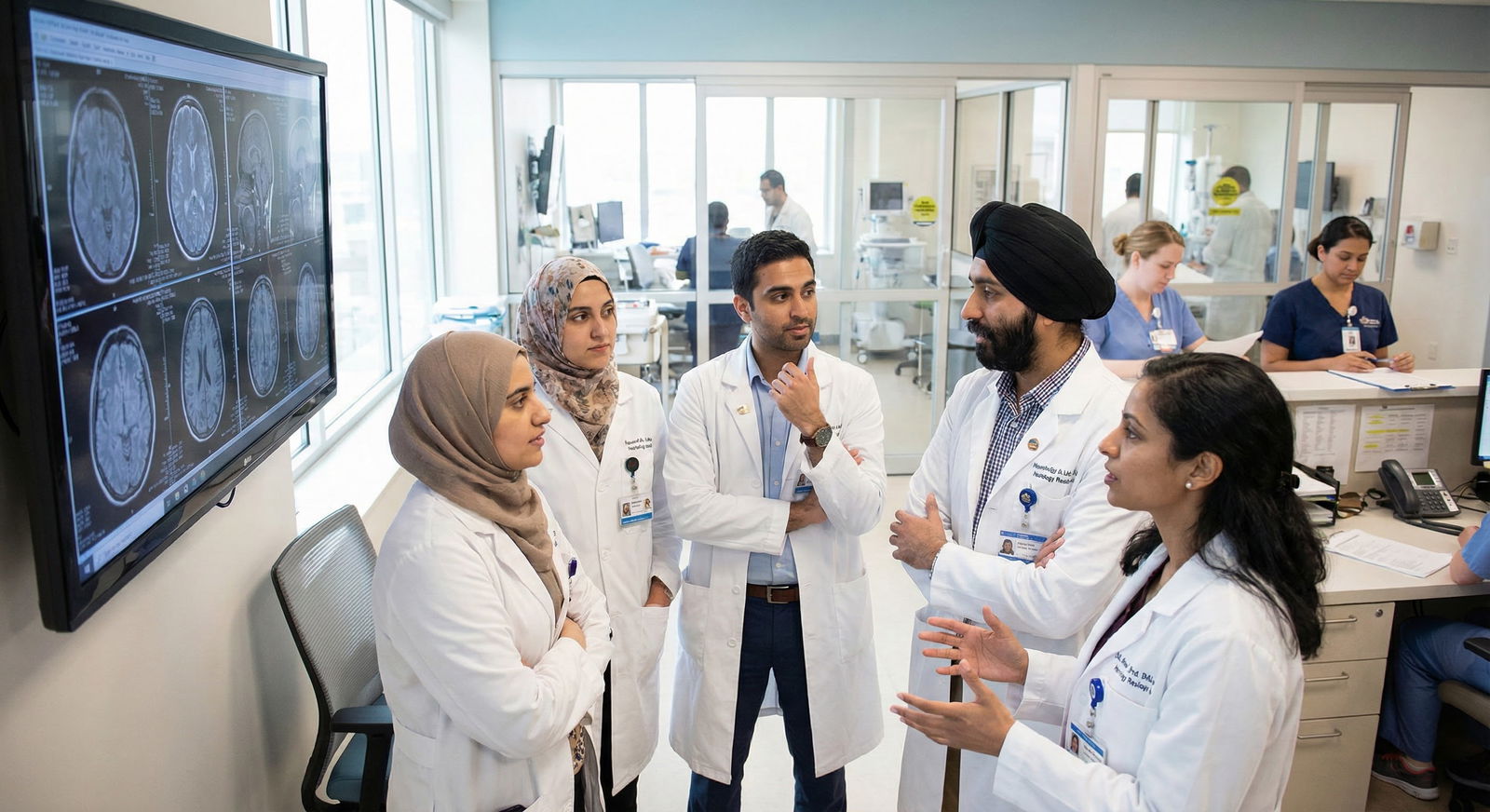
Neurology’s reputation is worse than its reality. By a lot.
On Reddit and in med school hallways, neurology gets painted as this depressing, low-paid, burnout-heavy specialty where every patient is either dying, demented, or “nothing more we can do.” Meanwhile you’re supposedly drowning in pages, doing endless consults, and making less than your classmates who do fewer hours and have more “fixable” problems.
That caricature is lazy. And mostly wrong.
Neurology has problems—real ones. But they’re not the ones preclinical students obsess over. And the horror stories usually come from a mix of old data, bad anecdotes, and people who never set foot on a modern stroke service.
Let’s dismantle the biggest myths using what actually exists: match data, salary data, burnout surveys, and how current practice looks on the ground.
Myth #1: “Neurology is underpaid and not worth the years of training”
This is the first thing people parrot: “Why would you do neurology when IM and hospitalist gigs pay the same or more for less training?”
That was closer to true 15–20 years ago. It’s not 2024 neurology.
Here’s the broad reality, using recent MGMA/Medscape-style ranges (figures vary by survey, but the order of magnitude is consistent):
| Specialty | Typical Range (USD) |
|---|---|
| General Neurology | $280k–$380k |
| Stroke/Neurohospitalist | $320k–$450k |
| Epilepsy/Clinical Neurophys | $320k–$450k |
| General IM Outpatient/Hospitalist | $250k–$330k |
| Cardiology (non‑interventional) | $450k–$650k |
Neurology is not cardiology money, fine. But it usually beats generic IM/hospitalist work once you’re fellowship-trained and in the right practice setting.
Two big things people miss:
Subspecialty neurology pays more than “average neurology.”
Stroke, epilepsy, neurocritical care, movement, and EMG-heavy neurophys practices often push into the mid-300s or above, especially in non-coastal areas.The job market is absurdly tight.
Neurologists are in chronically short supply. That means:- Multiple offers
- Negotiating leverage on RVUs, schedule, call
- More options for lifestyle positions (neurohospitalist 7-on/7-off, tele-neuro, etc.)
Here’s how neurology actually stacks up against some other “thinking” fields:
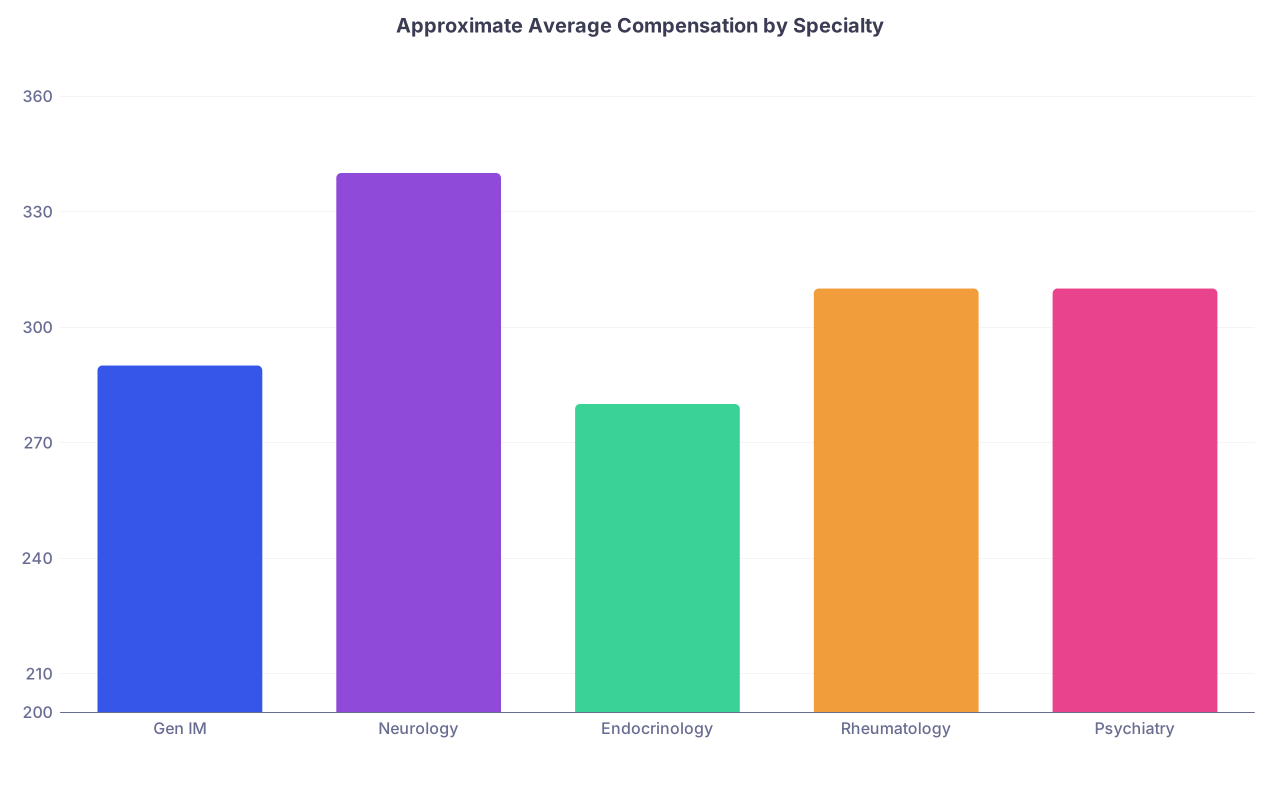
| Category | Value |
|---|---|
| Gen IM | 290 |
| Neurology | 340 |
| Endocrinology | 280 |
| Rheumatology | 310 |
| Psychiatry | 310 |
The “neurology is badly paid” line survives mostly because:
- People only see big-name academic salaries (which are always lower).
- Students remember an attending who told them his 2005 salary and never updated.
If you want to do a highly procedural, high-RVU specialty, neurology isn’t that. But compared with other cognitive fields, it’s not the cautionary tale people claim. Especially when you factor in leverage and job security.
Myth #2: “Neurology is just watching people decline and die”
This is the existential dread myth: that neurology is emotionally unbearable because “nothing gets better.” I’ve heard students say on rounds: “I couldn’t do this, it’s too sad. Everything is either MS, dementia, or ALS.”
That tells me something very specific: they only saw the worst slices of inpatient tertiary-care neurology.
Modern neurology is more about acute treatment and long-term control than it has ever been:
Stroke:
- Ten, fifteen years ago, stroke neurology was mostly supportive care.
- Now: tPA/tenecteplase, thrombectomy, hyper-acute systems of care, dedicated neuro-ICUs.
- Door-to-needle and door-to-groin times are tracked like baseball stats. You see people walk out who would’ve been totally disabled or dead a decade ago.
Epilepsy:
- Broad spectrum of meds, surgical options, VNS, RNS, dietary strategies.
- Many patients go from multiple weekly seizures to “I haven’t had one in years.”
MS and neuroimmunology:
- This has gone from “inevitable decline” to “chronic, often very controllable disease.”
- Monoclonals and oral agents have changed the slope of the curve. People work, have families, live normal-ish lives.
Headache:
- CGRP inhibitors, neuromodulation, better triptans/gepants, and structured headache clinics have taken countless patients from 15+ headache days per month to single digits.
Yes, there are brutal diseases: ALS, some dementias, high-grade gliomas. They’re not going away. But pretending internal medicine, oncology, or even ICU work don’t involve slow declines and death is delusional.
The question isn’t “Are there incurable diseases?” That’s universal. The real question: does this field give you enough clinical wins and satisfying puzzles to sustain you?
For a lot of neurologists, the wins look like:
- The young stroke patient who’s hemiplegic in the morning and walking with PT two days later
- The seizure patient who can drive again
- The MS patient who stabilizes and doesn’t need a cane after aggressive early therapy
- The “psychogenic vs epileptic” mystery you untangle with careful history + EEG
If you only ever saw end-stage dementia in academic neurology clinic and think that’s the whole specialty, you got a biased sample. Bad rotations poison entire fields in students’ minds.
Myth #3: “Neurology residents are miserable and burned out more than everyone else”
People repeat this like it’s fact, usually with zero data.
Let’s look at what burnout surveys actually show (think Medscape’s annual reports, plus specialty society surveys). Methodology is imperfect, but the shape is consistent: everyone’s tired; extremes matter more than exact numbers.
Typical pattern (approximate, combining several recent survey years):
- Highest burnout clusters: emergency medicine, critical care, family med, OB/GYN, general surgery.
- Middle of the pack: internal medicine, neurology, anesthesiology, psychiatry.
- Lower (not zero) risk: derm, path, some radiology, ophtho.
Neurology is not at the very top of the misery heap.
Where neurology does get dinged:
- Inpatient services can be heavy with complex cases and long notes.
- Academic programs sometimes lean too hard on neurology as “the consult service for everything weird.”
- Residents feel cognitively and emotionally drained because every case is a puzzle with consequences.
But compare that to night float in surgery or brutal ED shifts. The suffering is different, not uniquely worse.
What actually drives neurology burnout when it happens?
System factors, not the subject matter.
High consult volume, EHR bloat, understaffed services. Same killers as everywhere.Mismatched expectations.
People who thought neurology would be purely diagnostic puzzles, then realize there’s a ton of chronic disease management and social work issues.Badly designed call structures.
Stroke codes and tPA calls at 3 a.m. with no backup. That burns anyone out.
None of those are inherent to neurology. They’re about program design and practice setting. I’ve seen neurology residents laughing over cases at 3 p.m. with reasonable caps, and I’ve seen them crushed on services with 30+ patients and relentless consults. Guess where the horror stories come from.
Myth #4: “The match is easy, so neurology must be a ‘backup’ specialty”
You’ll hear: “Neurology? That’s just what people do when they can’t match something more competitive.”
Again, look at data, not vibes.
Neurology has historically had:
- Reasonable match rates for US MDs and DOs.
- Open spots some years, especially in smaller community programs or less popular geographic regions.
- A mix of highly competitive academic programs and more accessible ones.
It’s not derm or ortho. But it’s shifted from “true backup” territory to “moderately competitive, especially at good places,” particularly now that neurology is clearly in workforce shortage mode and procedures / subspecialties are expanding.
A rough comparison using trends from NRMP-style data (conceptual, not exact):
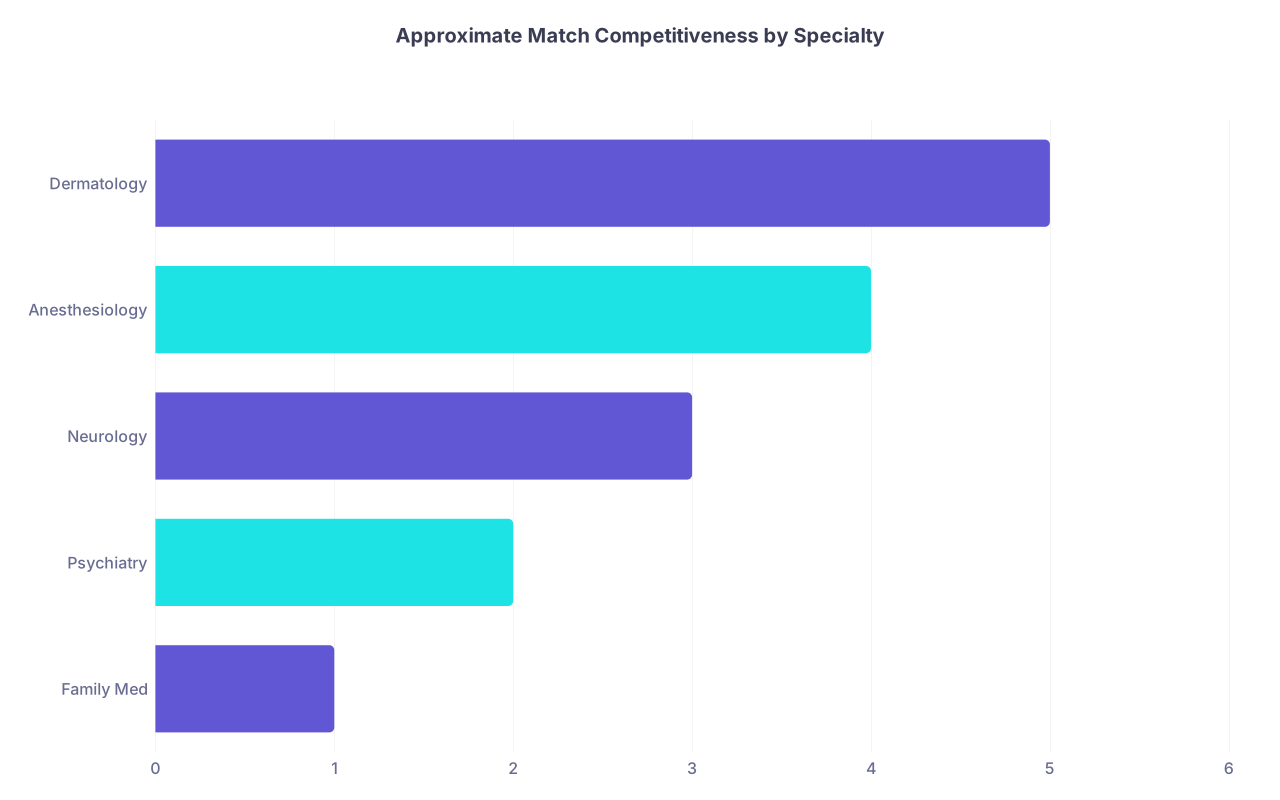
| Category | Value |
|---|---|
| Family Med | 1 |
| Psychiatry | 2 |
| Neurology | 3 |
| Anesthesiology | 4 |
| Dermatology | 5 |
(Think of 1 as “easiest” and 5 as “hardest.” Neurology consistently sits in the middle chunk.)
What this means practically:
- Strong students absolutely choose neurology as a first choice and match at top places.
- There are also viable pathways for solid but not superstar applicants, especially if they’re flexible on geography and type of program.
- Calling it a “backup” is outdated and usually said by people who haven’t seen the recent match cycles.
Myth #5: “Neurology is just inpatient stroke calls forever”
This is the “you’ll spend your life doing tPA at 3 a.m.” myth. There are neurologists whose job looks like that. But it’s not the only – or even most common – endpoint.
Think of neurology like internal medicine:
- Broad base
- Multiple subspecialties
- You can tailor your practice to inpatient, outpatient, or mixed
Here’s how practice patterns often shake out (very rough ballparks from specialty surveys and workforce reports):
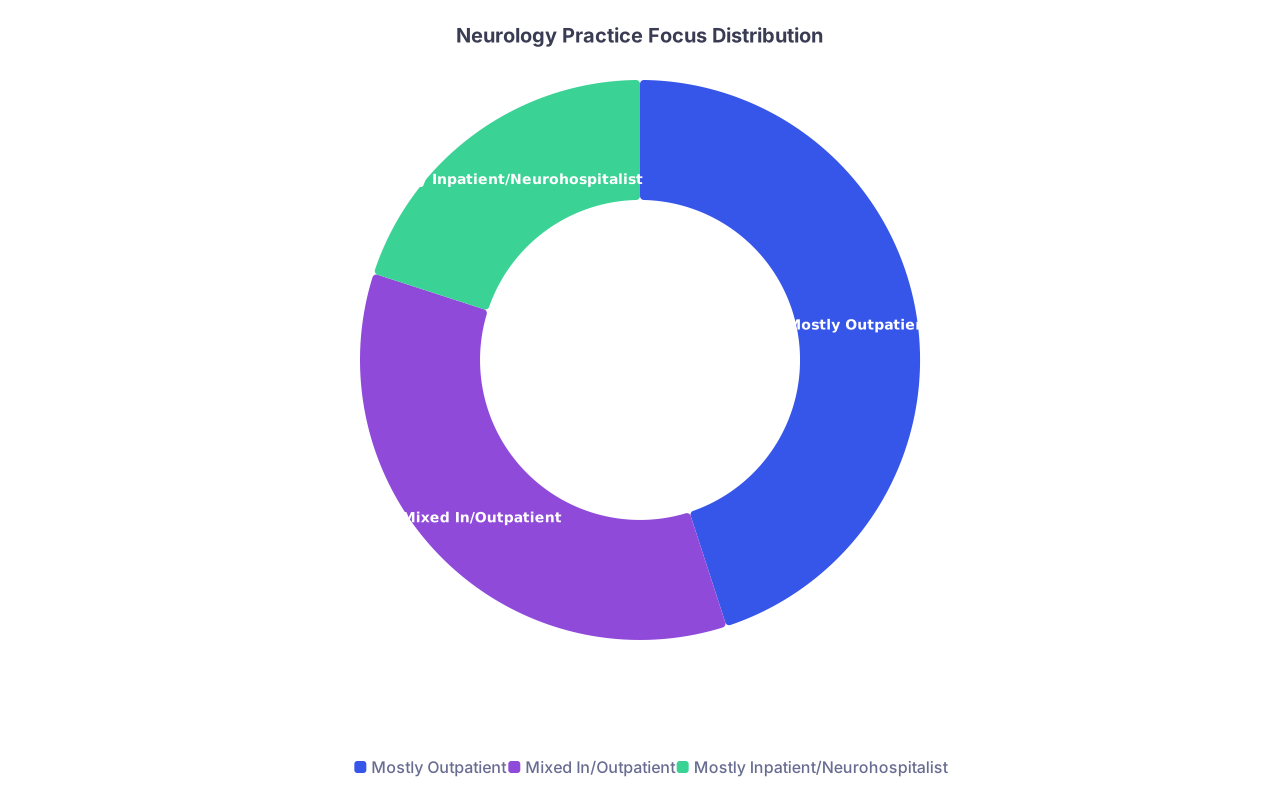
| Category | Value |
|---|---|
| Mostly Outpatient | 45 |
| Mixed In/Outpatient | 35 |
| Mostly Inpatient/Neurohospitalist | 20 |
A few very real career shapes:
Outpatient subspecialty clinics
- Movement disorders, MS, epilepsy, headache, neuromuscular
- High continuity, limited nights/weekends, a lot of pattern recognition and long-term relationships
Neurohospitalist / stroke
- Shift-based, 7-on/7-off models are increasingly common
- Clear boundaries: on means on, off means genuinely off
- Intense work weeks, but predictable time off chunks
Hybrid community neurology
- Bread-and-butter clinic plus hospital consults
- Some call, some weekends, but significant control via group negotiation and local culture
Tele-neurology / tele-stroke
- Remote work for stroke codes and consults
- Growing fast, especially since COVID pushed telehealth mainstream
If you want a life that’s mostly clinic-based cognitive medicine, neurology offers that. If you like high-stakes acute care, stroke and neurocritical care are saturated with it.
The horror stories usually come from:
- Academic stroke-heavy rotations with insufficient staffing
- Programs where neurology is the default dumping ground for every “altered mental status” at all hours
Those environments exist, and you should absolutely screen for them. But do not confuse “some academic programs run rough neurology services” with “the entire field is miserable stroke-call hell.”
Myth #6: “You have to be an absolute genius to do neurology”
This one gets thrown around by both residents and attendings. Usually half as a compliment, half as gatekeeping.
Does neurology require strong clinical reasoning? Yes. The neuro exam isn’t something you fake. Localizing lesions is mentally taxing when you’re new. There’s a learning curve.
But here’s what I’ve seen in real residency programs:
- The people who thrive aren’t necessarily the ones who aced every neuro exam in pre-clinical. They’re the ones who are methodical and curious.
- The best neurologists have habits, not magic brains:
- Structured approaches to localization
- Good pattern recognition developed over reps
- Obsession with a precise history
The idea that you must be some prodigy to be “allowed” to choose neurology is nonsense. If you enjoy the thought process and you’re willing to grind through initially painful learning, you’ll be fine.
And frankly, if complexity scared you off neurology, what exactly do you think critical care, cardiology, or heme/onc are?
How to evaluate neurology without getting duped by horror stories
If you’re even slightly interested in neurology, ignore the people who haven’t been near a neurology ward in years. Look at:
Your own rotation experience – but with context.
- Was the misery due to service design (30+ patients, no caps) or the specialty itself?
- Did you see only tertiary-care disasters or a mix of outpatient and inpatient?
Program-specific realities.
- Ask residents directly about:
- Typical census caps
- Stroke code volume and who responds
- Night float vs home call
- Support from NPs/PAs, stroke coordinators, etc.
- Press for numbers and examples, not “it’s fine.”
- Ask residents directly about:
Career paths that actually appeal to you.
- Go shadow a headache clinic or epilepsy monitoring unit.
- Talk to a community neurologist versus an academic subspecialist. Their lives don’t look the same.
Data: compensation and job prospects.
- Look at recent neurology workforce reports (AAN regularly puts out projections).
- Check job boards: count postings for neurologists vs some other “safer” field you’re considering.
Neurology: reality vs reputation
So where does that leave us?
Neurology is not:
- A poverty specialty
- Uniquely tragic among fields that deal with chronic disease
- A guaranteed burnout track
- Just a match backup for people who “couldn’t get anything better”
Neurology is:
- A moderately competitive, high-demand field with rising pay, especially in subspecialties
- A mix of acute life-or-death decisions and long-term control of serious disease
- A specialty with big variability in lifestyle depending on how you design your practice
- Intellectually heavy, yes—but learnable for any solid, motivated trainee
If you take nothing else from this:
- Base your opinion of neurology on current data and real rotations, not decade-old anecdotes.
- Separate program-specific dysfunction (service design, call structure) from the specialty itself.
- If you actually enjoy neuro—the exam, the localization, the puzzles—do not let horror stories from people who never liked it talk you out of it.