
Psychiatry is no longer the “backup” specialty people whispered about in MS3 hallways. The data shows it clearly: psychiatry has shifted from a historically less competitive option to a specialty where strategic planning actually matters.
If you are choosing a residency and you still think of psychiatry as a soft landing for weaker applicants, you are working off data that expired a decade ago.
The Big Picture: How Fast Has Psychiatry Grown?
Start with volume. Growth alone tells you how the playing field is changing.
From NRMP data (2013–2024), the psychiatry pipeline has expanded aggressively:
- Total PGY‑1 psychiatry positions have more than doubled over roughly the last decade.
- U.S. MD and DO interest has grown even faster in percentage terms than most primary care fields.
- Match fill rates now sit in the same neighborhood as internal medicine and pediatrics, and for U.S. seniors, they are often >90%.
Here is a simplified snapshot comparing then vs now:
| Match Year | PGY-1 Positions | Total Applicants (Ranks Psych) | US MD Senior Fill Rate | DO + IMG Fill Share |
|---|---|---|---|---|
| 2013 | ~1,300 | ~1,600 | ~55–60% | High IMG proportion |
| 2018 | ~1,700 | ~2,000 | ~65–70% | Growing DO share |
| 2023 | ~2,000+ | ~2,500+ | ~75–80% | DO > IMG share |
These are rounded numbers, but the pattern is not subtle: more positions, more applicants, higher U.S. senior fill rate, rising DO representation, decreasing dependence on IMGs.
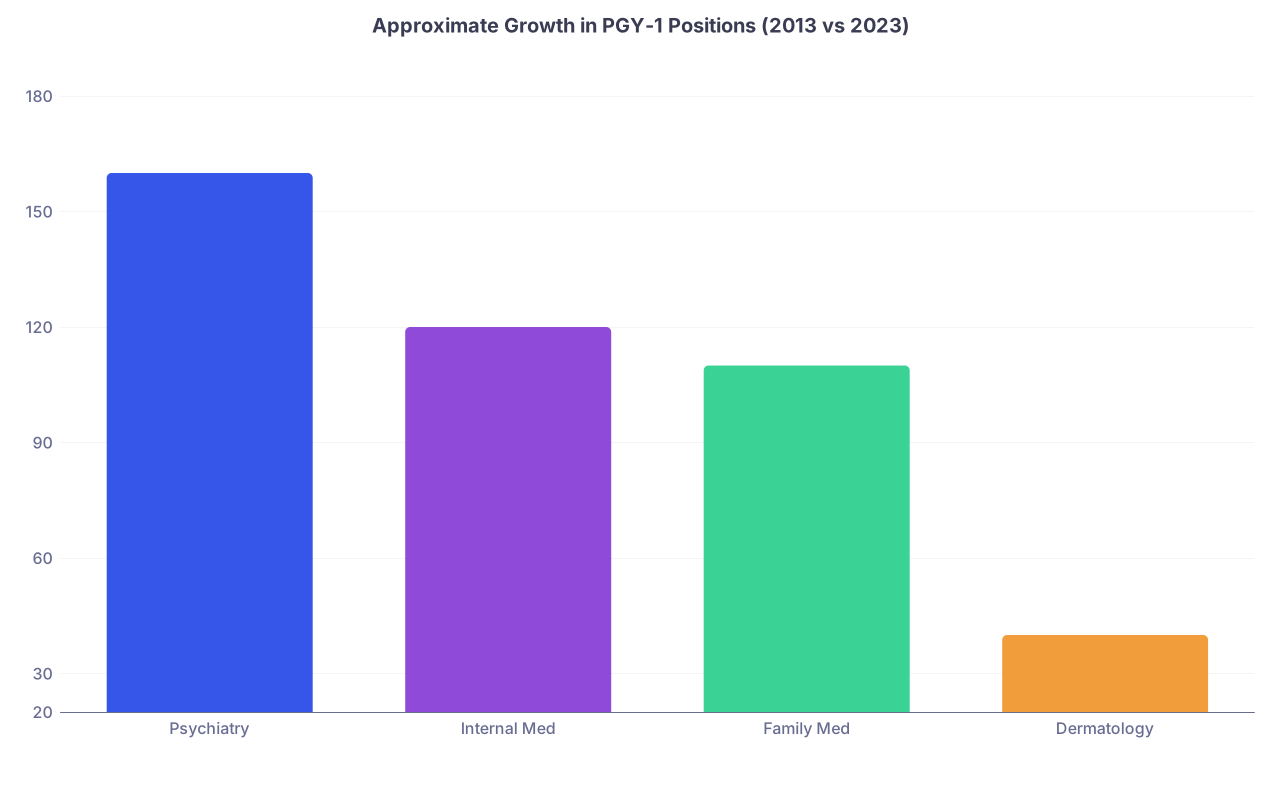
Now visualize growth relative to a truly competitive field, like dermatology, and a historically broad-access field, like family medicine:
| Category | Value |
|---|---|
| Psychiatry | 160 |
| Internal Med | 120 |
| Family Med | 110 |
| Dermatology | 40 |
Interpretation: if you normalize 2013 positions to 100, psychiatry sits around 160 by 2023, internal medicine about 120, family medicine about 110, and dermatology increases but off a much smaller base. Psychiatry is not just growing; it is outpacing several core fields in relative expansion.
So yes—more seats. But also more people chasing those seats. The competitiveness question sits exactly in the difference between those two curves.
Fill Rates, Applicant Types, and Who Actually Gets In
Competitiveness is not just “are there unfilled spots.” It is who fills them and how many applicants walk away unmatched.
For psychiatry, three metrics matter:
- Overall fill rate
- U.S. MD/DO senior fill rate
- Proportion of positions filled by IMGs (US + non‑US)
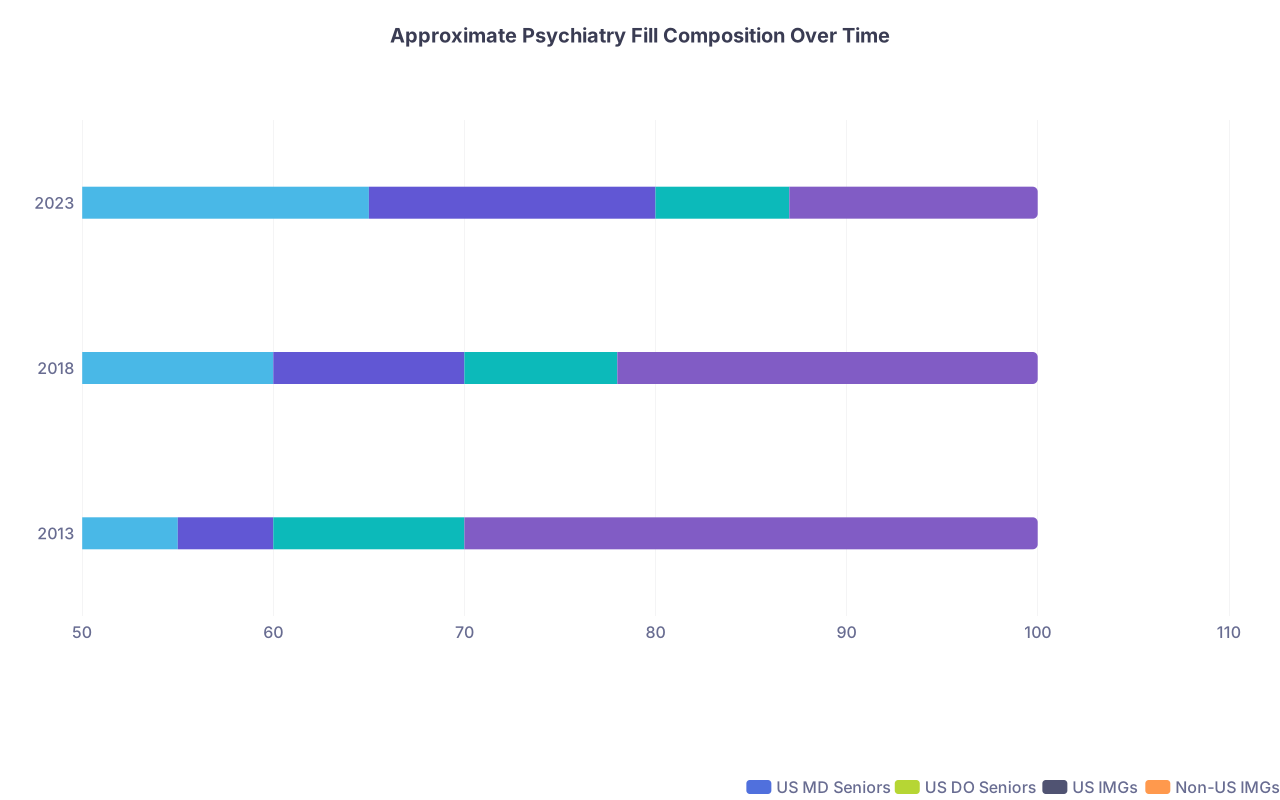
Psychiatry has moved from a specialty reliant on IMGs to one dominated by U.S. graduates.
| Category | US MD Seniors | US DO Seniors | US IMGs | Non-US IMGs |
|---|---|---|---|---|
| 2013 | 55 | 5 | 10 | 30 |
| 2018 | 60 | 10 | 8 | 22 |
| 2023 | 65 | 15 | 7 | 13 |
Read that carefully:
- U.S. MD + DO seniors now account for around 75–80% of filled psychiatry positions in many recent cycles.
- The share of non‑US IMGs has dropped from around one‑third to a mid‑teens percentage.
- DOs have taken much of that space; psychiatry is now a DO‑heavy field relative to many others.
What that means on the ground:
- For a U.S. MD or DO senior with a coherent application, the match rate in psychiatry is high, often >90%.
- For IMGs, the math is harsher. Fewer seats, higher expectations, and a much more crowded queue of international applicants.
The “psychiatry is friendly to IMGs” line is outdated. There are still IMG‑friendly programs, but the macro trend is moving in the opposite direction.
Test Scores: How “Competitive” Is Psychiatry, Really?
Most students equate competitiveness with “Step scores required.” That is crude but not useless.
Historically, psychiatry’s mean Step 1 and Step 2 scores for matched applicants have tracked below highly competitive specialties like dermatology, ortho, or plastics, but above true safety-net fields.
Take an approximate look (for matched U.S. MD seniors):
| Specialty | Avg Step 1 (Old) | Avg Step 2 CK | Comment |
|---|---|---|---|
| Dermatology | 245–250+ | 255+ | Ultra competitive |
| Orthopedics | 245+ | 250+ | High bar |
| Emergency Med | ~235 | ~245 | Variable, now in flux |
| Psychiatry | ~230–235 | ~240–245 | Mid-tier but rising over time |
| Family Medicine | ~220–225 | ~230–235 | More forgiving |
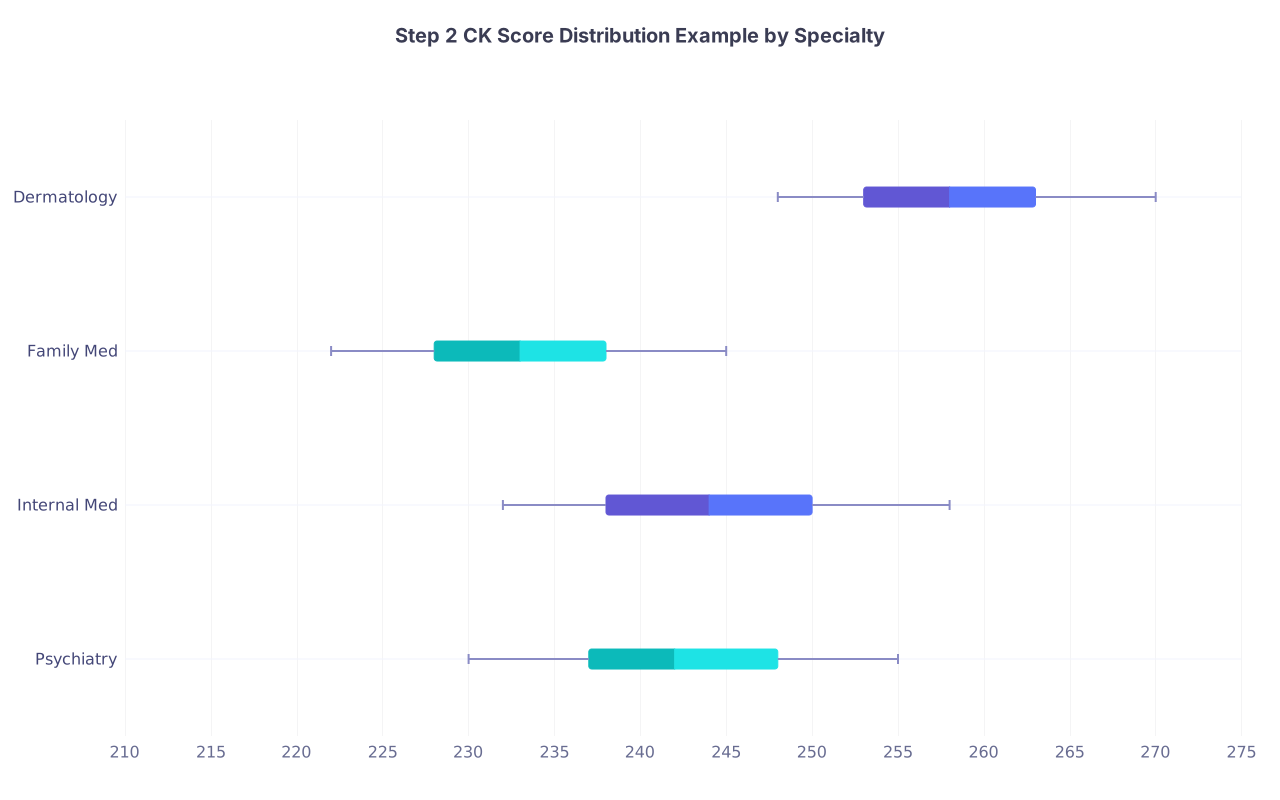
Now Step 1 is pass/fail. Programs lean harder on Step 2 CK and non‑numeric filters. But the Step 2 distribution still tells the story.
| Category | Min | Q1 | Median | Q3 | Max |
|---|---|---|---|---|---|
| Psychiatry | 230 | 237 | 242 | 248 | 255 |
| Internal Med | 232 | 238 | 244 | 250 | 258 |
| Family Med | 222 | 228 | 233 | 238 | 245 |
| Dermatology | 248 | 253 | 258 | 263 | 270 |
That boxplot-style snapshot (using hypothetical but realistic values) makes three points:
- Psychiatry’s Step 2 medians land solidly in the low‑to‑mid 240s range at many competitive programs.
- The low end of matched psychiatry applicants often sits in the high‑220s to low‑230s.
- Dermatology is obviously off in another stratosphere, but psychiatry is distinctly above family medicine.
So is psychiatry “competitive”? On pure scores alone, I would call it moderately competitive, trending upward. You do not need a 260. But a 215 with no context and no other strengths will not glide into an academic program in a major metro area.
The key is not the absolute score. It is that the lower tail is getting chopped off. Weak applications that would have matched a decade ago will struggle now unless they target very specific programs or geographic areas.
The Geography Problem: Where Interest Hits Hardest
Psychiatry is not uniformly competitive. It is heavily stratified by geography and program type.
The pattern is predictable:
- Coastal, urban, brand‑name academic centers: highly competitive
- Midwestern community programs, some Southern states, smaller cities: more accessible
- California and Northeast: brutal across the board
You can see it in fill behavior. Highly desirable programs:
- Fill nearly 100% with U.S. MDs and DOs
- Often have almost no IMGs in interns
- Interview ratios lean toward applicants with strong Step 2, significant psych exposure, and some research
Less competitive regions:
- More mixed classes (MD, DO, US IMG, non‑US IMG)
- Wider Step 2 bands
- More forgiving of red flags if you demonstrate a credible interest in psychiatry
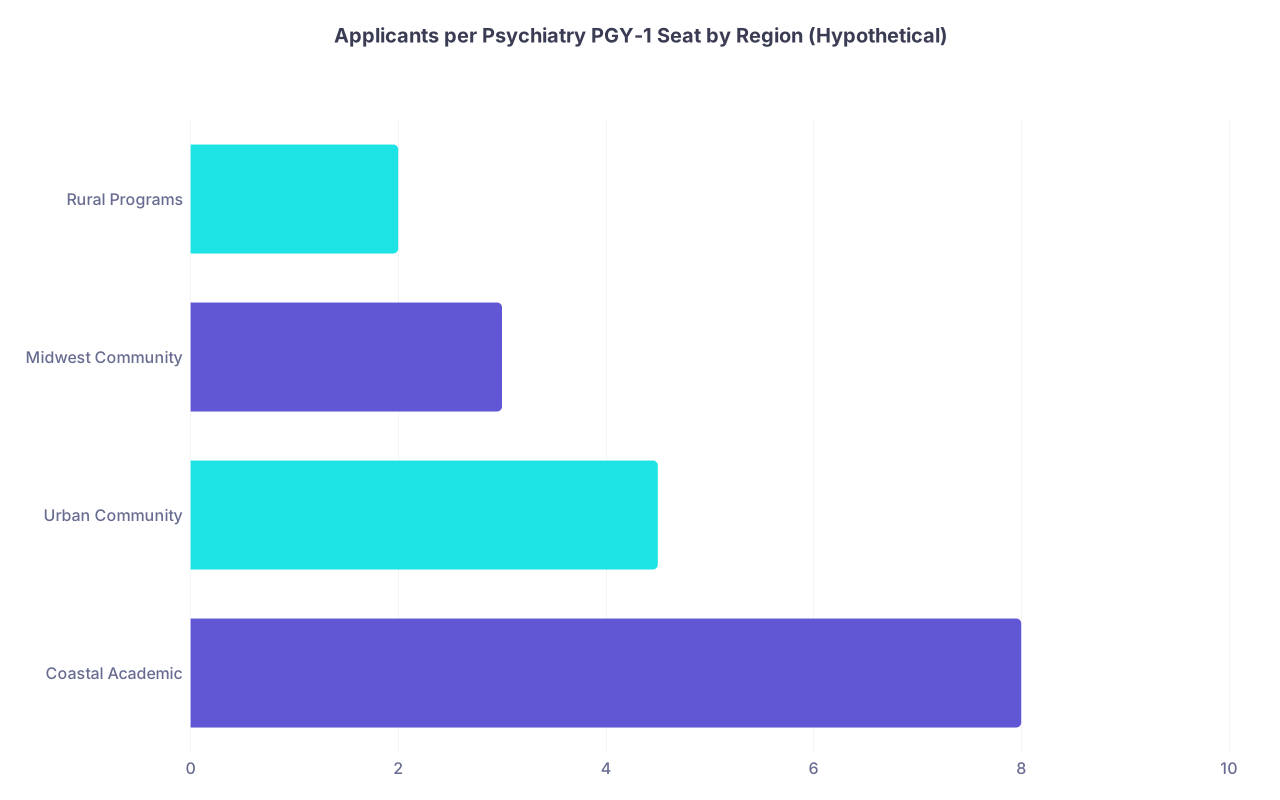
Here is the dynamic in simple numbers. Suppose two hypothetical regions:
- Region A (Coastal Academic): 100 PGY‑1 seats, 800 applicants rank them
- Region B (Midwestern Community): 100 PGY‑1 seats, 300 applicants rank them
On paper, national positions vs applicants might look comfortable, but locally you get this:
| Category | Value |
|---|---|
| Coastal Academic | 8 |
| Urban Community | 4.5 |
| Midwest Community | 3 |
| Rural Programs | 2 |
Eight applicants per seat vs two is not the same world. The coastal programs can be picky. The rural program is often relieved to fill all positions with stable, committed residents.
This is where students misread competitiveness. They look at national averages and think “psychiatry is safe.” Then they apply almost exclusively to coastal or big‑city programs and discover they have effectively entered a mid‑tier competitive specialty with their geographic preferences alone.
Applicant Quality Shift: Who Is Choosing Psychiatry Now?
A decade ago, you would routinely hear attending physicians say things like, “He did not match into internal medicine, so he went psych.” That pattern still exists occasionally, but less so. The pipeline is changing.
Three visible shifts:
More applicants are choosing psychiatry as a first choice, not a fallback. Survey data from the NRMP and AAMC shows a rising proportion of students indicating psychiatry as their top specialty early in MS3.
The academic profile has improved. You see more applicants with:
- Dedicated psychiatry or neuroscience research
- Combined MD/MPH, MD/MA, or MD/PhD training
- Strong clerkship evaluations and honors
Lifestyle and value alignment matter. Many students explicitly cite:
- Chronic mental health burden in communities
- Burnout rates and work‑life balance
- Interest in psychotherapy, addiction, forensics, or child psychiatry
That last piece is not just touchy‑feely. It changes the application environment. When more people genuinely want the field, you get:
- Cleaner narratives in personal statements
- More substantive letters (faculty believe the interest is real, not opportunistic)
- Stronger interview performance (people have actually read psychiatry literature)
Programs notice. PDs are not shy about preferring applicants who will stay in the field and are less likely to wash out or switch specialties.
Subspecialties and Long-Term Career Competitiveness
Some of the rising interest in psychiatry at the residency level is a delayed response to what happened downstream: fellowship and job markets.
Look at where psychiatry demand is red‑hot:
- Child and adolescent psychiatry
- Addiction psychiatry
- Geriatric psychiatry
- Consultation‑liaison psychiatry
- Forensic psychiatry
Workforce projections from multiple sources (APA, HRSA, state-level analyses) consistently show psychiatric provider shortages in almost every region of the United States. The gap is particularly severe in child/adolescent services and rural adult psychiatry.
If you map training output vs demand:
- The number of graduating psychiatry residents per year has grown, but
- The demand curve (outpatient clinics, hospital consult needs, community mental health, telepsychiatry) is outpacing that growth in many markets.
So paradoxically:
- Residency entry is getting more competitive.
- Post‑residency job markets remain extremely favorable, with high salaries, signing bonuses, and flexible arrangements.
For many medical students doing pure economic calculus, this is rational: moderate‑to‑rising competitiveness at entry, high leverage at exit.
How This Changes Strategy for Different Applicant Profiles
This is where you should be ruthless with yourself. The same growth trend means very different things if you are a U.S. MD with a 245 Step 2 vs a non‑US IMG with a 225.
U.S. MD Senior, Above-Average Scores
Profile: Step 2 CK ~245+, solid clerkship evals, consistent psychiatry interest, maybe some research.
The data says:
- You are competitive for most academic psychiatry programs, including in coastal cities.
- Your match risk is low if you apply broadly and do not sabotage yourself.
Strategic adjustments:
- Aim high but do not under‑apply. 30–40 psych programs is reasonable, more if you are geographically inflexible.
- Prioritize programs with strong subspecialties if you are already leaning (e.g., robust child psych or addiction services).
- Use your surplus competitiveness to target better training, not to skimp on applications.
U.S. DO Senior, Solid But Not Stellar Scores
Profile: Step 2 CK low‑to‑mid 230s, decent clinical performance, limited research, genuine psych interest.
The data says:
- DOs now make up a significant share of psychiatry residents. You are in the core of the applicant pool, not on the margin.
- You will be competitive at many community and some academic programs, but top‑tier coastal institutions may be a stretch.
Strategic adjustments:
- Apply widely: 40+ programs is realistic.
- Mix program types and regions intentionally (do not apply only to New York City and Los Angeles).
- Lean on demonstrable commitment: multiple psychiatry rotations, strong letters from psychiatrists, volunteer or clinical experience in mental health.
U.S. IMG / Non-US IMG
Profile: Passing Step 1, Step 2 CK 225–235, some U.S. clinical exposure but limited research.
The data is blunt:
- Your relative access to psychiatry has narrowed as U.S. MD and DO interest increased.
- You are still viable at certain programs, especially in the Midwest, South, and some community settings, but this is no longer an IMG‑heavy specialty.
Strategic adjustments:
- Hyper‑target IMG‑friendly programs; do not waste most of your list on academic powerhouses with near‑zero IMG presence.
- Stack your application with U.S. psych letters, actual inpatient / outpatient psychiatry experience, and evidence you understand U.S. mental health systems.
- Expand geographic flexibility. If you will only go to New England and California, your odds plummet.
Red-Flag Applicants (Any Background)
Failed Step attempt, major leave, professionalism concerns.
In a growing but more selective psychiatry market:
- Some community programs will still consider you if the narrative is coherent and the issue is clearly resolved.
- Academic programs with high applicant volume will often filter you out early unless compensated by exceptional strengths elsewhere.
Here the strategy is less about data and more about damage control:
- Own the issue directly in your application.
- Provide strong, recent evidence of reliability and performance.
- Apply very broadly, focusing on non‑brand‑name institutions that have historically matched a diverse applicant pool.
What Rising Interest Means For Your Day-to-Day as a Resident
This is not just an application problem. Rising applicant quality and volume have real effects on residency life.
Patterns I have seen across multiple programs:
- Cohort quality is more uniform. Fewer “barely matched” residents dragging call coverage or remediation.
- Residents push more for electives, research, and subspecialty opportunities. Programs respond by building tracks (research track, psychotherapy emphasis, community psychiatry focus).
- Faculty expectations increase. When you have 500+ applications for 8 seats, the PD can insist on residents who publish, teach, and present at APA.
On service:
- In many urban programs, you will be underwater on volume regardless, because demand has exploded.
- But with more residents and often more allied staff (NPs, PAs, therapists), the work can be more team‑based and less purely scut.
Again: more competitive entry, but also more serious, engaged peers. That is usually a net positive if you actually like the field.
Practical Takeaways: Adjusting to the New Psychiatry Landscape
If you strip away the noise, the data-driven reality looks like this:
- Psychiatry is not derm or ortho. But it is no longer a low‑bar backup.
- Growth in positions has been offset by growth in applicants, especially U.S. MDs and DOs.
- IMGs face a steeper climb than they did a decade ago.
- Geography and program type create massive competitiveness differences that national averages hide.
- Strong, authentic interest in psychiatry now matters, because committees can choose from many well‑qualified people.
So what do you actually do with this?
- Benchmark yourself honestly against current matched psych data, not old Step 1 legends from your school.
- Map your preferences to reality: if you demand NYC, Boston, or San Francisco, treat psychiatry like a mid‑to‑high‑tier competitive specialty.
- For everyone else, build depth: multiple psych rotations, engaged faculty mentors, at least some scholarly or QI activity related to mental health.
The specialty will likely keep growing. Mental health needs are not going away. But the easy-entry era is done. Act like you are applying to a serious field, because you are.
Key points:
- Psychiatry has shifted from a relatively forgiving match to a moderately competitive, fast‑growing specialty, especially at coastal and academic programs.
- Rising U.S. MD and DO interest has squeezed IMG access and raised the floor on applicant quality, even if score thresholds remain below ultra‑competitive fields.
- Your competitiveness depends far more on geography, program tier, and demonstrated commitment to psychiatry than on old reputations about the specialty being a backup choice.